

What Does Black Coffee Taste Like – Flavor Profile And Characteristics
When you sip black coffee, you taste a complex dance of bright acidity, bold bitterness, and layered notes. These can range from fruity and floral to nutty and chocolatey. Its flavor changes depending on the bean origin, roast level, and brewing method, revealing subtle textures and aromas.
Without any additives, the pure bean character really shines through. You get to experience the depth and clarity that’s often hidden by cream or sugar. Exploring these elements helps you understand how each cup tells a unique story shaped by its origins and preparation.
What Is Black Coffee and How Is It Made?

What makes black coffee distinct is its pure, unadulterated form. It’s just brewed coffee without any additives like milk, sugar, or cream. When you understand black coffee, you realize it’s a direct expression of coffee cultivation.
Factors like altitude, soil, and climate shape the beans’ character. The brewing equipment you choose, whether a French press, pour-over, or espresso machine, also influences the extraction process. This affects the clarity and intensity of the final cup.
Each method highlights different nuances inherent in the beans, revealing their origin story without interference.
What Does Black Coffee Taste Like?
Although black coffee might seem straightforward, its taste can be surprisingly complex and varied. When you sip black coffee, you’ll notice flavors shaped by coffee cultivation.
Black coffee may seem simple, but its flavors reveal a rich complexity shaped by cultivation.
Altitude, soil, and climate all influence the beans’ inherent sweetness, acidity, and bitterness.
Brewing techniques further transform these nuances. For example, a French press might yield a richer, bolder profile, while a pour-over highlights brighter, cleaner notes.
You might detect fruity, floral, nutty, or even chocolate undertones depending on the bean origin and roast level.
The absence of additives reveals coffee’s true character. It challenges you to discern subtle layers and textures.
Understanding these variables helps you appreciate black coffee not just as a drink, but as a complex sensory experience shaped by nature and technique.
Why Does Black Coffee Taste Different Without Cream or Sugar?

When you skip cream and sugar, you’re actually exposing the natural bitterness that coffee beans have.
Without that sweetness to smooth things out, those sharp, acidic notes really stand out and hit your palate more strongly.
So, in a way, you’re getting to taste coffee in its purest and most complex form.
It’s like experiencing the real essence of the beans without anything masking the flavors.
Natural Coffee Bitterness
Because black coffee lacks the smoothing effects of cream or sugar, you’ll notice its natural bitterness more sharply. This bitterness comes from compounds released during roasting and brewing, influenced by factors like brewing temperature and coffee aroma. Higher temperatures extract more bitter elements, intensifying the experience.
Your senses pick up these bitter notes alongside the rich coffee aroma, creating a complex flavor profile unique to black coffee.
| Factor | Impact on Bitterness |
|---|---|
| Brewing Temperature | Higher temps increase bitterness |
| Coffee Aroma | Amplifies perception of bitterness |
| Roast Level | Darker roasts tend to taste more bitter |
Understanding these elements helps you appreciate black coffee’s distinctive, bold character without additives.
Absence Of Sweetness
Without the sweetness that cream or sugar provides, black coffee reveals a starkly different taste experience. You’ll notice the absence of sweetness perception shifts the entire flavor balance, exposing the coffee’s natural bitterness and subtle complexity.
This lack of added sugar uncovers flavors that are often masked, giving you a clearer sense of the coffee’s origin and roast profile.
When you drink black coffee, you engage with the raw, unaltered bitter compounds that define its character. You also get a more pronounced texture and mouthfeel without sweet smoothness.
Plus, there’s a heightened awareness of nuanced earthy, nutty, or smoky notes.
Highlighted Acidic Notes
As you sip black coffee, your palate becomes more attuned to its bright, acidic notes that often get softened or hidden by cream and sugar. These highlighted acidic tones create a lively brightness, adding complexity and dimension to the coffee’s flavor harmony.
Without additives, you experience the true interplay between acidity and bitterness, which shapes the coffee’s overall character.
This acidity can range from citrusy sharpness to subtle fruity tangs, engaging your senses more fully. By tasting black coffee, your sensory experience deepens, revealing nuances that balance and elevate the brew’s profile.
The absence of sweetness allows these crisp, vibrant notes to shine, making each sip a more authentic reflection of the beans’ origin and roast.
Common Flavor Notes in Black Coffee
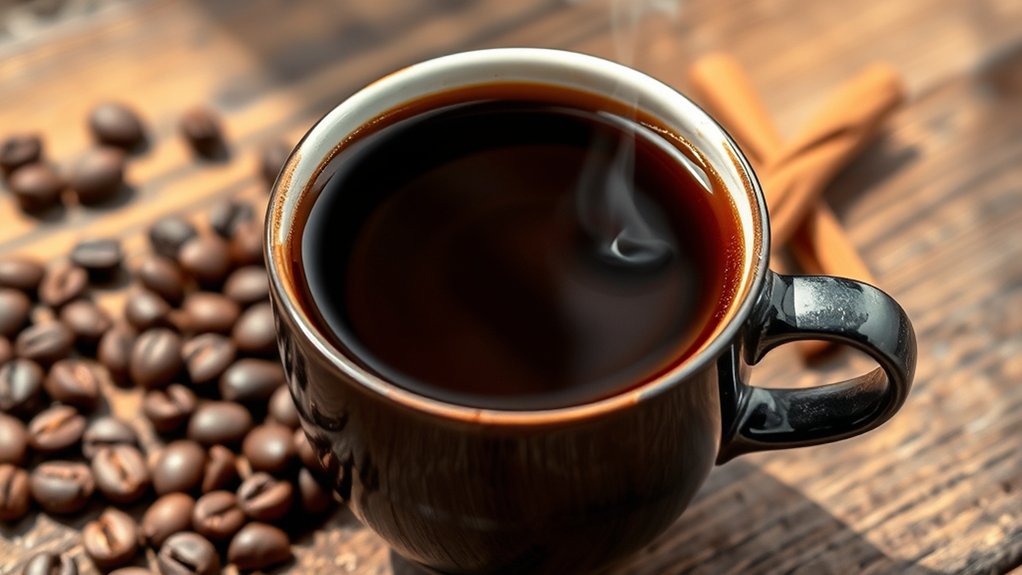
When you take a sip of black coffee, your palate encounters a complex symphony of flavors that vary widely depending on the bean origin, roast level, and brewing method. The coffee aroma alone hints at the layered taste experience awaiting you, shaped by subtle chemical reactions during roasting and extraction.
Different brewing techniques highlight unique aspects of these flavors, making each cup distinct.
Each brewing method reveals distinct flavor characteristics, crafting a unique experience in every cup.
Common flavor notes in black coffee often include fruity undertones, like berry or citrus, offering brightness and liveliness. You might also notice nutty or chocolatey hints that lend warmth and smoothness. Then there are earthy or smoky tones, which provide depth and complexity.
Recognizing these notes helps you appreciate how coffee aroma and brewing methods influence the final taste. It really deepens your connection with each cup you enjoy.
How Roast Levels Affect Black Coffee Flavor
Understanding the common flavor notes in black coffee sets the stage for appreciating how roast levels shape the beverage’s character. Coffee cultivation influences bean qualities, but it’s bean roasting that truly transforms flavor profiles.
Light roasts preserve origin nuances, offering bright acidity and floral or fruity notes. Medium roasts strike a balance, enhancing sweetness and body without overshadowing origin traits.
Dark roasts emphasize bitterness and smoky or chocolatey flavors, often masking subtler notes.
| Roast Level | Flavor Characteristics |
|---|---|
| Light | Bright, acidic, fruity, floral |
| Medium | Balanced, sweet, fuller body |
| Dark | Bitter, smoky, chocolatey |
How Coffee Bean Origins Influence Black Coffee Flavor
You’ll notice that coffee beans from different regions bring distinct flavors, and that’s because of their unique soil and climate conditions. These environmental factors mix with how the beans are processed, creating those subtle taste profiles that make each origin special.
When you get to know these elements, it’s easier to appreciate all the complexity behind every cup of black coffee.
Regional Flavor Profiles
Although black coffee might seem simple, the origin of its beans dramatically shapes its flavor landscape. When you sip coffee from different regions, you’ll notice unique notes influenced by local factors. The coffee aroma often hints at these regional traits, which your brewing techniques can highlight or suppress.
For example, East African beans typically offer bright, fruity acidity. South American beans lean toward nutty and chocolatey profiles. Asian coffees might surprise you with earthy, spicy undertones.
Consider these regional flavor profiles:
- Ethiopian: Floral, citrusy, vibrant aroma
- Colombian: Balanced, nutty, smooth finish
- Sumatra: Earthy, full-bodied, with herbal notes
Understanding these nuances helps you appreciate how origin shapes your black coffee’s character. It’s pretty cool how much where your coffee comes from can change what’s in your cup.
Soil And Climate Effects
Because soil composition and climate directly affect coffee plants, they play a crucial role in shaping the flavor of your black coffee. The minerals and organic matter in the soil influence nutrient uptake, which impacts bean density and sweetness.
Rich volcanic soils often produce coffee with vibrant acidity and complex fruit notes, while clay-heavy soils might yield earthier, fuller-bodied flavors.
Climate variation also shapes the taste. Higher altitudes with cooler temperatures slow bean maturation, enhancing aromatic complexity and brightness.
On the other hand, warmer, more humid climates accelerate ripening, leading to bolder, less acidic cups.
When you savor black coffee, you’re experiencing a direct reflection of its origin’s soil and climate. Each element contributes subtle nuances that define its unique profile.
Understanding these factors deepens your appreciation of every sip.
Processing Impact On Taste
The journey from soil and climate to your cup continues with how coffee beans are processed after harvest, a step that considerably shapes the flavor you experience. Processing methods influence the flavor chemistry by altering compounds like sugars and acids, which sensory analysis reveals through distinct taste notes.
For example, the drying technique can enhance fruity or earthy tones, while fermentation duration impacts acidity and body. Understanding these nuances helps you appreciate the complexity behind each sip.
Washed process: produces clean, bright flavors with pronounced acidity. Natural process: emphasizes sweetness and fruity characteristics. Honey process: balances acidity and sweetness, offering a nuanced profile.
How Brewing Methods Affect Black Coffee Flavor
When you choose a brewing method, you shape the very essence of black coffee’s flavor. Each brewing technique, from French press to pour-over, extracts different compounds that influence aroma, body, and clarity.
Choosing your brewing method shapes black coffee’s flavor by extracting unique aromas, body, and clarity.
For example, a French press emphasizes oils and heaviness, creating a rich, full-bodied cup. On the other hand, a pour-over highlights acidity and brightness with a cleaner finish.
These nuances affect how you approach coffee pairing. A heavier brew might complement bold desserts, while a lighter method suits delicate pastries.
Understanding brewing techniques lets you tailor black coffee’s flavor to your palate or meal, revealing its complexity.
Why Acidity and Bitterness Matter in Black Coffee
Although acidity and bitterness might seem like opposing forces, they actually work together to create black coffee’s dynamic flavor balance. You’ll notice acidity adds brightness and a lively snap, while bitterness offers depth and complexity.
Managing brewing temperature is key. Too hot and bitterness overwhelms; too cool and acidity can feel flat.
Both influence the coffee aroma, enhancing your sensory experience.
Understanding why acidity and bitterness matter helps you appreciate each sip’s nuance. Acidity highlights fruity and floral notes, lifting the overall flavor. Bitterness grounds the profile, balancing sweetness and preventing flatness.
Adjusting brewing temperature controls how these elements emerge, tailoring your cup’s character.
What Texture and Mouthfeel Reveal About Black Coffee
You’ll notice that the texture and mouthfeel of black coffee say a lot about its character. Whether it’s smooth or coarse, light or heavy, these qualities really shape your experience.
Think about how the weight and body of the coffee affect the way flavors unfold on your palate. It’s not just about taste—these tactile elements also influence the texture of the aftertaste that lingers after each sip.
Smoothness And Coarseness
Because texture shapes your overall experience, the smoothness or coarseness of black coffee reveals a lot about its quality and brewing method. When you take a sip, the balance between these textures influences flavor harmony and enhances your sensory experience.
A smooth black coffee often means a refined extraction and well-chosen beans. It offers a velvety mouthfeel that lets nuanced flavors shine.
On the other hand, a coarse texture might suggest under-extraction or heavier roast profiles. This can add grit or uneven sensations that disrupt flavor balance.
Consider these key aspects to better understand smoothness and coarseness:
- Smoothness signals a clean, even extraction, promoting flavor harmony.
- Coarseness may introduce a rough, grainy mouthfeel, affecting sensory appeal.
- Texture nuances often reflect grind size and brewing precision.
Pay attention—texture guides more than taste; it shapes your entire coffee journey.
Weight And Body
When you savor black coffee, the weight and body reveal how its texture and mouthfeel interact to shape your overall experience. The body refers to the perceived thickness or heaviness on your palate, influenced by coffee cultivation factors like bean variety and growing altitude.
High-altitude beans often produce a lighter body, while lower elevations yield denser, fuller textures.
Brewing techniques also play an essential role. Methods like French press or espresso extract more oils and solids, giving the coffee a richer, heavier body. In contrast, pour-over or drip brewing tends to create a cleaner, lighter mouthfeel.
Understanding these elements helps you appreciate how cultivation and preparation combine to define black coffee’s unique tactile signature. It makes each sip a nuanced sensory journey rather than just a simple caffeine fix.
Aftertaste Texture
The weight and body of black coffee set the stage for the lingering sensations that follow each sip. When you pay attention to aftertaste texture, you *discover* deeper layers of the coffee’s flavor evolution.
The mouthfeel reveals how the flavors develop and fade, offering insight into the coffee’s quality and roast level.
Aftertaste clarity is key. It determines whether the finish is clean and crisp or muddled and heavy.
Notice how:
- Silky or oily textures often indicate a fuller flavor evolution.
- Dry, astringent feels can signal over-extraction or harsh roasting.
- Smooth, velvety mouthfeel contributes to a refined aftertaste clarity.
How to Pick Black Coffee Beans You’ll Love
Choosing black coffee beans that truly satisfy your palate involves understanding a few key factors that shape their flavor. Start by exploring different flavor combinations found in beans from various regions. Fruity, nutty, floral, or earthy notes can dramatically alter your experience.
Pay attention to the roast level, as it influences bitterness and acidity. This affects how these flavor combinations come through.
Next, consider your preferred brewing techniques. Espresso, pour-over, or French press each highlight different aspects of a bean’s profile.
Don’t hesitate to experiment with single-origin beans to pinpoint flavors you love. Or try blends that balance complexity and smoothness.
Frequently Asked Questions
Can Black Coffee Help With Weight Loss?
Yes, black coffee can help with weight loss by boosting your metabolism and suppressing appetite.
When you explore different black coffee varieties and brewing methods, you’ll notice how caffeine content varies, which influences its effectiveness.
Coffee brewing techniques like cold brew or espresso can change the intensity and antioxidant levels. This impacts how your body processes fat.
Just remember, drinking it without sugar or cream maximizes these benefits and supports your weight loss goals.
Keep it simple to get the best results!
Is Black Coffee Good for Hydration?
You might be surprised to learn that black coffee can contribute to your daily hydration, despite its mild diuretic effect.
The coffee acidity varies depending on coffee brewing methods, influencing how your body processes fluids.
While it’s not a substitute for water, black coffee does hydrate you by about 90%, so it’s a decent option if you enjoy its bold flavors.
Just balance it with enough plain water throughout the day.
How Does Black Coffee Affect Sleep Patterns?
Black coffee can cause sleep disruption because its caffeine blocks adenosine, a brain chemical that promotes sleep. If you drink it too late, you might struggle to fall asleep or experience lighter rest.
Over time, you could develop caffeine dependency, needing more to feel awake but risking worsening sleep quality. To avoid this, try limiting black coffee intake to earlier in the day.
Also, pay attention to how your body reacts to caffeine’s effects.
Are There Health Risks to Drinking Black Coffee Daily?
Yes, drinking black coffee daily can pose some health risks, especially if you develop caffeine dependency. You might find yourself needing more caffeine to feel alert, which can disrupt your natural energy balance.
Furthermore, excessive intake may affect heart health by increasing heart rate or blood pressure. However, moderate consumption usually supports heart health.
It’s important to listen to your body and adjust your coffee habits accordingly.
What Is the Best Time to Drink Black Coffee?
The best time to drink black coffee is mid-morning, around 9:30 to 11:30 AM, when your natural cortisol levels dip.
At this time, the coffee aroma is most uplifting, and the flavor intensity hits just right to boost your focus without overstimulation.
Drinking it then lets you fully appreciate its bold, complex profile while maximizing alertness.
This timing helps you avoid the early morning cortisol clash that dulls coffee’s stimulating effects.
Conclusion
Black coffee isn’t just a drink; it’s an experience waiting to unfold on your palate. Each sip reveals layers, from bright acidity to deep bitterness. It invites you to explore a world beyond cream and sugar.
Like a symphony, its flavor notes and textures dance together, awakening your senses. So, next time you brew, savor black coffee’s bold story. It’s more than taste; it’s a daily ritual that challenges and delights you in every cup.