How Many Tablespoons Of Whole Coffee Beans Per Cup – Measurement Guide
You’ll want about 2 tablespoons of whole coffee beans, roughly 10-11 grams, for a standard 6-ounce cup. If your cup is bigger or you prefer stronger coffee, just adjust: 3 tablespoons for 8 ounces or 4 for 12 ounces.
Keep in mind, measuring by weight is more accurate than volume since bean size and roast affect density. Getting the right balance makes a smoother cup, and there’s more to discover about how grind and roast influence your perfect brew.
How Many Tablespoons of Coffee Beans Make One Cup?
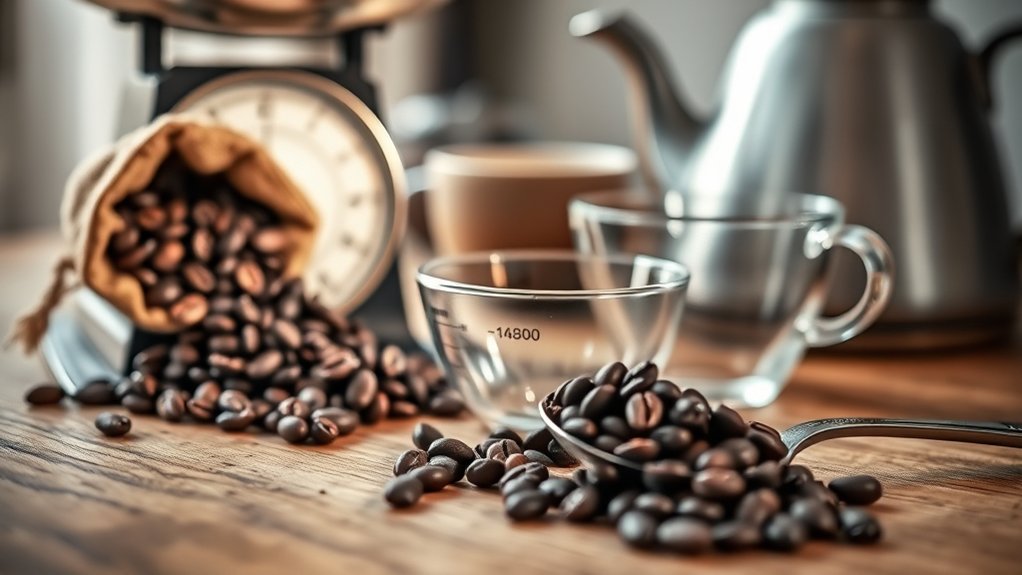
Wondering how many tablespoons of coffee beans you need for one cup? For a standard 6-ounce cup, you’ll want about 2 tablespoons of whole coffee beans, which weighs roughly 10 to 11 grams.
For a standard 6-ounce cup, use 2 tablespoons of whole coffee beans, about 10 to 11 grams.
Since one tablespoon typically yields 5 to 6 grams, this amount confirms the right coffee-to-water ratio for a balanced brew.
Keep in mind that 2 tablespoons usually contain around 40 to 45 medium-roast Arabica beans, though density can cause slight variations.
Measuring by weight is more precise than relying solely on tablespoons, as grind size and bean type affect volume.
Using a scale guarantees consistency every time you brew, helping you achieve that perfect cup without guesswork or waste.
Matching Tablespoons of Coffee Beans to Different Cup Sizes
Different cup sizes call for varying amounts of coffee beans to guarantee a well-balanced brew. Using the golden ratio, you can match tablespoons of coffee to whole coffee beans for each cup size. Adjust grams of coffee to suit your preferred coffee strength and brewing methods. Here’s a quick guide:
| Cup Size | Tablespoons of Coffee (approx.) |
|---|---|
| 6 oz | 2 (10-11 grams) |
| 8 oz | 3 (15-18 grams) |
| 12 oz | 4 (20-24 grams) |
For stronger coffee, increase tablespoons slightly, like 2.5 for 6 oz or 3.5 for 8 oz cups. Remember, 1 tablespoon equals about 5-6 grams, so tweak the amount based on roast and grind. This helps you tailor your brew perfectly.
Tablespoons vs. Scales: Measuring Coffee Accurately
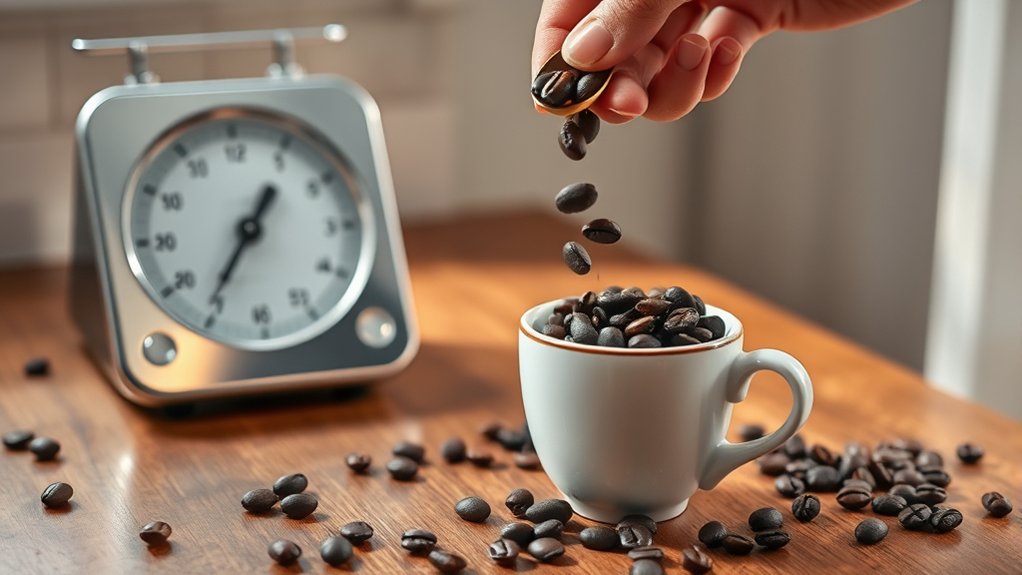
You might think using tablespoons is quick and easy, right?
But measuring by weight actually gives you a lot more accuracy. Since coffee bean density can vary quite a bit, a scale makes sure you get the exact amount every single time.
And that kind of precision? It really helps you brew a consistently better cup of coffee.
Volume Versus Weight
Although measuring coffee by volume is common, it often leads to inconsistent results because bean density varies. One tablespoon of whole beans usually weighs about 5.3 grams, but this can change based on the bean type and grind size.
For a standard 6-ounce cup, you’ll need roughly 10 grams of coffee, which is about 2 tablespoons. However, measuring by weight guarantees you get accurate measurements every time.
Using a digital kitchen scale helps maintain the proper coffee-to-water ratio, essential for consistent flavor. Since volume can fluctuate, relying solely on tablespoons might throw off your brew.
To brew coffee precisely, trust weight over volume, especially when working with whole beans, to get the best, repeatable results.
Precision Benefits
Many coffee enthusiasts swear by using a digital scale because it guarantees accuracy that tablespoons can’t match. When measuring coffee beans per cup, relying on volume can mislead you due to variations in bean density and grind size.
The Specialty Coffee Association recommends about 10 grams of coffee per 6-ounce cup, roughly two tablespoons. But weighing your beans assures precision benefits that tablespoons can’t provide.
Using a scale helps maintain a consistent coffee-to-water ratio, typically between 1:15 and 1:18, which is vital for balanced flavor extraction.
By measuring coffee in grams rather than tablespoons, you achieve consistent brewing results every time, eliminating guesswork and variability.
If you want precise, repeatable coffee strength, a digital scale is your best tool for measuring coffee accurately.
How Roast Level Changes Coffee Measurement
You’ll notice that the roast level actually changes how dense your coffee beans are. This means the number of beans you need per cup can vary.
Dark roasts tend to be lighter, so you’ll need fewer beans. On the other hand, light roasts are denser, which means you’ll want to use more.
Roast Level Bean Density
Since roast level directly affects bean density, it changes how you measure coffee for brewing. Understanding roast level bean density guarantees you get the right coffee-to-water ratio and ideal flavor.
Keep these points in mind:
Dark roasts lose moisture, making beans less dense, so you need fewer whole beans per cup.
Light roasts are denser, requiring more beans, which affects your tablespoon measurement.
A tablespoon of whole beans varies in weight depending on roast level, altering your coffee strength.
Adjust your measurement to roast level for accurate brewing. Light roasts often need a finer grind and slightly different ratios than dark roasts.
Bean Count Variations
How does roast level affect the number of coffee beans you use per cup? The number of beans varies because dark roast beans are less dense, so you need about 35-38 beans per cup.
Medium roast coffee beans you need hover around 38-42, while light roasts require even more, about 42-45 beans.
For a standard coffee, roughly 10 grams or 40 medium-roast beans make a perfect 6-ounce cup.
The grind size also influences how much coffee you should measure; finer grinds usually need more beans to maintain flavor and strength.
When you measure coffee, keep these variations in mind to achieve a balanced cup. Adjusting the bean count based on roast level guarantees your brew hits the right flavor and strength every time.
Measurement Adjustments Needed
Roast level directly influences how much coffee you need to measure for each cup. Since bean density changes with roasting, adjusting your measurements guarantees a balanced brew.
Instead of relying solely on tablespoons of ground coffee, consider these points for precision:
Dark roasts are lighter, so fewer grams of ground coffee suffice for your preferred strength.
Medium roast beans require a standard coffee-to-water ratio, usually around 10-11 grams for a 6-ounce cup.
Measuring by weight accounts for bean density variations better than volume measures.
Light roasts, being denser, need slightly more grams or tablespoons to maintain flavor consistency.
How Grind Size Changes Coffee Measurements
Grind size plays a crucial role in determining the amount of coffee you’ll need for each cup. When you grind whole coffee beans finer, they become denser and occupy less volume. So, you’ll need more coffee by weight to maintain the same flavor intensity.
On the other hand, coarse grinds extract flavors more gently and usually require fewer beans, resulting in milder coffee. This means your coffee measurements should adjust based on grind size to keep your coffee-to-water ratio balanced.
Coarse grinds yield milder coffee and need less coffee, so adjust measurements for a balanced brew.
For brewing coffee, a general guideline is about 10 grams of coffee per 6 ounces of water, but you might need to tweak this depending on your grind size and taste.
Understanding this helps you achieve consistent flavor intensity every time.
Adjusting Tablespoons of Coffee Beans for Strength
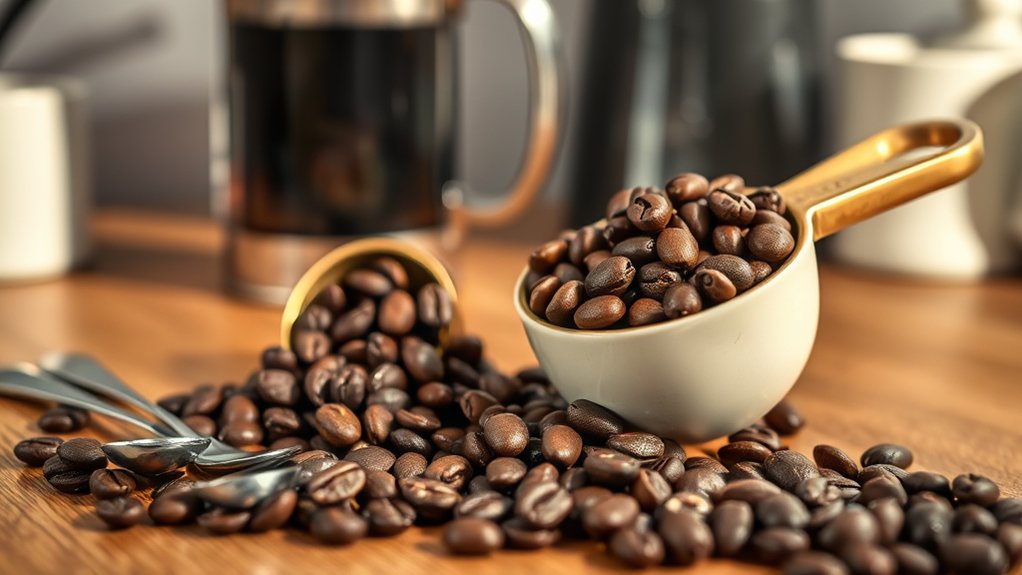
One easy way to control your coffee’s strength is by adjusting the number of tablespoons of whole beans you use. The right amount guarantees you get the perfect brew tailored to your personal taste preferences.
Here’s how to tweak your measurements for desired strength:
For a 6-ounce cup, start with 2 tablespoons of whole coffee beans (about 10-11 grams). Increase to 3-4 tablespoons for an 8-ounce cup if you want a stronger brew. Use fewer tablespoons if you prefer a milder strength in your brewing.
Remember, each tablespoon weighs roughly 5.3 grams, so small adjustments impact flavor noticeably.
Experiment with these amounts to find the balance that suits your taste and enjoy consistent, flavorful coffee every time.
How Bean Variety Affects Tablespoon Measurements and Flavor
You’ll notice that Arabica and Robusta beans differ in density, which means the number of tablespoons you need for the same weight can change.
And it’s not just the bean variety—roast level plays a role too. Lighter roasts tend to be denser, so you might end up using more tablespoons compared to darker roasts.
Knowing these differences helps you tweak your measurements to get the flavor and strength you want.
Arabica Versus Robusta
Two tablespoons of Arabica beans typically brew a smooth, aromatic 6-ounce cup.
But when you switch to Robusta, you might need fewer beans to achieve a bolder flavor because they’re denser and have higher caffeine content.
When adjusting your tablespoons of coffee, keep these in mind:
- Arabica beans offer a milder flavor profile, requiring about 2 tablespoons per cup.
- Robusta beans are denser with more caffeine, so slightly fewer tablespoons can deliver stronger coffee strength.
- Brewing method affects coffee measurements; for example, a French press may need more Robusta beans to balance flavor.
- Dark roasted Robusta beans lose moisture, changing their weight and impacting how many tablespoons you use.
Understanding these differences helps you tailor your coffee strength perfectly.
Roast Level Impact
Because roast level directly affects bean density and moisture, it changes how many tablespoons you’ll need for a consistent cup.
Dark roast coffee beans are lighter and less dense, so you’ll use fewer beans per coffee scoop, about 35-38 beans for a 6-ounce cup, to achieve a bold flavor.
Light roasts are denser, requiring more beans, around 42-45, which means your tablespoon measurement might increase slightly.
Medium roasts, often ground to a medium grind, typically weigh about 10 grams or two tablespoons per cup, offering a balanced flavor.
When measuring coffee per cup, it’s essential to adjust your coffee scoop depending on the roast to maintain taste consistency.
Always keep in mind that roast impacts both the measurement and the flavor profile of your brew.
Bean Density Variations
Although roast level influences bean weight, the variety of coffee beans you choose plays an equally important role in determining how many tablespoons you’ll need for a consistent cup. Bean density varies considerably across types, affecting your measurements and flavor profile.
Medium-roast beans usually require about 2 tablespoons (10 grams) for a 6-ounce cup. Light roasts are denser, needing roughly 2.5 tablespoons or 42-45 beans per cup. Dark roasts weigh less, so 35-38 beans or slightly fewer tablespoons work better.
Grind size impacts density too. A finer grind packs tighter, so adjust tablespoons carefully to avoid over-extraction.
Pay attention to bean density and grind size to dial in your tablespoons accurately for the best flavor every time.
Tips for Accurate Tablespoon Measurements of Coffee Beans
Achieving accurate tablespoon measurements of coffee beans starts with understanding that one tablespoon typically holds about 5.3 grams or roughly 10-12 whole beans, depending on their size and roast. To nail the golden ratio for coffee brewing, use a kitchen scale whenever possible. It’s more precise than relying solely on a tablespoon of coffee.
Remember, grind your whole coffee beans just before brewing to keep flavors fresh. Ground coffee beans lose aroma quickly. Here’s a quick guide to help you measure better:
| Measurement Type | Weight (grams) | Beans per Tablespoon |
|---|---|---|
| 1 tablespoon | 5.3 | 10-12 |
| 2 tablespoons (6 oz) | 11 | 20-24 |
| Strong brew (2.5 tbsp) | 14 | 25-30 |
| Scale recommended | Variable | N/A |
Use these tips for accurate measurements every time.
Why Measuring Coffee With Tablespoons Can Be Tricky
When you measure coffee with tablespoons, you might notice the results vary more than you’d expect. That’s because measuring coffee using volume doesn’t account for the many factors influencing coffee density and extraction results.
With whole coffee beans, a tablespoon’s weight can shift based on roast and bean type, which affects coffee flavor.
Here’s why measuring coffee with tablespoons can be tricky:
Whole beans take up more space than ground coffee, risking under-extraction if mass isn’t adjusted.
Different grind sizes pack differently, changing how much coffee fits in a tablespoon.
Coffee density varies, so the same volume might weigh differently each time.
Precision measurements are tough without a digital scale, leading to inconsistent brews.
For consistent coffee flavor, it’s best to complement tablespoons with weight-based methods.
Common Tablespoon Mistakes and How to Fix Them
Mistakes with tablespoons often come from assuming all coffee measurements are equal, but the difference between whole beans and ground coffee can cause confusion. You might think one tablespoon of ground coffee matches one tablespoon of whole coffee beans, but ground coffee’s air pockets mean it takes up more volume.
When measuring whole beans, remember their packing density varies, so weighing is more reliable than volume. Avoid heaping tablespoons; level off the beans to keep your measurement consistent.
Using about 2 tablespoons of whole beans, roughly 10-11 grams, per 6-ounce cup guarantees ideal brew strength.
Also, consider grind sizes since they affect extraction. Overpacking leads to bitter flavors, so precise measurement is key to a balanced, tasty cup.
Frequently Asked Questions
Can I Use Pre-Ground Coffee Instead of Whole Beans for Tablespoon Measurements?
Yes, you can use pre-ground coffee instead of whole beans for tablespoon measurements, but you’ll need to adjust for coffee grind size and brewing methods.
Pre-ground coffee might extract faster, affecting flavor profiles and extraction time.
To maintain freshness, grind beans just before brewing when possible.
Consider serving size and bean origin to fine-tune your measurements, ensuring a balanced cup every time.
Measuring by weight often gives better consistency than tablespoons.
How Does Water Temperature Affect Coffee Strength and Flavor?
Think of water temperature as the maestro conducting your coffee’s symphony. If it’s too low, your brew time drags, under-extracting flavors and dulling acidity.
Too high, and bitter notes overpower your flavor profile. Matching the right temperature with grind size and extraction methods guarantees balanced coffee acidity and a rich taste.
Plus, water quality and brewing techniques play key roles, so keep these factors in harmony for the perfect cup every time.
What Is the Best Way to Store Whole Coffee Beans?
The best way to store whole coffee beans is in airtight storage containers with humidity control to maintain bean freshness.
You’ll want to keep them away from light exposure and guarantee temperature stability, ideally in a cool, dark place.
Vacuum sealing your beans can enhance aroma retention by limiting air contact.
Avoid frequent temperature changes, as they degrade flavor quickly.
Regularly cleaning your containers also helps preserve the beans’ quality and taste.
How Long Do Coffee Beans Stay Fresh After Roasting?
Coffee beans stay fresh for about one month after roasting, but freshness factors like roasting methods and storage conditions play a big role.
If you grind your beans too early or expose them to air and light, you’ll lose aroma retention and flavor profile quickly.
Proper grinding techniques and airtight containers can extend shelf life.
Can I Reuse Coffee Grounds for a Second Cup?
You can reuse coffee grounds for a second cup, but expect a weaker flavor profile due to reduced coffee extraction and lower caffeine content.
To improve taste, adjust grind size or try different brewing methods like cold brew or mixing fresh grounds.
Keep freshness factors in mind. Use grounds quickly to avoid stale flavors.
Reusing grounds also lessens environmental impact by reducing waste, making it a practical choice if you don’t mind milder coffee.
Conclusion
Measuring coffee beans with tablespoons is like planting seeds in a garden. Too few, and your brew feels weak; too many, and it overwhelms your senses.
Just as a gardener adjusts for sunlight and soil, you tweak measurements for bean type, roast, and grind. With practice, you’ll find the perfect balance, brewing a cup that blooms with flavor every time.
So, trust your tools but listen to your taste buds. They’re your best guide.