What Us State Grows Coffee Beans – Growing Regions Explained
If you want to grow coffee beans in the U.S., Hawaii is your primary region, especially the Kona area known for premium quality Arabica. Puerto Rico still produces specialty coffee but faces climate and economic challenges.
California and Florida are experimenting with cultivation but lack commercial scale. Coffee growth depends on stable temperatures, humidity, and soil, limiting viable zones.
Labor costs and climate risks shape the market. Exploring these dynamics reveals why U.S. coffee remains distinct yet niche.
Which U.S. States Grow Coffee Beans Today?
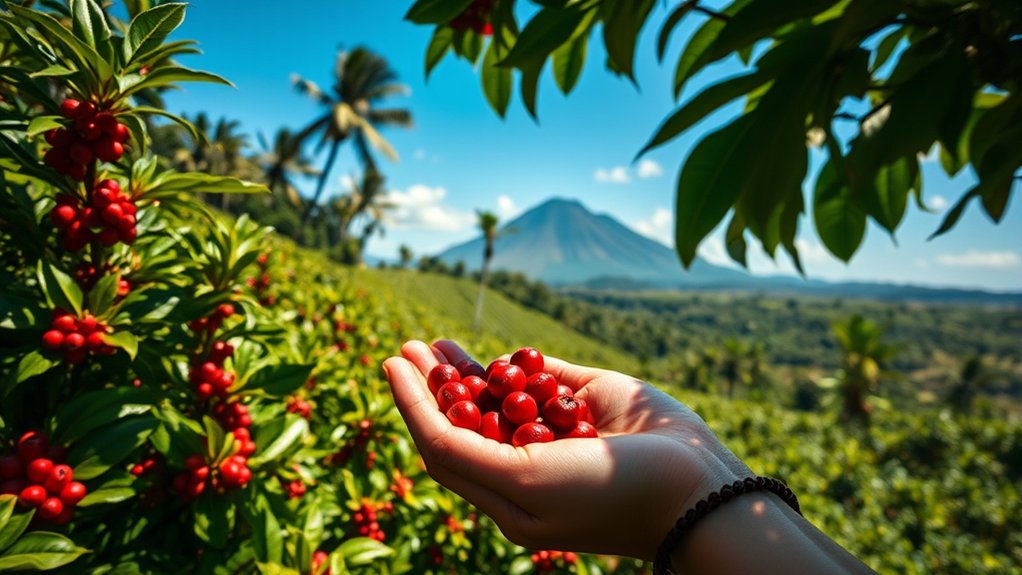
Which U.S. states currently grow coffee beans?
Hawaii stands out as the only state with established commercial coffee production, particularly in the Kona region on the Big Island, known for its superior coffee quality.
Puerto Rico historically contributed considerably to U.S. coffee cultivation, though production has declined recently due to hurricanes and other environmental challenges.
Florida is actively exploring coffee farming, with ongoing experiments aiming to meet strict climate requirements for viable coffee cultivation.
While California has initiated experimental coffee cultivation, it hasn’t yet reached commercial-scale coffee production.
The continental U.S. largely depends on imports to meet coffee bean demand because most regions don’t satisfy the specific climate requirements essential for coffee beans to thrive.
Your understanding of U.S. coffee cultivation focuses primarily on Hawaii’s unique climate and soil advantages.
History and Current Production in Puerto Rico
Although Puerto Rico’s coffee production has declined in recent decades, the island once ranked as a major producer known for high-quality beans, especially from the Grand Lares and Yauco Selecto regions.
Coffee cultivation began in the 18th century and peaked mid-20th century with exports near 5 million pounds annually.
The island’s unique mountainous terrain and climate create a distinct flavor profile characterized by balanced body, pleasant acidity, and fruity aromas.
Recent declines stem from hurricanes and economic factors impacting production.
Today, efforts focus on reviving Puerto Rico’s coffee production through specialty coffee initiatives and sustainable farming practices.
These strategies aim to restore the island’s reputation while ensuring environmental resilience, attracting both local and international markets interested in premium-quality Puerto Rican coffee.
California’s Emerging Coffee Farms and Flavors
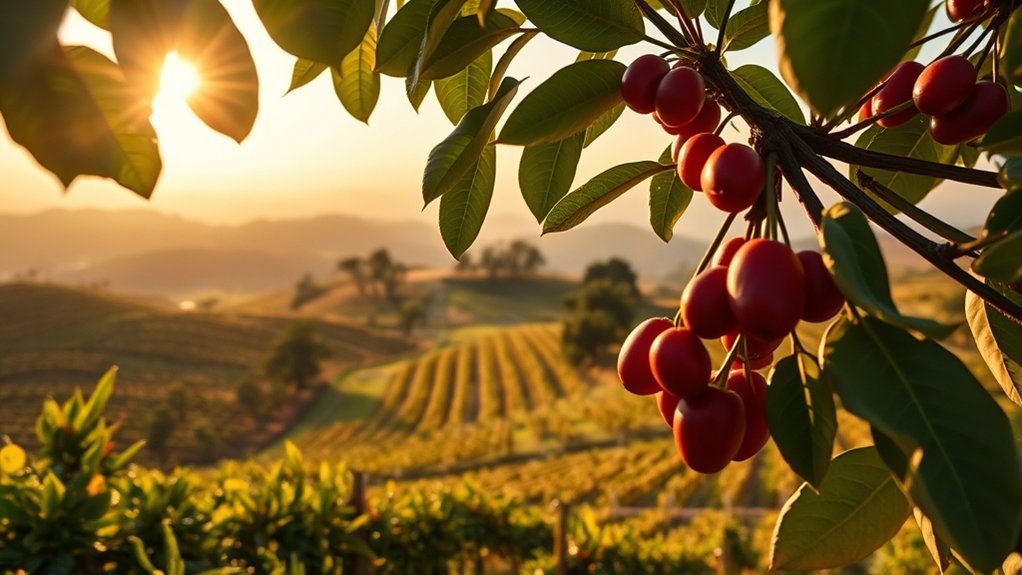
When you explore California’s coffee scene, you’ll find it’s largely experimental, with pioneering farms like Frinj pushing the boundaries of cultivation in the state. California’s coffee farms capitalize on specific growing conditions in southern regions, where climate permits limited coffee cultivation.
Frinj coffee exemplifies this innovation, producing unique flavors such as cookie dough and black Twizzlers, which distinguish California’s offerings from traditional coffee regions. However, higher labor costs and the necessity for specialized agricultural practices present significant challenges to scaling production.
Despite these obstacles, the demand for locally sourced coffee and the pursuit of diverse flavor profiles drive ongoing research and farm development.
As you engage with California’s emerging coffee farms, you witness a technically precise, evidence-based approach shaping this nascent industry’s future.
Why Hawaii Leads U.S. Coffee Production
California’s experimental coffee farms highlight the challenges of cultivating coffee in nontraditional U.S. regions.
Hawaii leads U.S. coffee production due to its prime environment and established infrastructure.
The Big Island’s western slope offers rich volcanic soil and a tropical climate that support consistent, high-quality coffee cultivation.
Kona coffee, grown exclusively here, dominates Hawaii’s commercial coffee production and the broader coffee industry.
Its long history, starting in the early 1800s, has fostered expertise and reputation unmatched by other states.
Key factors include:
- Unique tropical climate ideal for coffee growth
- Rich volcanic soil enhancing bean quality
- Established coffee cultivation traditions
- Concentrated commercial coffee production on the Big Island
- Well-developed industry infrastructure supporting export and sales
This combination guarantees Hawaii remains the U.S. leader in coffee production.
What Makes Kona Coffee Unique in Flavor and Quality
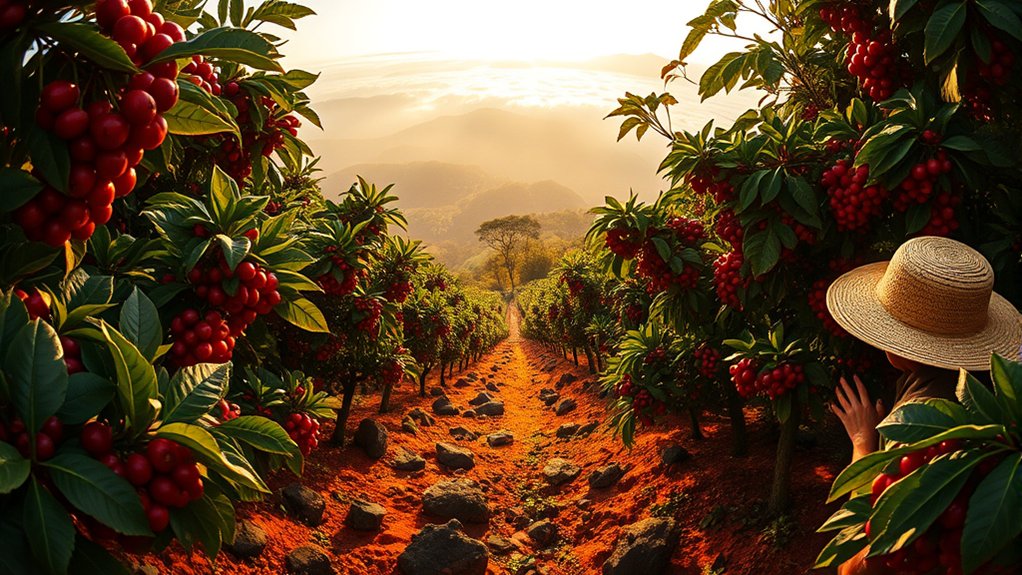
Because Kona coffee grows on the western slopes of Hawaii’s Big Island, where volcanic soil and a tropical climate create ideal conditions, it develops a distinctive flavor and quality profile.
The rich volcanic soil combined with specific elevation and microclimates enhances its unique coffee characteristics.
You’ll notice a smooth, well-balanced flavor, featuring subtle notes of honey and brown sugar, supported by a silky aftertaste and lively acidity.
This complex flavor results directly from precise coffee growing practices in a terroir unmatched elsewhere in the U.S.
Kona’s consistent quality and refined taste make it highly sought after, often commanding premium prices.
Understanding these factors helps you appreciate why Kona coffee stands apart as a unique coffee variety within American coffee production.
Climate and Geography Limits on U.S. Coffee Growing
You’ll find that growing coffee in the U.S. is pretty limited when it comes to geography. Hawaii’s Kona region stands out as the only area with a consistently suitable environment, thanks to its tropical climate and volcanic soil.
Arabica coffee, which is the most popular type, needs stable mild temperatures, high humidity, and nutrient-rich soil. These conditions are hard to come by outside of Kona.
That said, climate change might shake things up a bit in the future. Still, for now, the geography and climate pretty much put a cap on large-scale coffee production anywhere else in the country.
Geographic Constraints
Although the United States has diverse climates, coffee cultivation remains confined primarily to Hawaii, California, and Puerto Rico due to strict geographic and climatic requirements. The coffee-growing regions suitable for Arabica, the predominant variety, demand mild temperatures between 15°C and 24°C, high humidity, and nutrient-rich soil. These conditions are rarely met outside these areas.
Hawaii leads in commercial coffee production, while California’s efforts remain experimental. Puerto Rico faces challenges like hurricane damage. Geographic constraints limit expansion despite potential shifts from climate change.
Key geographic constraints include:
- Limited zones with stable, mild temperatures ideal for Arabica coffee
- Specific elevation and soil composition requirements
- Vulnerability to extreme weather events, especially hurricanes in Puerto Rico
- Insufficient humidity levels in most U.S. regions
- Restricted commercial-scale land availability in suitable climates
Climate Requirements
When you consider the specific climate requirements of Arabica coffee plants, it becomes clear why U.S. cultivation remains limited. Arabica coffee thrives in mild temperatures ranging from 15°C to 24°C (60°F to 75°F), combined with high humidity and rich soil.
These conditions are mainly found in Hawaii’s coffee-growing regions. Hawaii’s tropical climate and volcanic soil provide an ideal environment for coffee cultivation, unlike most other U.S. areas.
Experimental efforts in California and Florida face challenges due to less suitable climate and soil conditions.
Climate change may alter these parameters, potentially expanding viable coffee-growing regions in the future. However, the current geographic and climatic limitations restrict commercial Arabica coffee production primarily to Hawaii, where the balance of mild temperatures, humidity, and rich soil supports consistent yield and quality.
How Labor and Costs Affect U.S. Coffee Farms
Because labor costs in the U.S. are considerably higher than in traditional coffee-growing countries, coffee farms face considerable economic challenges. High minimum wages increase production costs, directly impacting the economic viability of domestic farming.
Securing skilled labor is difficult and costly, which further strains operations. Fair labor practices, while essential, add to overall expenses but appeal to ethically conscious consumers.
Finding skilled workers is costly, and fair labor practices raise expenses while attracting ethical consumers.
So, U.S. coffee farms often rely on premium pricing strategies to offset these higher costs.
- Elevated labor costs limit competitiveness with imported coffee
- Skilled labor shortages hinder efficient farm management
- Fair labor standards increase operational expenses
- Premium pricing reflects the cost of domestic farming
- Economic viability depends on balancing costs with market demand
Understanding these factors helps you grasp the financial complexities U.S. coffee farms navigate.
Potential U.S. Coffee Farming Regions to Watch
As interest in coffee cultivation expands beyond traditional areas, regions like California and Florida are emerging as promising candidates for U.S. coffee farming.
California, with companies like Frinj pioneering efforts, leverages its mild temperatures and humidity to create viable growing areas. It remains nascent compared to Hawaii’s established commercial coffee production.
Similarly, Florida conducts ongoing experiments to assess its climate’s suitability for coffee production, potentially broadening the U.S. coffee industry’s geographic scope.
These non-traditional states demonstrate increasing viability for coffee cultivation, signaling a shift in growing regions.
While Hawaii still dominates commercial coffee output, California and Florida’s progress could diversify the U.S. coffee industry, offering new opportunities for sustainable and localized coffee production within the country.
How U.S.-Grown Coffee Compares to Global Origins
You’ll notice that U.S.-grown coffee, especially from Hawaii, has some really unique flavor profiles. This is largely because of the volcanic soil and the one-of-a-kind terroir there, which definitely sets it apart from coffee grown in other parts of the world.
That said, the scale of coffee production in the U.S. is pretty limited compared to huge plantations you find in countries like Brazil and Colombia.
On top of that, growing coffee in the U.S. comes with higher labor and production costs. These factors create economic challenges that make it tough for U.S.-grown coffee to compete on the global market.
Flavor Profiles Compared
While global coffee origins like Brazil and Vietnam often deliver straightforward flavor profiles due to large-scale production, U.S.-grown coffees, particularly from Hawaii and California, offer distinct and nuanced taste experiences. These are shaped by unique terroir and innovative roasting methods.
Growing coffee in volcanic soil, Hawaii produces Arabica beans with a medium body and complex notes of honey and brown sugar.
California’s experimental approach yields unique flavors such as cookie dough and black Twizzlers. Compared to dominant Robusta and Arabica regions, U.S. coffee regions emphasize quality over volume.
- Hawaiian Kona coffee: balanced, honey-sweet flavor profiles
- California Frinj: unconventional, dessert-like notes
- Puerto Rican coffee: balanced body with pleasant acidity
- Higher production costs influence U.S. coffee pricing
- Terroir and roast styles create complex flavor signatures
Growing Conditions Contrast
Although U.S. coffee production is limited geographically, primarily to Hawaii, its growing conditions differ markedly from major global origins. Hawaii’s tropical climate and rich volcanic soil provide ideal conditions for growing coffee, supporting a stable environment with consistent rainfall and mild temperatures.
Unlike many global coffee producers situated at high altitudes, such as Colombia and Guatemala, where slower bean maturation enhances flavor complexity, Hawaii’s lower elevation yields a distinct, smooth medium-bodied profile.
As a coffee producer, the U.S. faces constraints in scale and geographic suitability compared to countries like Brazil, which dominates global coffee cultivation with extensive land.
However, climate change may alter this dynamic, potentially expanding coffee-growing regions in states like California and Florida. This shift could enable experimental cultivation that mimics traditional global environments.
Economic Viability Challenges
Because labor costs in the U.S. are markedly higher than in traditional coffee-producing countries, cultivating coffee domestically presents substantial economic challenges.
Hawaii’s coffee production benefits from unique volcanic soil, yielding premium beans at a high cost. However, the region’s geographic limitations and elevated minimum wages drive operational expenses up, affecting economic viability.
To stay competitive, U.S. growers often rely on blending expensive coffee with cheaper varieties. Compared to large-scale producers like Brazil, U.S. output remains minimal, reinforcing premium pricing.
- High labor costs inflate production expenses considerably
- Volcanic soil in Hawaii supports niche, high-quality coffee
- Geographic limitations restrict widespread cultivation beyond Hawaii
- Blending helps mitigate costs but affects purity of origin
- Premium pricing limits market share against global producers
Frequently Asked Questions
What Is the Best Time of Year to Harvest Coffee Beans in the U.S.?
You should plan your harvest timing based on regional differences and climate factors, typically from August to January in Hawaii and November to March in Puerto Rico.
Coffee varieties and seasonal care affect yield expectations and flavor profiles, so picking cherries at peak ripeness is essential.
Labor considerations also influence timing, ensuring efficient harvests.
Adjust your schedule according to microclimates to optimize bean quality and meet production goals precisely.
How Do Coffee Pests and Diseases Impact U.S. Coffee Farms?
Coffee pests and diseases cause significant yield reduction on U.S. farms, forcing you to adopt rigorous pest management and disease resistance strategies.
You must prioritize pest identification and implement preventative measures early to minimize economic effects.
Climate impact intensifies these threats, challenging your crop’s health.
Integrating organic practices helps sustain soil and plant resilience, but high labor costs complicate efforts.
Staying proactive is essential to protect your coffee yield effectively.
What Types of Coffee Processing Methods Are Used in U.S. Farms?
Think of coffee processing as a symphony where each note shapes flavor. You’ll find U.S. farms using diverse Processing Techniques: the Wet Method dominates, removing fruit before fermentation to yield clean Flavor Profiles.
The Dry Method dries cherries whole, enhancing fruity notes, while the Honey Process blends both, balancing sweetness and acidity.
Fermentation Time varies, impacting taste.
Sustainability Practices and Regional Variations also influence these methods, ensuring unique, high-quality beans tailored to local environments.
Are There Any Coffee Festivals or Events in U.S. Coffee Regions?
Yes, you’ll find vibrant coffee festivals across U.S. coffee regions that highlight coffee culture and local brews. These events feature tasting events, coffee competitions, and artisan roasters showcasing sustainable practices.
Festival highlights often include educational workshops promoting community involvement.
For example, Hawaii’s Kona Coffee Cultural Festival and California’s Los Angeles Coffee Festival emphasize innovation and quality, providing you opportunities to engage directly with producers and deepen your appreciation of U.S. coffee craftsmanship.
How Can Home Gardeners Grow Coffee Plants Indoors or in Small Spaces?
Growing coffee plants indoors is like nurturing a delicate ecosystem.
You’ll need the right container size with a well-draining soil mix that maintains slightly acidic pH. Choose suitable coffee varieties for indoor gardening.
Provide indirect light for 4-6 hours daily to meet their light needs and keep humidity levels above 50%.
Water consistently but avoid overwatering by letting the top inch of soil dry out between waterings.
Use propagation methods like cuttings or seeds for new plants, and fertilize regularly to encourage healthy growth.
Conclusion
If you’re curious about U.S. coffee production, note that Hawaii alone accounts for nearly 90% of the nation’s coffee output, highlighting its dominant role.
While California and Puerto Rico show promise, climate and labor challenges limit expansion. Understanding these factors helps you appreciate why U.S.-grown coffee remains a niche but high-quality product.
This knowledge equips you to better evaluate the unique characteristics and potential of American coffee farming.