How Many Calories In A Matcha Latte – Nutrition Facts Explained
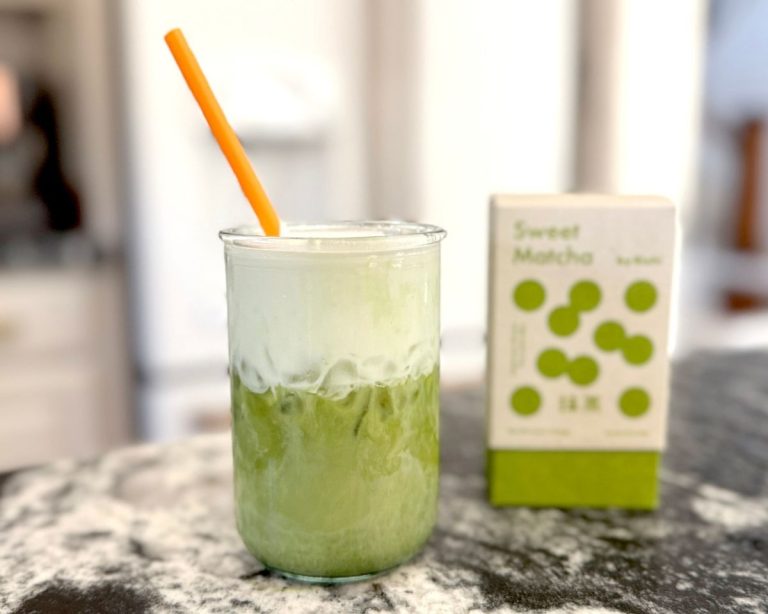
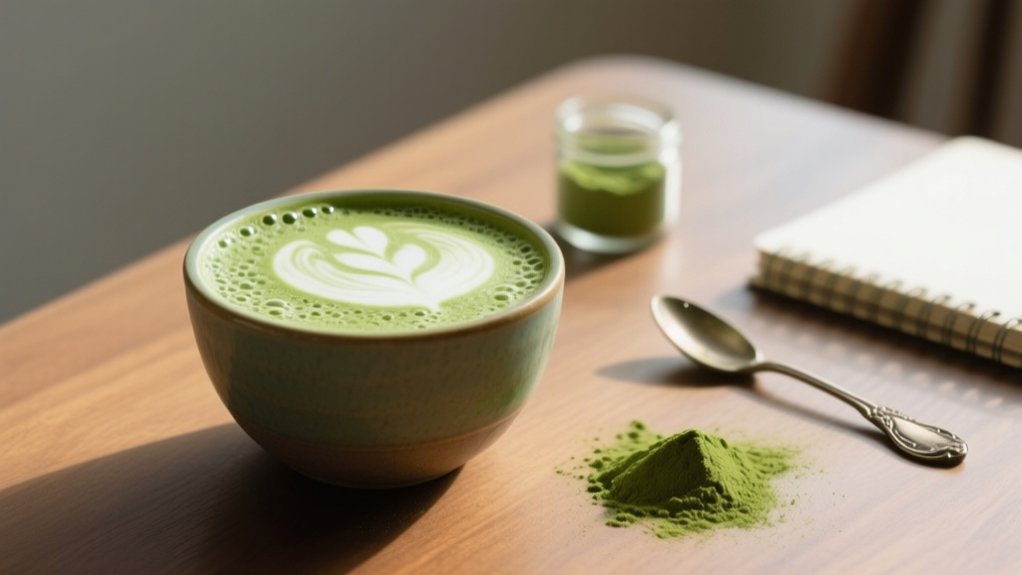
A typical matcha latte has between 50 to 300 calories, depending on the milk and sweeteners you use. Plain matcha powder itself adds just about 5 calories per teaspoon.
Choosing unsweetened almond milk keeps your latte low in calories, around 50-70 per cup, while dairy or oat milk ups the count. Sweeteners like honey or sugar can add 16-70 calories, so skip or use zero-calorie options to stay light.
Keep going and you’ll find smart tips to enjoy matcha lattes without extra calories.
Calories In Plain Matcha Powder
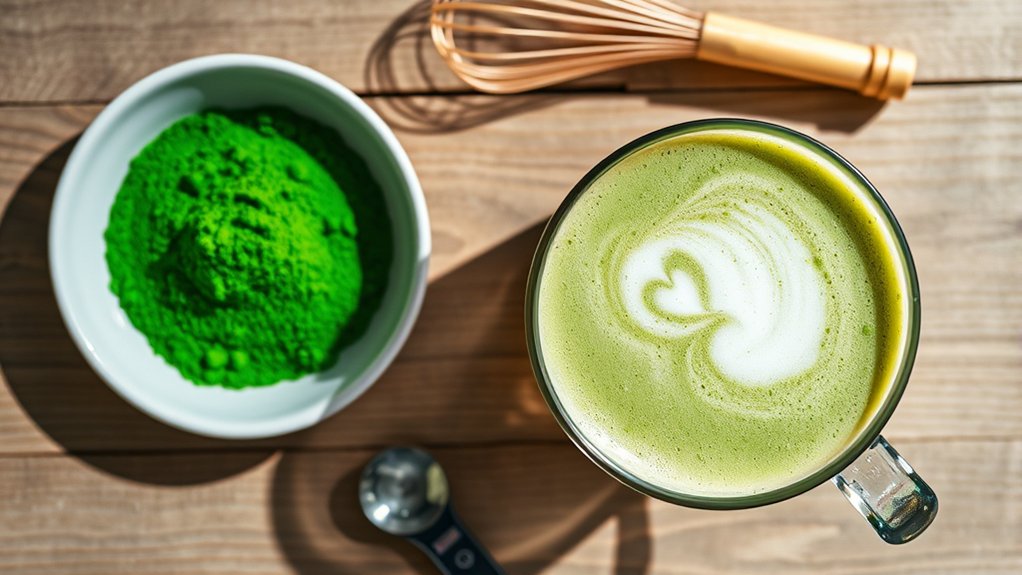
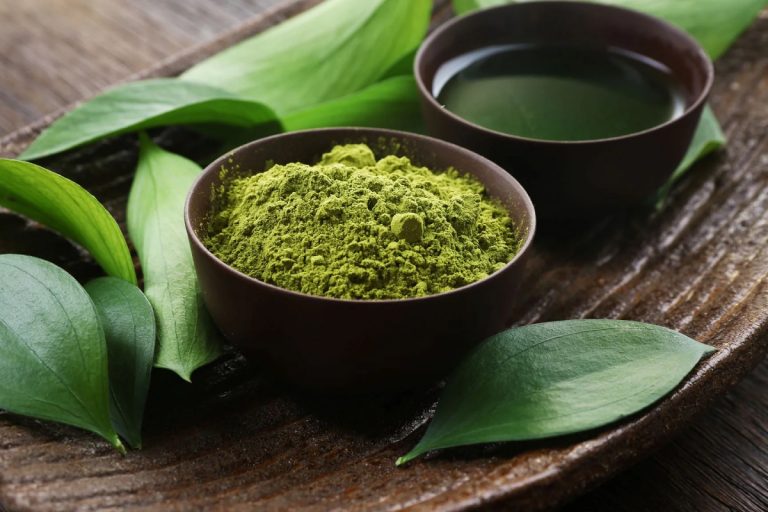
Although matcha powder contains only about 5 calories per teaspoon, it packs a powerful nutritional punch. When you use matcha, you’re consuming the entire tea leaf in powdered form, which means you get a higher concentration of antioxidants and nutrients than with brewed green tea.
This low-calorie content makes matcha an excellent choice if you want a flavorful drink without worrying about excess calories. Each teaspoon of matcha powder provides not just minimal calories, primarily from carbohydrates and protein, but also a rich supply of EGCG, a potent antioxidant linked to various health benefits.
Beyond antioxidants, matcha offers vitamins and minerals that boost its overall nutritional value, making it a smart option for those prioritizing both taste and wellness.
Typical Calorie Ranges For Matcha Lattes
If you enjoy matcha powder for its low calories and health benefits, you’ll want to contemplate how those numbers change once it’s turned into a latte.
Typical calorie ranges for a matcha latte vary widely, generally from 50 to 300 calories per serving.
Matcha latte calories can range broadly, typically between 50 and 300 per serving.
Using milk alternatives like unsweetened almond milk keeps the calorie content on the lower side, around 50-70 calories per 240 mL serving.
In contrast, dairy-based matcha lattes tend to have higher calories, mostly due to the milk.
Sweeteners also play a major role, adding anywhere from 16 to 70 calories depending on the type and amount used.
When you make homemade matcha lattes, you gain full control over calories per serving, so you can adjust ingredients to meet your dietary goals.
How Milk Choices Affect Matcha Latte Calories
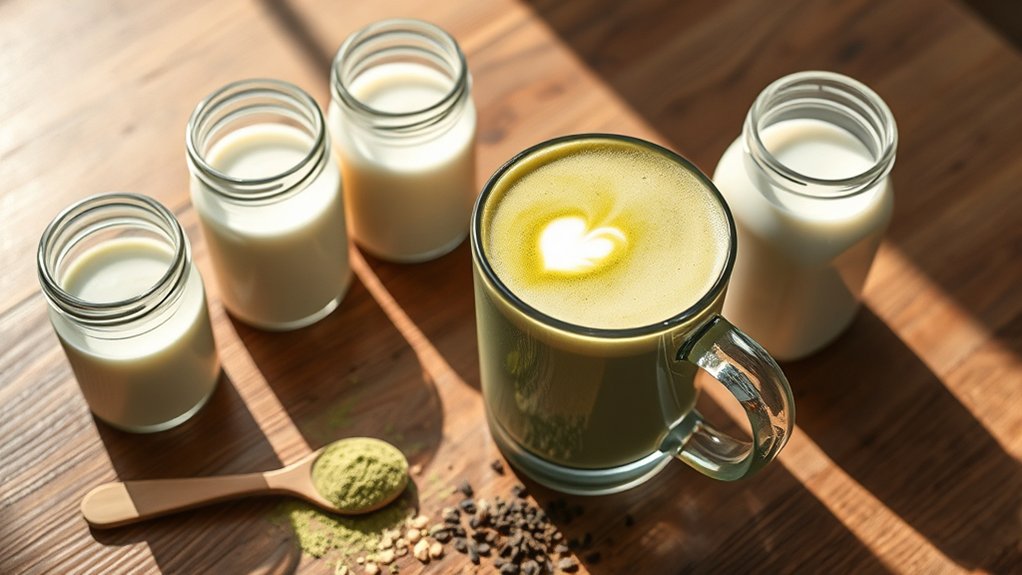
Because the type of milk you choose directly influences the calorie content of your matcha latte, picking the right one matters if you’re watching your intake. Whole milk adds about 150 calories per 8-ounce serving, markedly increasing your drink’s calorie content.
If you want low-calorie alternatives, unsweetened almond milk offers just 30-40 calories, making it a popular choice. Oat milk, while creamy, contains around 130-150 calories, so it’s a middle ground. Skim milk also reduces calories to roughly 80-90 per serving.
Your milk choices don’t just affect calories; they impact the matcha latte’s flavor and nutritional profile, too. By selecting the right milk, you can enjoy your matcha latte while managing calories effectively.
Calories In Dairy Vs. Plant-Based Milks
When you’re deciding between dairy and plant-based milks for your matcha latte, you’ll probably notice there’s quite a difference in calories and nutrition.
It’s all about balancing the flavor and creaminess with how many calories you want to take in.
Calorie Differences Among Milks
Although matcha itself is low in calories, the type of milk you choose can greatly impact your latte’s calorie content. Whole milk adds about 150 calories per 8-ounce serving, making it one of the highest-calorie options.
If you want to reduce calorie intake, unsweetened almond milk is a great choice with only 30-40 calories per cup. Oat milk offers a creamy texture but contains around 130-150 calories, similar to whole milk.
Skim milk provides a lighter alternative at about 80 calories per cup, while soy milk balances creaminess and nutrition at roughly 100 calories.
Knowing these nutrition facts helps you make informed choices based on your calorie goals when enjoying a matcha latte.
Nutritional Impact On Calories
Selecting the type of milk for your matcha latte plays an essential role in its calorie content and nutritional value. Choosing wisely helps you manage matcha latte calories and nutritional components effectively.
Here’s how dairy and plant-based milks compare:
- Whole milk adds around 150 calories per 10 ounces, boosting calorie content and fat.
- Unsweetened almond milk contains only 30-40 calories, making it ideal to reduce calories.
- Oat milk offers creaminess but adds 130-150 calories, which is higher than almond milk.
- Using 2% milk cuts calories to about 120 per 10 ounces, balancing richness and calorie control.
Switching from whole milk to unsweetened almond milk or 2% milk can considerably reduce calories while maintaining nutritional benefits.
Flavor Versus Calorie Trade-Off
Because the type of milk you choose directly influences both the flavor and calorie content of your matcha latte, balancing taste with nutrition becomes key. Whole milk boosts creaminess but adds 122-150 calories, while almond milk offers a low-calorie, nutty flavor with just 30-40 calories.
Oat milk sits in between, giving rich creaminess at 120-160 calories. Sweeteners also affect calories; sugar raises them considerably, whereas stevia does not. Choosing plant-based milk lets you customize flavor and calorie intake without sacrificing the essence of your matcha latte.
| Milk Type | Calories (per 8 oz) |
|---|---|
| Whole Milk | 122-150 |
| Almond Milk | 30-40 (low-calorie) |
| Oat Milk | 120-160 |
How Sweeteners Can Boost Your Matcha Latte’s Calories
You mightn’t realize just how much sweeteners can bump up the calories in your matcha latte.
For example, a simple teaspoon of honey or sugar can add around 16 to 21 calories.
But if you’re using flavored syrups, those numbers can shoot up to well over 150 calories.
Common Sweetener Calories
How much do sweeteners really add to your matcha latte’s calorie count? Depending on what you choose, sweeteners can noticeably increase the calories in your drink. Here’s a quick breakdown:
- Honey adds about 21 calories per teaspoon, making it a natural yet calorie-rich sweetener.
- Sugar contributes roughly 16 calories per teaspoon, a classic choice that packs on calories quickly.
- Maple syrup and agave syrup are denser options, with 52 and 60 calories per tablespoon respectively, so use them sparingly.
- Stevia offers sweetness without adding calories, perfect if you want to keep your matcha latte low-calorie.
Knowing these values helps you control the calories in your matcha latte while enjoying the sweetness you love.
Impact On Total Intake
While matcha lattes on their own can be relatively low in calories, adding sweeteners quickly boosts their total intake. If you want to enjoy the health benefits of matcha without extra calories, it’s smart to reduce calories by limiting or skipping sweeteners.
Using unsweetened almond milk and customizing sweetness with low-calorie options like stevia helps keep your matcha latte light.
| Sweetener | Calories per Teaspoon | Impact on Calorie Content |
|---|---|---|
| Honey | 21 | Moderate increase |
| Maple Syrup | 52 | High increase |
| Flavored Syrups | 150+ (varies) | Very high increase |
Choosing low-calorie sweeteners lets you enjoy flavor without sacrificing your calorie goals.
Why Whole Milk Adds More Calories To Your Matcha Latte
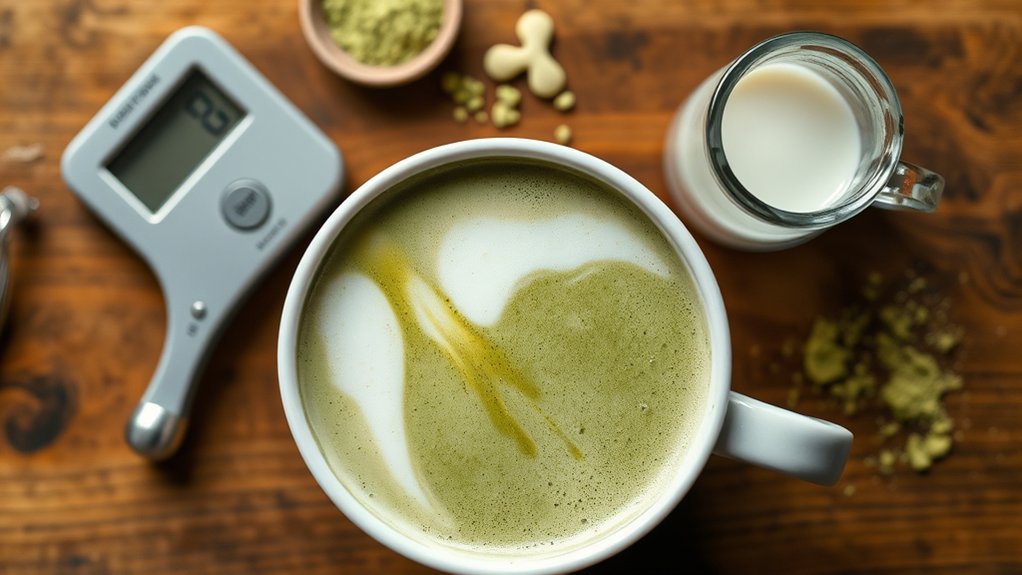
Because whole milk contains about 150 calories per 8-ounce serving, it greatly boosts the calorie count of your matcha latte.
Here’s why whole milk impacts your drink’s nutritional profile more than lighter milk options:
- Whole milk adds roughly 8 grams of fat, increasing calories a lot compared to almond milk or skim milk.
- It also contributes about 12 grams of carbohydrates and 8 grams of protein, enriching the latte’s overall nutrition.
- When combined with sweeteners, the calorie count can exceed 200 calories, making your matcha latte less diet-friendly.
- Choosing whole milk over almond milk or other lighter milk options can add up to 100 extra calories per serving.
How To Make A Lower-Calorie Matcha Latte At Home
If you want to enjoy a matcha latte without the extra calories, you can easily make a lighter version at home by swapping out ingredients and controlling portions.
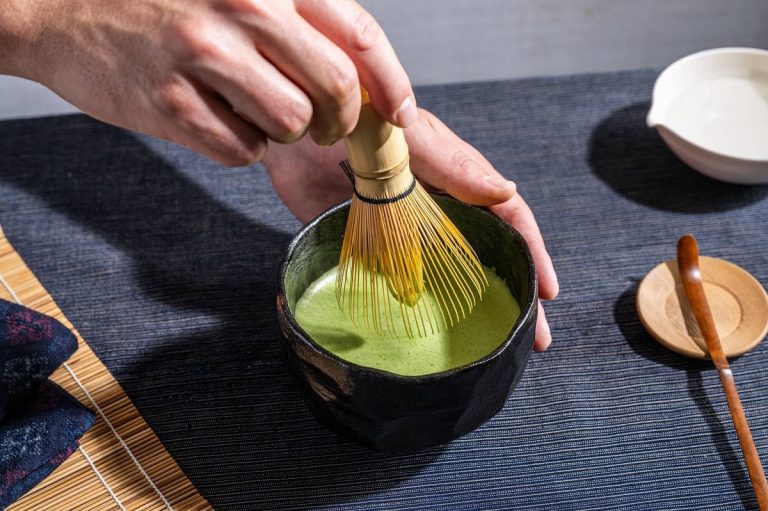
Start with 1 teaspoon of matcha powder, which has about 5 calories, then whisk it with ½ cup of hot water for a smooth base.
Begin with 1 teaspoon of matcha powder whisked into ½ cup of hot water for a smooth base.
Use unsweetened almond milk instead of whole milk to keep calories around 30-40 per cup.
Avoid sugary sweeteners like honey, or opt for zero-calorie alternatives such as stevia to reduce calorie count further.
Keep your portion sizes between 6-8 ounces to maintain a lower-calorie homemade version.
Navigating Matcha Latte Calories Within Your Daily Calorie Goals
You can easily keep your matcha latte within your daily calorie goals by picking the right milk and sweeteners.
It really helps to track the calories from each ingredient so you stay on target without giving up the flavor you love.
Plus, trying out lower-calorie milk options and natural sweetener alternatives makes it way easier to enjoy your latte guilt-free.
Give it a shot—you might find a combo that’s both tasty and fits perfectly into your daily plan!
Calorie Counting Strategies
While managing your daily calorie goals, guiding through matcha latte calories becomes easier when you choose ingredients wisely. Understanding the caloric contributions of each component helps you stay on track.
Here are four calorie counting strategies to keep your matcha latte in check:
- Opt for unsweetened almond milk to lower calories to around 50-70 per serving.
- Limit or skip sweeteners; sugar adds 16-60 calories per teaspoon, so consider alternatives like stevia.
- Make your matcha latte homemade to control portions and ingredient choices, reducing calorie counts to as low as 30-50 calories.
- Track ingredient calories individually. Matcha powder is about 5 calories per teaspoon. That way, you know exactly what you’re consuming.
Using these tips, you can enjoy your matcha latte without surpassing your daily calorie goals.
Milk Choices Impact
Since milk makes up a large portion of your matcha latte, choosing the right type can dramatically affect your calorie intake. Different milk choices vary widely in calorie content.
For example, whole milk adds about 150 calories per 8-ounce serving, while skim milk cuts that down to around 80-90 calories.
If you prefer plant-based milks, almond milk is a great low-calorie option, providing only 30-40 calories.
Oat milk, though creamier, contains roughly 130-150 calories, making it higher in calories than almond or skim milk.
Soy milk offers a balance with about 120 calories, combining protein and flavor without a big calorie jump.
Sweetener Alternatives
Although sweeteners can enhance the flavor of your matcha latte, they often add extra calories that can quickly add up. To keep your calorie content in check, consider these sweetener alternatives:
- Use stevia or monk fruit, which provide sweetness without any calories.
- Swap sugary additions like honey or sugar for these lower-calorie options.
- Combine unsweetened almond milk with your matcha latte to reduce calories further, often bringing the total to 50-70 calories.
- Customize your drink at home, so you control exactly how much sweetener to add, keeping your matcha latte both tasty and aligned with your daily calorie goals.
How Matcha Latte Calories Compare To Other Coffee Drinks
If you’re curious about how matcha lattes stack up calorie-wise against other coffee drinks, you’ll find they sit in the moderate range. A typical matcha latte has about 220 calories, which is less than a café latte’s 280 but close to a chai latte’s 240-300 calories.
A Starbucks matcha latte ranges from 190 calories (tall) to 240 calories (grande), making it a reasonable choice if you want something flavorful yet moderate in calorie content.
Compared to regular coffee with milk, which has 30-50 calories, matcha lattes offer more nutrients.
If you want a low-calorie option, homemade versions using unsweetened almond milk can cut calories to 40-80, showing how your choice of milk affects overall calories in your matcha latte.
Simple Tips To Enjoy Matcha Lattes Without Extra Calories
Understanding how matcha lattes compare calorie-wise to other coffee drinks is a great starting point.
Knowing how matcha lattes stack up calorie-wise against other coffee drinks is a smart first step.
But you can take control of your intake by making smart choices when preparing or ordering your drink. Here are simple tips to enjoy your matcha latte without extra calories:
- Choose unsweetened almond or coconut milk instead of whole milk to cut about 100 calories per serving.
- Skip or limit sweeteners since just a tablespoon of honey or syrup adds 60-70 calories.
- Control portion sizes by opting for a smaller cup (6–8 oz) to keep calories under 100.
- Use zero-calorie sweeteners like stevia or monk fruit to maintain sweetness without extra calories.
Frequently Asked Questions
Does the Temperature of the Milk Affect Matcha Latte Calories?
No, milk temperature doesn’t affect the calories in your matcha latte.
Whether you use hot or cold milk, calorie absorption stays the same since the milk’s nutritional content doesn’t change with temperature.
Frothing effects or preparation methods impact texture and flavor, not calories.
What really matters are ingredient ratios, dairy alternatives, sweetener impact, and serving size.
Can Adding Spices Like Cinnamon Change the Calorie Count?
Adding cinnamon won’t greatly change the calorie count of your matcha latte since its caloric impact is minimal.
You’ll enjoy cinnamon benefits like antioxidant health properties and flavor enhancement without extra sugar.
Using cinnamon and other spice combinations offers a tasty sugar alternative, boosting nutritional value and helping you maintain taste balance.
How Do Different Brands of Matcha Powder Vary in Calories?
Imagine matcha powders having a calorie battle royale. Ceremonial grade flexes with its refined sweetness, while culinary grade throws in a savory punch.
When you compare brands, you’ll find organic versus conventional powders dancing around flavor profile differences and sourcing origins. Some brands sneak in fillers, hiking calories.
Preparation methods matter too. Whisked or blended, calories shift.
Are Calorie Counts Different for Iced Versus Hot Matcha Lattes?
Yes, you’ll notice calorie counts differ between iced and hot matcha lattes.
Iced preparation usually involves less milk and more sweetener to balance flavor variations caused by dilution, lowering caloric density.
Hot preparation often uses more milk and fewer sweetener choices. Serving sizes can vary too.
Plus, using milk alternatives affects calories.
Do Matcha Latte Toppings Like Whipped Cream Add Significant Calories?
Yes, whipped cream calories can add up quickly, making your matcha latte much higher in calories.
To keep it lighter, try topping alternatives like frothed plant-based milks or dairy options with fewer fats.
Using sugar substitutes and smaller portion sizes helps control flavor enhancements without extra calories.
Plus, these choices often offer better nutritional benefits, letting you enjoy your matcha latte guilt-free while still savoring delicious tastes.
Conclusion
Now that you know how matcha latte calories stack up, from plain powder to sweetened blends, you can enjoy your drink without guilt. Whether you pick dairy or plant-based milk, or skip the sugar, making smart choices keeps your calorie count in check.
Think of it like tuning a vintage jukebox: a little adjustment brings perfect harmony. So, sip mindfully and savor every cup while staying on track with your daily goals!