How Many Grams Of Matcha Per Latte – Measurement Guide And Tips
You should use about 3 grams of matcha per latte for a balanced, smooth flavor that blends well with milk and water. Adjust to 2 grams for a milder taste or up to 4 grams if you want it stronger.
Always sift your matcha and keep water between 170-180°F to avoid bitterness. Different milk types affect how much matcha you need, so experiment for your perfect cup.
Keep going to discover how to nail texture, strength, and balance every time.
How Many Grams of Matcha Should You Use Per Latte?
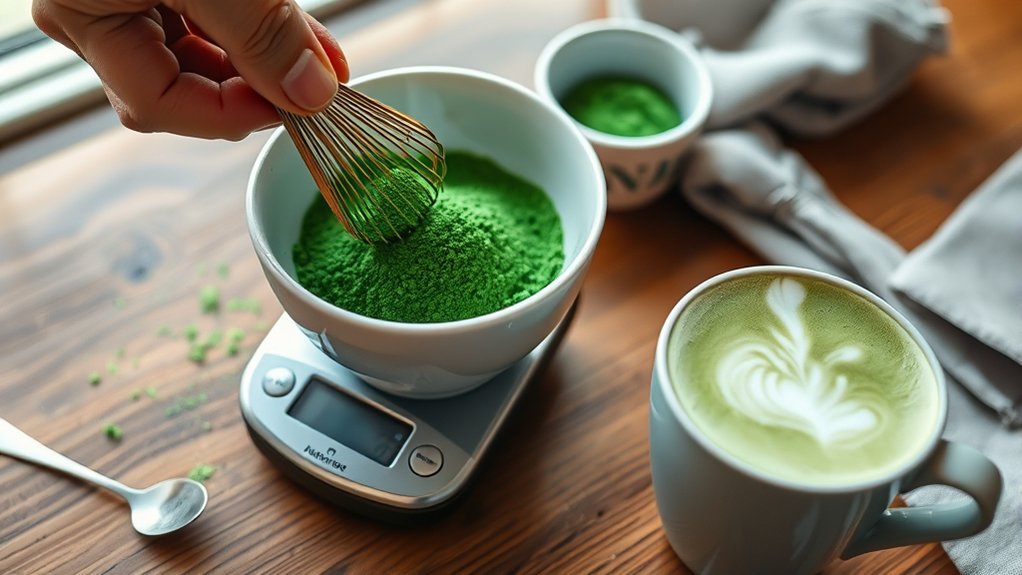
How many grams of matcha should you use per latte? For a balanced matcha latte recipe, start with 3 grams of matcha powder. This amount delivers ideal creaminess and flavor without overpowering your drink.
For a perfectly balanced matcha latte, use 3 grams of matcha powder for ideal creaminess and flavor.
Use a water temperature around 175°F to prevent bitterness, especially when making a hot matcha latte. If you prefer a milder taste, lower the grams of matcha to 2, or boost it to 4 for a stronger, more vibrant flavor.
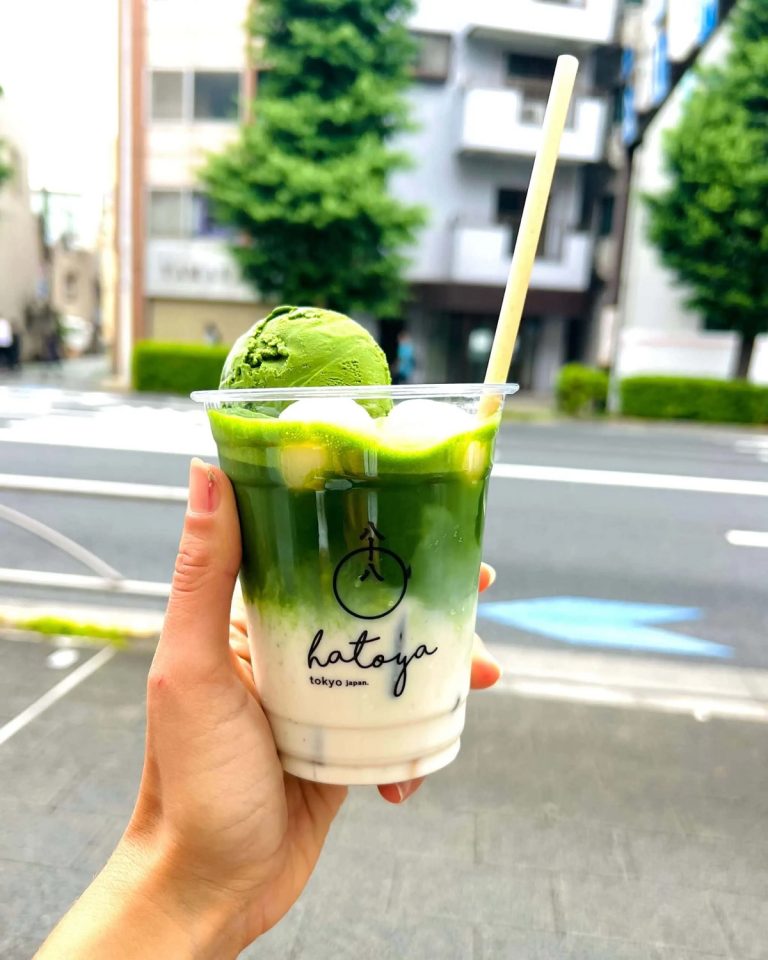
For an iced matcha latte, increase the matcha to about 6 grams since the ice and extra milk dilute the taste.
Always sift your matcha first to avoid clumps, ensuring a smooth texture.
Keeping these tips in mind helps you craft the perfect cup every time.
How Matcha-to-Water Ratios Impact Latte Flavor and Texture
Although matcha powder is the star ingredient, the ratio of matcha to water plays an essential role in shaping your latte’s flavor and texture. The matcha-to-water ratio determines whether your hot lattes feel light and frothy or thick and creamy.
Using about 2 grams of quality matcha with 60-80 mL water creates a balanced usucha style, while a denser koicha ratio (4 grams to 30-50 mL) intensifies umami. To avoid bitterness, aim for roughly a 1:10 ratio when adding milk.
Your whisking method also impacts foam quality and smoothness, enhancing the overall experience.
Consider how these factors influence:
- Creaminess versus tea-like mouthfeel
- Foam density and texture
- Intensity of matcha flavor
- Bitterness balance
- Smoothness from quality matcha and whisking
Why Water Temperature Matters When Measuring Matcha for Lattes
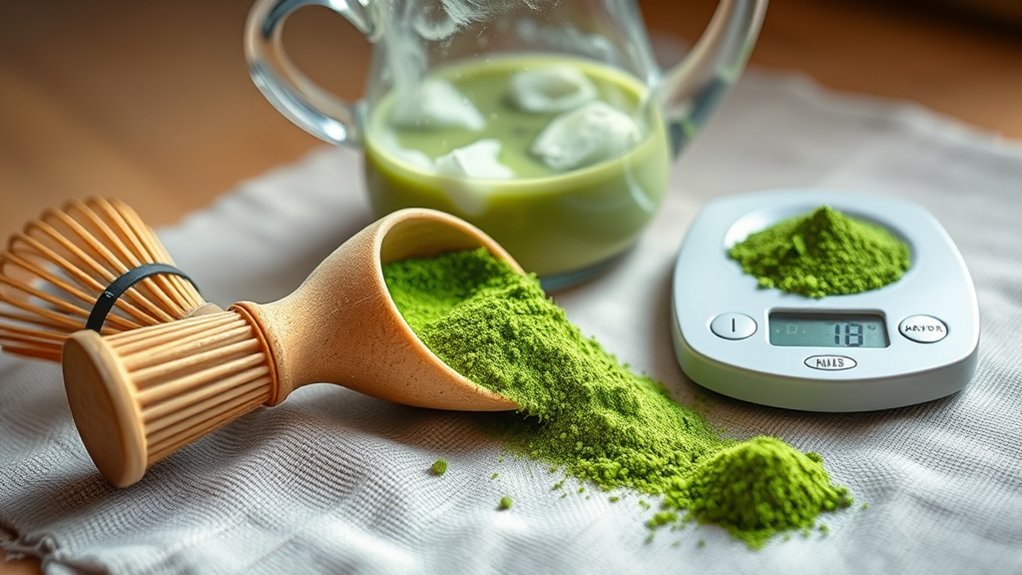
When you prepare matcha for your latte, paying close attention to water temperature makes a noticeable difference in flavor and texture. Using hot water between 170-180°F helps the matcha powder dissolve smoothly, preventing clumps and bitterness.
Avoid boiling water since it destroys delicate compounds in the matcha, leading to a flat taste and less sweetness. The right water temperature also helps create a creamy froth when you whisk the matcha, enhancing the overall mouthfeel of your latte.
Experimenting with water temperature lets you find the perfect balance that suits your taste.
How to Measure Matcha for Latte Accurately and Consistently
Accurately measuring your matcha powder is essential to crafting a perfectly balanced latte every time. When measuring matcha for your lattes, consistency secures the best flavor and texture.
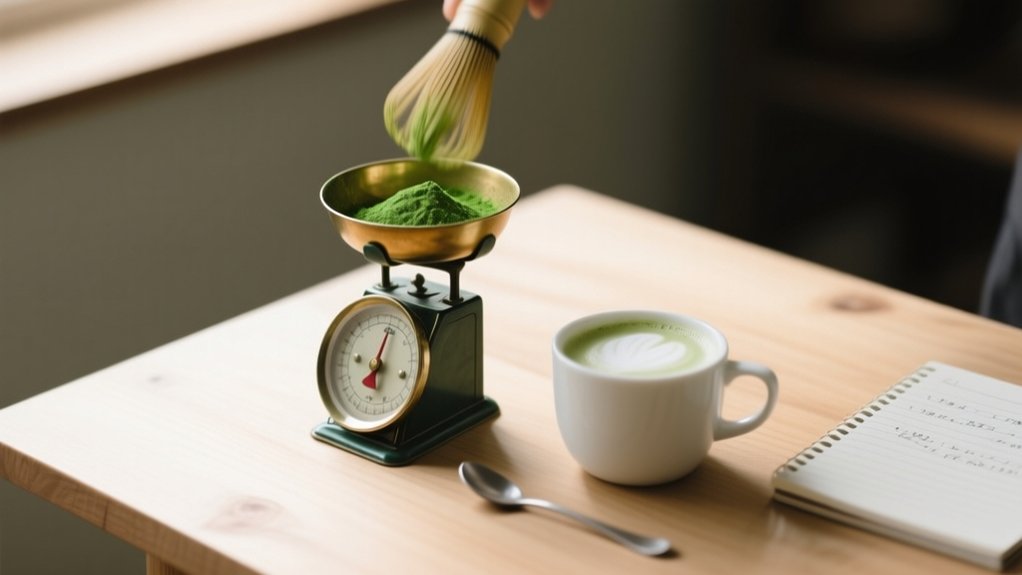
Use a digital scale to measure 3 grams of high-quality matcha powder per standard latte, matching it with about 1 ounce of water at 170–180°F. Sifting the powder before weighing prevents clumps that can affect taste.
For stronger matcha lattes, increase the powder proportionally, keeping the balance right.
- Use a digital scale for precision
- Sift matcha powder to avoid clumps
- Mix 3 grams matcha with 1 ounce warm water
- Adjust to 4 grams per 40 mL for stronger flavor
- Always use the same tools and method for consistency
This method guarantees smooth, flavorful matcha every time.
How Milk Type Affects Matcha Measurement and Flavor Balance
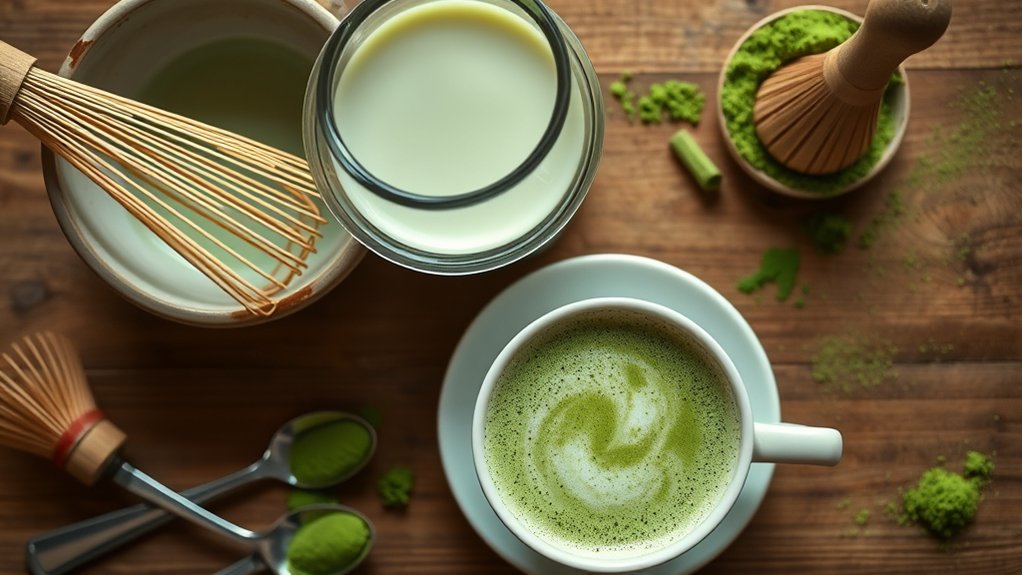
When you pick your milk type, it really changes the flavor, texture, and sweetness of your matcha latte. Whole milk gives you that rich creaminess, but plant-based milks bring their own unique tastes and mouthfeel to the mix.
So, depending on what you choose, you might want to tweak how much matcha you use.
Finding that perfect balance is all about adjusting to these differences. Play around with the matcha measurement until every sip feels just right.
That way, your cup will always hit the perfect harmony.
Milk Flavor Impact
Choosing the right type of milk can make a big difference in how you measure matcha and balance flavors in your latte. Your choice impacts the matcha’s flavor profile and how much powder you’ll need.
For example, creamy whole milk enriches texture but can mask matcha’s subtle umami, so use slightly less matcha. Oat milk’s natural sweetness complements matcha perfectly, enhancing flavor without overpowering it.
Lighter milks like almond allow matcha’s notes to shine, often needing a bit more powder for balance.
Consider these milk flavor impacts:
- Whole milk’s rich, creamy texture smooths the latte
- Oat milk adds gentle sweetness and smoothness
- Almond milk keeps the flavor light and fresh
- Flavored milks might dominate matcha’s delicate taste
- Adjust matcha amount depending on milk thickness and taste
Experiment to find your perfect matcha-milk harmony.
Milk Texture Influence
Milk texture plays a big role in how your matcha latte turns out, influencing both flavor and how much matcha you use. Your milk choice affects the creamier mouthfeel you get; whole milk or coconut milk’s higher fat content smooths out bitterness and lets you use the standard 3 grams of matcha per latte.
If you opt for lighter or plant-based milks like oat or soy, expect a silkier texture but possibly a need to adjust matcha amounts to maintain balance.
Whether you prefer your latte hot or iced, steaming milk between 150°F and 155°F helps the matcha blend seamlessly.
To fully enjoy the highest quality matcha, match your milk texture to your taste and measurement needs for a perfectly balanced latte.
Milk Sweetness Considerations
The sweetness of your latte can shift dramatically depending on the milk you pick, directly impacting how much matcha you’ll want to use. Whole milk adds creaminess and richness, complementing matcha’s earthiness, while oat milk naturally boosts sweetness, allowing you to reduce matcha for balance.
Choose unsweetened almond or soy milk? You might need a slightly higher matcha-to-milk ratio to keep flavors vibrant. Be cautious with flavored or sweetened milks, as added sugars can overpower matcha’s delicate notes.
Consider these milk sweetness effects when measuring matcha:
- Creamy whole milk softens matcha’s bite
- Naturally sweet oat milk cuts matcha quantity
- Unsweetened plant milks demand more matcha
- Flavored milks risk masking matcha’s taste
- Adjust matcha-to-milk ratio for flavor balance
Adjusting Matcha Amounts for Hot vs. Iced Matcha Lattes
When you make a hot matcha latte, aim for about 1.5 to 2 grams of matcha per 6 ounces of milk to keep the flavor balanced and creamy.
For iced matcha lattes, increase the matcha to 2.5 to 3.5 grams per 8 to 10 ounces of milk since cold drinks tend to mute flavors.
Maintaining consistent latte ratios is key: use a 1:10 water-to-matcha ratio, so 2 grams of matcha pairs with roughly 20 mL of water.
Always whisk your matcha thoroughly before adding milk, whether hot or iced, to guarantee smoothness.
Adjust amounts based on how strong you like your drink, but keep the water ratio steady to avoid bitterness and enjoy a perfectly balanced matcha latte every time.
How to Avoid Clumps When Mixing Matcha in Your Latte
Although matcha powder can be tricky to mix smoothly, you can avoid clumps by preparing it properly before adding milk. Start by sifting 3 grams of matcha powder through a fine strainer to break up lumps.
Matcha can be tricky to mix, but sifting 3 grams through a fine strainer prevents clumps for a smooth blend.
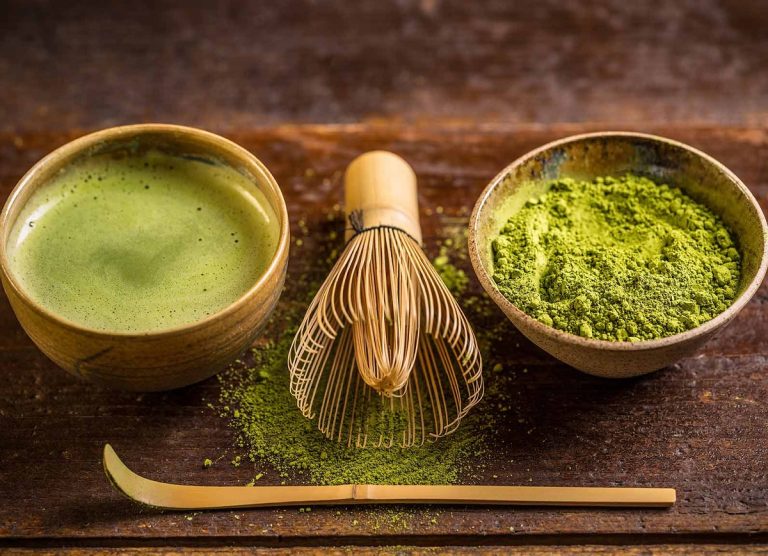
Next, use about 1 oz of warm water (170-180°F) to help dissolve the powder evenly without bitterness. Then, employ the right whisking technique with a bamboo whisk (chasen), using a zigzag motion to create a frothy texture.
Don’t overmix; stop once it’s smooth and frothy. If you don’t have a chasen, a small electric frother works well to avoid clumps too.
- Sift matcha powder finely
- Use warm water, not boiling
- Whisk in zigzag motion
- Stop whisking once frothy
- Use frother if no chasen available
How to Customize Matcha Latte Strength Without Losing Balance
If you want to tailor your matcha latte’s strength without losing its smooth balance, start by adjusting the matcha-to-water ratio carefully.
Stick to Latte Ratios like 3g of matcha to 30g of water for a well-rounded flavor.
To boost strength, increase matcha to 4g but keep water at 30g, enhancing taste without compromising texture.
Always whisk in a fast, using warm water first to avoid clumps and guarantee smoothness.
Next, adjust milk quantity for harmony.
160ml pairs well with 4g matcha for a creamy finish.
Experiment with the Best Milk for Matcha: oat milk adds natural sweetness, almond milk keeps it light.
Common Matcha Measurement Mistakes and How to Avoid Them
Since precision matters in crafting the perfect matcha latte, overlooking common measurement mistakes can quickly ruin your drink’s flavor and texture.
Avoid these pitfalls to enjoy a smooth, balanced cup.
Always use about 3 grams of matcha powder per 1 ounce of water for a standard latte. Pour water first, at 170°F to 180°F, to prevent bitterness.
Use 3 grams matcha per ounce of water at 170°F–180°F to avoid bitterness.
Sift your matcha powder to eliminate clumps.
Whisked vigorously in a zigzag motion guarantees full dissolution and creamy texture.
Avoid rich or flavored milks that overpower the matcha’s delicate taste.
Using boiling water, causing bitterness
Skipping sifting, leading to clumps
Incorrect matcha powder-to-water ratio
Not whisked enough, leaving residue
Choosing overpowering milk types
Steer clear of these matcha measurement mistakes for a flawless latte every time.
How Different Matcha Grades Affect Your Latte Measurements
Getting your matcha measurement right is only part of the equation; the grade of matcha you choose also plays a big role in shaping your latte’s flavor and texture.
Ceremonial grade matcha delivers a smoother, more vibrant taste with less bitterness, so using about 3 grams strikes an ideal balance in your matcha latte.
Culinary grade matcha, being less refined, often needs a bit more to achieve a similar flavor, but it can introduce more bitterness, affecting how much milk or sweetener you add.
When mixing matcha and water, ceremonial grade dissolves more evenly, enhancing the latte’s texture and color.
Choosing the right grade helps you perfect your matcha latte’s flavor, caffeine content, and presentation without guessing your measurements.
Frequently Asked Questions
Can Matcha Powder Lose Potency Over Time After Opening?
Yes, matcha powder can lose potency over time after opening. Proper matcha storage is key to preserving its potency.
You’ll want to keep it in an airtight, opaque container away from light, air, and moisture.
Watch for freshness indicators like vibrant green color and strong aroma. Once these fade, flavor degradation starts.
Typically, the shelf life after opening is about 60 to 90 days, so consume it quickly for the best taste and health benefits.
What Tools Are Best for Whisking Matcha in a Latte?
Whisking matcha is like painting a masterpiece; you need the right brushes. For smooth whisking techniques, a traditional bamboo chasen works wonders, creating that perfect frothy texture.
If you want convenience, matcha frothers can quickly blend your latte. Choose wide, shallow bowl types to whisk efficiently, and mind the water temperature, ideally 170-180°F.
Balancing ingredient ratios while whisking guarantees your matcha latte is creamy and delicious every time.
How Long Should You Whisk Matcha Before Adding Milk?
You should whisk matcha for about 20-30 seconds before adding milk. Use whisking techniques like a zigzag motion to break up clumps and achieve a smooth, frothy foam consistency.
Confirm your water’s at the ideal temperature, around 170-180°F, to preserve flavor balance.
Different matcha types might require slight adjustments, but stopping once a glossy foam forms guarantees your latte blends perfectly with milk for a vibrant taste and texture.
Does the Origin of Matcha Affect Its Measurement for Lattes?
Yes, the origin of matcha affects its measurement for lattes because flavor profiles vary widely.
You’ll notice color variations influenced by sourcing practices and growing conditions, which impact bitterness and sweetness.
Different processing methods also change matcha’s intensity, so you might use less Japanese ceremonial grade matcha with its smooth taste but more from other regions with stronger flavors.
Adjust your grams accordingly to balance the latte perfectly.
Can Sweeteners Change the Ideal Matcha Measurement in a Latte?
Yes, sweetener types can influence the ideal matcha measurement in your latte. To maintain flavor balance, you might reduce matcha slightly if you add a lot of sweetness.
Different sweetness levels and texture differences from honey, maple syrup, or agave affect how the matcha stands out.
Still, keeping matcha around 3 grams works well, preserving health benefits while complementing your chosen sweetener without overpowering the natural umami taste.
Conclusion
Mastering your matcha latte is like painting with flavors; each gram you measure shapes the perfect balance. By tuning your matcha-to-water ratio, minding water temperature, and choosing the right milk, you craft a symphony of taste and texture.
Avoid clumps and common pitfalls to keep your latte smooth as silk. With these tips, you’ll pour a vibrant green masterpiece every time, turning a simple drink into an artful ritual you’ll savor.