Can You Brew Tea In Cold Water – Cold Brewing Methods Explained
You can absolutely brew tea in cold water by steeping loose leaves for several hours, usually between 4 to 12. This gentle process draws out sweeter, smoother flavors without bitterness, emphasizing natural sweetness and delicate notes.
Use about 1 teaspoon per 8 ounces of water and steep in the fridge or at room temperature for best results. If you want to master perfect brewing times, tea types, and safety tips, keep exploring for a fuller understanding.
What Is Cold Brewing Tea and How Does It Work?
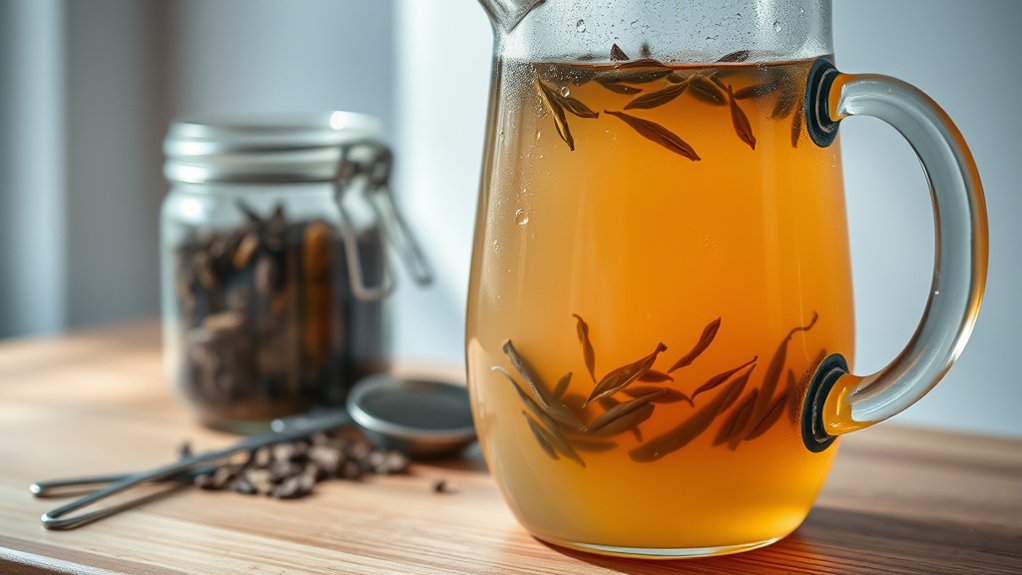
Although cold brewing tea takes longer than traditional methods, it lets you extract flavors gently by steeping tea leaves in cold or room temperature water for 4 to 12 hours.
When you cold brew teas, you rely on time rather than heat to release flavors, resulting in a smooth, mild, and naturally sweeter drink.
Using loose leaf tea enhances this process, as the leaves slowly infuse without releasing bitterness or astringency. This method is forgiving, so you can adjust the amount of tea and steeping time to suit your taste.
Loose leaf tea gently infuses, avoiding bitterness and allowing flexible steeping to match your flavor preferences.
Once ready, the brewed iced tea offers a revitalizing alternative to hot brews, preserving antioxidants while highlighting delicate flavors.
Cold brewing is perfect for those who want a smooth, well-balanced iced tea without the harsh notes hot water can cause.
Why Does Cold Brew Tea Taste Different From Hot Brew?
Why does cold brew tea taste so much smoother than hot brew? When you try cold brewing tea, you’ll notice it extracts flavors gently, avoiding bitterness. Here’s why cold brewed tea tastes different:
- Cold water extracts fewer bitter compounds, resulting in a smoother profile.
- It emphasizes sweetness and umami as amino acids and carbs dissolve more readily.
- The longer steep time (3-12 hours) prevents over-extraction common in hot brewing.
- Cold brewing tea highlights complex flavors, revealing nuances high-quality leaves often hide in hot brews.
This slower extraction process shifts flavor balance, making cold brewed tea uniquely invigorating and less harsh.
Best Teas to Cold Brew
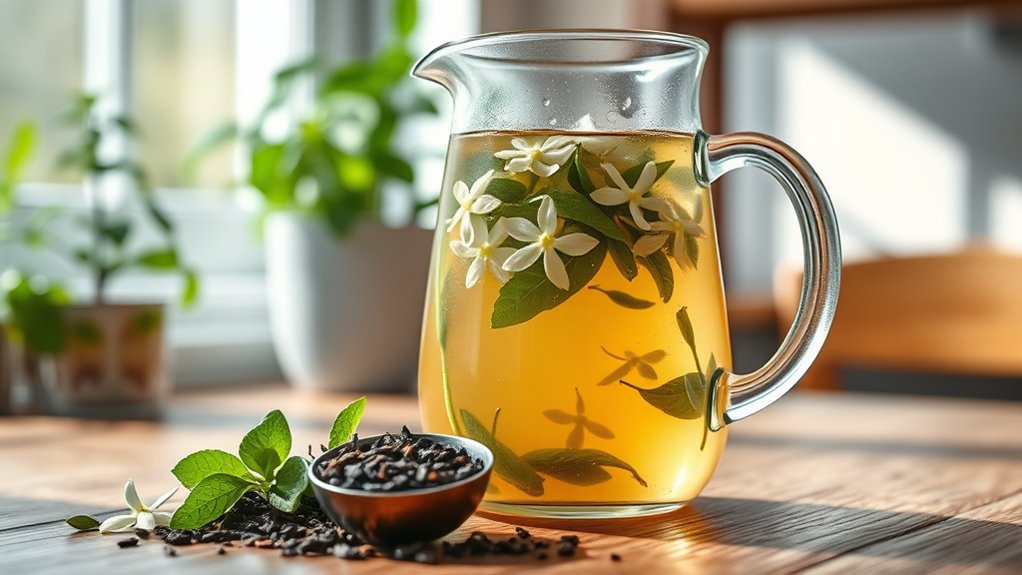
You can cold brew all kinds of teas—green, black, herbal, and even floral blends. Each one has its own unique flavor that really shines when brewed cold.
Just keep in mind the steeping times. Delicate teas usually need less time to brew, while stronger teas benefit from a longer steep.
Knowing these little differences makes it easier to enjoy that smooth, naturally sweet taste that cold brewing brings out.
Ideal Tea Varieties
When you cold brew tea, choosing the right variety makes all the difference in flavor and smoothness. The ideal tea varieties bring out natural sweetness and avoid bitterness, making your cold brew experience delightful. Here are the top picks:
- Green and white teas have delicate flavors that shine with enhanced floral notes.
- Herbal tisanes like hibiscus and chamomile are vibrant, invigorating, and never bitter.
- Oolong tea is complex and smooth, with subtle fruity undertones.
- Black teas, especially fruity or spiced ones, offer bold, rich flavors without harshness.
You can also experiment with unique blends like Moroccan mint or berry-infused teas, as cold brew reveals nuanced tastes.
Selecting these ideal tea varieties guarantees a smooth, flavorful cold brew every time.
Steeping Time Guide
Although cold brewing requires patience, the steeping time you choose greatly influences the tea’s flavor and smoothness. When making cold brew tea, delicate teas like green and white need just 2 to 6 hours of steeping time to avoid bitterness.
Robust teas, such as black or herbal varieties, benefit from longer steeping up to 12 hours to develop rich, smooth flavors. Use about 2 teaspoons of loose leaf tea per 2 cups of cold or room temperature water for the best results.
Try teas like Limonada Rosa, Berry Boost, or Organic Moroccan Mint for unique tastes.
Don’t hesitate to taste your brew throughout steeping time so you can adjust strength and enjoy the perfect cup every time.
Flavor Profiles Comparison
Understanding the steeping time helps you tailor the flavor of your cold brew, but choosing the right tea plays an equally important role in the final taste.
Cold brewing brings out unique flavor profiles, especially when you pick the best teas to cold brew.
Here’s a quick guide:
- Delicate green and white teas become sweeter and smoother without bitterness.
- Black teas like Assam and Ceylon develop rich, complex notes with enhanced natural sweetness after 8-12 hours.
- Herbal teas, such as chamomile and hibiscus, release vibrant flavors without over-extraction.
- Fruit- or spice-infused tisanes, like lemongrass or ginger, create invigorating, aromatic cold brews, especially when steeped overnight.
Cold brew truly highlights the nuanced flavor profiles of high-quality loose-leaf teas better than hot brewing.
How Long Should You Cold Brew Tea for Best Flavor?
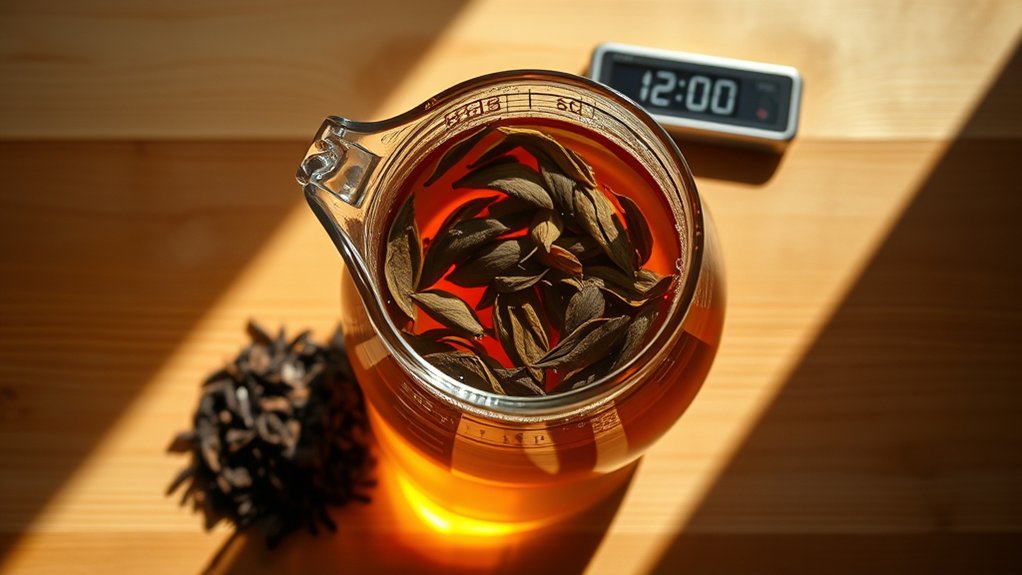
How long should you cold brew tea to get the best flavor? Typically, cold brew requires a steeping time of 4 to 12 hours. Overnight steeping often delivers the richest taste, especially for black or oolong teas.
If you’re using delicate tea leaves like green tea, aim for a shorter steep of 2 to 6 hours to avoid bitterness. For a stronger flavor, extend the steeping time closer to 12 hours.
Brewing at room temperature can bring out more intense flavors compared to refrigeration. Since every tea type varies, experiment with steeping times and taste frequently to find your perfect balance.
How to Cold Brew Tea at Home
To cold brew tea at home, start by picking your favorite loose leaf tea. Measure out about one teaspoon for every eight ounces of water.
Next, steep the tea in cold or room temperature water. Let it sit for at least 4 to 6 hours—overnight is even better if you want to get the best flavor.
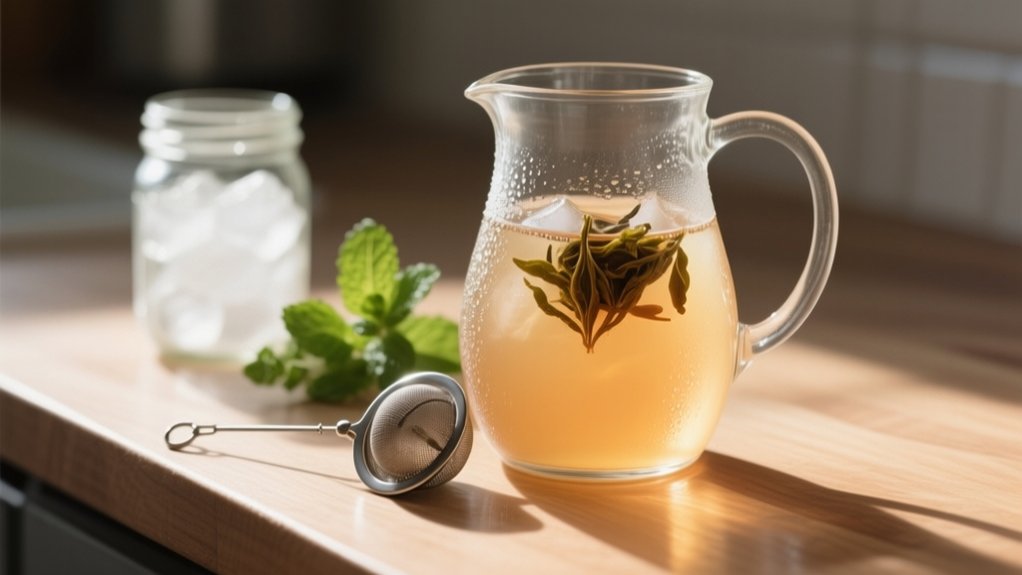
Using a mason jar or pitcher makes the whole process super easy. You can mix, refrigerate, and strain your tea right in the same container before you enjoy it.
Choosing Tea Types
Which teas work best for cold brewing? You’ll want to start with loose leaf teas or premium tea bags for the best flavor. Here’s how to choose:
- Pick delicate teas like green or white; they brew smoother and less bitter in cold water.
- Use about 2 teaspoons of loose tea per 2 cups of cold or room temperature water for balanced flavor.
- For stronger tastes, increase tea quantity or steep up to 12 hours, tasting frequently.
- Try flavored options like Limonada Rosa, Berry Boost, or Organic Moroccan Mint for unique cold brews.
These teas extract their subtle flavors slowly, making cold brewing a revitalizing alternative to hot steeping.
Choose wisely, and enjoy the natural taste revealed by this brewing method.
Measuring Tea Leaves
One teaspoon of loose leaf tea per eight ounces of cold or room temperature water creates a perfectly balanced cold brew.
When measuring tea leaves, accuracy is key to achieving the flavor you want in your brewing process.
If you prefer a stronger taste, double the amount, using about four teaspoons of tea per four cups of water.
Once you combine the tea leaves with the water, stir or shake gently to distribute the leaves evenly.
Since water temperature remains low, the cold brewing process extracts flavors more slowly, so correct measuring secures ideal taste without bitterness.
Proper measuring tea leaves sets the foundation for a smooth, invigorating cold brew every time.
Steeping Time Guidelines
After measuring your tea leaves carefully, the next step is deciding how long to steep them.
When you brew loose leaf tea to make cold, steeping time plays an essential role in flavor extraction without bitterness. Here’s a simple guide to get you started:
- Use about 1 teaspoon of loose leaf per 8 ounces of cold water.
- Steep for 4 to 12 hours, with overnight steeping (around 8 hours) being ideal.
- Taste your brew midway to check flavor strength and adjust steeping time as needed.
- Strain the tea leaves after steeping to stop infusion and preserve taste.
Experimenting with these steps helps you perfect your cold brew and enjoy a smooth, invigorating tea every time.
How to Adjust Cold Brew Tea Strength and Flavor
Although cold brewing tea is straightforward, you can easily adjust its strength and flavor by tweaking the tea-to-water ratio and steeping time. To make your brew more robust, increase the tea-to-water ratio. Try 4 teaspoons per 4 cups of water. If it’s too strong, simply dilute it with cold water or ice.
Experiment with steeping times: shorter (4-6 hours) for mild flavors, longer (8-12 hours) for intensity. You can also blend teas or add herbs to customize taste. Taste periodically to find your perfect balance.
| Adjustment | Effect |
|---|---|
| Increase tea ratio | Stronger, richer flavor |
| Dilute with water | Milder taste, fresher profile |
| Adjust steeping time | Controls flavor intensity levels |
Cold Brew Tea: Refrigerator or Room Temperature?
You can cold brew your tea in the refrigerator if you want a milder flavor.
On the other hand, steeping it at room temperature will give you a stronger taste.
Just remember, if you’re brewing at room temperature, it’s best to limit the steeping time to about 8 hours to keep things safe.
Knowing these little differences can help you pick the best way to brew your tea, depending on the flavor you like and how you plan to store it.
Brewing Temperature Differences
When deciding between cold brewing your tea in the refrigerator or at room temperature, consider how each method affects flavor and safety. Both use cold water, but the brewing temperature impacts the final brew. Here’s what you should know:
- Refrigerated brewing takes 8 to 12 hours and yields a milder, smoother flavor.
- Room temperature steeping is faster, around 8 hours, producing a stronger taste.
- Refrigeration minimizes microbial growth, making it safer for longer steeping.
- Room temperature brewing shouldn’t exceed 8 hours to avoid health risks.
Using loose-leaf tea and adjusting steeping time lets you tailor your cold-brewed tea’s flavor.
Flavor Profiles Compared
How does the brewing environment shape your tea’s flavor? When you use cold water in the refrigerator, your tea develops a mild, smooth flavor profile because the slow extraction limits bitterness.
Refrigerator cold brew typically takes 8 to 12 hours, allowing natural sweetness to come forward.
On the other hand, room temperature brewing speeds up extraction, producing a stronger, more robust taste in just 4 to 6 hours. This method can highlight bolder notes but may also risk unwanted microbial growth if left too long, so keep it under 8 hours.
Both methods influence the balance of flavor compounds differently, so experimenting with cold water steeped in either refrigerator or room temperature brewing lets you find the flavor profile that suits your palate best.
Safety And Storage
Two key factors determine the safety of cold brew tea: steeping time and temperature. To guarantee safety and proper storage, follow these guidelines:
Steep tea at room temperature for no longer than 8 hours to minimize microbial growth risks. For best safety, steep tea in the fridge, where it can remain fresh for up to 24 hours.
Use a glass jug with a built-in strainer for easy serving and to prevent over-extraction during storage. Consume your cold brew tea within a day to enjoy the best flavor and freshness.
If you have a compromised immune system, avoid room temperature steeping altogether. Prioritize tea in the fridge to keep your cold brew safe and flavorful.
Common Mistakes to Avoid When Cold Brewing Tea
Although cold brewing tea is simple, you can easily make mistakes that affect flavor and safety. Oversteeping beyond 12 hours can cause bitterness, so aim for 8-12 hours for a smooth taste.
Using an incorrect tea-to-water ratio, like too few tea leaves, results in a weak brew. Stick to 4 teaspoons of loose-leaf tea per 4 cups of water.
Neglecting safety is another common error. If you cold brew at room temperature, limit steeping to 8 hours to prevent microbial growth or refrigerate your brew.
Also, avoid poor-quality tea and always strain leaves after steeping to stop over-extraction.
How to Store and Serve Cold Brew Tea for Freshness
Keeping your cold brew tea fresh starts right after steeping. To store and serve it properly, follow these steps:
- Decant the cold brew tea into a clean vessel to separate it from the leaves, preventing over-extraction.
- Store your tea in a glass jug with a built-in strainer to keep it fresh and stop further steeping.
- Refrigerate the cold brew tea immediately, as it stays flavorful for up to 24 hours when chilled.
- Serve the tea without ice to enjoy its full flavor, but feel free to add ice or cold water to adjust strength if you like.
Creative Cold Brew Tea Recipes to Try
Looking to elevate your cold brew tea experience? Start by steeping 4 teaspoons of loose black tea in 4 cups of cold water for 8 to 12 hours to create a smooth iced tea base.
Add fresh peaches or berries to infuse natural sweetness and aroma.
For a refreshing twist, try a hibiscus and mint cold brew with 2 teaspoons dried hibiscus flowers and 1 teaspoon mint leaves, steeped for 6-8 hours.
If you prefer something spiced, blend 4 teaspoons black tea with crushed cardamom pods and saffron overnight.
Don’t forget herbal tea options.
Lemon verbena or fuchsia flowers steeped for 4-6 hours deliver a floral, revitalizing flavor.
These creative cold brew tea recipes will transform your iced tea routine effortlessly.
Frequently Asked Questions
Can You Cold Brew Tea Using Tea Bags Instead of Loose Leaves?
Yes, you can cold brew tea using tea bags instead of loose leaves. Just pick high-quality tea bag types for better flavor extraction.
Use two tea bags per 2 cups of cold or room temperature water and steep for 8 to 12 hours to get the best taste.
This longer steeping time helps the flavors develop smoothly without bitterness, making cold brewing with tea bags a convenient and tasty choice for your revitalizing tea.
Does Cold Brew Tea Have Less Caffeine Than Hot Brewed Tea?
Cold brew tea doesn’t necessarily have less caffeine than hot brewed tea. You’ll find caffeine extraction depends on brewing time and temperature.
Since cold brewing takes longer, it extracts caffeine more gently, resulting in a smoother flavor profile that masks bitterness.
If you want more caffeine, you can increase tea concentration during cold brewing.
Is Cold Brew Tea Safe to Drink After Several Days in the Fridge?
Yes, cold brew tea is generally safe to drink after several days in the fridge if you follow proper storage tips.
Its shelf life is best kept within 24 hours for ideal flavor preservation, but it can last longer without major flavor loss.
Always store it chilled and check for off smells or changes in appearance before drinking.
Keeping tea leaves out during storage also helps maintain a balanced taste and freshness.
Can You Cold Brew Herbal Teas or Only Traditional Teas?
You can definitely cold brew herbal teas, not just traditional ones. Cold brewing herbal teas enhances flavor extraction gently, bringing out natural sweetness and vibrant aromas without bitterness.
Plus, you’ll enjoy added herbal tea benefits since cold water preserves delicate compounds better than hot water.
Just remember to allow enough steeping time, usually 6 to 12 hours in the fridge, to fully develop the flavors and healthful properties in your brew.
Does the Water Type (Tap, Filtered, Bottled) Affect Cold Brew Tea Taste?
Water type definitely shapes your cold brew tea’s flavor profile, like an artist’s brushstroke on a canvas.
Tap water’s chlorine can dull your tea’s brightness, while filtered water sharpens clarity by reducing impurities.
Bottled water, rich in minerals, adds depth and sweetness, but watch out for water hardness.
It can introduce astringency and mask delicate notes. Experiment with different mineral contents to discover the perfect balance that sings to your taste buds.
Conclusion
Don’t worry if you think cold brewing tea takes too long. It’s actually super easy and hands-off. Imagine waking up to an invigorating, smooth tea already chilled and ready in your fridge.
Just a little patience turns simple leaves into a naturally sweet, mellow drink without bitterness. Once you try it, you’ll wonder why you ever brewed tea any other way.
Give cold brewing a shot, and enjoy a delicious, hassle-free tea experience!