
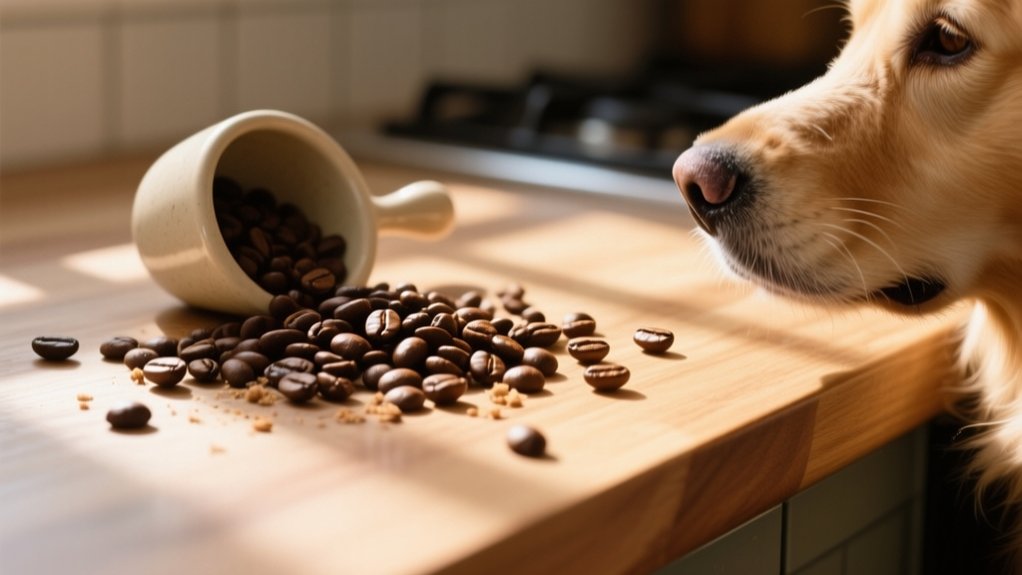
Are Coffee Beans Bad For Dogs – Risks And Safety Facts
Coffee beans are dangerous for your dog because they contain caffeine, which dogs can’t process safely. Even a small amount, like a few beans, can cause restlessness, vomiting, or worse, seizures, especially in small dogs.
Chocolate-covered espresso beans are even more toxic due to the added theobromine. If your dog eats any coffee products, quick action is essential.
Keep your dog safe by storing all coffee items securely, and learn more to protect your furry friend from risks.
Why Coffee Beans Are Toxic To Dogs
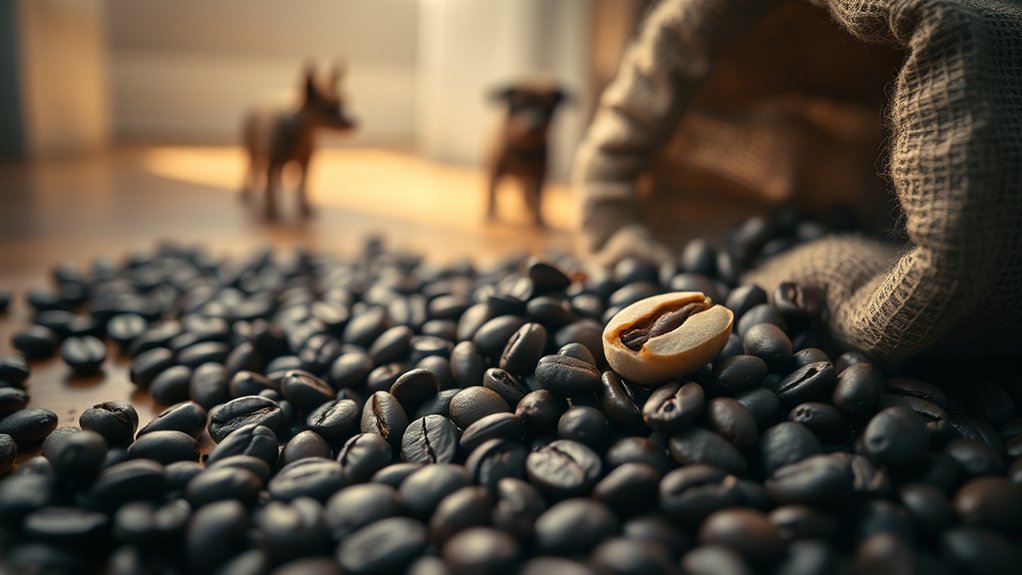
Although coffee beans might seem harmless, they contain caffeine, which can seriously harm your dog. Dogs can’t metabolize caffeine like humans do, so even small amounts can trigger caffeine toxicity.
Coffee beans contain caffeine, which dogs can’t process, making even small amounts dangerous.
When your dog ingests coffee beans, caffeine overstimulates their nervous system, causing symptoms to develop quickly. These symptoms include restlessness, vomiting, an increased heart rate, muscle tremors, and in severe cases, seizures.
Since dogs process caffeine much slower, the toxic effects last longer and can escalate rapidly.
Remember, all coffee products pose risks, so it’s essential to keep coffee beans out of your dog’s reach.
Understanding why coffee beans are toxic to dogs helps you protect your furry friend from caffeine toxicity before symptoms develop and become life-threatening.
Safe Vs. Toxic Caffeine Levels For Dogs
Because dogs metabolize caffeine much slower than humans, even small amounts can quickly become dangerous. There’s no safe caffeine level for dogs, especially small dogs, since toxicity can start at about 15 mg per kilogram of their body weight.
For example, a 6 lb (2.7 kg) dog can show adverse effects after just 30 mg of caffeine, which is about five coffee beans.
Watch out for these key points:
- One coffee bean contains roughly 6 mg of caffeine.
- Symptoms of toxicity can appear within 1 to 2 hours.
- Monitoring your dog closely after any caffeine exposure is critical.
If you suspect caffeine ingestion, watch for restlessness, vomiting, or a rapid heart rate to prevent severe toxicity.
Effects Of Eating A Coffee Bean On Dogs
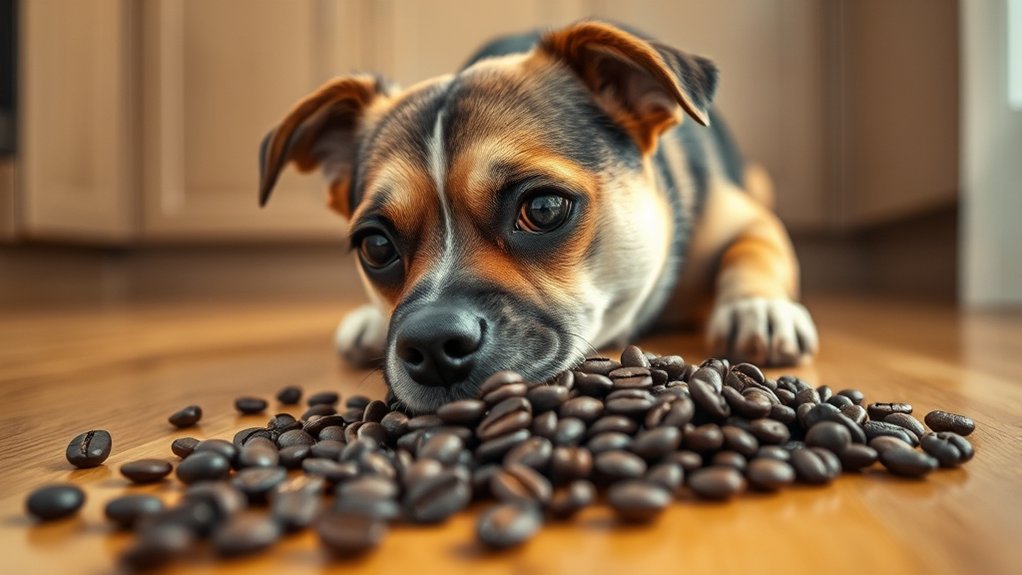
When your dog eats a coffee bean, they can quickly experience caffeine’s toxic effects, especially if they’re small or sensitive. Each coffee bean contains about 6 mg of caffeine, and even a small amount can trigger caffeine toxicity in smaller dogs.
Even a few coffee beans can cause rapid caffeine toxicity in small or sensitive dogs.
For instance, a 6 lb dog can be at risk from just a few beans, as toxic doses start around 15 mg/kg. The severity depends on your dog’s size and health, but symptoms can escalate rapidly.
Because caffeine toxicity can develop within one to two hours, you must seek veterinary attention immediately if your dog consumes coffee beans.
Prompt treatment is essential to prevent serious complications and guarantee your pet’s safety after ingesting any amount of coffee beans.
Recognizing Symptoms Of Caffeine Poisoning In Dogs
You’ll want to keep an eye out for early signs like restlessness and vomiting, especially soon after your dog eats coffee beans.
If you start to see more serious symptoms, such as tremors or seizures, don’t wait around.
It’s really important to get veterinary help right away to keep your dog safe.
Early Signs To Watch
If your dog consumes coffee beans or any caffeine-containing product, watch closely for early signs like restlessness, hyperactivity, and a rapid heart rate. These can show up within just one to two hours. Recognizing these early signs of caffeine poisoning can help you act quickly.
Here are key symptoms to watch for:
- Increased heart rate and restlessness
- Vomiting and diarrhea
- Rapid breathing and hyperactivity
These symptoms indicate your dog is reacting to caffeine toxicity. Smaller dogs are especially vulnerable since even a small amount can trigger these effects.
If you notice vomiting or any of these early signs, monitor your dog closely and consult your vet promptly to guarantee their safety. Early detection is vital to prevent more serious complications.
Severe Symptoms Alert
Although early signs of caffeine poisoning in dogs can appear quickly, severe symptoms demand your immediate attention.
If your dog shows muscle tremors, an elevated heart rate, vomiting, or seizures, these are serious caffeine symptoms indicating worsening toxicity.
Dark vomit that looks like coffee grounds is especially alarming and requires prompt veterinarian care.
Remember, smaller dogs are at higher risk since even a small amount of caffeine can be dangerous.
Because caffeine can affect dogs rapidly, you must monitor your pet closely after any suspected ingestion.
If you notice any severe symptoms, contact your veterinarian immediately to prevent life-threatening complications.
Acting fast can make all the difference in your dog’s recovery from caffeine poisoning.
When To Seek Help
How can you tell when your dog needs help after ingesting caffeine? Recognizing symptoms of caffeine toxicity early is vital. Watch for changes within one to two hours, especially in small dogs who are more vulnerable.
Here are key signs to monitor:
- Restlessness, vomiting, or increased heart rate
- Muscle tremors or hyperactivity
- Severe reactions like seizures or collapse
If your dog shows any of these symptoms, contact a veterinarian immediately. Caffeine poisoning can escalate quickly, and professional care is essential to prevent serious health risks.
Don’t wait. Early intervention can save your dog’s life.
Always consider the amount of caffeine consumed, as even a few coffee beans can be dangerous depending on your dog’s size and health.
Why Small Dogs Are More At Risk From Coffee Beans
You’ve got to remember that small dogs process caffeine quite differently because of their size and metabolism.
Just a few coffee beans can raise their caffeine levels to a risky point in no time.
Since their bodies absorb caffeine more quickly, they can show symptoms sooner, and those symptoms can be much worse compared to bigger dogs.
Size And Toxicity
Since smaller dogs weigh less, even a tiny amount of caffeine can quickly reach toxic levels in their bodies. For pet owners, understanding size and toxicity is essential when it comes to coffee beans and small dogs.
A single coffee bean contains about 6 mg of caffeine, which can be dangerous for dogs under 10 lbs. Here’s why caffeine toxicity hits small dogs harder:
- Toxic dose starts at roughly 15 mg/kg, so even a few beans can cause harm.
- Small dogs process caffeine slowly, increasing the risk of severe symptoms like seizures.
- Symptoms appear quickly, often within 1–2 hours, making immediate attention critical.
Always monitor your small dog closely and consult a vet if you suspect coffee bean ingestion.
Metabolism Differences
Understanding size and toxicity helps explain why caffeine poses a greater threat to small dogs, but metabolism plays an even bigger role. Small dogs metabolize caffeine much slower than larger breeds, so even a tiny amount can lead to caffeine toxicity.
For example, a 6 lb dog can be at risk after ingesting just a few coffee beans since one bean contains about 6 mg of caffeine.
Because of metabolism differences, small dogs experience symptoms like increased heart rate and restlessness at lower caffeine levels.
The effects can come on quickly, causing severe issues such as tremors and seizures. Knowing this helps you understand why caffeine exposure is especially dangerous for small dogs, emphasizing the need to keep coffee beans well out of their reach.
Coffee Beans Vs. Grounds: Which Is More Toxic?
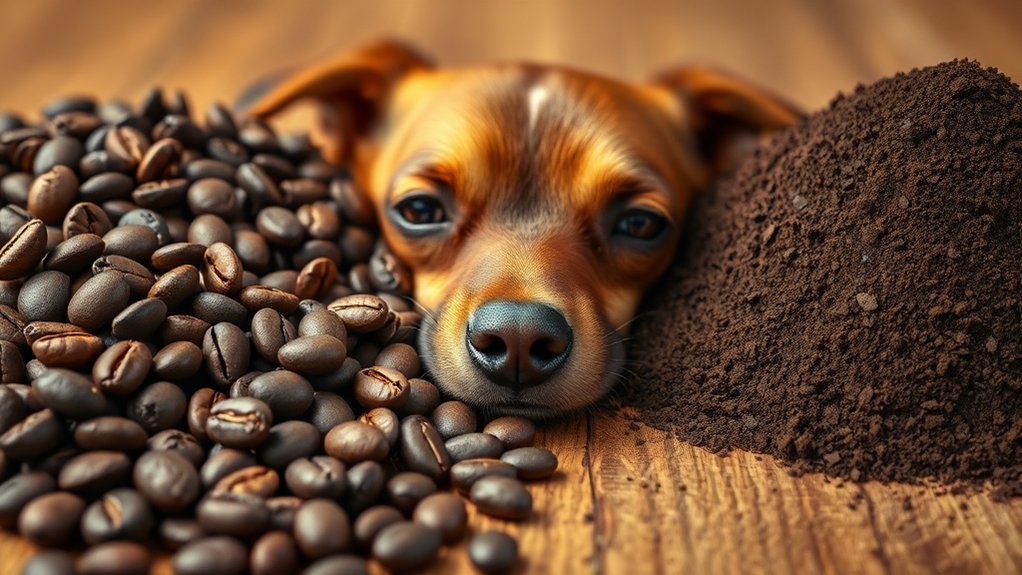
Although whole coffee beans contain caffeine, coffee grounds pack a stronger punch and pose a greater risk to your dog. Coffee grounds are more concentrated, with up to 15 mg of caffeine per gram compared to about 6 mg per bean. This makes coffee grounds more likely to cause caffeine toxicity at lower amounts.
Keep these facts in mind:
- The toxic dose for dogs is around 15 mg/kg, so even a small amount of coffee grounds can be dangerous, especially for small dogs.
- Both coffee beans and grounds can cause symptoms of caffeine toxicity within one to two hours after ingestion.
- Used coffee grounds still contain caffeine and remain hazardous.
Always store coffee beans and grounds securely to prevent accidental poisoning.
Are Chocolate-Covered Espresso Beans Toxic To Dogs?
You should know that chocolate-covered espresso beans contain both caffeine and theobromine, which are really toxic to dogs.
Even just a small amount can lead to serious symptoms.
So, if your dog happens to eat any, it’s important to get veterinary help right away.
Acting quickly can really make a big difference in keeping your pet safe.
Combined Toxic Effects
Since chocolate-covered espresso beans contain both caffeine and theobromine, they pose a serious risk to dogs. These compounds together amplify toxic effects, making even small amounts dangerous. Here’s why you should be cautious:
- Each chocolate-covered espresso bean can contain 10-15 mg of caffeine, which is harmful, especially for small dogs.
- Theobromine in chocolate worsens caffeine’s impact, increasing the chance of seizures and heart issues.
- Even a few beans can cause severe symptoms, requiring prompt veterinary attention.
Because of this combined toxicity, you shouldn’t let your dog near chocolate-covered espresso beans. Their dual threat means the toxic effects are stronger and faster, so vigilance is key to keeping your pet safe.
Immediate Veterinary Attention
When your dog accidentally eats chocolate-covered espresso beans, you need to act quickly. These treats contain high levels of caffeine and theobromine that can cause serious toxicity.
Even a small amount of coffee beans combined with chocolate can deliver a dangerous amount of caffeine, especially to smaller dogs.
Symptoms like restlessness, vomiting, increased heart rate, or seizures indicate toxicity and require immediate veterinary attention. Don’t wait to see if symptoms worsen. Getting your dog to the vet promptly can prevent severe complications or collapse.
The combination of caffeine and theobromine makes these beans particularly harmful.
Always keep chocolate-covered espresso beans out of your pet’s reach. If ingestion occurs, prioritize immediate veterinary care to guarantee your dog’s safety.
What To Do If Your Dog Eats Coffee Beans
If your dog has eaten coffee beans, act quickly by contacting the Pet Poison Helpline at (855) 764-7661 for immediate guidance.
When you call, be ready with details about the amount your dog has ingested, their weight, and when it happened. Caffeine toxicity can start at about 15 mg/kg, so even a single coffee bean can be risky depending on your dog’s size.
Here’s what you should do:
- Call the Pet Poison Helpline right away for expert advice.
- Monitor your dog closely for symptoms like restlessness, vomiting, rapid heartbeat, or tremors.
- Avoid inducing vomiting or giving any treatments without professional instruction.
Following these steps guarantees you respond safely to caffeine toxicity risks from coffee beans.
When To See A Veterinarian For Coffee Bean Ingestion
After reaching out to the Pet Poison Helpline, you’ll want to closely watch your dog for any signs that call for a veterinarian’s care.
If your dog shows restlessness, vomiting, an elevated heart rate, or muscle tremors within one to two hours of ingesting coffee beans, these symptoms signal caffeine toxicity and require immediate attention.
Watch for restlessness, vomiting, rapid heart rate, or tremors within two hours—signs of caffeine toxicity needing urgent care.
Smaller dogs are especially vulnerable, so don’t hesitate to call your veterinarian even if your dog ate just a small amount.
Your vet can help assess the situation based on your dog’s size and health and may recommend treatments like inducing vomiting or activated charcoal if ingestion was recent.
When in doubt, always call your veterinarian to guarantee your dog’s safety and get the proper care promptly.
How To Prevent Coffee Bean Accidents At Home
To keep your dog safe from caffeine hazards, you’ll want to store coffee beans, grounds, and brewed coffee in sealed containers placed high out of reach. Since even a small amount of coffee can be dangerous for dogs, it’s essential to avoid accidental ingestion.
Here’s how you can prevent coffee bean accidents at home:
- Store all coffee products securely in cabinets or pantries your dog can’t access.
- Dispose of used coffee grounds in trash bins with tight lids to stop scavenging.
- Keep coffee cups and mugs out of reach, especially when unattended.
Also, educate everyone in your household about the risks caffeine poses to dogs.
Regularly check for hidden caffeine sources to maintain a safe environment so your furry friend stays healthy.
Frequently Asked Questions
Can Caffeine Affect a Nursing Mother Dog’s Milk?
Yes, caffeine can affect a nursing mother dog’s milk. You should know that caffeine absorption rates influence how much caffeine passes into her milk, impacting nursing dog health and milk quality.
This can cause restlessness and hyperactivity in puppies.
To protect both mom and pups, avoid caffeinated drinks and opt for safe beverage alternatives like water or herbal teas.
Staying cautious helps maintain their well-being and reduces caffeine-related risks.
Are Decaffeinated Coffee Beans Safe for Dogs?
Think of decaffeinated coffee beans as a shadowy fog, less intense but still present. You shouldn’t consider decaffeinated coffee benefits a green light for your dog, as dog health concerns remain.
Even without caffeine, harmful compounds linger, so it’s best to follow canine dietary guidelines and avoid giving these beans.
Instead, explore safe coffee alternatives like dog-friendly herbal teas to keep your furry friend healthy and happy.
How Long Does Caffeine Stay in a Dog’s System?
Caffeine stays in your dog’s system for about 4 to 6 hours due to caffeine metabolism, but it can last up to 24 hours, especially in smaller or unhealthy dogs.
If your dog shows symptoms like restlessness, vomiting, or rapid heart rate, seek veterinary advice immediately.
Treatment options vary based on the amount ingested but may include activated charcoal or IV fluids.
Don’t hesitate to contact your vet for the best care.
Can Other Pets Be Affected by Coffee Beans?
Imagine your curious bird fluttering near spilled coffee grounds. That exposure can trigger serious coffee toxicity.
Yes, other pets can be affected by coffee beans. Animals like cats, rabbits, ferrets, and birds all react to caffeine sources with changes in pet behavior, such as restlessness or seizures.
To protect animal health, you need to keep all caffeine sources out of reach. This helps prevent accidental ingestion and ensures your pets stay safe and healthy.
Does Roasting Level Change Coffee Bean Toxicity for Dogs?
Roasting effects don’t substantially change the toxicity levels of coffee beans for dogs.
Whether you have light or dark bean types, caffeine remains harmful.
Darker roasts might’ve slightly less caffeine, but the difference is minimal and won’t reduce health implications for your dog.
So, no matter the roasting level, all coffee beans carry similar risks.
You should keep them away from your pets to avoid caffeine toxicity.
Conclusion
If your dog accidentally nibbles on coffee beans, like Max, a small terrier who once got into a bag and started shaking uncontrollably, you’ll want to act fast. Coffee beans contain caffeine, which can be toxic even in small amounts, especially for little dogs.
Always keep coffee beans out of reach and watch for symptoms. When in doubt, don’t hesitate to contact your vet immediately to keep your furry friend safe and healthy.