Is There Decaf Espresso – Everything You Need To Know
Yes, you can enjoy decaf espresso, which contains only 3 to 15 mg of caffeine per shot, about 97% less than regular espresso. Decaf beans undergo careful processes like the Swiss Water or CO2 method to keep rich flavors while cutting caffeine.
Picking the right roast enhances your experience, and brewing with the right grind and temperature matters. If you want a smooth, flavorful espresso without the jitters, there’s a lot more to explore about making and enjoying decaf.
What Is Decaf Espresso and How Is It Made?
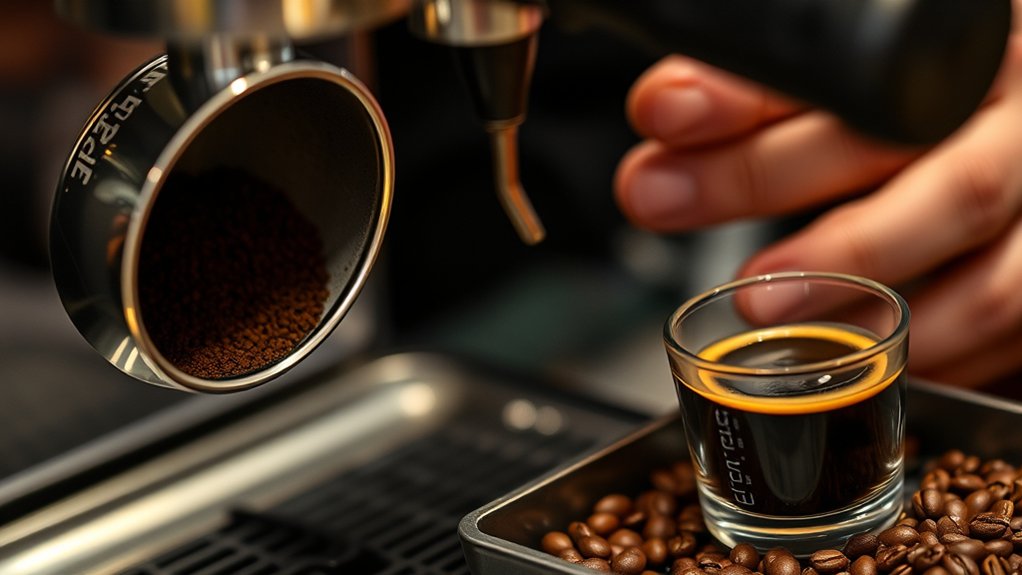
Decaf espresso comes from coffee beans that have had most of their caffeine removed, leaving you with just about 3 to 15 mg of caffeine per shot. These Decaf Espresso Beans undergo a Decaffeination Process designed to preserve flavor while reducing caffeine content.
One popular method is the Swiss Water Process, which uses water to extract caffeine without chemicals, ensuring the beans keep their rich taste.
When you brew decaf espresso, pay close attention to grind size. It should be ultra-fine to extract the full flavor.
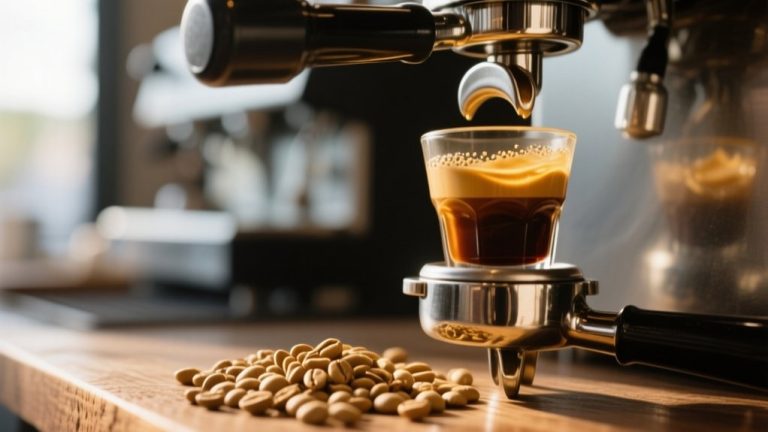
The brewing method also matters. Aim for water temperatures between 195°F and 205°F, with a brewing time of 25 to 30 seconds. Following these steps helps you enjoy a smooth, flavorful espresso, even without the caffeine kick.
How Much Caffeine Is Actually in Decaf Espresso?
How much caffeine do you really get from a shot of decaf espresso? While it’s called “decaf,” it’s not completely caffeine-free. Thanks to the decaffeination process, like the Swiss Water Process, the caffeine content drops considerably but doesn’t vanish entirely.
Here’s what you need to know:
- A typical shot of decaf espresso contains 3 to 15 mg of caffeine, about 97% less than regular espresso.
- Regular espresso packs around 50-60 mg of caffeine per shot, so decaf offers a major reduction.
- The remaining caffeine in decaf espresso is roughly 2-3% of what’s in caffeinated beans, preserving flavor without the jitters.
Decaffeination Methods for Decaf Espresso Beans
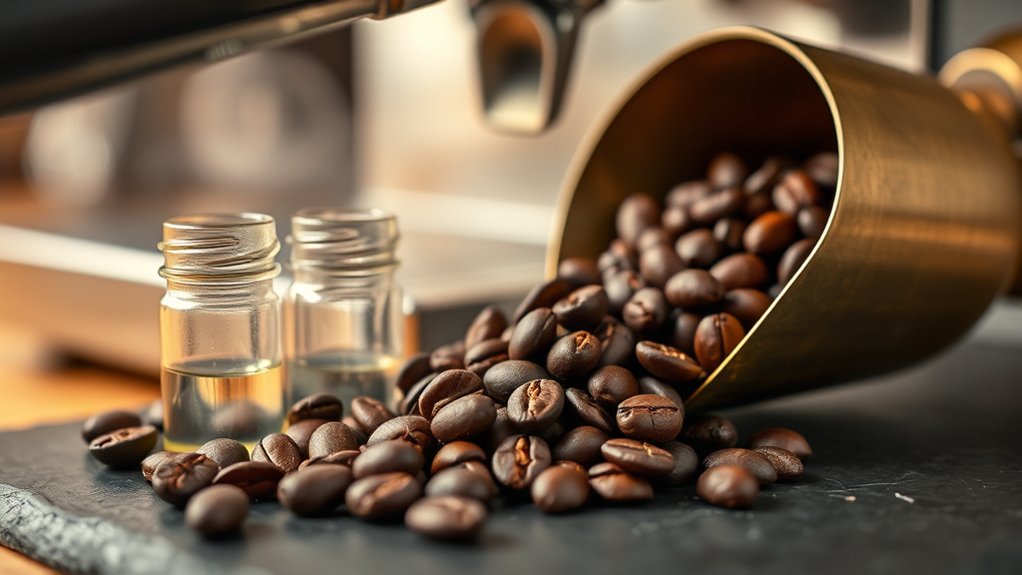
Although removing caffeine from espresso beans is a complex task, several methods have been developed to do it effectively while preserving flavor.
You’ll find the Swiss Water Process popular because it’s chemical-free and removes 94-96% of caffeine, maintaining the rich flavor profile you want in decaf espresso.
The Supercritical Carbon Dioxide Process uses pressurized CO2 to extract caffeine, offering an eco-friendly option that keeps the beans’ taste intact, though it can be pricier.
The Direct Method employs solvents like methylene chloride, which is cheaper but risks compromising flavor quality.
Each decaffeination method impacts the final flavor profile differently, so choosing beans processed with high-quality methods guarantees your decaf espresso doesn’t sacrifice taste for caffeine removal.
How Roast Levels Influence Decaf Espresso Flavor
Once you’ve chosen beans processed with quality decaffeination methods, the next factor shaping your espresso’s taste is the roast level. The roast dramatically influences your decaf espresso’s flavor, balancing brightness and boldness.
Here’s what to keep in mind:
- Light Roast: Offers brighter, fruity notes that highlight subtle flavors often muted by decaffeination.
- Medium Roast: Provides a balanced flavor, combining acidity and body, ideal if you want a classic espresso experience.
- Dark Roast: Delivers intense, rich flavors like toasted nuts, cacao, and cherry. It’s perfect for milk-based drinks.
Air roasting can enhance dark roasts by preventing burnt flavors common in traditional methods.
Choosing the right roast guarantees your decaf espresso isn’t flat or bitter but smooth and flavorful.
How to Pick the Best Decaf Espresso Beans
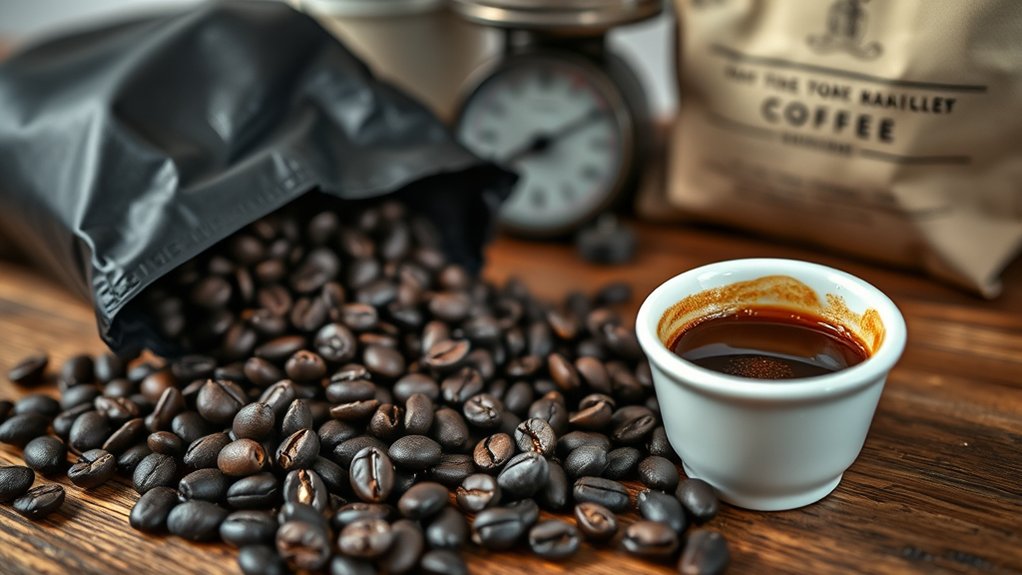
What makes a decaf espresso bean truly stand out? It’s all about quality and method. When choosing decaf espresso beans, look for those processed with the Swiss Water Process or CO₂ method to avoid chemical residues while preserving flavor.
Quality and method define standout decaf espresso beans—choose those using Swiss Water or CO₂ processes for pure flavor.
Opt for medium to dark roasted Arabica beans. They deliver a smoother, more balanced flavor profile than Robusta. Freshness matters, so always check the roast date to confirm vibrant taste.
Think about your preferred flavor notes. Central and South American beans bring nutty, chocolatey tones, while African beans offer brighter, fruitier hints.
Finally, pick decaf espresso beans from reputable specialty roasters to guarantee a rich and satisfying cup every time. This way, your decaf espresso won’t just be caffeine-free; it’ll be genuinely enjoyable.
Brewing Tips for the Perfect Decaf Espresso Shot
To nail the perfect decaf espresso shot, you’ll want to zero in on grind size precision. Keep it ultra-fine—that’s the key to pulling out the best flavors.
Next up, watch your water temperature carefully. It should stay between 195°F and 205°F to avoid any bitterness and help you get that smooth, rich taste.
And don’t forget about brewing time. Aim for around 25 to 30 seconds to strike the perfect balance between flavor and crema.
Easy, right? Give it a try and enjoy!
Grind Size Precision
Although decaf espresso demands a grind size that’s ultra-fine, you’ll need to adjust slightly compared to regular beans to avoid bitterness.
Decaf beans require precision to get the perfect extraction and flavor balance.
Here’s how to nail your grind size for a smooth espresso shot:
- Use a consistent ultra-fine grind size to guarantee even extraction and prevent channeling.
- Experiment with grind adjustments to find the sweet spot that suits your decaf beans without over-extracting.
- Keep your brewing time between 25 to 30 seconds; this helps balance the flavors and avoids bitterness.
Optimal Water Temperature
When you brew decaf espresso, keeping the water temperature between 195°F and 205°F guarantees you extract the rich flavors without bitterness. This ideal water temperature ensures proper extraction, highlighting the coffee’s nuanced notes while avoiding over-extraction that can spoil the taste.
Use filtered water to prevent impurities from interfering with the espresso’s quality. Water that’s too hot can scorch the coffee grounds, creating an unpleasant burnt flavor, while too cold water results in weak, under-extracted shots.
To maintain consistency, measure the temperature with a reliable thermometer.
Also, preheat your espresso cup to help keep your decaf espresso at the perfect drinking temperature longer, allowing you to savor its full flavor profile.
Mastering this balance is key to a perfect shot every time.
Brewing Time Control
Since brewing time directly impacts flavor, you’ll want to keep your decaf espresso shot between 25 and 30 seconds. This range guarantees ideal flavor extraction without bitterness.
To get the best results, focus on these key points:
- Use an ultra-fine grind to maximize flavor extraction from your decaf espresso beans.
- Maintain water temperature between 195°F and 205°F to balance acidity and richness.
- Pre-infuse the grounds briefly by soaking with hot water before full extraction to enhance flavor depth.
Controlling brewing time alongside grind size and water temperature lets you craft a smooth, rich decaf espresso shot every time.
Top Decaf Espresso Drinks to Enjoy Anytime
You can enjoy decaf espresso in so many popular drinks, like lattes, cappuccinos, and Americanos. They keep that bold flavor you love, but without the caffeine kick.
Feeling a bit adventurous? Try unique twists like decaf affogatos or flat whites. They offer a rich, satisfying experience you can enjoy anytime.
Let’s dive into some delicious decaf espresso options you’re sure to love!
Popular Decaf Espresso Drinks
How can you enjoy your favorite espresso drinks without the caffeine kick? Decaf espresso lets you savor rich flavors and aromas, especially when processed with methods like the Swiss Water Process. This means you don’t have to sacrifice taste for caffeine-free beverages.
Here are three popular decaf espresso drinks to try:
1. Decaf Lattes
Creamy and smooth, they blend decaf espresso with steamed milk for a comforting treat.
2. Decaf Cappuccinos
Enjoy the perfect balance of frothy milk and bold decaf espresso without jitters.
3. Decaf Affogato
Pour rich decaf espresso over ice cream for a delightful dessert experience.
These options let you indulge anytime, all while keeping caffeine intake low or nearly nonexistent.
Creative Decaf Drink Ideas
Beyond the classics like decaf lattes and cappuccinos, there’s a world of creative decaf espresso drinks waiting to be explored. You can enjoy a decaf affogato, where a shot of decaf espresso is poured over ice cream for a rich, invigorating treat.
On warmer days, try using decaf espresso in cold brew coffee to experience a smooth, mellow flavor profile perfect for cooling off.
If you love experimenting, make a creamy cortado or flat white with decaf espresso for a satisfying, caffeine-free twist.
Quality decaf espresso beans offer notes of toasted nut, cacao, and cherry, enhancing your creative coffee experience.
These inventive drinks let you enjoy your favorite coffee moments anytime, without the caffeine buzz.
Why Gigawatt Decaf Espresso Stands Out
Although many decaf coffees sacrifice flavor for caffeine removal, Gigawatt Decaf Espresso stands out by delivering a rich, smooth taste that rivals its caffeinated counterparts.
Gigawatt Decaf Espresso defies expectations with rich, smooth flavor matching that of regular coffee.
It uses special decaffeinated coffee beans processed through a pure water-based process, avoiding chemicals and preserving the rich flavor you crave.
The dark roast profile offers smooth notes of toasted nut, cacao, and cherry, perfect for any espresso-based drink.
Here’s why you’ll love it:
- Chemical-free water-based process keeps flavor integrity intact.
- Unique air roasting prevents burnt tones common in dark roasts.
- Over 2,000 five-star reviews prove its popularity and taste appeal.
Gigawatt Decaf Espresso changes the game for anyone seeking a bold, enjoyable decaf option.
How Decaf Espresso Tastes Compared to Regular Espresso
When you savor a well-crafted decaf espresso, you’ll notice it keeps many of the rich flavors and aromas found in regular espresso, thanks to high-quality Arabica beans and careful roasting.
Decaf espresso often delivers a smooth, mellow taste with notes of toasted nut, cacao, and cherry, closely mirroring the flavor depth of regular espresso.
The Swiss Water Process, used to remove caffeine, helps preserve these delicate flavors by avoiding the bitter, burnt tones typical of traditional decaffeination methods.
Although caffeine is removed, decaf espresso retains character and complexity, challenging the idea that it’s a weaker brew.
Why Try Decaf Espresso and Who Should Drink It?
Why choose decaf espresso if you love the taste of regular coffee? Decaf espresso offers the rich, bold flavor profile you crave but with considerably less caffeine. It has only 3–15 mg per shot compared to 50–60 mg in regular espresso. It’s perfect if you want to enjoy coffee without jitters or sleep disruptions.
Decaf espresso delivers rich, bold flavor with just a fraction of the caffeine, perfect for anytime enjoyment.
Here’s why you should try it:
- You’re sensitive to caffeine or want to cut back without losing flavor.
- You appreciate high-quality decaf made with gentle methods like the Swiss Water Process or CO₂, preserving the espresso’s complex notes.
- You enjoy tasting notes like caramel and chocolate, common in decaf blends, that make each cup satisfying.
Decaf espresso lets you savor coffee any time while managing caffeine intake smartly.
Frequently Asked Questions
Can Decaf Espresso Be Used for Espresso-Based Cocktails?
Yes, you can definitely use decaf espresso for espresso-based cocktails. Decaf espresso cocktails let you enjoy the rich flavor profile without caffeine, perfect if you want caffeine alternatives.
By applying mixology techniques, you can create smooth, bold espresso recipes that rival traditional versions.
Whether you’re crafting an Espresso Martini or something unique, decaf espresso maintains the depth and texture, giving you exciting options for your cocktail menu or home bar.
Does Decaf Espresso Have a Shorter Shelf Life Than Regular Espresso?
You might find decaf espresso’s shelf life a bit more delicate than regular espresso’s.
Due to flavor profile differences and how decaf storage conditions affect its oils, it tends to lose freshness faster.
Your brewing method impact is subtle but real, so airtight packaging effects become essential.
Always check freshness indicators like roast date to enjoy peak taste.
Proper storage keeps your decaf vibrant, but don’t let it linger too long.
How Does Water Temperature Affect Decaf Espresso Extraction?
Water temperature directly impacts extraction efficiency when brewing decaf espresso.
If you use water that’s too hot, you risk over-extraction, which hurts the flavor profile and increases acidity levels, making your shot bitter.
Too cold, and you get under-extraction, resulting in weak crema quality and muted flavors.
Are There Any Health Benefits Unique to Decaf Espresso?
Yes, decaf espresso offers unique health effects, especially if you have caffeine sensitivity. It lets you enjoy rich flavor profiles without jitters or sleep disruption.
Decaf’s antioxidant levels remain high, supporting inflammation reduction and heart health.
Plus, certain brewing methods preserve these benefits better, so choosing the right technique matters.
If caffeine affects you, decaf espresso is a smart, flavorful choice that keeps you healthy without sacrificing taste.
Can Decaf Espresso Be Used in Coffee Blends or Only Single Origin?
Decaf espresso can be used in blends just like single-origin beans, offering you a variety of decaf flavor profiles.
Like a painter mixing colors, blending different espresso roast levels balances taste preferences while managing caffeine content comparison.
By experimenting with brewing techniques, you can create smooth, rich coffee without the buzz.
Conclusion
So, is decaf espresso worth your sip? Absolutely. It lets you savor rich, bold flavors without the caffeine kick. Whether you’re winding down or avoiding jitters, decaf isn’t just a backup; it’s a bold choice that proves great taste doesn’t always need a buzz.
Like a quiet song that still moves your soul, decaf espresso offers comfort and flavor in every cup. Why not give it a try and experience the difference yourself?