What Is Blonde Espresso – Taste, Caffeine And Roast Guide
Blonde espresso is made from light to medium-light roasted beans, giving it a matte, light brown color and a brighter, more acidic flavor with citrus and floral notes. You’ll find it has slightly higher caffeine per volume due to denser beans and demands precise brewing, like finer grind and hotter water, to extract its complex profile.
It’s smoother and less bitter than dark espresso. Keep exploring and you’ll uncover tips to perfect its distinctive taste and ideal pairings.
What Is Blonde Espresso and How Is It Roasted
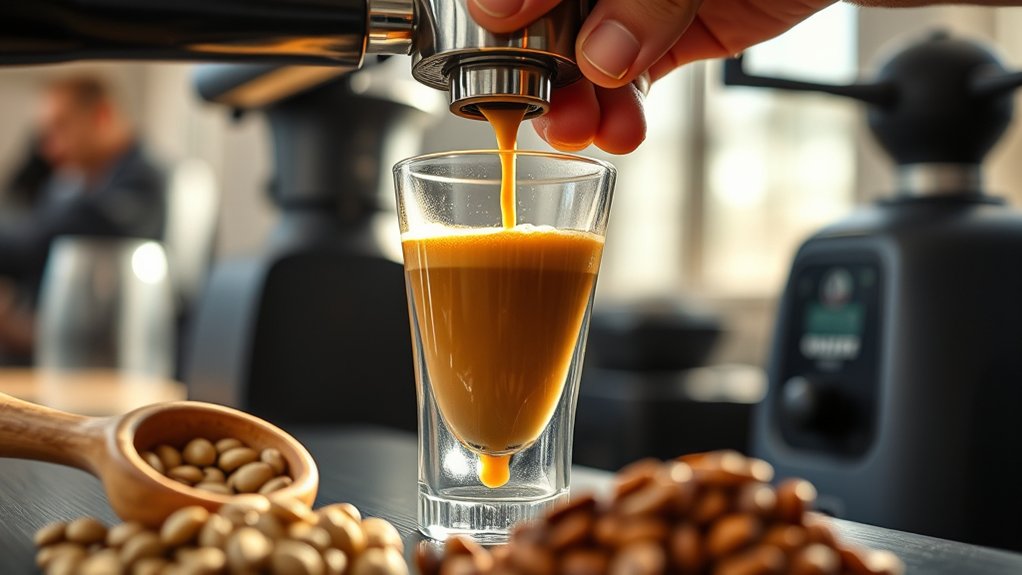
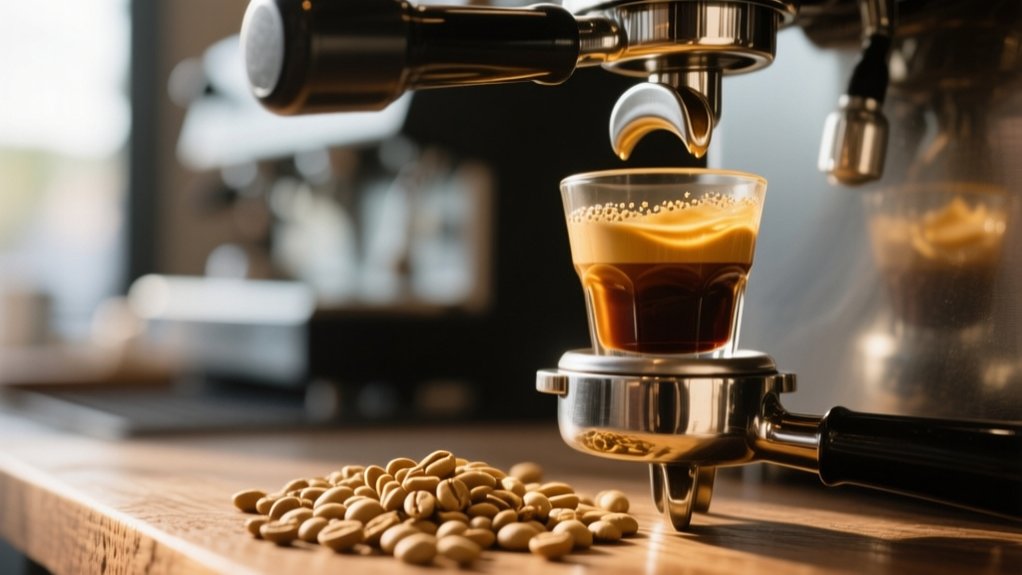
Blonde espresso comes from coffee beans roasted to a light or medium-light level, where lower temperatures and shorter roasting times preserve the beans’ natural flavors. This blonde espresso roast stops before the second crack, resulting in a matte, light brown appearance rather than the oily sheen typical of darker roasts.
During the roasting process, light roast beans retain higher acidity and showcase brighter flavor notes, including citrus, floral hints, and natural sweetness.
Because the beans are denser and less expanded than darker roasts, the caffeine content per volume is slightly higher.
To extract these unique characteristics effectively, you need precise control over grinding, brewing time, and water temperature. This careful approach guarantees you experience the distinctive profile that defines blonde espresso roast.
Blonde vs. Regular Espresso: Key Differences
Although both types of espresso share similar caffeine content by weight, you’ll notice distinct differences in flavor, body, and preparation between light-roasted blonde and traditional dark-roasted espresso.
Blonde espresso, from lighter roasts, offers a smoother, brighter profile with lighter body. Dark roast espresso delivers bolder, richer flavors and a heavier body.
Grind size varies too: blonde espresso requires finer grounds due to denser beans, whereas dark roast uses coarser grinds. Brewing techniques differ, with blonde needing hotter water and precise tamping.
| Aspect | Blonde Espresso | Regular Espresso (Dark Roast) |
|---|---|---|
| Roast Level | Light to medium-light | Dark |
| Grind Size | Finer | Coarser |
| Body & Flavor | Lighter, bright acidity | Heavier, bold bitterness |
What Does Blonde Espresso Taste Like?
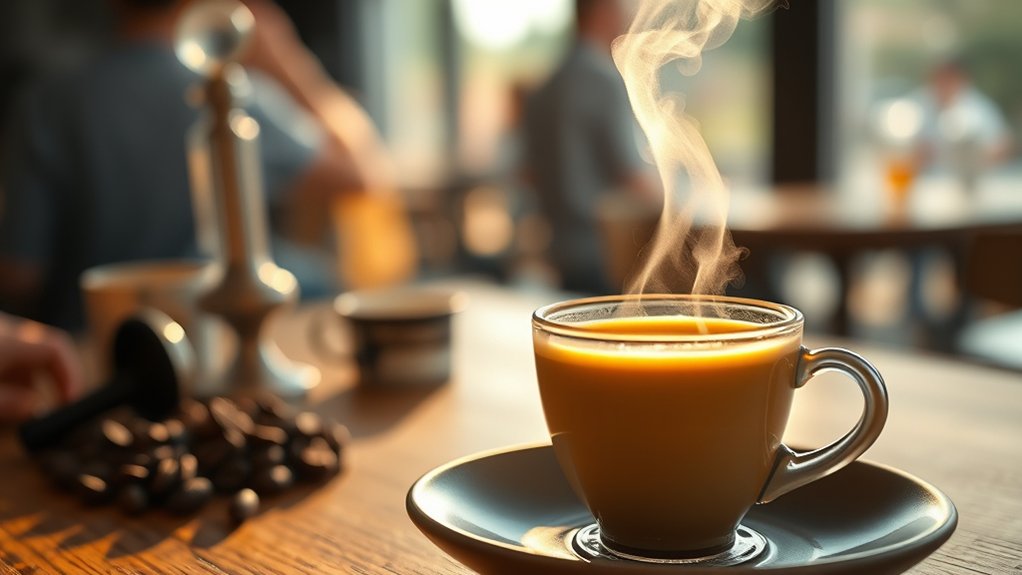
Anyone exploring lighter espresso options will appreciate the smoother, brighter profile that comes with this style of coffee. Blonde espresso, crafted through a lighter roast, preserves more of the coffee bean’s original flavors. This results in a clean, easy-to-drink taste.
You’ll notice distinct flavor notes such as citrus and floral aromas, complemented by subtle sweetness that enhances its complexity without overwhelming bitterness. This smooth profile differentiates blonde espresso from traditional dark roasts by offering a milder, more approachable flavor.
It’s especially suitable if you find darker espresso too intense. Its balanced nature also allows it to pair well with creamers and flavored syrups, broadening its versatility in various espresso-based drinks.
Is Blonde Espresso More Bitter Than Dark Roast?
How bitter your espresso tastes largely depends on the roast level, and lighter roasts typically produce less bitterness than darker ones.
Blonde espresso, roasted for a shorter time, retains more of the bean’s natural acidity and nuanced flavors. This results in a brighter, less bitter flavor profile with citrus and floral notes.
In contrast, dark roasts develop greater bitterness due to prolonged roasting, which creates heavier, more intense flavor compounds. This bitterness often dominates dark roast espressos, making them feel harsher on the palate.
If you prefer a smoother, less bitter experience, blonde espresso offers a cleaner taste without sacrificing complexity.
Understanding this contrast helps you choose between blonde and dark roasts based on your bitterness tolerance and flavor preferences.
How Much Caffeine Does Blonde Espresso Really Have?
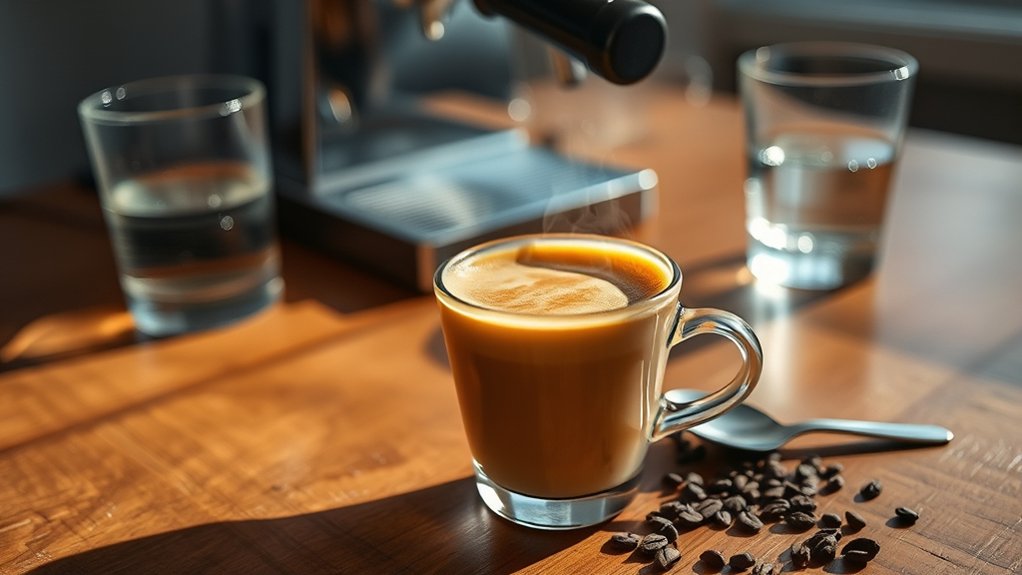
While blonde espresso offers a brighter, less bitter flavor than dark roast, you might wonder if its lighter taste means less caffeine.
Actually, the caffeine content in blonde espresso and regular espresso is nearly identical when measured by weight.
Caffeine levels in blonde and regular espresso are almost the same when compared by weight.
Blonde espresso beans are roasted light to medium-light, preserving their density, which can mean slightly more caffeine by volume compared to darker roasts.
However, this difference is minimal. Typically, a shot of blonde espresso contains about 63 mg of caffeine, just one milligram less than regular espresso.
The roasting process doesn’t greatly alter caffeine levels; instead, it affects flavor.
So, despite blonde espresso’s brighter profile, you’re getting almost the same caffeine punch.
Don’t let the roast fool you. Caffeine content remains consistent across espresso beans.
Why Blonde Espresso Tastes Brighter and Smoother
Because blonde espresso uses light to medium-light roasted beans, it delivers a noticeably brighter and smoother flavor compared to traditional dark espresso. This lighter roast preserves more of the beans’ natural characteristics, which enhances the flavor profile with pronounced citrus and floral notes.
You’ll find less bitterness due to the shorter roasting process, making blonde espresso easier to enjoy if you prefer milder tastes.
The higher acidity retained in blonde espresso contributes to a clean, invigorating sensation that contrasts with the boldness typical of darker roasts.
This unique flavor profile allows blonde espresso to pair well with creamers and flavored syrups, which can enhance its smoothness without overshadowing its inherent brightness.
How Bean Density Influences Brewing Blonde Espresso
Since blonde espresso beans are denser than their darker counterparts, you’ll need to adjust your grind size to a finer setting to achieve ideal extraction. This higher density means water must penetrate more compact grounds, so a finer grind size increases surface area, promoting balanced extraction and flavor clarity.
Furthermore, denser blonde espresso beans respond best to hotter water temperatures, which help dissolve soluble compounds efficiently. You must also tamp consistently and evenly to avoid channeling, ensuring uniform water flow through the tightly packed grounds.
Ignoring these density-driven adjustments risks under-extracting or uneven flavors. Understanding how density influences grind size and extraction lets you brew blonde espresso that highlights its distinctive bright, nuanced profile with peak caffeine concentration.
Choosing the Best Machines and Grinders for Blonde Espresso
To brew blonde espresso effectively, you’ll want a grinder that delivers a consistent, fine grind because the beans tend to be denser.
Your espresso machine should have adjustable temperature settings and reliable pressure control—these features help bring out those bright, delicate flavors just right.
And don’t forget about tamping evenly; it’s key to avoiding channeling and making sure you get a balanced shot every single time.
Grinder Features For Blonde
When dialing in your grinder for blonde espresso, you’ll want to prioritize consistency and control to capture the delicate flavor profile these beans offer.
Burr grinders are preferred because they deliver uniform particle size, which is critical for even extraction and avoiding channeling.
You’ll need precise grind size adjustment since blonde espresso typically demands a finer grind than darker roasts. This allows you to tailor the grind based on your brewing method and taste preferences.
Pay attention to grinders with temperature control features because excessive heat during grinding can degrade the subtle flavors of blonde beans.
Finally, select a grinder that balances ease of use with precise settings. This will help you maintain grind consistency and experiment effectively to highlight the nuanced characteristics unique to blonde espresso.
Optimal Espresso Machine Settings
Selecting the right espresso machine complements your grinder’s role in crafting Blonde Espresso. Since Blonde requires a finer grind to handle denser light-roast beans, your espresso machine must offer precise control over water temperature and extraction time.
Set the water temperature around 200°F (93°C) to fully extract subtle flavor notes without under-extraction. Consistent tamping paired with an espresso machine that allows adjustable pressure guarantees even extraction, preventing channeling.
Aim for an extraction time between 25 and 35 seconds to balance acidity and sweetness effectively.
Furthermore, opt for a machine with manual textured milk capabilities and precise shot control to elevate your brewing experience.
Together, these settings assure ideal flavor and quality in every Blonde Espresso shot you pull.
Brewing Tips for Blonde Espresso
Although blonde espresso beans are denser than darker roasts, you’ll want to use a finer grind size to extract their delicate flavors effectively. Avoid a medium grind, which is too coarse for blonde espresso and can result in under-extraction.
When you brew, maintain a shot time between 25-35 seconds, guaranteeing balanced acidity and brightness. Consistent, level tamping prevents channeling, which is essential for even extraction with lighter roasts.
Experiment with different brewing methods like the Moka pot or AeroPress to explore varied flavor profiles and find your preferred taste. Each method interacts differently with blonde espresso’s unique characteristics, so adjusting grind size and brew time accordingly assures peak results.
Precision in these variables enhances the nuanced flavors blonde espresso offers.
How Water Temperature and Tamping Affect Blonde Espresso
Because blonde espresso demands hotter water temperatures, around 200°F (93°C), you’ll need to pay close attention to both your water temperature and tamping technique to reveal its bright, citrusy flavors.
Using water below this threshold risks under-extraction, which dulls those vibrant notes.
Water below 200°F risks under-extraction, muting the bright, vibrant flavors unique to blonde espresso.
Tamping plays a critical role. A level, consistent tamp prevents channeling and ensures even extraction throughout the puck.
Since blonde espresso requires a finer grind, inconsistent tamping can cause uneven brew time and flavor imbalance.
To optimize extraction, adjust tamping pressure and grind size so your brew time falls between 25-35 seconds.
This balance of proper water temperature and precise tamping maximizes flavor clarity, delivering the distinct profile that sets blonde espresso apart from darker roasts.
Pairing Blonde Espresso With Milk and Syrups
When you pair blonde espresso with milk and syrups, you enhance its natural sweetness and bright acidity, creating a more complex flavor profile. Blonde espresso’s lighter, smoother taste blends seamlessly with various creamers and flavored syrups, such as vanilla, caramel, and hazelnut, which highlight its citrus and floral notes.
Choosing the right milk types like oat or almond milk further refines the experience, adding subtle nuances without overshadowing the coffee’s clean flavor. This balance makes blonde espresso ideal for lattes and cappuccinos, where milk’s creaminess complements rather than competes.
Moreover, its invigorating clarity holds up well in iced beverages, maintaining brightness.
Blonde or Regular Espresso: Which to Choose?
How do you decide between blonde and regular espresso for your next cup? It boils down to your preference for flavor profile and caffeine content. Blonde espresso offers a lighter, brighter taste with floral and citrus notes, while traditional espresso delivers a bold, chocolatey experience.
Both contain similar caffeine by weight, but blonde espresso’s denser beans pack slightly more caffeine per scoop. Consider your brewing method and pairing choices, too.
| Aspect | Blonde Espresso | Traditional Espresso |
|---|---|---|
| Roast Level | Light to medium-light roast | Dark roast |
| Flavor Profile | Bright acidity, floral, citrus | Rich, nutty, chocolatey |
| Caffeine Content | Slightly higher per volume | Standard |
| Brewing | Finer grind, hotter water | Coarser grind, cooler water |
Frequently Asked Questions
Can Blonde Espresso Be Used for Cold Brew Recipes?
Yes, you can definitely use blonde espresso for cold brew recipes. Its flavor profile offers natural sweetness and bright citrus notes, which enhance your cold brew’s taste.
To maximize blonde espresso benefits, adjust your cold brew techniques by using a coarser grind and experimenting with brewing methods like varying brew time and coffee-to-water ratios.
This approach helps you extract a balanced, invigorating cup with lighter acidity and unique flavors.
Does Blonde Espresso Have a Shorter Shelf Life?
Think of blonde espresso as a delicate flower. It doesn’t stay fresh forever. Yes, it has shorter shelf stability because its lighter roast keeps more oils and moisture, which can dull the flavor profile faster.
To preserve its brightness, follow smart storage tips like airtight containers and cool, dark spots.
Also, grind just before brewing. These brewing techniques help you savor its unique taste before it fades away.
Are There Specific Regions Known for Blonde Espresso Beans?
Yes, specific regions like Colombia, Ethiopia, and Guatemala are known for blonde espresso beans.
You’ll find their regional varieties offer distinct flavor profiles, from bright citrus to floral notes, perfectly matching different taste preferences.
These beans thrive with brewing methods that highlight their natural acidity and complexity.
When choosing blonde espresso, consider how these regional characteristics influence your cup’s overall brightness and subtlety.
How Does Blonde Espresso Affect Latte Art Quality?
When a barista at a specialty café switched to blonde espresso, they noticed latte art’s visual appeal sharpened thanks to the espresso’s brightness.
You’ll find that blonde espresso demands careful attention to latte texture and milk interaction because its lighter body alters microfoam consistency.
This precision enhances flavor balance, allowing floral and fruity notes to shine.
Is Blonde Espresso Suitable for Decaf Versions?
Yes, blonde espresso suits decaf versions well. You’ll find its lighter flavor profiles, like citrusy, floral, and smooth, carry over nicely even after decaffeination.
Adjust your brewing methods slightly to maintain balance and brightness. Decaf blonde espresso aligns with health benefits by offering lower caffeine without sacrificing taste.
Its rising popularity trends reflect a demand for flavorful, milder options.
Conclusion
Choosing between blonde and regular espresso is like picking a route on your morning commute. Both get you caffeinated, but the experience differs. Blonde espresso’s lighter roast offers a brighter, less bitter flavor with slightly more caffeine.
It’s perfect if you want a smooth yet energizing start. Remember, just as adjusting your speed affects your drive, tweaking brewing variables like water temperature can reveal the best in blonde espresso. So, experiment and enjoy your perfect cup.