Do Lattes Have Caffeine – Everything You Need To Know
Yes, lattes do have caffeine because they’re made with espresso, which contains about 63 mg of caffeine per shot. Most lattes have one or two shots, meaning their caffeine ranges from 63 to 126 mg, with larger sizes offering even more.
The type of coffee bean and milk amount can influence the caffeine strength and taste. If you want to understand how shots, bean types, and customization affect your latte’s caffeine impact, keep exploring the details ahead.
What Is a Latte and What Caffeine It Contains
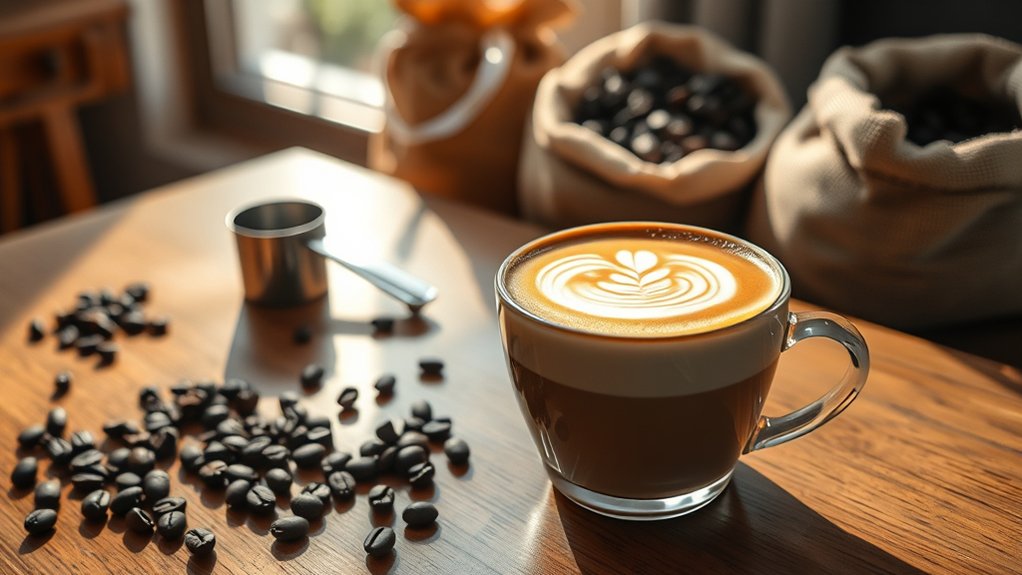
A latte combines espresso with steamed milk, typically featuring one or two shots of espresso, which directly determines its caffeine content. When you order a latte, the espresso base is essential. It’s usually extracted from Arabica coffee beans, known for their balanced flavor and moderate caffeine levels.
The caffeine content varies depending on how many shots of espresso are included; one shot delivers about 63 mg, while two shots double that amount. Steamed milk dilutes the intensity of caffeine’s taste, making the latte feel smoother than straight espresso despite containing a significant caffeine amount.
Furthermore, the type of coffee beans you choose, such as Arabica or Robusta, impacts caffeine content. Arabica generally provides less caffeine.
Understanding these components helps you gauge the caffeine strength in your latte precisely.
How Much Caffeine Does a Typical Latte Have?
When you order a typical latte, expect it to contain about 63 mg of caffeine from a single shot of espresso. Most cafés, however, serve lattes with two espresso shots, doubling the caffeine content to roughly 126 mg.
The caffeine content in your latte depends primarily on the number of espresso shots and the drink’s size. For example, a 16 oz latte typically contains two shots, while larger sizes with extra shots increase caffeine levels accordingly.
Caffeine in your latte varies mainly with espresso shots and drink size, increasing with larger servings.
Furthermore, the type of coffee beans used influences caffeine content. Lattes made with Arabica beans generally have less caffeine than those made with Robusta beans, as Arabica naturally contains lower caffeine.
Understanding these variables helps you gauge how much caffeine your latte delivers precisely.
Why Do Lattes Contain Caffeine From Espresso?
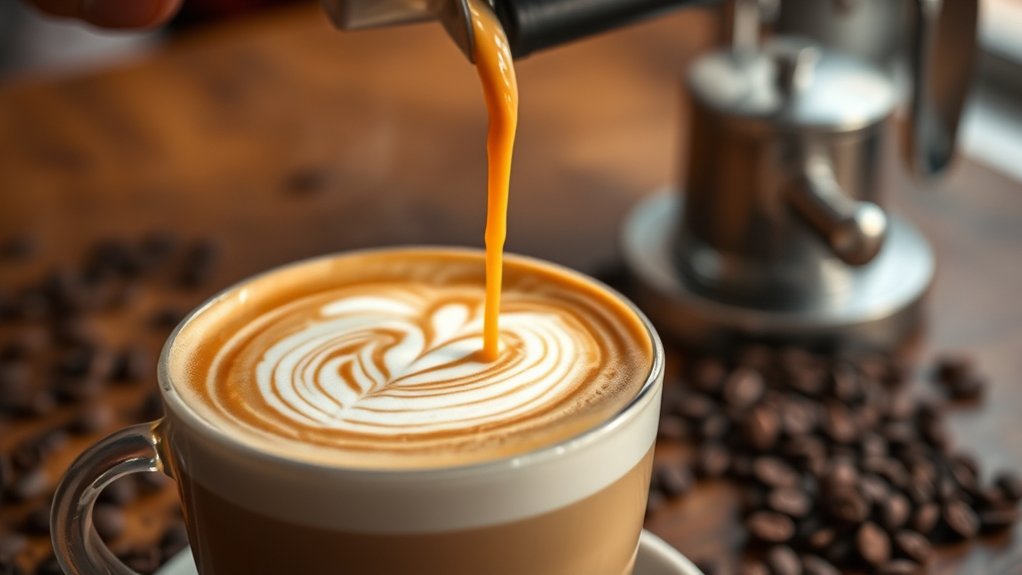
Understanding the caffeine content in your latte starts with recognizing that espresso serves as its foundation.
Lattes contain caffeine because they’re made with espresso shots, which are highly concentrated. Here’s why lattes get their caffeine from espresso:
- Each espresso shot delivers about 63 mg of caffeine, making it the primary caffeine source in lattes.
- Standard lattes use one or two shots, contributing between 63 and 126 mg of caffeine, depending on the number of shots.
- The steamed milk in lattes dilutes the espresso, softening the caffeine’s intensity but not reducing its total amount.
How Espresso Boosts Caffeine in Your Latte
Because espresso is brewed under high pressure, it extracts caffeine more efficiently than regular coffee methods, giving your latte a potent caffeine boost. Each shot of espresso contains about 63 mg of caffeine, making it the primary source of caffeine in your latte.
Typically, lattes include one or two shots, resulting in caffeine content between 63 mg and 126 mg. The type of coffee bean used also matters. Arabica beans, commonly chosen for their smoother flavor, have less caffeine than Robusta, which contains more.
When you order a latte, the number of espresso shots directly influences how much caffeine you consume.
Understanding how espresso extraction and bean variety affect caffeine helps you make informed choices about your latte’s strength and caffeine level.
How Latte Size and Shots Affect Caffeine Content
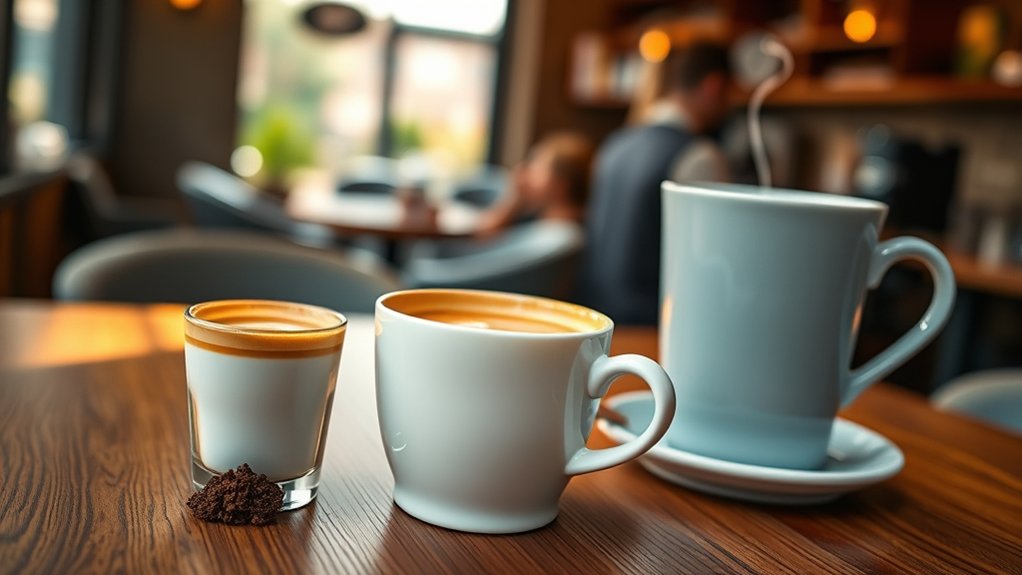
You can control your caffeine intake by adjusting both the size of your latte and the number of espresso shots it contains.
Usually, a bigger cup means more shots, so that directly bumps up the caffeine content. At the same time, the milk-to-espresso ratio plays a role—it affects how strong your drink tastes and its overall flavor.
Latte Size Impact
When you choose a latte size, the number of espresso shots directly influences its caffeine content. Understanding this relationship helps you make informed consumer choices.
Larger lattes typically contain more espresso shots, increasing caffeine content accordingly. Milk dilution affects how strong the caffeine feels but doesn’t reduce the actual caffeine amount.
Here’s a quick breakdown:
- A 12-ounce latte usually has one shot of espresso, delivering about 63 mg of caffeine.
- A 16-ounce latte often contains two shots, doubling caffeine content to roughly 126 mg.
- A 20-ounce latte can include three shots, raising caffeine to approximately 189 mg.
Customizing espresso shots in your latte size lets you control caffeine levels precisely, balancing strength and milk dilution to suit your preference.
Espresso Shot Variations
Two key factors influence the caffeine content in your latte: the number of espresso shots and the type of coffee beans used. A standard latte usually includes one espresso shot, delivering about 63 mg of caffeine, while double shots nearly double that, averaging 126 mg.
The coffee beans also matter; Robusta beans contain more caffeine than Arabica, affecting the total caffeine content.
Latte size often dictates the number of espresso shots, with larger sizes requiring multiple shots to maintain strength.
Furthermore, the milk ratio plays an essential role in how you perceive caffeine intensity. More milk dilutes the espresso’s immediate impact without reducing caffeine itself.
Understanding these variables helps you predict and control caffeine levels in your latte effectively.
Customizing Caffeine Levels
Although the base caffeine content in a latte depends on a single espresso shot, customizing your drink by adjusting the size and number of shots allows you to control caffeine intake precisely.
When customizing caffeine levels in your latte, consider these factors:
- Espresso Shots: A single shot contains about 63 mg of caffeine, doubling to 126 mg with two shots. Adding extra shots can push caffeine content above 175 mg.
- Latte Size: Larger lattes often include more espresso shots, increasing caffeine proportionally.
- Bean Type: Choosing Robusta beans instead of Arabica raises caffeine content, as Robusta naturally contains more caffeine.
Additionally, the milk-to-espresso ratio affects perceived caffeine strength. More milk dilutes the taste but not the caffeine.
Does Milk Affect Latte’s Caffeine Strength?
How does milk influence the caffeine strength in your latte? When you add steamed milk to espresso, it dilutes the caffeine concentration, making the overall caffeine effect feel milder than a straight espresso shot.
A standard latte typically contains one shot of espresso with about 63 mg of caffeine, but the volume of steamed milk reduces the perceived intensity. The more milk you use, the less pronounced the caffeine taste becomes, as the creamy texture balances espresso’s natural bitterness.
Even in larger lattes with multiple espresso shots, while total caffeine content rises, the milk’s dilution effect still softens how strong the caffeine feels.
Comparing Caffeine in Lattes and Other Coffee Drinks
When you compare lattes to brewed coffee, you’ll notice that brewed coffee usually packs more caffeine per cup, even though espresso has a higher concentration.
It’s kind of interesting because espresso shots concentrate caffeine into a small volume, which is why lattes tend to feel a bit milder.
On top of that, the type of coffee bean—whether it’s Robusta or Arabica—really plays a big role in how much caffeine ends up in your drink.
Latte Vs Brewed Coffee
Because lattes rely on espresso shots diluted with milk, they generally contain less caffeine per serving than brewed coffee.
When comparing caffeine content, consider these points:
- A single espresso shot in a latte has about 63 mg of caffeine, while an 8-ounce brewed coffee ranges from 100 to 140 mg, making brewed coffee stronger per cup.
- Lattes dilute caffeine with milk, so even a double-shot latte delivers around 126 mg, often less than brewed coffee’s typical caffeine concentration.
- Brewed coffee’s longer extraction time through drip or pour-over methods extracts more caffeine compared to the quick extraction of espresso shots in lattes.
Understanding these factors helps you choose your coffee based on caffeine strength and preference.
Espresso Caffeine Concentration
Understanding the caffeine concentration in espresso is key to comparing lattes with other coffee drinks. A single shot of espresso, the base for lattes, contains about 63-64 mg of caffeine, while two shots double that amount to roughly 126-128 mg.
This espresso caffeine concentration is higher per ounce than brewed coffee, which typically has 100-140 mg of caffeine per 8 ounces.
Because lattes mix espresso with steamed milk, the overall amount of caffeine in your drink depends primarily on whether it has one or two shots.
Among espresso-based drinks, lattes generally share similar caffeine levels, but the milk dilutes the intensity, making the caffeine effect feel milder.
Bean Type Impact
Although the caffeine content in lattes largely depends on the number of espresso shots, the type of coffee bean used plays an essential role in determining the final caffeine level.
When comparing Arabica and Robusta beans, you’ll notice significant differences affecting your latte’s caffeine:
- Arabica beans contain about 1.2% caffeine, resulting in a smoother, less caffeinated latte.
- Robusta beans have roughly 2.2% caffeine, nearly doubling the caffeine content per shot of espresso.
- Brewed coffee generally has more caffeine per serving than lattes, as milk dilutes caffeine concentration.
How Coffee Bean Types Influence Latte Caffeine
When you choose between Arabica and Robusta beans for your latte, you directly affect its caffeine content and flavor profile. Arabica beans typically yield about 63 mg of caffeine per espresso shot, while Robusta beans contain considerably more, resulting in a stronger, more bitter taste.
Choosing Arabica or Robusta beans shapes your latte’s caffeine kick and flavor intensity.
The number of espresso shots also plays an important role; a double-shot latte roughly doubles the caffeine content to 126 mg.
Furthermore, grind size influences extraction. Finer grinds enhance caffeine extraction, intensifying the shot’s strength.
Since espresso uses high pressure and a quick brew time, caffeine extraction per ounce is lower than in longer brewing methods.
But the bean type and grind size remain key variables. Understanding these coffee bean types helps you tailor your latte’s caffeine content precisely.
Health Tips for Safe Caffeine Consumption From Lattes
Since caffeine affects people differently, it’s important to monitor your intake to stay within safe limits. To consume lattes safely, consider these health tips for moderating intake and avoiding negative effects:
- Know your recommended daily caffeine limit. For most adults, this is 400 mg (about six single-shot lattes), while pregnant women should limit intake to 200 mg.
- Assess your individual caffeine sensitivity. Some experience jitters or sleep disruptions with moderate caffeine intake, so adjust accordingly.
- Time your caffeine intake wisely. Avoid lattes late in the day to prevent sleep disturbances.
Can You Customize Your Latte’s Caffeine Kick?
You can totally control how much caffeine is in your latte by choosing how many espresso shots you want. Each shot packs about 63 mg of caffeine.
Plus, the type of coffee bean you pick—like arabica or robusta—makes a difference too, not just in caffeine but also in flavor intensity.
And don’t forget, tweaking the milk-to-espresso ratio can change how strong that caffeine kick feels in your cup.
Espresso Shot Options
One or two espresso shots typically form the caffeine foundation of your latte, each delivering approximately 63 mg of caffeine. By understanding espresso shot options, you can customize caffeine levels and tailor your latte experience precisely.
Consider these key factors:
- Number of espresso shots: Single or double shots adjust caffeine content from about 63 mg to 126 mg, with additional shots further increasing strength.
- Decaf shot substitution: Replacing a regular shot with a decaf shot lets you enjoy the creamy latte texture with minimal caffeine.
- Bean choice influence: Though not covered here in detail, Arabica vs. Robusta beans affect flavor and caffeine concentration, impacting the shot’s potency.
Bean Type Influence
Beyond simply adjusting the number of espresso shots, the type of coffee bean plays a crucial role in determining your latte’s caffeine content.
Arabica beans, commonly used in espresso, provide about 63 mg of caffeine per shot, while Robusta beans deliver nearly twice that, up to 140 mg per shot.
Choosing Robusta beans can greatly increase your latte’s caffeine kick without adding extra shots.
Moreover, brewing methods affect caffeine extraction; finer grinds and higher brewing temperatures typically yield more caffeine, further influencing your latte’s strength.
By selecting the bean type and optimizing brewing parameters, you can precisely customize your latte’s caffeine content to suit your preferences, balancing flavor and potency effectively.
This approach offers a nuanced alternative to simply increasing espresso shots.
Milk-to-Espresso Ratio
Although the standard latte typically contains one or two shots of espresso, adjusting the milk-to-espresso ratio offers a straightforward way to customize both flavor and caffeine strength.
By changing this ratio, you can tailor your latte’s caffeine kick precisely to your liking.
Here’s how you can customize the drink:
- Opt for a single shot of espresso for about 63 mg caffeine content with a creamier, milder taste due to higher milk volume.
- Choose a double shot to double the caffeine content to around 126 mg, intensifying both strength and flavor.
- Adjust milk volume to dilute or concentrate caffeine impact without altering espresso shots, perfect for a personalized latte experience.
Experimenting with these variables helps you find the ideal balance of flavor and caffeine strength.
Frequently Asked Questions
How Long Does Caffeine From a Latte Stay in Your System?
Caffeine from a latte typically stays in your system for about 3 to 7 hours, depending on your caffeine metabolism and individual tolerance.
Latte preparation, like using a double shot of espresso, increases caffeine content, extending its effects.
Your health benefits and withdrawal symptoms relate directly to how your body processes caffeine from various sources.
Factors like age, liver function, and medication influence how quickly caffeine clears, so knowing your limits helps manage intake effectively.
Can Decaf Espresso Be Used to Make a Caffeine-Free Latte?
Coincidentally, decaf espresso benefits your latte preparation techniques by allowing you to create a low-caffeine drink without sacrificing the creamy texture.
You can use decaf espresso to make a caffeine-free latte, though slight caffeine remains due to brewing methods.
While the flavor profile differences are subtle, you might notice a milder taste.
Exploring caffeine alternatives suits health considerations, especially if you’re sensitive, helping you enjoy your latte without the jitters.
Does the Time of Day Affect How Caffeine Impacts Your Body?
Yes, the time of day does affect how caffeine impacts your body.
In the morning, caffeine boosts your energy and workout performance by aligning with your hormonal balance and metabolic rate.
However, if you consume caffeine later, especially in the afternoon, it might contribute to an afternoon crash or disrupt your sleep quality.
Your body’s changing sensitivity means timing caffeine intake strategically can optimize alertness without compromising rest.
Are There Any Caffeine-Free Latte Alternatives Available?
If you crave a latte without the caffeine kick, you’ve got options as vast as a painter’s palette.
You can choose plant-based options like oat or almond milk combined with decaf espresso or immerse yourself in herbal lattes using caffeine substitutes like roasted chicory or barley.
Each offers unique flavor profiles and health benefits.
Just remember, preparation methods matter. Checking with your café guarantees you get a truly caffeine-free experience tailored to your taste.
How Does Caffeine in Lattes Affect People With Caffeine Sensitivity?
If you have caffeine sensitivity, the latte effects can be pronounced, causing jitters or anxiety even from a single shot. Your individual tolerance plays a key role; some experience stronger impacts or withdrawal symptoms after cutting back.
To manage this, practice moderation tips like choosing smaller sizes or decaf options.
Exploring alternative beverages without caffeine can also help you enjoy coffee culture without adverse effects on your system.
Conclusion
In the world of lattes, caffeine is the silent conductor orchestrating your morning energy. Every shot of espresso you add is like a brushstroke painting your drink’s strength.
By understanding how size, bean type, and espresso shots affect caffeine, you can precisely craft your perfect pick-me-up. So, next time you order, remember you hold the palette to customize your latte’s caffeine canvas exactly how you need it.