How Long Does Instant Coffee Last – Shelf Life And Storage Tips
You can expect unopened instant coffee to last anywhere from 2 to 20 years if stored in airtight packaging away from heat, moisture, and light. Once opened, it’s best to use it within 3 to 6 months to preserve aroma and flavor. Air and humidity speed up quality loss, so it’s important to keep that in mind.
Proper storage in resealable, opaque containers can slow down how quickly your coffee degrades. Understanding these factors helps you keep your coffee fresh and tasty. Keep reading to learn how to extend your coffee’s shelf life.
How Long Does Instant Coffee Last Unopened?
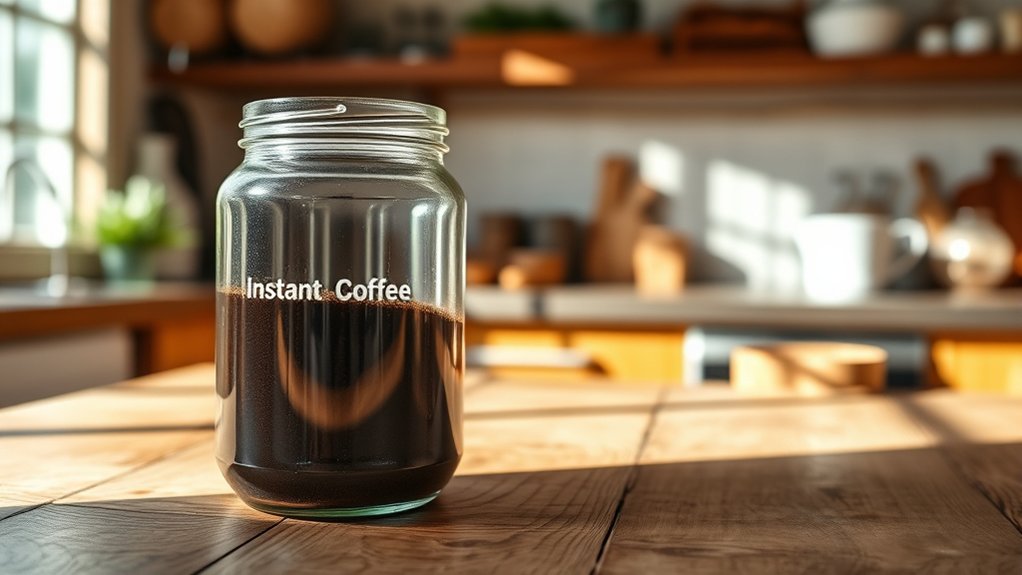
Although instant coffee may seem like a product with an indefinite shelf life, its unopened form typically lasts between 2 to 20 years, depending on packaging and storage conditions. You’ll find that vacuum-sealed or nitrogen-flushed containers extend freshness by minimizing oxygen exposure, which preserves the coffee brewing quality and caffeine content.
Studies show that caffeine, a stable compound, remains relatively unchanged over time, but flavor compounds can degrade, affecting taste rather than potency. To maximize shelf life, store unopened instant coffee in a cool, dry place away from light.
Understanding these factors helps you maintain *ideal* coffee brewing results when you decide to open the package, ensuring both the caffeine content and flavor integrity remain intact throughout the shelf life.
How Long Does Instant Coffee Last After Opening?
Once you open instant coffee, its exposure to air, moisture, and light speeds up the degradation process. This reduces both the flavor quality and freshness.
Opening instant coffee exposes it to air, moisture, and light, accelerating flavor loss and reducing freshness.
Typically, instant coffee stays at its best for about 3 to 6 months after opening if you store it properly. Make sure to keep it in an airtight container away from heat and humidity.
After this period, you’ll likely notice a drop in aroma and taste, which can affect your coffee brewing experience. The caffeine content usually stays pretty stable over time, but the flavor loss can make your cup less enjoyable.
To get the most out of your instant coffee, keep the container sealed tightly and store it in a cool, dry place. It’s also a good idea to check for clumping or any off-odors regularly to ensure you’re brewing coffee that still tastes great and has the right caffeine kick.
Key Factors Affecting Instant Coffee’s Shelf Life
Because instant coffee’s shelf life depends on multiple variables, understanding these factors can help you maximize its freshness and flavor. Key influences include moisture exposure, oxygen contact, and temperature fluctuations, which accelerate degradation and flavor loss.
You should store instant coffee in airtight containers to minimize oxygen exposure. This is vital for preserving flavor. Also, packaging innovations like vacuum-sealed or nitrogen-flushed packs can considerably extend shelf life by reducing oxidation.
Light exposure affects quality too, so opaque containers are preferable. Temperature stability plays a role as well; storing coffee in cool, dry environments slows chemical reactions that degrade taste.
Shelf Life Differences Among Instant Coffee Types
Understanding how storage conditions impact instant coffee’s shelf life sets the stage for comparing different types of instant coffee. Freeze-dried instant coffee typically offers superior flavor preservation due to its porous structure. It rehydrates quickly and retains aroma better than spray-dried varieties.
Spray-dried instant coffee, while generally less expensive, has a shorter shelf life because its denser granules lose volatile compounds faster. Packaging innovations play a critical role in extending shelf life across all types. Vacuum-sealed and nitrogen-flushed containers limit oxygen exposure, preserving freshness.
Moreover, single-serve packets reduce contamination risks compared to bulk jars. When choosing instant coffee, consider both the type and packaging. These factors collectively influence how long the coffee maintains ideal flavor and quality before degradation begins.
Why Moisture and Air Matter for Instant Coffee Freshness
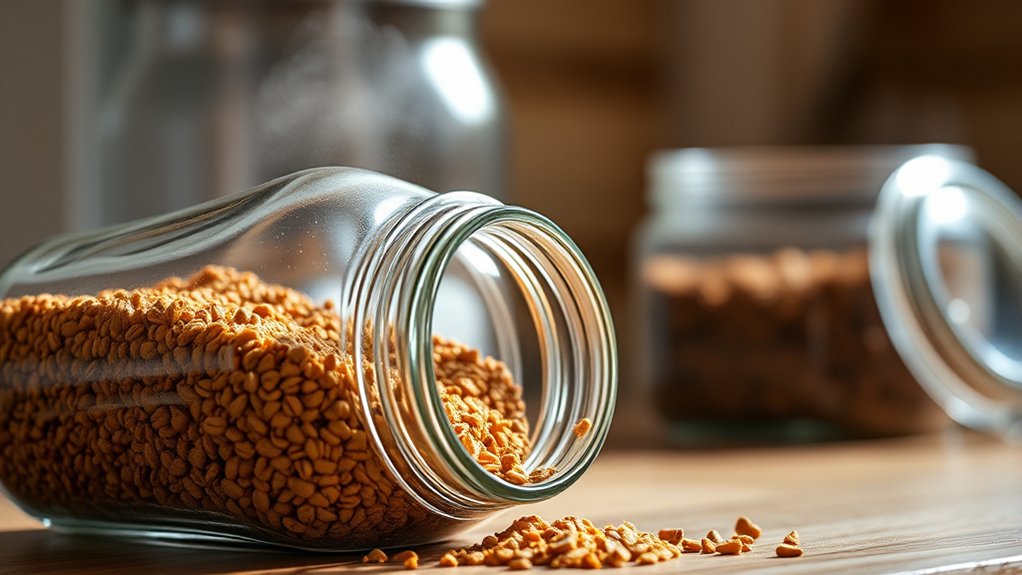
Since instant coffee is highly hygroscopic, it readily absorbs moisture from the air. This speeds up flavor degradation and causes clumping. So, you really need to control exposure to both moisture and air to keep the aroma and taste fresh. Here’s why it matters:
- Moisture triggers chemical reactions that break down flavor compounds, which reduces freshness.
- Air exposure oxidizes the coffee’s oils, leading to stale, flat notes.
- Humidity makes instant coffee particles clump together, affecting how well it dissolves and its consistency.
- Proper sealing helps limit oxygen and moisture from getting in, which keeps the aroma intact and extends the shelf life.
How to Tell If Instant Coffee Has Gone Bad
When instant coffee shows changes in smell, texture, or flavor, it’s a clear sign it may have gone bad. First, assess the aroma loss. Fresh instant coffee has a strong, rich scent, while spoiled coffee smells flat or stale.
Next, examine the texture. If the granules clump together or feel damp, moisture exposure has likely compromised the product.
Finally, flavor deterioration is a definitive indicator. Brew a small amount; if the taste is weak, bitter, or off, the coffee has degraded.
These sensory tests provide reliable, evidence-based cues to determine freshness. Avoid relying solely on expiration dates, as environmental factors accelerate spoilage.
How to Store Instant Coffee for Maximum Freshness
Noticing changes in your instant coffee’s aroma, texture, or flavor signals the need to reassess how you store it. Flavor preservation depends largely on minimizing exposure to air, moisture, heat, and light.
Changes in instant coffee’s aroma or flavor mean it’s time to improve your storage methods.
Follow these steps to optimize storage:
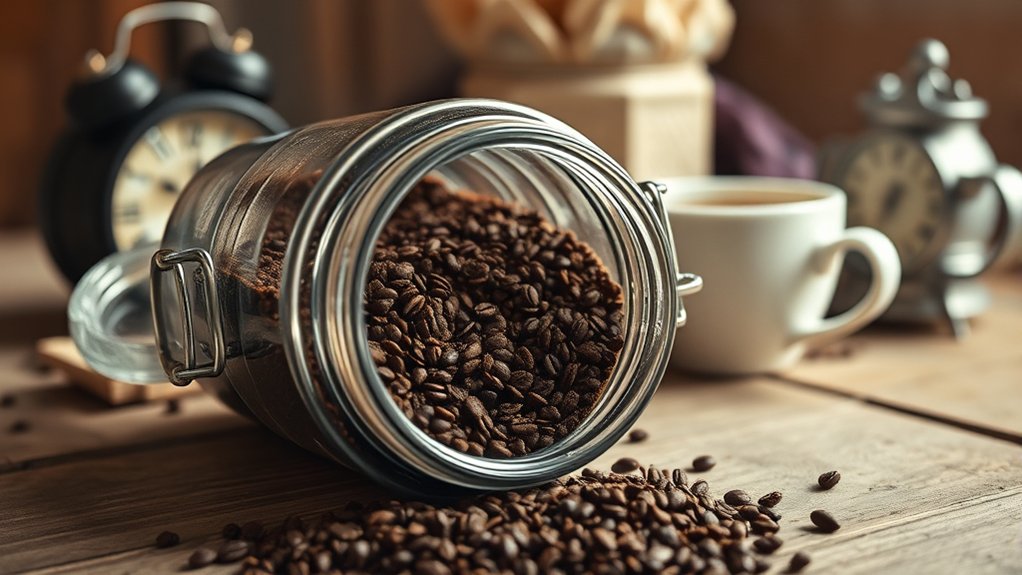
- Use airtight containers with secure seals. Container design matters for limiting oxygen and humidity exposure.
- Choose opaque containers to block light. Light degrades coffee compounds and affects taste.
- Store the container in a cool, dry place away from heat sources. This helps slow chemical changes.
- Avoid frequent opening to reduce air exchange. Too much air speeds up staling.
Keeping your coffee fresh is easier when you keep these simple tips in mind. Just a little care goes a long way!
How to Extend Instant Coffee’s Shelf Life at Home
Although instant coffee is designed for convenience, you can really extend its shelf life at home by controlling the environmental factors that speed up degradation. Store your instant coffee in an airtight container away from heat, light, and moisture to minimize oxidation, which is the main cause of flavor loss.
Using opaque containers helps reduce UV exposure, preserving the aroma compounds that are essential for good flavor.
Also, try to avoid frequent temperature changes by keeping your coffee in a stable, cool spot like a pantry, not the fridge.
When you brew, use filtered water at the right temperature—around 85 to 90°C—to get the best extraction of the preserved flavor compounds without adding bitterness.
By paying attention to these brewing details, you make sure your instant coffee tastes great and that all your efforts to extend its shelf life actually matter.
These simple steps help keep your coffee fresh and flavorful for longer.
Does Instant Coffee Go Bad or Just Lose Flavor?
Taking steps to preserve your instant coffee’s freshness is effective, but it raises an important question: does instant coffee actually go bad, or does it simply lose its flavor over time?
Scientifically, instant coffee doesn’t spoil in the traditional sense because of its low moisture content. However, it does undergo gradual aroma decline and flavor degradation. Here’s what you should know:
Instant coffee doesn’t spoil traditionally but gradually loses aroma and flavor over time.
- Oxidation causes flavor compounds to break down, which reduces flavor preservation.
- Exposure to moisture can cause clumping and potential microbial growth.
- Over time, volatile aromatic oils evaporate, diminishing aroma and taste.
- Storage conditions directly impact how fast the flavor fades.
How to Buy Instant Coffee That Stays Fresh Longer
When you’re buying instant coffee, one of the first things to look out for is the packaging. Airtight containers and vacuum-sealed packs are your best bet because they help keep the coffee fresh for a longer time.
Also, don’t forget to check the expiration date. It’s a simple step that can make a big difference, ensuring you get a product that still has great flavor.
Both of these things really affect how well your coffee holds up over time, so keeping them in mind will help you enjoy a fresher cup every time.
Packaging Types Matter
Three common packaging types, foil sachets, glass jars, and airtight tins, play a big role in how long instant coffee stays fresh. Packaging innovation is super important for keeping flavor and aroma intact. Plus, coffee branding often highlights these features.
Foil sachets are great because they block moisture and oxygen really well, which helps the coffee last longer.
Glass jars seal tightly to keep air out, but they let light in, which can make the coffee go bad faster.
Airtight tins are tough and protect coffee from both light and air, so they’re perfect for keeping coffee fresh for a long time.
Also, resealable packaging is a game changer. It helps keep coffee fresh even after you’ve opened it, which is key if you use it every day.
Check Expiration Dates
Understanding the expiration date on instant coffee is essential for ensuring peak freshness and flavor. Expiration labels provide a clear guideline on how long the product maintains its quality under recommended conditions. When buying, always check these dates to avoid stale or degraded coffee.
Remember, the date reflects optimal freshness, not safety. So, coffee past this point may lose aroma and taste but won’t necessarily spoil.
Moreover, the effectiveness of expiration labels depends on proper storage. Using airtight storage containers after opening helps preserve freshness by limiting exposure to moisture and oxygen, which accelerate quality loss.
Try to prioritize coffee packaged in moisture-resistant containers with clear expiration labels. This way, you can maximize shelf life and enjoy the best instant coffee experience.
Frequently Asked Questions
Can Instant Coffee Be Used in Baking or Cooking Recipes?
Yes, you can use instant coffee in baking or cooking recipes to enhance coffee flavor without adding liquid. It dissolves quickly, making it ideal for dry mixes or batters.
Using instant coffee powder intensifies baking enhancements, especially in chocolate-based desserts, by deepening the overall taste. Just adjust the amount based on your desired coffee intensity, ensuring it complements rather than overpowers the dish’s flavor profile.
Is Instant Coffee Healthier Than Brewed Coffee?
Imagine a study comparing two groups: one drinking instant coffee, the other brewed. You’ll find instant coffee offers similar health benefits, like antioxidants, but with slightly fewer polyphenols.
Nutritional comparison shows instant coffee often has less caffeine and fewer compounds, making it gentler on your stomach.
Does Instant Coffee Contain Caffeine?
Yes, instant coffee contains caffeine, typically ranging from 30 to 90 mg per serving. The exact amount depends on the brand and how you prepare it.
To keep the flavor fresh, manufacturers use airtight packaging, which often is sustainable. This packaging protects the coffee from moisture and air, helping maintain caffeine potency.
Can Instant Coffee Be Rehydrated Multiple Times?
You can’t effectively rehydrate instant coffee multiple times because the rehydration process extracts most soluble compounds in the first use.
Subsequent rehydrations lead to notably weaker brews with poor flavor retention.
Instant coffee is designed to dissolve quickly and deliver ideal flavor in a single rehydration.
So, trying to reuse it just wastes both taste and aroma.
For the best results, prepare fresh each time to enjoy the intended strength and flavor profile.
Are There Any Environmental Concerns With Instant Coffee Packaging?
Like a fleeting cloud, instant coffee packaging often leaves an environmental footprint. You should know many brands still use non-recyclable materials, contributing to landfill waste.
However, some companies now embrace biodegradable packaging and recyclable materials, reducing harm.
By choosing these options, you actively lower environmental impact.
Analyzing current trends, shifting towards sustainable packaging is essential for eco-conscious consumers like you who want to enjoy coffee responsibly.
Conclusion
Instant coffee can last up to 20 years unopened, but once opened, its freshness drops considerably within 6 to 12 months. You’ll want to store it airtight, away from heat and moisture to preserve flavor.
Remember, while instant coffee rarely goes bad, it loses potency over time. You can expect up to 60% flavor loss after a year.
By managing storage carefully, you can enjoy a consistently satisfying cup without waste or disappointment.