
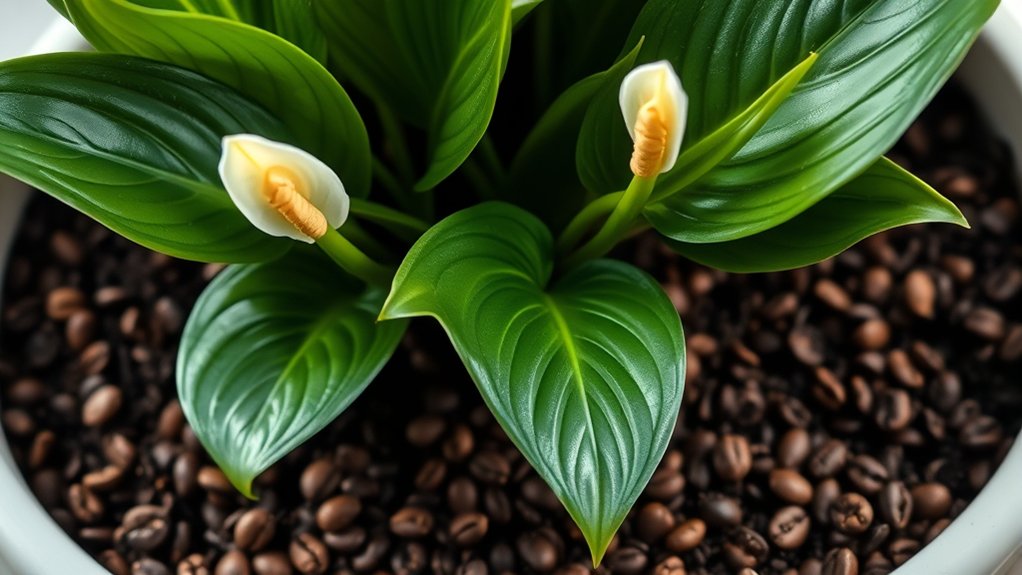
Do Peace Lilies Like Coffee Grounds – Gardening Tips Explained
You can boost your peace lily’s growth by using composted coffee grounds. They supply key nutrients like nitrogen and improve soil structure without harming the plant. Just make sure you’re using composted grounds, not fresh ones.
Fresh coffee grounds can stress the roots because of their acidity and caffeine. They might also cause mold or poor drainage, which you definitely want to avoid. So, it’s best to steer clear of fresh grounds altogether.
Use only small amounts of composted grounds—up to 20% of your soil mix—and mix them well. Keeping an eye on soil pH and how your plant is doing will help you catch any issues early. Try out these tips and explore other proper practices and alternatives to give your peace lily the best care possible.
Why Coffee Grounds Are Popular for Houseplants?
Several key factors make coffee grounds popular for houseplants, especially Peace Lilies. You’ll find that coffee grounds contain essential nutrients like nitrogen, phosphorus, and potassium, which support healthy plant growth.
Their slow ground decomposition guarantees nutrients release gradually, sustaining your plants over time without overwhelming them.
Additionally, coffee grounds improve soil structure and drainage, promoting better root health.
The natural coffee aroma also plays a role by potentially repelling pests such as fungus gnats and ants, helping maintain a cleaner plant environment.
While the acidity of coffee grounds can vary, their overall effect tends to increase soil acidity, which works well for acid-loving plants like Peace Lilies.
Understanding these factors helps you appreciate why coffee grounds remain a favored organic amendment in houseplant care.
Are Coffee Grounds Actually Good for Peace Lilies?
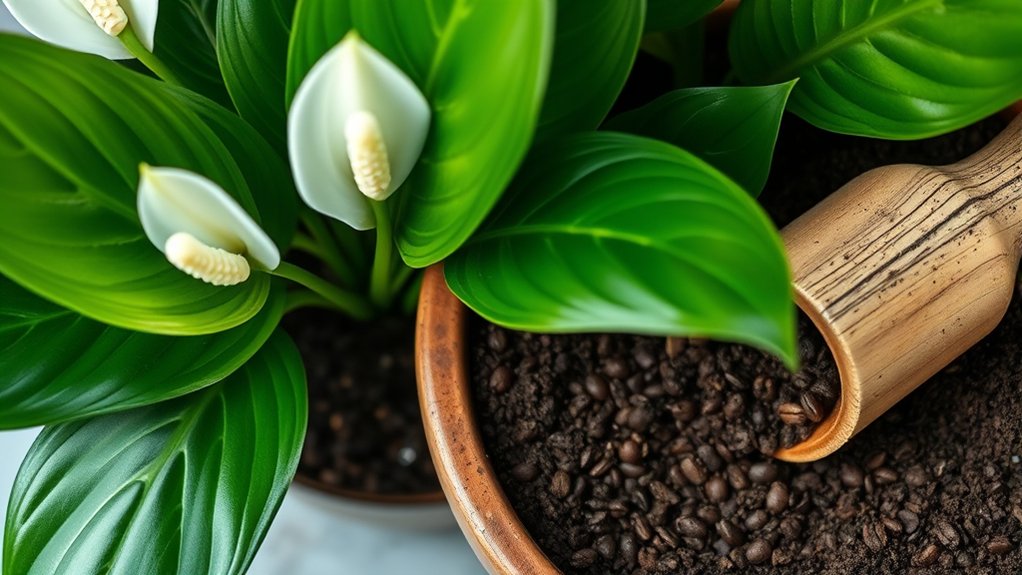
While coffee grounds offer nutrients and improve soil quality, their direct use with Peace Lilies requires caution. These plants prefer slightly acidic to neutral soil, so using coffee grounds as soil conditioners can unintentionally lower pH, stressing your plant.
Fresh grounds contain caffeine, which may inhibit root growth. Plus, if you use too much, it can lead to mold and oxygen depletion in the soil. Composting grounds before application helps reduce acidity and turns them into safer nutrients.
| Aspect | Effect on Peace Lilies |
|---|---|
| Fresh Coffee Grounds | Contain caffeine, inhibit growth |
| Used Grounds (Uncomposted) | Can cause mold, root suffocation |
| Composted Grounds | Provide nitrogen, safer soil conditioner |
| Soil pH Impact | Lowers pH, may stress lilies |
| Coffee Substitutes | Safer alternatives for soil conditioning |
What Coffee Grounds Do to Your Peace Lily’s Soil and Growth
When you add coffee grounds to your peace lily’s soil, they slowly release essential nutrients like nitrogen, phosphorus, and potassium that support growth.
But, fresh grounds can sometimes create a barrier that limits water and air flow, which can stress your plant.
Nutrient Impact On Soil
Although coffee grounds can enrich your peace lily’s soil with essential nutrients like nitrogen, phosphorus, and potassium, their impact depends heavily on how you use them. Fresh coffee grounds are acidic and can lower soil pH, potentially stressing your peace lily if applied excessively.
When composted properly, coffee grounds improve soil structure and boost microbial activity, fostering a healthier root environment. However, improper use may lead to excessive microbial breakdown, depleting soil oxygen and encouraging mold growth, which harms roots.
Additionally, bioactive compounds in used grounds, such as caffeine, can inhibit root elongation if not fully decomposed. To optimize nutrient benefits, incorporate coffee grounds into compost rather than applying them directly.
This ensures balanced soil pH and enhanced microbial activity that supports your peace lily’s soil health.
Effects On Plant Growth
Because coffee grounds contain acidic compounds and bioactive substances like caffeine, they can substantially influence your peace lily’s growth by altering soil chemistry and root development. The acidity affects the soil pH balance, which is vital for nutrient uptake.
Fresh grounds may inhibit root growth due to caffeine and slow decomposition, potentially reducing soil aeration by forming a hydrophobic layer.
If you apply too much, there’s a risk the soil pH could drop below the ideal 5.8 to 6.5 range. That can cause stress or nutrient deficiencies in your plant.
Composting coffee grounds before use helps a lot because it stabilizes the pH and allows nutrients to release gradually.
- Lowers soil pH, affecting nutrient availability
- May inhibit root and leaf development due to caffeine
- Slow decomposition can reduce soil aeration temporarily
- Risk of excessive acidity if over-applied
- Composting improves nutrient release and pH balance
Risks of Using Coffee Grounds Directly on Peace Lilies
If you apply fresh coffee grounds directly to your peace lily’s soil, you risk lowering the pH below the ideal range of 5.8 to 6.5, which can stress the plant. Fresh grounds contain caffeine and bioactive compounds that may inhibit root growth and leaf development.
Plus, coffee grounds can promote mold growth, which suffocates roots and increases the chances of fungal diseases. They also tend to form hydrophobic crusts that mess with soil aeration and water drainage, causing oxygen deprivation at the roots.
Using too much can create nutrient imbalances and even lead to soil toxicity. While coffee grounds might keep some pests away, they can attract others that are harmful to your peace lily.
How to Safely Use Coffee Grounds With Your Peace Lily
When you compost coffee grounds before adding them to your peace lily’s soil, you reduce acidity and enhance nutrient availability. This creates a healthier environment for your plant. Properly processed coffee residue serves as an effective soil amendment that supports balanced pH and nutrient uptake.
Composted coffee grounds improve soil health by balancing pH and boosting nutrient availability for peace lilies.
To safely use coffee grounds with your peace lily, follow these guidelines:
- Compost used, dried coffee grounds rather than applying fresh residues.
- Mix grounds into soil or compost to prevent hydrophobic layers and mold.
- Limit coffee grounds to no more than 20% of your soil amendments.
- Monitor your plant for stress indicators like yellowing or browning leaves.
- Avoid placing coffee residue directly on the plant’s surface to prevent root damage.
Why Composting Coffee Grounds Benefits Peace Lily Health
You’ll find that composting coffee grounds before use helps regulate their nutrient release. This way, your peace lily gets a steady supply of nitrogen, potassium, and phosphorus over time.
Plus, composting reduces soil acidity, which means you won’t have to worry about fresh grounds potentially harming the roots.
Nutrient Release Improvement
Although fresh coffee grounds contain nutrients, composting them before use considerably enhances nutrient release for your peace lily. Composting breaks down caffeine and other compounds through coffee oxidation, which helps reduce plant stress and toxicity.
This process guarantees a gradual nutrient supply, improving root aeration and supporting healthy growth.
Here’s how composted coffee grounds benefit your peace lily’s nutrient availability:
- Gradual release of nitrogen, phosphorus, and potassium
- Enhanced soil microbial activity promoting nutrient cycling
- Improved root aeration due to better soil structure
- Reduced risk of mold and microbial imbalances
- Minimized plant stress from caffeine and bioactive compounds
Soil Acidity Reduction
How does composting coffee grounds improve soil conditions for your peace lily? Fresh coffee grounds are highly acidic, with a pH between 5.0 and 5.5. This acidity can disrupt the soil pH balance that peace lilies prefer, which is slightly acidic to neutral.
Composting these grounds before use considerably reduces their acidity, creating a more suitable environment for your plant. It also boosts microbial activity, which helps break down organic matter faster and promotes a gradual release of nutrients.
Plus, composting prevents oxygen depletion and mold growth in the soil. This means it lowers the risk of root rot.
Best Ways to Use Coffee Grounds on Peace Lilies
When used properly, coffee grounds offer valuable benefits for peace lilies by enhancing soil structure and providing nutrients. After coffee brewing, used grounds should undergo ground composting to neutralize acidity before applying.
Properly composted coffee grounds enrich peace lilies by improving soil structure and adding essential nutrients.
Incorporate the composted grounds into the soil or compost mix rather than spreading on the surface to avoid water repellency. Use coffee grounds sparingly to maintain ideal soil pH and avoid stressing your peace lily.
It’s a good idea to mix coffee grounds thoroughly into compost before application. Applying small amounts every few weeks helps allow slow nutrient release, which is better for your plant.
Blending grounds into soil can also improve aeration and drainage. Keep an eye on your peace lily’s health so you can adjust how often you use coffee grounds.
Avoid putting fresh grounds directly on the soil since that can cause acidity spikes. Following these steps ensures coffee grounds benefit your peace lily’s growth effectively.
With a little care, your peace lily will thrive and enjoy the perks of coffee grounds without any hassle.
How Coffee Grounds Help Control Pests on Peace Lilies
Because coffee grounds contain compounds like caffeine and trigonelline, they serve as effective natural repellents against common pests such as fungus gnats and ants. These compounds act as pest deterrents by interfering with insect nervous systems, reducing their activity around your peace lily.
Plus, the strong aroma of coffee grounds messes with pest sensory cues, making your plant less attractive to insects. When you apply used, composted coffee grounds around the base of the peace lily, you create a physical and chemical barrier that discourages crawling pests.
But be careful not to use fresh grounds directly, as they can promote mold growth and actually attract pests.
Signs Your Peace Lily Reacts Badly to Coffee Grounds
You might start to see yellowing or wilting leaves if the coffee grounds make the soil too acidic or limit the oxygen around the roots. This usually means the roots aren’t doing well, often because the soil has become too dense and compact from too many coffee grounds.
Also, if you notice mold growing or a sour smell, that’s a sign that harmful microbes are affecting your peace lily’s health. It’s a clear warning that the coffee grounds are causing more harm than good.
Yellowing And Wilting Leaves
If your peace lily shows yellowing or wilting leaves after applying coffee grounds, it likely signals an adverse reaction to changes in soil conditions. Leaf discoloration often results from excessive soil acidity or nutrient imbalances caused by overapplication.
Wilting leaves may indicate root distress due to oxygen deprivation, especially if moldy grounds block soil pores.
Fresh coffee grounds can create a crust, reducing water absorption and further stressing the plant.
Watch for these signs:
- Yellowing leaves indicating nutrient stress
- Wilting despite adequate watering
- Surface crusting from fresh grounds
- Leaf drooping due to poor hydration
- Presence of mold affecting root oxygen
If you see these symptoms consistently, it’s a good idea to stop or adjust how you use coffee grounds to keep your peace lily healthy.
Root Health Deterioration
When coffee grounds accumulate excessively around your peace lily’s roots, they can create a hydrophobic crust that limits oxygen flow. This lack of oxygen leads to root suffocation. When roots don’t get enough oxygen, they start to decay, showing up as blackened, mushy roots with a sour odor.
The excess acidity from coffee grounds also stresses the roots. This stress makes it harder for the roots to take up nutrients, which speeds up their deterioration.
| Symptom | Cause | Effect |
|---|---|---|
| Blackened roots | Oxygen deficiency | Root decay |
| Mushy texture | Hydrophobic crust | Root suffocation |
| Sour odor | Decaying organic matter | Root infection risk |
| Yellowing leaves | Impaired nutrient uptake | Stunted growth |
Keep an eye out for these signs. Catching them early helps you avoid irreversible root health damage caused by using too many coffee grounds.
Mold And Fungus Growth
Although coffee grounds can benefit soil in moderation, excessive use often leads to mold and fungus growth around your peace lily. Fresh grounds create hydrophobic crusts that trap moisture, encouraging fungal proliferation and disrupting soil aeration.
Decomposing grounds release organic matter and VOCs, promoting mold spores like Aspergillus and Penicillium, reducing fungal resistance.
Recognizing early signs is key for mold prevention. Watch for fuzzy white, green, or black patches on the soil surface. You might also notice a moldy, musty odor near the plant base or visible fungal hyphae spreading in the soil.
Keep an eye on excessive soil moisture with poor drainage, too. Root suffocation symptoms linked to fungal growth can also be a warning sign.
Catching these indicators early helps you restore balance and keeps your peace lily healthier and more resistant to fungus.
Alternatives to Coffee Grounds for Fertilizing Peace Lilies
Several organic fertilizers offer safer and more effective alternatives to coffee grounds for nourishing peace lilies. Compost tea, worm castings, and slow-release amendments provide balanced nutrients without altering soil pH or causing compaction.
You should avoid applying fresh coffee grounds directly, as their acidity and caffeine content can harm roots. Instead, using aged, fully decomposed grounds (six months or more) minimizes these risks.
Incorporating natural fertilizers like kelp or crab meal supplies essential micronutrients that support healthy growth. Along with proper plant pruning, these alternatives contribute to overall plant vigor and pest prevention by reducing stress and improving resilience.
How to Balance Coffee Grounds With Other Fertilizers for Peace Lilies
Balancing coffee grounds with other fertilizers guarantees your peace lily receives a well-rounded nutrient supply without risking soil acidity issues. Use coffee compost rather than fresh grounds, as it’s gentler on roots and releases nutrients steadily.
Incorporate coffee grounds through organic blending with materials like worm castings or compost tea to enhance microbial activity and nutrient diversity.
Limit coffee grounds to 10-20% of your total compost or soil volume to prevent over-acidification. Regularly check soil pH and plant health to adjust your fertilizer mix accordingly.
Thoroughly compost coffee grounds before use. Mix coffee compost with organic fertilizers. Maintain coffee grounds at 10-20% of compost volume. Monitor soil pH consistently. Observe peace lily’s growth for nutrient balance.
When and How Often Should You Use Coffee Grounds on Peace Lilies?
When you incorporate coffee grounds into your peace lily’s care routine, applying them every 4 to 6 weeks during the plant’s active growing season guarantees a steady nutrient supply without overwhelming the soil.
For coffee grounds safety, always use composted grounds rather than fresh ones. Fresh grounds can harm roots, encourage mold, and reduce oxygen availability.
Limit the application frequency to prevent excessive soil acidity, which can stress your peace lily and cause leaf yellowing or browning.
It’s essential to monitor soil pH regularly and observe your plant’s response to adjust the application schedule accordingly.
Use coffee grounds sparingly as part of soil amendments or compost, avoiding direct, large amounts.
This careful approach ensures you optimize benefits while minimizing risks to your peace lily’s health.
Frequently Asked Questions
Can Coffee Grounds Affect the Fragrance of Peace Lily Flowers?
Yes, coffee grounds can alter your Peace Lily’s flower scent by changing the soil aroma and pH. Using too much may stress your plant, reducing fragrance intensity. But moderate, composted grounds usually won’t harm flower scent.
Do Coffee Grounds Influence Peace Lily Root Development Differently Than Other Fertilizers?
Like a slow-burning candle, coffee grounds influence peace lily root development differently by gradually altering soil acidity and nutrient balance. You’ll need to monitor these factors closely to prevent root stress compared to quick-acting fertilizers.
It’s a bit of a delicate dance because coffee grounds work slowly over time. So, keep an eye on how your peace lily responds. This way, you can adjust care before any problems develop.
Are There Specific Peace Lily Varieties That React Differently to Coffee Grounds?
Yes, peace lily varieties show different reactions to coffee grounds. Delicate types like ‘Power Petite’ often exhibit stress when exposed to them. On the other hand, more resilient varieties like ‘Sensation’ tend to tolerate composted grounds better.
How Do Coffee Grounds Impact the Water Retention of Soil for Peace Lilies?
Think of coffee grounds as tiny sponges that enhance soil acidity and nutrient balance. They help boost water retention by improving the crumbly texture of the soil.
However, you’ll want to compost them well first. This helps avoid harming your peace lily’s delicate root environment. It’s all about giving your plant the best chance to thrive!
Can Coffee Grounds Be Used in Hydroponic Setups With Peace Lilies?
You shouldn’t use coffee compost in hydroponic setups with peace lilies because it can disrupt root health by promoting microbial growth and clogging systems.
It’s best to stick to specialized nutrient solutions for ideal growth and stability. These solutions are designed to provide exactly what your peace lilies need without any risks.
This way, you can keep your plants healthy and your hydroponic system running smoothly.
Conclusion
Using coffee grounds on your peace lily can be a bit of a double-edged sword. They do offer essential nutrients like nitrogen, which your plant loves. But their acidity and the chance of mold can actually harm your peace lily if you apply them directly or use too much.
Think of coffee grounds like a spice in cooking. Use them sparingly, and they help your plant grow better. But if you overdo it, they can overwhelm your peace lily.
A good way to use coffee grounds is by mixing them with compost. Keep an eye on how your plant responds, and you can safely improve your soil without putting your peace lily at risk.