How Many Scoops Per Cup Of Coffee – Brewing Ratio Guide
You’ll want about one standard coffee scoop, about 10 grams or two tablespoons, for every 8-ounce cup to get a balanced brew. Adjust the amount slightly for your brewing method. French Press needs more scoops, Pour Over a bit less.
Be sure to level your scoop and consider grind size to keep flavors consistent. Getting this ratio right helps you avoid weak or bitter coffee. Keep exploring to master how scoop sizes and brewing variables shape your perfect cup.
How Many Coffee Scoops Make One Cup?
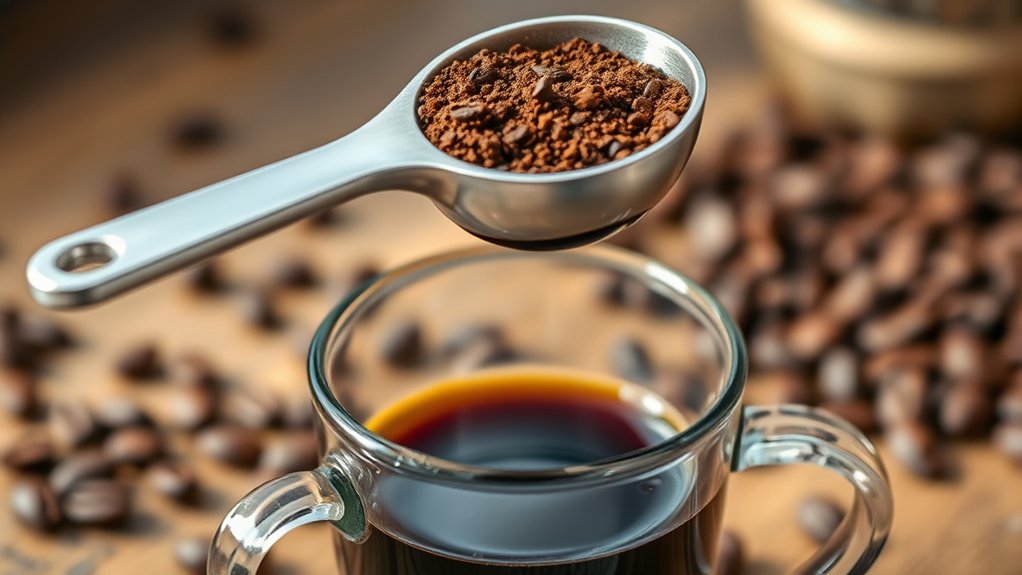
How many coffee scoops make one cup? Typically, one standard coffee scoop holds about 10 grams of ground coffee bean, which is enough for an 8-ounce cup.
To brew a balanced cup, you’ll want to use one scoop per cup, adjusting slightly based on your taste preferences.
Keep in mind, the brewing temperature plays a crucial role. Water between 195°F and 205°F extracts the best flavors from your coffee bean.
Using too hot or too cool water can under or over-extract, affecting the taste.
By measuring one coffee scoop per cup and maintaining the proper brewing temperature, you ensure a consistent and flavorful coffee experience every time.
This simple ratio helps you brew efficiently without guessing.
Why Scoop-To-Water Ratio Matters for Flavor
Because the scoop-to-water ratio directly influences extraction, getting it right is vital to bringing out your coffee’s best flavors. When you use too little coffee, under-extraction occurs, leading to weak, sour notes. Too much coffee causes over-extraction, producing bitter, harsh flavors.
The scoop-to-water ratio is key to avoiding weak or bitter coffee and unlocking its best flavors.
By balancing the scoop-to-water ratio, you guarantee ideal flavor extraction, allowing the natural characteristics of your coffee bean quality to shine. Quality beans deserve precise measurement to reveal their complexity and aroma fully.
Adjusting this ratio lets you tailor your brew strength and taste profile, whether you prefer bright acidity or rich body.
Ultimately, mastering your scoop-to-water ratio transforms every cup into a consistent, flavorful experience that highlights your coffee’s unique qualities.
What’s a Coffee Scoop, Anyway?
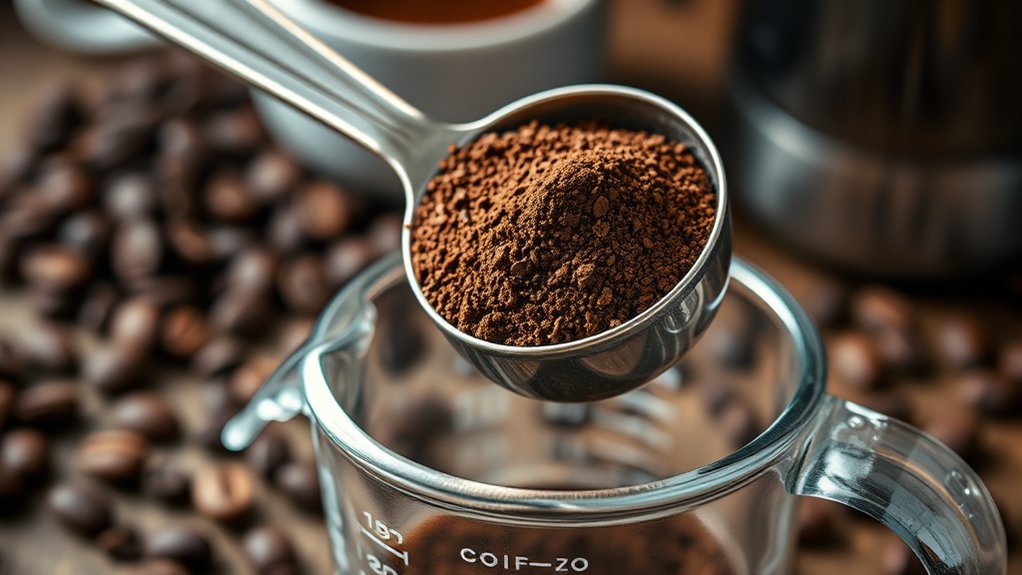
Getting your scoop-to-water ratio spot on starts with understanding the tool you use to measure your coffee: the coffee scoop. This simple tool guarantees you add the right amount of ground coffee, which directly affects your brew’s strength and flavor.
Here’s what you should know about a coffee scoop:
- It typically holds about 10 grams of coffee, roughly one tablespoon.
- It’s designed to measure ground coffee, not whole coffee beans, which vary in size due to the roasting process.
- The roasting process affects bean density, so scoops may differ slightly in weight depending on roast level.
- Using a scoop helps you maintain consistency, vital for replicating your favorite brew every time.
With this knowledge, you can better control your coffee’s taste and strength. Easy, right?
Measuring Coffee Scoops Accurately: Tips and Tools
Although a coffee scoop provides a handy baseline, measuring your coffee accurately requires more than just filling it up. To get consistent results, use a digital kitchen scale to weigh your coffee precisely. Scoops vary in size, so relying solely on volume can lead to inconsistent brews.
Also, pay attention to grind consistency. Finer grinds pack more densely, affecting the actual coffee mass per scoop.
How you store your coffee impacts measurement too. Proper coffee storage keeps beans fresh and grind size stable, which helps maintain a consistent scoop weight.
Try leveling off your scoops instead of heaping them to avoid variations.
Adjusting Scoop Sizes for Brewing Methods
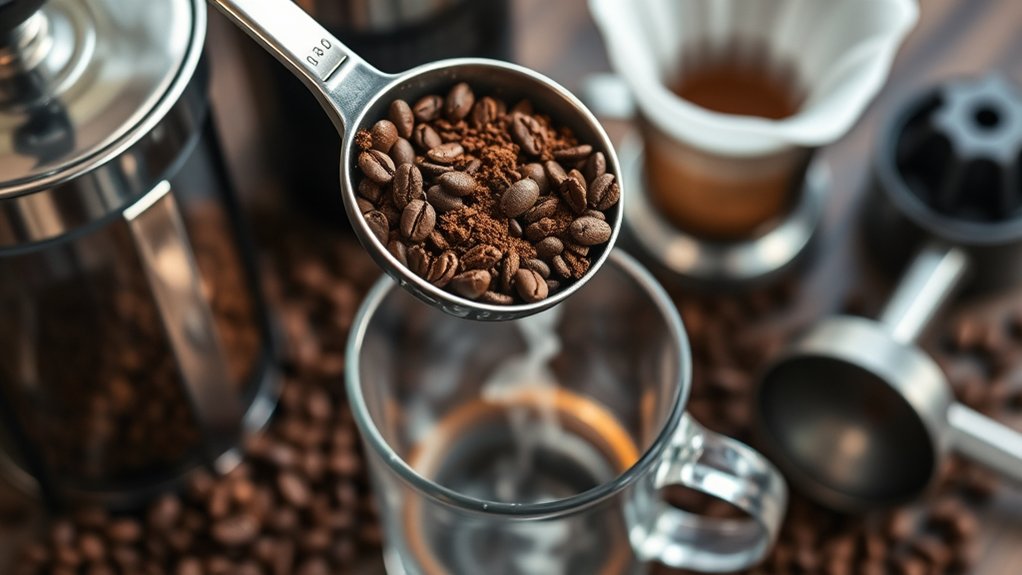
When you switch between brewing methods, adjusting your scoop size becomes essential to maintain the ideal coffee strength and flavor. Different methods extract flavors uniquely, so precision really matters.
Think about your coffee bean varieties—they affect grind size and density, which changes how much you should scoop. Also, brewing temperature plays a role; hotter water might need less coffee to avoid bitterness.
Immersion methods like French press usually call for coarser grinds and a slightly bigger scoop.
On the other hand, pour-over needs finer grinds and more precise scoop measurements to keep the extraction time balanced.
Scoops Per Cup for Drip Coffee Makers
When you’re brewing drip coffee, a standard scoop typically holds about two tablespoons of grounds. That amount works perfectly for an eight-ounce cup.
If you like your coffee stronger, you can simply add more scoops. Want it a bit milder? Just use less. It’s all about finding the right balance for your taste.
Once you get the hang of it, you’ll be brewing consistently satisfying coffee every time.
Standard Scoop Measurements
Since the perfect cup of drip coffee depends on accurate measurements, understanding standard scoop sizes is essential. Different coffee bean varieties and grinder types affect how much coffee fits into a scoop, making consistency key. Typically, a standard coffee scoop holds about 2 tablespoons (10 grams) of ground coffee.
Here’s what you should know about standard scoop measurements:
- One scoop usually equals 2 tablespoons of ground coffee.
- A “cup” in drip machines often refers to 6 ounces, not 8.
- Scoop size remains constant regardless of grind size, but grind affects extraction.
- Use a scale alongside scoops for precision, especially with varying bean densities.
Mastering scoop sizes helps you brew balanced drip coffee every time.
Adjusting For Strength
Now that you understand standard scoop measurements, you can tailor your coffee’s strength by adjusting how many scoops you use per cup. If you prefer a bolder flavor, increase the number of scoops slightly. Just be mindful of the coffee bean varieties you choose. Some beans naturally produce stronger or more delicate brews.
Conversely, fewer scoops result in a lighter cup, perfect for those who enjoy subtle flavors. Remember, brewing temperature also affects strength. Water that’s too hot can over-extract and create bitterness, while too cool water under-extracts, making the coffee weak.
Try experimenting with both scoops and temperature to find your ideal balance. Adjusting scoops per cup in your drip coffee maker helps you craft a personalized brew every time. It’s all about what tastes best to you!
Scoops Per Cup for French Press and Pour Over
How many scoops of coffee should you use for a perfect cup with your French Press or Pour Over? Getting this right hinges on precise measurements and consistent grind size.
Start with a standard ratio and adjust based on your grinder calibration and coffee storage conditions to maintain freshness.
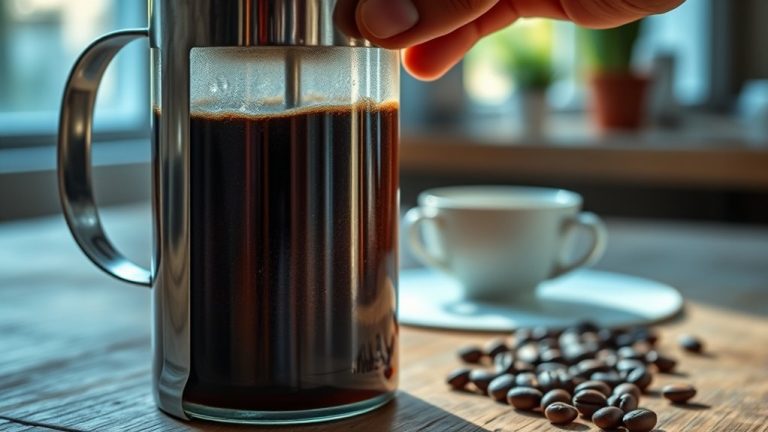
For French Press, use about 1.5 scoops (roughly 15 grams) per 8-ounce cup.
Pour Over typically requires 1 to 1.25 scoops per 8-ounce cup for balanced extraction.
Always calibrate your grinder to a coarse setting for French Press and medium for Pour Over.
Store coffee in airtight containers away from light to preserve flavor and aroma.
Following these steps ensures you brew a consistently flavorful cup every time.
Give it a try, and you’ll notice the difference!
Customizing Your Scoop Ratio by Taste
Although standard scoop ratios provide a solid starting point, adjusting them to suit your personal taste can really transform your coffee experience. Try experimenting with different amounts to bring out specific flavor profiles. Whether you like a bolder, richer cup or something lighter and more delicate, it’s all about what you enjoy.
Pay attention to how changes affect acidity, bitterness, and body. Your brewing technique also impacts how the coffee extracts, so tweak scoop ratios to match.
For example, French press usually needs more grounds, while pour over might require less.
Keep notes on what works best for each method and coffee variety. By customizing your scoop ratio, you get control over every sip. This way, your coffee matches your preferences perfectly and makes your daily ritual even better.
Common Coffee Scoop Mistakes to Avoid
When you’re measuring coffee, small mistakes with your scoop can throw off the entire brew. Whether you’re using different coffee bean varieties or adjusting grind size considerations, accuracy matters. Avoid these common scoop errors:
- Overpacking the scoop. Tamping down grounds changes the dose and extraction.
- Ignoring grind size. Finer grinds settle more compactly, affecting volume per scoop.
- Using inconsistent scoops. Different scoop sizes lead to unpredictable strength.
- Neglecting bean type differences. Oily beans can clump, altering scoop volume.
Stick to a consistent scoop size, level off grounds gently, and adjust your dose based on grind and bean variety. This precision ensures every cup matches your preferred strength and flavor profile.
It’s all about keeping things steady so your coffee tastes just right every time.
Scaling Scoop Ratios for Multiple Cups
Since brewing multiple cups requires maintaining consistent flavor, you’ll need to tailor your scoop ratios carefully. Different coffee bean varieties react uniquely to water and brewing temperature, so precise measurements ensure balanced extraction.
Simply multiplying scoops by cups works, but slight adjustments might be necessary based on bean density and grind size. Keep an eye on your brewing temperature, as it influences how coffee flavors develop.
Here’s a quick reference for scaling:
| Cups | Coffee Scoops | Water (ml) |
|---|---|---|
| 1 | 1 | 180 |
| 2 | 2 | 360 |
| 3 | 3 | 540 |
| 4 | 4 | 720 |
| 5 | 5 | 900 |
Scaling accurately keeps your coffee rich and consistent every time. Give it a try and see the difference!
Frequently Asked Questions
Can I Use Tablespoons Instead of a Coffee Scoop?
Yes, you can use tablespoons instead of a coffee scoop, but be precise. A standard coffee scoop is about two tablespoons, so using tablespoons helps you control the coffee flavor better.
Measuring with tablespoons ensures brewing consistency, so your coffee tastes just right every time.
Just remember to level off each tablespoon to avoid over-extraction or weak brews. This way, you’ll enjoy a balanced and consistent cup without needing a special scoop.
How Does Grind Size Affect Scoop Measurements?
Grind size directly impacts how much coffee fits into a scoop because grind consistency changes the density. Finer grinds pack more tightly, so you’ll get more coffee by weight per scoop. Meanwhile, coarser grounds are chunkier and less dense.
This affects extraction efficiency since uneven or incorrect amounts can lead to under- or over-extracted coffee. So, it’s important to adjust your scoop measurements based on grind size.
That way, you can achieve the perfect balance in flavor.
Does Water Temperature Impact Scoop-To-Water Ratio?
You might be surprised, but yes, water temperature does impact your scoop-to-water ratio. When the temperature’s off, water chemistry shifts, affecting extraction efficiency.
Hotter water extracts flavors more quickly, so you might need slightly fewer scoops to avoid over-extraction.
Cooler water slows extraction, meaning you may want more coffee grounds to hit that perfect balance.
Adjusting your ratio based on temperature guarantees every cup bursts with ideal taste.
Can I Reuse Coffee Grounds for Another Scoop?
You shouldn’t reuse coffee grounds for another scoop because it compromises coffee freshness and flavor. Once brewed, the grounds have released most of their oils and aromas, leaving a stale, bitter taste.
Instead of reusing, it’s better to dispose of the grounds properly or compost them if you can. That way, you guarantee each cup stays vibrant and rich, giving you the best coffee experience every time.
How Long Should I Wait Before Brewing After Scooping?
You don’t have to wait long after scooping. Think of coffee freshness like a fleeting breeze; it starts fading quickly once exposed.
For the best brewing consistency, grind and brew within minutes after scooping to lock in those vibrant flavors. Waiting more than 15 minutes lets oxygen dull the beans’ aroma and taste, so aim for quick action.
This way, your cup stays bold and balanced every single time.
Conclusion
Now you know that using just one standard coffee scoop per 6-ounce cup hits the perfect flavor balance for most brews. Remember, even a small tweak, like adding half a scoop more, can boost your coffee’s richness dramatically.
Getting your scoop-to-water ratio right isn’t just about numbers; it’s about crafting a cup that feels just right every morning. So, measure carefully and enjoy coffee that truly wakes up your taste buds!