How Many Tablespoons Of Coffee Per Cup Of Water – Brewing Ratio Guide
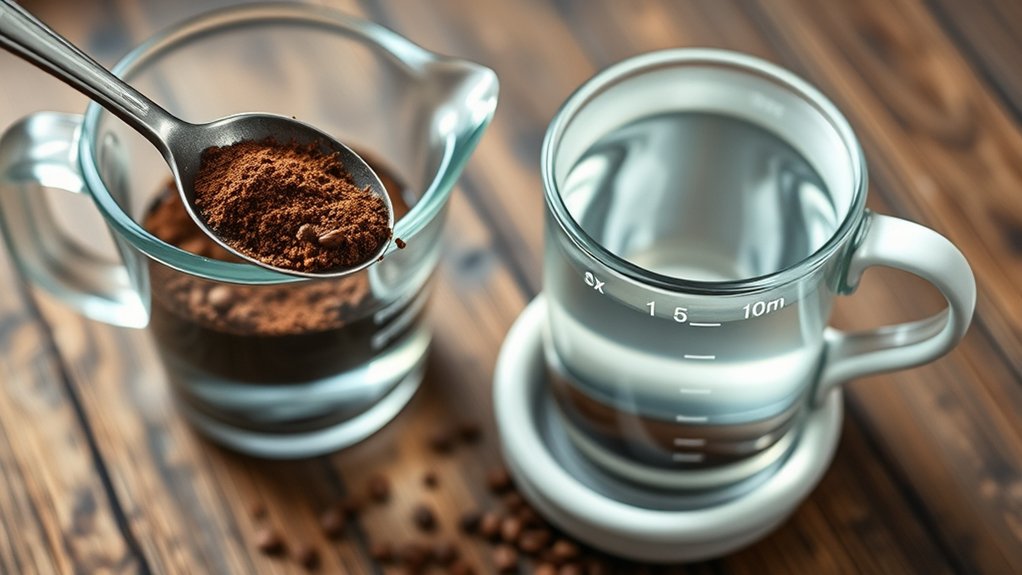
You’ll want about 1 to 2 tablespoons of ground coffee per 6-ounce cup of water for a balanced brew. For bigger cups, adjust up around 1.5 to 2.5 tablespoons for 8 ounces, and more for larger mugs.
Using a kitchen scale and converting tablespoons to grams helps keep your measurements spot-on. Avoid measuring whole beans with spoons and store coffee properly for the best flavor.
Keep exploring to fine-tune your perfect brew ratio. It’s all about finding what tastes best to you!
Recommended Tablespoons of Coffee Per Cup
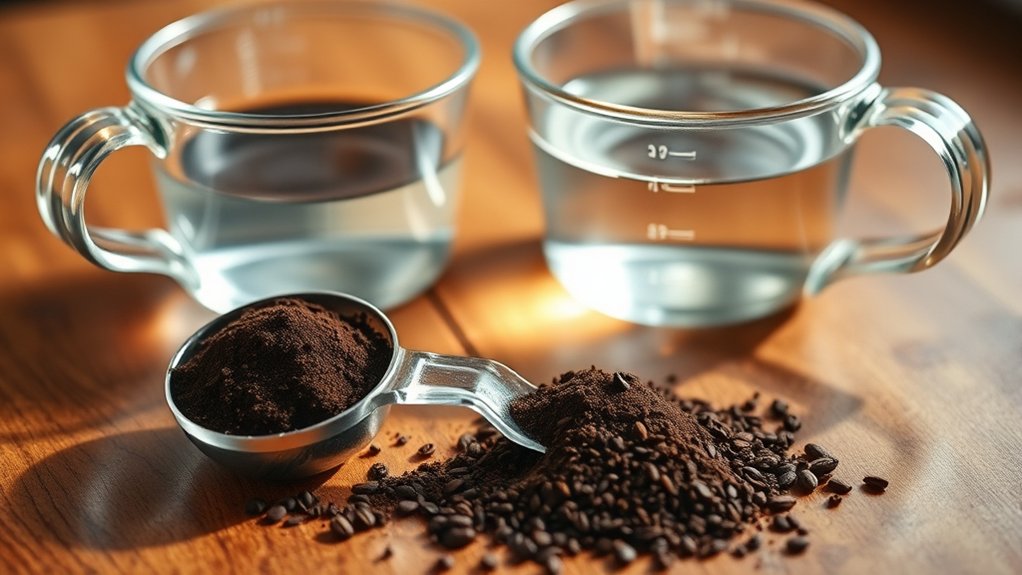
When you brew coffee, using the right amount of grounds is key to achieving your desired strength. A standard guideline suggests 1 to 2 tablespoons of coffee per 6-ounce cup of water.
For an 8-ounce cup, aim for about 1.5 to 2.5 tablespoons.
Using 1 tablespoon per 6 ounces yields a milder brew, while 2 tablespoons intensify the flavor. Adjust within this range to match your preference.
Remember, consistent coffee storage impacts freshness, which influences how your measured grounds extract during brewing.
Also, keep brewing temperature in mind. Optimal heat ensures proper flavor extraction, complementing your coffee-to-water ratio.
Measuring Coffee Beans vs. Grounds
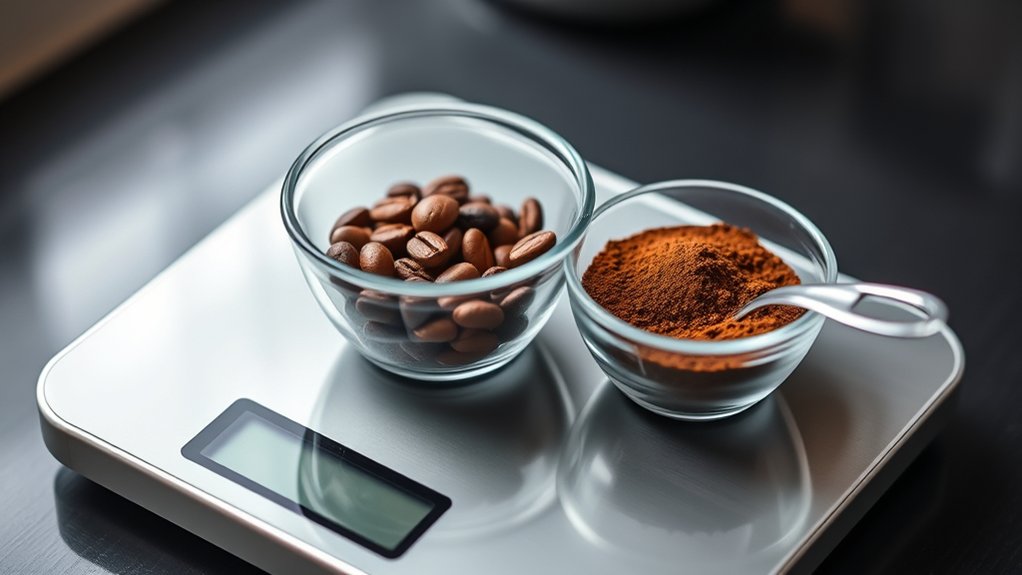
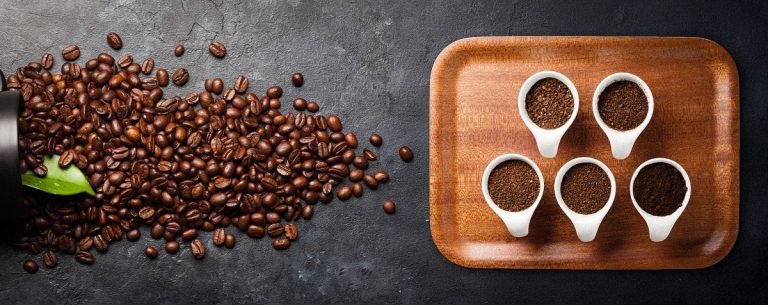
When you’re measuring coffee, it’s best to focus on the grounds rather than the whole beans. That’s because their volume and weight can be pretty different.
Ground coffee is actually denser and more consistent, so weighing it’s way more reliable than measuring by volume.
If you weigh your grounds in grams, you’re making sure your brewing ratio is spot on. This way, you get a consistent flavor every single time you brew.
Beans Versus Grounds
Although measuring coffee might seem straightforward, using whole beans instead of grounds can lead to inconsistent results because their densities and volumes differ markedly. A tablespoon of whole beans weighs less and occupies more space than the same volume of ground coffee due to air gaps.
When you grind beans, their density increases, making grounds heavier and more compact per tablespoon.
For reliable brewing, it’s best to measure your coffee after grinding, ensuring better grind consistency and accuracy. Plus, proper coffee storage affects freshness and grind quality, which impacts taste.
To avoid variability, weigh your coffee rather than relying on volume measurements, especially when switching between beans and grounds.
This approach guarantees a consistent brew every time, letting you enjoy your perfect cup without guesswork. It really makes a difference once you get the hang of it!
Volume And Weight
How do you guarantee your coffee measurements translate into the perfect brew? Understanding the difference between volume and weight is key. Coffee storage and brewing temperature impact freshness and extraction, but precise measurement guarantees consistency.
Here’s what you need to know:
- A tablespoon of coffee beans isn’t equal to a tablespoon of grounds. Beans contain air pockets, making them less dense.
- Ground coffee weighs about 5 grams per tablespoon, but this varies with grind size and roast level.
- Using a scale to weigh your coffee grounds eliminates inconsistencies caused by volume measurements. This guarantees your brew stays true every time.
Converting Tablespoons of Coffee to Grams
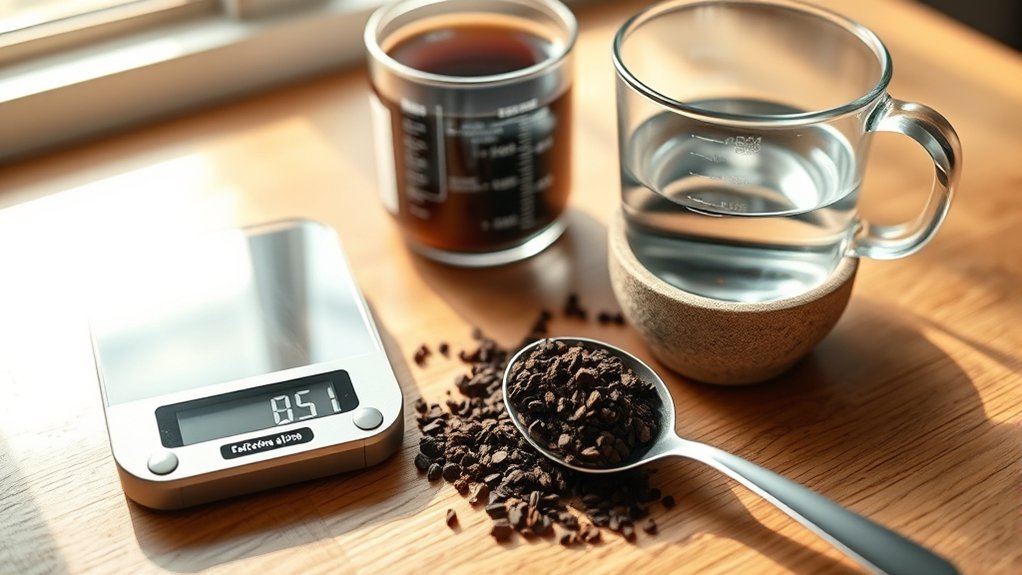
When you convert tablespoons of coffee to grams, you’ll see that weight gives you a more consistent measure than volume.
A standard tablespoon usually weighs somewhere between 5 to 10 grams, depending on how dense the grind is. So, knowing this range can really help you nail the perfect brew.
Honestly, using a kitchen scale instead of just spoon measurements makes a big difference—it sharpens your accuracy and gives you better control over your coffee-to-water ratio.
Tablespoons Versus Grams
Since coffee grounds can vary in density and grind size, converting tablespoons to grams is essential for accuracy. Using grams helps you maintain consistency, especially when factors like coffee storage and grind consistency affect volume.
Here’s why grams outperform tablespoons:
- Tablespoons measure volume, which changes with grind size and how tightly coffee is packed.
- A standard tablespoon roughly equals 5 grams, but this fluctuates, causing inconsistent brews.
- Weighing coffee in grams eliminates guesswork, ensuring precise ratios for every cup.
Standard Coffee Weight
A single tablespoon of coffee grounds usually weighs between 5 and 7 grams, depending on factors like grind size, roast level, and how tightly the coffee is packed. For standard conversions, 1 tablespoon typically equals about 5 grams. Understanding this helps you control your coffee-to-water ratio more precisely, improving brewing consistency.
Keep in mind that grind consistency plays an essential role here. Finer grinds pack more densely, which changes the weight per tablespoon. Similarly, roast level affects density. Darker roasts are lighter, so the same volume weighs less.
Proper coffee storage also influences grind consistency and freshness, which indirectly impacts your measurements. By converting tablespoons to grams, you gain accuracy that volume measurements alone can’t offer.
This way, you make sure each cup tastes just right every time.
Measuring Accuracy Tips
Although one tablespoon of coffee grounds generally weighs about 5 grams, variations in grind size and density can throw off your measurements. To guarantee precise brewing, converting tablespoons to grams is essential.
Here’s how you can improve measuring accuracy:
- Use a digital kitchen scale for consistent results, as weight measurement trumps volume in precision.
- Maintain grind consistency by adjusting your grinder to a uniform particle size, which affects both weight and extraction.
- Store coffee properly in an airtight container away from light and moisture to preserve freshness and prevent weight fluctuations caused by humidity.
Following these tips will help you get the most out of your coffee every time. It’s all about keeping things consistent and fresh!
Finding Your Perfect Coffee-to-Water Ratio
When you adjust the coffee-to-water ratio, you control the strength and flavor of your brew. Start with the standard 1 to 2 tablespoons of coffee per 6-ounce cup of water, then tweak within that range to suit your taste.
Measuring by weight, about 5 grams per tablespoon, ensures consistency.
Keep in mind that proper coffee storage preserves freshness, which directly impacts flavor extraction. Also, maintain ideal brewing temperatures to avoid under or over-extraction, which affects taste.
Experiment systematically by adjusting coffee amounts while keeping water volume and temperature steady.
Over time, you’ll discover the precise ratio that balances strength and flavor perfectly for your preferred brewing method. This approach guarantees a consistently satisfying cup tailored to your palate.
Ideal Tablespoons of Coffee for French Press Brewing
Since French press brewing demands a coarser grind and full immersion, using about 2 tablespoons of coffee per 6 ounces of water guarantees a balanced extraction. To get consistent results, pay close attention to grind consistency and proper coffee storage. Stale beans can really undermine your brew’s quality.
Here’s how to perfect your French press measurements:
- Use roughly 8 tablespoons of coarsely ground coffee for an 8-cup (48-ounce) press.
- Adjust between 1.5 to 2 tablespoons per 6 ounces to suit your strength preference.
- Measure your coffee by weight (around 10 grams per 6 ounces) for precision.
Mastering these details ensures a flavorful, robust cup every time. It’s all about finding that sweet spot that works for you!
Measuring Coffee for Drip and Pour-Over Methods
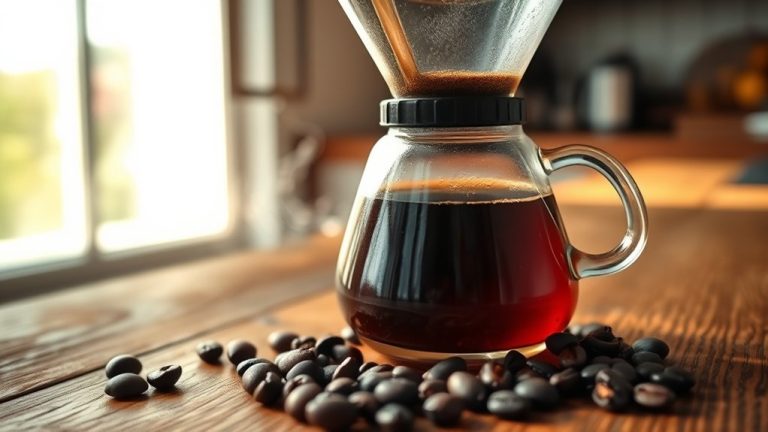
If you want to brew a consistently great cup using drip or pour-over methods, measuring your coffee accurately is key. Start with 1.5 tablespoons or about 7.5 grams of coffee per 6-ounce cup. Using a scale guarantees better consistency than tablespoons, especially when grind consistency affects extraction.
Proper coffee storage also preserves freshness, which impacts flavor regardless of measurement precision.
| Measurement Method | Amount per 6 oz Cup |
|---|---|
| Scale (grams) | 5 – 10 g |
| Tablespoons | 1 – 2 tbsp |
| Pour-over standard | 1.5 tbsp |
| Adjust for strength | More or less |
Stick to these guidelines, and your drip or pour-over brew will deliver balanced, flavorful results every time.
Measuring Coffee for Espresso
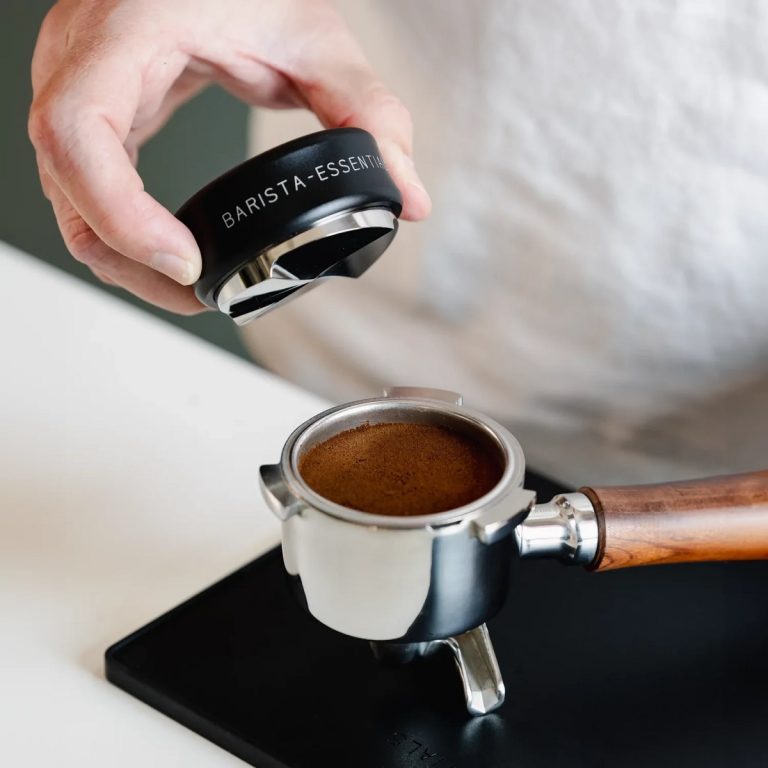
Although espresso requires less volume than drip coffee, you’ll need to measure your grounds carefully to get the perfect shot. Precision is essential since espresso’s intense flavor depends on exact coffee-to-water ratios.
Use a scale instead of tablespoons to guarantee consistency, as grind size and compaction affect volume measurements.
For a single shot, weigh 7–9 grams (1.5 to 2 tablespoons). For a double, use 14–18 grams (3 to 3.5 tablespoons).
Maintain grinder calibration to achieve a consistent grind size, which is vital for even extraction.
Also, store coffee properly in airtight containers to preserve freshness and prevent flavor degradation.
Adjusting Coffee Amounts for Different Cup Sizes
You’ll want to start with a standard cup size—about 8 ounces—and then adjust your coffee amount accordingly.
It’s pretty simple: just scale up or down while keeping roughly 1 to 2 tablespoons per 6 ounces. This way, you’ll get a consistent flavor every time.
Of course, feel free to tweak the coffee amount to match your preferred strength, whether you like it bold or mild.
Standard Cup Size
How much coffee should you use for different cup sizes? A standard cup size is typically 6 ounces, and it’s usually best to use 1 to 2 tablespoons of coffee. Getting the amount just right helps make sure your coffee tastes great.
Adjusting your coffee amount precisely ensures optimal flavor. This is especially true when you think about coffee storage and brewing temperature. Both of these factors impact freshness and extraction, so they matter.
- For a 6-ounce cup, use 1 to 2 tablespoons.
- For an 8-ounce cup, increase to about 1.33 to 2.67 tablespoons.
- For larger mugs, 1.5 to 3 tablespoons keep the strength without making it bitter.
Always check your cup size before you start brewing. Changing the coffee-to-water ratio based on your actual cup volume helps keep your brew consistent and flavorful.
Proper coffee storage preserves bean quality. Also, keeping the right brewing temperature helps to extract the best taste from your coffee.
Scaling For Larger Cups
When brewing larger cups of coffee, you need to increase the coffee amount proportionally to maintain the right strength and flavor.
For example, a 12 oz mug typically requires 2.5 to 3.5 tablespoons, while a 16 oz cup calls for 3.5 to 4.5 tablespoons.
Multiply your cup size by the standard ratio, 1 to 2 tablespoons per 6 oz, to scale accurately.
Using a kitchen scale helps you measure precisely and ensures consistency across batches.
Always keep your coffee storage airtight to preserve freshness because that directly impacts flavor.
Also, make sure to maintain the correct brewing temperature to extract the ideal taste without bitterness.
Personal Strength Preferences
Adjusting the coffee amount to suit your personal strength preferences can transform your daily brew from ordinary to exceptional. To tailor your coffee perfectly, consider these key steps:
Start with 1.5 to 2 tablespoons of coffee per 8-ounce cup and adjust by adding half a tablespoon if you prefer a stronger flavor. Just be careful not to overdo it, since over-extraction can make your coffee bitter.
Remember that brewing temperature impacts extraction. Using the right heat helps preserve flavor without scorching the grounds.
Store your coffee properly in an airtight container away from light and moisture to keep it fresh. This way, you’ll get consistent strength every time.
Experimenting with coffee-to-water ratios is a great way to find your ideal balance. And don’t forget, adjusting amounts for different cup sizes lets you customize each brew.
That way, every cup becomes a satisfying experience tailored just for you.
Adjusting Coffee Amounts for Desired Strength
Although it might seem simple, changing the amount of coffee you use per cup directly impacts the strength and flavor of your brew. Start with 1 to 2 tablespoons per 6-ounce cup, then adjust gradually to find your ideal strength, up to 3 tablespoons if you want a bolder taste.
Keep in mind that using more coffee grounds increases flavor extraction but can lead to bitterness if overdone.
Your personal preference and brewing method both play vital roles here. Also, proper coffee storage guarantees freshness, which affects flavor clarity.
Don’t overlook brewing temperature; too hot or too cool water can alter how coffee compounds extract, influencing strength and taste.
Experiment thoughtfully to balance these factors for the perfect cup every time.
Common Coffee Measurement Mistakes to Avoid
Because accurate coffee measurement directly influences your brew’s consistency, avoiding common mistakes is essential. Missteps often start with how you measure and store your coffee. Here are three key pitfalls to watch for:
First, using tablespoons for whole beans instead of ground coffee leads to inconsistent flavor. That’s because volume varies a lot depending on grind size and density. So, it’s better to measure by weight for accuracy.
Next, overpacking or unevenly filling your measuring spoon causes uneven extraction. This can mess with the taste and strength of your coffee. Just scoop gently and evenly to keep things balanced.
Finally, neglecting grinder calibration and proper coffee storage results in stale grounds or the wrong grind size. Both of these will hurt your brew’s quality. Keeping your grinder dialed in and storing beans properly makes a big difference.
Tips for Measuring Coffee With Scales and Scoops
Accurate measurement is the foundation of a great cup, so choosing the right tools makes all the difference. Using a kitchen scale to weigh your coffee in grams offers unmatched precision compared to scoops, which can vary because of grind consistency and bean density. Always tare your scale with an empty container to avoid errors and guarantee exact ratios.
While a standard scoop holds about 2 tablespoons or 10 grams, relying solely on scoops can lead to inconsistencies, especially if your grind size changes. For the best results, pair precise coffee measurement with careful water weighing.
How to Experiment With Coffee Ratios for Best Flavor
When you start experimenting with coffee ratios, you’ll discover the flavors that suit your palate best. Begin with the standard 1-2 tablespoons per 6 ounces of water, then adjust to taste. Pay close attention to the coffee aroma and grind consistency because they greatly affect extraction and flavor.
Try using a kitchen scale to measure coffee precisely in grams, then convert to tablespoons for consistency. Brew small batches with varying ratios to find your preferred strength and flavor profile.
Make sure to keep detailed notes on each trial, including grind size and brewing method. This way, you can refine your ideal ratio over time.
This methodical approach guarantees you get the coffee’s fullest aroma and balanced taste every time. Give it a try, and enjoy the process of dialing in your perfect cup!
Frequently Asked Questions
How Does Water Temperature Affect Coffee Extraction?
You’ll find water temperature directly impacts extraction by influencing water chemistry and solubility. Maintaining temperature stability guarantees consistent extraction, balancing flavors without bitterness or sourness, so your coffee tastes precisely how you want every single time.
It’s kind of like Goldilocks — not too hot, not too cold. When the temperature’s just right, the flavors come out perfectly. Too hot, and you risk over-extracting; too cold, and your coffee can end up weak and underwhelming.
What Grind Size Works Best for Each Brewing Method?
You’ll want a coarse grind for French press, medium for drip, and fine for espresso. Proper coffee bean storage and regular brewing equipment maintenance preserve flavor and guarantee your grind size extraction stays consistent and balanced every time.
Keeping your grind size consistent really makes a difference in the taste of your coffee. Plus, taking care of your equipment means every cup will taste just right. It’s all about making sure each brewing method gets what it needs to shine.
Can the Type of Coffee Bean Influence Measurement Ratios?
Yes, coffee bean varieties definitely influence measurement precision. Since bean density and moisture differ, you’ll need to adjust your coffee-to-water ratio accordingly.
This helps you achieve the perfect strength and flavor for each specific variety you brew. It’s all about tailoring your approach to get the best cup every time. So, don’t be afraid to experiment a little!
How Long Should I Steep Coffee in a French Press?
You should steep your French press coffee for exactly 4 minutes, no more, no less. Think of it like timing an espresso preparation to perfection.
Proper coffee storage keeps grounds fresh. This way, each steep delivers rich, balanced flavor without bitterness or sourness.
Does Altitude Impact Coffee Brewing Times or Ratios?
Yes, altitude effects impact your coffee brewing times and ratios. You’ll need brewing adjustments like grind size or steeping duration to compensate for lower boiling points and pressure. This helps ensure ideal extraction and consistent, flavorful coffee every time.
Conclusion
Think of your coffee-to-water ratio as the secret recipe that reveals your perfect brew. By measuring tablespoons carefully and adjusting to your taste, you’re not just making coffee. You’re crafting a personalized experience.
Avoid common mistakes, experiment boldly, and use scales or scoops for precision. With each cup, you’re fine-tuning the balance until your coffee sings just right.
So grab your tools, trust your palate, and brew with confidence every time.