Can Chickens Eat Coffee Grounds – Safety Guide Explained
You shouldn’t feed chickens coffee grounds directly, as caffeine can harm their nervous and circulatory systems. This could also affect egg production, which is something you want to avoid.
However, dried, mold-free grounds are safe and effective as coop bedding. They help control odors and moisture, making the coop a nicer place for your chickens. Just make sure to fully dry and store them properly to prevent mold from growing.
Using grounds responsibly promotes a healthy environment without toxicity risks. Keep exploring to understand safe handling, signs of caffeine toxicity, and bedding alternatives. It’s always good to know all your options!
What Are Coffee Grounds and How Are They Used With Chickens?
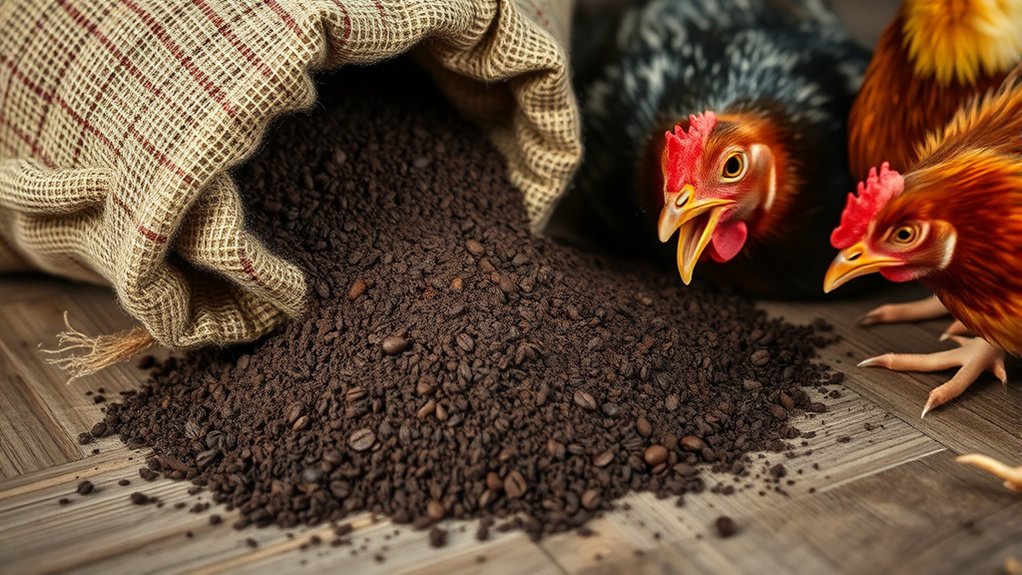
Although coffee grounds are often discarded as waste, they serve a valuable purpose in chicken care by acting as an effective bedding material. These used remnants of brewed coffee retain a faint coffee flavor but no longer contain caffeine, making them safe for coop use.
Used coffee grounds make safe, effective bedding for chickens, free of caffeine but full of benefits.
You can dry and spread coffee grounds alone or mix them with pine shavings or straw to improve absorbency and odor control.
Their ability to manage moisture keeps the coop dry and reduces unpleasant smells, creating a healthier environment for your chickens.
Plus, coffee grounds support ground composting efforts by breaking down naturally and enriching soil when you eventually compost the bedding.
Using coffee grounds this way transforms waste into a sustainable resource benefiting both poultry management and the environment.
Do Chickens Eat Coffee Grounds and Are They Safe?
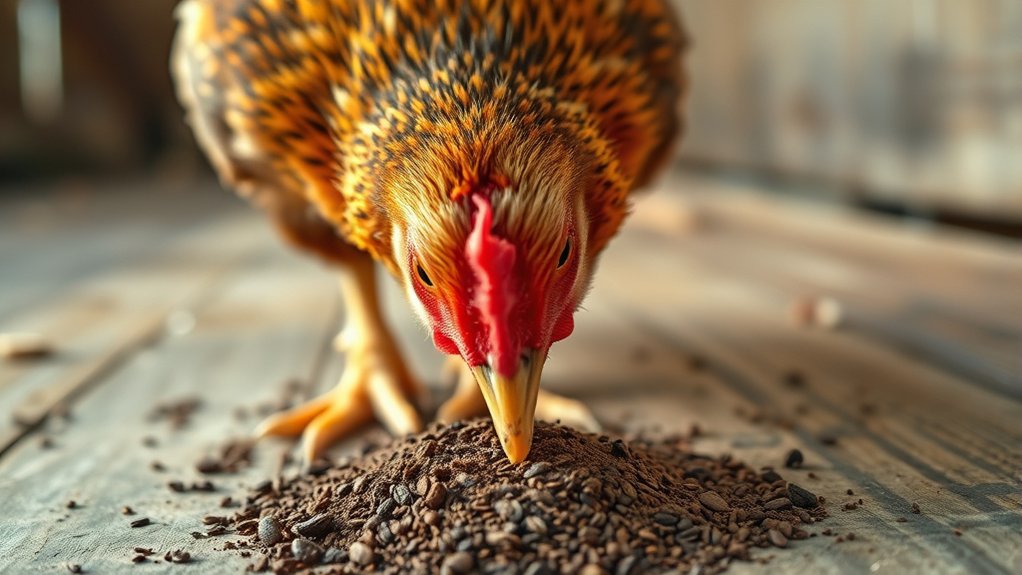
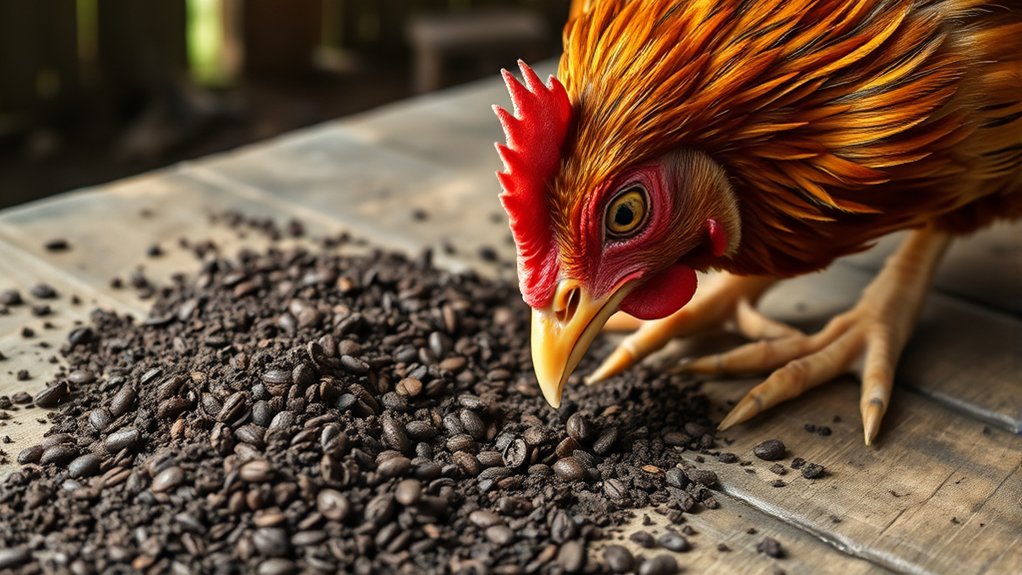
While chickens rarely eat coffee grounds on their own, it’s important to understand if they’re safe for your backyard flock. Chickens usually aren’t attracted to the taste of coffee, so they tend to avoid it naturally. This means they don’t often consume coffee grounds, which helps reduce any toxicity concerns.
Research shows that moderate exposure to properly dried coffee grounds doesn’t harm chickens or affect their egg production. Just make sure the grounds are free from mold and stored well to prevent any health risks.
A great way to handle coffee grounds is through composting. Composting breaks down caffeine and other compounds, making the grounds less harmful for your chickens.
What Does Caffeine Do to Chickens?
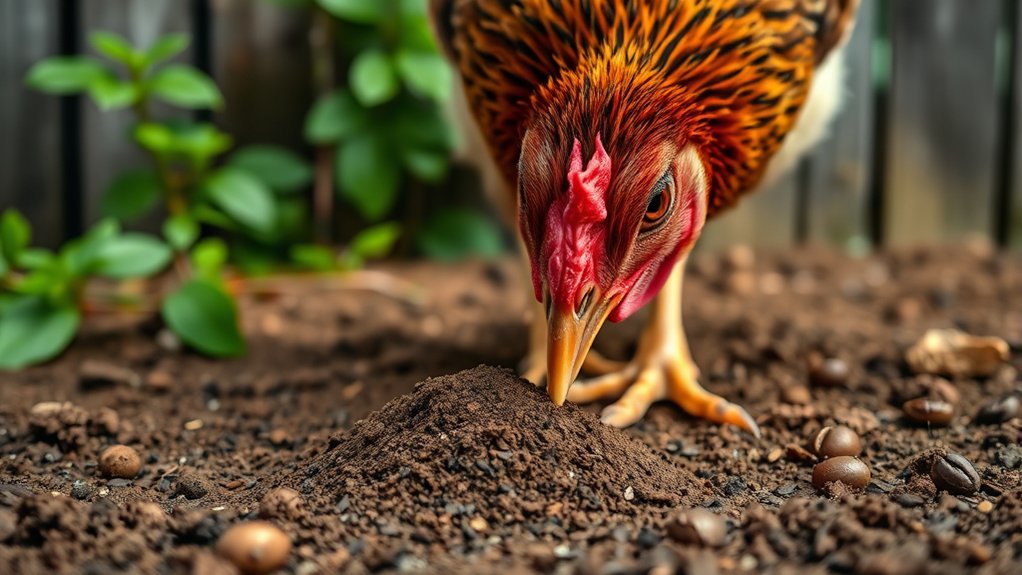
Because caffeine acts as a powerful stimulant, it can profoundly affect your chickens’ nervous and circulatory systems. Chickens metabolize caffeine differently than mammals, but as with other poultry stimulants, excessive intake can lead to increased heart rate and hyperactivity.
Caffeine metabolism in chickens isn’t fully understood, but its impact on calcium absorption is clear. This may impair eggshell formation in hens.
While moderate caffeine exposure is unlikely to cause severe issues, chronic or high doses pose risks and can disrupt essential physiological functions.
You should consider these effects carefully when feeding your flock any caffeine-containing substances. The stimulant properties of caffeine can alter their behavior and health over time.
Signs of Caffeine Toxicity to Watch For in Poultry
You need to watch for early signs of caffeine toxicity, like an increased heart rate, tremors, and hyperactivity. Also, keep an eye out for behavioral changes such as loss of coordination, weakness, or unusual vocalizations—they can signal a problem too.
It’s really important to recognize these symptoms quickly since they usually show up within 30 to 60 minutes after ingestion.
Early Toxicity Symptoms
If your chickens ingest caffeine-containing substances, you should watch closely for early signs of toxicity that can appear within 30 to 60 minutes. Toxicity symptoms in poultry include increased heart rate, trembling, and nervousness.
You might notice rapid breathing and muscle tremors as well.
These early indicators are critical for evaluating poultry health and intervening promptly. If left unchecked, symptoms can escalate to weakness, lethargy, and coordination problems.
Additionally, caffeine poisoning may cause dehydration and abnormal egg-laying behavior, further compromising your birds’ well-being.
Monitoring these initial signs closely helps you protect your flock from severe health issues related to caffeine exposure.
Quick action based on early toxicity symptoms is essential to maintain ideal poultry health and prevent further complications.
Behavioral Changes Indicators
When chickens consume caffeine, they often show distinct behavioral changes that signal toxicity. You might notice increased excitability, restlessness, or unusual vocalizations.
Rapid breathing, tremors, and uncoordinated movements point to nervous system distress.
Pay close attention to any muscle twitching or disorientation. These early signs can help you step in before severe health issues develop.
Caffeine toxicity can also affect feather coloration, causing darkened or abnormal feathering due to stress or neurological impact.
Also, keep an eye on egg production. A decline may indicate underlying caffeine poisoning.
If your poultry shows decreased appetite, lethargy, or abnormal droppings after coffee ground exposure, watch them closely.
Consider removing caffeine sources right away to protect their health.
Are Coffee Grounds Good or Bad for Your Chickens’ Nutrition?
You might be wondering if coffee grounds can actually boost your chickens’ nutrition. The truth is, they offer very minimal essential nutrients and aren’t really a natural part of what chickens eat.
Now, the good news is that the risk of toxicity is pretty low since chickens usually don’t eat coffee grounds in large amounts. However, if they do consume too much, it could interfere with how their bodies absorb calcium.
Nutritional Value Concerns
Although coffee grounds contain some nitrogen and organic matter, they offer little nutritional value to your chickens. They lack essential proteins, vitamins, and minerals needed for their growth and egg production.
When thinking about nutrition, coffee grounds shouldn’t replace balanced feed. Their main concern is how they might interfere with nutrient absorption, rather than providing direct benefits.
| Nutrient Type | Presence in Coffee Grounds | Importance for Chickens |
|---|---|---|
| Protein | None | *Essential* for growth and eggs |
| Vitamins & Minerals | Negligible | *Indispensable* for health and vitality |
| Nitrogen & Organic Matter | Present | Minimal nutritional contribution |
Toxicity Risks and Effects
Since caffeine can be toxic to many animals, it’s important to understand its effects on chickens before adding coffee grounds to their diet. Chickens metabolize caffeine differently than mammals, and current research shows they’ve a relatively high tolerance. Toxicity thresholds are generally not reached under moderate exposure.
Studies reveal that chickens rarely consume coffee grounds voluntarily, which lowers the risk of caffeine poisoning. A 2011 study confirmed that moderate coffee inclusion didn’t harm egg production or shell quality. This indicates limited toxicity at those levels.
However, excessive caffeine might interfere with calcium absorption and impact the nervous, respiratory, and circulatory systems. That said, specific effects on chickens remain poorly documented.
Should You Feed Coffee Grounds or Use Them as Bedding?
When deciding whether to feed coffee grounds to your chickens or use them as bedding, it’s important to take into account their safety and effectiveness. Coffee grounds, a byproduct of the coffee bean brewing process, contain compounds that can be harmful if ingested in large amounts. Chickens typically avoid eating used grounds, which reduces toxicity risks.
Instead, you can repurpose properly dried coffee grounds as coop bedding. This method controls moisture and odors effectively, providing a lightweight, dust-free alternative to traditional materials like pine shavings.
Collecting grounds from local cafes or your home is both eco-friendly and cost-effective.
Just make sure the grounds are thoroughly dried to prevent mold growth and keep the bedding quality high. Feeding coffee grounds remains risky, so using them as bedding is the safer, more practical choice for your flock.
It’s a smart way to recycle and keep your chickens safe at the same time.
Using Coffee Grounds as Coop Bedding: Benefits and Tips
You’ll find that coffee grounds work great for controlling odors and soaking up moisture when used as coop bedding. This makes your cleaning routine a lot easier.
Just make sure to dry the grounds completely before using them to avoid any mold, and keep them stored in a dry spot.
Plus, this eco-friendly option breaks down nicely in compost, which helps you keep a sustainable and healthy environment for your chickens.
Benefits Of Coffee Bedding
Although coffee grounds might seem unconventional, they offer several practical benefits as coop bedding. You’ll appreciate how their coffee aroma naturally reduces unpleasant odors in the coop, creating a fresher environment for your chickens.
Coffee grounds also excel at moisture control, preventing dampness that can lead to bacterial growth.
When dried properly, they become lightweight and dust-free, making cleanup easier since you can scoop them out efficiently, similar to cat litter.
Additionally, coffee grounds promote better airflow within the coop, which helps regulate temperature and maintain a healthier space.
Using coffee grounds also supports ground composting, turning waste into a valuable resource.
Over years of use, chickens show no adverse effects and rarely consume the bedding, making it a safe, eco-friendly choice you can trust.
Preparation And Storage Tips
To guarantee coffee grounds serve effectively as coop bedding, you must dry and store them properly to prevent mold and spoilage. Start by drying the grounds in an oven at the lowest setting for 1-2 hours, stirring occasionally to ensure even moisture control.
This step is essential for maintaining a dust-free environment that aids temperature regulation inside the coop.
Once dried, transfer the grounds from their original bags into airtight, moisture-proof containers stored at room temperature. This prevents excess moisture and spoilage while preserving the grounds’ odor-controlling properties.
Collect fresh grounds daily, dry them promptly, and store them correctly before adding to the bedding.
Proper preparation and storage not only extend the grounds’ usability but also help maintain a healthier, more comfortable environment for your chickens. It’s all about keeping things dry and fresh so your coop stays cozy and clean.
Preparing Coffee Grounds for Bedding Use
When preparing coffee grounds for bedding, drying them thoroughly is essential to prevent mold growth and keep your poultry safe. You can spread the grounds on a tray or bake them at the lowest oven setting for 1-2 hours. Make sure to stir occasionally to help moisture evaporate evenly and keep the grounds smelling fresh.
Once they’re dried, store the grounds in a moisture-proof container at room temperature. Keep them away from humidity or rain to avoid any moisture from sneaking back in. Properly dried grounds create dust-free, odor-absorbing bedding that’s great for your poultry.
Plus, you can reuse the dried grounds or add them to your coffee compost, which is a nice bonus. It’s a simple process that makes a big difference!
| Step | Method | Key Benefit |
|---|---|---|
| Spread on tray | Air drying | Prevents clumping |
| Bake in oven | Low heat, 1-2 hours | Kills moisture efficiently |
| Stir grounds | During drying | Ensures even drying |
| Store properly | Moisture-proof container | Maintains grounds aroma |
Preventing Mold in Coffee Grounds Bedding
How can you keep your coffee grounds bedding mold-free and safe for your chickens? The key is focusing on coffee mold prevention by controlling moisture at every step.
Make sure to thoroughly dry coffee grounds before using them. Baking the grounds at the lowest oven setting for 1 to 2 hours, stirring occasionally, helps remove any leftover moisture.
Thoroughly dry coffee grounds by baking at a low oven setting for 1–2 hours, stirring occasionally.
Store these dried grounds in sealed, moisture-proof containers at room temperature. This keeps them safe from humidity, which can encourage mold growth.
Avoid adding fresh, moist coffee grounds directly to your existing bedding. Doing so can introduce too much moisture and trigger mold development.
Keep an eye on your bedding regularly for signs of mold or clumping. If you spot any, replace the bedding promptly to keep the coop healthy.
Where to Source and Store Coffee Grounds for Your Flock
Although sourcing coffee grounds may seem straightforward, finding reliable, mold-free supplies takes a bit of effort and planning. You can often get used coffee grounds for free from local coffee shops like Starbucks or small cafes by just asking.
Since availability varies, it’s a good idea to check stores like Rural King, which offer grounds in-store but not online.
After you collect the grounds, dry them thoroughly. Spread them out in a well-ventilated area or use the oven to dry them. This helps prevent mold during storage.
Avoid keeping grounds in their original paper bags because they absorb moisture. Instead, store dried coffee grounds in a sealed, moisture-proof container at room temperature.
Taking these steps ensures your coffee brewing leftovers stay safe and effective for composting or as bedding material for your flock.
Alternatives to Coffee Grounds for Chicken Coop Bedding
If coffee grounds aren’t readily available or suitable for your chicken coop, several other bedding options can meet your flock’s needs.
Pine shavings offer excellent moisture absorption and are generally safe, though they can be pricier.
Straw and hay provide natural insulation, helping regulate temperature, but require careful maintenance to prevent mold and pest infestations.
Straw and hay insulate naturally but need vigilant upkeep to avoid mold and pests.
Sand excels in pest control and drainage, keeping the coop dry, though it doesn’t retain heat as effectively and can be cumbersome to manage.
Commercial products like pelleted or recycled paper bedding simplify cleanup and maintain cleanliness.
Each alternative has unique benefits and limitations, so choose based on your climate, budget, and pest control priorities to guarantee a healthy, comfortable environment for your chickens.
How to Introduce New Bedding Materials to Your Chickens
When introducing new bedding materials to your chickens, start by mixing a small amount with the existing bedding to monitor their reactions closely. Make sure the new material is thoroughly dried and mold-free to prevent any health issues related to chicken dust or moisture.
Transition during a routine clean-out to minimize stress and make adaptation easier.
Keep an eye out for signs of discomfort or any adverse reactions, especially around nest decoration areas where your chickens spend a lot of time. It’s important to provide plenty of ventilation during and after the bedding change. This helps your flock get used to new smells and textures comfortably.
By following these steps, you create a safe and hygienic environment that supports your chickens’ well-being and keeps the coop clean. Introducing bedding gradually makes sure your chickens accept it without any disruption or health risks.
It’s a simple way to keep everyone happy and healthy!
Frequently Asked Questions
Can Coffee Grounds Affect Egg Production in Chickens?
Coffee toxicity rarely affects egg production if you feed chickens moderate amounts of coffee grounds. You shouldn’t worry about negative impacts unless caffeine intake becomes excessive.
Too much caffeine could disrupt calcium absorption and weaken eggshell formation. So, just keep an eye on how much coffee grounds your chickens are eating.
In general, a little coffee grounds here and there won’t mess with egg production. Just don’t go overboard!
How Do Coffee Grounds Impact Soil When Used in Chicken Runs?
Like a slow-burning fire, coffee grounds enrich your chicken run’s soil with organic matter. This helps improve aeration and water retention, making the soil healthier for your plants.
But be careful not to use too much. Excess coffee grounds can increase soil acidity, which might disrupt the nutrient balance. That can end up harming your garden’s overall health.
Are Coffee Grounds Safe for Other Poultry Like Ducks or Turkeys?
You can safely offer ducks and turkeys small amounts of coffee grounds, but be cautious of poultry health and nutritional risks. Excessive intake may cause caffeine toxicity, so always verify grounds are mold-free and given infrequently.
It’s best to keep the portions small and not make coffee grounds a regular part of their diet. Just like with any treat, moderation is key to keeping your birds healthy.
Can Coffee Grounds Be Composted With Chicken Manure Safely?
Yes, you can safely compost coffee grounds with chicken manure by drying them thoroughly to avoid mold. Coffee toxicity won’t affect poultry digestion in compost. But it’s important to balance nitrogen with carbon-rich materials and turn the pile regularly.
Keeping your compost well-aerated helps speed up the process and prevents any unpleasant odors. Just remember, a good mix keeps everything breaking down nicely. So go ahead and combine those coffee grounds and chicken manure with some dry leaves or straw for best results!
Do Coffee Grounds Repel Specific Pests Better Than Other Natural Repellents?
You know what they say: “The proof is in the pudding.” Coffee grounds work as a pest deterrent, but compared to other natural repellents, they’re more localized and less broad-spectrum.
Conclusion
So, while you might be tempted to toss coffee grounds to your chickens or use them as bedding, remember they’re not exactly their morning cup of joe. Caffeine can be harmful, and mold risks make it a less-than-ideal choice.
Instead, stick to safer, proven bedding options. After all, your chickens don’t need a caffeine boost. They just need your careful attention to keep them healthy and happy.
Irony aside, safety always comes first.