Does Brewed Coffee Go Bad – Shelf Life Facts
Yes, brewed coffee does go bad. You’ll get the best flavor within 20-30 minutes, but after two hours at room temperature, bacteria growth makes it unsafe and stale.
Refrigerated coffee lasts 3-4 days, with peak taste in the first 24 hours. After that, the flavor fades and off-smells can develop. Adding milk speeds spoilage, so consume those versions quickly.
Proper storage extends freshness and safety. Keep exploring to understand the best ways to store and reuse your coffee.
How Long Does Brewed Coffee Last?
Although brewed coffee remains safe to drink for several days when stored properly, you should aim to consume it within 20-30 minutes for the best flavor and freshness. Coffee bean freshness and brewing temperature play vital roles in this window, as fresher beans and ideal brewing temperatures (195-205°F) extract the best flavors.
Once brewed, coffee begins to lose its aroma and taste within an hour, with a significant decline after a day.
If refrigerated in an airtight container, brewed coffee can last 3-4 days, though its quality diminishes, tasting stale over time.
Black coffee without additives can remain safe for up to 42 days refrigerated but won’t maintain a desirable flavor. For peak enjoyment, prioritizing freshness and timely consumption is essential.
How Long Does Brewed Coffee Stay Fresh at Room Temperature?
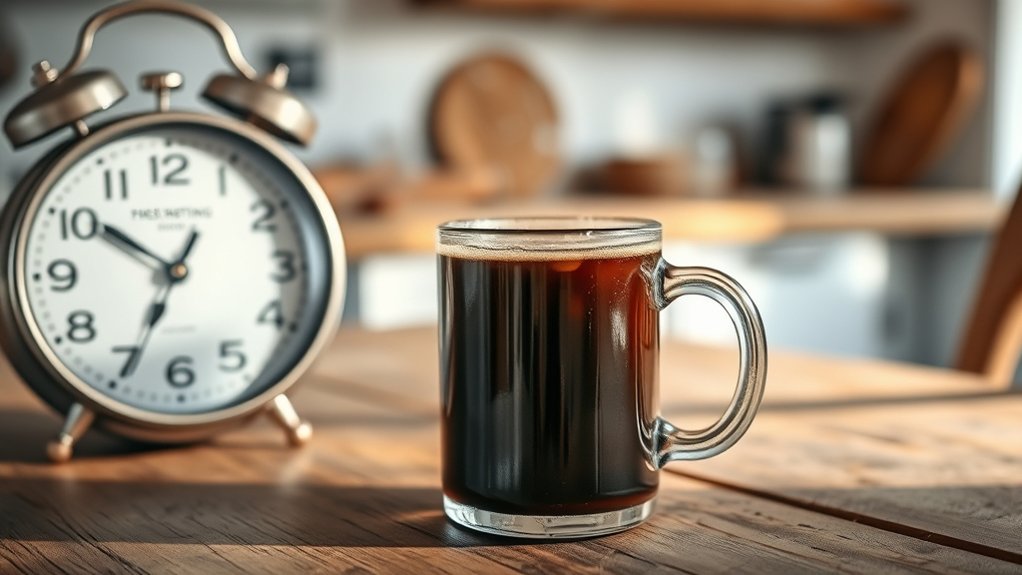
You should try to drink brewed coffee within 20 minutes when it’s at room temperature to really enjoy its best flavor and keep it safe from bacteria.
After about two hours, it’s not safe to drink anymore because harmful bacteria can start to grow.
And if you leave it out for longer than four hours, the coffee will taste stale and there’s a higher chance mold or more bacteria could develop.
Room Temperature Safety
How long can you safely leave brewed coffee at room temperature? Generally, you shouldn’t exceed 2 hours. Beyond this, bacteria and mold growth increase, especially if the coffee temperature remains warm.
To ensure safety, consider these points:
- Brewed coffee is safe for up to 2 hours at room temperature.
- After 2 hours, sour or off-flavors may develop, indicating spoilage.
- The risk of bacterial contamination rises significantly in warm environments.
- Refrigerate coffee within 2 hours of brewing, then consume within 3-4 days.
Using proper brewing techniques and keeping an eye on the coffee’s temperature helps maintain safety. Leaving coffee out longer than 2 hours might lead to health risks and spoilage.
Flavor Degradation Timeline
While safety concerns limit brewed coffee’s time at room temperature to about 2 hours, its flavor begins to degrade even sooner.
Within 4 hours, you’ll notice a decline in coffee aroma and overall flavor preservation as the brew starts to taste stale.
If left out longer, between 12 to 24 hours, the flavor quality markedly deteriorates, often developing unpleasant sour or bitter notes.
Beyond a few hours unrefrigerated, microbial growth may occur, and spoilage signs like mold or foul odors can appear.
To enjoy the freshest taste and maintain coffee aroma, it’s best to consume your brewed coffee within 2 hours at room temperature or refrigerate it promptly.
This approach guarantees you savor the top-quality flavor before degradation sets in.
How Long Does Brewed Coffee Last in the Fridge?
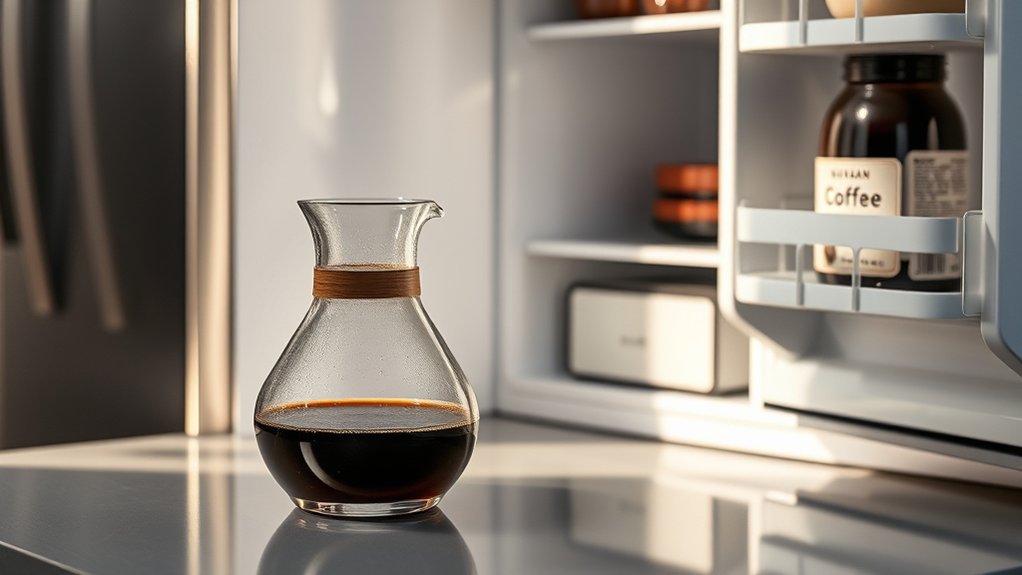
Although brewed coffee can stay safe to drink for several days when refrigerated, its flavor quality declines noticeably after the first 24 hours. You’ll notice changes in coffee acidity and aroma, influenced by brewing techniques and storage conditions.
To maximize freshness, follow these guidelines: store brewed coffee in an airtight container to reduce oxidation. Keep it refrigerated immediately after brewing to slow flavor degradation.
Consume within 3 to 4 days for safety, though taste is best within 24 hours.
And if you ever detect a sour smell, mold, or discoloration, those are signs of spoilage, so it’s best to discard the coffee.
Does Adding Milk or Cream Make Brewed Coffee Spoil Faster?
Because milk and cream contain perishable proteins and fats, adding them to brewed coffee considerably shortens its shelf life. When you add these dairy ingredients, you introduce dairy bacteria that thrive in the coffee’s environment, accelerating spoilage.
Cream spoilage often shows up quickly as curdling or an unpleasant sour smell. At room temperature, coffee with milk or cream should be consumed within two hours to avoid bacterial contamination.
Even refrigerated, it usually lasts only one to two days before signs of spoilage appear.
This happens because the perishable nature of milk and cream promotes microbial growth way more than black coffee alone. So, to keep your coffee fresh, it’s best not to store it with dairy for long periods.
How To Tell If Your Brewed Coffee Has Gone Bad
You can usually tell your brewed coffee has gone bad by paying close attention to how it smells and tastes. If it starts to smell dull, sour, or even musty, that’s a good sign it’s past its prime.
And if the flavor turns overly bitter or just tastes off compared to when it was fresh, it’s definitely time to toss it out.
Also, don’t forget to check how it looks. If you notice any discoloration, cloudiness, or mold on the surface, those are clear signs that the coffee has spoiled.
Better safe than sorry!
Aroma And Flavor
When brewed coffee loses its aroma, it’s a clear sign that it has gone stale or spoiled. Aroma preservation plays a vital role in maintaining the coffee’s freshness and overall enjoyment. You can tell your brewed coffee has degraded by paying close attention to its flavor and smell.
Here are four key indicators:
- A flat or musty odor signals poor aroma preservation, often indicating staleness.
- Off-flavors such as sourness or bitterness show the coffee has deteriorated.
- The taste becomes dull or rancid, reflecting a loss in flavor enhancement.
- A significant decrease in aroma intensity confirms spoilage.
Visual Spoilage Signs
Although brewed coffee generally looks inviting, certain visual signs can reveal that it has gone bad and is unsafe to drink. Pay close attention to visual cues such as changes in color, whether darkening or lightening, as these often indicate spoilage.
Mold detection is essential. Fuzzy, discolored patches on the surface or inside the coffee are a definite sign that it’s spoiled. If you’ve added milk or creamer, look for visual separation or curdling, which suggests bacterial growth.
Unusual spots or any visible mold confirm that the coffee should be discarded immediately. By observing these visual cues carefully, you can avoid consuming brewed coffee that has deteriorated in quality or safety.
Always prioritize these signs to guarantee your coffee stays fresh and safe to drink.
Is It Safe To Drink Old Brewed Coffee?
How long can you safely enjoy brewed coffee after it’s made? Generally, if you store it in the refrigerator, you’re safe drinking it within 12 to 24 hours.
Refrigerated brewed coffee is best enjoyed within 12 to 24 hours for safety and freshness.
Beyond that, risks increase, especially if you notice coffee mold or signs of bacterial growth.
To stay safe, keep these points in mind:
- Consume plain brewed coffee within 24 hours refrigerated.
- Avoid drinking coffee showing sour or rancid smells, discoloration, or visible mold.
- Coffee with dairy or flavorings should be used within 12 hours to prevent bacterial growth.
- Never drink coffee stored improperly at room temperature for extended periods.
Drinking old or improperly stored coffee can lead to health issues, so always check for spoilage before drinking. Better to be safe than sorry, right?
How Does Brewed Coffee’s Flavor Change Over Time?
Since brewed coffee starts to lose its ideal flavor and aroma within just a few hours at room temperature, you’ll notice a significant change if you don’t drink it quickly. Flavor stability declines rapidly due to oxidation and increased acidity, causing bitterness and sourness. Aroma decline also begins early, diminishing the fresh scent you expect.
Refrigeration slows these changes but doesn’t prevent the coffee from tasting dull and developing off-flavors after about 24 hours.
| Time Elapsed | Flavor Stability | Aroma Decline |
|---|---|---|
| 0-4 hours (room temp) | Prime | Minimal |
| 4-12 hours (room temp) | Noticeable decrease | Moderate |
| 12-24 hours (refrigerated) | Significant decline | Significant |
| 24+ hours (refrigerated) | Dull, sour, off-flavors | Strong musty or rancid |
Best Containers and Storage Tips To Keep Brewed Coffee Fresh
To maintain the best possible flavor and aroma of your brewed coffee, choosing the right storage container plays a key role. Selecting appropriate container types and effective storage techniques helps preserve freshness and prevent spoilage.
Follow these steps:
- Use airtight containers with tight seals to minimize oxygen exposure.
- Opt for opaque, non-reactive materials like glass or stainless steel to block light and avoid chemical leaching.
- Store brewed coffee in the refrigerator at or below 40°F (4°C) to extend freshness and safety.
- Avoid transparent or plastic containers, which can degrade flavor by allowing light penetration and chemical transfer.
These simple tips really make a difference in keeping your coffee tasting great for longer.
Give them a try, and you’ll notice the difference every time you brew a fresh cup!
How Does Cold Brew Coffee’s Shelf Life Differ?
Although both hot brewed and cold brew coffee share common storage needs, cold brew typically lasts longer in the refrigerator due to its lower acidity and unique brewing process. Cold brew longevity generally spans 7 to 10 days when kept in a sealed container. It maintains better shelf stability compared to hot brewed coffee.
Its low acidity helps preserve flavor and safety over this period. However, if you add milk or creamer to your cold brew, consume it within 1 to 2 days to avoid spoilage. Be alert for signs like sour smell, off-taste, or mold, which usually appear after 10 days.
Proper storage enhances cold brew’s shelf stability, letting you enjoy its smooth taste longer without compromising quality or safety. So, keep it sealed and chilled, and you’ll get the best experience from your cold brew coffee.
Can You Freeze Brewed Coffee To Make It Last Longer?
You can definitely freeze brewed coffee by pouring it into airtight containers or even ice cube trays. This way, it can last up to two weeks without going bad.
Just remember, freezing helps keep the flavor intact because it slows down any microbial growth.
That said, if you freeze and thaw the coffee over and over, the taste might change a bit. So, the best way to keep it tasting good is to freeze the coffee soon after you brew it.
And once you thaw it, try not to refreeze it again.
Freezing Brewed Coffee
Freezing brewed coffee can extend its shelf life up to two weeks when stored properly in airtight containers or ice cube trays. To preserve the coffee aroma and maintain the quality you worked hard to achieve through your brewing techniques, just follow these simple steps.
First, cool the coffee to room temperature before freezing. This helps prevent freezer burn and flavor loss.
Next, use vacuum-sealed bags or tightly sealed containers so your coffee doesn’t absorb odors from other freezer items.
It’s also a good idea to freeze coffee in small portions, like ice cube trays. That way, you can thaw only what you need and reduce waste.
Just remember to consume frozen coffee within two weeks for the best flavor.
Flavor Changes After Freezing
How does freezing brewed coffee affect its flavor? Freezing extends shelf life but may cause subtle taste alteration. Ice crystal formation can mute or change the coffee’s flavor profile after thawing.
While aroma is mostly preserved, reheating frozen coffee sometimes intensifies bitterness or creates flatness. To minimize flavor loss, freeze brewed coffee in small portions like ice cubes and consume within a month for best quality.
Below is a summary of flavor changes after freezing:
| Aspect | Effect of Freezing | Recommendation |
|---|---|---|
| Flavor Profile | Slightly muted or altered | Freeze in small portions |
| Aroma | Largely preserved | Use airtight containers |
| Taste Alteration | Bitterness or flatness on reheating | Consume within 1-3 months |
| Shelf Life | Extended up to 2-3 months | Avoid long-term freezing |
How To Safely Reuse or Repurpose Old Brewed Coffee
Although brewed coffee loses its ideal flavor after a few hours, you can safely reuse it within 3 to 4 days if you store it in an airtight container in the refrigerator and reheat it properly. Proper coffee storage helps maintain safety and flavor for reuse recipes.
Here’s how to reuse or repurpose old brewed coffee effectively:
- Reheat refrigerated coffee gently on the stove or microwave to avoid bitterness.
- Use cooled coffee in baking recipes like cakes or brownies to enhance flavor.
- Freeze coffee in ice cube trays for smoothies or iced drinks later.
- Always discard coffee if you notice mold, discoloration, or a foul smell.
Avoid using coffee stored beyond 4 days, as it develops sour off-flavors unsuitable for consumption or cooking.
Debunking Common Myths About Brewed Coffee Expiration and Safety
When you store brewed coffee properly, it doesn’t suddenly become unsafe to drink after a few days, despite common warnings. The idea that brewed coffee “expires” quickly is a myth. Its quality declines, but safety remains intact if you use clean storage containers and refrigerate promptly.
Coffee brewing methods don’t affect this much, but additives like dairy shorten freshness.
| Myth | Reality |
|---|---|
| Brewed coffee molds in days | Mold only appears with visible signs |
| Coffee is unsafe after 1 day | Safe refrigerated 3-4 days without additives |
| Expired coffee is harmful | Mostly loses flavor, not safety |
| Storage containers don’t matter | Airtight containers preserve quality |
| Additives don’t affect shelf life | Dairy or syrups reduce safe time to ~12 hrs |
Trust your senses to detect spoilage: foul odor, discoloration, or sour taste signal it’s time to discard.
Frequently Asked Questions
Can Brewed Coffee Cause Stomach Issues if Consumed Frequently?
Yes, if you drink brewed coffee frequently, its acidity and brewing temperature can irritate your stomach lining. Proper coffee storage won’t reduce acidity, so moderating intake helps prevent acid reflux and digestive discomfort effectively.
Just keep in mind, cutting back a little can make a big difference. It’s all about finding the right balance for your body.
Does the Type of Coffee Bean Affect Brewed Coffee’s Shelf Life?
Think of coffee bean freshness as a ticking clock. Arabica’s higher oils spoil faster, while Robusta lasts longer. Dark roast’s longevity drops quicker too.
How Do Different Brewing Methods Impact Brewed Coffee’s Freshness?
Different brewing techniques impact flavor preservation by altering acidity and oxidation rates. You’ll find cold brew maintains freshness longer, while drip or espresso methods degrade faster. So choosing the right technique helps you enjoy better-tasting coffee longer.
It’s pretty interesting how the method you pick can change how long your coffee stays fresh. Cold brew’s low acidity and slow extraction really work in its favor. Meanwhile, quicker methods like espresso expose coffee to more oxygen, which can speed up flavor loss.
Is Decaffeinated Brewed Coffee’s Shelf Life Different From Regular Coffee?
Decaffeinated brewed coffee’s shelf life isn’t different from regular coffee. For effective decaffeinated storage and coffee preservation, you should refrigerate both promptly and use airtight containers. This helps maintain freshness and prevent spoilage within 3-4 days.
Keeping your coffee cold and sealed is really the key. So, whether it’s decaf or regular, treat them the same to enjoy the best taste for longer.
Can Additives Like Sugar or Flavor Syrups Affect Brewed Coffee Spoilage?
Yes, additives like sugar or flavor syrups reduce brewed coffee’s shelf stability by increasing microbial growth. This can compromise the preservation of the flavor.
You should consume flavored coffee faster, ideally within 12 days when refrigerated. Doing this helps avoid spoilage and the risk of fermentation.
Conclusion
You now know brewed coffee typically lasts about 12 hours at room temperature and up to a week in the fridge. Notably, adding milk or cream can cut that fridge life down to just a couple of days.
By understanding these timelines and checking for sour smells or off tastes, you can avoid wasting coffee and stay safe. So, keep your coffee fresh and enjoy every sip without worry!