How Big Is A Coffee Scoop – Measurements Explained
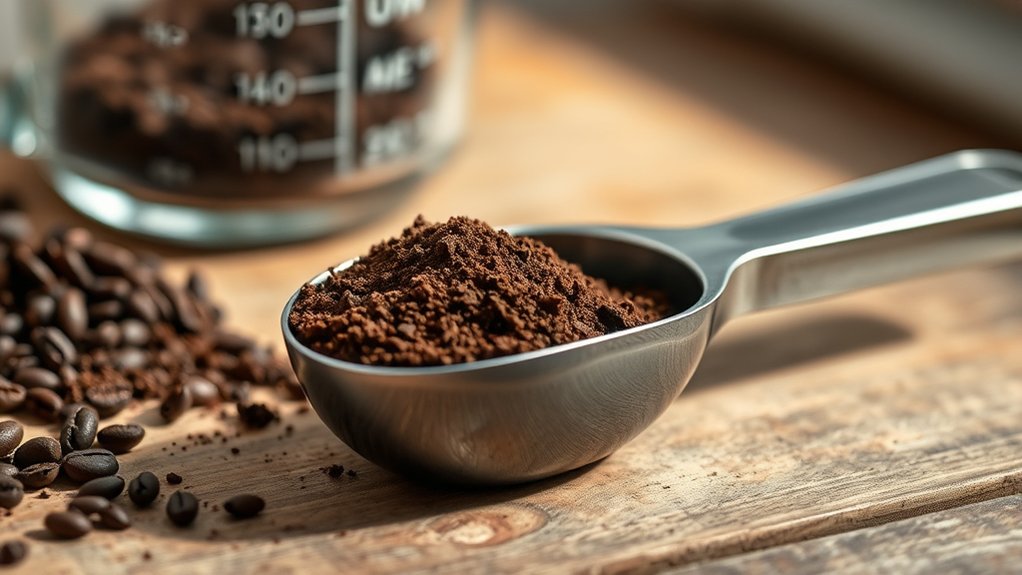
A coffee scoop typically holds about 2 tablespoons or roughly 10 grams of ground coffee, but size and weight vary with grind size, roast level, and design. Finer grinds pack denser, so the weight per scoop changes, affecting brew strength. Different brands offer scoops ranging from 1 to 3 tablespoons, so you should calibrate yours for accuracy.
Adjust your scoop use based on cup size and brewing method for consistent flavor. Explore how measurement nuances impact your perfect brew. It’s all about finding what works best for you and your taste buds.
What Is the Standard Size of a Coffee Scoop?
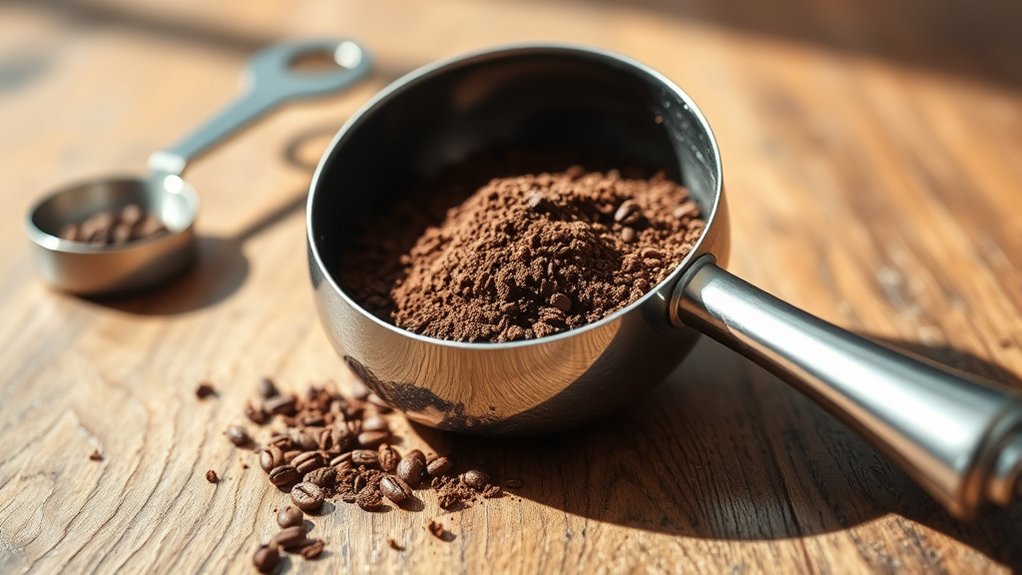
Although coffee scoop sizes can vary slightly by manufacturer, the standard coffee scoop typically holds 2 tablespoons or about 10 grams of ground coffee. This consistency helps you maintain precise coffee-to-water ratios, which is important no matter where your coffee beans come from.
Using a standard scoop ensures repeatable brewing results. That way, you can highlight the specific flavors tied to different origins.
Proper coffee storage complements this precision by preserving the coffee’s freshness and aroma, which directly influences taste.
Since ground coffee density varies, relying on a consistent scoop size rather than volume alone gives you better control over extraction.
In short, using a standard 2-tablespoon scoop streamlines your brewing process. It guarantees your coffee’s unique qualities, influenced by origin and freshness, shine through every cup.
How Much Coffee Does a Scoop Hold by Volume and Weight?
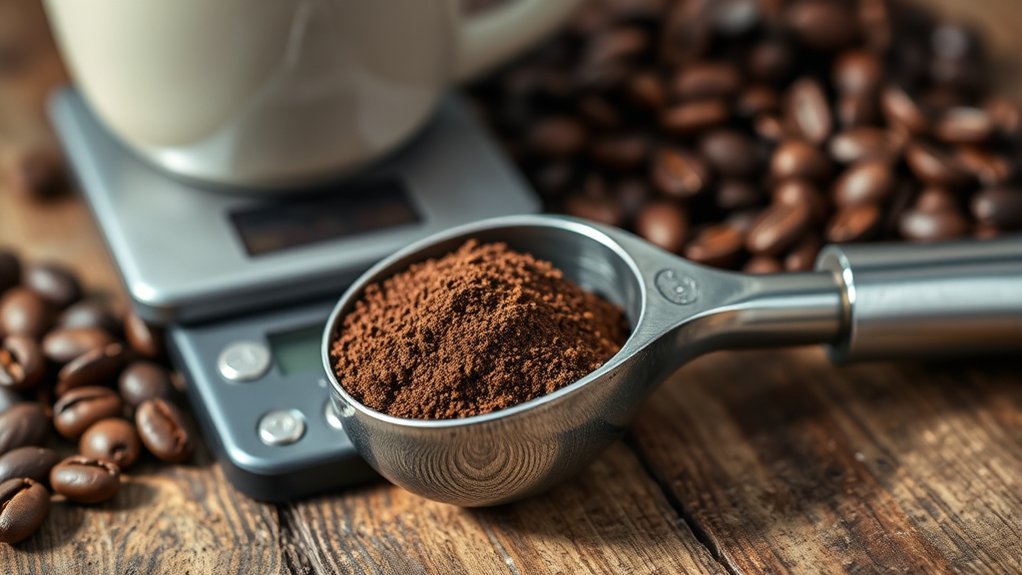
You’ll find that a standard coffee scoop holds about 15 milliliters in volume, which is roughly equivalent to 2 tablespoons.
But here’s the thing—the actual weight of coffee in each scoop can vary quite a bit. It all depends on factors like the grind size and the roast level.
So, to get the best results, it’s a good idea to consider both the volume and the weight when measuring your coffee.
That way, you can make sure your brew turns out just right every time.
Volume Capacity Explained
When measuring coffee, understanding the volume and weight a scoop holds is essential for consistency. A standard coffee scoop holds about 2 tablespoons, roughly 15 ml by volume, and weighs around 10 grams. However, factors like coffee bean origin and grind size affect density, causing weight variations.
Precise measurement improves brewing temperature control and overall flavor extraction.
| Measurement Type | Typical Amount |
|---|---|
| Volume | 15 ml (2 tbsp) |
| Weight (avg.) | 10 grams |
| Weight range | 8–14 grams |
| Notes | Varies by grind & roast |
Since grind coarseness alters density, using volume alone may lead to inconsistent results. For accuracy, weigh your coffee grounds when possible. It really makes a difference in your brew.
Weight Variations Factors
Understanding the volume a coffee scoop holds is just one part of the measurement equation; weight variations play a significant role in brewing consistency.
A standard scoop holds about 2 tablespoons, but the actual weight ranges between 10 to 14 grams, influenced heavily by grind density and coffee bean freshness.
Finer grinds pack more tightly, increasing the weight per scoop, while coarser grounds weigh less.
Additionally, lighter roasts, being denser, weigh more than darker roasts.
Freshly roasted beans retain more moisture, making them heavier compared to older, dried beans.
Even scoop design affects measurements. Variations in shape and material can alter the volume and consequently the weight of coffee held.
To achieve precise brewing, you have to consider these factors beyond simple volume.
Why Coffee Scoop Sizes Differ Between Brands and Designs
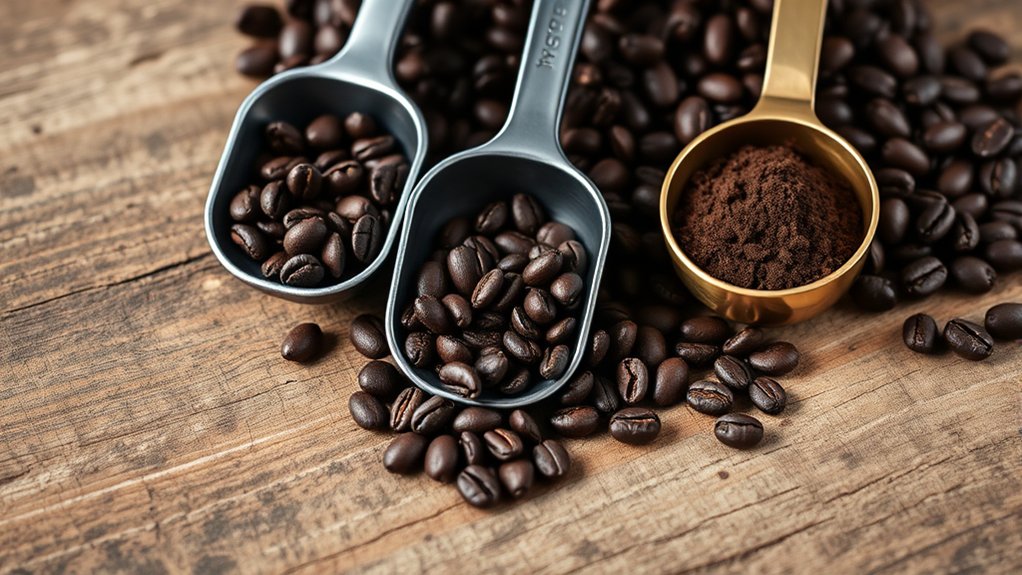
You might’ve noticed that coffee scoop sizes aren’t all the same. That’s because different brands focus on different capacities, usually anywhere from 1 to 3 tablespoons.
Plus, the design of the scoop plays a role too. Some have long handles, while others are more compact, and these choices can change how much coffee the scoop holds and how easy it’s to measure.
Knowing these little details can really help you pick the right scoop, so your brewing stays consistent every time.
Scoop Size Variations
Although many coffee scoops are labeled as holding one tablespoon, their actual sizes can vary widely between brands and designs. You’ll find scoops ranging from 15 ml to over 30 ml, influenced by differences in shape, handle length, and manufacturing processes.
These variations mean that even if two scoops claim to measure one tablespoon, their true volume can differ, affecting how much coffee you brew.
Some scoops are tailored for specific brewing methods, optimizing the coffee-to-water ratio for techniques like pour-over or French press. This specialization impacts scoop size to better suit each method’s requirements.
Considering these factors is essential, especially when you measure coffee against your coffee mug size, to guarantee consistent flavor and strength in every cup you make.
Design Impact On Capacity
Because coffee scoop designs vary widely, the capacity of scoops labeled as the same size can differ markedly between brands. You’ll find that coffee mold variations and handle length differences directly impact how much coffee a scoop holds. Even if two scoops claim to measure two tablespoons, their shape, depth, and materials create subtle but important volume differences.
Consider these factors:
- Coffee mold variations influence bowl shape and depth, altering total capacity.
- Handle length differences affect ease of scooping but may correlate with scoop size.
- Material choice, like stainless steel versus plastic, impacts weight and how compact the grounds settle.
When measuring coffee, always verify your scoop’s actual volume instead of relying solely on brand labels for accuracy. It’s a simple step that can make a big difference in your brew.
How Grind Size and Roast Level Affect Coffee Scoop Capacity
When measuring coffee by volume, grind size and roast level considerably influence how much coffee your scoop actually contains. Finer grinds pack more densely, so a scoop of espresso grind weighs more than the same scoop of coarse French press grounds. Those coarser grounds take up more volume but weigh less.
Dark roasted beans are less dense than light roasts, which changes the actual coffee amount per scoop. Because of these differences, volume measurements aren’t consistent across grind sizes or roast levels. So, to get a consistent flavor and strength, you’ll need to adjust how much coffee you scoop accordingly.
Proper coffee bean storage also plays a role since stale beans can affect grind consistency. Plus, brewing temperature interacts with grind and roast, impacting extraction. That’s why precise measurement helps you get the best brewing results every time.
How Many Scoops of Coffee Should You Use Per Cup?
A standard coffee scoop holds about 2 tablespoons of ground coffee, which is generally the right amount for an 8-ounce cup. When you use one scoop per cup, you balance coffee flavor and brewing temperature effectively, ensuring ideal extraction.
However, cup sizes vary, so adjust accordingly.
Think about smaller cups (5 ounces); they might need slightly less than a full scoop to avoid overpowering bitterness. On the other hand, larger mugs might require more grounds to keep a strong coffee flavor without lowering the brewing temperature too much.
Also, personal taste plays a big role. You can increase or decrease scoops depending on whether you want a milder or bolder brew.
This approach helps you consistently achieve the coffee strength and flavor you’re after.
Adjusting Scoop Measurements for Different Coffee Makers
Although many coffee scoops look similar, their sizes can vary considerably depending on the coffee maker you use. This affects how much ground coffee you need per brew.
For example, drip machines often require one scoop (about 2 tablespoons) per 6-ounce cup, but this changes if your machine’s cup size differs.
Larger machines, like 12-cup models, typically need about 12 scoops, yet it’s best to follow manufacturer guidelines to optimize flavor. Since “cups” may represent 5 ounces, adjust scoop amounts accordingly.
Proper coffee storage preserves freshness, which influences grind consistency and extraction.
Also, brewing temperature interacts with coffee quantity, impacting taste balance.
To adapt scoop measurements accurately, consider your machine’s specifics, maintain ideal brewing temperature, and store coffee properly.
This way, you’ll achieve consistent, well-extracted brews every time.
Using a Coffee Scoop to Measure Coffee Consistently
Since consistent coffee measurements directly influence your brew’s flavor and strength, using a coffee scoop with a known capacity is vital. A standard scoop holds about 2 tablespoons, or 10 grams, guaranteeing you maintain a reliable coffee-to-water ratio.
This consistency helps stabilize flavor despite variations in brewing temperature or coffee storage conditions.
To measure coffee accurately, fill the scoop level without packing grounds, preserving volume uniformity. Using the same scoop every time leads to predictable, repeatable results.
Key points to think about:
- Use a durable scoop made of stainless steel or plastic for ease and longevity.
- Maintain consistent coffee storage to prevent moisture affecting grind weight.
- Adjust brewing temperature carefully to complement your precise measurements for ideal extraction.
This method ensures your coffee’s taste remains balanced and consistent.
Measuring Coffee: Weight vs. Scoop Pros and Cons
Maintaining consistent coffee measurements with a scoop helps stabilize your brew, but relying solely on volume can introduce variability. A scoop typically holds about 2 tablespoons, but its weight fluctuates between 8 to 14 grams depending on coffee bean origin, roast, and grind size. These factors affect bean density, causing inconsistencies when measuring by volume.
On the other hand, weighing coffee grounds offers precise control over brew strength and flavor. It accounts for variables like brewing temperature, which also impacts extraction.
While scoops provide convenience, they can’t guarantee reproducibility across different coffees or equipment.
Using weight measurement ensures you tailor each cup accurately, preserving the nuances of your coffee bean origin and optimizing brewing temperature effects. Ultimately, weighing coffee delivers more reliable and repeatable results than relying on a scoop alone.
How to Calibrate Your Coffee Scoop Using a Kitchen Scale
When you want to guarantee your coffee scoop delivers consistent measurements, calibrating it with a kitchen scale is essential. Start by weighing your empty scoop to establish a baseline. Next, fill it with coffee grounds or beans, then weigh it again.
Subtract the empty weight from the filled weight to find its exact capacity. This calibrated weight ensures precision, which is vital for maintaining proper brewing temperature and maximizing flavor extraction.
Regular calibration helps adjust for any changes caused by scoop wear or inconsistent coffee storage. To calibrate effectively, remember to use freshly roasted beans to prevent moisture variation.
Also, tare your kitchen scale accurately before each measurement. And don’t forget to store your coffee properly to maintain consistent density and weight.
This method improves your brew consistency considerably. Give it a try, and you’ll likely notice the difference in every cup!
Alternatives to Coffee Scoops: Kitchen Spoons and Other Tools
Although coffee scoops are designed specifically for measuring coffee, you can use common kitchen tools as effective alternatives. Standard measuring spoons, ranging from 1 teaspoon to 1 tablespoon, often serve as substitutes. One tablespoon roughly equals one coffee scoop.
Since kitchen spoons aren’t calibrated for coffee, you should calibrate them or use a digital kitchen scale for precise measurements. This precision matters because different coffee bean varieties can vary in density, which affects how much ground coffee fits in a scoop.
Also, consistent measurements help maintain the ideal brewing temperature and extraction. Measuring spoons work for small amounts, but they become less efficient for larger quantities. Weighing coffee grounds ensures accuracy and gives you better control over flavor, no matter what bean variety or brewing method you prefer.
Choosing the Best Coffee Scoop Size for Your Brewing Style
Since the size of your coffee scoop directly impacts the strength and flavor of your brew, choosing the right one for your brewing style is vital. Standard 2-tablespoon scoops suit drip coffee, while smaller 1-tablespoon scoops work better for lighter or espresso brews.
Choosing the right coffee scoop size is key to brewing strength and flavor that match your style.
Specialty methods like French press may require larger scoops to accommodate coarser grounds.
Consider these factors when selecting your scoop:
- Brewing method compatibility: Match scoop size to grind coarseness and desired strength.
- Scoop material: Stainless steel resists corrosion, preserving coffee storage freshness.
- Coffee storage habits: A scoop that fits your container improves measurement consistency and minimizes exposure to air.
Selecting the proper coffee scoop size and material ensures precise dosing, maintaining flavor integrity tailored to your brewing preferences.
Tips for Consistent Coffee Measurement and Brewing Success
Achieving consistent coffee measurement means using reliable tools and techniques that cut down on variability in every brew. A digital scale to weigh about 10 grams per scoop is way more accurate than volume-based methods because those can change with grind size and roast. Make sure to regularly calibrate your scale and measuring tools so you keep things precise.
Also, tweak your coffee amount based on the size of your brewing container. This helps avoid over- or under-extraction and keeps the flavor balanced.
Storing your coffee properly is super important too. Keep your grounds in an airtight container away from light, heat, and moisture to keep them fresh.
And don’t forget about controlling your brewing temperature precisely, ideally between 195°F and 205°F. That’s key to getting the best extraction.
Frequently Asked Questions
What Materials Are Coffee Scoops Commonly Made From?
You’ll find coffee scoop types made from stainless steel, plastic, wood, and aluminum. Each offers material durability differently. Stainless steel resists rust really well.
Plastic is lightweight and easy to handle. Wood has a nice, natural look that many people like. Aluminum is both light and resistant to corrosion.
Can Coffee Scoops Be Used for Measuring Tea Leaves?
You can’t just toss a coffee scoop at tea leaf measurement and expect perfection. Tea leaves vary wildly!
Using alternative scoop sizes or a scale works better. They give you consistent, precise results instead of guesswork with volume alone.
Are Coffee Scoops Dishwasher Safe?
Yes, most coffee scoop sizes made of stainless steel or durable plastic are dishwasher safe. This means you can clean them easily without worrying about losing measuring accuracy.
Just double-check the manufacturer guidelines first. You want to avoid damaging any decorative finishes or coatings during cleaning.
It’s always better to be safe than sorry when it comes to keeping your coffee tools in great shape!
How Do You Clean and Maintain a Coffee Scoop?
Long before instant coffee, you’d clean your coffee scoop by scrubbing with warm, soapy water. For precise coffee scoop calibration, rinse well, dry thoroughly, sanitize occasionally, and store it in a dry, odor-free place for ideal use.
It’s pretty simple but makes a big difference! Keeping your scoop clean helps your coffee taste just right every time. Plus, storing it properly means it’s ready whenever you need it.
Where Can I Buy Specialty or Designer Coffee Scoops?
You can buy specialty or custom coffee scoop designs at high-end kitchenware stores, boutique coffee shops, and online retailers like Amazon.
Consider coffee scoop alternatives from brands like Fellow or Hario for precise, stylish options tailored to your needs. They really have some cool designs that make measuring coffee both easy and fun.
Just take a look around, and you’ll find something that fits your style and brewing routine perfectly.
Conclusion
Now that you know a coffee scoop isn’t just a scoop but a precision tool, you can measure your brew like a pro. Remember, sizes vary, so calibrate with a kitchen scale to avoid guessing games. Whether you prefer a light drip or a bold espresso, matching scoop size to grind and roast makes all the difference.
With these tips, you’ll consistently brew coffee that’s just right. No more hit or miss, just perfect cups every time.