
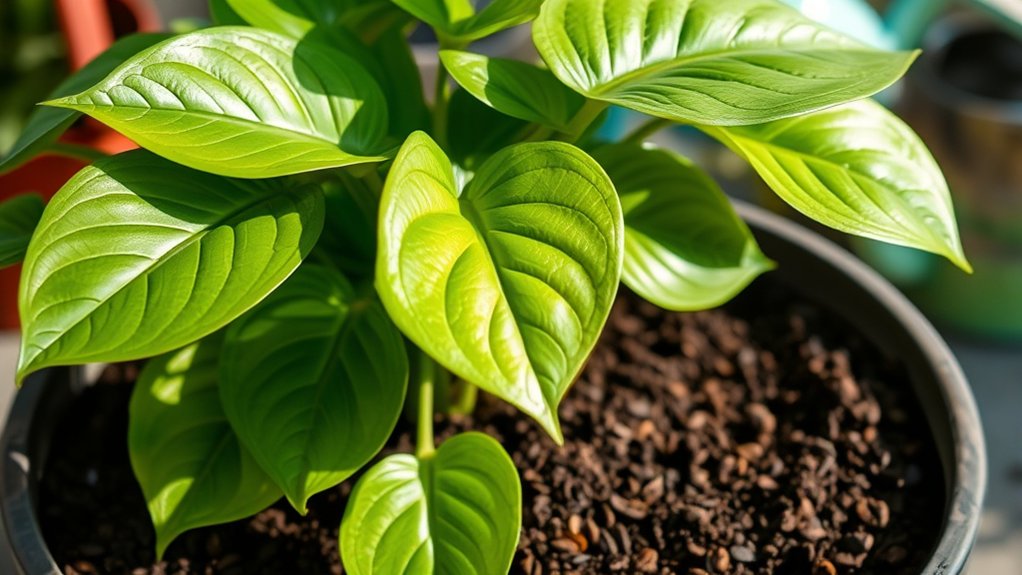
Do Pothos Like Coffee Grounds – Plant Care Tips And Facts
You can use well-composted coffee grounds sparingly with your pothos to boost soil nutrition and help with moisture retention. They also slightly acidify the soil, which can improve nutrient uptake.
Just avoid fresh grounds since their acidity and caffeine might harm the roots and attract pests. Try applying about 1–2 tablespoons per pot every 4–6 weeks, and adjust based on the growing season.
Keep an eye on your soil’s pH and how your plant is doing to prevent any issues. There are more details on how to get the most benefits while keeping risks low for your pothos.
Do Pothos Like Coffee Grounds As Fertilizer?
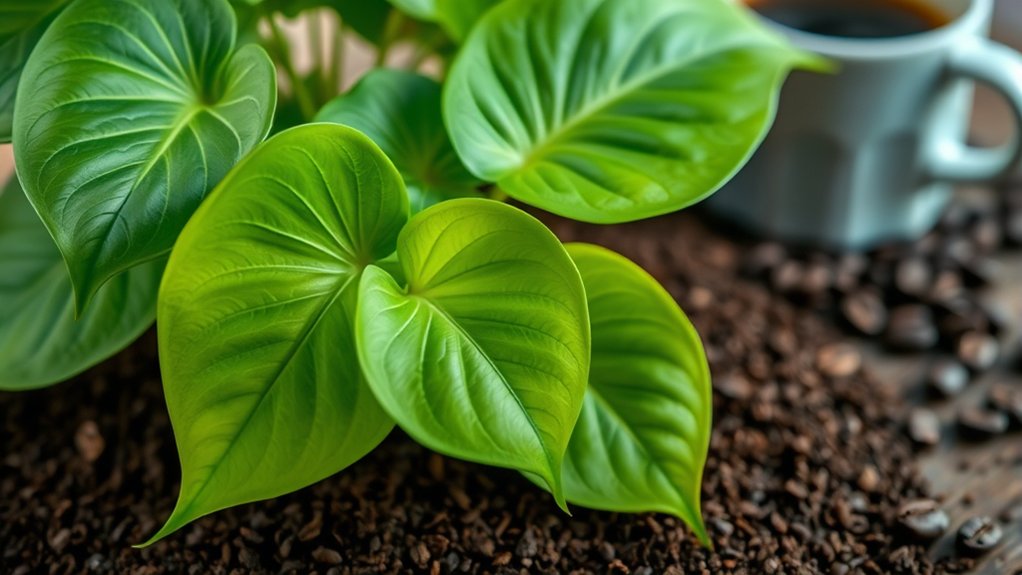
Although pothos plants are resilient and adaptable, using coffee grounds as fertilizer requires caution. You should avoid applying fresh grounds directly, as their acidity and caffeine content can hinder nutrient absorption and root development.
Instead, composted coffee grounds, which are neutralized and broken down, can be used sparingly to enrich soil.
When you prune your plant by removing dead or yellowing leaves, you help maintain healthy growth and reduce the risk of fungal issues that might be made worse by improper fertilization.
Plus, managing coffee grounds carefully helps prevent pests by avoiding excess moisture and residues that attract insects.
Benefits Of Coffee Grounds For Pothos Growth
When you incorporate properly composted coffee grounds into your pothos soil, you provide a valuable source of organic matter that improves soil structure and moisture retention. This enhancement optimizes plant watering efficiency, reducing water runoff and ensuring consistent moisture availability for roots.
Coffee grounds also contribute essential nutrients like nitrogen, which promotes vigorous foliage growth. Their slightly acidic nature helps balance soil pH, benefiting nutrient uptake.
Plus, coffee grounds act as a natural deterrent for certain pests, supporting pest prevention without any chemical intervention.
By integrating coffee grounds, you foster a healthier root environment that enhances aeration and boosts microbial activity. This synergy improves overall pothos vitality and resilience.
Just be sure to always use composted grounds in moderation to maintain proper soil balance and avoid waterlogging.
Risks Of Using Too Many Coffee Grounds On Pothos
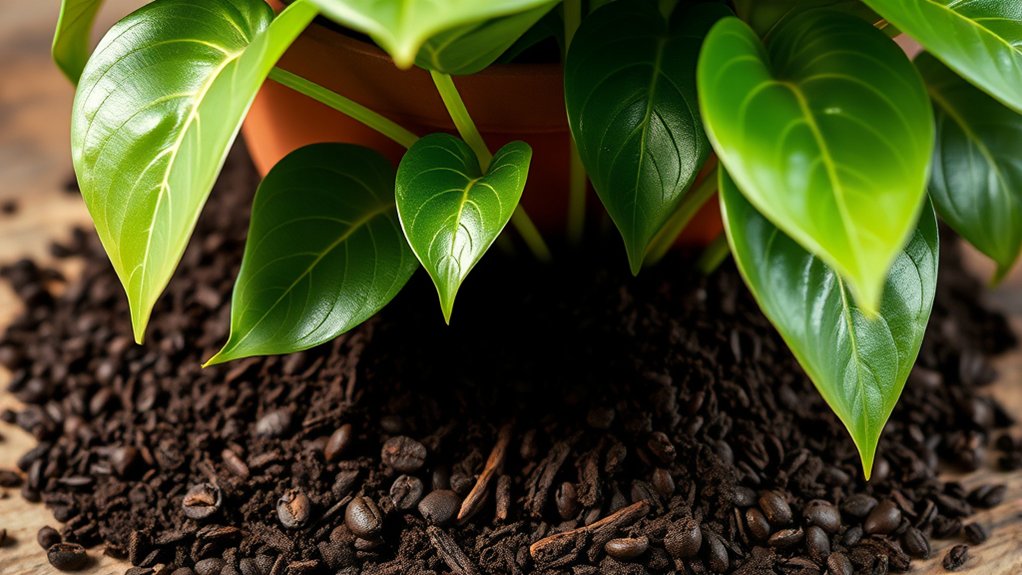
While coffee grounds offer several benefits for pothos plants, using them excessively can lead to detrimental effects. Overapplication disrupts soil balance and can negatively impact your plant’s health.
Too many coffee grounds increase the risk of root rot by retaining excessive moisture, creating an anaerobic environment unfavorable for roots.
Excessive coffee grounds can trap moisture, leading to root rot and poor oxygen flow for roots.
Additionally, excess acidity can alter soil pH beyond the most favorable levels, impairing nutrient uptake.
Although coffee grounds aid in pest prevention, overuse may attract unwanted pests like fungus gnats.
Be cautious of these risks when applying coffee grounds:
- Elevated soil acidity causing nutrient deficiencies
- Increased moisture retention fostering root rot
- Suppressed microbial diversity affecting soil health
- Attraction of pests despite pest prevention benefits
- Compacted soil reducing aeration and root growth
Signs Your Pothos Is Thriving Or Struggling With Coffee Grounds
You’ll know your pothos is doing well with coffee grounds if its leaves stay a vibrant green and it keeps growing steadily or even better than before.
On the other hand, if you start to see yellow leaves or the growth seems to slow down, that might mean it’s getting stressed from too much coffee grounds.
It’s also a good idea to keep an eye on the soil—things like how well it holds moisture and the pH level can give you important clues about how healthy your plant really is.
Leaf Color Changes
Although coffee grounds can enrich your pothos soil with nutrients, they may also cause noticeable changes in leaf color that indicate the plant’s health. Monitoring leaf variegation helps you assess whether your pothos is thriving or under stress. Excessive coffee grounds can alter soil pH and affect root health, leading to discoloration.
Watch for these signs: fading or loss of leaf variegation, which signals nutrient imbalance. Yellowing leaves often result from root damage or over-acidity. Browning edges can indicate possible nutrient toxicity.
Pale green leaves suggest insufficient nutrients despite added coffee grounds. On the other hand, consistent vibrant variegation is a positive sign of balanced soil conditions and healthy roots.
Keep an eye on your plant, and you’ll know how it’s doing in no time!
Growth Rate Variations
When you introduce coffee grounds to your pothos soil, closely monitor its growth rate to gauge the plant’s response. A thriving pothos will demonstrate accelerated root propagation, indicating nutrient absorption is effective and the organic matter in coffee grounds is beneficial.
Conversely, slowed or stunted growth suggests the grounds may be altering soil pH or moisture retention adversely. Inconsistent growth rates can also signal pest infestation, as damp coffee grounds sometimes attract pests. So, integrating coffee grounds requires vigilant pest prevention measures.
Track new leaf emergence and root development weekly to detect changes. If growth declines, reduce or discontinue coffee ground application.
Properly balanced coffee grounds can enhance growth, but overuse risks inhibiting root expansion and inviting pests, ultimately affecting your pothos’s health.
Soil Condition Indicators
If coffee grounds influence your pothos’s soil, watch for specific indicators that reveal the plant’s health status. Healthy soil conditions promote robust root propagation and support pest prevention. On the other hand, imbalanced soil can hinder growth and invite infestations.
Make sure to monitor these signs closely:
- Uniform leaf color and firm texture indicate nutrient balance.
- Vigorous root propagation suggests ideal soil aeration and moisture.
- Stunted growth or yellowing leaves may reflect nutrient lockout from excess coffee grounds.
- Presence of pests or fungal growth signals compromised soil conditions.
- Soil pH shifts outside 6.0–7.0 range can disrupt nutrient uptake.
Keep an eye on these, and your pothos will thank you!
How Coffee Grounds Affect Soil PH
You should know that coffee grounds can slightly increase soil acidity, which affects the pH balance around your plants.
Now, when it comes to pothos, keeping the soil near-neutral in pH is really important because too much acidity can make it harder for the plant to absorb nutrients.
Coffee Grounds Soil Acidity
Although coffee grounds are often thought to increase soil acidity, their actual effect on soil pH depends on whether they’re fresh or used. Fresh coffee grounds are acidic and can lower soil pH, while used grounds have a near-neutral pH and minimal impact.
When you add coffee grounds, consider these factors: fresh grounds release a strong coffee aroma, which means higher acidity. On the other hand, used grounds improve soil texture by enhancing aeration and drainage.
Keep in mind that excess fresh grounds can temporarily acidify the soil, affecting nutrient availability. But as used grounds decompose, they gradually neutralize acidity and help stabilize pH levels.
PH Impact On Pothos
The pH level of soil markedly influences pothos health, as these plants prefer slightly acidic to neutral conditions, typically between 6.1 and 6.5. Coffee grounds can lower soil pH, increasing acidity if applied excessively, which may disrupt nutrient availability and negatively affect your pothos.
Maintaining ideal pH ensures efficient nutrient uptake, supporting healthy growth and reducing susceptibility to plant pests attracted to stressed plants.
Plus, altered pH can change your pothos’ watering needs since acidic soils may hold moisture differently. This shift can increase the risk of overwatering or root rot.
To prevent these issues, keep an eye on soil pH regularly when using coffee grounds and use them sparingly. Balancing pH helps you maintain healthy pothos, minimizes pest problems, and aligns with proper watering practices for the best plant care.
Safe Ways To Add Coffee Grounds To Pothos Soil
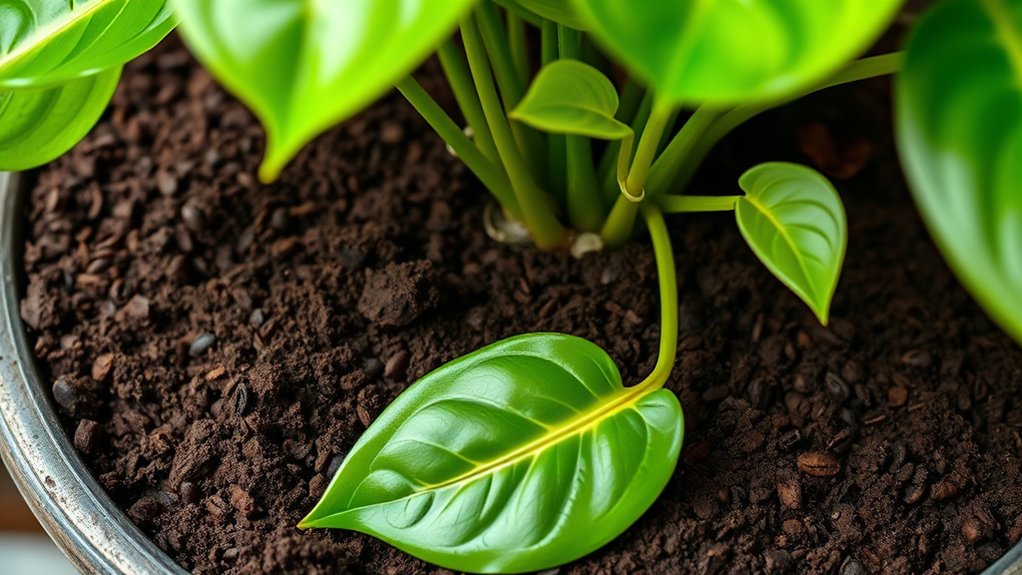
When incorporating coffee grounds into pothos soil, ensuring safe application is essential to prevent root damage and nutrient imbalance. You want to add grounds in a way that boosts plant propagation and aids pest prevention without overwhelming the soil.
Follow these safe practices:
Use only small amounts of well-composted coffee grounds to avoid excessive acidity. Mix grounds thoroughly into the topsoil layer, preventing direct contact with roots. Monitor soil moisture closely; coffee grounds can affect drainage.
Combine with other organic matter to balance nutrients and promote microbial activity. Avoid using fresh grounds, as they may introduce pests or fungal issues. Just keep it balanced and your pothos will thank you!
How Often Should You Feed Pothos Coffee Grounds?
You should feed your pothos coffee grounds sparingly—ideally, just once a month. This helps avoid nutrient buildup that can harm the plant.
Keep an eye out for signs of overfeeding, like yellowing leaves or stunted growth, since these usually mean there’s too much nitrogen.
Also, it’s a good idea to adjust how often you feed your pothos depending on the season. During colder months, when the plant goes into dormancy, try reducing or even pausing the feeding altogether.
Ideal Feeding Frequency
Although pothos plants benefit from the nutrients in coffee grounds, feeding them too frequently can lead to nutrient imbalances or soil acidity issues. To maintain excellent root health and prevent pest attraction, you should feed your pothos coffee grounds sparingly. A good rule of thumb is to do this once every 4 to 6 weeks.
This schedule gives the soil enough time to break down and absorb nutrients without overwhelming your plant.
Keep the following guidelines in mind:
- Use only small amounts (1-2 tablespoons per pot)
- Mix grounds thoroughly with soil or compost
- Avoid fresh, wet grounds to reduce pest attraction
- Monitor soil pH regularly to prevent acidity buildup
- Adjust feeding frequency based on plant growth and seasonal changes
Signs of Overfeeding
Since overfeeding pothos with coffee grounds can disrupt soil chemistry and root function, recognizing the signs early is crucial for maintaining plant health. Excessive coffee grounds can cause nutrient imbalances, leading to yellowing leaves, stunted growth, and soil compaction.
You might also notice a sour odor from the soil, indicating microbial imbalance. These symptoms hinder nutrient uptake and root respiration.
To mitigate damage, implement regular plant pruning to remove affected leaves and stimulate healthy growth. Overfeeding can also attract pests like fungus gnats, which compromises pest prevention efforts.
To avoid these issues, monitor your feeding frequency carefully and adjust based on how your plant responds. Maintaining a balanced approach ensures your pothos thrives without compromising soil quality or increasing pest susceptibility.
Seasonal Feeding Adjustments
Monitoring your pothos for signs of overfeeding lays the groundwork for adjusting your feeding schedule effectively. You should modify how often you feed coffee grounds based on seasonal growth patterns and environmental factors.
During active growth in spring and summer, feeding every 3–4 weeks supports nutrient uptake without risking root propagation disruption or pest prevention issues.
In fall and winter, reduce feedings to once every 6–8 weeks to prevent nutrient buildup and stress.
Consider these factors for seasonal feeding adjustments:
- Growth rate indicating nutrient demand
- Soil moisture levels affecting nutrient absorption
- Presence of pests, which can increase with excess organic matter
- Root propagation activity requiring minimal disturbance
- Climate variations influencing metabolic rates
Adjust feeding frequency accordingly to maintain ideal pothos health year-round.
Combining Coffee Grounds With Other Fertilizers For Pothos
When you combine coffee grounds with other fertilizers for pothos, you improve nutrient availability and enhance soil structure. The coffee aroma in ground composting attracts beneficial microbes, which speeds up the breakdown of organic matter and the release of nutrients.
Mixing coffee grounds with balanced NPK fertilizers or organic compost ensures a steady supply of nitrogen, phosphorus, and potassium. This mix helps optimize pothos growth. Just be careful not to use too many coffee grounds on their own, since their high acidity can block nutrient uptake.
It’s best to use a blend to keep the pH balanced and provide important micronutrients. That way, your pothos get everything they need without any unwanted side effects.
| Fertilizer Type | Nutrient Focus | Impact on Pothos Soil |
|---|---|---|
| Coffee Grounds | Nitrogen, organic matter | Enhances microbial activity, adds organic carbon |
| Balanced NPK Fertilizer | Nitrogen, Phosphorus, Potassium | Supports overall nutrient needs |
| Organic Compost | Micronutrients, humus | Improves soil aeration and moisture retention |
Natural Alternatives To Coffee Grounds For Pothos Care
Although coffee grounds offer valuable nutrients for pothos, you might want to explore natural alternatives that provide similar benefits without the risk of acidity imbalance. These options support healthy growth, enhance soil structure, and reduce pests. These things are crucial for effective pothos pruning and propagation.
Consider these alternatives:
- Composted leaf mold: Improves soil aeration and moisture retention.
- Worm castings: Rich in nitrogen and beneficial microbes.
- Banana peels: Supply potassium and phosphorus for robust growth.
- Diluted seaweed extract: Offers trace minerals and growth hormones.
- Crushed eggshells: Provide calcium, promoting strong cell walls.
Try incorporating these into your care routine to maintain a balanced nutrient profile. That way, you encourage vigorous pothos propagation and efficient pruning outcomes without risking soil pH disruption.
Coffee Grounds And Pothos: Myths You Shouldn’t Believe
Even though coffee grounds are often praised for their nutrient content, several misconceptions surround their use with pothos plants. You might think that adding coffee grounds from your local coffee shop directly to the soil boosts growth, but too much can actually mess with the soil’s acidity. This imbalance can stop your plant from soaking up the nutrients it needs.
Another myth is that coffee grounds improve plant aesthetics by acting as mulch. The truth is, they can compact and form a barrier that reduces aeration and water penetration. So instead of helping, they might make things harder for your pothos to breathe and drink.
Some people also believe coffee grounds repel pests. However, evidence shows they don’t really do much against common pothos pests. To keep your pothos healthy, it’s best to use coffee grounds sparingly. Composting them before adding to the soil helps release nutrients evenly without harming the plant’s look or soil structure.
Frequently Asked Questions
Can Coffee Grounds Prevent Pests on Pothos Plants?
Yes, coffee grounds can act as a pest deterrent for your pothos plants. When you use coffee composting properly, the grounds create an environment that repels common pests like ants and aphids.
But, you should avoid applying fresh coffee grounds directly because their acidity might harm the plant. Instead, try mixing well-composted coffee grounds into the soil.
This way, you get the pest-repelling benefits while also improving soil structure and nutrient content effectively.
Do Coffee Grounds Affect Pothos Leaf Color?
Studies show that 20% of gardeners notice color changes in foliage due to soil amendments. Coffee grounds can subtly influence pothos leaf color by altering soil acidity.
Since coffee grounds are acidic, they may increase soil acidity, affecting nutrient availability. This change can enhance fertilizer benefits by improving micronutrient uptake, sometimes intensifying leaf variegation.
However, excessive coffee grounds might cause yellowing or dullness, so use them sparingly for ideal leaf color. Just remember, a little goes a long way when it comes to coffee grounds and your pothos.
Are Instant Coffee Grounds Safe for Pothos?
Instant coffee grounds are generally safe for your pothos in small amounts. But keep in mind, their coffee acidity can lower soil pH, which might stress the plant if you use too much.
They can actually help improve soil aeration by loosening compacted soil, which means better oxygen access for the roots. Just make sure to mix the grounds thoroughly into the soil.
Avoid piling them on too thickly because that can lead to mold growth.
Keep an eye on how your plant responds and adjust how much you use accordingly. That way, you can keep your pothos healthy and happy.
Can Coffee Grounds Be Used for Propagating Pothos?
You shouldn’t use coffee grounds directly for propagating pothos because they can increase soil acidity and may inhibit root development in cuttings.
Instead, mix a small amount of coffee grounds into well-draining soil to provide a nutrient boost once roots form.
For propagation, stick to water or a neutral medium.
Then gradually introduce nutrient-rich soil with coffee grounds to support healthy growth without harming delicate new roots.
How Do Coffee Grounds Impact Pothos Root Development?
Coffee grounds can affect pothos root development by slightly increasing soil acidity, which may influence nutrient availability. While moderate use provides beneficial nitrogen, excessive coffee grounds can lower pH too much, potentially hindering root nutrition and growth.
You should mix grounds evenly into well-draining soil to maintain balanced acidity and guarantee roots access essential nutrients without being exposed to overly acidic conditions that could impair development.
It’s all about finding the right balance to keep your pothos happy and healthy.
Conclusion
When it comes to using coffee grounds for your pothos, remember that moderation is key. Too much can do more harm than good. Like the adage says, “Don’t put all your eggs in one basket.”
Coffee grounds can enrich soil and improve growth if used sparingly and combined with balanced fertilizers. Just keep an eye on your plant’s response to make sure it’s thriving. This way, you avoid any risk of nutrient imbalance or pH disruption.