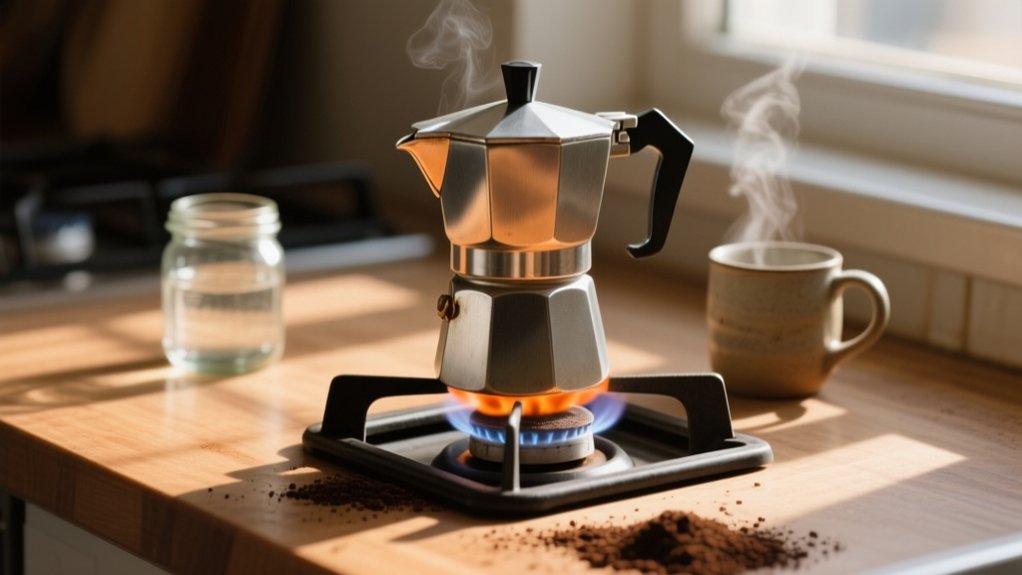
How To Make Coffee On Stove – Easy Brewing Guide
To make coffee on the stove, start by boiling water in a saucepan. Add extra water to offset evaporation and watch carefully to prevent overflow.
Turn off the heat, then stir in medium-fine coffee grounds using about 2 tablespoons per 6 ounces of water. Cover and steep for around 5 minutes, removing promptly to avoid bitterness.
Strain with a fine sieve or cloth for a smooth cup. Master these basics, and you’ll reveal richer, bolder flavors with every pot.
How To Brew Coffee On The Stove: A Quick Overview
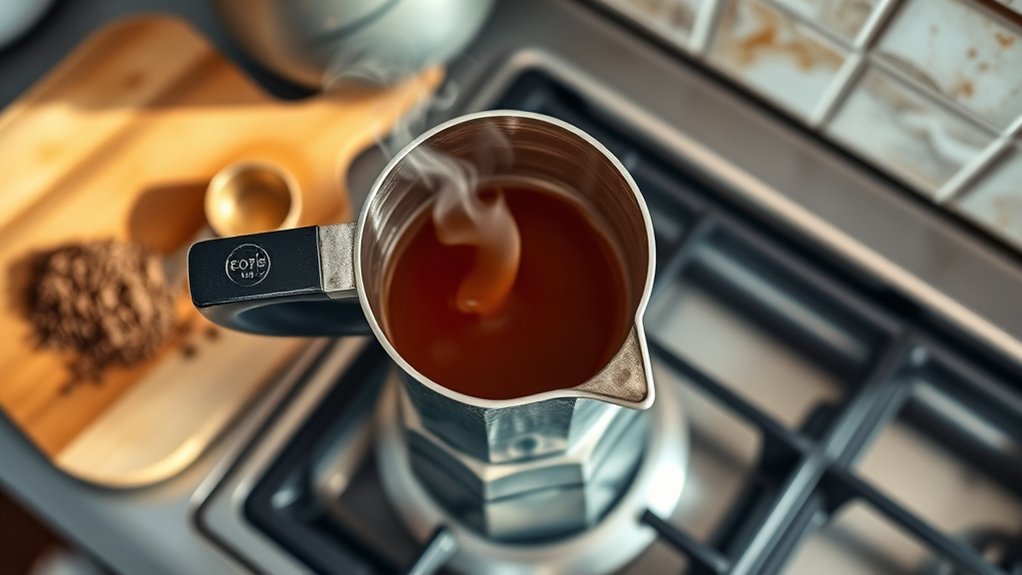
When you want to brew coffee on the stove, mastering the basics guarantees you get a rich, balanced cup every time. Start by boiling water in a saucepan, using 2 tablespoons of medium-to-fine coffee grounds per 6 ounces of water to optimize flavor.
Master the basics of stovetop brewing for a rich, balanced coffee every time.
Once boiling, turn off the heat before adding the coffee grounds to avoid bitterness, then cover and let it brew for about 5 minutes.
If you prefer the Cowboy Coffee brewing method, mix cold water with grounds, boil for 2 minutes, then steep for 3.
For a French Press style, use coarse grounds steeped for 4 minutes.
Always clean your equipment thoroughly after use to prevent old oils from spoiling the taste. These steps guarantee you consistently brew coffee expertly on the stove.
How To Choose The Right Coffee For Stove Brewing
Although selecting the right coffee for stove brewing might seem straightforward, your choice profoundly impacts the flavor and balance of the final cup.
To craft the perfect stovetop brew, focus on these essentials:
Use a medium grind size for Moka pots to guarantee balanced extraction and flavor.
Adjust the coffee-to-water ratio to about 1 to 1.5 tablespoons per 5 ounces of water for ideal strength.
Prioritize bean quality by selecting fresh, whole beans and grinding them just before brewing.
Choose a roast type that suits your taste: light roasts for nuanced origin flavors or darker roasts for bold richness.
Avoid pre-ground coffee since it loses flavor quickly, diminishing your stovetop coffee’s vibrancy.
Mastering these factors will elevate your stovetop coffee experience with precision and passion.
How To Measure Water And Coffee For Ideal Strength
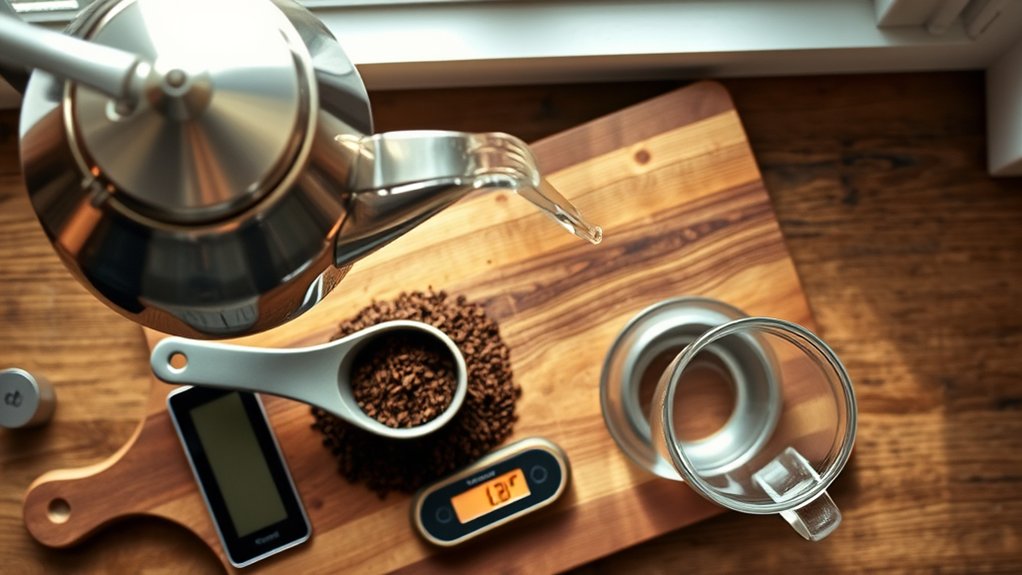
Two tablespoons of medium-to-fine ground coffee per 6 ounces of water deliver the ideal strength for stovetop brewing, but feel free to adjust according to your taste.
For a standard 12-ounce cup, use about 4 tablespoons of coffee.
Since 1 cup equals 8 ounces, knowing this helps you scale measurements precisely.
When you measure water, add a few extra tablespoons to compensate for evaporation during boiling.
A solid brewing method guideline is one tablespoon of coffee grounds per 5 ounces of water for balanced flavor.
Make sure to distribute your coffee evenly in the water to maximize extraction and bring out the best taste.
Accurate water and coffee measurement is key to mastering your stovetop coffee experience.
Boiling Water Safely For Coffee
Measuring your water and coffee with care sets the foundation, but heating that water properly reveals the full potential of your stovetop brew.
Boiling water safely is critical to mastering this coffee-making method, ensuring peak flavor extraction without bitterness.
Follow these key steps for your brewing method:
Use a saucepan and add a few extra tablespoons of water to compensate for evaporation.
Keep track of total water volume; 1 cup equals 8 ounces for precise measurement.
Heat over medium-high until you reach a rolling boil, signaling readiness.
Monitor carefully to avoid overflow, and use a lid to speed boiling.
Remove the pot immediately once boiling to prevent over-extraction when adding grounds.
Mastering this process guarantees a perfectly controlled brewing method every time.
How To Add Coffee Grounds For Even Extraction
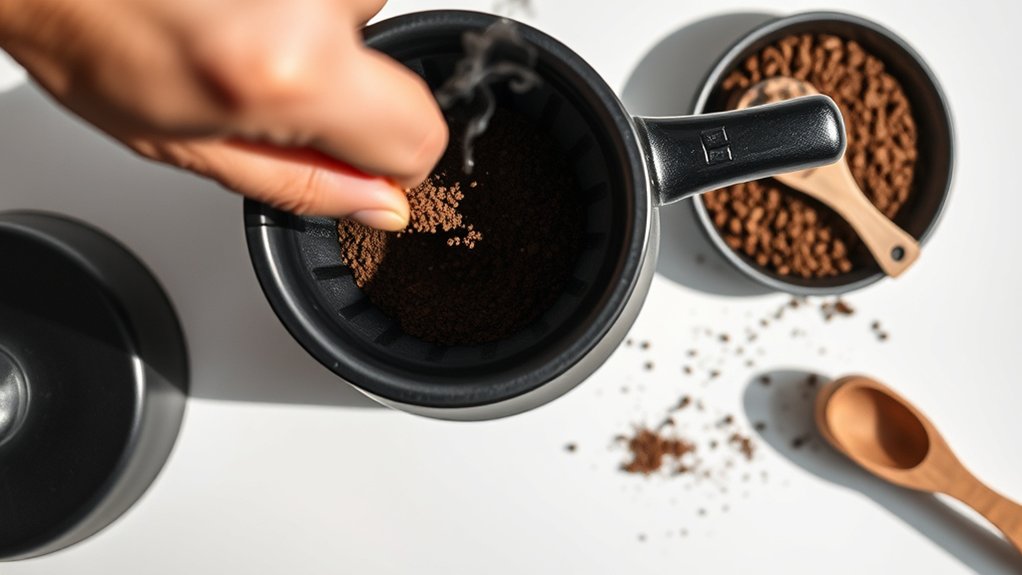
Start by using about two tablespoons of medium-to-fine ground coffee for every six ounces of water to achieve ideal extraction.
To master this brewing method, evenly distribute the coffee grounds into the hot water immediately after boiling. This allows every particle to interact with water, promoting even extraction and balanced flavor.
Gently stir the mixture to saturate all grounds, revealing their full aroma without causing bitterness.
Avoid letting the coffee boil once grounds are added. Instead, cover your pot and let the grounds steep. This careful control enhances flavor clarity.
Finally, strain your brew through a fine-mesh sieve or coffee sock. This step removes residual grounds, leaving you with a smooth, richly extracted coffee.
Following this process guarantees a perfectly balanced cup every time.
How Long To Brew Coffee On The Stove For Best Flavor
Once you’ve evenly distributed and stirred the coffee grounds into boiling water, controlling the brewing time becomes key to revealing the best flavor.
To brew coffee on the stove perfectly, follow these essential steps:
To brew coffee on the stove perfectly, precise timing and gentle stirring unlock rich, full flavors.
Turn off the heat immediately after adding ground coffee to avoid boiling. Stir gently after 45 seconds to enhance flavor extraction.
Cover the pot to retain heat and let the coffee brew for about 5 minutes.
Then, allow the coffee to sit off the heat for an additional 3 minutes to let grounds settle.
Strain the brew using a fine-mesh sieve or coffee sock for a clean, sediment-free cup.
How To Prevent Bitter Or Burnt Coffee When Brewing
Although brewing coffee on the stove might seem straightforward, preventing bitterness or a burnt taste requires careful attention to temperature, grind size, and timing. To master this brewing method, always control water temperature by heating it just below boiling, around 200°F (93°C), to avoid over-extraction.
Use the right grind size. Coarser grounds work best for stove-top methods like the French press or Moka pot, reducing bitterness compared to finer grinds.
You should also limit brewing time precisely—about 4 minutes for French press—to prevent extracting harsh compounds.
Accurate measurement of coffee and water guarantees balanced flavor, while regular cleaning of your equipment avoids residual off-flavors.
How To Strain Coffee Without A Machine
There are several effective ways to strain coffee without a machine, each designed to preserve the rich flavors while minimizing sediment. When you use these methods, you’ll maintain the integrity of your brewing method and enjoy a clean cup.
Use a fine-mesh sieve to separate brewed coffee from coffee grounds for a smoother taste. You can also employ a coffee sock or clean cloth as a makeshift filter by placing grounds inside and pouring hot water over them.
A fine-mesh sieve or coffee sock makes a great filter for smoother, sediment-free coffee.
Try the cowboy coffee method: let grounds settle before gently pouring to avoid sediment. Another option is to create a DIY coffee bag with a paper filter tied securely for a cleaner extraction.
Avoid pressing down on coffee grounds when straining to prevent bitterness.
These techniques help you strain coffee effectively, ensuring a rich, balanced brew every time.
Using A Moka Pot To Brew Coffee On The Stove
Mastering the art of brewing coffee with a Moka pot on your stove elevates your morning ritual with rich, intense flavors.
Begin by filling the Moka pot’s bottom chamber with hot water up to the safety valve.
Add 1.5 tablespoons of medium-ground coffee into the brewing basket but don’t pack it down.
Securely screw on the top section, making sure the filter and gasket are properly seated to prevent leaks.
Place the pot on medium-low heat. Allow gentle boiling to build steam pressure that pushes water through the grounds.
Listen closely for a soft bubbling sound as coffee drips into the upper chamber. This signals your cup of coffee is nearly ready.
Remove it from heat immediately and serve fresh to savor the Moka pot’s signature robust taste.
Alternative Stove Methods: Cowboy Coffee And Bag It
Two straightforward stove-top methods, Cowboy Coffee and the Bag It technique, offer reliable ways to brew flavorful coffee without specialized gear.
The cowboy coffee method involves boiling 12 ounces of water with coffee grounds. After 45 seconds, you stir, then remove from heat after two minutes to avoid bitterness.
Boil 12 ounces of water with grounds, stir after 45 seconds, then remove heat after two minutes.
The Bag It Method uses a coffee-filled filter bag steeped in boiling water for four minutes, which simplifies cleanup. Both prioritize an easy brewing process and robust flavor.
Key points to master these methods:
- Measure water precisely: 12 ounces (cowboy) or use a filter bag (Bag It)
- Stir cowboy coffee early, then let grounds settle
- Steep the Bag It coffee bag for four minutes
- Use a fine-mesh sieve to strain if needed
- Enjoy bold, no-fuss coffee without special equipment
How To Store And Reheat Coffee Without Losing Flavor
You want to keep your coffee’s flavor sharp by storing it properly—an insulated thermos or airtight container is your best bet.
When reheating, skip the microwave and use the stovetop or an electric kettle to preserve taste and avoid bitter spots.
Proper Coffee Storage
Keeping your coffee fresh hinges on storing it properly to preserve its rich flavors and aromas. To enjoy good coffee every time, pay close attention to how you store your coffee beans. Here’s how to keep your coffee at its peak:
Use an airtight container to block air and moisture.
Store the container in a cool, dark place away from light and heat.
Avoid the refrigerator or freezer to prevent condensation.
Prefer whole coffee beans over pre-ground for longer-lasting freshness.
Brew and consume coffee within 30 minutes to savor its ideal taste.
Reheating Tips
Although freshly brewed coffee offers the best flavor, storing and reheating it properly can help maintain its quality when immediate consumption isn’t possible. To preserve your final cup’s aroma, store coffee in an insulated thermos or airtight container away from light and air.
When reheating, use short microwave bursts (15-30 seconds) to avoid bitterness and prevent overheating. Avoid boiling coffee on the stove; instead, gently warm it over low heat, stirring occasionally.
| Storage Method | Reheating Technique | Flavor Outcome |
|---|---|---|
| Insulated Thermos | Microwave, short bursts | Retains aroma, less bitter |
| Airtight Container | Low stove heat, stirring | Balanced warmth, no burnt taste |
| Room Temperature | Avoid high heat | Maintains coffee brewing quality |
This approach preserves your coffee brewing effort and your final cup’s integrity.
Frequently Asked Questions
Can I Use Flavored Coffee Beans for Stove Brewing?
Yes, you can use flavored coffee beans for stove brewing, and you’ll enjoy unique flavored bean benefits like enhanced aroma and personalized taste.
To get the best results, adjust your brewing techniques by slightly shortening extraction time since flavorings can affect it.
Comparing taste with regular beans reveals richer, more complex notes.
Just remember to clean your equipment thoroughly to avoid residue and keep flavors pure in future brews.
What Type of Stove Works Best for Brewing Coffee?
Like a maestro controlling an orchestra, you’ll find electric stoves work best for brewing coffee because their consistent heat and precise heat settings let you perfect extraction.
Gas stoves also shine, offering instant adjustments that suit various brewing techniques, especially Moka pots or French presses.
Induction stoves heat quickly but need compatible cookware.
Coil and camping stoves can manage, but lack the finesse required for precise brewing mastery across different stove types.
How Do Altitude and Water Quality Affect Stove Coffee?
Altitude lowers your brewing temperature because water boils at a lower point.
So, you’ll need to increase your brewing time or use a finer grind size to optimize coffee extraction.
Water quality impacts flavor directly.
Minerals in your water enhance extraction, while hard or overly alkaline water can mute complexity.
Is It Safe to Leave the Coffee Brewing Unattended?
No, you shouldn’t leave coffee brewing unattended on the stove. Brewing safety is essential because high coffee temperature and unattended cooking can cause the water to boil dry or the pot to overheat, creating a fire hazard.
Staying present lets you control the temperature and avoid burnt flavors.
Use a timer to manage brewing times, and if you must step away, transfer coffee to an insulated carafe to keep it warm safely.
Can I Brew Decaf Coffee Using a Moka Pot?
You absolutely can brew decaf coffee using a moka pot. It’s like painting with a different palette but the same brush.
Decaf brewing techniques in a moka pot highlight its benefits, extracting rich coffee flavor profiles without caffeine’s kick.
Use medium ground decaf and maintain the right coffee-to-water ratio for a balanced cup.
This method delivers a bold, aromatic brew that respects the moka pot’s craftsmanship while honoring decaf’s unique character.
Conclusion
Brewing coffee on the stove is a timeless skill that connects you directly to the craft of coffee making. Did you know that 54% of daily coffee drinkers prefer stove-top methods for their rich, bold flavor?
By choosing the right grind, measuring precisely, and mastering your technique, you control every element of your brew. Embrace the ritual. It’s simple, satisfying, and delivers a deeply authentic cup every time.
Your perfect stove-brewed coffee awaits.