

Do Mice Like Coffee Grounds – Facts And Prevention Tips
Mice generally dislike the strong scent of fresh coffee grounds. It can disrupt their ability to find food or escape. But coffee grounds alone won’t guarantee keeping them away since mice can get used to smells over time.
For better results, use fresh grounds combined with other natural repellents and physical barriers. Regularly reapplying grounds also helps maintain their potency.
You’ll find more practical prevention tips and signs to watch for that can improve your home protection. It’s all about staying consistent and using a few methods together.
Why Are Mice Sensitive to Coffee Grounds’ Scent?

Because mice have around 250 odor receptors, their sense of smell is incredibly sharp. This allows them to detect strong scents like coffee grounds with ease.
Mice possess about 250 odor receptors, making their sense of smell highly sensitive to strong scents like coffee grounds.
Their heightened olfactory sensitivity means the coffee aroma stands out prominently to them, signaling an intense and unfamiliar environment.
The caffeine compounds in coffee contribute to this potent scent, which mice find overwhelming. Their olfactory system is finely tuned to pick up on strong odors.
This can interfere with their ability to locate food or plan escape routes.
So, the coffee aroma acts as a natural alert, influencing their behavior by making certain areas less appealing.
Understanding this sensitivity helps you see why coffee grounds can play a role in managing mice presence effectively.
Do Mice Avoid the Smell of Coffee Grounds?

Although mice have a sharp sense of smell and generally dislike strong or unfamiliar odors like coffee grounds, the proof that they actually avoid the scent isn’t clear-cut.
You should know that some stories say coffee scent keeps mice away, but science hasn’t backed this up yet. Mice seem to pay more attention to food smells than to things like coffee grounds, which don’t attract them as food.
How well coffee grounds work to deter mice really depends on how strong the scent is, where and how you put it, and other factors around the area.
Fresh vs. Used Coffee Grounds: Which Repels Mice Better?
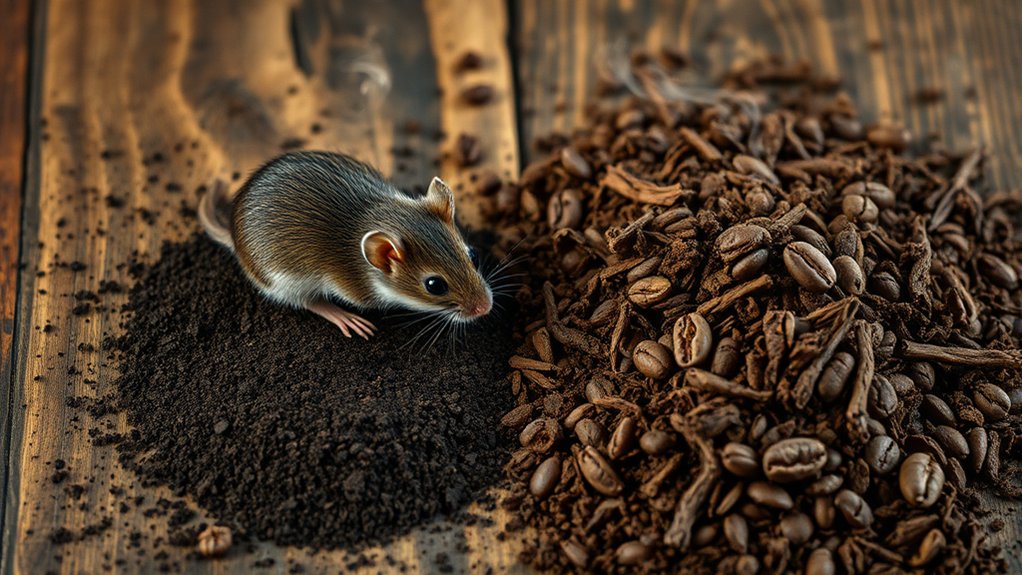
You’ll find that fresh coffee grounds have a stronger aroma, which makes them better at keeping mice away compared to used grounds.
Used grounds still have some caffeine, but their smell isn’t as strong, so they’re not as good at deterring rodents.
That said, neither fresh nor used grounds will protect you for the long haul.
But if you need a quick, temporary barrier, fresh grounds can do the trick.
Fresh Grounds Potency
When deciding between fresh and used coffee grounds to repel mice, fresh grounds stand out because they’ve a stronger aroma and more caffeine. The potent coffee fragrance in fresh grounds can overwhelm mice, making them less likely to come near.
Plus, fresh grounds are more abrasive, which irritates rodents better than used grounds.
Here’s the deal with fresh grounds potency:
- Stronger coffee fragrance boosts repellency.
- Higher caffeine levels make them more effective.
- The rougher texture physically deters mice.
- But keep in mind, potency drops a lot after brewing.
Using fresh coffee grounds gives you a more reliable and practical barrier against mice thanks to their intense scent and texture.
Used Grounds Effects
Since used coffee grounds have a milder scent than fresh ones, they tend to be less effective at repelling mice.
The coffee scent in fresh grounds is stronger because of higher caffeine content, which plays a key role in how well the grounds work.
Although used grounds still have some caffeine, their aroma fades over time. This means they won’t do as much to keep rodents away.
You might find used grounds useful as a mild repellent, but don’t count on them alone for mouse control.
For better results, fresh coffee grounds create a more noticeable scent barrier that mice usually avoid.
If you want the best effectiveness, using fresh grounds is your best bet.
Used grounds can work too, but think of them more as a backup rather than the main solution.
Can Coffee Grounds Prevent Mice From Entering Your Home?
Although coffee grounds emit a strong scent that some believe can deter mice, their effectiveness as a barrier is limited and inconsistent. Mice’s dietary habits and nesting behaviors influence how they respond to strong odors.
While coffee grounds might mask scents that attract mice, they don’t reliably prevent entry.
Coffee grounds can mask attractive scents but aren’t a reliable way to keep mice out.
You should consider that mice have a highly sensitive sense of smell and may be temporarily repelled. But coffee grounds alone won’t seal entry points or stop persistent mice.
Also, relying solely on coffee grounds ignores more effective prevention strategies.
Mice may eventually ignore the scent if they’re motivated by food or shelter. To truly prevent mice from entering your home, combine scent deterrents with physical barriers and traps for the best results.
It’s all about using a mix of methods that work together.
How to Use Coffee Grounds Effectively Against Mice
You can sprinkle used coffee grounds around entry points and along walls to create an effective scent barrier against mice. It’s pretty simple and can really help keep those little critters away.
For even better results, try mixing the coffee grounds with natural repellents like cinnamon or peppermint oil. These scents together can make the area even less inviting for mice.
Just remember to reapply the coffee grounds regularly. This way, their strong smell stays fresh and keeps working as a deterrent over time.
Application Methods
When aiming to keep mice at bay, applying coffee grounds strategically can make all the difference. Mice behavior is strongly influenced by the coffee scent, which they find unpleasant.
To use coffee grounds effectively, focus on creating scent barriers and targeting areas where mice frequent.
Sprinkle used coffee grounds near entry points, baseboards, and rodent activity zones. Reapply grounds every few days or after rain to maintain the scent’s potency.
Place soaked coffee filters or grounds inside pantry shelves and cabinets to deter nesting.
You can also form a ring of coffee grounds around gardens or trash bins outdoors to discourage mice from approaching.
It’s a simple trick, but when done right, it really works. Give it a try and see how it helps keep those pesky mice away!
Combining With Other Repellents
Building on the strategic placement of coffee grounds, combining them with other natural repellents can really boost their effectiveness against mice. Mouse behavior shows they avoid strong odors, so mixing coffee grounds with peppermint oil or cinnamon creates a potent scent barrier that deters them.
Apply this mixture around entry points and nesting areas to reinforce the deterrent effect. Since these scents fade, make sure to reapply after rain or cleaning to keep a strong barrier in place.
Pairing this scent strategy with physical barriers like sealing holes further reduces mouse access.
Using coffee grounds alongside other repellents in a multi-method approach offers a more comprehensive and humane way to keep mice from invading your space. It’s all about combining tactics to get the best results.
What Coffee Grounds Can’t Do and Possible Risks
Although coffee grounds are often touted as a natural way to deter mice, they don’t provide reliable protection and shouldn’t replace proven pest control methods. You shouldn’t rely on coffee grounds alone, as their impact is inconsistent and may lead to ongoing infestations.
Coffee grounds are not a reliable mouse deterrent and should not replace effective pest control methods.
Also, improper ground disposal can cause environmental issues. Plus, coffee toxicity concerns arise if pets or wildlife ingest large amounts.
Keep in mind these limitations and risks:
- Coffee grounds don’t prevent mice from entering or nesting effectively
- They won’t eliminate odors or health hazards from dead mice inside walls
- Excessive use may disrupt soil drainage or attract other pests
- Relying on grounds alone delays effective control, risking damage and contamination
What to Do When Coffee Grounds Don’t Work on Mice
If coffee grounds don’t keep mice away, don’t worry—you’ve got other options. You can try peppermint oil or set up baited traps to tackle the problem.
Also, it’s really important to seal up any entry points and get rid of food sources to make your home less inviting for those little intruders.
And hey, if natural methods aren’t cutting it, calling in professional pest control can be a smart move for a more effective, long-term solution.
Alternative Repellent Options
When coffee grounds don’t keep mice at bay, you’ll need to explore other options to protect your home effectively. Understanding rodent behavior is key to pest prevention. Mice are resourceful and may ignore certain deterrents, so diversifying your approach is vital.
Here are alternative repellent options to consider:
- Use commercial rodent repellents with natural ingredients like peppermint or capsaicin for stronger deterrence.
- Seal all entry points such as gaps around pipes and vents to block mice from entering.
- Set traps baited with peanut butter or sunflower seeds for direct control.
- Maintain cleanliness by removing food debris and storing pantry items in airtight containers to eliminate attractants.
If infestations persist, seeking professional pest control services ensures targeted and effective solutions. It’s often the best way to get rid of mice once and for all.
Enhancing Coffee Grounds Use
Since coffee grounds alone mightn’t always keep mice away, you can boost their effectiveness by combining them with stronger scents like peppermint or cinnamon. After your coffee brewing, mix fresh grounds with these aromatic spices to create a more potent natural repellent. Reapply this mixture regularly, especially after rain, to maintain its deterrent effect.
Alongside using coffee grounds, seal entry points and remove food sources to reduce mouse attraction. If you’re into organic composting, confirm coffee grounds don’t attract pests by turning the pile frequently.
For added protection, consider natural deterrents like cat urine or snake feces, which can supplement coffee grounds. These combined efforts will enhance your chances of keeping mice at bay without relying solely on coffee grounds.
It’s all about layering your defenses to get the best results.
Professional Pest Control
Relying solely on coffee grounds and natural remedies may not always keep mice away. When these methods fail, professional pest control is your best option to tackle infestations effectively. Experts can identify entry points, set traps, and apply targeted treatments that natural repellents can’t match.
They also assess how severe the problem is and recommend chemical or humane solutions tailored to your situation. To protect your home and garden from mice and other garden pests, there are a few simple steps you can take.
Seal holes and gaps where rodents enter. Remove food sources near bird feeders and outdoor areas. Use traps or bait stations as guided by professionals.
And don’t forget to schedule timely pest control interventions to prevent damage and disease. Taking swift, professional action guarantees long-term results beyond what coffee grounds can achieve.
How to Combine Coffee Grounds With Other Natural Mouse Deterrents
Although coffee grounds alone can help repel mice, combining them with other natural deterrents markedly boosts their effectiveness. You can mix coffee grounds with peppermint oil or eucalyptus to create a strong scent barrier that mice find unpleasant. Adding bay leaves or chili powder intensifies the multilayered aroma, further discouraging pest migration into your home.
Coffee grounds combined with peppermint, eucalyptus, bay leaves, or chili powder create a powerful natural scent barrier against mice.
Place soaked coffee grounds alongside catnip or garlic near entry points and food storage areas to enhance protection. This combination works especially well in managing indoor humidity, as dampness can attract rodents.
For a thorough strategy, layer coffee grounds with physical barriers like leaves or mesh, paired with natural scents. This eco-friendly approach not only deters mice but also reduces the chances of infestations efficiently and sustainably.
It’s a simple, effective way to keep your home pest-free without relying on harsh chemicals. Give it a try and see how well these natural methods work together!
Natural Alternatives to Coffee Grounds for Keeping Mice Away
While coffee grounds offer a natural way to deter mice, you don’t have to depend solely on them to protect your home. The caffeine effects in coffee, a byproduct of coffee cultivation, can repel mice, but several other natural alternatives work effectively too. You can diversify your approach to keep rodents at bay without relying only on coffee grounds.
Consider these natural alternatives:
- Peppermint oil or growing peppermint plants, which emit scents mice dislike.
- Snake feces, whose strong odor mimics predator presence.
- Hot pepper flakes combined with leaves and twigs, creating physical and olfactory barriers.
- Cat urine, a natural predator scent that discourages mice.
Using multiple methods together enhances your chances of success while avoiding chemicals. It’s all about mixing things up to keep those little critters away without harsh stuff.
How to Seal and Protect Your Home From Mouse Infestations
To effectively keep mice out of your home, you need to seal every possible entry point with care and precision. Start by using caulk or weatherstripping to close gaps around doors, windows, and the foundation. Install door sweeps on exterior doors and cover vents, pipes, and utility lines with mesh or foam.
For small holes, fill them with steel wool or metal mesh since mice can’t chew through these materials. Regularly inspect and repair damaged screens on windows, vents, and attic openings.
Incorporate interior insulation to help block entry points and improve pest proofing techniques throughout your home’s structure.
Also, keep outdoor areas free from debris and overgrown vegetation to reduce nesting sites near your house. These steps create a strong barrier against mouse infestations.
It’s all about being thorough and consistent to keep those little critters out for good.
Additional Tips to Keep Your Home Mouse-Free
Sealing your home tightly is a strong first step, but maintaining a mouse-free environment requires ongoing effort. Effective pest proofing techniques go beyond sealing entry points; they include strategic furniture placement to reduce hiding spots and make your home less inviting to mice. Keep clutter minimal and inspect less visible areas regularly to catch early signs of activity.
To enhance your mouse prevention strategy, consider these tips:
- Store food in airtight containers to eliminate easy food sources.
- Remove nesting materials like paper, fabric, and cardboard promptly.
- Use natural repellents such as peppermint oil near common mouse pathways.
- Position furniture away from walls to limit mouse shelter and improve inspection access.
Implementing these practical steps helps you maintain a truly mouse-proof home. It’s all about staying vigilant and making your space less appealing to these little invaders.
Understanding When to Seek Professional Pest Control Help
Even if you’ve tried natural deterrents like coffee grounds and traps, persistent rodent activity means it’s probably time to call in professional pest control experts. Urban wildlife like mice can nest in hard-to-reach places, which can create health risks and cause property damage.
When you notice more rodent sightings, persistent odors, or signs of extensive damage, getting professional help is really important. Licensed specialists use targeted methods that focus on keeping your pets safe while effectively removing infestations.
| Sign to Seek Help | Why It Matters |
|---|---|
| Persistent rodent activity | DIY methods failed |
| Nesting in walls/attics | Requires specialized removal |
| Rapid increase in sightings | Indicates growing infestation |
| Dead rodents or odors | Health risks present |
| Extensive property damage | Needs expert intervention |
Frequently Asked Questions
Can Coffee Grounds Harm Pets if Used as a Mouse Deterrent?
Yes, coffee grounds can harm pets if used as a mouse deterrent. You should prioritize pet safety and avoid toxic risks by keeping grounds out of reach.
Or better yet, choose safer alternatives to protect your pets effectively. It’s always a good idea to be cautious when using anything potentially harmful around animals.
How Long Do Coffee Grounds Remain Effective Against Mice?
Like a knight’s armor losing luster, coffee grounds remain effective against mice for only 48 to 72 hours due to biodegradation rate and ground freshness.
You’ll need to replace them every couple of days to keep mice away. It’s kind of like giving your defense a quick refresh to stay strong. Just toss in fresh grounds regularly, and you’ll keep those mice at bay without much hassle.
Do Mice Develop a Tolerance to Coffee Grounds Over Time?
You won’t see mice develop chemical resistance or behavioral adaptation to coffee grounds over time. Their sensitive sense of smell keeps the grounds effective.
Are Certain Coffee Types More Effective Than Others in Repelling Mice?
You won’t find significant differences in repelling mice between coffee types. Coffee flavor and ground acidity vary, but neither strongly impacts effectiveness.
Focus more on freshness and aroma strength rather than specific coffee varieties for best results. It’s really about how strong and fresh the coffee smells, not so much the type you choose.
Can Coffee Grounds Attract Other Pests Besides Mice?
Coffee grounds are like a double-edged sword. While they repel some pests, they can unintentionally invite others, like fruit flies, because these pests are attracted to them.
Conclusion
You might worry that using coffee grounds won’t be enough to stop mice, but combining their strong scent with proper sealing and cleanliness makes a real difference.
Coffee grounds alone aren’t a magic fix, but they’re a natural, safe tool in your arsenal. By staying consistent and using multiple prevention methods, you’ll protect your home effectively.
Don’t wait for an infestation. Take action now to keep mice out for good.