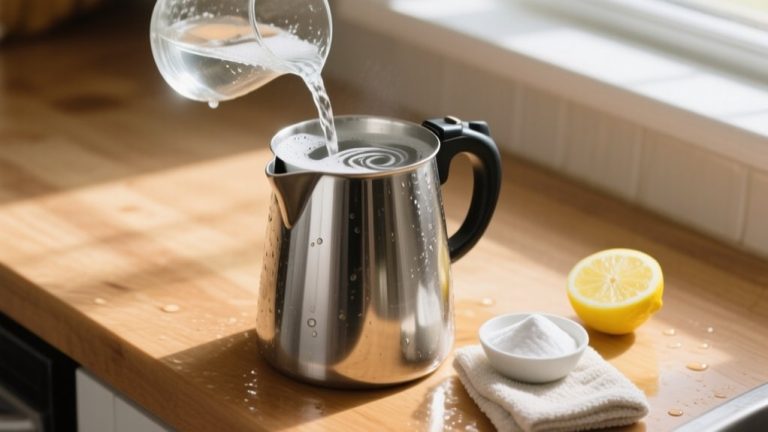

How To Clean A Coffee Maker Without Vinegar – Alternative Cleaning Methods
To clean your coffee maker without vinegar, try natural alternatives like baking soda, lemon juice, or citric acid. Mix baking soda with warm water and run a brew cycle. Or use equal parts lemon juice and water to descale and remove odors.
Denture tablets also help remove buildup effectively. Just remember to rinse thoroughly after cleaning so no residues affect the taste. These methods protect your machine’s components and keep your coffee tasting great.
If you want, you can explore more for detailed steps and maintenance tips. It’s easier than you might think!
Why Clean Your Coffee Maker Without Vinegar?
Although vinegar is a common cleaning agent, you should avoid using it to clean your coffee maker because its high acidity can corrode internal components over time. This corrosion compromises your machine’s functionality, affecting brewing consistency and ultimately the taste of your coffee.
Vinegar’s strong odor and lingering taste can also transfer to your brews, diminishing coffee freshness. Instead, opt for natural substitutes like lemon juice or baking soda, which effectively descale without damaging delicate parts.
Regular cleaning using these safer alternatives maintains peak performance and extends your appliance’s lifespan by preventing chemical buildup.
How to Know When Your Coffee Maker Needs a Deep Clean
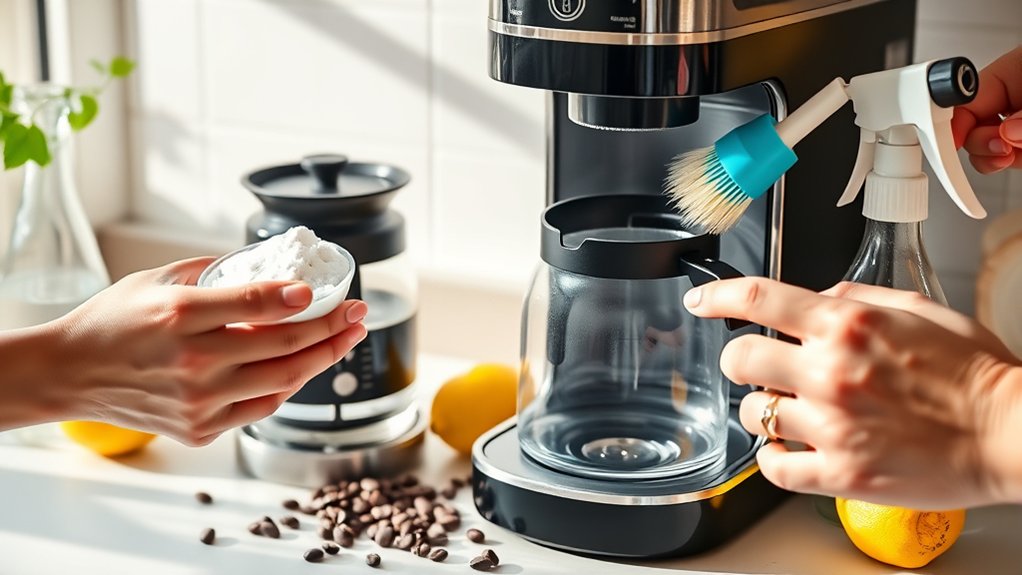
You’ll know your coffee maker needs a deep clean when you start to see visible stains or buildup inside the carafe or brew basket. It’s a clear sign things are getting a bit grimy in there.
Also, if your coffee begins tasting bitter or stale, that’s another red flag. And have you noticed the brewing process slowing down or the machine making strange noises? Yep, that means it’s time to give it some attention.
All these signs point to mineral deposits or residue affecting how your coffee maker performs and, of course, the flavor of your coffee. So, don’t wait too long before you clean it up!
Visible Buildup And Stains
When you notice visible buildup or stains on your coffee maker’s carafe or machine, it’s a clear sign that a deep clean is necessary. Coffee stains often appear as stubborn discolorations that regular cleaning won’t remove. These marks indicate mineral deposits or residue buildup needing targeted residue removal techniques.
If you see discoloration or sticky residue inside the water reservoir or around the filter basket, don’t delay cleaning. Ignoring these signs can lead to clogged components and affect your machine’s performance. Regularly inspecting your coffee maker for these visible coffee stains helps maintain its longevity and ensures peak brewing.
Addressing buildup promptly prevents further accumulation and keeps your machine hygienic without relying on harsh chemicals like vinegar. It’s better to tackle these issues early, so your coffee maker stays in great shape for every cup.
Changes In Coffee Taste
If your coffee suddenly tastes bitter or stale, it’s a strong indication that your coffee maker needs a deep clean. Changes in coffee taste often result from buildup affecting the coffee aroma and brewing temperature.
To identify when it’s time for a thorough cleaning, watch for these signs:
- Unpleasant odors from the machine, suggesting bacteria or mold growth.
- Noticeably slower brewing times, indicating mineral deposits impacting temperature control.
- Visual stains or scale inside the carafe or brew basket.
- A sudden improvement in flavor after cleaning, revealing prior residue affecting taste.
Brewing Issues And Noises
Although brewing issues and unusual noises might seem minor at first, they often signal that your coffee maker needs a thorough clean. If you hear grinding or banging sounds during brewing, mineral buildup or debris are likely blocking internal parts.
Slower brewing times usually point to clogs that disrupt water flow, affecting the brewing temperature and extraction. Even if your coffee bean freshness is excellent, a persistent bitter or off-taste can indicate mold growth inside the reservoir or filter.
Visible stains or scale on your machine also suggest it’s time for comprehensive descaling. Frequent brewing errors or inconsistent coffee quality often result from internal blockages.
Addressing these issues promptly with a thorough clean restores ideal function and guarantees your coffee tastes as fresh as your beans. So, don’t wait—give your machine some love and keep those brews tasting great!
Baking Soda Cleaning Guide for Coffee Makers Without Vinegar
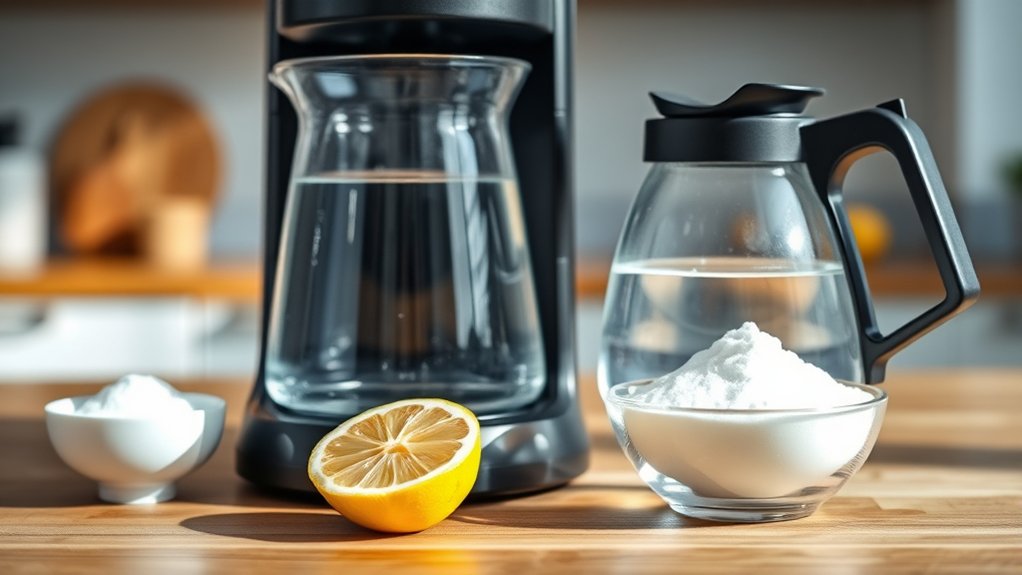
Because baking soda acts as a gentle abrasive, it effectively removes stains, mineral deposits, and odors from your coffee maker without harsh chemicals. Maintaining a clean machine guarantees consistent coffee strength and ideal brewing temperature.
Here’s how to clean your coffee maker with baking soda:
- Mix 1/4 cup baking soda with warm water in the reservoir.
- Run a full brew cycle to circulate the solution through the system.
- Use a soft sponge or brush to scrub the interior, loosening any remaining buildup.
- Rinse thoroughly by running one or two cycles with clean water to remove residue.
Repeat monthly or as needed for deep cleaning. This method preserves your coffee maker’s performance without affecting taste or safety.
It’s simple and effective—just what you need to keep your coffee tasting great!
Lemon Juice for Natural Coffee Maker Descaling
When you want to naturally remove mineral buildup from your coffee maker, lemon juice offers an effective and eco-friendly solution. Its high citric acid content breaks down mineral deposits, restoring peak performance. Mix equal parts lemon juice and water, then run a brew cycle.
Lemon juice’s natural acidity effectively removes mineral buildup, restoring your coffee maker’s performance with an eco-friendly brew cycle.
To protect your coffee flavor, follow with two cycles of clean water to rinse away any residual acidity and citrus scent. Using lemon juice regularly for descaling helps prevent buildup, ensuring your machine lasts longer and your coffee tastes fresh.
Adjust descaling frequency based on water hardness and usage, typically every one to three months.
This method not only maintains your coffee maker’s efficiency but also neutralizes unpleasant odors, leaving a clean, fresh aroma without overpowering your brew’s natural flavor. It’s a simple trick that keeps your coffee tasting just right!
Using Denture Tablets to Clean Your Coffee Maker
If you want a straightforward and effective way to clean your coffee maker without vinegar or lemon juice, denture tablets offer a powerful alternative. These tablets contain citric acid and cleaning agents that excel in coffee stain removal and the descaling process.
To clean your machine with denture tablets, follow these steps:
- Add one or two denture tablets to the water reservoir.
- Run a full brew cycle without coffee to dissolve stains and mineral buildup.
- Discard the cleaning solution and run at least two cycles with plain water to rinse thoroughly.
Repeat this process every 1-2 months to maintain cleanliness and enhance coffee flavor. This method is safe, natural, and leaves no residual odors. It effectively disinfects and descales your coffee maker.
Citric Acid Method for Safe Coffee Maker Descaling
Denture tablets provide a convenient cleaning option, but citric acid offers another effective way to descale your coffee maker safely. To use this method, dissolve citric acid in water at a 1:2 ratio and run the solution through your machine.
Let it sit in the reservoir for about 15 minutes to break down mineral buildup thoroughly.
Allow the solution to rest in the reservoir for 15 minutes to effectively dissolve mineral deposits.
This process protects your coffee maker’s components from corrosion, unlike vinegar, ensuring long-term durability. After descaling, run two clean water cycles to flush out any residue completely.
Regular use of citric acid maintains your coffee maker’s brewing efficiency, preventing clogs and buildup that can alter coffee flavor.
This method keeps your machine in ideal condition, preserving the taste quality and performance you expect every brew.
Cleaning Coffee Maker Parts With Dish Soap and Warm Water
First, go ahead and remove all the detachable parts like the brew basket and carafe.
Then, wash them thoroughly with warm water and some dish soap.
You can use a soft sponge to scrub away any stubborn coffee stains.
Make sure to rinse everything well to get rid of any soap residue.
Once the parts are completely dry, store them in a clean, dry place.
This helps prevent mold and keeps your coffee tasting fresh every time.
Washing Removable Components
Although cleaning the entire coffee maker is important, focusing on the removable components guarantees thorough removal of coffee oils and residue. Start by removing the coffee filter, brew basket, carafe, and any detachable parts.
Follow these steps for effective coffee stain removal and cleanliness: Wash all parts with warm water and a few drops of dish soap using a soft sponge or brush. Make sure to pay close attention to small crevices where residue builds up. Then, rinse thoroughly to eliminate any soap or detergent residue.
Check the manufacturer’s guidelines for dishwasher compatibility before placing parts in the dishwasher. Once cleaned, air dry all components completely before reassembling. This helps prevent mold and bacteria growth.
Using this method, your coffee maker stays clean without needing vinegar. It’s a simple way to keep everything fresh and working great.
Drying And Storage Tips
Once you’ve thoroughly washed your coffee maker’s removable parts with dish soap and warm water, the next step is to guarantee they dry properly to maintain cleanliness. Rinse all parts well to remove soap residue, then let items like the carafe and filter basket air dry completely with lids open to prevent mold.
Wipe external surfaces with a dry cloth to eliminate moisture. Store parts in a dry, well-ventilated area to avoid bacterial growth. Make sure everything is fully dry before reassembling to uphold hygiene and support energy efficiency by reducing the need for extra cleaning cycles.
| Drying Tips | Storage Tips |
|---|---|
| Air dry with lids open | Store in dry, ventilated spot |
| Wipe external surfaces | Avoid moisture buildup |
| Fully dry before storing | Stick to regular cleaning schedules |
Salt and Ice Cubes Trick for Tough Stains in Glass Carafes
If you’re dealing with tough, stubborn stains inside your glass carafe, adding coarse salt and ice cubes creates a natural abrasive that scrubs away buildup effectively without scratching the surface. This salt mixture combined with ice scrubbing loosens ingrained deposits that regular washing misses.
Follow these steps for the best results:
Follow these steps for a sparkling clean carafe without harsh chemicals or scrubbing tools.
- Add a handful of coarse salt and several ice cubes into the carafe.
- Swirl the mixture vigorously for 3 to 5 minutes, allowing the abrasive action to clean thoroughly.
- Pour out the salt and ice, then rinse the carafe multiple times with warm water.
- Dry completely to prevent water spots and maintain clarity.
Using this method regularly helps prevent buildup and keeps your glass carafe looking pristine. Plus, you won’t have to rely on harsh chemicals or vinegar to get the job done.
Why You Should Avoid Harsh Chemicals and Vinegar
You’ll want to steer clear of harsh chemicals and vinegar when cleaning your coffee maker. That’s because they can actually corrode the internal parts of your machine, which might lead to expensive repairs down the line and even affect the taste of your coffee.
Vinegar, in particular, is pretty acidic, and it can break down rubber and plastic components inside your coffee maker. This means your machine mightn’t last as long as it should.
A better bet? Try natural alternatives like lemon juice and baking soda. These clean just as well but without putting your coffee maker at risk. Plus, they’re gentle and safe to use regularly.
Vinegar’s Potential Damage
Although vinegar is a popular choice for cleaning coffee makers, its high acidity can cause significant damage to your machine over time. You should be cautious because vinegar corrodes internal metal components, risking long-term damage. It also weakens seals and gaskets, potentially causing leaks or malfunction.
Plus, residual vinegar can alter the coffee aroma and negatively affect brewing temperature regulation, which impacts flavor. Its corrosive nature degrades plastic parts, shortening your coffee maker’s lifespan.
Using vinegar frequently also increases residue buildup, which compromises performance. This can diminish the quality of your brewed coffee and undermine the rich coffee aroma you expect.
Harsh Chemicals Risks
Why risk damaging your coffee maker with harsh chemicals when safer options exist? Using bleach or hydrogen peroxide can corrode internal components, leading to malfunctions over time. These aggressive agents may also cause plastic degradation, making parts brittle and prone to cracking.
Beyond appliance damage, chemical safety is a major concern. Many harsh cleaners aren’t food-safe and can leave harmful residues. Even vinegar, though natural, can leave a lingering odor and unpleasant taste that impacts your coffee’s flavor quality.
Frequent use of these substances increases the risk of exposure to harmful chemicals and shortens your machine’s lifespan. So, protect both your health and your coffee maker by avoiding harsh chemicals and vinegar.
Instead, opt for gentler cleaning methods that preserve your appliance’s integrity and ensure safe, great-tasting coffee.
Safer Natural Alternatives
Since harsh chemicals and vinegar can cause damage and leave unwanted residues, choosing safer natural alternatives is essential for maintaining your coffee maker’s performance and longevity. Vinegar’s acidity may corrode seals and metal parts, while harsh chemicals risk internal damage.
To protect your machine and preserve coffee flavor, consider these natural options:
- Lemon juice: Its gentle acidity effectively breaks down mineral buildup without harsh effects.
- Baking soda: A mild abrasive that removes stains and odors safely.
- Citric acid: Food-safe and efficient at dissolving scale, ideal for regular cleaning.
- Frequent cleaning: Using these alternatives regularly prevents buildup, preserving both machine health and coffee flavor.
Using these natural options is a smart way to keep your coffee maker running smoothly. Plus, it helps keep your morning brew tasting just right!
How Often to Clean Your Coffee Maker Without Vinegar
When you use your coffee maker regularly, cleaning it without vinegar at least once a month guarantees peak performance and prevents mineral buildup. This routine supports machine maintenance and helps maintain coffee freshness by removing residues that affect flavor.
If you brew daily or have hard water, clean your machine every 2-3 weeks using natural alternatives like lemon juice or baking soda. These methods effectively dissolve deposits without harsh chemicals. They’re easy and safe to use.
For thorough machine maintenance, perform a deep clean every 3-6 months to extend your coffee maker’s lifespan. Adjust your cleaning schedule based on usage and water quality, but never skip monthly cleanings.
Staying consistent assures your coffee maker runs efficiently and delivers the freshest coffee every time. It’s worth the small effort to keep your coffee tasting great.
Tips to Keep Your Coffee Maker Tasting Fresh Longer
How can you guarantee your coffee maker consistently brews fresh, flavorful coffee? Focus on maintaining both your machine and the quality of your coffee bean.
Here’s how to keep your coffee tasting fresh longer:
- Clean your coffee maker regularly with natural agents like lemon juice or baking soda to prevent stale tastes.
- Use filtered water to reduce mineral buildup, preserving the brewing temperature and flavor integrity.
- Deep clean your machine monthly to remove oils and residues that dull the coffee bean’s natural taste.
- Rinse and dry removable parts thoroughly after each use to avoid mold and bacteria growth, which can alter flavor.
Keeping things clean and fresh really makes all the difference!
Fixing Common Problems When Cleaning Without Vinegar
Maintaining your coffee maker without vinegar often means adjusting your cleaning routine to tackle stubborn mineral buildup and residues more effectively. Since alternative methods may need longer or extra cycles, increase the concentration or duration of natural solutions like citric acid or baking soda if deposits persist.
Combine baking soda and lemon juice for enhanced results, especially when water quality contributes to mineral buildup.
Regularly inspect and scrub with a soft brush to remove stains that solutions alone can’t address. Thorough rinsing after cleaning is essential to prevent residual agents from affecting coffee flavor and to protect coffee machine durability.
Adapting these steps guarantees your machine stays clean, prolongs its lifespan, and maintains peak performance without relying on vinegar.
Frequently Asked Questions
Can I Use Baking Soda to Clean Other Kitchen Appliances?
Yes, you can use baking soda for kitchen appliance maintenance. It’s great for eco-friendly cleaning, removing stains, grease, and odors.
Just make a paste, scrub gently, and always rinse thoroughly to avoid residue buildup. It’s super easy and works wonders!
Is It Safe to Use Lemon Juice on All Coffee Maker Types?
Don’t put all your eggs in one basket. Lemon cleaning isn’t safe for all coffee makers.
You’ve got to check your coffee machine safety guidelines first. Acidity can damage seals and electronics over time.
How Do Denture Tablets Compare to Commercial Coffee Maker Cleaners?
Denture tablets’ effectiveness rivals commercial cleaner comparison by removing stains and buildup gently. You’ll appreciate their affordability and safety, though they may not disinfect as deeply as specialized commercial products designed for thorough sanitization.
They work well for everyday cleaning and are a great budget-friendly option. But if you need something for heavy-duty sanitizing, commercial cleaners might be the better pick. Overall, denture tablets offer a simple and safe way to keep your coffee maker clean without breaking the bank.
Can Salt and Ice Cubes Damage My Coffee Maker’s Glass Carafe?
Yes, salt abrasion and ice damage can harm your coffee maker’s glass carafe. Using salt and ice too aggressively causes micro-abrasions and weakens the glass. This increases the risk of cracks, so it’s better to avoid that.
Instead, go for gentle cleaning methods. They’ll get the job done without putting your carafe at risk. Trust me, a little care goes a long way!
What Should I Do if My Coffee Maker Still Smells After Cleaning?
If your coffee maker still smells after cleaning, focus on odor removal by applying deep cleaning techniques. Thoroughly scrub removable parts, run multiple water cycles, use baking soda or lemon juice, and guarantee complete drying with the lid open.
If the smell lingers, try running a cycle with just white vinegar and water. This helps break down any stubborn residues causing the odor. After that, run a few cycles with plain water to rinse out the vinegar taste.
Make sure every part is fully dry before putting your coffee maker away. Leaving the lid open can help air it out and prevent smells from coming back. Sometimes, a little extra care makes all the difference!
Conclusion
Cleaning your coffee maker without vinegar is easier than you think. By using baking soda, lemon juice, or denture tablets, you can keep your machine spotless and fresh without harsh chemicals.
Regular cleaning acts like a shield, protecting your coffee’s rich flavor and your machine’s longevity. Stick to these natural methods, and your brew will always taste as bright as the morning sun.
That way, every cup is a perfect start to your day.