How To Dye Fabric With Coffee – Step-By-Step Guide
To dye fabric with coffee, start by choosing natural fibers like cotton or linen and pre-washing them to remove oils. Brew a strong coffee bath, then submerge your damp fabric for 30 minutes to several hours depending on the shade you want.
Stir occasionally, rinse with cold water, and soak your fabric in a vinegar solution to set the color. Air dry in shade to avoid fading. If you want to explore tricks for richer tones and care tips, there’s more to discover.
Choose the Right Fabric for Coffee Dyeing
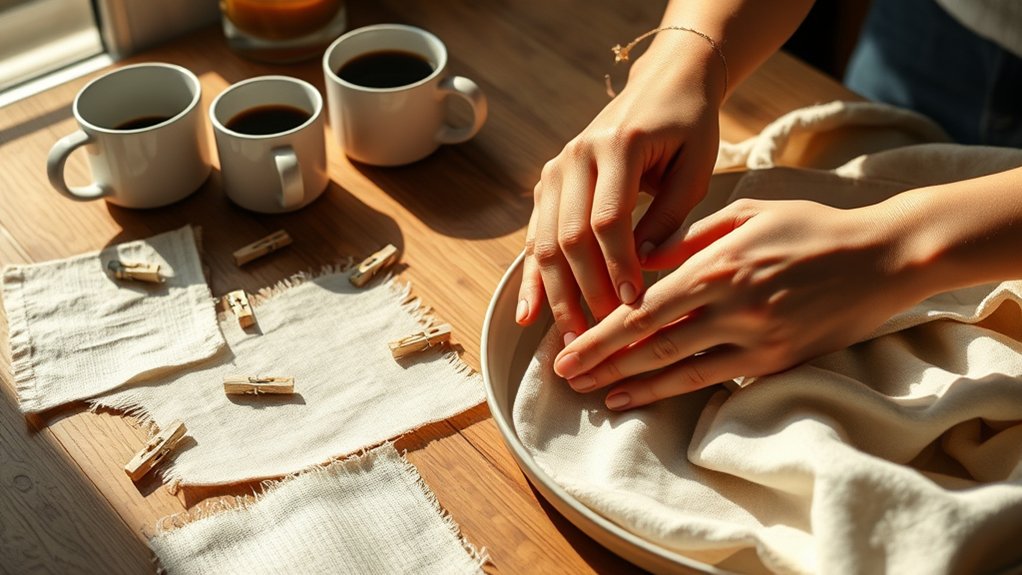
Choosing the right fabric is key to getting the best results when dyeing with coffee. You’ll want to pick natural fibers like 100% cotton, linen, or wool since they soak up coffee dye much better than synthetics.
Natural fibers like cotton, linen, and wool absorb coffee dye best for vibrant, lasting color.
Light or white fabrics work best because they let the coffee’s tan and brown shades really shine through.
Don’t skip fabric preparation. Always pre-wash your fabric to remove dirt or oils, then keep it damp before dyeing to guarantee even color absorption.
Think about thickness, too. Thicker fabrics absorb dye more deeply, giving you richer, darker tones, while lighter fabrics produce softer hues.
To avoid surprises, test a small swatch first, as different fibers can react unpredictably to coffee dye.
This way, you’ll nail the perfect color every time.
Gather Materials for Coffee Dyeing
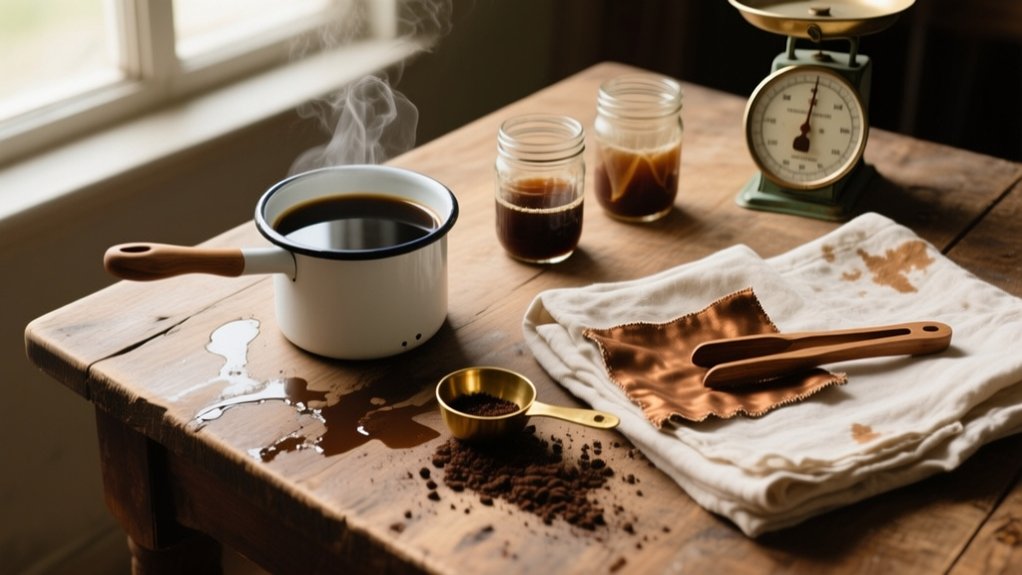
Before you start, make sure you’ve got the right supplies on hand. You’ll need a large pot, some stirring utensils, and vinegar to help set the dye.
Try to stick with 100% natural fabrics like cotton or linen since they soak up the color best.
Also, brew a strong batch of coffee—that way, your dye bath will be nice and rich and will dye your fabric evenly.
Essential Dyeing Supplies
To get the best results from coffee dyeing, you’ll want to gather a few key supplies.
Start with 100% cotton or other natural fiber fabric, as these absorb coffee dye much better than synthetics.
Brew a strong batch using about 80 grams of coffee grounds per 100 grams of fabric to get rich color.
You’ll also need a large pot big enough to fully submerge your fabric in the brewed coffee.
A wooden spoon comes in handy for stirring the fabric gently, preventing air pockets during dyeing.
After rinsing, use white wine vinegar to create a vinegar solution that sets the dye and helps the color last longer.
Having these essentials ready will make your coffee dyeing experience smooth and effective.
Fabric Selection Tips
While coffee dyeing can work on various fabrics, natural fibers like cotton, linen, and wool will give you the richest, most even color. Choose 100% natural fibers for the best results, and opt for white or light shades to make the coffee dye pop.
Always wash your fabric first to remove oils or dirt that could block dye absorption. Keep in mind, thicker fabrics may need longer soaking to soak up the color evenly.
Here’s a quick guide to help you pick the right fabric:
| Fabric Type | Dyeing Tip |
|---|---|
| Cotton | Absorbs dye well |
| Linen | Gives rich, even tones |
| Wool | Deep, warm colors |
| Synthetic | Avoid; resists dye |
| Thick Fabrics | Soak longer for color |
Stick to natural fibers, and you’ll love the results!
Brew a Strong Coffee Dye Bath
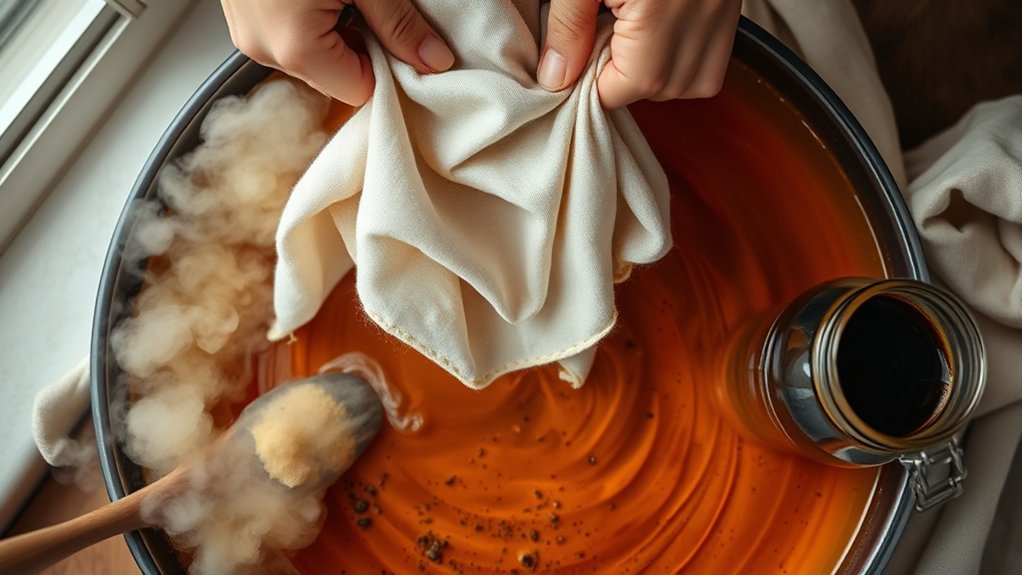
You’ll want to brew a strong coffee using your favorite method—think French press or instant—for a rich, even dye.
Keep the coffee hot, but not boiling, when you add your damp fabric. That way, you get the best color absorption.
Make sure to stir the fabric occasionally, too, so every part soaks up the coffee evenly.
Choosing Coffee Strength
Three key factors determine how rich and deep your coffee-dyed fabric will look, and the strongest is the concentration of your brew.
To get that perfect shade, focus on these:
- Coffee-to-water ratio: Use about 1 cup of ground coffee per 4 cups of water for a strong dye bath that saturates fabric with rich color.
- Instant coffee option: Dissolve ½ cup of instant coffee in very hot water to create a concentrated solution that’s just as effective.
- Steeping time: Let your coffee steep for at least 30 minutes to boost its staining power before you dip your fabric.
Brewing Methods Overview
Because the strength of your coffee dye bath directly affects the depth of color, choosing the right brewing method is key.
To brew a strong coffee dye bath, opt for methods like French press, pour-over, or instant coffee to get a concentrated brewed coffee.
Use about 80 grams of coffee grounds per 100 grams of fabric, tweaking the amount for lighter or darker shades.
Once brewed, bring the coffee to a boil, then turn off the heat before adding your damp fabric.
Steep it for at least an hour. Longer soaking, even up to 24 hours, deepens the color. This approach guarantees your fabric absorbs rich, lasting tones.
Next, you’ll want to rinse carefully to set that beautiful coffee hue.
Maintaining Optimal Temperature
While brewing a strong coffee dye bath sets the stage, maintaining the right temperature throughout the process is just as essential to achieving rich, even color.
Use a large pot to brew your coffee and water mixture, aiming for a good amount of roasted coffee, about 80 grams per 100 grams of fabric, for deep saturation.
Once it reaches a rolling boil, turn off the heat to extract tannins fully, then submerge your damp fabric.
Here’s how to keep it ideal:
- Keep the pot of coffee warm, reheating gently if it cools too much.
- Avoid boiling the fabric; hot water allows the dye to absorb without damage.
- Stir occasionally with a wooden spoon to distribute color evenly.
This method sets the color beautifully, whether you use instant coffee or brewed coffee and tea.
Prepare Fabric for Coffee Dyeing
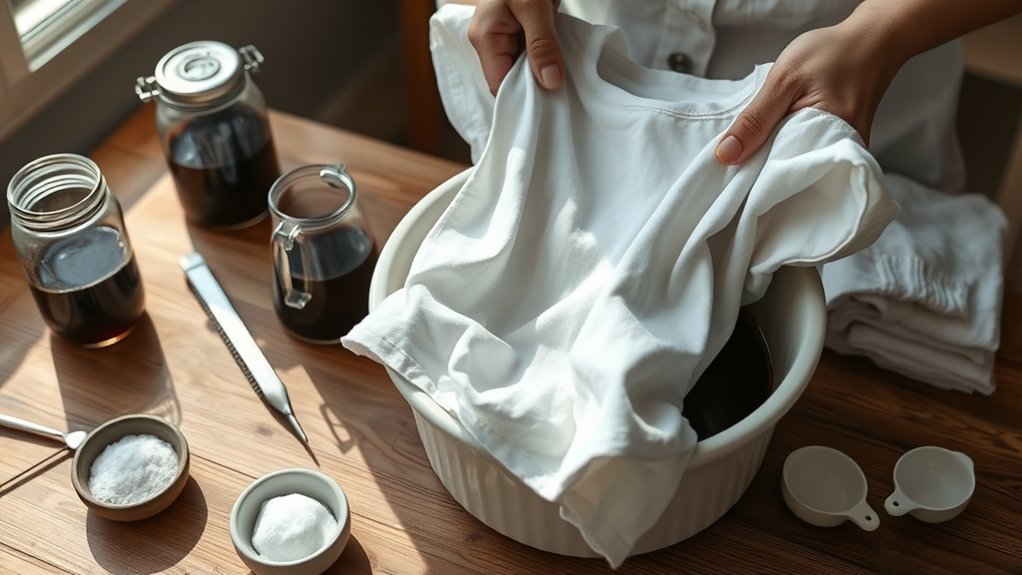
Start by giving your fabric a good wash to remove any dirt, oils, or finishes that could block the coffee dye from soaking in properly.
Using 100% natural fibers like cotton, linen, or wool will give you the best results since these materials absorb the dye much better than synthetics.
Choose 100% natural fibers like cotton, linen, or wool for the richest, most vibrant coffee dye results.
If your fabric is new, rinse it in cold water first to prep the fibers for dye uptake.
After washing, don’t dry your fabric—keep it damp. This moisture helps the coffee dye penetrate evenly, ensuring a consistent color.
Keeping your fabric wet before dyeing is a small step that makes a big difference in how beautifully your coffee dye will set.
Now your fabric is ready for the next step in the dyeing process!
Submerge and Soak Fabric in Coffee Dye
Be sure to fully submerge your damp fabric in the hot coffee dye so it gets an even color and doesn’t trap any air pockets.
Give it a gentle stir every now and then to help the dye soak in evenly.
Depending on how deep you want the shade, you can soak it anywhere from an hour up to 24 hours—just keep checking the color as you go.
Fabric Immersion Techniques
A key step in achieving a beautifully dyed fabric is fully submerging it in hot, brewed coffee. This guarantees even dye absorption and vibrant color variations.
To get the best results, follow these fabric immersion techniques:
- Immerse the fabric completely in a pot of hot coffee. Stir gently to remove air pockets and promote uniform color distribution.
- Add a vinegar solution (1 part vinegar to 4 parts coffee) to help open the fibers. This allows the dye to penetrate deeper.
- After soaking, rinse the fabric in cold water to set the color and wash away excess dye.
Soaking Duration Effects
Three soaking times can dramatically change the shade you get when dyeing fabric with coffee. If you soak your fabric for 30 minutes, you’ll get a light tan shade with modest color saturation.
Waiting an hour deepens that to a medium brown, offering richer color saturation.
But for a dark, intense hue, leave the fabric soaking for 24 hours. This allows the fibers to fully absorb the dye.
Be certain to stir the fabric occasionally during soaking to avoid air pockets and guarantee even color saturation.
Keep the coffee dye warm throughout, as cooler temperatures slow absorption.
Once done, rinse the fabric in cold water to set the color and remove excess dye, giving you a vibrant, lasting finish.
Adjust Soaking Time in Coffee Dye to Control Color
When you adjust how long you soak your fabric in coffee dye, you can easily control the shade it takes on. This simple tweak lets you create beautiful color variations, from light tans to rich browns.
Here’s how to manage soaking time for your desired shade:
- Soak for about 30 minutes to get a subtle, light tan color. It’s great for a soft, natural look.
- Extend soaking up to 24 hours to achieve deep, dark brown hues for a bolder statement.
- Stir the fabric occasionally during soaking to avoid uneven patches and guarantee consistent color.
Set Coffee Dye With Vinegar
To lock in your coffee dye and keep the color vibrant, you’ll want to soak your fabric in a vinegar solution right after dyeing. Mix 1 part white distilled vinegar with 4 parts water to create this magic potion.
This solution opens fabric fibers, allowing better dye absorption, which is one of the key vinegar benefits. Soak your fabric for about 30 minutes to enhance color retention and prevent fading.
Here’s a quick look at vinegar benefits:
| Benefit | Effect | Emotion |
|---|---|---|
| Opens Fibers | Better Dye Absorption | Satisfaction |
| Enhances Color | Longer-lasting hues | Confidence |
| Prevents Fading | Keeps colors vibrant | Joy |
This simple step makes a big difference in your coffee dye project!
Rinse and Dry Coffee-Dyed Fabric
Start by rinsing your coffee-dyed fabric in cold water until it runs clear. This helps wash away any excess dye and prevents unwanted staining later on.
This step is essential in coffee dyeing techniques to guarantee even color and avoid blotches.
Next, follow these drying tips to keep your fabric vibrant:
- Air dry in a shaded area to prevent fading from direct sunlight.
- If using a dryer, opt for a low-heat setting to protect the dye’s integrity.
- Make certain the fabric is completely dry before ironing to avoid staining or distortion.
Re-Dye Fabric With Coffee for Darker Shades
Once your fabric is thoroughly rinsed and dried, you can move on to deepening its color with a fresh coffee dye bath.
For darker shades, dampen your fabric first, then submerge it in a strong, freshly brewed coffee solution.
To achieve deeper tones, moisten your fabric before immersing it in robust, freshly brewed coffee.
Use about 80 grams of coffee grounds per 100 grams of fabric to intensify the color. Let it soak for at least an hour or overnight for richer hues.
Stir frequently to prevent uneven patches and guarantee full saturation.
After dyeing, rinse the fabric in cold water mixed with a splash of vinegar to set the dye and improve color retention.
Avoid Common Coffee Dyeing Mistakes
Although coffee dyeing seems straightforward, overlooking a few key steps can lead to disappointing results. To get the best from this natural alternative to chemical dyes, avoid these common mistakes:
- Don’t dye dirty or dry fabric. Clean, damp fabric absorbs coffee dye evenly, giving you consistent color.
- Skip weak brews. Use a strong coffee solution to achieve rich, lasting shades instead of dull, fading hues.
- Avoid synthetic fibers. They often repel dye and can be damaged by heat, so stick to natural fabrics for ideal results.
Remember to test a small fabric piece first to see how the coffee dye interacts with your material.
Using these tips, you’ll master coffee dyeing without frustration and enjoy a beautiful, eco-friendly finish.
Try Tie-Dye and Coffee Ground Patterns
Three simple techniques can transform your coffee-dyed fabric into eye-catching works of art.
Start with tie-dye by dampening your fabric, then twist or fold it into shapes you like. Secure sections with rubber bands or string to control how the coffee dye soaks in, creating unique contrasts.
Dampen, twist, and bind your fabric to craft distinctive coffee dye patterns with striking contrasts.
For added texture, sprinkle coffee grounds onto the soaked fabric. This creates varied stain designs and depth, especially when you layer grounds and dye. You can also adjust soaking time to tweak color saturation.
Pattern experimentation like this lets you explore endless creative possibilities with coffee dye.
Remember to let your fabric dry away from direct sunlight to keep those rich coffee hues vibrant.
Give these methods a try, and watch your fabric transform into a stunning, coffee-inspired masterpiece.
Care for Coffee-Dyed Clothing
Caring for your coffee-dyed clothing properly can help maintain those rich, warm tones you worked hard to create.
Color preservation is key to keeping your fabric looking vibrant longer. Here’s how you can care for your coffee-dyed pieces:
- Rinse thoroughly in cold water until it runs clear to remove excess dye and lock in color.
- Use a gentle detergent made for delicate fabrics when washing, and always wash coffee-dyed items separately from lighter clothes to avoid color transfer.
- Store your coffee-dyed clothing in a cool, dry place away from direct sunlight to prevent fading caused by UV exposure.
You can expect some gradual fading over time, but following these steps will maximize your fabric’s lifespan and color integrity.
Frequently Asked Questions
Can I Use Instant Coffee Instead of Coffee Grounds for Dyeing?
Yes, you can definitely use instant coffee instead of coffee grounds for dyeing fabric.
The instant benefits include easy dissolving in hot water, giving you a smooth, uniform color that’s perfect for large batches.
Just make sure your fabric is damp before you dip it in the dye solution for better absorption.
Afterward, rinse with cold water and soak in vinegar to help set the color.
This method saves time and gives consistent results!
How Long Does Coffee-Dyed Fabric Retain Its Color?
You can expect decent color longevity with coffee-dyed fabric, but it varies based on fabric type and care.
Natural fibers like cotton hold dye better, and darker shades usually last longer.
To keep the color vibrant, wash your fabric in cold water with gentle detergent, and avoid harsh washing or mixing with whites.
Using a mordant like alum also helps lock in the color, extending how long your coffee dye stays rich.
Is Coffee Dyeing Safe for All Skin Types?
Coffee dyeing is generally safe for most skin types, but if you have skin sensitivity, you should be cautious. You might want to do a patch test first to see how your skin reacts.
Since coffee uses natural ingredients, it’s less harsh than chemical dyes, but tannins can sometimes cause irritation for very sensitive skin.
Rinsing your fabric thoroughly after dyeing helps reduce any leftover residue that could bother you.
Can I Mix Coffee Dye With Other Natural Dyes?
Yes, you can mix coffee dye with other natural dyes for amazing color blending.
Combining coffee with tea, turmeric, or hibiscus lets you create unique shades and deeper hues.
Coffee’s tannins also help other dyes stick better and last longer.
Just remember to test small fabric samples first to see how the colors blend and interact.
Experimenting this way makes your dyeing projects more vibrant and exciting!
What Is the Environmental Impact of Coffee Fabric Dyeing?
You’ll find coffee fabric dyeing supports sustainable practices by using biodegradable, non-toxic materials that reduce chemical waste.
It minimizes water pollution compared to synthetic dyes, so you’re helping protect waterways.
Plus, repurposing leftover coffee grounds means less waste and a lower carbon footprint since it requires less energy.
Choosing coffee dye also boosts local economies, making your eco-friendly choice even more impactful and rewarding.
Conclusion
Now that you’ve mastered coffee dyeing, your fabric will have a rich, warm glow that could rival the sunrise itself! Just remember to choose the right fabric, soak it thoroughly, and don’t shy away from re-dyeing for deeper hues.
Avoid common mistakes, and get creative with patterns to make your pieces truly unique. With a little care, your coffee-dyed clothes will stay vibrant and cozy, turning heads wherever you go. Happy dyeing!