
Can Cats Have Coffee – Safety Risks And Facts Explained
You shouldn’t let your cat have coffee because even small amounts can be dangerous. Cats metabolize caffeine slowly and are highly sensitive, which can cause rapid heart rate, restlessness, tremors, or worse. Both regular and decaf coffee carry risks and offer no benefits to your pet.
Keep all coffee products out of reach and act quickly if exposure happens. Understanding why coffee harms cats, the signs to watch for, and safe alternatives can help you protect your furry friend. It’s always better to be safe than sorry when it comes to your cat’s health.
Why Is Coffee Dangerous for Cats?
Although coffee is a popular beverage for people, it poses serious risks to your cat’s health. During coffee brewing, caffeine extraction releases compounds that are safe for humans in moderate amounts but toxic to cats.
Even small quantities of caffeine can overstimulate your cat’s nervous system and heart. Since cats are much smaller, the caffeine concentration from coffee brewing can quickly reach dangerous levels in their bodies.
If your cat ingests coffee, it can cause symptoms like restlessness, rapid breathing, increased heart rate, tremors, or even seizures. You need to be cautious about where you leave coffee and how you dispose of coffee grounds.
Your curious cat might consume these without you realizing it. Protecting your feline friend means keeping all coffee-related items out of their reach.
It’s better to be safe and keep your cat away from anything with caffeine.
Why Cats Handle Caffeine Differently
You might be curious about why cats react so strongly to caffeine compared to us. Well, it turns out their metabolism processes caffeine much more slowly.
Plus, their nervous system is way more sensitive to its effects. So, when you put those two things together, it’s easier to see why caffeine can be so toxic to your feline friend.
Cat Metabolism And Caffeine
How does a cat’s metabolism affect its reaction to caffeine? Cats metabolize substances differently than humans because of their unique liver enzymes. Unlike your diet, which might include coffee brewing byproducts, a cat’s diet doesn’t have caffeine exposure. This means they’re less equipped to process it efficiently.
When caffeine enters a cat’s system, their slower metabolism means the stimulant sticks around longer, which raises the risk of toxicity. You might think a tiny sip won’t cause harm, but even small amounts can overwhelm their liver’s ability to break down caffeine safely.
Knowing this difference helps you protect your feline friend by avoiding accidental caffeine ingestion. Make sure their diet stays free from coffee brewing residues and related stimulants.
Keeping your cat safe means understanding how their metabolism handles substances like caffeine differently.
Nervous System Sensitivity
Why does caffeine affect cats so much more intensely than it does humans? It all comes down to their nervous system sensitivity. Cats have a heightened neural response to caffeine, meaning their brains react more strongly to its stimulating effects.
This intensified reaction influences their sensory perception, making them more susceptible to caffeine’s impact. Unlike humans, whose nervous systems can tolerate moderate caffeine intake, cats’ neural pathways are far more sensitive, which amplifies caffeine’s effects.
When you consider this, it’s easy to understand why even small amounts of coffee can cause significant changes in your cat’s behavior and well-being.
Toxic Effects Mechanism
Although caffeine might seem harmless in small doses, your cat’s body processes it very differently, leading to toxic effects that you mightn’t expect. When you brew coffee, caffeine is extracted in a concentrated form, but cats absorb and metabolize it much slower than humans.
This slower caffeine absorption causes toxic buildup quickly. Here’s why: Cats lack certain liver enzymes that break down caffeine efficiently, which means it sticks around in their system much longer. Plus, their smaller size means even tiny amounts of caffeine can cause significant physiological changes.
And caffeine overstimulates their central nervous system and heart, leading to symptoms like rapid breathing, tremors, or seizures. Understanding this mechanism helps you realize why coffee brewing waste or spilled coffee poses serious risks to your furry friend.
Common Symptoms of Caffeine Poisoning in Cats
If your cat gets into something with caffeine, you might see them acting restless or agitated all of a sudden.
They could also start showing physical signs like vomiting, breathing rapidly, or having a racing heart.
It’s really important to catch these symptoms early because caffeine poisoning can quickly become serious and might need urgent veterinary attention.
Behavioral Changes
When your cat consumes caffeine, it can trigger noticeable behavioral changes that signal toxicity. You might observe shifts that differ from their normal playful behavior or grooming habits. Recognizing these signs early can help you act quickly to protect your pet.
Watch for these common behavioral changes:
- Restlessness or hyperactivity. Your cat may pace or seem unusually alert.
- Aggression or irritability. They might snap or hiss without clear cause.
- Excessive grooming or neglect of grooming. Either overdoing it or completely avoiding their usual routine.
These changes indicate your cat’s nervous system is overstimulated by caffeine. If you notice any of these symptoms, it’s vital to seek veterinary care promptly to prevent further complications.
Physical Symptoms
How can you tell if your cat is physically affected by caffeine poisoning? Watch closely for symptoms like rapid breathing, an increased heart rate, tremors, or muscle twitching.
Since caffeine content in coffee brewing varies, even small amounts can cause these signs in cats.
You might also notice vomiting, diarrhea, or restlessness as their body reacts to the stimulant.
Cats metabolize caffeine differently than humans, so these symptoms can appear quickly after ingestion.
If your cat’s physical condition changes suddenly after exposure to coffee brewing products, it’s essential to act promptly.
Recognizing these symptoms early helps you seek timely veterinary care, minimizing potential harm.
Always keep coffee and related items out of your cat’s reach to prevent accidental poisoning.
Severe Health Risks
Why should you be especially concerned about caffeine poisoning in cats? Their small size and natural cat curiosity make even tiny amounts of coffee brewing residue dangerous. Caffeine affects their heart and nervous system severely.
Watch for these common symptoms indicating severe health risks: rapid breathing and heart palpitations. Caffeine overstimulates their cardiovascular system.
Tremors or seizures can happen when their nervous system is overwhelmed. Vomiting and diarrhea are their bodies trying to get rid of the toxin.
If you notice these signs, act quickly and contact your vet immediately. Coffee brewing areas should be off-limits to prevent accidental ingestion.
Protect your feline friend by understanding these risks and keeping caffeine far from their reach.
Toxic Coffee Amounts for Cats
Although cats are curious creatures, you should never let them consume coffee because even small amounts can be toxic.
Cats are curious, but even tiny amounts of coffee can be toxic and should be avoided.
The caffeine content in coffee varies depending on the brewing method, but even a tiny sip can pose serious risks for your cat. Unlike humans, cats metabolize caffeine much more slowly, making them highly sensitive to its effects.
Just a few milligrams per kilogram of your cat’s weight can lead to toxicity. Since the exact amount differs with each coffee type and brewing strength, it’s safest to assume any coffee is harmful.
To protect your feline friend, keep coffee and any coffee-related products out of their reach. Being cautious prevents accidental ingestion and guarantees your cat’s well-being.
What Happens When Cats Drink Coffee?
If your cat drinks coffee, the caffeine can quickly affect their nervous and cardiovascular systems.
You might notice symptoms like restlessness, rapid breathing, or even tremors.
Effects Of Caffeine
When cats consume caffeine, their small bodies react much more intensely than ours do. Unlike humans, who can handle moderate caffeine content from coffee brewing, cats lack the enzymes to break it down effectively. This leads to rapid absorption and heightened sensitivity.
Here’s what happens when your cat ingests caffeine: Their central nervous system overstimulates, causing increased heart rate and restlessness. Their muscles may tense or twitch due to caffeine’s stimulant effects.
Also, their body temperature can rise, putting extra stress on their organs.
Even a tiny amount of coffee brewing residue with caffeine content can trigger these effects. So, understanding this helps you keep your pet safe by avoiding accidental exposure to coffee or caffeine-containing products. Just a little caution can go a long way!
Symptoms Of Poisoning
How can you tell if your cat has ingested coffee and is suffering from poisoning? Cats are naturally drawn to the coffee aroma, and their curiosity might lead them to sip a bit.
Unfortunately, even a small amount can trigger serious symptoms.
Watch for signs like restlessness, rapid breathing, vomiting, diarrhea, and an elevated heart rate. Your cat may also exhibit muscle tremors or seizures, indicating severe caffeine toxicity.
Early detection is essential, so if you notice any unusual behavior after exposure to coffee, act quickly.
Contact your veterinarian immediately to guarantee your feline friend gets the care they need.
Understanding these symptoms helps you protect your cat from the dangers hidden behind that tempting coffee aroma.
Just keep an eye out and don’t hesitate to get help if something feels off.
Is Decaf Coffee Safe for Cats?
Why does decaf coffee seem like a safer option for your cat? You might think removing caffeine eliminates risk. However, decaf coffee still contains trace caffeine amounts and other compounds from the coffee brewing process.
Here’s what you should consider about decaf safety:
- Trace Caffeine: Even decaf has small caffeine levels that can affect cats, who are much more sensitive than humans.
- Chemical Residue: Some coffee brewing methods leave behind chemicals or oils that may irritate your cat’s digestive system.
- No Nutritional Benefit: Decaf offers no health benefits and may cause unnecessary risk or discomfort.
Ultimately, it’s best to avoid giving your cat decaf coffee. The potential harms outweigh any perceived safety, so keep their diet caffeine and coffee free.
Safe Alternatives to Coffee for Cats
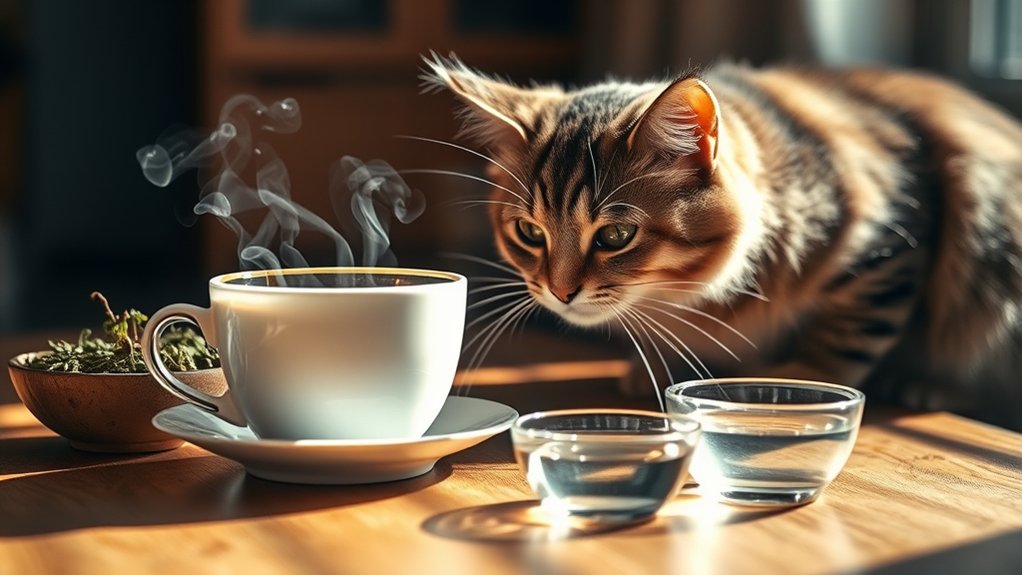
Since both regular and decaf coffee pose risks to your cat’s health, finding safe and enjoyable alternatives is important. Cats are sensitive to caffeine content, so avoiding coffee brewing byproducts is essential.
You can offer specially formulated cat beverages or simple water infusions that are safe and hydrating. Here’s a quick guide to alternatives that keep your cat happy without harm:
| Alternative Drink | Benefits | Notes |
|---|---|---|
| Catnip Tea | Herbal, soothing | Use dried catnip leaves |
| Cat Grass Water | Hydrating, digestive | Infuse fresh cat grass |
| Tuna Broth | Flavorful, nutritious | Low sodium, no spices |
| Water with Ice Cubes | Invigorating, pure | Adds fun without risks |
| Commercial Cat Drinks | Nutrient-enriched | Vet-approved options |
These options avoid caffeine content and coffee brewing risks, keeping your cat safe.
How to Keep Your Cat Away From Coffee
Although cats are naturally curious, you can take simple steps to prevent them from accessing coffee and its harmful effects. Keep in mind that coffee brewing areas and caffeinated treats pose risks to your feline friend.
Here’s how you can protect your cat:
- Always store coffee beans, grounds, and caffeinated treats in sealed containers and out of your cat’s reach.
- Avoid leaving your coffee cup unattended, especially near edges where your cat can easily knock it over or lap up the liquid.
- Create a designated coffee brewing zone that’s inaccessible to your cat. You can use barriers or closed doors to limit access.
What to Do If Your Cat Drinks Coffee
Even with careful precautions, accidents can happen, and your cat might ingest coffee. If this occurs, stay calm and remove any remaining coffee immediately to prevent further exposure. Avoid inducing vomiting unless instructed by a professional.
Since coffee brewing involves hot liquids and strong caffeine, even small amounts can be harmful to cats. Monitor your cat closely for symptoms like restlessness or rapid breathing.
Afterward, gently assist with cat grooming to clean any coffee residue from their fur, preventing them from licking and ingesting more caffeine. Keep fresh water accessible to help dilute toxins.
While you manage these initial steps, prepare to contact a vet if symptoms worsen. Your quick response and careful attention can make a significant difference in your cat’s safety.
When to See a Vet for Coffee-Related Issues
If your cat shows signs of severe distress after ingesting coffee, you should seek veterinary care immediately. Coffee brewing and caffeine extraction produce potent compounds that are highly toxic to cats, even in small amounts. Watch for symptoms like vomiting or seizures, which require urgent attention.
Seek immediate vet care if your cat shows severe distress after ingesting toxic coffee compounds.
You should see a vet if your cat exhibits any of these:
- Continuous vomiting or diarrhea
- Tremors, seizures, or difficulty breathing
- Extreme restlessness or rapid heartbeat
Prompt treatment can prevent dangerous complications from caffeine poisoning. Your vet might induce vomiting or provide activated charcoal to limit caffeine absorption.
Remember, coffee’s caffeine extraction results in a concentration no cat should ingest.
Acting quickly safeguards your feline friend’s health and comfort.
Frequently Asked Questions
Can Coffee Grounds Harm Cats if Ingested?
Yes, coffee grounds can harm your cat if ingested. During coffee brewing, caffeine stays concentrated in the grounds.
Since cats metabolize caffeine much slower than humans, it can build up to toxic levels quickly.
This can cause symptoms like restlessness, rapid breathing, and even seizures.
So, it’s really important to keep coffee grounds out of your cat’s reach.
That way, you can avoid accidental ingestion and keep your furry friend safe and healthy.
Do Coffee Beans Pose a Risk to Cats?
Yes, coffee beans do pose a risk to your cat. Since they come from the coffee plant, they contain caffeine, which affects your cat’s heart and nervous system.
Even small amounts can cause symptoms like restlessness, rapid breathing, or vomiting.
It’s best to keep coffee beans out of reach to protect your furry friend from harmful caffeine effects and prevent accidental ingestion. Better safe than sorry, right?
Is Coffee Toxic to Kittens as Well as Adult Cats?
Yes, coffee is toxic to kittens and adult cats alike. You might wonder if kittens process caffeine differently, but their immature caffeine metabolism actually makes them more vulnerable.
When your cat ingests caffeine, it disrupts their behavior, causing restlessness or even seizures.
Since cats can’t efficiently break down caffeine, even a small amount poses serious risks. It’s best you keep coffee far away to protect your furry friend’s health.
Can Cats Develop Caffeine Addiction?
Cats can develop caffeine addiction, though it’s pretty rare since they usually avoid bitter tastes like coffee. If your cat does consume caffeine regularly, they might start showing some behavioral changes. You could notice restlessness or irritability.
When caffeine is suddenly taken away, your cat might experience withdrawal symptoms. This can lead to lethargy or mood swings.
Are Coffee-Flavored Treats Safe for Cats?
Imagine your cat sniffing a coffee-flavored treat beside your morning cup. Despite the tempting scent, these treats often contain harmful caffeine or artificial ingredients that disrupt cat nutrition.
You shouldn’t risk their health just for flavor.
Instead, choose safe coffee alternatives like catnip or specially formulated treats designed for feline diets. By prioritizing their well-being, you make sure your furry friend enjoys treats without putting their safety or nutritional balance at risk.
Conclusion
Imagine your curious cat’s wide eyes reflecting the swirl of your morning coffee. Though tempting, that cup holds hidden dangers. Coffee’s caffeine can disrupt their tiny heartbeats and cause jittery paws. This can turn a cozy moment into a veterinary emergency.
By understanding the risks and offering safe alternatives, you protect your feline friend from harm. Stay vigilant and keep coffee out of reach. Instead, cherish those peaceful, caffeine-free cuddles. Your cat’s safety is worth every mindful choice.