Can You Use Coffee Grounds In An Espresso Machine – What To Know
You can use coffee grounds in an espresso machine, but they must be finely ground, like powdered sugar, for the best results. Regular, coarser grounds lead to weak, sour shots and little crema.
Stale coffee dulls flavor, so you need fresh, dark-roasted beans and consistent tamping pressure to balance extraction. Using the right grind and dose is key to avoid bitterness or clogs.
Understanding these details will help you pull a truly great shot every time.
Key Differences in Coffee Grounds for Espresso Machines
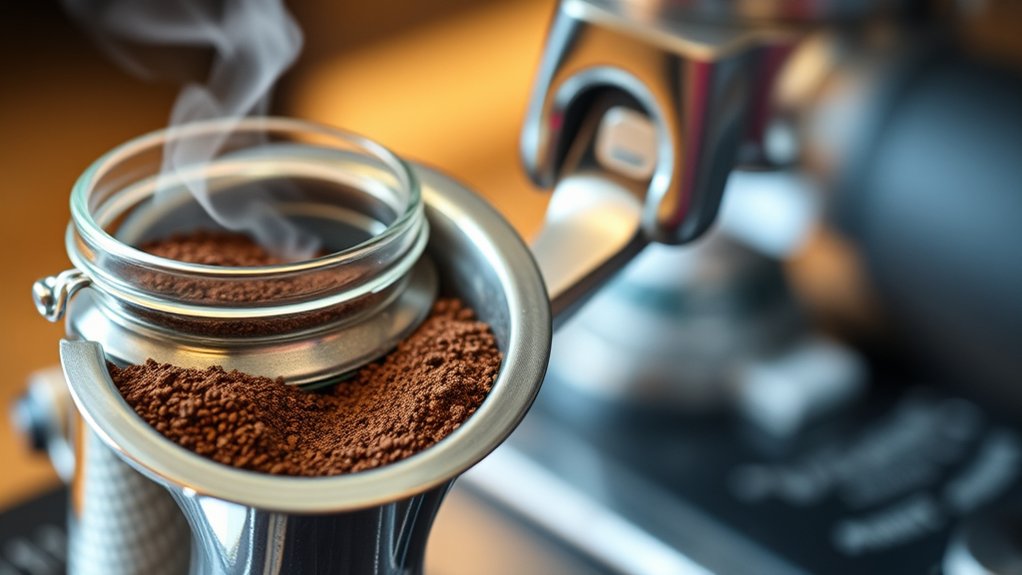
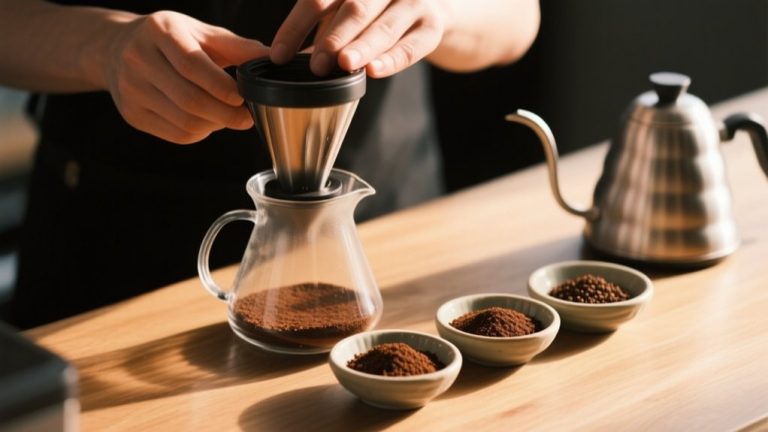
Although many people think any coffee grind will do, using the right grind size is essential when making espresso. You need an espresso grind that’s fine, almost like powdered sugar, to guarantee excellent extraction and a rich crema.
Using the right fine grind, almost like powdered sugar, is key for perfect espresso extraction and rich crema.
Regular coffee grounds are typically coarser, which won’t work well with the high-pressure process of espresso machines. If the grind is too coarse, you’ll end up with weak, sour flavors due to under-extraction; if it’s too fine, it can clog your machine and produce bitterness.
Mastering the proper technique means using freshly ground, dark-roasted beans specifically for espresso. This precision enhances the full-bodied flavor and smoothness you expect from a quality shot.
Don’t settle for regular coffee grounds if you want the best espresso experience.
Using Regular Coffee Grounds in Espresso Machines
You might wonder what happens if you use regular coffee grounds in your espresso machine instead of finely ground espresso beans. Regular coffee grounds, typically ground for drip brewing, have a coarser grind size that’s unsuitable for espresso machines.
This coarseness leads to weak, sour shots and a noticeable lack of crema because the grounds don’t provide enough resistance during extraction. Pre-ground coffee from stores often compounds the problem by losing freshness quickly and causing uneven extraction, which diminishes flavor.
Espresso machines demand a consistent, fine grind size, similar to powdered sugar, to guarantee ideal pressure and extraction. Using regular coffee grounds disrupts this balance, resulting in disappointing espresso that doesn’t showcase the machine’s potential or the coffee’s true character.
Common Espresso Problems From Incorrect Grounds
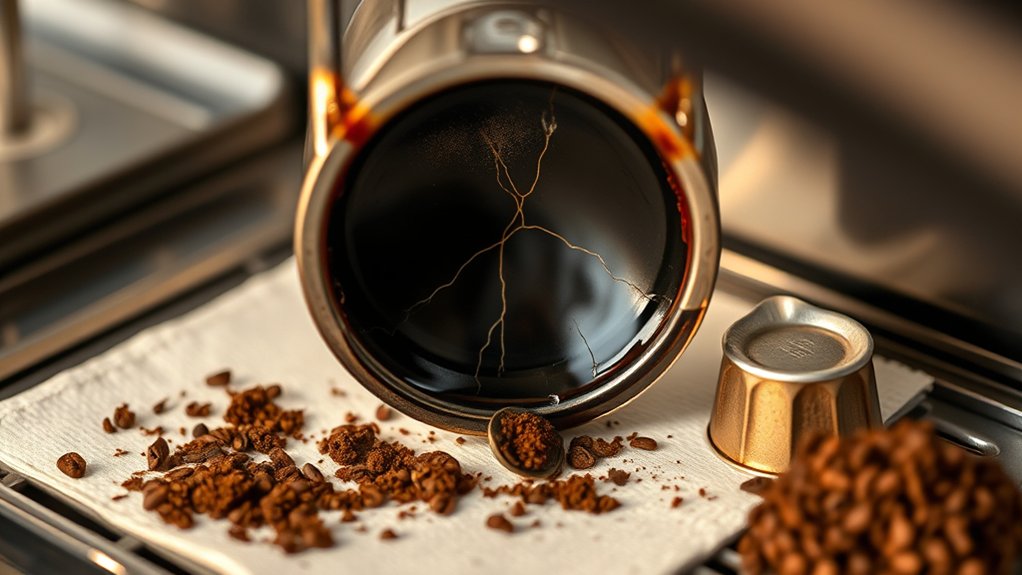
Extraction problems often stem from using incorrect coffee grounds in your espresso machine. If your grind size is too coarse, you’ll end up with under-extracted shots that taste weak and sour, lacking crema.
On the flip side, overly fine grounds can clog the portafilter, disrupting water flow and causing bitter, over-extracted espresso. Inconsistent grind size leads to channeling, where water bypasses some grounds, resulting in uneven flavor.
Using stale coffee grounds compounds these issues by dulling the espresso’s brightness and complexity.
Additionally, tamping pressure plays a critical role. Too light or uneven pressure can worsen extraction problems, producing watery or harsh shots.
Adjusting Grind Size for Better Espresso
When dialing in your espresso, adjusting the grind size plays a pivotal role in revealing the full flavor potential of your coffee. You want finely ground coffee, similar to table salt or powdered sugar, to guarantee the high-pressure extraction draws out balanced flavors and rich crema.
Using a burr grinder is essential because it offers precise control over grind size, delivering the consistent particle size espresso demands. Aim for a grind that results in a 25–30 second extraction.
Too coarse, and your shot will be under-extracted and sour. Too fine, and it may over-extract, tasting bitter.
Experiment carefully, but remember, consistency in grind size is key to mastering espresso. Adjust your grind precisely, and you’ll reveal a more flavorful, satisfying shot every time.
How Tamping Affects Your Espresso Shot
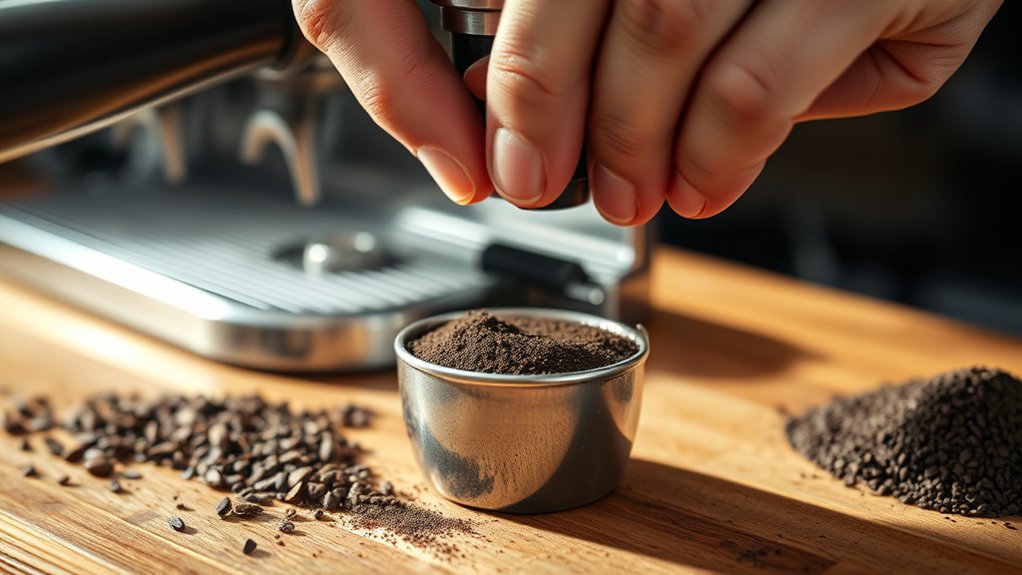
Although dialing in the perfect grind size is essential, tamping your coffee grounds properly plays an equally important role in crafting a balanced espresso shot. Applying consistent tamp pressure, around 30 pounds, ensures even compression of the coffee grounds. This creates a uniform surface that promotes a consistent espresso extraction.
Uneven tamping causes channeling, which leads to sour or bitter flavors from under- or over-extraction. Focus on leveling the puck to offer equal resistance across the coffee bed. This enhances flavor clarity and crema quality.
Regularly monitor your tamp pressure to improve shot consistency and taste.
| Tamping Factor | Effect on Espresso | Resulting Flavor Profile |
|---|---|---|
| Light Pressure | Uneven extraction | Sour, under-extracted |
| Ideal Pressure | Even flow, balanced puck | Sweet, smooth, consistent |
| Heavy Pressure | Over-extraction risk | Bitter, harsh |
Measuring Coffee Dose for Espresso
You’ll want to measure between 18 to 20 grams of coffee for a double shot to nail the ideal balance and extraction. It’s all about getting that perfect amount.
Consistency is key, so using a precise scale guarantees every shot hits the mark. Trust me, it makes a big difference.
Adjusting your dose with the right tools lets you tailor flavor and avoid common pitfalls like under- or over-extraction. That way, you get the best taste every time.
Ideal Coffee Quantity
Eighteen to twenty grams of coffee is the sweet spot for pulling a balanced double shot of espresso. When using coffee grounds in your espresso machine, this ideal coffee quantity secures peak extraction, neither too weak nor bitter.
Measuring your dose with a kitchen scale helps maintain consistency, so every shot tastes just right. If you use too much coffee, you risk clogging the portafilter, while too little leads to watery espresso lacking crema.
You can tweak the dose slightly to match your taste or specific bean profiles. But staying close to this range assures a well-extracted, flavorful shot.
Mastering the ideal coffee quantity is essential for elevating your espresso experience and making the most of your coffee grounds in the espresso machine.
Dose Consistency Importance
Mastering the ideal coffee quantity sets the stage, but maintaining dose consistency is what truly guarantees every espresso shot delivers balanced flavor and perfect extraction.
You’ll want to consistently measure around 18–20 grams for a double shot, as even slight variations can cause noticeable shifts in taste.
Under-dosing leads to sour, weak espresso, while over-dosing results in bitter, over-extracted flavors.
Dose consistency also guarantees the right resistance in the portafilter, which controls prime water flow and extraction time, usually between 25 to 30 seconds.
As you adjust grind size, recalibrating your dose becomes essential to preserve espresso quality.
This meticulous attention to dose consistency transforms each shot into a reliable, flavorful experience every time you use your espresso machine.
Measuring Tools Usage
Although some baristas rely on pre-measured scoops, using a digital scale to measure your coffee dose guarantees the precision needed for consistently excellent espresso shots. Accurate measuring tools assure you hit the ideal 18–20 grams for a double shot, delivering balanced extraction.
Consistent measurements matter. Small dose variations can alter flavor dramatically. Adjust doses based on bean density and roast, and track your results to refine your technique.
| Coffee Dose (g) | Bean Type | Notes |
|---|---|---|
| 18 | Light Roast | Slightly less for lighter |
| 20 | Medium Roast | Standard dose |
| 20+ | Dark Roast | Denser beans require more |
Use a scale to achieve consistent, repeatable espresso quality every time.
Step-By-Step Guide to Brewing Espresso With Ground Coffee
You’ll want to grind your coffee to a fine, consistent texture so you can really bring out all those rich flavors.
Then, make sure to apply the right tamping pressure—this helps ensure an even extraction and creates that perfect, creamy crema on top.
Finally, timing your shot between 25 and 30 seconds is key; it strikes the perfect balance between bitterness and sweetness in every cup.
Grind Size Importance
Three key factors make grind size critical when brewing espresso: extraction quality, shot strength, and flavor balance. You need coffee grounds fine enough, like table salt or powdered sugar, to create the right resistance in your espresso machine.
If the grind size is too coarse, your shot will be weak and sour because water flows through too quickly, under-extracting flavors. Aim for a grind that yields a 25-30 second extraction time to capture a rich, balanced flavor with a creamy crema on top.
Consistency matters, too. Uneven particles cause channeling, resulting in uneven extraction and off-flavors.
Since each espresso machine and coffee type behaves differently, you’ll have to adjust your grind size accordingly to reveal the best tasting espresso every time.
Proper Tamping Technique
Since even the finest grind can’t brew a great espresso without proper tamping, mastering this step is crucial to revealing rich flavors and a balanced shot.
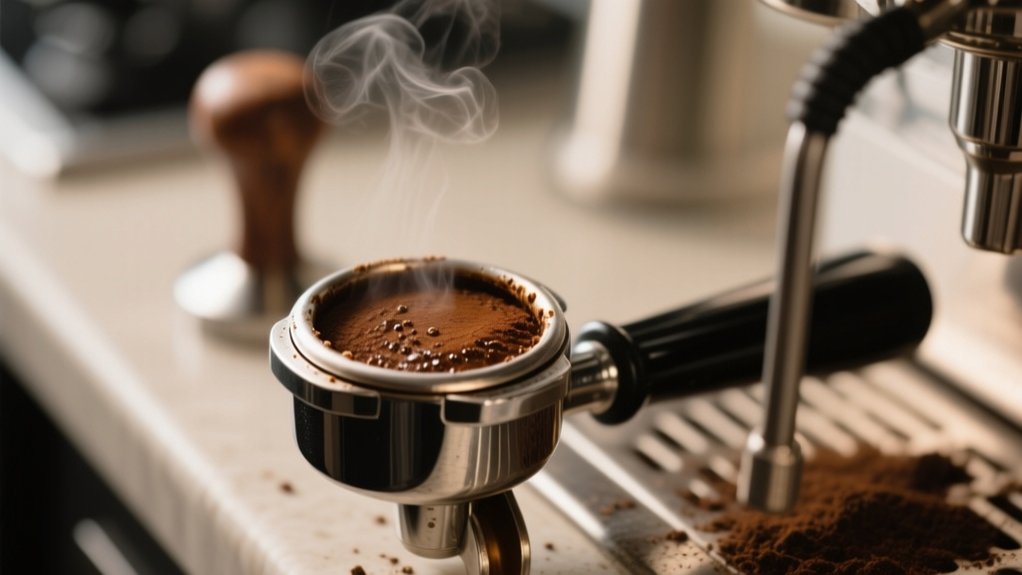
Start by evenly distributing your coffee grounds in the portafilter to prevent channeling.
Use a firm, consistent tamping pressure, around 30 pounds, to compact the coffee properly. This creates the right resistance for ideal extraction.
Avoid using ground for drip methods here; espresso demands a precise, fine grind combined with careful tamping.
After tamping, focus on leveling the coffee surface to guarantee uniform water flow and prevent over- or under-extraction.
Using a calibrated tamper helps maintain consistent pressure and grind integrity.
When locked in, the portafilter should offer noticeable resistance, signaling that your tamping technique is spot on for a rich, balanced espresso shot.
Extraction Timing Tips
Although dialing in extraction timing might seem challenging at first, mastering this step is essential for revealing the full flavor potential of your espresso. Aim for an extraction time of 25–30 seconds for a double shot to achieve balanced flavors and rich crema.
Adjust your grind size to a fine consistency, resembling powdered sugar, to optimize resistance and surface area during extraction. Keep your water temperature steady between 195–205°F to avoid bitterness or under-extraction.
Remember, precise control over these variables guarantees a harmonious brew.
Tips to Improve Flavor When Using Ground Coffee
Anyone looking to elevate their espresso experience should start with freshly ground coffee just before brewing. This step preserves the beans’ full aroma and flavor and prevents the weak or bitter notes that stale grounds can cause.
To get the best from your coffee grounds, focus on these key factors:
- Use a fine grind size, similar to table salt, ensuring ideal extraction under high pressure.
- Apply consistent tamping pressure around 30 pounds to avoid uneven extraction or channeling.
- Aim for a brewing time between 25–30 seconds, adjusting grind or tamp as needed.
- Store coffee grounds in an airtight container away from heat, light, and air to maintain freshness.
Why Coffee Freshness Is Key for Espresso Quality
Mastering grind size and tamping pressure sets the stage, but the true magic of espresso lies in the freshness of your coffee grounds. Fresh coffee grounds contain volatile oils and compounds critical for rich flavor and aroma. These elements degrade quickly, turning your coffee stale.
Using coffee within two weeks of roasting guarantees you capture the full spectrum of taste notes. Grinding just before brewing is essential. Exposure to air accelerates oxidation and robs your espresso of brightness and depth.
Stale coffee often results in sour or bitter shots that compromise quality. To preserve freshness, store your grounds airtight, away from heat, light, and moisture.
Paying close attention to freshness elevates every shot you pull, making your espresso experience consistently exceptional.
Troubleshooting Common Espresso Issues
When your espresso doesn’t taste right, identifying the root cause quickly can save your shot and your patience. Common issues often stem from grind size, crema quality, and extraction time. Adjusting these factors fine-tunes your espresso’s flavor and texture.
Sour taste? Check for under-extraction: use a finer grind and apply firm tamping pressure.
Sour espresso? It’s under-extracted—try a finer grind and firmer tamping for better flavor.
Bitter notes? It’s likely over-extraction; try a coarser grind or slightly lower the brewing temperature.
Weak shot with little crema? Fresh beans and a fine grind are key for proper emulsification.
Clogs in the portafilter? Avoid excessively fine grounds and excessive tamping, plus clean your machine regularly.
Master these to consistently pull balanced, flavorful shots with rich crema.
Choosing the Right Coffee Grounds for Your Espresso Machine
Although choosing the right coffee grounds might seem straightforward, selecting the proper grind size, roast level, and freshness directly impacts your espresso’s flavor and crema quality.
Espresso machines demand a fine grind, almost like powdered sugar, to extract rich, balanced shots. Using coarser grounds, especially those meant for drip brewing, often clogs the machine and yields weak, sour espresso.
Freshness is equally essential. Grind your coffee just before brewing or use grounds no older than a few days to preserve flavor.
Dark roasts typically excel in espresso machines, offering bold, low-acidity profiles, though medium roasts provide a smoother alternative.
Also, measure about 18–20 grams per double shot for consistent extraction.
Frequently Asked Questions
Can Espresso Machines Handle Flavored Coffee Grounds?
Yes, espresso machines can handle flavored coffee grounds, but flavored ground compatibility requires attention.
You’ll want to monitor flavor infusion techniques closely, as oils from flavorings might affect brewing flavor profiles and cause buildup.
To maintain ideal extraction, use flavored grounds sparingly or blend them with regular coffee.
This approach helps you enjoy enhanced flavor without compromising your machine’s performance or the espresso’s rich, balanced taste.
How Often Should You Clean an Espresso Machine?
You should follow a consistent cleaning frequency to keep your espresso machine in top shape.
Wipe the group head and clean the portafilter after every use as essential maintenance tips.
Perform a deep cleaning, including descaling, every 1-3 months depending on your water hardness.
Always use specialized cleaning products designed for espresso machines to remove oils and buildup without damage.
Regular upkeep guarantees great flavor and prolongs your machine’s life.
Is It Possible to Use Decaf Coffee Grounds in Espresso Machines?
Yes, you can use decaf coffee grounds in your espresso machine.
Keep in mind, decaf flavor profiles might differ slightly from regular beans, so adjust your brewing techniques accordingly.
Fine grind size is essential for proper espresso extraction differences, ensuring a rich, balanced shot.
Compare your usual methods and tweak tamping pressure or extraction time if needed.
With care, decaf espresso can deliver a satisfying, flavorful experience just like caffeinated brews.
Can You Mix Different Coffee Grounds for Espresso?
Mixing different coffee grounds for espresso is like painting with a palette of rich colors. You can craft unique espresso blend ratios that highlight your taste.
You’ll want to maintain coffee grind consistency to guarantee even extraction. Balancing the flavor profile is key; blending beans with varying roast levels or origins can deepen complexity.
With careful measurement and fresh grounds, your espresso will sing with harmony and bold character every time.
What Is the Best Water Temperature for Espresso Extraction?
The best water temperature for espresso extraction is between 195°F and 205°F, which guarantees ideal brewing conditions.
You’ll want to maintain precise temperature stability to avoid bitter or sour flavors.
Remember, water quality plays an essential role, so use clean, filtered water.
Keep your extraction time consistent to balance flavor and aroma perfectly.
Preheating your machine and portafilter helps you achieve this ideal temperature throughout the process.
Conclusion
You simply can’t underestimate the power of the right coffee grounds in your espresso machine. Using regular grounds is like trying to fit a square peg in a round hole.
Grind size, tamping pressure, and freshness aren’t just tips; they’re espresso life or death. Nail these, and you’ll reveal flavors so rich they’ll have you swearing off every mediocre cup you’ve ever had.
Don’t settle. Your espresso deserves perfection!