How Long Do Coffee Makers Last – Average Lifespan Explained
You can expect your coffee maker to last between 4 to 15 years, depending on its type, usage, and maintenance. Basic drip machines often reach up to 10 years, while single-serve models typically wear out after 4 to 6 years.
Espresso machines can last as long as 15 years with consistent care. Regular cleaning, using filtered water, and addressing leaks early greatly extend its lifespan. Understanding these factors helps you make smarter choices for durability and performance.
Average Lifespan of Coffee Makers: What to Expect
Although the lifespan of coffee makers varies widely, you can generally expect them to last between 4 and 10 years. The average lifespan depends largely on the coffee maker type, but also on regular maintenance and usage frequency.
Basic drip coffee machines often last up to 10 years with proper care, while single-serve models typically last 4 to 6 years. Espresso machines can last even longer, sometimes reaching 15 years, provided you perform consistent descaling and cleaning.
Usage frequency greatly affects how long your coffee machine lasts. Daily use without proper upkeep may reduce its lifespan to as little as 2 to 3 years.
To maximize longevity, adhere to manufacturer-recommended maintenance schedules and avoid overuse beyond the machine’s design limits.
How Coffee Maker Type Affects Longevity
You’ll notice that the type of coffee maker you choose has a big impact on how long it lasts.
Drip machines usually stick around longer because their mechanics are simpler. On the other hand, single-serve and espresso models often come with more complex parts, which can affect their durability.
Knowing these differences makes it easier to pick a model that fits how often you plan to use it and how much upkeep you’re willing to do.
Machine Type Differences
The type of coffee maker you choose greatly influences its lifespan, as each design involves varying mechanical complexity and material durability.
Traditional drip coffee machines usually last 5-10 years due to simpler mechanics and fewer moving parts.
In contrast, espresso machines offer a longer lifespan, typically 5-15 years, depending heavily on build quality and your maintenance habits.
Single-serve pod machines tend to wear out faster, averaging 4-6 years because their pod mechanics undergo frequent stress.
Automatic coffee makers fall between these ranges, lasting about 5-10 years based on usage intensity and model sophistication.
Understanding these machine type differences helps you anticipate longevity and tailor maintenance accordingly, ensuring your coffee machine operates efficiently throughout its expected lifespan.
Lifespan by Model
Five common coffee maker models each offer distinct longevity profiles influenced by their design and usage demands.
Traditional drip coffee machines typically last 5 to 10 years, owing to simpler mechanics and fewer moving parts.
Capsule coffee machines have a shorter lifespan of 4 to 6 years due to rapid wear in pod insertion components.
Espresso machines vary widely, lasting from 5 to 15 years depending on build quality and maintenance. They’re among the most durable when properly cared for.
Automatic coffee machines generally operate between 5 and 10 years, with lifespan hinging on technology complexity and upkeep.
Single-serve coffee makers tend to last 3 to 5 years, often requiring replacement sooner with frequent use.
Understanding these differences helps you know when to replace your coffee machine for peak performance.
How Often You Use Your Coffee Maker Impacts Its Lifespan
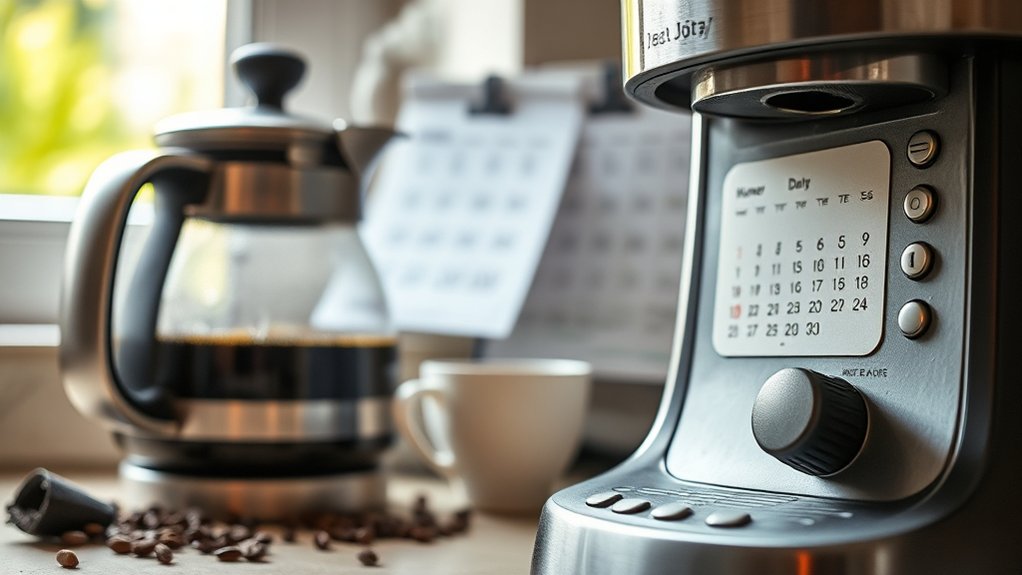
How often you use your coffee maker really impacts how long it lasts. If you use it a lot every day, especially with basic models, it usually only sticks around for about 2 to 3 years.
But here’s something surprising: using it too little can also cause parts to wear out because they’re not being used enough.
So, knowing how often you brew your coffee can help you figure out the best way to take care of your machine.
Plus, it can guide you in picking a model that’s built to last based on your habits.
Daily Use Effects
Although frequent use can accelerate wear, it also keeps your coffee maker’s components functioning smoothly by preventing mineral buildup. When you use your coffee maker daily, its lifespan typically ranges from 2 to 3 years for basic models.
A practical way to estimate longevity is dividing 1000 by the number of cups brewed daily, highlighting how usage directly affects lifespan.
However, regular maintenance plays an essential role in extending performance and durability. Without consistent cleaning and descaling, performance declines noticeably around 4 to 5 years.
Machines designed for heavy daily use require more diligent upkeep to mitigate wear and tear.
Infrequent Use Risks
When you use your coffee maker infrequently, its lifespan can shorten considerably because of issues like dried seals and stagnant water inside the machine.
Infrequent use causes accelerated wear and corrosion, which can reduce your machine’s effective lifespan to as little as 2-3 years without proper maintenance.
To avoid these problems, try doing regular cleaning and descaling to prevent mineral buildup.
Running water cycles periodically helps keep the seals lubricated, too.
Be sure not to leave stagnant water inside the reservoir, and check your seals regularly.
Replace any that look worn to keep your machine performing well.
Finally, store the machine in a dry, clean environment between uses to keep it in good shape.
Usage Frequency Patterns
Your coffee maker’s lifespan heavily depends on how often you use it. High usage frequency typically leads to faster wear on components, especially in basic coffee machines, where daily use can reduce lifespan to 2-3 years.
However, regular use also prevents parts from deteriorating due to inactivity, which can happen if you brew infrequently. Daily coffee drinkers who perform regular cleaning and maintenance can expect a coffee machine to last 4-5 years.
Neglecting cleaning accelerates wear and tear, undermining lifespan regardless of usage frequency.
Understanding your brewing habits helps you select a machine built to handle your demand, ensuring durability.
How Water Quality Influences Coffee Maker Durability
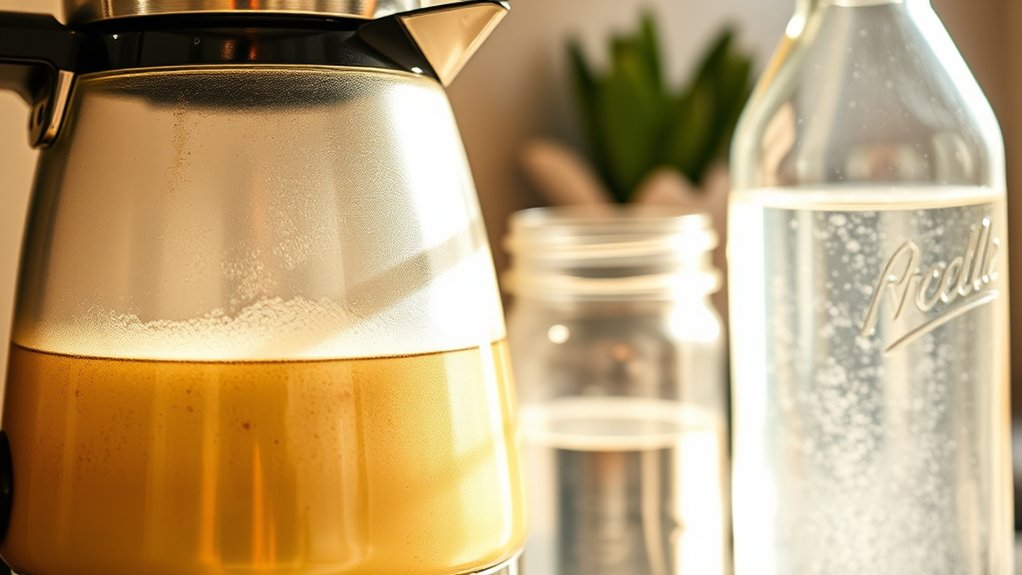
Since water quality directly affects your coffee maker’s internal components, using hard water can cause mineral buildup that clogs mechanisms and reduces the machine’s lifespan.
To help your coffee machine last longer and perform effectively, you should focus on managing water quality carefully. Hard water accelerates scale formation, leading to frequent clogs and potential leaks.
To extend its lifespan, consider these key points:
- Use filtered or bottled water to minimize impurities.
- Descale your coffee maker every 2-3 months, especially in hard water areas.
- Avoid prolonged exposure to hard water to reduce mineral buildup.
- Perform routine maintenance to prevent mechanical failures.
- Monitor water hardness and adjust cleaning frequency accordingly.
Common Signs Your Coffee Maker Is Failing
Recognizing the early warning signs of coffee maker failure can save you from unexpected breakdowns and poor brewing results. When brewing coffee, watch for inconsistent temperatures, leaks, or unusual noises. These are key signs to look for that suggest your coffee machine may need to be replaced soon.
Frequent error messages and a decline in coffee quality further confirm the machine’s aging condition.
| Sign to Look | Description | Action Needed |
|---|---|---|
| Temperature Inconsistency | Fails to reach 195-205°F | Monitor; consider replace |
| Persistent Leaks | Water escaping internally | Attempt fix; replace if unresolved |
| Unusual Noises | Grinding or rattling sounds | Diagnose; likely replace |
Address these signs promptly to maintain peak brewing coffee performance.
Why Heating Problems Mean It’s Time to Replace Your Coffee Maker
You need your coffee maker to consistently reach 195-205°F for proper flavor extraction.
So, if it’s brewing lukewarm or cold coffee, the heating element or thermostat might be on the fritz. These temperature issues usually mean some internal components aren’t working right, which often leads to weak, under-extracted brews.
And honestly, fixing heating problems can end up costing more than just buying a new machine.
That’s why replacement is often the most practical choice.
Brewing Temperature Importance
Three key factors determine the quality of your brewed coffee, with temperature topping the list. Maintaining an ideal brewing temperature between 195-205°F (90.6-96.1°C) is critical for proper extraction and flavor.
If your coffee machine can’t consistently reach this range, the resulting brew will be under-extracted and sour. Aging heating elements cause inconsistent temperature control, signaling that your coffee maker may no longer last effectively.
Here’s why brewing temperature matters:
- Guarantees full flavor extraction
- Prevents sour or bitter taste
- Maintains consistent brewing quality
- Indicates heating element health
- Affects overall machine longevity
When your coffee is lukewarm despite multiple attempts, it’s a sign the heating system is failing beyond easy repair, meaning replacement is the best option.
Signs Heating Element Fails
How can you tell when your coffee maker’s heating element is failing? One key sign is consistently lukewarm coffee, indicating the heating element isn’t reaching the ideal brewing temperature of 195-205°F.
A malfunctioning heating element can cause prolonged brew times and temperature inconsistencies, which degrade coffee quality. If your machine frequently brews below this range, it may also involve a failing thermostat.
At this point, you’ll likely need to replace the coffee maker rather than repair it, as heating element replacements often cost more than a new unit, especially for budget models.
Persistent heating problems clearly signal that your coffee maker’s core component is malfunctioning, and continuing to use it will result in subpar brews and further reliability issues.
Repair Vs Replacement Choices
When your coffee maker’s heating element starts to fail, deciding between repair and replacement becomes a practical concern. Coffee machines usually last 4 to 10 years, but persistent heating issues often indicate the end of their lifespan.
If your machine can’t reach the ideal brewing temperature (195-205°F), your coffee will taste off. That’s a sign replacement is a better option than repair.
Consider these factors: repair costs for heating elements or thermostats may exceed a new machine’s price. Lukewarm coffee and inconsistent brewing times suggest deeper mechanical faults.
Frequent heating problems reduce extraction quality. Replacement offers improved brewing performance and reliability.
Investing in a new coffee maker often proves more economical and efficient than repeated repairs.
Choosing replacement over repair guarantees consistent coffee quality and long-term satisfaction.
What Leaks and Overflows Reveal About Your Coffee Maker’s Health
Although leaks and overflows might seem like minor inconveniences, they often reveal critical issues within your coffee maker’s internal components, such as the water tank, group head gasket, or coffee basket.
Leaks usually indicate worn seals or cracks, while persistent overflows suggest clogged pathways or malfunctioning parts.
Leaks often signal worn seals; overflows point to blockages or faulty components.
These problems directly impact your coffee maker’s performance and lifespan. Regular maintenance, including thorough cleaning and inspection of seals, helps prevent leaks and prolongs the machine’s life.
If leaks coincide with inconsistent brewing times or unusual noises, you’re likely facing deeper mechanical failures that require prompt attention.
Ignoring these signs can escalate damage, leading to costly repairs or even the premature replacement of your coffee maker.
Address leaks early to maintain peak function and extend your appliance’s service life.
When Changing Coffee Needs Mean It’s Time to Upgrade
Leaks and brewing inconsistencies not only signal mechanical issues but can also highlight mismatches between your coffee maker’s capabilities and your current needs.
When your coffee habits evolve, it may be time to replace your coffee machine to maintain brewing quality and efficiency.
Consider upgrading when your household size grows, requiring larger brewing capacity. Or if you shift from single-serve to multi-cup brews. Specialty coffee preferences might demand precise temperature control.
Also, think about it if your machine can’t accommodate new brewing methods. And if bottlenecks occur during gatherings due to limited output.
Recognizing these signs guarantees you choose a new coffee machine aligned with your demands. Upgrading optimizes brewing consistency, accommodates diverse methods, and enhances your overall coffee experience.
Don’t wait too long; timely replacement maximizes performance and satisfaction.
Maintenance Habits That Help Your Coffee Maker Last Longer
Maintaining your coffee maker with regular care greatly extends its lifespan and guarantees consistent brewing performance. Key maintenance habits include regularly descaling every 2-3 months to prevent mineral buildup, which can degrade internal components and reduce efficiency.
Regular descaling every 2-3 months prevents mineral buildup and ensures your coffee maker’s optimal performance.
Using filtered water minimizes impurities that cause scaling, helping to extend the life of your machine. Furthermore, run a clean water cycle after each use to flush out coffee oils and residue, preventing clogs.
Monthly deep cleaning of all removable parts reduces bacteria growth and guarantees smooth operation.
Proper storage, unplugging when idle and keeping the unit dry, prevents electrical issues and moisture damage.
How to Choose a Durable Coffee Maker That Lasts
When choosing a durable coffee maker, you should prioritize models built with high-quality materials and solid construction. These typically outlast budget options. A coffee maker’s lifespan depends heavily on its build quality and ease of maintenance.
To guarantee durability, consider the following:
- Select machines with fewer complex parts, like traditional filter and drip systems. They last longer than single-serve models.
- Research brand reputation and user reviews to find quality products with proven longevity.
- Opt for features that make maintenance easier, such as self-cleaning cycles or descaling reminders.
- Choose models designed for easy repair and part replacement to extend lifespan when components wear out.
- Avoid low-quality plastics or fragile components that compromise durability.
Frequently Asked Questions
Can Coffee Makers Be Recycled or Disposed of Responsibly?
Yes, you can recycle coffee makers by following proper recycling options and disposal methods.
Check local e-waste guidelines to separate plastic, metal, and electronic parts correctly.
Some manufacturers offer take-back programs for responsible practices, allowing you to return machines for refurbishing.
If functional, consider donating to extend their life.
Always remove non-recyclable elements like coffee pods before disposal to comply with recycling protocols and minimize environmental impact.
Do Coffee Maker Warranties Cover All Types of Damage?
You might expect your coffee maker’s warranty to cover all damages, but that’s rarely true. Warranties often exclude common damages like mineral buildup or wear from neglect. These are typical warranty exclusions.
To protect your machine, follow maintenance tips like regular descaling. If issues arise, check your warranty for repair options covering heating element failures or defects.
Always read the fine print carefully so you know exactly what’s covered and what isn’t.
Are There Eco-Friendly Coffee Makers That Last Longer?
Yes, eco-friendly coffee makers built with sustainable materials and designed for energy efficiency often last longer.
When making brand comparisons, focus on models emphasizing robust construction and low-energy operation.
Regular maintenance tips like descaling and cleaning are essential to maximize durability.
These features reduce wear and tear, helping your coffee maker perform efficiently over time while minimizing environmental impact.
Choose wisely to enjoy longevity and sustainability combined.
How Does Coffee Grind Size Affect Machine Wear?
Your grind size directly impacts machine wear by influencing brewing efficiency and flavor extraction.
Finer grinds can clog filters, increasing strain on pumps and heating elements, which accelerates wear.
Coarser grinds promote smoother water flow, reducing mechanical stress and prolonging lifespan.
Matching grind size to your coffee maker optimizes flavor extraction while minimizing maintenance needs.
Using an incorrect grind size repeatedly elevates machine wear and compromises brewing efficiency over time.
Can Using Filtered Water Improve Coffee Flavor but Not Lifespan?
Yes, using filtered water benefits your coffee taste enhancement by reducing mineral content impact, which often causes off-flavors. This leads to better brewing consistency factors like stable temperature and extraction.
However, filtered water doesn’t directly improve your coffee maker’s lifespan. While it minimizes mineral buildup, regular maintenance and descaling play a more critical role in preserving machine durability.
Conclusion
Think of your coffee maker as a trusty clock. Regular winding, which means maintenance, and quality parts like good water and the right machine type keep it ticking longer.
Just like a clock shows wear when gears falter, leaks and overflows signal your coffee maker’s decline. By understanding usage patterns and water quality, you’re better equipped to extend its lifespan or know when it’s time for an upgrade.
Treat it well, and it’ll keep brewing your perfect cup for years to come.