What Coffee Has Most Caffeine – Top High-Caffeine Choices
If you want the most caffeine, cold brew and ultra-strong specialty brands lead the pack. Cold brews offer 150-240 mg per 8 oz, and brands like Black Label hit up to 1555 mg per 12 oz.
Espresso packs more caffeine per ounce than drip coffee but usually less overall due to smaller servings. Roast level and bean type also influence caffeine, with light roasts and robusta beans containing more.
Exploring further reveals how serving size, brewing methods, and brand choices shape your caffeine intake.
Which Coffee Drinks Have the Most Caffeine?
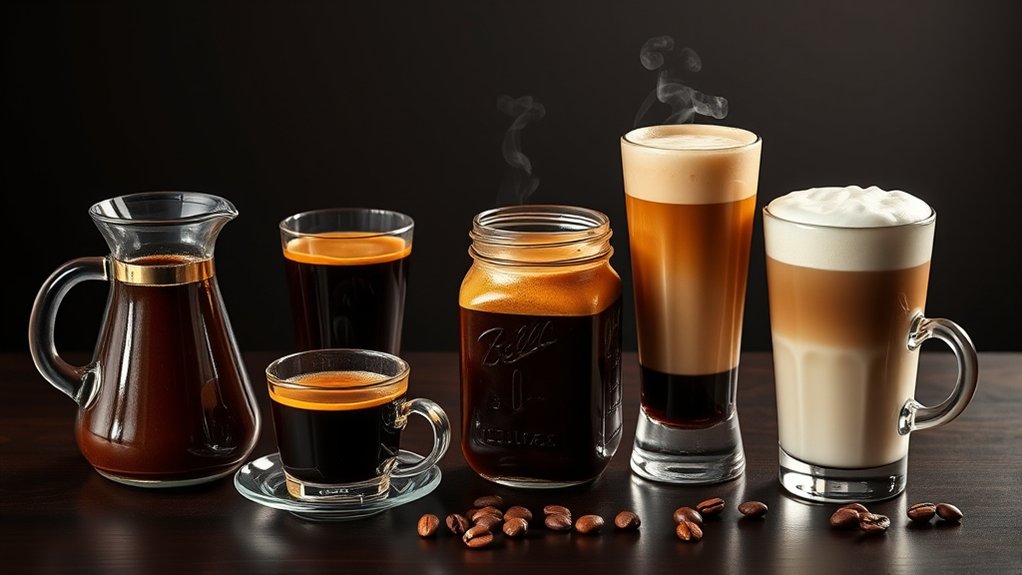
Which coffee drinks pack the most caffeine? Cold brew coffee stands out, typically containing 150 to 240 mg of caffeine per 8 oz, sometimes exceeding 300 mg depending on the brand.
Compared to standard brewed coffee from coffee shops, which delivers 150 to 250 mg per 8 oz, cold brew often offers a higher caffeine concentration.
Espresso, while potent by volume with 63 to 75 mg per 1 oz shot, contains less total caffeine than a full cup of drip coffee.
Dark roast varieties, contrary to popular belief, generally have slightly less caffeine content in coffee than light roasts.
Specialty coffee brands, especially ultra-high caffeine options like Black Label, can reach caffeine levels far beyond typical ranges, appealing to those seeking maximum caffeine intake.
How Serving Size Affects Caffeine Content
You really need to think about how serving size impacts your total caffeine intake. Bigger portions can significantly boost the amount of caffeine you end up consuming.
Since the caffeine concentration changes depending on the type of coffee and its ounces, it’s important to understand both the serving size and the caffeine density. This way, you can keep track of how much caffeine you’re actually getting.
For example, that’s why a 16 oz cold brew can have way more caffeine than a standard 8 oz espresso shot, even though the espresso is more concentrated.
It’s all about the amount you drink, not just the strength.
Serving Size Variability
Serving size directly influences how much caffeine you consume from your coffee. The total caffeine content rises with ounces served, meaning a large serving from coffee shops can greatly increase your intake.
For example, a 16 oz cold brew can have over 200 mg of caffeine, while an 8 oz drip coffee contains about 95 mg. Understanding serving size variability helps you control caffeine levels accurately.
| Coffee Type | Serving Size (oz) | Approx. mg of Caffeine |
|---|---|---|
| Drip Coffee | 8 | 95 |
| Cold Brew | 16 | 200 |
| Espresso Shot | 1 | 63 |
| Starbucks Venti | 20 | 475 |
| Instant Coffee | 8 | 30-90 |
Larger servings clearly deliver more caffeine, emphasizing the impact of serving size on total caffeine.
Caffeine Per Ounce
How much caffeine you get from your coffee depends heavily on its concentration per ounce, not just the total serving size.
Espresso shots, for instance, deliver about 63 mg of caffeine per ounce, a much higher concentration than drip coffee’s 12 mg per ounce.
Cold brew often exceeds both, with caffeine per ounce ranging considerably due to its steeping method. Sometimes it reaches 150-240 mg per 8 oz.
Dark roasts, despite their bolder flavor, typically contain less caffeine per ounce than lighter roasts, as roasting reduces caffeine content.
Robusta beans, often used in espresso blends, contain nearly twice the caffeine of Arabica, increasing caffeine per ounce in those brews.
Understanding caffeine concentration helps you make informed choices beyond just measuring your cup size.
Impact On Total Intake
Understanding caffeine concentration per ounce sets the stage for examining total caffeine intake, which depends heavily on the size of your coffee serving.
While dark roast coffee may have slightly lower caffeine levels per ounce, the serving size amplifies total intake considerably.
Consider these points:
A standard 8 oz cup of drip coffee contains about 95 mg of caffeine, but a 16 oz cold brew can exceed 200 mg due to longer steeping.
Espresso’s caffeine per shot (63 mg) is lower, but multiple shots increase total intake.
Large servings, like a 20 oz Venti, can contain up to 475 mg, highlighting serving size’s impact.
Instant coffee ranges from 30-90 mg per 8 oz, showing brewing method and serving size both matter.
Your total caffeine intake hinges on both concentration and the cup of coffee’s volume.
Brewing Methods and Their Impact on Caffeine
Although brewing methods vary widely, they directly influence the caffeine content you get in each cup. Caffeine extraction depends heavily on the brewing method, coffee-to-water ratio, grind sizes, and water temperature.
For instance, cold brew uses a high coffee-to-water ratio and long steeping times, resulting in 150-240 mg of caffeine per 8 oz, sometimes exceeding 300 mg in commercial varieties.
Cold brew’s high coffee ratio and long steeping yield 150-240 mg caffeine per 8 oz, often more commercially.
French press brewing efficiently extracts 80-135 mg per 8 oz, offering a robust flavor profile.
Espresso delivers 63-75 mg per 1 oz shot, less caffeine overall than an 8 oz drip coffee cup, which ranges from 95-200 mg depending on technique.
Finer grind sizes and hotter water typically increase caffeine extraction, so adjusting these variables lets you tailor caffeine levels precisely to your preference.
How Coffee Bean Type Influences Caffeine Levels
Besides brewing techniques, the type of coffee bean you choose plays a major role in determining caffeine content. Robusta beans contain roughly 2.2-2.7% caffeine, almost double the 1.2-1.5% found in Arabica coffee beans. This difference directly influences caffeine levels in your cup, especially if you prefer high caffeine blends.
Consider these points:
- Robusta’s higher caffeine makes it popular in espresso and instant coffee.
- Arabica beans offer a superior flavor profile but less caffeine.
- Blending Robusta with Arabica balances taste and boosts caffeine content.
- Coffee drinkers seeking a stronger caffeine hit often favor Robusta-based brews.
Understanding bean types helps you select coffee tailored to your caffeine needs without sacrificing flavor.
Does Roast Level Change Coffee’s Caffeine?
You might think dark roast has more caffeine, right?
But actually, light roast contains a bit more caffeine because its beans are denser and hold onto more moisture.
The roasting process itself lowers caffeine levels, which clears up the common misconception that dark roast means stronger caffeine.
Light Roast Caffeine Levels
When you compare light and dark roasts, you’ll find that light roasts generally retain more caffeine because the shorter roasting time preserves their caffeine content. The roasting process plays a significant role in caffeine levels, with light roasts losing less caffeine than darker ones.
Here’s what you should know about light roast caffeine content:
- Light roast coffee typically contains 140-180 mg of caffeine per 12 oz serving, which is higher in caffeine than dark roasts by volume.
- Roasting reduces bean weight and moisture, so dark roasts have less caffeine per ounce.
- Cold brews made from light roasts often exceed 200 mg caffeine in a 16 oz serving.
- Light roasts yield around 12-15 mg caffeine per ounce, maintaining more caffeine due to shorter roasting.
Understanding this helps you choose coffee with the ideal caffeine content.
Dark Roast Myths
Light roasts hold more caffeine by volume than dark roasts due to their shorter roasting times, but this fact often leads to misunderstandings about caffeine content in darker brews. Dark roast myths suggest higher caffeine, yet roasting reduces caffeine slightly.
Brewing methods, like drip coffee, influence caffeine extraction more than roast level. Below is a comparison illustrating caffeine content differences:
| Roast Level | Caffeine per 8 oz (mg) | Common Brewing Methods |
|---|---|---|
| Light Roast | 140-180 | Drip, Cold Brew |
| Medium Roast | 110-150 | Drip, Espresso |
| Dark Roast | 80-120 | Drip, French Press |
You’ll find light roasts generally provide the highest caffeine. Understand that flavor intensity doesn’t equal caffeine content. Brewing methods and grind size also impact your cup’s caffeine content.
Roasting Impact On Caffeine
Although many assume darker roasts pack more caffeine due to their bold flavor, the roasting process actually reduces caffeine content slightly by causing moisture loss and bean weight reduction.
Roast level directly impacts caffeine content, with light roasts generally retaining more caffeine than dark roasts.
Here’s what you should know:
- Light roasts keep more caffeine since they undergo shorter roasting, preserving the bean’s original caffeine.
- Dark roasts lose moisture and mass, leading to lower caffeine per volume despite their stronger taste.
- Cold brew coffee, often made from light roasts, extracts more caffeine thanks to a higher coffee-to-water ratio and long steeping.
- A 12 oz cup of light roast coffee can contain 140–180 mg caffeine, while dark roasts offer 80–120 mg.
Understanding roast level helps you choose coffee with the caffeine kick you want.
Espresso vs. Drip Coffee: Which Has More Caffeine?
How much caffeine you get depends on whether you choose espresso or drip coffee. Espresso boasts a higher caffeine concentration per ounce (about 63 mg in 1 oz), but drip coffee provides more total caffeine per serving due to its larger size (95 mg in 8 oz).
This means that while espresso is highly concentrated, you’d need multiple shots to match the caffeine in a typical cup of drip coffee.
| Coffee Type | Caffeine Concentration (mg/oz) | Total Caffeine per Serving (mg) |
|---|---|---|
| Espresso | 63 | 63 (1 oz shot) |
| Drip Coffee | 12 | 95 (8 oz cup) |
Top Coffee Brands With High Caffeine Content
If you’re searching for coffee that packs a serious caffeine punch, several brands stand out for their exceptional potency.
These high caffeine options cater to those who want strong coffee with measurable impact.
Consider these top contenders:
- Black Label Brewed Coffee delivers an unparalleled 1555 mg caffeine per 12 oz, the highest caffeine concentration available.
- Very Strong Coffee follows closely with 1350 mg per 12 oz, offering a robust boost.
- Death Wish Coffee provides 728 mg per 12 oz, known for its strong coffee reputation.
- Black Insomnia Coffee contains 1105 mg per 12 oz, making it one of the strongest coffee brands globally.
Choosing any of these guarantees you get a precise, evidence-based caffeine hit tailored to your needs.
How Much Caffeine Is Left in Decaf Coffee?
What remains after the decaffeination process? Decaf coffee contains roughly 2 to 15 mg of caffeine per 8 oz cup, considerably less than regular coffee. The FDA requires at least 97% of caffeine to be removed, but small amounts persist.
If your decaf coffee is made from Robusta blends, expect slightly higher caffeine levels than Arabica-based decaf. While decaf is low-caffeine, it’s not caffeine-free, so you need to take this into account when monitoring caffeine consumption, especially if you drink multiple cups.
Cumulative caffeine intake from decaf may still affect factors like sleep quality. Understanding these nuances helps you manage your overall caffeine load accurately, ensuring decaf coffee fits your dietary and health goals without unexpected caffeine exposure.
Choosing the Best High-Caffeine Coffee for You
Where can you find the highest caffeine content to suit your energy needs? Evaluating high-caffeine options helps you choose the best fit based on caffeine strength and serving size. Consider these evidence-based choices:
Cold brew coffee often contains 150-240 mg per 8 oz, with some specialty brands exceeding 300 mg. The Venti Blonde Roast from Starbucks delivers 475 mg per 20 oz, the highest among standard menu items.
Light-roasted drip coffee offers 140-180 mg in larger servings, typically more than dark roasts.
Espresso provides 63-75 mg per shot; a double shot can reach 150 mg.
If you seek extreme potency, specialty brands like Black Label brew coffees with caffeine levels up to 1555 mg per serving.
Choose based on your tolerance and desired energy boost.
Frequently Asked Questions
How Does Caffeine Affect Sleep and Alertness?
Caffeine boosts your alertness by blocking adenosine receptors, which delays drowsiness.
However, it can disrupt sleep because it interferes with sleep cycles and circadian rhythms, especially if you have it late in the day.
Since caffeine metabolism takes about five hours, it can keep you awake longer and reduce sleep quality.
Over time, you might develop a tolerance, but withdrawal symptoms can still affect your alertness.
Managing when you consume caffeine can help minimize its negative impact on sleep while keeping you focused.
Can Caffeine Intake Cause Health Issues?
Yes, caffeine intake can cause health issues if you exceed daily limits. You might experience increased anxiety levels and negative effects on heart health, such as elevated heart rate.
Caffeine addiction can develop, leading to withdrawal symptoms like headaches and irritability when you stop suddenly.
Also, caffeine has hydration effects, acting as a mild diuretic, so you should balance your intake with water.
Moderation is key to minimizing risks.
What Are Natural Alternatives to Caffeine in Coffee?
You can explore natural alternatives like herbal infusions and adaptogenic herbs to boost energy without high caffeine.
Matcha benefits include sustained alertness due to L-theanine, making it a smart energy booster.
Protein drinks support stamina, while proper hydration methods improve focus naturally.
These options offer balanced stimulation, reducing jitters linked to coffee and provide additional health perks, making them effective, evidence-based substitutes for caffeine in coffee.
How Does Caffeine Tolerance Develop Over Time?
You’ll notice caffeine tolerance develops because your body adapts to daily consumption impacts by speeding up caffeine metabolism. This means the same amount feels less stimulating over time.
It’s a long-term effect influenced by genetic predisposition.
When you stop suddenly, withdrawal symptoms like headaches hit because your adenosine receptors have become desensitized.
Fortunately, tolerance reversal is possible if you reduce intake, but how quickly depends on your unique physiology and consumption habits.
Are There Caffeine-Free Coffee Substitutes With Similar Taste?
Yes, you’ll find caffeine-free coffee substitutes with similar flavor profiles, like chicory root and barley coffee. Their brewing methods mirror traditional coffee, preserving taste while offering health benefits such as reduced acidity.
Consumer preferences increasingly favor these alternatives, driven by ingredient sourcing transparency and market trends toward wellness.
Conclusion
As you navigate the rich landscape of coffee, remember caffeine content isn’t just about the bean. It’s a dance of serving size, brew method, and roast. Like a finely tuned instrument, each factor shapes your coffee’s punch.
Whether you crave the bold thunder of espresso or the steady stream of drip, understanding these elements helps you choose the perfect high-caffeine brew. With precision, you’ll fuel your day, sip by informed sip.