How Many Tablespoons For A Pot Of Coffee – Coffee Ratio Guide
For a standard 12-cup pot, you’ll want to use about 10 to 12 tablespoons of ground coffee, adjusting based on your preferred strength. Generally, 1 to 2 tablespoons per 6-ounce cup works well. Use closer to 2 for a bolder brew and 1 for something lighter.
Different brewing methods like French press or cold brew require different ratios, so adjusting for those makes a big difference. If you keep going, you’ll uncover tips to perfect your measurements every time.
How Much Coffee Should You Use Per Pot or Cup?
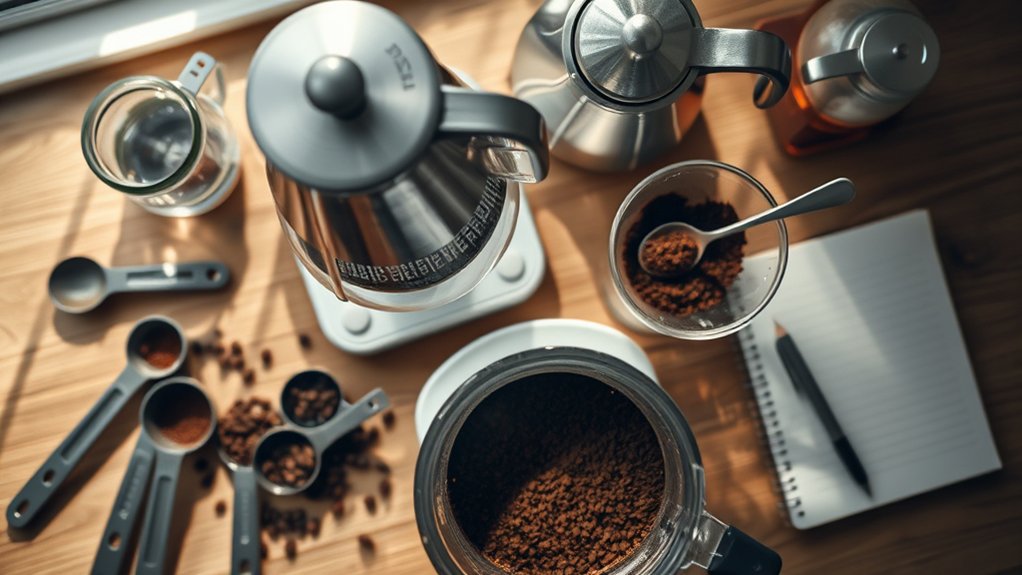
Wondering how much coffee you should use per pot or cup? For a standard 12-cup coffee pot, aim for 10 to 12 tablespoons of ground coffee. That’s about 60 to 72 grams.
The general ratio is 1 to 2 tablespoons of coffee per 6-ounce cup, depending on how strong you like it. If you prefer a bolder brew, use closer to 2 tablespoons (around 10-11 grams), while 1 tablespoon works well for lighter coffee.
When brewing a full liter, 6.5 to 7 tablespoons of ground coffee helps maintain the ideal flavor balance.
Keep in mind that measuring coffee by weight is the most precise method because one tablespoon equals roughly 5 grams. This ensures consistent results regardless of your brew method.
Measuring Coffee: Spoons or Grams-What’s Best?
How do you decide whether to measure your coffee by spoon or by grams? Using tablespoons is convenient. One tablespoon of coffee grounds equals about 5 grams. For a standard 12-cup pot, 5 to 6 tablespoons usually hit the right coffee-to-water ratio.
But if you want precision, especially with espresso, measuring grams on a kitchen scale is best. It guarantees consistency and lets you tweak strength and flavor precisely. Here’s a quick comparison:
| Measurement Method | Notes |
|---|---|
| Tablespoons | Approx. 5 grams per tablespoon |
| Grams | More precise, ideal for espresso |
| Tablespoons | Easy, no extra tools needed |
| Grams | Requires kitchen scale |
| Tablespoons | Adjust for roast type |
Choose what fits your routine and taste goals!
Coffee-to-Water Ratios by Brew Method
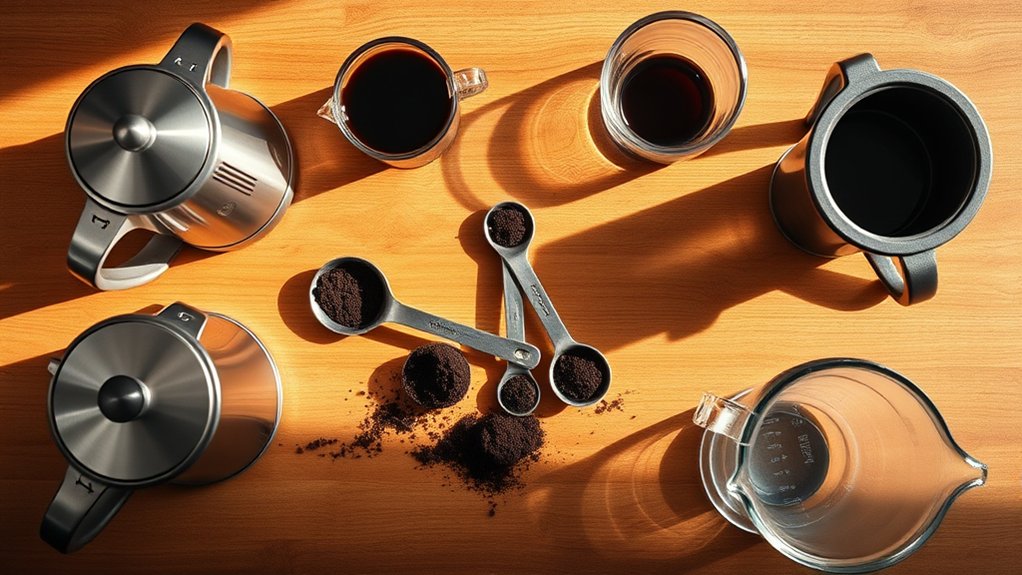
You’ll find that coffee-to-water ratios actually change depending on the brew method you’re using. This shift affects both the strength and the flavor of your coffee.
Knowing the ideal measurements really helps you tailor each cup just the way you like it.
Whether you’re brewing with a French press, a pour-over, or an espresso machine, the right ratio makes all the difference.
Let’s dive into how to measure precisely so you get the best results every single time.
Ratio Variations By Method
Although each brewing method demands a different coffee-to-water ratio, getting this balance right is key to revealing the best flavors. Whether you’re using drip coffee, French press, or Aeropress, knowing the right tablespoons of ground coffee per cup helps you avoid under or over-extraction.
For example, drip coffee uses about 2 tablespoons (10-11 grams) per 6-ounce cup, while French press calls for a tighter ratio with 2 tablespoons per 4 ounces.
Here’s a quick guide:
| Brew Method | Ratio of Coffee to Water | Tablespoons of Ground Coffee per Cup |
|---|---|---|
| Drip Coffee | 1:17 | 2 (10-11 g) |
| French Press | 1:15 | 2 (coarse grounds) |
| Pour-Over | ~1:16 | 1.5 |
| Cold Brew | 1:4 | High concentration |
| Aeropress | 1:12 | 1 |
Adjust according to your preferred strength.
Ideal Coffee Strength Levels
Getting the right coffee strength depends on adjusting your coffee-to-water ratio based on the brew method you’re using.
For a standard 12-cup drip pot, use 12 to 15 tablespoons of coffee, hitting a 1:16 to 1:17 ratio with each standard coffee scoop representing about one tablespoon.
French press calls for a tighter 1:15 ratio, so aim for 10 to 12 tablespoons of coarse ground coffee per cup.
Pour-over matches drip’s 1:16 ratio, needing 10 to 12 tablespoons for 12 cups.
If you prefer milder coffee, go for 8 to 10 tablespoons; stronger brews require 14 to 16.
Cold brew uses much more, 16 to 20 tablespoons, due to its concentrated nature.
Adjusting the amount of coffee lets you achieve your ideal coffee strength every time.
Measuring Techniques For Brewing
Mastering coffee-to-water ratios starts with understanding the measuring techniques unique to each brew method.
For standard drip coffee makers, use 1 to 2 tablespoons of ground coffee per 6 ounces of water, targeting a 1:17 coffee ratio for balanced flavor.
In a French press, measure 2 tablespoons of coarse grounds for every 4 ounces of water, creating a stronger 1:15 ratio.
Pour-over calls for about 1.5 tablespoons or roughly 10 grams of coffee per 100 milliliters of water for even extraction.
Espresso demands precision: 7–9 grams of finely ground coffee for a single shot and 14–18 grams for a double.
Adjust these measurements slightly depending on roast type, as lighter roasts often require more coffee due to their density.
How Roast and Grind Change Your Coffee Tablespoons
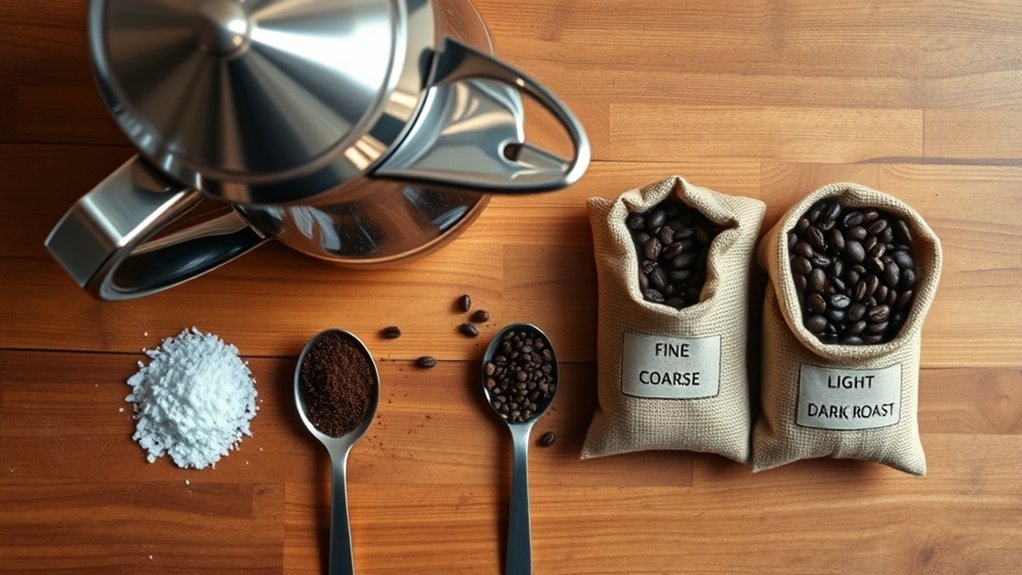
Because grind size and roast level directly impact the density of coffee grounds, you’ll need to adjust your tablespoons accordingly for the best brew.
When using a coffee maker, the grind size plays a key role. Medium grind works well for drip machines, typically requiring about 1 tablespoon of ground coffee per 4 ounces of water.
Dark roast beans are less dense, so you might want to use slightly more tablespoons to balance flavor.
Remember, coarser grinds need more volume compared to finer ones.
Use more tablespoons for dark roast to achieve the perfect coffee strength.
Adjust tablespoons if grind size shifts from medium grind to coarse or fine.
Follow your coffee maker’s guidelines but tweak based on roast and grind size for ideal taste.
Adjusting Coffee Amounts for Strength and Pot Size
When you adjust the amount of coffee grounds to match your pot size and desired strength, you control the flavor and intensity of your brew.
Adjusting coffee grounds to your pot size and strength controls your brew’s flavor and intensity.
For a standard 12-cup pot, use 5 to 6 tablespoons per pot, roughly 30 to 36 grams, depending on how strong you like it.
If you prefer a lighter brew, cut back to 4 tablespoons (about 20 grams). Each 6-ounce cup size typically needs 1 to 2 tablespoons of coffee for every cup.
When using a French press, aim for 2 tablespoons per 4 ounces of water, adjusting as needed.
Avoid These Common Coffee Measuring Mistakes
Three common measuring mistakes can easily throw off your coffee’s balance and flavor. When brewing coffee at home, it’s essential to avoid these common coffee measuring mistakes to get the perfect cup every time.
First, don’t rely solely on a standard tablespoon without leveling it off. Uneven scoops can mean too much or too little coffee.
Second, avoid using whole beans instead of ground coffee per your recipe, since density differences affect accuracy.
Third, we recommend weighing your grounds instead of guessing. This guarantees the right amount of coffee for your brew.
Paying attention to these details helps maintain consistency and lets you enjoy coffee at home with the taste you want, every single time.
Tips to Nail Your Coffee Measurements Every Time
Nailing your coffee measurements every time starts with understanding the right amount of grounds for your brew method. For a standard 12-cup coffee maker, use 5 to 6 tablespoons of coffee grounds, which equals about 30–36 grams.
Remember, one tablespoon of coffee is roughly 5 grams, so leveling off your spoon assures consistency. Adjust your coffee-to-water ratio between 1:15 and 1:17 by weight for balanced flavor, whether you use ground coffee or freshly ground whole beans.
If you prefer stronger coffee, increase the tablespoons up to 2 per cup. Using a kitchen scale helps you measure grams or milliliters precisely, especially important with Specialty Coffee where accuracy enhances flavor.
Following these tips guarantees you’ll nail your coffee measurements every time.
Frequently Asked Questions
How Does Water Temperature Affect Coffee Extraction?
Water temperature directly shapes your coffee’s extraction and flavor profile. Staying within the ideal temperature range (195°F to 205°F) helps you avoid bitterness or sourness.
Different brewing methods and grinding sizes also impact how temperature interacts with extraction time. For example, full immersion techniques like French press benefit from slightly lower temperatures.
Can Altitude Influence Coffee Brewing Measurements?
Altitude definitely nudges your brewing techniques because pressure variations change how water boils and extracts flavors.
You’ll need altitude adjustments, maybe a finer grind size or longer extraction time, to coax out richer flavor profiles.
Since water boils lower, your coffee can taste sour or weak without tweaks.
What Is the Best Way to Store Ground Coffee?
The best way to store ground coffee is in airtight containers to lock in freshness and prevent flavor loss.
You should keep your coffee away from light exposure and humidity, which can degrade the taste quickly.
Avoid fridge storage since moisture causes off-flavors and clumping.
Instead, store your coffee in a cool, dark pantry spot.
This way, you maintain ground freshness longer and enjoy a richer brew every time.
How Often Should You Clean Your Coffee Maker?
You should clean your coffee maker every 30 days to keep it running smoothly and prevent mold buildup.
If you use hard water, increase the cleaning frequency to every two weeks.
Focus on the descaling process with equal parts white vinegar and water, then run a brew cycle with fresh water to rinse.
Don’t forget filter replacement as part of coffee maker maintenance to guarantee fresh taste and extend your machine’s lifespan.
Does Water Quality Impact Coffee Flavor Consistency?
Absolutely, water quality can make or break your coffee’s flavor consistency. It’s like turning a gourmet brew into swamp water if you’re not careful!
Different brewing methods react uniquely to water hardness and mineral content, which influence extraction and flavor profiles.
Using the right filter types helps control impurities, while temperature stability depends heavily on water quality.
Conclusion
Now that you’ve got the coffee-to-water ratios down, you’re ready to brew like a pro, no abacus needed! Remember, whether you measure by tablespoons or grams, adjusting for roast, grind, and strength is key.
Avoid common slip-ups, and you’ll nail your perfect pot every time. Keep experimenting, trust your taste buds, and soon you’ll be sipping coffee that’s just right, cup after cup. Happy brewing!