How Can I Grind Coffee Beans Without A Grinder – Easy Methods Explained
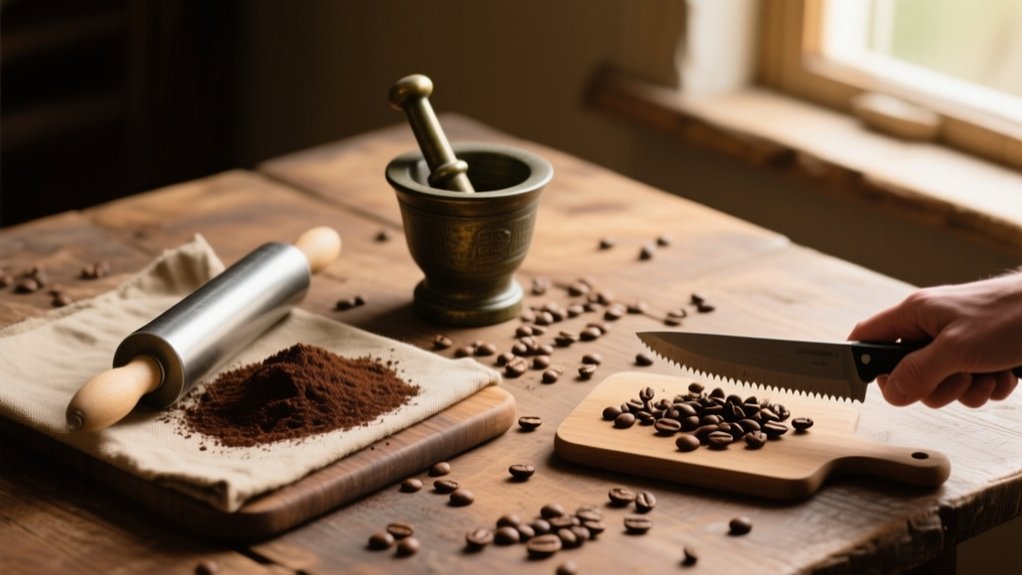
You can grind coffee beans without a grinder using everyday tools like a blender, food processor, rolling pin, or mortar and pestle. Use short pulses to avoid overheating and shake for even consistency.
Blenders and processors work well for coarse to medium grinds, while manual methods suit smaller batches and fine control. Matching grind size to your brewing method guarantees the best flavor extraction.
Stick with these techniques, and you’ll reveal expert tips and tricks for perfect homemade coffee grounds.
Why Grind Size Matters for Great Coffee
Because grind size directly influences how coffee extracts, understanding its impact is vital for brewing great coffee.
When you control grind size, you control extraction speed and flavor balance.
A fine grind increases surface area, accelerating coffee extraction but risks over-extraction, which causes bitterness if brewed too long.
A fine grind boosts extraction speed but can lead to bitterness if brewed excessively.
Conversely, coarse grounds slow extraction, perfect for methods like French press that require longer steeping to avoid sourness.
Achieving an even grind is important; uneven grind sizes cause inconsistent extraction, blending under-extracted sour notes with over-extracted bitterness, muddling your cup’s clarity.
Each brewing method demands a specific grind size to reveal its ideal flavor profile and brewing efficiency.
Mastering grind size empowers you to tailor every cup’s intensity, ensuring your coffee is vibrant, balanced, and precisely what you want.
How to Grind Coffee Beans Without a Grinder: Blender Method
Start by measuring your coffee beans carefully and placing them in your blender’s container. Don’t overfill it, as that can prevent even grinding.
To grind your coffee beans effectively using a blender, pulse in short bursts of 3-5 seconds. This method prevents overheating and preserves the rich aroma essential for fresh coffee.
Gently shake the blender between pulses to move larger chunks closer to the blades, ensuring a consistent grind size.
Keep these tips in mind:
- Use intermittent pulses to avoid heat buildup.
- Aim for a coarse to medium grind ideal for methods like French press.
- Check grind size frequently to reach your preferred consistency.
Using a Food Processor to Grind Coffee Beans
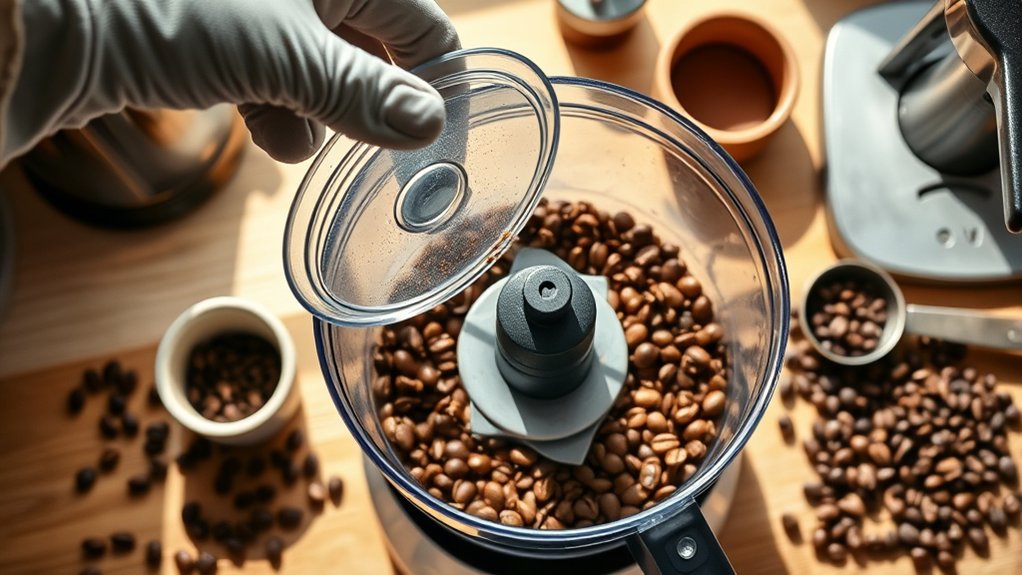
To get the best results with your food processor, pulse the beans in short bursts. Give the bowl a little shake every now and then to make sure the grind stays even.
Keep an eye on the grind consistency—adjust the pulsing time as needed, and sift out any fine particles to avoid bitterness.
Once you’re done grinding, be sure to clean your processor thoroughly. This helps keep it running smoothly and stops leftover oils from messing with future batches.
Food Processor Grinding Tips
Mastering the art of grinding coffee beans with a food processor requires careful control and technique to preserve flavor and achieve the right consistency.
When you use a food processor to grind, pulse in short bursts of about 3 seconds to maintain control over the grind and avoid overheating.
Shake or tilt the bowl between pulses to redistribute the beans, aiming for a medium grind ideal for most brewing methods.
To guarantee your freshly ground coffee is balanced, sift the grounds to remove ultra-fine particles, which can cause bitterness.
Always grind small batches, filling the processor no more than halfway for best results.
- Pulse in short bursts to prevent heat buildup
- Shake the processor bowl to redistribute beans
- Sift grounds to separate fine particles for cleaner flavor
Achieving Consistent Grind
Although food processors aren’t designed specifically for coffee grinding, you can achieve a consistent grind by carefully pulsing the beans in short bursts. Frequently shaking the bowl helps guarantee even exposure to the blades.
To grind coffee beans effectively, measure your desired amount and pulse in 3-second intervals to avoid overheating and uneven grounds. Shake or tilt the bowl often to move larger chunks closer to the blades, ensuring uniformity.
Grinding in small batches helps you maintain control over the grind size. If you notice uneven coffee grounds, sift them through a fine sieve to remove ultra-fine particles that can alter flavor.
Using a food processor to grind coffee requires attention, but mastering these steps leads to a consistent grind perfect for drip or pour-over brewing.
Cleaning And Maintenance
Since coffee oils can linger and affect the flavor of your next batch, you should clean your food processor immediately after grinding. Prompt cleaning prevents coffee oils and residues from building up, ensuring pure flavor every time.
Start by washing the bowl and blade with warm, soapy water. For stubborn oils, run a baking soda and water mixture through the processor, then rinse thoroughly.
Regular maintenance also includes drying the parts fully to avoid moisture damage. Check the lid and seal for trapped coffee particles that cause odors.
To keep blades sharp and absorb residual oils, grind a small amount of uncooked rice occasionally. Follow these steps for effective cleaning and maintenance of your food processor.
- Wash immediately with warm, soapy water
- Use baking soda mix to remove oils
- Grind rice occasionally to maintain blades
Crush Coffee Beans With a Rolling Pin or Hammer
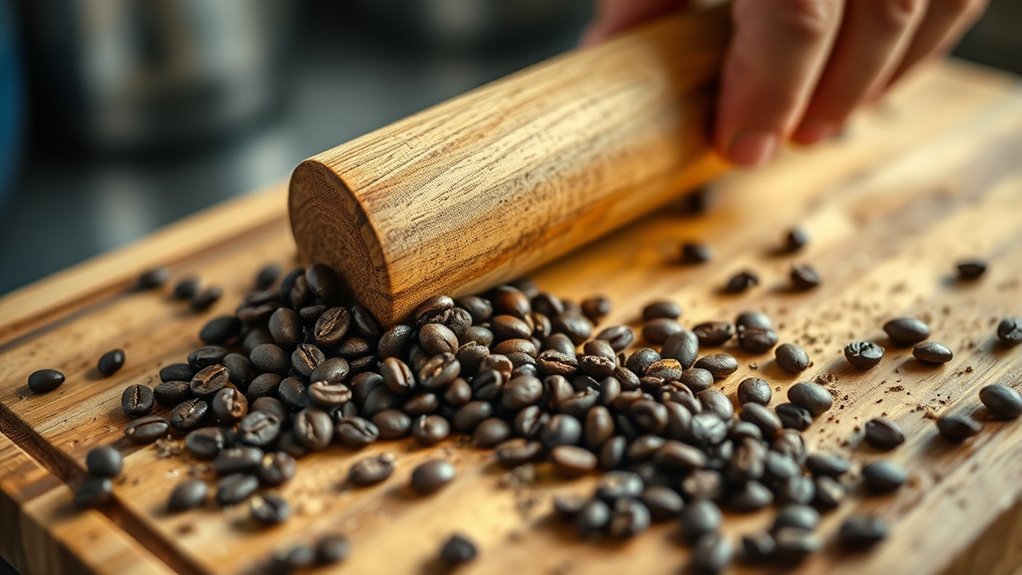
A rolling pin and a hammer can serve as effective tools to crush coffee beans when you don’t have a grinder on hand.
To crush the beans with a rolling pin, place them in a sealed freezer bag with minimal air, and roll back and forth, redistributing the beans to guarantee an even grind size.
Place beans in a sealed bag, then roll back and forth to achieve an even grind size.
For the hammer method, put the beans inside a plastic bag or between parchment paper, then gently tap to break them down. Adjust the pressure to reach a coarse to medium grind.
Both techniques offer manual control over grind size, perfect for coarser brews like French press or cold brew.
These methods let you grind coffee without specialized equipment quickly and efficiently, ideal for small batches and when uniformity isn’t critical.
Grind Coffee Finer With a Mortar and Pestle
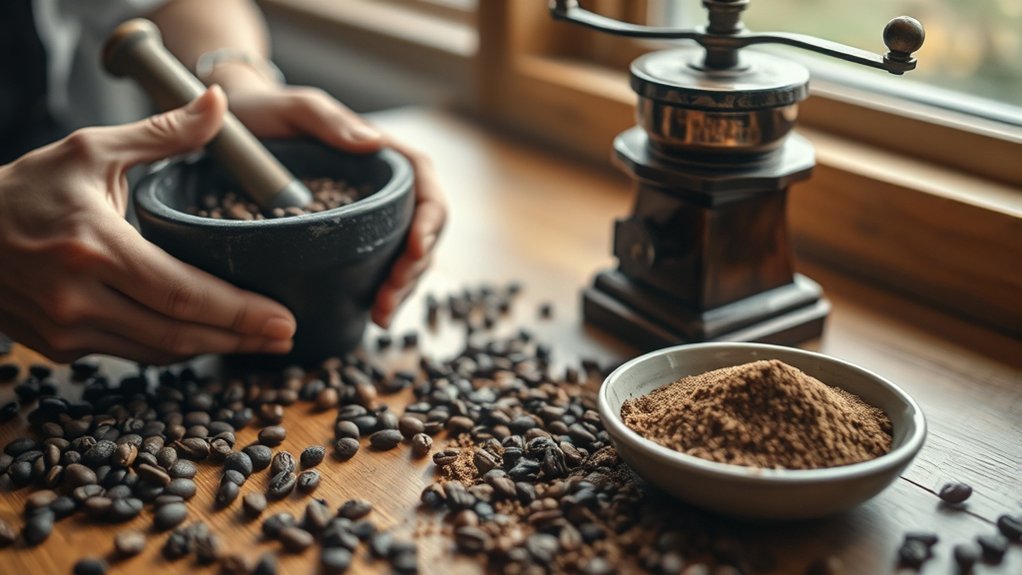
If you’re looking to achieve a grind finer than what a rolling pin or hammer can offer, reach for a mortar and pestle. This method lets you grind coffee beans with exceptional control, producing fine grounds perfect for ideal extraction.
Start by filling the mortar one-fourth full, then use a twisting motion with the pestle to crush the beans evenly. This process takes 5-10 minutes but allows you to tailor the grind size precisely to your brewing needs.
Keep in mind:
- Use a gradual approach, adding beans as you grind for consistency
- Apply steady pressure with the twisting motion for even results
- Aim for uniform fine grounds to reveal maximum flavor
With patience, the mortar and pestle becomes your ultimate tool for superior coffee.
Choosing the Best Grinding Method for Your Brew
Though selecting the right grinding method might seem straightforward, matching your grind size precisely to your brewing technique reveals the full potential of your coffee’s flavor. Coarse grinds suit French press, while espresso demands a fine grind.
Choosing the perfect grind size tailored to your brewing method unlocks the richest coffee flavors.
If you’re aiming for medium to coarse, a blender can be your go-to. Just pulse in short bursts to maintain consistency.
For small, precise amounts, the mortar and pestle excels, giving you fine control and an experimental edge.
Manual methods like rolling pins produce coarser grinds but require care to avoid unevenness. A food processor handles larger batches but may need shaking to equalize the grind.
Prevent Overheating and Uneven Grinds When Grinding Coffee
You’ll want to pulse your blender or processor in short bursts—that way, the beans stay cool and keep their flavor intact.
Grinding in consistent intervals also gives you better control over the texture, so you avoid those uneven chunks and overheating.
Once you get the hang of this rhythm, you’ll be able to nail a balanced, aromatic grind every single time.
It’s all about finding that sweet spot between speed and patience!
Short Pulses Technique
Mastering the short pulses technique transforms your coffee grinding process by preventing overheating and promoting an even grind consistency.
When you grind coffee beans without a grinder, especially if you use a blender, applying short bursts of 3 to 5 seconds is essential. This method controls heat buildup, preserving delicate coffee oils and flavors. It also helps you achieve a more even consistency by breaking down beans gradually, avoiding over-processing.
To optimize this technique, pulse in short intervals, allowing the blades to rest and prevent overheating.
Shake or tilt the container between pulses to reposition larger chunks closer to the blades. Regularly check the grind size to stop at your desired consistency, ensuring uniform extraction.
Implementing these steps elevates your manual grinding to expert-level precision.
Consistent Grinding Intervals
Maintaining consistent grinding intervals builds on the short pulses technique by further protecting the delicate coffee oils from heat damage and ensuring uniform particle size. To avoid overheating and achieve the desired texture, you must grind in small batches and maintain control at every step.
Whether using a blender, food processor, mortar and pestle, or rolling pin, applying consistent intervals helps prevent uneven grinds and bitterness caused by over-extraction.
| Method | Grinding Tips |
|---|---|
| Blender | Pulse 3-5 seconds |
| Food Processor | Short 3-second pulses + shake |
| Mortar & Pestle | Grind <¼ full, small batches |
| Rolling Pin | Gentle pressure + shake bag |
| General Advice | Consistent intervals prevent heat buildup |
Stick to these intervals, and your coffee will taste flawless every time.
When to Invest in a Coffee Grinder
Although it may seem convenient to stick with pre-ground coffee, investing in a quality grinder transforms your brewing routine by giving you control over grind size and freshness.
When you grind coffee beans just before brewing, you reveal the full aroma and flavor potential that pre-ground coffee often lacks.
Grinding coffee right before brewing unlocks richer aroma and deeper flavor often missing in pre-ground options.
A burr grinder, in particular, guarantees consistent grind sizes, which is essential for optimizing extraction across different brewing methods.
Whether you prefer manual or electric grinders, choosing the right one elevates your fresh coffee experience.
Consider investing in a grinder if you:
- Brew coffee regularly and want precise grind sizes.
- Experiment with various brewing methods requiring different grinds.
- Value the freshness and flavor that freshly ground coffee beans deliver.
How to Store Ground Coffee to Keep It Fresh Longer
If you want to preserve the rich aroma and complex flavors of your ground coffee, storing it correctly is vital. Always store ground coffee in an airtight container to limit oxygen exposure, which quickly degrades freshness.
Place the container in a cool, dark spot. Heat and light accelerate the loss of essential oils and flavor compounds.
Avoid the refrigerator or freezer, as moisture can cause clumping and spoilage. Remember, ground coffee loses freshness far faster than whole coffee beans, so use it within two weeks for the best taste.
For longer storage, consider vacuum-sealing your ground coffee.
Frequently Asked Questions
Can I Grind Coffee Beans Using a Spice Grinder?
Yes, you can use a spice grinder to grind coffee beans effectively. It offers great spice grinder effectiveness for achieving a medium to coarse coffee bean texture.
For grinding consistency, pulse in short bursts and check frequently to avoid over-grinding.
While it’s an excellent alternative grinding tool, make sure to clean thoroughly after use to preserve the coffee’s flavor.
This method balances convenience with quality for your brew.
How Long Should I Grind Coffee Beans Manually?
You should spend 30 seconds to 10 minutes on manual grinding techniques, depending on your ideal grind size. Coarse grinds take less time, while fine grinds demand patience.
Use tools for grinding like a mortar and pestle or rolling pin, applying steady effort. Focus on grinding consistency tips and check often to avoid uneven texture.
Perfecting this enhances coffee flavor profiles and reveals rich, balanced aromas in every cup you brew.
Does Grinding Coffee Beans Affect Caffeine Content?
Think of caffeine extraction as a dance between grind size and brewing methods. Grinding doesn’t change caffeine content in the bean itself, but a finer grind boosts extraction speed, enhancing your brew’s intensity and flavor profile.
Coarser grounds slow this dance, requiring patience for full strength. Your choice influences freshness retention too.
Grind just before brewing to savor peak vibrancy and release the fullest caffeine potential in every cup.
Can I Grind Flavored Coffee Beans Without Losing Taste?
Yes, you can grind flavored coffee beans without losing taste by focusing on grinding consistency and proper flavored bean storage.
Use short pulses to preserve the aroma and avoid overheating, which impacts flavor.
Grind right before brewing to maximize aroma, and match your brewing method compatibility to the grind size.
Also, control water temperature effects during brewing; too hot can mask delicate notes, while ideal temp highlights the beans’ unique flavors.
What Is the Best Bean Roast for Manual Grinding?
You’ll find medium roast coffee bean varieties best for manual grinding, as their balanced roast levels offer versatile flavor profiles and suit various brewing methods.
Medium roasts combine acidity and body, making grinding techniques more forgiving and consistent.
Light roasts demand more effort due to density, while dark roasts can be oily and brittle, complicating grinding.
Choosing medium roasts helps you extract the richest flavors with ease, ensuring your manual grind shines.
Conclusion
Now that you know how to grind coffee beans without a grinder, you’re ready to reveal the full flavor of your brew, no fancy gadget required. Whether you use a blender, rolling pin, or mortar and pestle, just be careful not to overheat or unevenly crush your beans.
Perfect grind size is like the secret key to a coffee flavor explosion that’ll make your mornings legendary. When you’re ready, investing in a grinder will only elevate your coffee game further.