Does Ground Coffee Go Bad – Shelf Life And Storage Tips
Ground coffee doesn’t technically go bad, but it loses flavor and aroma quickly because of air, moisture, heat, and light exposure. After opening, you get peak freshness for about 1-2 weeks before oxidation and oil breakdown dull its taste.
To keep it fresh longer, store ground coffee in airtight, opaque containers in a cool, dark place. Also, try to avoid moisture as much as possible. Freezing can help extend its shelf life too.
Understanding these factors will really help you preserve and enjoy your coffee better. It’s all about keeping those flavors locked in for as long as possible.
How Long Does Ground Coffee Stay Fresh?
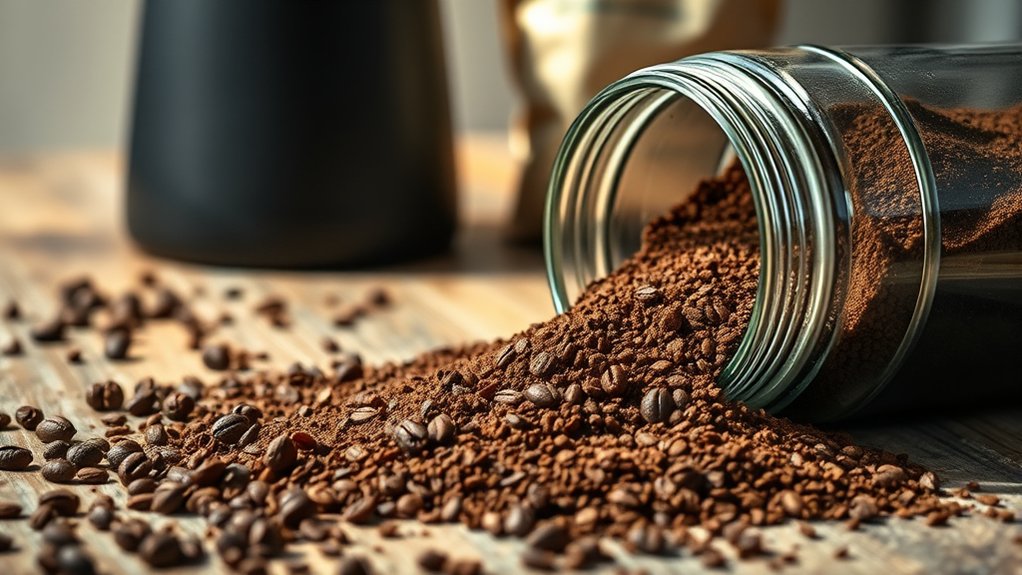
How long does ground coffee stay fresh once opened? Typically, ground coffee maintains peak freshness for about one to two weeks after opening. The coffee brewing quality declines as exposure to air accelerates oxidation, degrading flavor compounds developed during bean roasting.
Ground coffee stays freshest for one to two weeks after opening before oxidation diminishes its flavor.
Once the coffee is ground, the increased surface area intensifies aroma and flavor loss. To maximize freshness, store ground coffee in an airtight container away from light and heat.
While some degradation is inevitable, understanding the impact of bean roasting and grinding on freshness helps you gauge the best usage time.
For best results, consume ground coffee promptly after opening to preserve the nuanced flavors essential to quality coffee brewing.
Does Ground Coffee Expire or Only Lose Flavor?
Although ground coffee doesn’t spoil in the traditional sense, it does lose flavor and aroma over time because of oxidation and moisture exposure. You won’t find harmful bacteria growing, so it’s not unsafe. But the quality of your coffee brewing experience will definitely go down.
When coffee is ground, it releases oils that start to break down, which affects both taste and aroma. Here’s a quick comparison to help you understand:
| Aspect | Expiration | Flavor Loss |
|---|---|---|
| Safety | No health risk | Noticeable decline |
| Aroma | Remains safe | Fades gradually |
| Taste | Safe to consume | Becomes bland |
| Coffee brewing | Still possible | Less satisfying |
| Ground roasting oils | Stable initially | Degrade over time |
Why Does Ground Coffee Go Stale?
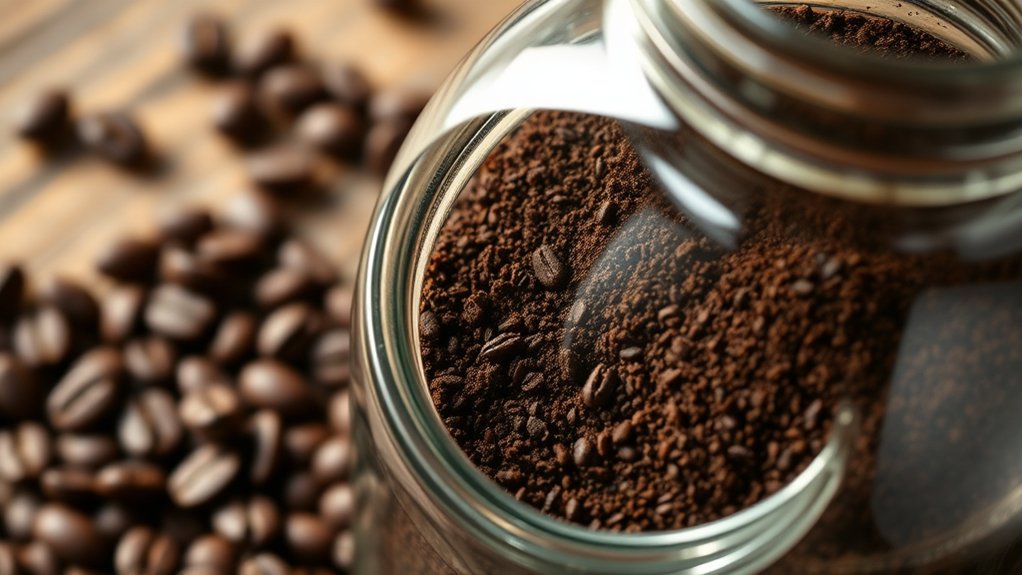
You’ve probably noticed that ground coffee goes stale pretty quickly. That’s because oxygen reacts with the coffee’s compounds, causing oxidation, which dulls the flavor.
At the same time, those wonderful aromatic oils either evaporate or break down, so the rich scent starts to fade. Knowing how this happens helps explain why coffee tastes best when it’s fresh and why the freshness disappears soon after grinding.
Oxidation Effects on Flavor
Because ground coffee exposes more surface area to air than whole beans, oxidation rapidly alters its chemical composition. Once ground, the coffee’s lipids and oils react with oxygen, breaking down and producing rancid flavors.
The degree of coffee bean roasting also affects oxidation speed. Darker roasts have more exposed oils, which makes staleness happen faster.
Also, grind size influences oxidation. Finer grounds increase surface area, speeding up flavor degradation. You’ll notice this as a flat or bitter taste that replaces the coffee’s original complexity.
To keep your coffee tasting fresh, it’s really important to minimize oxygen exposure. Store ground coffee in airtight containers and keep it away from heat and light.
Understanding how oxidation works helps you enjoy fresher coffee longer and get the most out of the flavors developed during roasting and grinding.
Loss of Aromatic Compounds
Oxidation not only changes the flavor of ground coffee but also causes the rapid loss of its aromatic compounds. These compounds are key to the coffee’s unique smell and taste.
When you expose ground coffee to air, the volatile oils that give it aroma start to break down. This process is called aromatic degradation.
As a result, the scent becomes less intense, making your coffee smell flat and less inviting.
To slow this down, you want to focus on preserving the scent by minimizing oxygen exposure, controlling humidity, and storing coffee in airtight containers away from light and heat.
Knowing how this works helps you understand why freshly ground coffee tastes and smells richer. It also shows why proper storage is so important to keep those aromatic qualities over time.
How to Tell If Your Ground Coffee Has Gone Bad
Even if your ground coffee looks fine at first glance, subtle signs can reveal it’s no longer fresh. Start by evaluating its aroma. Stale coffee loses the distinctive fragrance tied to specific coffee bean varieties. If the smell is flat or rancid, it’s a clear indicator of degradation.
Next, observe the texture. Clumping or excessive dryness often points to moisture exposure or oxidation.
When you brew, taste carefully. Off-flavors, bitterness beyond the usual, or a lack of complexity signal that the grounds have deteriorated.
Different brewing methods may mask these defects to some extent, but inconsistent extraction or weak flavor will still be noticeable.
Paying attention to these factors ensures you’re not wasting coffee that’s past its prime.
Common Mistakes That Make Ground Coffee Go Stale Faster
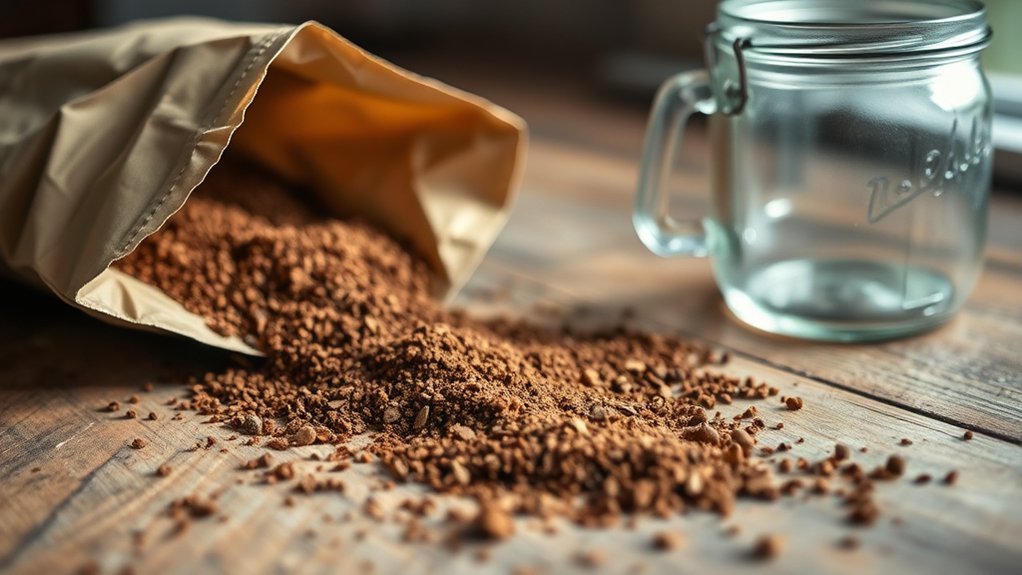
Recognizing when your ground coffee has gone bad helps you avoid wasting it. But understanding what speeds up this process can save you from premature staleness.
One common mistake is exposing coffee to air repeatedly. Oxygen accelerates oxidation, which degrades flavor no matter where the coffee beans come from.
Another error is storing grounds near heat sources or moisture. That only promotes faster deterioration.
Using improper brewing methods, like using water that’s too hot or steeping for too long, can mask stale flavors. But it also encourages quicker staling by breaking down delicate compounds too soon.
Plus, grinding coffee too far in advance increases surface area exposure, which speeds up freshness loss.
To keep your coffee’s unique profile—shaped by its origin—try to minimize exposure to oxygen. Keep your grounds cool and dry, and grind only what you need for your brewing method.
That way, you’ll enjoy the best flavor for longer.
How Packaging Impacts Ground Coffee Freshness
Because packaging serves as the primary barrier between your ground coffee and environmental factors like air, moisture, and light, it plays a critical role in preserving freshness. Effective packaging design minimizes exposure to these elements, which degrade flavor and aroma.
Look for airtight seals and materials that block UV rays and humidity, as these markedly slow oxidation. Moreover, label quality matters; clear, accurate labels inform you about roast dates and storage recommendations, helping you track freshness.
Poor label quality can leave you guessing, increasing the risk of using stale coffee. In sum, when choosing ground coffee, prioritize packaging that combines functional design with reliable labeling.
This way, you make sure you maintain peak freshness and enjoy the best possible flavor from your coffee grounds.
Best Ways to Store Ground Coffee for Maximum Freshness
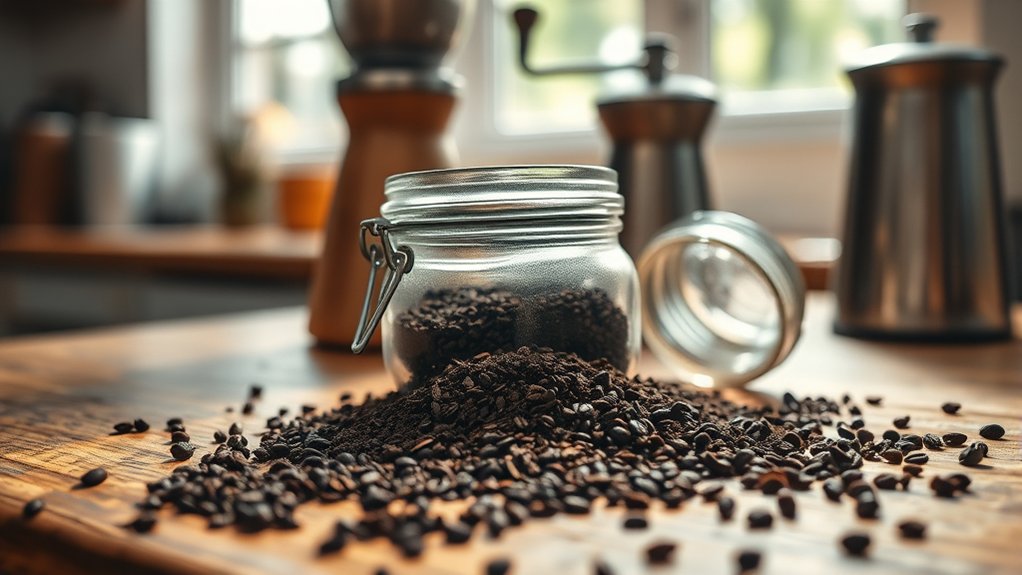
To keep your ground coffee fresh, it’s best to store it in airtight containers that block out air and odors effectively. You want to make sure no unwanted smells sneak in and ruin that rich coffee flavor.
Next, find a cool, dark spot for your container. Heat and light are the enemies here—they can quickly degrade your coffee’s taste. So, a cupboard or pantry away from the stove or windows works perfectly.
And don’t forget about moisture! It’s a big no-no because it speeds up staling and spoilage. Keeping your coffee dry will help preserve that fresh, delicious aroma every time you brew.
Airtight Containers Importance
While many factors influence the freshness of ground coffee, using airtight containers plays a crucial role in preserving its flavor and aroma. Airtight storage minimizes exposure to oxygen, which speeds up oxidation and causes a stale taste.
When selecting containers, focus on materials that provide effective barriers against air and moisture. Glass, stainless steel, and high-quality BPA-free plastics do a great job at maintaining airtight conditions. Avoid permeable materials like thin plastics or paper since they let air in easily.
Also, make sure the container’s seal is strong and reliable to prevent leaks. By prioritizing airtight storage with the right materials, you slow down degradation and extend your coffee’s shelf life.
This simple step helps you enjoy consistently fresh, flavorful coffee with every brew.
Cool Dark Storage
Although airtight containers help preserve ground coffee, storing them in a cool, dark place really boosts freshness by slowing down the chemical reactions that degrade flavor. Heat and light speed up oxidation and staling, which messes with the quality of your coffee brewing experience.
To keep your coffee tasting great after grinding, here’s what you can do:
- Store your coffee in a cupboard or pantry away from direct sunlight and heat sources like ovens or microwaves.
- Keep the storage temperature stable, ideally between 50-70°F (10-21°C), to maintain prime freshness.
- Use opaque containers to block light exposure, which protects the coffee’s volatile oils and aromas that are essential for quality brewing.
Following these tips helps preserve your ground coffee’s integrity, so every cup tastes as fresh and flavorful as possible.
Avoid Moisture Exposure
How does moisture affect your ground coffee’s freshness? Moisture control is critical since water accelerates oxidation and promotes mold growth. This degrades both flavor and safety. To maintain quality, prioritize container sealing to block humidity.
Choose airtight containers made from non-porous materials like glass or stainless steel. Avoid plastic bags or containers that allow moisture infiltration. You want to keep your coffee as dry as possible.
| Moisture Exposure Level | Impact on Ground Coffee |
|---|---|
| None | Ideal freshness preserved |
| Low | Slight flavor loss |
| Moderate | Noticeable stale taste |
| High | Mold risk and spoilage |
| Continuous | Complete degradation |
Can You Freeze Ground Coffee to Extend Its Shelf Life?
Because ground coffee starts losing freshness soon after grinding, you might wonder if freezing it can effectively extend its shelf life. Freezing ground beans does slow down the oxidation and staling processes, preserving aroma and flavor longer than room temperature storage. However, freezing isn’t foolproof. You must store coffee properly to avoid moisture damage.
Freezing ground coffee slows staling and preserves flavor, but proper storage is essential to prevent moisture damage.
Consider these key points:
- Use airtight, moisture-proof containers to prevent ice crystals that degrade quality.
- Portion coffee into small amounts to avoid repeated thawing and refreezing, which accelerates freshness loss.
- Thaw frozen ground coffee at room temperature before coffee brewing to retain peak flavor.
Freezing can extend shelf life up to several months, but careful handling is essential to maintain the ground bean’s integrity and guarantee a satisfying brew. So, if you decide to freeze your coffee, just take these tips into account and you should be good to go!
How to Revive Slightly Stale Ground Coffee
If your ground coffee tastes a bit stale, don’t worry—you can actually freshen it up with some easy tricks. For instance, tweaking how you brew it might make a noticeable difference.
You could also try adding a small pinch of salt; it sounds unusual, but it can really help bring out the flavors.
Let’s dive into some simple tips that can help make your coffee taste more lively again.
Freshening Techniques
Why does slightly stale ground coffee lose its appeal, and can you restore its freshness? Stale coffee loses volatile aromatic compounds, which leads to a flat taste. But don’t worry, you can improve its profile with some targeted freshening techniques.
First, try adjusting your brewing techniques. Changing the water temperature or brewing time can help make up for the diminished flavor extraction. Using slightly hotter water or letting it steep a bit longer can bring out more solubles.
Next, consider altering the coffee grind size. Going for a finer grind increases the surface area, which boosts extraction efficiency and can intensify the flavor even if the coffee is a bit stale.
You can also mix stale grounds with a small portion of fresh coffee. This blend balances and uplifts the overall taste, giving you a better cup without having to toss your old grounds.
Keep in mind, these methods won’t fully restore peak freshness, but they can definitely improve your coffee’s complexity and aroma. So, it’s worth trying before you throw away those existing grounds.
Flavor Restoration Tips
Building on adjustments to brewing methods and grind size, you can actively restore some vibrancy to slightly stale ground coffee by targeting specific flavor-enhancing techniques. Start by increasing the brewing temperature slightly within safe limits. Hotter water extracts more oils and compounds, improving flavor enhancement.
Next, try adding a pinch of salt or cinnamon to your grounds before brewing. This can mask bitterness and revive aroma preservation. Using a French press or pour-over method may also help extract better flavors compared to automatic drip machines.
Finally, store your ground coffee in an airtight container away from light and moisture to slow further degradation. These targeted steps can improve the taste and aroma of coffee that’s lost some freshness. This way, you can enjoy your brew longer without waste.
Choosing Ground Coffee That Stays Fresh Longer
When selecting ground coffee that stays fresh longer, you should focus on factors like roast date, packaging, and grind size. Freshness begins with coffee roasting. Choose coffee roasted recently, ideally within two weeks, to ensure peak flavor and aroma.
Packaging plays a crucial role. Opt for airtight, opaque bags with one-way valves that allow gas release without oxygen entry.
Grind size affects oxidation speed. Coarser grinds expose less surface area, slowing staling compared to finer grinds.
- Check the roast date to guarantee freshness.
- Select packaging designed to minimize oxygen and light exposure.
- Choose grind size based on your brewing method, favoring coarser grinds for longer shelf life.
Frequently Asked Questions
Does the Grind Size Affect the Shelf Life of Ground Coffee?
Yes, grind size does affect the shelf life of ground coffee. Finer grinds expose more surface area, which speeds up oxidation and flavor loss. This means the shelf life gets shorter.
Coarser grinds stay fresh longer because they’ve less exposure.
Also, how uniform the grind is matters. If the particles aren’t consistent, it can cause uneven extraction during brewing, which hurts the taste.
Can Humidity Levels in Your Kitchen Impact Ground Coffee Freshness?
Yes, humidity effects can greatly impact ground coffee freshness. When kitchen moisture rises, it speeds up coffee’s staling process by encouraging mold growth and breaking down flavor compounds.
You should store ground coffee in airtight containers to keep humidity out. Also, avoid placing it near sinks or stoves where moisture levels can change a lot.
Controlling kitchen moisture helps keep your coffee’s aroma and taste fresh longer. This way, you preserve its quality for your daily brew.
Is It Safe to Consume Expired Ground Coffee?
Imagine you find a bag of ground coffee from Ethiopian beans, ground using a burr grinder, but it’s six months past its best-by date. Is it safe to drink? Yes, expired ground coffee won’t harm you, but its flavor and aroma considerably degrade due to oxidation and moisture exposure.
While coffee bean origins influence taste, improper grinding techniques and storage only speed up staleness. So, it’s safe but won’t deliver a satisfying cup.
You might still enjoy it, but don’t expect the rich flavor you’d get from fresh coffee. It’s more about safety than quality at this point.
How Does Caffeine Content Change as Ground Coffee Ages?
As ground coffee ages, its caffeine content stays pretty stable, so you won’t lose much potency. The freshness of the coffee beans, though, makes a big difference in the overall flavor and aroma. That freshness can actually mask how much caffeine you feel.
Different brewing methods pull out caffeine in different amounts, but aging itself doesn’t reduce the caffeine. To get the best experience, it’s a good idea to use fresh grounds.
Also, pick a brewing method that fits your taste—like espresso if you want a stronger caffeine kick, or drip coffee for something smoother.
Are Flavored Ground Coffees More Prone to Going Bad?
Like a fading perfume on a once-vibrant scarf, flavored ground coffees are more prone to going bad because their flavor stability is compromised. You’ll notice the aroma fades faster since the added oils and flavorings break down quicker than plain coffee.
To keep your flavored grounds fresh longer, store them airtight and away from light and heat. This way, you can preserve the delicate balance of taste and aroma before they slip away.
Conclusion
You might wonder, does ground coffee truly go bad or just lose its spark? It’s both. Over time, the flavor dulls and staleness sets in.
But here’s the key: store it airtight and keep it away from heat, light, and moisture to lock in freshness. If you need to, freeze it carefully.
Remember, a little care now means every cup tastes like the first. Don’t let your coffee’s potential slip away—preserve it and savor each brew’s bold brilliance.