Is It Cheaper To Buy Coffee Beans Or Ground Coffee – Cost Comparison
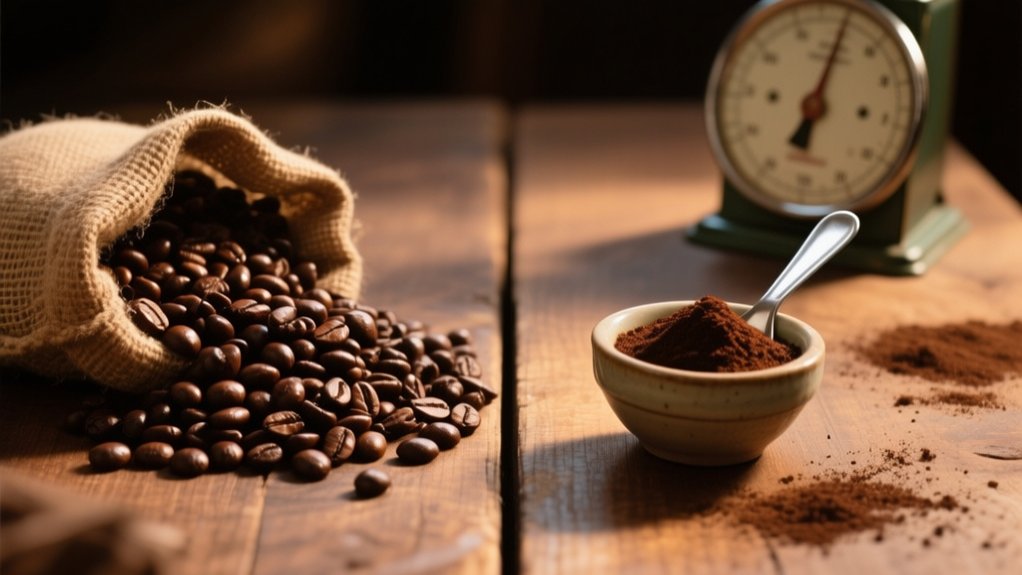
You’ll pay less upfront for ground coffee, costing about $0.18 to $0.20 per cup, versus $0.31 to $0.35 for whole beans. However, whole beans stay fresher 2-4 weeks after opening, preserving flavor and reducing waste, which can save money long-term.
Plus, owning a grinder lets you customize grind size for better taste and efficiency. If you want to understand how freshness, storage, and convenience impact overall coffee costs, there’s more to ponder.
Comparing Whole Bean and Ground Coffee Costs
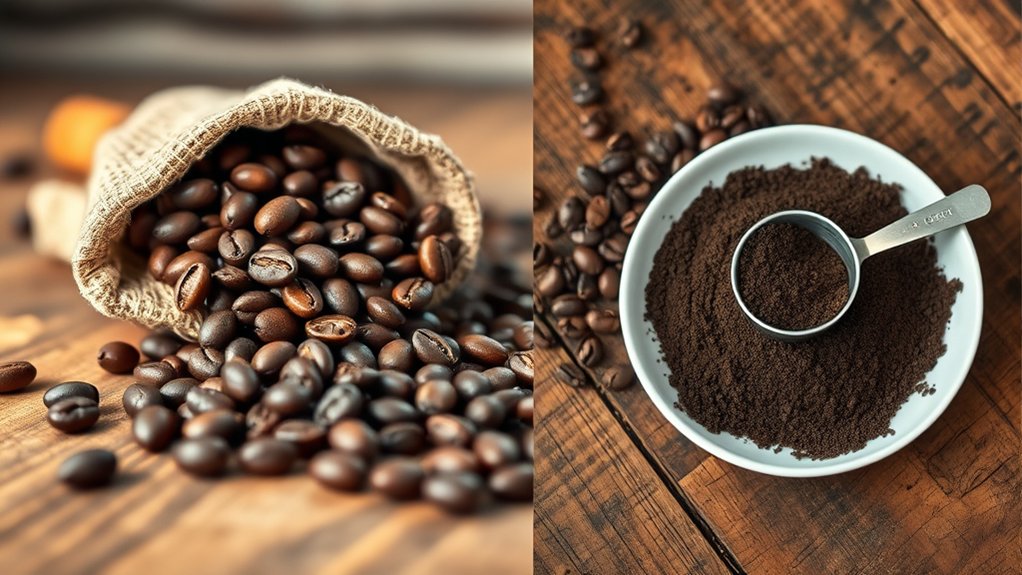
How do the costs of whole bean and ground coffee compare? Whole bean coffee typically costs between $10 and $18 per pound, while ground coffee ranges from $6 to $12 per pound. So, if you buy ground coffee, the upfront expense is generally lower.
However, when comparing whole beans vs ground coffee, consider that whole beans average $0.31 to $0.35 per cup, reflecting higher quality coffee, while ground coffee costs about $0.18 to $0.20 per cup.
Whole beans cost $0.31 to $0.35 per cup, offering higher quality than ground coffee at $0.18 to $0.20.
Though whole beans come with the added cost of purchasing a grinder to grind the beans yourself, this investment can enhance flavor and freshness.
Furthermore, whole beans have a longer shelf life, potentially reducing waste and offsetting the initial higher price over time.
How Freshness Impacts Coffee Value and Price
Because freshness directly influences flavor and overall satisfaction, it plays an essential role in determining coffee’s value and price.
Whole bean coffee retains its freshness for 2-4 weeks after opening, while ground coffee loses aroma and flavor within days due to oxygen exposure.
This freshness difference impacts taste quality and cost per cup. Whole bean coffee averages $0.31 to $0.35, compared to $0.18 to $0.20 for ground coffee.
Although whole beans cost more upfront, their longer shelf life reduces waste and can lead to long-term savings, especially when bought in bulk.
Grinding whole beans just before brewing maximizes flavor, making freshness a critical factor in evaluating the overall value and cost-efficiency of your coffee choice.
Why Whole Bean Coffee Costs More Upfront
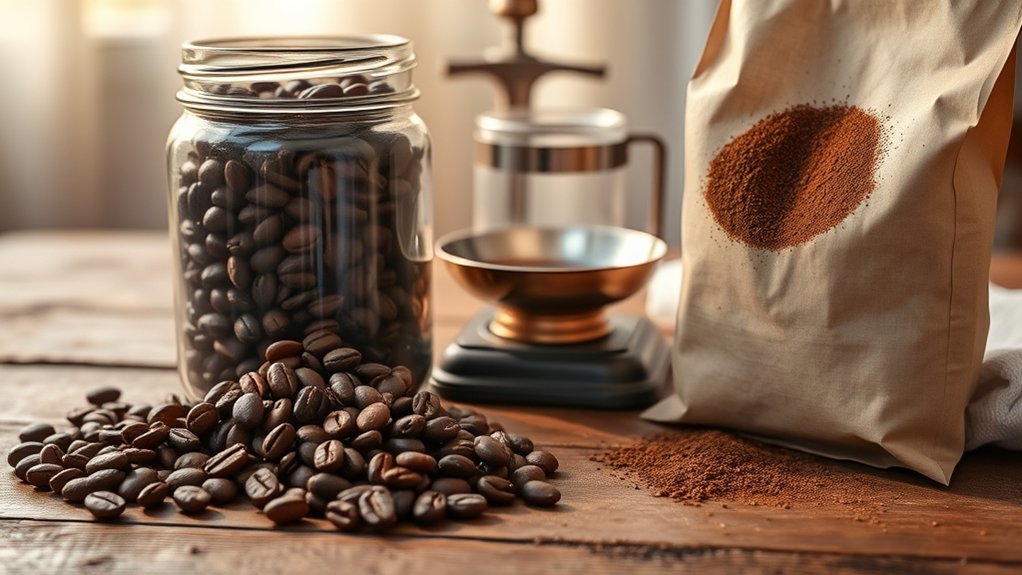
You’ll notice that whole bean coffee usually costs between $10 and $18 per pound, which is a bit higher than the $6 to $12 range for ground coffee.
That price difference comes down to the premium quality of the beans chosen and the extra care needed to keep them fresh.
Roasters put more effort into sourcing and handling whole beans, so that’s why the upfront cost is a little higher.
Premium Bean Quality
When you factor in quality, whole bean coffee commands a higher price, typically $10 to $18 per pound, compared to ground coffee’s $6 to $12 range. This price difference reflects the premium quality of whole beans sourced from better lots, ensuring superior flavor and freshness.
Unlike ground coffee, which often contains fillers or lower-grade beans, whole beans maintain their aroma and complexity for 2–4 weeks after opening.
Investing in whole beans also lets you customize grind size, improving brewing precision beyond the standardized grind of pre-ground coffee.
The higher cost is justified by the consistent quality and enhanced taste experience you get, making whole beans a valuable choice despite their upfront expense.
This focus on premium bean quality directly impacts the value you receive per dollar spent.
Higher Processing Expenses
Although whole bean coffee delivers superior quality, its higher upfront cost stems largely from the intricate processing involved. Whole bean coffee demands selective harvesting, precise roasting, and sustainable packaging, all of which elevate processing expenses compared to pre-ground coffee.
Furthermore, reputable roasters invest in ethical sourcing and timely shipping to maintain freshness, which further increases costs.
These processing methods guarantee the superior quality that discerning consumers expect but come at a premium.
How Grinder Investment Affects Your Coffee Budget
Since investing in a quality coffee grinder can cost anywhere from $20 to several hundred dollars, it greatly influences your initial coffee budget. When deciding between coffee beans vs ground coffee, this upfront cost is a key factor.
If you choose to buy whole beans, a burr grinder allows you to customize grind size precisely, enhancing flavor extraction and freshness. Although whole beans typically cost $10 to $18 per pound, which is higher than ground coffee’s $6 to $12 per pound, the grinder investment can lead to long-term savings by preserving bean quality and reducing reliance on expensive pre-ground options.
Ultimately, while the initial grinder cost raises your budget, it supports better coffee quality and cost efficiency over time compared to buying ground coffee alone.
Brewing Efficiency: Cost Implications of Coffee Usage
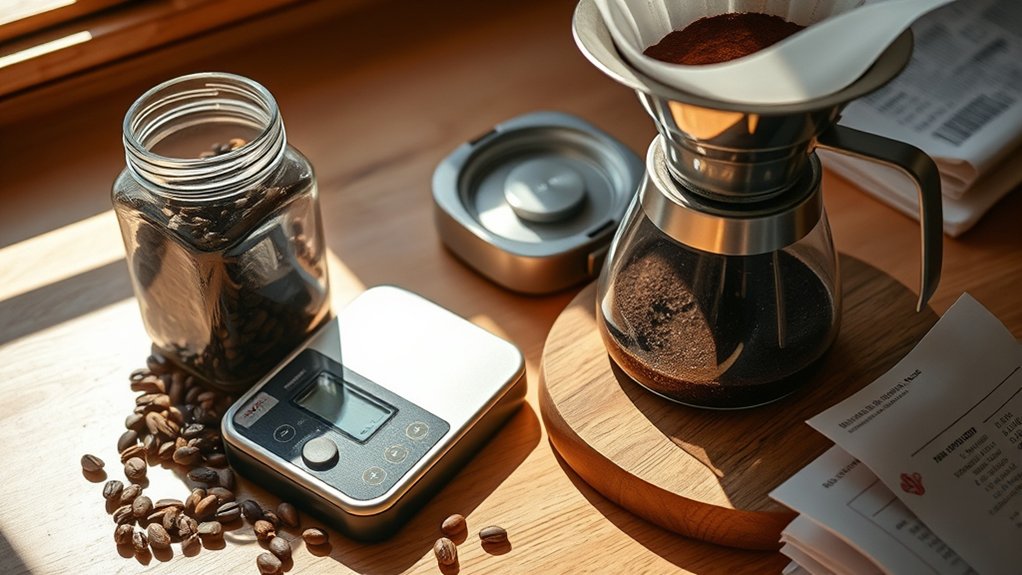
Because whole bean coffee maintains its flavor longer and allows for precise brewing control, you can achieve better coffee-to-water ratios and potentially use less coffee per cup compared to pre-ground options.
Whole bean coffee typically costs $10 to $18 per pound, higher than ground coffee’s $6 to $12 per pound, but its enhanced brewing efficiency can offset upfront costs.
Using the 1:15 coffee-to-water ratio, you optimize extraction, reducing waste and improving cup strength.
Ground coffee’s average cost per cup is $0.18 to $0.20, while whole beans range from $0.31 to $0.35, reflecting the trade-off between freshness and immediate cost.
Investing in a grinder maximizes whole bean use, while ground coffee’s faster flavor loss reduces its brewing efficiency and increases long-term cost implications.
Storing Coffee to Extend Freshness and Save Money
Maximizing the freshness of your coffee starts with how you store it. This directly impacts both flavor and cost efficiency. Whole bean coffee retains its flavor for 2–4 weeks after opening when kept in airtight containers away from light, heat, and moisture. This extends freshness considerably compared to ground coffee.
Ground coffee loses aroma within days due to increased oxygen exposure, making proper storage techniques essential. Avoid refrigerating beans to prevent condensation that degrades flavor.
Using airtight containers for both whole bean coffee and ground coffee effectively slows quality loss, reducing waste and saving money.
Hidden Costs of Pre-Ground Coffee Quality and Waste
When you buy pre-ground coffee, you’re often getting lower-quality beans that don’t deliver the best flavor or value.
Plus, ground coffee starts losing its freshness within just a few days. So, you might end up tossing out stale coffee more often than you’d like.
All this waste and the lower quality can actually make pre-ground coffee more expensive than buying whole beans in the long run.
Quality Compromises
Although pre-ground coffee offers convenience, it often comes at the expense of quality and flavor. Ground coffee typically contains lower-quality beans and fillers, which can dilute the taste and aroma.
In contrast, whole bean coffee retains freshness and flavor for up to four weeks after opening, while ground coffee loses its complexity within days due to oxygen exposure.
Although the cost per cup for ground coffee averages $0.18–$0.20, whole bean coffee costs more, around $0.31–$0.35 per cup, but delivers superior quality and flavor control.
Grinding beans at home reveals enhanced flavor profiles that pre-ground coffee can’t match.
While whole bean coffee requires a higher upfront cost, it ultimately provides better value by maintaining quality longer and reducing flavor loss.
Increased Waste Impact
Because pre-ground coffee exposes more surface area to oxygen, it spoils faster than whole beans, often going stale within days after opening. Whole bean coffee, when stored properly, can last 2–4 weeks, reducing the likelihood of waste.
Pre-ground coffee’s quicker degradation, combined with the frequent use of lower-quality beans, often leads to a compromised taste experience. This dissatisfaction prompts you to discard coffee prematurely, increasing waste.
Furthermore, pre-ground coffee may contain fillers that affect flavor unnoticed until brewing, further promoting waste.
While pre-ground coffee seems cheaper upfront, its faster spoilage and reduced taste quality cause you to repurchase more frequently, negating initial savings.
Choosing whole bean coffee lets you control freshness and grind size, minimizing waste and enhancing your overall taste experience.
Convenience vs. Customization: What Fits Your Budget?
How do convenience and customization impact your coffee budget?
Pre-ground coffee costs between $6 and $12 per pound, offering a budget-friendly option if you prioritize convenience. It saves time and eliminates the need for a grinder, making it ideal for busy routines.
Whole bean coffee ranges from $10 to $18 per pound, with a higher upfront cost due to the beans and grinder investment. However, grinding your own beans lets you customize grind size, enhancing flavor and potentially reducing waste.
While whole bean coffee requires more effort and initial spending, it offers a richer coffee experience.
Ultimately, your choice depends on whether you value quick convenience with ground coffee or prefer the customizable quality of whole bean coffee within your budget.
When Whole Beans Are More Cost-Effective Long Term
Even though whole bean coffee has a higher upfront cost, typically $10 to $18 per pound compared to $6 to $12 for ground coffee, it becomes more cost-effective over time.
When you purchase whole bean, you invest in freshness and flavor retention, which ground coffee often loses quickly after opening.
While the initial cost includes buying a grinder, this expense balances out as whole beans maintain quality for weeks, reducing waste.
The average cost per cup ranges from $0.31 to $0.35 for whole beans versus $0.18 to $0.20 for ground coffee, but whole beans offer better extraction control, enhancing flavor and maximizing your coffee’s value.
For regular drinkers focused on quality and long-term savings, purchasing whole bean proves the smarter financial choice.
Frequently Asked Questions
How Do Different Grind Sizes Affect Brewing Time and Taste?
Different grind sizes directly impact your brewing time and flavor profile. Finer grinds increase surface area, speeding up extraction rates and shortening brewing time, which is ideal for espresso.
Coarser grinds slow extraction and require longer steeping, making them perfect for French press.
Achieving consistent grind consistency with a burr grinder guarantees uniform extraction, which enhances flavor clarity.
Adjust your grind size based on brewing methods to optimize both taste and extraction efficiency for the best cup.
Can Whole Beans Be Used in All Types of Coffee Makers?
Whole bean versatility is impressive but not universal; you can’t use whole beans in all coffee makers. Brewing method compatibility varies. Espresso machines and single-serve pods usually require ground coffee.
However, methods like French press and grind-and-brew machines handle whole beans well. Whole beans offer better freshness retention and flexible storage options, letting you grind just before brewing.
To optimize flavor, match your grinder’s settings to your brewing method’s requirements.
What Is the Environmental Impact of Buying Whole Beans Versus Pre-Ground?
You’ll find whole beans have a lower carbon footprint due to fewer processing steps, which reduces energy use.
They generate less packaging waste since they often come in minimal, recyclable packaging.
Whole beans also have a longer shelf life, cutting down on spoilage and waste.
Sustainability factors favor whole beans, as they often support eco-friendly sourcing and local roasting.
This further reduces transportation emissions compared to pre-ground coffee.
How Does Water Quality Influence the Cost-Effectiveness of Coffee Brewing?
You mightn’t realize how much water quality impacts your coffee’s cost-effectiveness. High water hardness causes scale buildup, reducing brewing efficiency and forcing you to spend on maintenance.
Using proper filtration methods improves taste profiles, so you don’t need pricier beans to mask off-flavors.
Optimizing water quality means extracting more flavor from less coffee, saving money over time.
Investing in filtration pays off by balancing taste and cost efficiently.
Are There Health Differences Between Whole Bean and Pre-Ground Coffee?
Yes, you’ll notice health differences between whole bean and pre-ground coffee. Whole beans retain aroma longer and preserve freshness better, protecting antioxidant levels that contribute to health benefits.
Grinding just before brewing enhances flavor complexity and maximizes these compounds. Pre-ground coffee loses freshness quickly, reducing antioxidant potency and aroma.
Conclusion
You might not realize that whole bean coffee can stay fresh up to twice as long as pre-ground, saving you money by reducing waste. While whole beans often cost more upfront, investing in a grinder and proper storage pays off by preserving flavor and stretching your supply.
So, if you brew regularly, choosing whole beans is usually the smarter, more cost-effective choice over time, balancing quality, freshness, and budget in your daily cup.