
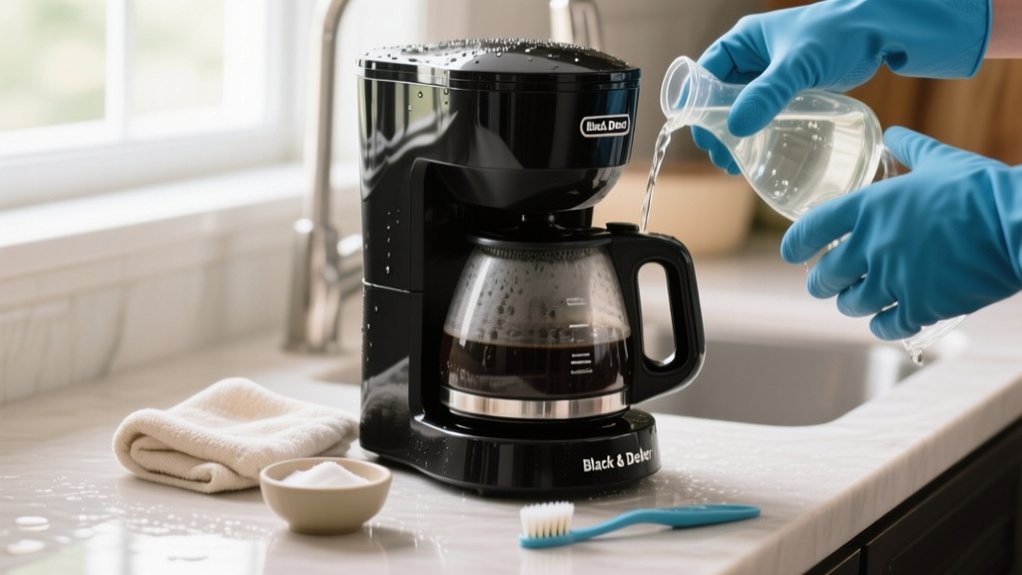
How To Clean A Black And Decker Coffee Maker – Step-By-Step Guide
To clean your Black and Decker coffee maker, first unplug it, empty the carafe, and place a paper filter in the basket. Fill the reservoir with one part distilled white vinegar to two parts water, following your model’s ratio (for example, 6 cups vinegar and 10 cups water for a 12-cup machine).
Run a brew cycle, pausing halfway to soak for 30 minutes. Afterward, discard the solution and rinse with fresh water 2-3 times. Further steps can help you maintain peak performance and address common issues.
How To Prepare Your Black And Decker Coffee Maker For Vinegar Cleaning
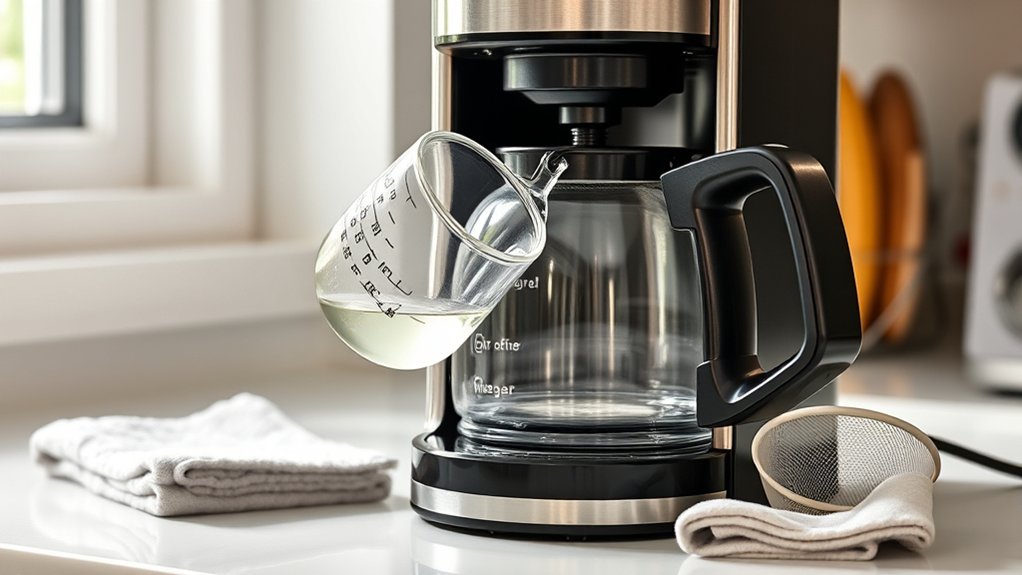
Before you begin cleaning your BLACK+DECKER® coffee maker with vinegar, start by consulting the instruction manual to determine the correct vinegar-to-water ratio for your specific model.
For a standard 12-cup machine, fill the reservoir with vinegar to the 6-cup mark, then add water up to the 10-cup line. This precise mixture guarantees an effective cleaning solution.
Fill the reservoir halfway with vinegar, then top up with water to the 10-cup mark for optimal cleaning.
Make certain the coffee maker is unplugged and the carafe is empty before proceeding.
Place a paper filter in the basket to catch any loosened mineral deposits or residue during the cleaning cycle, preventing clogging.
Familiarize yourself with any model-specific instructions, including the Auto-Clean feature if available, which may simplify the cleaning process.
These steps prepare your coffee maker properly to clean your coffee maker with vinegar and water efficiently.
Mixing Vinegar Solution To Descale Your Black And Decker Coffee Maker
When mixing the vinegar solution to descale your Black and Decker coffee maker, combine one part distilled white vinegar with two parts water. Adjust quantities to match your model’s reservoir capacity. For example, a 12-cup machine requires filling vinegar to the 6-cup mark and water to the 10-cup line.
Use a paper filter in the brew basket to trap residue. After preparing the descaling solution, run a cleaning cycle or pause halfway to let it soak for 30 minutes. This helps ensure effective scale removal.
Here’s a quick reference:
| Machine Size | Vinegar Volume | Water Volume |
|---|---|---|
| 4 cups | 1.3 cups | 2.6 cups |
| 8 cups | 4 cups | 8 cups |
| 12 cups | 6 cups | 10 cups |
This method guarantees your descaling solution is correctly mixed for ideal cleaning results.
How To Run The Auto Clean Cycle
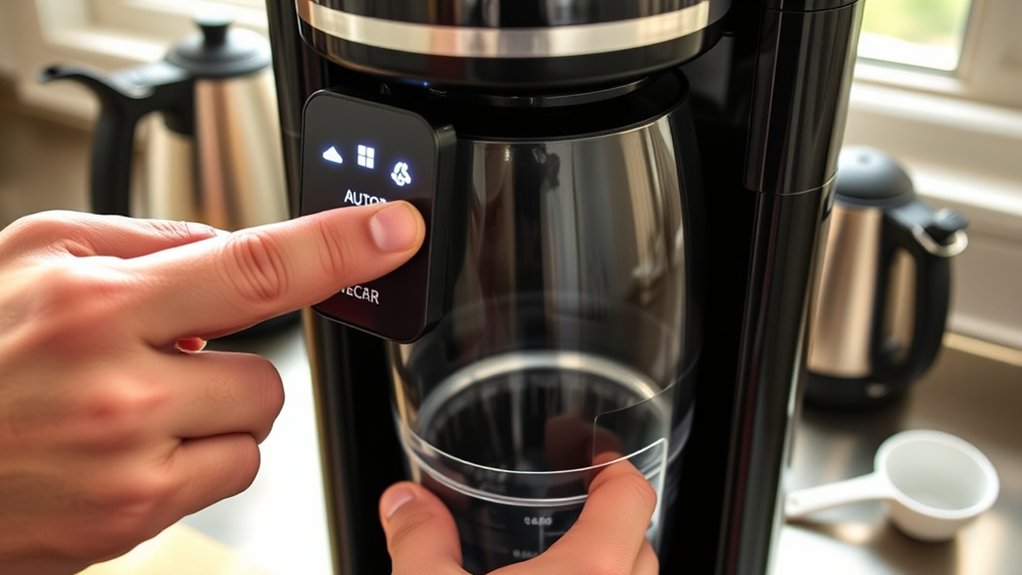
To run the Auto Clean cycle on your Black+Decker coffee maker, start by mixing 6 cups of white vinegar with 4 cups of cold water. Pour the solution into the water reservoir.
Next, place a basket-style paper filter in the removable filter basket to catch any residue. Secure the carafe lid and position the empty carafe on the carafe plate.
Plug in the machine, then press the “AUTO CLEAN” button to activate the Auto Clean function. The display will show “CLEAN,” and the power light will illuminate.
The cleaning cycle will last approximately 45-60 minutes. Once complete, the machine will beep and automatically shut off, ensuring thorough descaling and cleaning using the vinegar-based solution in the water reservoir.
How To Manually Clean Black And Decker Coffee Makers Without Auto Clean
If your Black+Decker coffee maker lacks an Auto Clean function, you can manually descale and clean it using a vinegar solution.
Mix one part distilled white vinegar with two parts water. For example, use 6 cups vinegar and 10 cups water for a 12-cup Decker Coffee Maker. Then fill the reservoir.
Place a paper filter in the basket to trap residue, start the brew cycle, then pause halfway. Let the vinegar solution soak for 30 minutes before resuming the cycle. This process effectively removes mineral buildup and residue.
Perform this cleaning every 60 brews or every two months. If you use hard water, clean it monthly.
After cleaning, remember to wash the carafe and filter basket with soapy water. The filter basket is dishwasher-safe for added convenience.
How To Rinse Your Black And Decker Coffee Maker After Cleaning
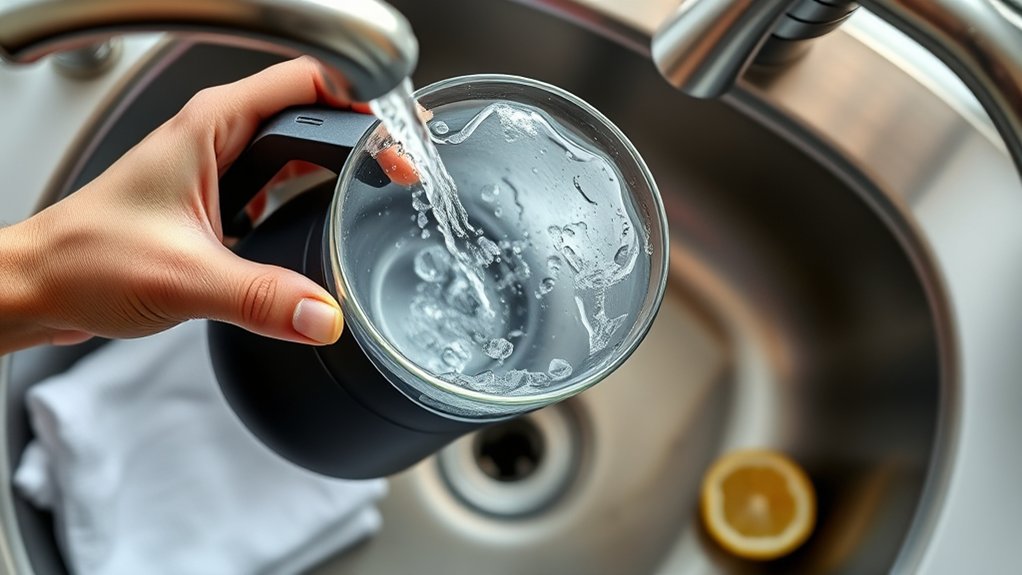
Start by emptying the carafe and removing the used paper filter immediately after finishing the vinegar cleaning cycle.
Next, fill the water reservoir with clean water to flush out any remaining vinegar residue.
Fill the reservoir with clean water to remove any lingering vinegar taste and ensure thorough rinsing.
Place the empty filter basket back in position without a paper filter.
Run a standard brew cycle using only clean water to rinse the internal components thoroughly.
Once complete, discard the water from the carafe and repeat this rinse cycle 2–3 times to guarantee all vinegar taste and odor are eliminated.
After the final rinse, inspect the filter basket for any leftover particles or residue.
Make sure the coffee maker is free of cleaning agents before brewing fresh coffee.
This will guarantee ideal flavor and machine performance.
How Often To Clean Your Black And Decker Coffee Maker
After thoroughly rinsing your Black and Decker coffee maker, it’s important to establish a regular cleaning schedule to maintain its performance. You should clean your coffee maker every 60 brews or about every two months with regular water. However, if you have hard water, clean it monthly to prevent mineral buildup.
Watch for slow brewing or visible deposits as signs for immediate cleaning. Regular cleaning eliminates off-flavors and extends your coffee maker’s lifespan.
| Usage Frequency | Water Type | Cleaning Interval |
|---|---|---|
| Regular | Soft/Normal | Every 60 brews (~2 months) |
| Regular | Hard | Monthly |
| Signs of buildup | Any | Immediate cleaning |
Maintain this routine using a vinegar solution for effective descaling.
Cleaning And Maintaining The Removable Filter Basket
You should clean the removable filter basket of your BLACK+DECKER® 12-Cup Programmable Coffeemaker after every use to maintain peak performance.
Follow these steps to properly clean and maintain the filter basket:
- Remove the filter basket and discard the used paper filter and coffee grounds.
- Rinse the basket thoroughly under warm, clean water to remove loose coffee residue and oils.
- Wash the filter basket with soapy water or place it in the dishwasher, as it’s dishwasher-safe, ensuring all coffee residue is eliminated.
- Inspect the basket for any damage or holes that could allow fine grinds to pass through, then dry completely before reassembling.
Maintaining the filter basket this way prevents buildup and preserves the quality of your brewed coffee.
Troubleshooting Cleaning Problems With Your Black And Decker Coffee Maker
If your Black and Decker coffee maker isn’t brewing quite right, the first thing to do is check for clogged tubes or mineral buildup.
Running a vinegar cleaning cycle can really help with that.
Sometimes, you might notice coffee grounds lingering around.
That usually means the cleaning wasn’t thorough enough or the filter could be damaged.
So, take a close look at the filter and don’t hesitate to repeat the cleaning process if needed.
Common Cleaning Issues
Three common cleaning issues can interfere with your Black and Decker coffee maker’s performance: clogged water tubes, grind residue in the brew, and leaks from the water reservoir.
To resolve these issues, follow this checklist:
- Check the coffee machine’s water tubes for mineral buildup. Use a vinegar solution during the cleaning process to clear obstructions.
- Inspect the filter for damage and switch to coarser grounds if you find grind residue in the empty carafe.
- Repeat the vinegar-water cleaning process if grinds persist, making sure all parts are thoroughly rinsed.
- Examine the water reservoir for leaks or poor seals that cause water loss and an empty reservoir.
These steps will maintain peak brewing and prevent common cleaning problems.
Vinegar Cleaning Troubles
When a Black & Decker coffee maker fails to brew after a vinegar cleaning, clogged water tubes often cause the issue. These tubes require thorough descaling with a vinegar-water solution. Make sure you run multiple rinse cycles to flush out loosened deposits and vinegar residue.
Thorough rinsing prevents taste contamination and keeps the system clear. If problems persist, inspect the machine for leaks or damage.
| Symptom | Solution |
|---|---|
| No brewing after cleaning | Descale clogged water tubes with vinegar |
| Residual vinegar taste | Perform thorough rinsing cycles |
| Water reservoir empty | Check for leaks, seal damaged areas |
Persistent Coffee Grounds
Anyone encountering coffee grounds in their cup should first inspect the permanent filter for holes or damage. Compromised filters allow fine grinds to pass through during brewing.
To resolve persistent coffee grounds, follow these steps:
- Examine the permanent filter carefully; replace if damaged.
- Use coarser coffee grinds to reduce seepage through the filter.
- Thoroughly clean the brew basket and carafe to remove residue buildup.
- Perform a vinegar and water cleaning cycle, then rinse all components thoroughly to eliminate mineral deposits and vinegar residue.
Tips To Extend Your Coffee Maker’s Lifespan And Improve Brew Quality
Although maintaining your Black and Decker coffee maker requires consistent effort, following key cleaning and care practices will greatly extend its lifespan and enhance brew quality.
Regularly descale your machine every 60 brews using a vinegar solution to prevent mineral buildup that impairs performance.
After each brewing cycle, clean the removable filter basket and carafe with soapy water, then run a plain water cycle to remove residual flavors.
Wipe the exterior with a damp cloth, avoiding abrasive cleaners to protect the finish.
Use coarser coffee grounds to reduce clogging and guarantee smoother extraction.
Always store the coffee maker in a dry location, emptying and cleaning the reservoir after use to prevent mold and odors.
Consistent cleaning and proper coffee grounds selection optimize both durability and flavor.
Alternative Cleaning Methods For Your Black And Decker Coffee Maker
You can easily clean your Black and Decker coffee maker using denture cleaning tablets. Just dissolve a tablet in the carafe filled with water and let it sit for about 30 minutes.
It’s a simple trick that works really well.
If you’re looking for a natural option, try mixing baking soda with water to create a cleaning solution. This helps get rid of odors and buildup without any harsh chemicals.
After using either method, make sure to run plain water through the machine to rinse out any leftover residue. That way, your coffee maker stays fresh and clean!
Denture Tablets Cleaning
When you want a quick, non-toxic alternative to vinegar for cleaning your Black and Decker coffee maker, denture tablets offer an effective solution. These tablets dissolve in water, targeting stains and mineral buildup in the carafe and brew basket.
Follow these steps for efficient cleaning:
- Fill the carafe with water and add the recommended number of denture tablets.
- Allow the tablets to dissolve and soak for about 30 minutes.
- Pour out the solution and scrub any remaining residue if necessary.
- Rinse the carafe thoroughly with clean water to remove all tablet remnants.
Using denture tablets regularly prevents mineral deposits, maintaining peak brewing performance and extending your coffee maker’s lifespan.
Baking Soda Solution
One effective way to clean your Black and Decker coffee maker involves using a baking soda solution made by dissolving 1/4 cup of baking soda in 1 quart of warm water. This solution tackles stains and odors efficiently. Run a brew cycle with it, then let it sit for 30 minutes before completing the cycle.
Afterward, rinse the coffee maker with 2-3 cycles of plain water to remove any residual baking soda taste. Regular use prevents mineral buildup and maintains coffee flavor quality. This method is safe, environmentally friendly, and an excellent alternative to vinegar-based cleaners.
| Step | Action |
|---|---|
| 1 | Mix 1/4 cup baking soda in 1 quart warm water |
| 2 | Run brew cycle with solution |
| 3 | Let sit 30 minutes |
| 4 | Complete brew cycle |
| 5 | Rinse with 2-3 cycles of plain water |
Expert Advice And Reader Tips For Black And Decker Coffee Maker Maintenance
Maintaining your BLACK+DECKER coffee maker every 60 brews, or roughly every two months, helps prevent mineral buildup and keeps the flavor just right.
For effective cleaning, follow these expert tips:
Use a 1:2 vinegar-to-water solution for descaling. Run a full cycle or let it soak to remove deposits. Always put a paper filter in the basket during cleaning to catch residues.
Wipe the machine’s exterior with a damp cloth after each use. Avoid abrasive cleaners to protect the finish.
And don’t forget to engage with online communities to swap maintenance tips and troubleshoot any issues.
Frequently Asked Questions
Can I Use Lemon Juice Instead of Vinegar for Cleaning?
Yes, you can use lemon juice instead of vinegar for cleaning as a natural cleaner and vinegar alternative.
Lemon juice benefits include its acidic properties that help dissolve light mineral buildup.
Mix equal parts lemon juice and water, run it through your coffee maker, then rinse thoroughly.
However, lemon juice may not be as effective for heavy descaling, so vinegar remains better for tough buildup.
Always rinse well to avoid residual taste.
Is It Safe to Clean the Exterior With Water and Soap?
Think of your coffee maker’s exterior as a shield guarding its inner workings. Yes, it’s safe to clean it using a damp cloth with mild soap. Just make sure the machine’s unplugged and cooled.
Avoid harsh soap alternatives or abrasive materials to prevent scratches.
For effective exterior cleaning tips, wipe regularly after use. This maintenance keeps your device spotless and extends its lifespan without risking damage to sensitive electronics.
How Do I Descale if My Model Lacks an Auto Clean Button?
If your model lacks an auto clean button, use manual descaling methods by mixing one part distilled white vinegar with two parts water.
Fill the reservoir accordingly, run a brew cycle halfway, then pause for a 30-minute soak.
Resume brewing, then flush with 2-3 cycles of plain water.
For vinegar alternatives, consider citric acid or commercial descalers.
Maintain cleaning frequency every 60 brews or about every two months to prevent buildup.
Can I Run the Cleaning Cycle More Than Once in a Row?
Yes, you can run the cleaning cycle more than once in a row if needed, but make sure to let the machine cool between cycles to avoid overheating.
Use fresh vinegar and water solution each time for effective descaling.
This cleaning frequency helps improve coffee quality and prevents buildup.
After running multiple cycles, always do a plain water cycle to rinse thoroughly.
Following these maintenance tips keeps your coffee maker performing at its best and extends its lifespan.
What Should I Do if My Coffee Tastes Bitter After Cleaning?
If your coffee tastes bitter after cleaning, remember that 60% of bitterness issues stem from improper grind size and brewing temperature.
Adjust your grind size to be coarser to avoid over-extraction.
Make certain your brewing temperature stays between 195-205°F for ideal flavor extraction.
Also, thoroughly rinse your machine by running multiple plain water cycles to remove any cleaning residues.
These steps will help restore balanced coffee flavor and reduce bitterness effectively.
Conclusion
By following these steps, you’ll keep your Black and Decker coffee maker running like a well-oiled machine, ensuring every cup tastes fresh and clean. Regular cleaning prevents buildup that can clog your system, so treat your coffee maker like a prized tool. Consistent care pays off.
With the right vinegar solution, auto clean cycles, and proper rinsing, you’ll brew better coffee and extend your machine’s lifespan without any hassle. Keep it sharp, keep it smooth.