

Are Coffee Grounds Good For Cucumber Plants – Gardening Benefits Explained
You can use coffee grounds to boost cucumber growth by supplying slow-release nitrogen, improving soil structure, and stabilizing pH near the ideal 6.0–7.0 range. They also act as a natural pest deterrent against slugs and snails.
However, avoid overapplying to prevent nitrogen depletion, soil acidity imbalance, and allelopathic effects. Properly composted and balanced coffee grounds enhance cucumber health and yield. Exploring application techniques and risks will help you optimize their benefits in your garden.
How Coffee Grounds Influence Cucumber Growth and Yield
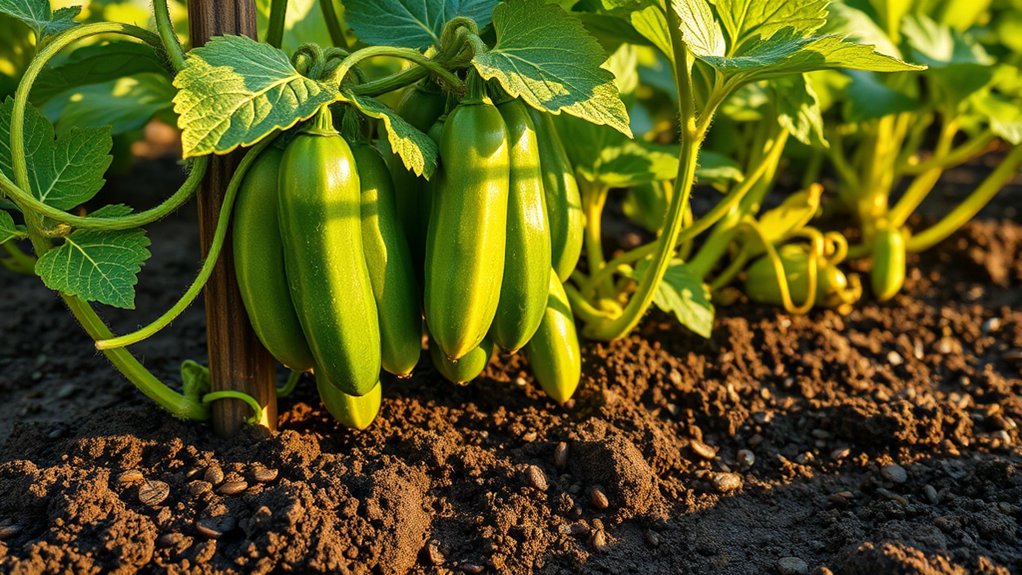
Several key properties of coffee grounds directly enhance cucumber growth and yield. You’ll find coffee grounds good because they supply an additional nitrogen source, essential for healthy foliage and abundant fruit production.
Their gritty texture improves soil structure by increasing water penetration and aeration, which supports robust root development.
The gritty texture of coffee grounds enhances soil aeration and water flow, fostering strong root growth.
Coffee grounds also act as a natural pest repellent, deterring slugs, snails, and fruit flies, thereby protecting your plants and maintaining yield.
When you incorporate coffee grounds into compost, nutrient availability increases further, enriching the soil and promoting vigorous growth.
These combined effects demonstrate that using coffee grounds is an evidence-based approach to optimizing cucumber health and productivity without relying on synthetic inputs.
How Coffee Grounds Can Help Balance Soil Acidity for Cucumbers
You’ll find that coffee grounds have a near-neutral pH of about 6.8. This means they can help nudge overly acidic soil closer to the ideal 6.0 to 7.0 range that cucumbers really like.
When you apply them carefully, they can stabilize soil acidity, which in turn boosts how well your plants take up nutrients and how their roots function.
It’s a good idea to measure your soil’s pH before adding coffee grounds so you don’t accidentally cause shifts that might stress your cucumbers.
Coffee Grounds pH Effects
Although cucumber plants thrive in a soil pH range of 6.0 to 7.0, maintaining this balance can be challenging. Coffee grounds, with a pH around 6.8, offer a practical solution to gradually adjust soil acidity.
When you apply coffee grounds, their pH effects help lower the soil’s alkalinity, promoting a mildly acidic environment conducive to cucumber growth. This gradual adjustment prevents abrupt pH shifts that could stress the plants.
Before incorporating coffee grounds, you should test your soil’s current pH to avoid over-acidification.
Moreover, coffee grounds enhance nutrient availability by improving the soil’s chemical properties, complementing their pH effects.
Using coffee grounds strategically supports a stable, ideal pH environment, fostering healthier cucumber plants and improving overall soil quality.
Optimal Soil pH Range
When you manage soil pH within the ideal range of 6.0 to 7.0, cucumber plants can efficiently absorb essential nutrients for growth.
Coffee grounds, with a pH near 6.8 post-brewing, serve as an effective amendment to slightly alkaline soils.
To enhance soil acidity for cucumbers, consider these steps:
- Test your soil pH before applying coffee grounds to avoid excessive acidification.
- Incorporate coffee grounds gradually into the soil or compost to maintain stable pH levels.
- Use coffee grounds consistently to support nutrient availability and improve soil structure.
- Monitor pH regularly to guarantee it remains within the ideal range, maximizing cucumber yield.
Improving Soil Structure With Coffee Grounds for Cucumbers
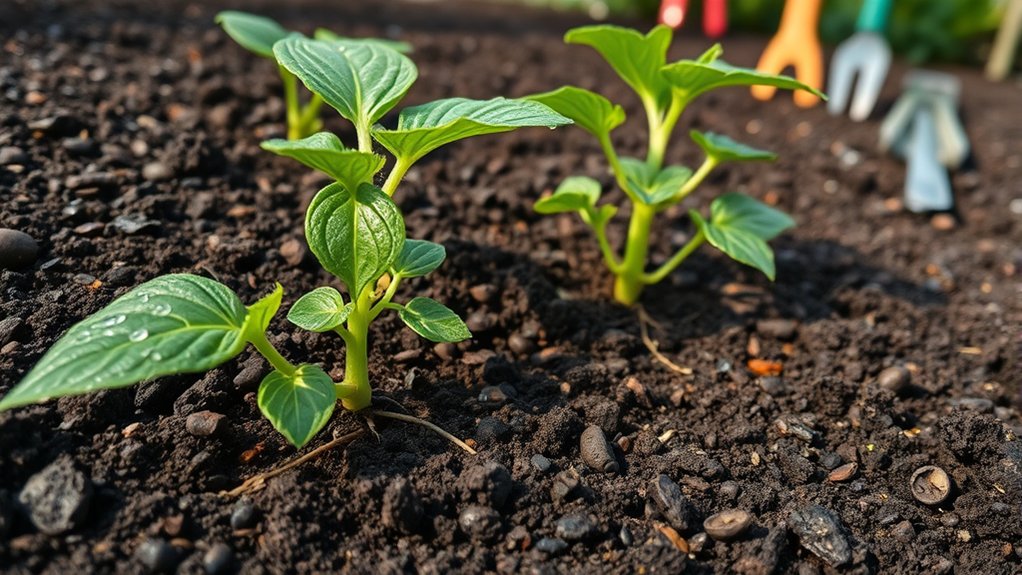
Since soil compaction limits water infiltration and root expansion, incorporating coffee grounds into your cucumber garden can greatly improve soil structure.
The gritty texture of coffee grounds around your plants breaks up dense soil clumps, enhancing water penetration and aeration critical for root health.
Coffee grounds improve soil by breaking up clumps, boosting water flow and oxygen for healthier roots.
Improved drainage from coffee grounds reduces the risk of root rot, a common issue in cucumbers grown in poorly drained soil.
Moreover, this enhanced soil porosity allows for more efficient nutrient uptake, supporting vigorous cucumber growth.
By adding coffee grounds around your cucumbers, you create a more hospitable root environment that fosters healthier plants and better yields.
This evidence-based approach to soil conditioning guarantees your cucumber plants thrive in well-structured, fertile soil optimized for growth.
How Coffee Grounds Give Your Cucumbers a Nitrogen Boost
Because nitrogen plays a critical role in promoting vigorous foliage and overall plant health, adding coffee grounds to your cucumber soil provides a valuable nutrient boost.
The nitrogen in coffee grounds releases slowly, ensuring sustained nutrient availability. Here’s how coffee grounds deliver this benefit:
- Coffee grounds are rich in nitrogen, which is essential for leaf and stem growth in cucumbers.
- Slow decomposition of coffee grounds maintains a steady nitrogen supply, preventing nutrient spikes.
- Incorporating coffee grounds balances soil nitrogen levels and helps optimize conditions for cucumber development.
- Using coffee grounds reduces reliance on synthetic fertilizers by naturally enhancing nitrogen content.
Using Coffee Grounds to Repel Common Cucumber Pests
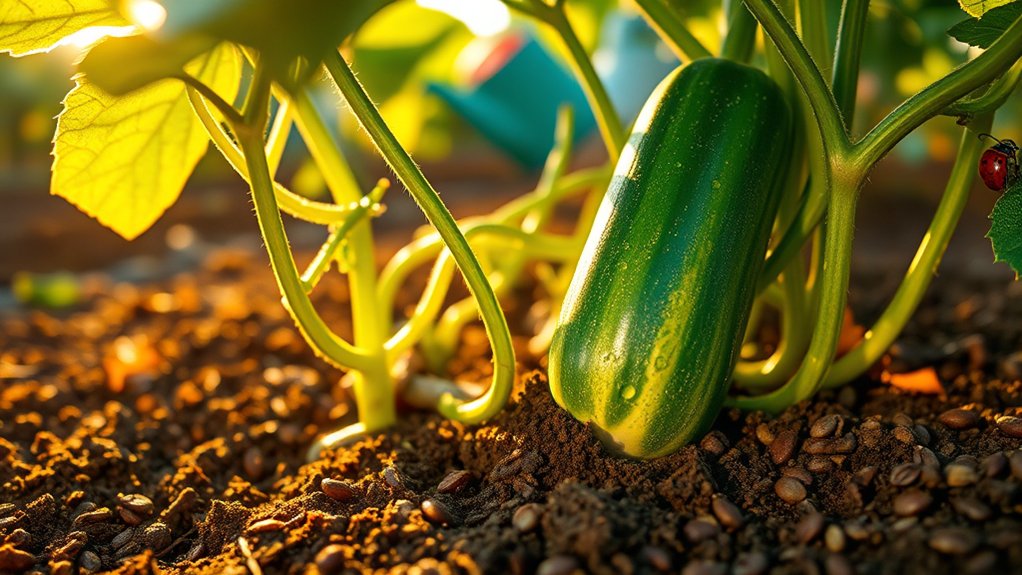
You can use coffee grounds as a natural way to keep common cucumber pests away. Slugs, snails, fruit flies, and even rabbits tend to steer clear when you sprinkle coffee grounds around your plants. The gritty texture acts like a physical barrier, making it hard for these pests to get through.
Plus, coffee contains bioactive compounds that pests just don’t like. So, it’s not just about the texture — these compounds help repel them naturally, without the need for harmful chemicals.
Using coffee grounds this way is a great method to protect your cucumber plants and keep them healthy.
And the best part? It helps maintain a balanced garden ecosystem. By reducing pest damage naturally, you support the overall health of your garden while avoiding harsh treatments.
It’s a simple, effective trick that’s easy to try at home!
Natural Pest Deterrent
Although pests like slugs, snails, fruit flies, and rabbits commonly threaten cucumber plants, applying coffee grounds effectively deters them by creating an inhospitable environment.
As a natural pest deterrent, coffee grounds work through several mechanisms:
- The coarse texture physically impedes pest movement, discouraging slugs and snails from approaching.
- Caffeine compounds act as biochemical repellents, reducing fruit fly attraction.
- The bitter smell and taste deter mammals like rabbits from feeding on your cucumbers.
- Using coffee grounds reduces dependency on synthetic pesticides, promoting sustainable gardening.
Protecting Cucumber Health
When coffee grounds surround cucumber plants, they create a physical and chemical barrier that repels common pests like slugs, snails, fruit flies, and rabbits. The gritty texture deters slugs and snails, while caffeine compounds discourage fruit flies and rabbits from approaching.
This natural repellent reduces reliance on chemical pesticides, bolstering your cucumber plants’ health.
| Pest | Repellent Mechanism | Effectiveness Level |
|---|---|---|
| Slugs | Physical barrier (grit) | High |
| Snails | Physical barrier (grit) | High |
| Fruit Flies | Caffeine toxicity | Moderate |
| Rabbits | Taste deterrent | Moderate |
| Overall | Combination effect | Enhanced plant defense |
Using coffee grounds enhances cucumber resilience by minimizing pest damage and promoting organic pest control.
Risks of Using Coffee Grounds on Cucumbers
Because coffee grounds contain high levels of caffeine and can alter soil chemistry, using them excessively on cucumber plants carries several risks.
Understanding these risks helps you avoid unintended damage to your cucumbers:
Being aware of these risks ensures your cucumbers grow healthy and strong without harm from coffee grounds.
- Nitrogen Depletion: Coffee grounds can cause nitrogen immobilization during decomposition. This may lead to yellowing leaves and stunted growth.
- Allelopathic Effects: High caffeine levels might inhibit seed germination and root development if grounds are overapplied.
- Soil Acidity Imbalance: Excess coffee grounds can lower soil pH below cucumbers’ ideal 6.0–7.0 range. This impairs nutrient uptake.
- Microbial Disruption: Fresh grounds can harm beneficial soil organisms. That slows decomposition and nutrient cycling.
Avoiding these risks guarantees your cucumber plants thrive without adverse effects from coffee grounds.
How to Add Coffee Grounds to Your Cucumber Garden
If you want to safely incorporate coffee grounds into your cucumber garden, start by mixing them into the soil at a ratio of one part grounds to three parts soil.
Before adding coffee grounds, test your soil pH to verify it remains within the ideal 6.0 to 7.0 range. Coffee grounds can acidify soil, so it’s good to keep an eye on that.
For pest control and nutrient delivery, sprinkle used coffee grounds around the base of cucumber plants. This deters slugs and snails while providing slow-release nitrogen.
To minimize risks, allow coffee grounds to age or compost for several weeks before direct soil application.
Why Composting Coffee Grounds Benefits Cucumber Plants
Incorporating coffee grounds through composting maximizes their benefits for cucumber plants by enhancing nutrient availability and soil health more effectively than direct application.
When you add coffee grounds to your compost pile, you:
- Boost nitrogen levels, essential for vigorous cucumber foliage and fruit yield.
- Improve soil structure via the grounds’ gritty texture, increasing aeration and water infiltration critical for root health.
- Promote hot composting that suppresses pathogens, reducing disease risk in cucumbers.
- Create a slightly acidic environment (pH 6.0–7.0), ideal for cucumber nutrient uptake.
Additionally, compost with coffee grounds can deter pests like slugs and snails, fostering a healthier cucumber growing environment.
Tips for Balancing Coffee Grounds With Other Soil Amendments
To achieve ideal soil health for your cucumber plants, you should balance coffee grounds carefully with other organic amendments. Use a ratio of 25-40 parts shredded leaves to 5-10 parts coffee grounds when composting to optimize nutrient availability, especially when adding nitrogen.
Avoid applying coffee grounds directly to soil, as they can temporarily deplete nitrogen, stressing your plants. Instead, incorporate them into well-rotted compost or manure to enhance soil structure and fertility gradually.
Regularly test your soil pH to maintain a range of 6.0 to 7.0, preventing excess acidity from overusing coffee grounds. Moderation is key; excessive coffee grounds can cause yellowing leaves due to nutrient imbalance.
Frequently Asked Questions
Can Coffee Grounds Affect the Taste of Cucumbers?
Coffee grounds don’t directly cause taste enhancement in cucumbers. You’ll find their main role is improving soil structure and nutrient content, which supports healthier plants but doesn’t alter flavor compounds considerably.
The pH balance coffee grounds provide creates ideal growth conditions, indirectly supporting fruit quality.
However, cucumber taste largely depends on genetic variety and growing environment.
Are Used Coffee Grounds Safe for Organic Cucumber Gardening?
Yes, used coffee grounds are safe for organic cucumber gardening and provide a reliable nutrient boost.
They supply nitrogen, which is essential for vigorous leaf and fruit growth, while also improving soil aeration and moisture retention.
Their slightly acidic nature helps optimize soil pH for cucumbers, enhancing nutrient uptake.
When composted, coffee grounds release balanced nutrients gradually, supporting sustainable soil fertility without chemical residues.
This makes them an effective organic amendment for healthy cucumber plants.
How Often Should I Apply Coffee Grounds to Cucumber Plants?
You shouldn’t apply coffee grounds so often that your cucumber plants feel like they’re drowning in java! The ideal application frequency is every 4-6 weeks during the growing season to provide steady nutrients without overwhelming the soil.
Incorporate about 1 cup per square foot, and monitor soil pH closely, keeping it between 6.0 and 7.0.
Adjust frequency if you notice yellowing leaves, indicating nitrogen overload, to keep plants healthy and thriving.
Can Coffee Grounds Be Used With Cucumber Seedlings?
Yes, you can use coffee grounds with cucumber seedlings, but you should compost or age them first to prevent nitrogen competition that can hinder seedling growth.
When applied properly, coffee grounds provide a valuable nitrogen boost and improve soil structure, enhancing water retention and aeration.
This creates an ideal environment for robust seedling growth and healthy development.
Use them in moderation to avoid excessive acidity or nutrient imbalance around your cucumber seedlings.
Do Coffee Grounds Attract Earthworms Beneficial for Cucumbers?
Yes, coffee grounds create an excellent worm habitat that attracts earthworms beneficial for your cucumber plants.
The organic matter in coffee grounds enriches the soil, promoting earthworm activity, which improves soil aeration and nutrient cycling.
Studies confirm earthworms thrive in such enriched environments, enhancing drainage and water retention essential for cucumbers.
Conclusion
You might not realize it, but those leftover coffee grounds can greatly boost your cucumber plants. By improving soil acidity, structure, and nitrogen content, they create an ideal environment for growth and pest resistance.
Yet, if you don’t balance them properly, you risk harming your crop. Coincidentally, the very grounds that invigorate your morning can invigorate your garden. Just remember to compost and combine them wisely for the best cucumber yield and health.