How To Reduce Acid In Coffee – Easy Tips For Smoother Flavor
You can reduce acid in your coffee by choosing low-acid beans like darker roasted Arabica or those from low-acidity regions. Use coarser grounds and brew with cooler water to slow acid extraction. Try brewing methods like cold brew or French press, which naturally produce smoother, less acidic coffee.
Adding milk or a pinch of baking soda also helps neutralize harshness. With these simple adjustments, you’ll enjoy a mellow cup that’s easier on your stomach and palate. There’s more to explore on optimizing your perfect brew.
What Makes Coffee Acidic And Why It Matters

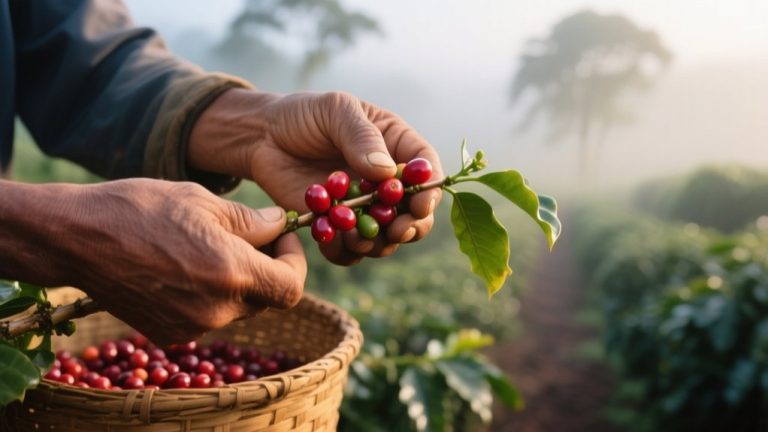
Although coffee’s acidity contributes to its bright, vibrant flavor, it can also cause discomfort for some drinkers. Understanding what makes coffee acidic starts with coffee bean processing. The way beans are harvested and treated, whether washed, natural, or honey processed, affects their pH level balance and influences acidity.
For instance, washed beans often retain higher acidity because the fruit pulp is removed, while natural processing can mellow this effect. Moreover, the organic acids present in coffee, like chlorogenic and citric acids, play a key role.
When you grasp how these factors combine, you’ll see why acidity matters—not just for taste but also for how your stomach handles coffee. Managing acidity means controlling these processing variables and pH balance to suit your palate and comfort.
How Roast Levels Change Coffee Acidity
You’ll notice that light roasts usually have higher acidity, which gives them those bright and fruity flavors.
Then, when you move to medium roasts, you get a nice balance—they still have some acidity but also start to develop richer, more complex tastes.
And with dark roasts, the acidity drops quite a bit, resulting in a smoother, bolder cup of coffee.
Light Roast High Acidity
Why does a light roast coffee often taste more acidic than darker roasts? It’s because the shorter roasting time preserves more of the coffee’s natural acids. These acids contribute to the bright, tangy flavors you experience.
When you enjoy light roast, you’re tasting a more vibrant, complex profile.
Here’s why light roasts stand out:
- Higher chlorogenic acid levels create sharp, fruity notes.
- Retained organic acids enhance brightness and clarity.
- Subtle sweetness pairs well with delicate flavors like citrus or floral.
- The lighter body allows coffee art to showcase its clarity and color vividly.
Understanding this helps you appreciate light roasts while exploring ways to balance acidity for a smoother cup.
Medium Roast Balanced Flavor
How does roasting coffee to a medium level affect its acidity? Medium roast strikes a balance by reducing the bright acidity found in light roasts while maintaining enough acidity to preserve complexity.
This roast level enhances the coffee aroma, bringing out nutty, caramel, and slightly fruity notes without overwhelming sharpness. It also respects bean freshness, as medium roast preserves the essential oils that contribute to flavor and aroma.
| Roast Level | Acidity Level | Flavor Profile |
|---|---|---|
| Light Roast | High | Fruity, bright, floral |
| Medium Roast | Moderate | Balanced, nutty, sweet |
| Medium-Dark | Lower | Rich, caramel, smooth |
| Dark Roast | Low | Bold, smoky, bitter |
| Bean Freshness | High | Vibrant aroma, crisp |
Choosing medium roast helps you enjoy a smooth, well-rounded cup without sacrificing complexity. It’s a great choice if you want something balanced but still interesting.
Dark Roast Low Acidity
Although darker roasts often get a reputation for bitterness, they actually have lower acidity than lighter roasts because the prolonged roasting process breaks down acidic compounds.
When you choose a dark roast, you reduce the sharpness without sacrificing flavor complexity. To optimize low acidity in your coffee, consider these factors:
- Select coffee origin wisely. Beans from regions like Sumatra naturally have lower acidity.
- Use brewing equipment that controls temperature precisely, such as a pour-over or espresso machine.
- Opt for coarser grind sizes to avoid over-extraction, which can increase acidity.
- Adjust brewing time; shorter extraction can help maintain smoothness.
Picking Low-Acid Coffee Beans For A Smoother Cup
You can reduce coffee’s acidity by choosing Arabica beans. They naturally have a smoother, less acidic profile than Robusta.
Also, selecting darker roasts helps a lot because the roasting process lowers acid levels and brings out rich, mellow flavors.
Choosing Arabica Over Robusta
When seeking to reduce acidity in your coffee, choosing Arabica beans over Robusta can make a significant difference. Arabica beans naturally contain less acid, offering a smoother, more balanced cup. Their flavor profiles tend to be more nuanced, with hints of sweetness and fruitiness.
Robusta often delivers a harsher, bitter taste with higher acidity. So, if you’re after a gentler coffee experience, Arabica is definitely the way to go.
Here’s why Arabica beans stand out:
- Lower acid content reduces sharpness in your brew.
- Richer flavor profiles provide complexity without bitterness.
- Generally grown at higher altitudes, enhancing bean quality.
- Arabica’s mild acidity suits sensitive stomachs better.
All in all, choosing Arabica can make your coffee smoother and easier on the stomach.
Opting For Darker Roasts
Selecting Arabica beans sets a solid foundation for reducing acidity, but the roasting level plays an equally important role in shaping your coffee’s smoothness.
Opting for darker roasts helps because the extended roasting techniques break down organic acids, resulting in a coffee with lower acidity and a richer, fuller body.
When you choose beans from specific coffee bean origins known for their naturally balanced profiles, darker roasting enhances those characteristics without overwhelming bitterness.
You’ll notice flavors shift toward chocolate, caramel, and smoky notes, which contribute to a smoother cup.
By understanding how roasting techniques affect acid content, you can make informed choices that suit your palate.
Brewing Methods That Reduce Coffee Acidity
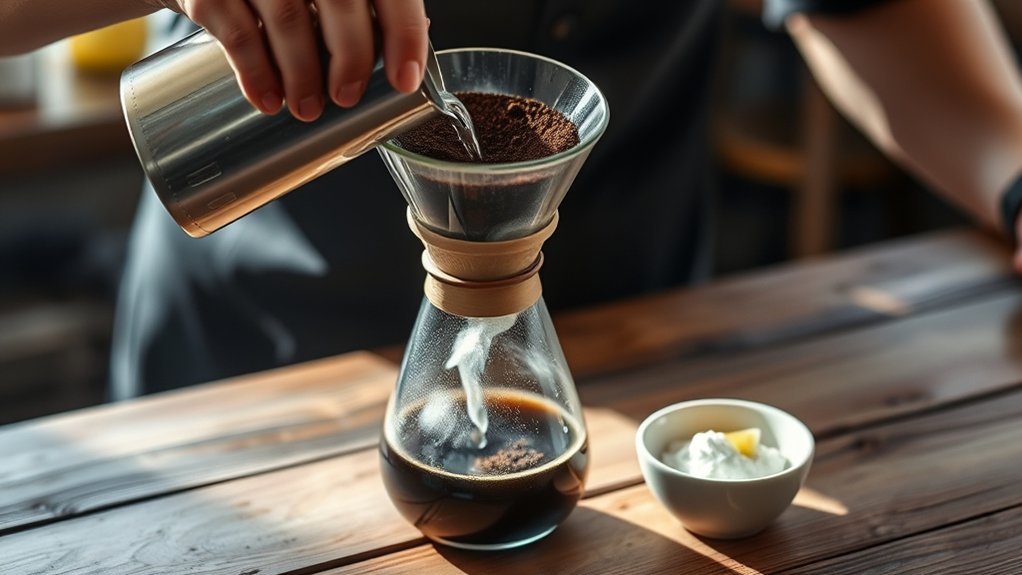
Although the type of coffee bean influences acidity, the brewing method plays an equally essential role in shaping your cup’s overall pH balance. You can adjust your brewing equipment and technique to reduce acidity and enhance coffee flavor.
Consider these methods:
- Cold Brew: Steeping grounds in cold water for 12-24 hours extracts fewer acids. This results in a smooth, mellow cup.
- French Press: Using a coarser grind and immersion brewing limits acid extraction compared to drip methods.
- Espresso: The quick, high-pressure extraction reduces acidity while delivering intense flavor.
- Aeropress: Its versatility lets you control brew time and pressure, which helps minimize acidic compounds.
How Grind Size And Water Temperature Affect Acidity
You’ll find that grind size directly influences extraction. When you use finer grounds, they release more compounds quickly, which increases acidity.
On the other hand, water temperature plays a big role too. Hotter water pulls out acids faster, while slightly cooler water can mellow that bright, sharp taste.
Grind Size And Extraction
When you adjust the grind size of your coffee, you directly influence how quickly water extracts flavors, including acids, from the grounds. A finer grind increases surface area, speeding up extraction and often intensifying acidity. Conversely, a coarser grind slows extraction, resulting in smoother flavors.
To optimize your brew, consider these points:
- Choose grind size based on your brewing method to balance acidity and flavor pairing.
- Use consistent grind size to ensure even extraction and avoid over- or under-extracted acidic notes.
- Store coffee properly to preserve freshness, as stale beans can alter acid perception.
- Experiment gradually with grind adjustments to find the ideal extraction that reduces harsh acids while maintaining desired flavor complexity.
Mastering grind size lets you control acidity and create a smoother, balanced cup. Give it a try—you’ll notice the difference!
Water Temperature Impact
Since water temperature directly influences the rate at which acids and other compounds extract from coffee grounds, adjusting it alongside grind size lets you fine-tune acidity levels. Higher temperatures speed up extraction, increasing acidity, while cooler water slows it, resulting in smoother flavor.
Water quality also plays a key role. Impurities can alter extraction and taste. You’ll want to balance brewing time with temperature to avoid over- or under-extraction, which impacts acidity.
| Water Temperature | Grind Size | Effect on Acidity |
|---|---|---|
| 195–205°F (90–96°C) | Medium-fine | Bright, higher acidity |
| 185–195°F (85–90°C) | Medium | Balanced acidity |
| 175–185°F (80–85°C) | Coarse | Lower acidity, smoother taste |
Adjusting these factors helps control acidity for a smoother cup.
Balancing Flavor And Acidity
Mastering the balance between flavor and acidity means understanding how grind size and water temperature work together during brewing. Both factors influence extraction, affecting acidity levels and overall taste.
To refine your coffee’s smoothness, consider these tips: Use a coarser grind to reduce over-extraction. This lowers harsh acidity and highlights subtle flavor pairing.
Opt for water temperature between 195°F and 205°F. Hotter water increases acidity, while cooler water extracts less.
Also, store coffee beans properly in airtight containers to preserve freshness. Stale beans can alter acidity perception.
Don’t be afraid to experiment with slight adjustments in grind and temperature. Find the perfect harmony that suits your palate.
Ingredients That Soften And Balance Coffee Acidity
Although coffee’s natural acidity contributes to its vibrant flavor, certain ingredients can effectively soften and balance this acidity, enhancing your cup without masking its character. Adding a pinch of baking soda, for example, neutralizes excess acid, creating a smoother taste without dulling the complex notes developed through coffee cultivation.
A pinch of baking soda smooths coffee’s acidity, enhancing flavor without compromising its complex character.
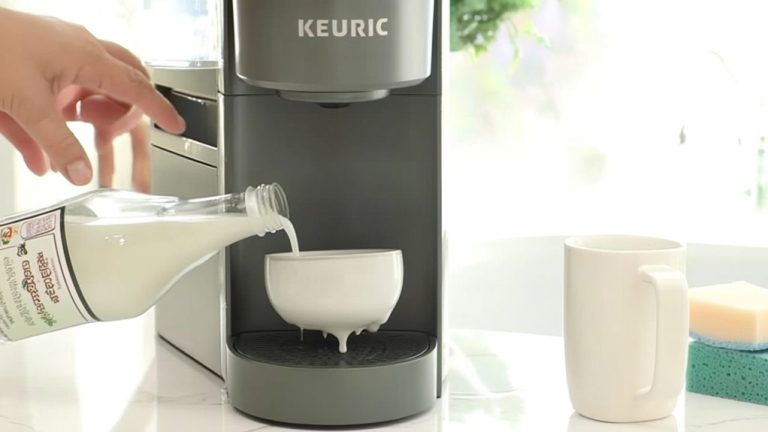
Milk or cream also buffers acidity by introducing fats that round out sharp edges. This promotes flavor enhancement and a creamier mouthfeel.
Moreover, cinnamon or nutmeg can subtly balance acidity by adding warm, aromatic layers that complement the coffee’s inherent brightness. These ingredients allow you to tailor acidity to your preference, preserving the coffee’s nuanced profile while making it more approachable.
Using them thoughtfully ensures your brew stays true to its origins and enhances your overall coffee experience.
Using Cold Brew To Lower Coffee Acidity

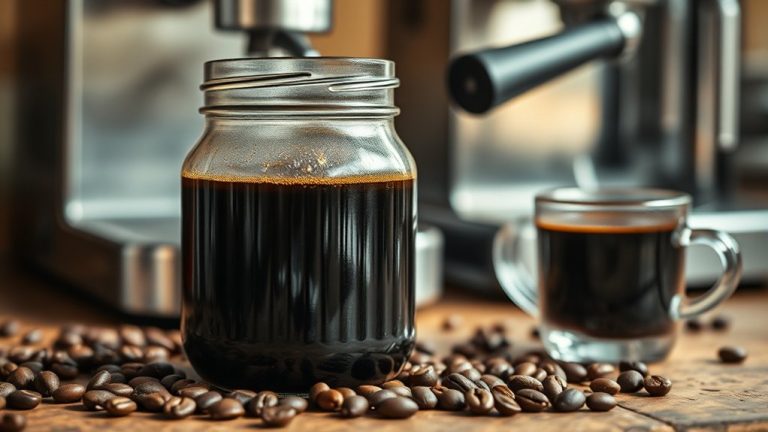
When you brew coffee with cold water over an extended period, you naturally reduce its acidity compared to traditional hot brewing methods. Cold brew offers a smooth, less acidic taste by extracting fewer acidic compounds.
To maximize acidity reduction through cold brew, follow these steps:
- Use coarsely ground coffee to slow extraction and minimize bitterness.
- Steep coffee grounds in cold or room-temperature water for 12 to 24 hours to allow gentle extraction.
- Filter thoroughly to remove fine particles that can increase sourness.
- Store cold brew in the fridge and consume within a week to preserve its mellow flavor and acidity balance.
Easy Routine Changes To Cut Coffee Acidity
If you want to enjoy a less acidic cup without changing your brewing method, small adjustments in your daily coffee routine can make a significant difference.
Start by selecting beans that underwent specific coffee fermentation techniques designed to reduce acidity. During fermentation, controlled microbial activity breaks down acids, resulting in smoother flavors.
Also, pay attention to bean processing methods. Washed beans often taste brighter and more acidic, while natural or honey-processed beans tend to have lower acid profiles. Opting for these can subtly cut acidity without altering your equipment.
Finally, try adjusting your grind size and water temperature slightly. Finer grinds and hotter water extract more acids.
Storing Coffee To Keep It Smooth And Low-Acid
Because coffee continues to oxidize after roasting, proper storage plays an essential role in maintaining its smoothness and minimizing acidity. To optimize coffee storage for acidity preservation, follow these steps:
- Use an airtight container to limit oxygen exposure and slow oxidation.
- Store coffee in a cool, dark place away from sunlight and heat sources.
- Avoid refrigeration or freezing, as moisture can accelerate acid breakdown and flavor loss.
- Buy smaller quantities to ensure freshness and reduce the time coffee sits stored.
Keeping your coffee fresh really comes down to limiting its contact with air and heat. When you do this, you help preserve those smooth, low-acid qualities that make your coffee taste great every time.
When To Try Decaf Or Specialty Low-Acid Coffees
Although many coffee lovers enjoy the robust flavors of regular brews, your sensitivity to acidity or caffeine might prompt you to explore decaf or specialty low-acid coffees. When acid reflux, stomach discomfort, or jitteriness interfere with your coffee routine, trying decaf options can provide relief without sacrificing flavor.
Specialty blends crafted from low-acid beans offer a smoother, gentler taste that’s easier on your digestive system. You’ll find these blends often highlight naturally lower acid profiles thanks to specific bean varieties or unique roasting methods.
If you want to maintain your coffee ritual but reduce acidity and caffeine intake, experimenting with decaf and specialty blends is a smart choice. They let you enjoy nuanced flavors while minimizing harsh acid effects, making your coffee experience more comfortable and enjoyable.
Frequently Asked Questions
Can Adding Milk or Cream Reduce Coffee Acidity?
Yes, milk addition can reduce coffee acidity by neutralizing some of the acids, making the flavor smoother and less sharp.
Cream enhancement works similarly but adds a richer texture and more fat, which further balances acidity and softens bitterness.
When you add milk or cream, you’re not just diluting acidity. You’re creating a creamier taste profile that feels gentler on your palate.
It’s perfect if you find black coffee too acidic or harsh.
Does Altitude Affect Coffee Bean Acidity?
Yes, altitude effects markedly influence coffee bean acidity. When you grow coffee at higher altitudes, cooler temperatures slow the bean’s maturation, enhancing bean characteristics like density and acidity.
This slower ripening process intensifies bright, fruity, and vibrant acidic notes.
So, if you want coffee with a lively acidity, beans grown at higher altitudes are your best bet.
Conversely, lower altitudes often yield beans with milder acidity and earthier flavors.
How Does Water Quality Impact Coffee Acidity?
Did you know that 70% of your coffee’s flavor is influenced by water quality? Water mineral content and pH balance play a huge role in acidity.
If your water is too acidic or too alkaline, it can either amplify or mute coffee’s natural acidity.
Using water with balanced minerals and a neutral pH (around 7) helps extract flavors evenly. This gives you a smoother, more consistent cup every time.
It’s a simple change that can make a big difference in your daily brew.
Are There Health Benefits to Drinking Low-Acid Coffee?
Yes, drinking low-acid coffee offers health benefits like reduced stomach irritation and less acid reflux. When you focus on bean selection, you naturally enhance the flavor without harsh acidity, making your cup gentler on your digestive system.
This flavor enhancement means you enjoy a smoother, richer taste while protecting your stomach.
Can Coffee Acidity Cause Stomach Problems?
While coffee roasting can enhance flavor, it can also increase acidity, which might upset your stomach. If you’re sensitive, the acids in certain bean varietals can cause discomfort or acid reflux.
Darker roasts tend to be less acidic and gentler on your digestive system. Choosing the right bean varietals and roast level helps you enjoy coffee without stomach problems.
This way, you can savor every cup without that uncomfortable burn.
Conclusion
Reducing acid in your coffee isn’t rocket science. You just need the right approach. By choosing low-acid beans, adjusting your grind and water temperature, or trying cold brew, you’ll smooth out those sharp edges.
Small changes in your routine and storage can make a world of difference too. With these tips, you’ll enjoy a cup that’s easier on your stomach without sacrificing flavor. After all, every cloud has a silver lining. Your perfect brew awaits.