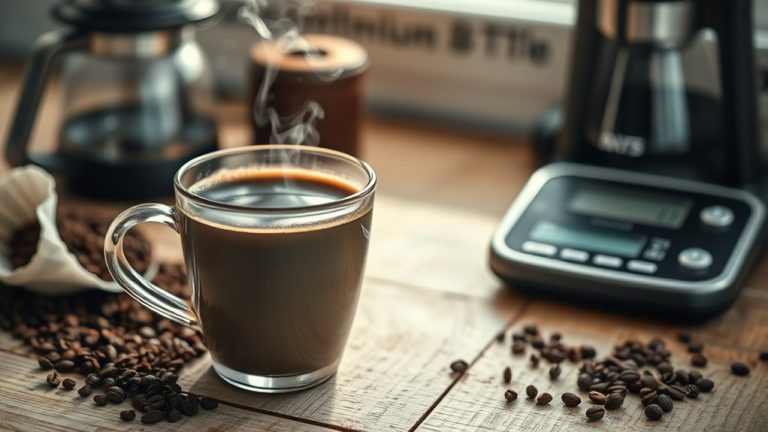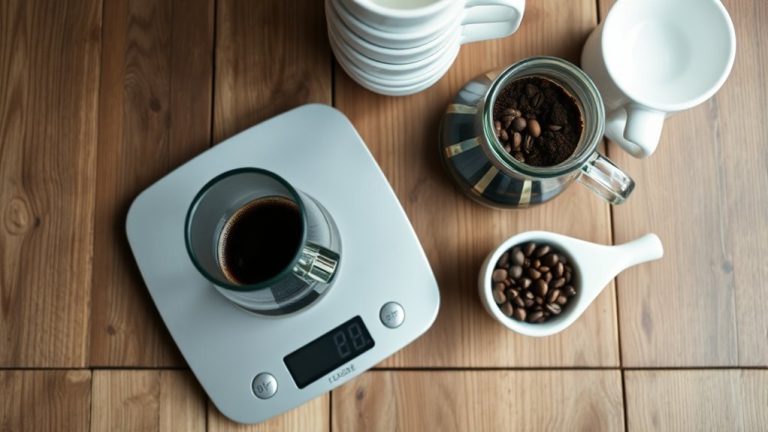
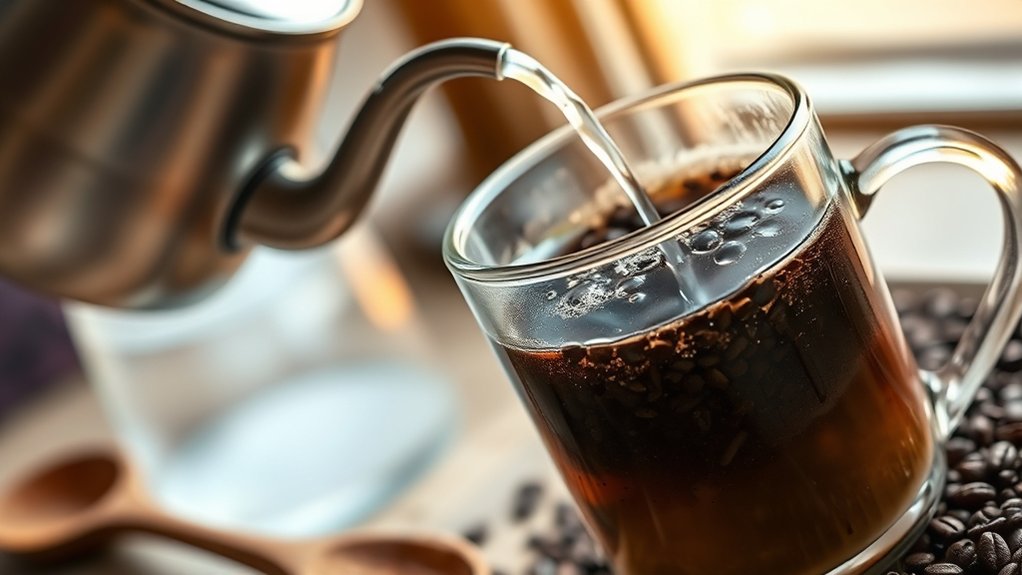
How To Make Coffee Without A Filter – Easy Brewing Methods
You can easily brew coffee without a filter by using household items like cheesecloth, paper towels, or cloth bags to strain grounds. Try the cowboy coffee method: boil grounds with water, then let the sediment settle before pouring carefully.
For a richer taste, make traditional Turkish coffee with finely ground beans heated slowly to create foam. Avoid pressing grounds to cut bitterness and rinse your tools promptly.
Explore these simple techniques to craft a smooth, flavorful cup every time. It’s easier than you might think, and you can get creative with what you have around the house.
What You Need to Brew Coffee Without a Filter
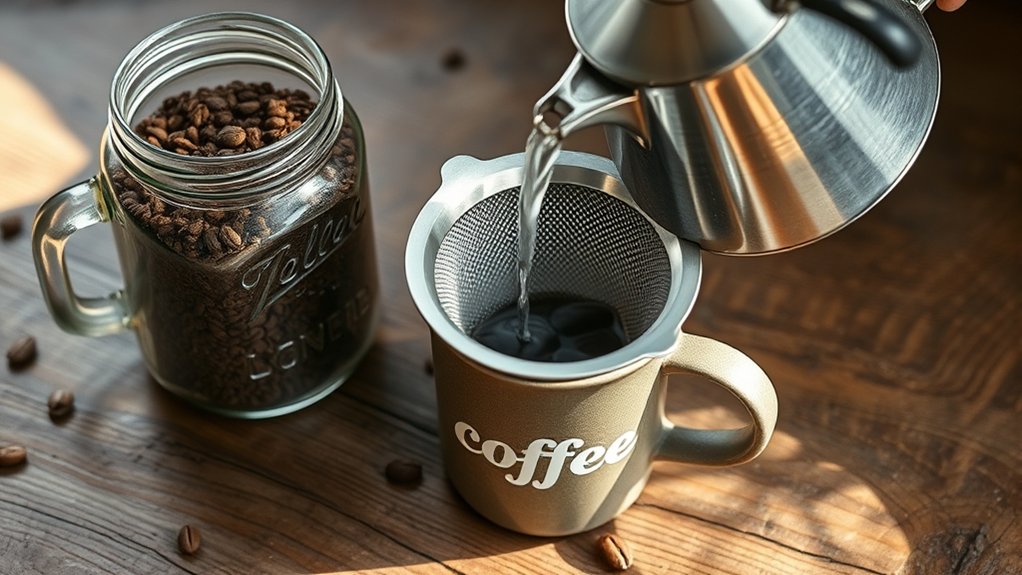
Wondering how to brew coffee without a traditional filter? Start by choosing your coffee bean varieties carefully, as each offers unique flavors that shine even without a filter. Proper coffee storage is really important. Keep your beans airtight and away from light to preserve freshness.
You’ll need coffee grounds, hot water, and a way to separate the grounds from the liquid. Household items like cheesecloth, a clean dish towel, or folded paper towels work great as makeshift filters. Or, you can create DIY filter pouches by tying coffee grounds in a coffee filter with string. Using coffee bags is another convenient option.
A saucepan or pot is essential for boiling water. For manual filtering, a funnel or homemade cone can hold your filter material, letting you pour brewed coffee through it smoothly. It’s pretty simple once you get the hang of it!
How to Make Cowboy Coffee Step-by-Step
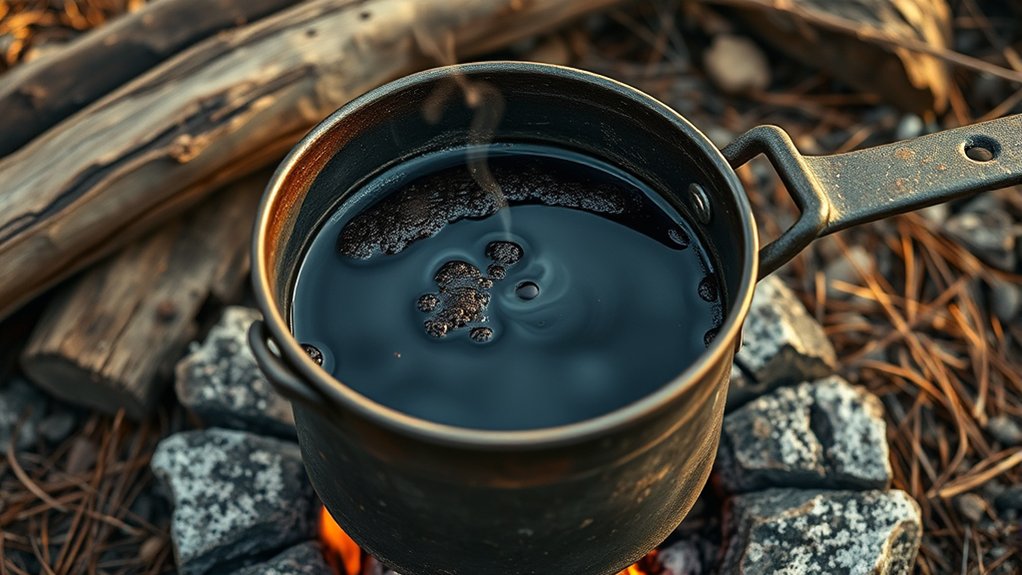
Although cowboy coffee is a straightforward brewing method, it requires careful attention to timing and technique to avoid bitterness and sediment.
Start by measuring 12-13 ounces of cold water and adding one tablespoon of coffee grounds to a pot. Heat it over medium-high, stirring after 45 seconds to guarantee even extraction.
Begin with 12-13 ounces of cold water and a tablespoon of grounds, heating and stirring for perfect extraction.
Let it boil for about two minutes, then remove from heat and allow the grounds to settle for three minutes.
To refine the coffee flavor, carefully pour the brew into mugs, using a strainer if desired to catch sediment. Adding a splash of cold water helps settle remaining grounds and improves clarity.
Mastering these brewing techniques ensures a robust, clean cup without the need for a filter. It might take a couple tries, but once you get the hang of it, cowboy coffee can be a real treat.
Brewing Turkish Coffee the Traditional Way

You’ll start by using a cezve, which is a small pot made just for Turkish coffee. The coffee itself needs to be ground really finely—almost like powder. Then, you brew it slowly over low heat.
As the coffee begins to foam, you carefully spoon that frothy layer onto each cup. This really adds to the flavor and texture.
Along the way, you’ll get to enjoy some of the cultural rituals that make this brewing method so special. For example, it’s common to serve the coffee with a glass of water. And don’t forget to savor the rich, gritty sediment that settles at the bottom—it’s all part of the experience.
Traditional Turkish Coffee Tools
When brewing Turkish coffee the traditional way, you rely on a specialized pot called a cezve or ibrik. It’s usually crafted from copper or brass and features a long handle to help manage the delicate heating process. This tool is essential for mastering the brewing techniques that develop the rich coffee flavor unique to Turkish coffee.
The cezve’s narrow neck helps concentrate the foam while preventing the coffee from boiling over during slow heating. You’ll use extremely finely ground coffee, almost powdery, combined with sugar added before heating to get your desired sweetness.
These tools and techniques work together to create a thick, aromatic brew with a distinctive gritty texture. This texture allows the coffee sediment to settle at the bottom, enhancing the authentic experience of traditional Turkish coffee.
It’s a method that’s all about patience and precision, making every cup special.
Brewing Process Step-by-Step
Mastering the traditional brewing process starts with combining finely ground coffee and cold water in your cezve or small saucepan, typically in equal parts. Heat the mixture slowly over low heat, stirring occasionally. Watch for the foam to rise. That’s when the brewing temperature is just right to maximize coffee flavor.
Remove from heat as the foam peaks. Spoon some into your cup, then return the cezve to low heat. Allow it to froth again before pouring carefully without stirring to preserve the foam. Let the coffee settle for a minute so grounds sink, ensuring a rich, sedimented cup.
| Step | Action | Purpose |
|---|---|---|
| 1 | Combine coffee and cold water | Balance coffee flavor |
| 2 | Heat slowly, stir occasionally | Control brewing temperature |
| 3 | Remove at foam peak | Capture aroma and texture |
| 4 | Froth second time | Enhance foam and richness |
| 5 | Let settle before serving | Sediment grounds for clarity |
Cultural Significance And Rituals
Why does brewing Turkish coffee the traditional way carry such deep cultural meaning? It’s because this method embodies centuries-old coffee traditions that go beyond just making a drink. Using a cezve to slowly heat finely ground coffee creates the signature thick foam, or “kaimaki,” which signals the coffee’s readiness.
This careful process holds ritual significance, symbolizing hospitality and social bonding. When you serve Turkish coffee, it’s customary to offer a glass of water and sometimes Turkish delight. This enhances the experience and honors guests.
This brewing style is more than a method. It’s an integral part of ceremonies like marriages, weaving coffee into the fabric of Turkish culture. By embracing these rituals, you connect with a rich heritage that celebrates community and warmth.
Using a Coffee Bag for Easy Brewing
Making your own coffee bag is super simple. Just grab a porous pouch and fill it with a few tablespoons of coffee grounds. Then, secure it tightly with some string or even a staple.
When you’re ready to brew, all you have to do is steep the bag in hot water for at least four minutes. Feel free to adjust the time depending on how strong you like your coffee.
Once you take the bag out, you’ll have a nice, clean cup of coffee without any sediment—and no need for a traditional filter. Easy, right?
Making A Coffee Bag
Although coffee bags aren’t as common as traditional filters, they offer a simple and efficient way to brew coffee without extra equipment. To make your own coffee bag, fill a porous filter with several tablespoons of coffee grounds, then tie it securely with string.
This setup lets you steep coffee like tea, controlling the brewing temperature by using hot water just off the boil, around 195-205°F, to extract ideal coffee flavor. Steep the bag for about 4 minutes or longer if you want a stronger brew.
When you’re done, remove the bag carefully to avoid drips and gently squeeze it to release extra flavor without letting grounds escape.
This method delivers a fresh, customizable cup with minimal cleanup and no need for a standard coffee filter.
Brewing With Coffee Bag
Once you’ve prepared a coffee bag, brewing becomes a straightforward process that combines convenience with control over flavor extraction. Simply place 2-3 tablespoons of your chosen coffee bean varieties into the porous pouch, secure it with a string, and steep it in hot water for about 4 minutes.
Adjust the steeping time to suit your taste. Go longer for a bolder brew or shorter if you want a milder cup. After steeping, remove the bag promptly to prevent over-extraction and bitterness.
This method lets you enjoy fresh coffee without traditional filters or equipment. It’s perfect for quick, mess-free brewing.
Just remember, proper coffee storage before bag preparation is key to preserving the beans’ flavor and aroma, so you get the best possible cup every time you brew with your coffee bag.
Using a Paper Towel or Napkin as a Filter
When traditional coffee filters aren’t available, folding a paper towel or napkin to fit inside a dripper or funnel is a practical alternative. This method stands out among eco-friendly options because it’s so easy to do and you probably already have what you need on hand.
Carefully pour hot water over the coffee grounds, letting the paper towel filter the grounds while pulling out those rich flavors. Just don’t overload the towel or pour too fast to avoid tearing it or getting a paper taste in your coffee.
While this technique is quick and effective, keep in mind that a slight paper flavor might sneak into your brew. Overall, using a paper towel or napkin as a filter is a handy solution that balances convenience with decent flavor when you don’t have traditional filters nearby.
Brewing Coffee With a Dish Towel Instead of a Filter
Start by securing a clean dish towel tightly over your mug with a rubber band. This creates an effective reusable filter.
Use medium-fine coffee grounds, and pour hot water slowly in a circular motion. This helps ensure even extraction without tearing the fabric.
After brewing, carefully lift the towel, discard the grounds, and wash it thoroughly for your next cup.
Easy, right?
Preparing The Dish Towel
Although a dish towel isn’t a traditional coffee filter, folding it into a compact square or rectangle creates an effective makeshift filter that fits snugly over your mug or pot.
Start by choosing a clean, thin cotton towel to guarantee the best water flow and avoid unwanted flavors. Fold it neatly, then secure it with a rubber band or clip to prevent slipping during brewing.
Place the towel directly over your mug, covering the opening completely to contain the coffee grounds.
Pour hot water slowly at the right brewing temperature, around 195°F to 205°F, to extract the full coffee aroma without scorching the grounds.
After brewing, carefully lift the towel, discard the used grounds, and wash the towel thoroughly for your next brew.
It’s a simple trick but works really well when you’re in a pinch.
Brewing Technique Tips
Once you’ve secured your dish towel in place, focus on mastering the pouring technique to make the most of your makeshift filter. Pour hot water slowly in a circular motion over medium-fine coffee grounds, maintaining an ideal brewing temperature around 195-205°F. This guarantees balanced extraction and excellent coffee flavor.
Avoid rushing. Slow, controlled pours let water saturate grounds evenly, preventing bitterness or weak taste.
After brewing, carefully lift the towel to keep grounds contained.
| Aspect | Tip |
|---|---|
| Pouring Speed | Slow, steady circular motion |
| Coffee Grind | Medium-fine for best filtering |
| Brewing Temperature | 195-205°F for balanced flavor |
| Towel Handling | Lift gently to avoid spills |
Mastering these steps enhances your brew’s clarity and richness without a traditional filter.
Cleaning And Reuse
Because you’re reusing a dish towel as your coffee filter, proper cleaning is essential to maintain both hygiene and flavor quality. After brewing, carefully remove the towel with the grounds, then rinse it immediately under hot water to prevent staining and residue buildup.
Wash the towel thoroughly with soap, making sure to get rid of all the coffee oils that could affect the flavor in future brews. Avoid using detergents with strong scents since they might change the taste of your coffee.
Brewing temperature affects extraction, so keeping your towel clean helps prevent any off-flavors caused by trapped grounds or mold. Regular laundering and air drying stop mold buildup and keep the towel filtering efficiently.
How to Use a French Press Alternative at Home
If you don’t have a French press on hand, you can still replicate its brewing method using common kitchen items like a bowl or large jar.
Start by adding 1-2 tablespoons of coarse ground coffee to your vessel. Then, pour hot water heated to the ideal brewing temperature, around 195-205°F, over the grounds and let them steep for 4-5 minutes.
After that, use the back of a spoon or a flat object to gently press the grounds down, separating them from the liquid.
Next, pour the coffee through a fine mesh strainer or cheesecloth to remove any remaining grit.
You can adjust the steeping time or coffee amount if you want a stronger flavor.
Just remember to clean your setup thoroughly after each use so you don’t get any leftover oils messing with your next brew.
It’s a simple way to enjoy French press-style coffee even without the actual press.
Making Cold Brew Coffee Without a Filter
After mastering a French press alternative, you might want to explore making cold brew coffee without a filter.
Start by combining 2 ounces of coarsely ground coffee with 2 ounces of cold or room-temperature water in a sealed jar.
The brewing temperature plays a crucial role. Steep the mixture for 12 to 24 hours either at room temperature or in the refrigerator for a smoother coffee flavor.
To separate the grounds, slowly strain through a cheesecloth-lined strainer without squeezing. This helps preserve the brew’s delicate taste.
Then, dilute the resulting concentrate with equal parts cold water before serving over ice.
Store any leftovers in the fridge for up to two weeks. This way, the coffee flavor stays fresh and vibrant throughout.
This method delivers a rich, smooth cold brew without needing a traditional filter.
Straining Coffee Grounds Without a Filter Made Easy
When you don’t have a traditional coffee filter on hand, using a clean cloth, cheesecloth, or even a reusable kitchen towel can effectively strain your coffee grounds. Just place the cloth securely over your mug or container, then pour your brewed coffee slowly through it. This method preserves the rich coffee aroma and keeps grit out of your cup.
Alternatively, you can fold a paper towel or napkin into a cone, secure it with a clip or elastic, and use it as an improvised filter.
Make sure your brewing temperature is just right to avoid over-extraction. Also, let the grounds settle before pouring to prevent clogging or overflow.
After you’re done, be sure to rinse your cloth filter thoroughly. This helps maintain the flavor quality and stops oil buildup that can affect your next cup.
Easy, right?
Tips for Better Flavor Without a Coffee Maker
Straining your coffee grounds properly sets the foundation, but achieving a rich, balanced flavor without a coffee maker takes a little extra attention. Start by using freshly ground coffee just before brewing to get the most aroma and flavor.
Proper straining and fresh grounds are key to rich, balanced coffee without a machine.
Pay close attention to grind size. If it’s too fine, your brew might turn bitter. If it’s too coarse, it could taste weak.
Keep your water temperature near 200°F to pull out the best flavors without bringing out bitterness.
Steep the grounds for the right amount of time based on your brewing method. Don’t be afraid to experiment with how long you brew and the grind size to find what works best for you.
These steps will help you craft a bold, aromatic cup, even if you don’t have specialized equipment.
How to Avoid Grit and Bitterness When Brewing Without Filters
Although brewing coffee without a filter can introduce unwanted grit and bitterness, you can minimize these issues by carefully selecting your grind size and straining technique. Opt for a coarser grain size, which reduces the chance of fine particles slipping through your strainer. This helps keep your coffee grit-free and smooth.
After brewing, strain your coffee thoroughly through a fine mesh or multiple layers of cheesecloth to catch any remaining grounds. Let your coffee sit undisturbed for a few minutes so any leftover sediment can settle at the bottom.
Avoid pressing or squeezing the grounds during steeping because that releases bitter compounds. If you still find your coffee a bit bitter, try diluting it with water or milk to soften the flavor.
Following these simple steps will give you a smoother, grit-free cup when brewing without filters.
Tools and Tricks to Improve No-Filter Coffee Brewing
If you want to enhance your no-filter coffee brewing, several simple tools and techniques can make a big difference. They help refine coffee flavor and improve brewing aesthetics, ensuring a cleaner, richer cup. Consider these effective methods:
Use a folded paper towel or napkin in a dripper to catch grounds without traditional filters. You can also secure a reusable cloth towel over your cup with a rubber band, pouring water in circles for natural filtration.
Brewing Turkish coffee in a cezve lets fine grounds settle, giving a full-bodied, gritty experience.
Another option is to pour boiling water slowly over grounds in a bowl lined with cloth or paper, allowing controlled drainage. Or try tying coffee grounds in a cloth bag and steeping it, which lets you customize strength while minimizing sediment.
These tricks really elevate your no-filter brew. They balance clarity and flavor while adding some visual appeal too. Give them a try and see how your coffee improves!
Frequently Asked Questions
Can I Reuse Coffee Grounds After Brewing Without a Filter?
You can reuse coffee grounds without a filter, but reusable grounds often lose flavor retention quickly. Expect a weaker, bitter brew. For better taste, reuse grounds within a few hours and adjust brewing time accordingly.
Keep in mind, the second brew won’t be as rich or aromatic. So, if you’re after a strong cup, fresh grounds are usually your best bet. But hey, if you’re just looking to cut down on waste or save a bit, reusing can work in a pinch.
How Long Can Brewed No-Filter Coffee Be Stored Safely?
You can safely store brewed no-filter coffee for up to 24 hours if you refrigerate it promptly. This helps preserve the coffee’s flavor best when you use proper storage techniques.
Keep in mind, if you leave it out at room temperature for more than two hours, bacterial growth can start. This not only risks spoilage but also causes the flavor to degrade quite a bit.
Does Brewing Without a Filter Affect Caffeine Content?
Brewing without a filter doesn’t affect caffeine extraction much. It mainly impacts brewing clarity by leaving more oils and grounds in your cup.
Your caffeine content depends more on grind size, steeping time, and the amount of coffee you use. So, it’s these factors that really matter when you’re aiming for a stronger or milder brew.
What Grind Size Is Best for No-Filter Coffee Methods?
You’ll want a coarse grind consistency for no-filter coffee methods, as the larger particle size prevents grounds from slipping through. This guarantees clearer coffee, avoids bitterness, and balances extraction perfectly without needing a paper or cloth filter.
Using a coarser grind makes a big difference. It keeps your coffee smooth and flavorful, so you don’t have to worry about sediment or harsh tastes. Plus, it’s just easier to work with when you’re skipping the filter.
Are There Any Health Concerns With Drinking Unfiltered Coffee?
You might think unfiltered coffee’s rich aroma and ideal brewing temperature outweigh risks, but it raises cafestol, increasing LDL cholesterol.
If you care about heart health, you should limit intake or use filters to reduce these compounds.
Conclusion
Brewing coffee without a filter might seem like sailing uncharted waters, but with these simple methods, you’ll navigate with ease. Whether you’re stirring up cowboy coffee or straining grounds through a paper towel, each step sharpens your barista skills.
Embrace the adventure, and you’ll reveal rich flavors without the fuss. Remember, a little creativity and care transform humble beans into a bold, smooth cup. Your perfect brew is filter-free and full of character.