
Does Chai Have Coffee – Ingredients Explained
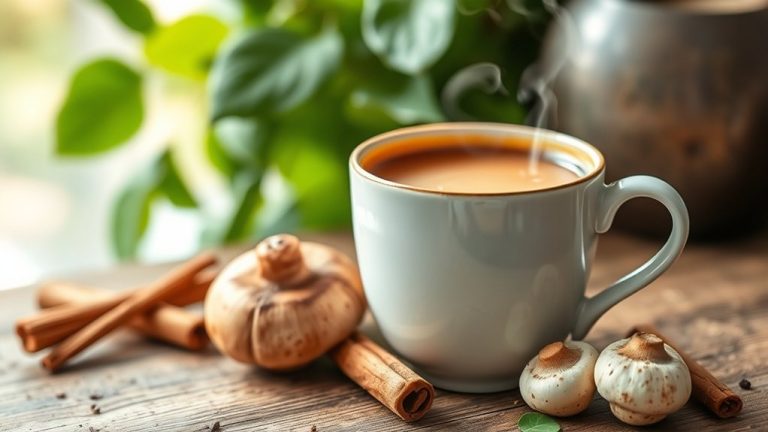
Chai doesn’t contain coffee. It’s a blend of black tea leaves, usually Assam or English Breakfast, and a balanced mix of spices like cinnamon, cardamom, ginger, cloves, star anise, and black pepper.
Milk and sweeteners complement the drink but aren’t part of the core spice blend. Although some chai variations add espresso, like a Dirty Chai, traditional chai focuses solely on tea and spices.
If you want to understand chai’s detailed ingredients and preparation, keep exploring its rich, aromatic profile. It’s a flavorful journey worth taking!
What Is Chai?
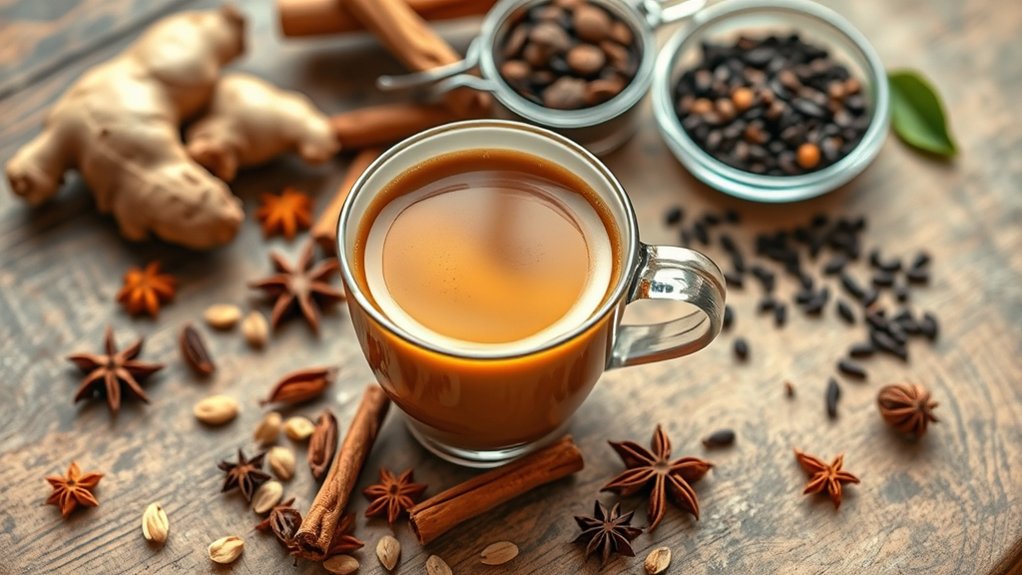
Although the term “chai” simply means “tea” in Hindustani, when you encounter chai in Western contexts, it specifically refers to masala chai. This is a spiced tea blend made by boiling black tea leaves with whole spices like ginger, cardamom, cinnamon, and cloves.
Then, the brew is combined with milk and sweetener.
Understanding chai means appreciating its deep tea history, which spans over 5,000 years in India. There, it evolved as a cultural staple. The quality of chai really depends on precise spice sourcing. Traditional recipes use freshly ground spices to guarantee potent flavors and aromatic complexity.
When you explore chai, you’re engaging with a beverage shaped by centuries of cultivation and trade. The sourcing of authentic spices directly impacts its taste and authenticity.
That’s what sets it apart from modern, pre-made versions.
How Is Traditional Chai Made?
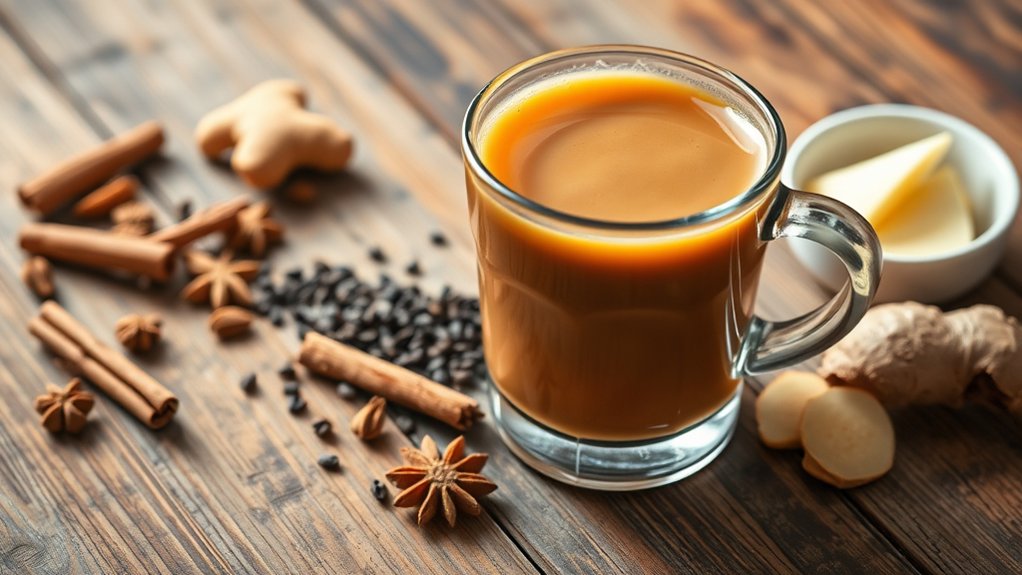
When you prepare traditional chai, you start by simmering black tea leaves with a carefully measured blend of spices. These typically include cinnamon, ginger, cardamom, and cloves, along with water and milk. This process relies on precise spice blending.
Simmer black tea with cinnamon, ginger, cardamom, and cloves for a perfectly spiced traditional chai.
The spices are crushed or ground to maximize their aromatic oils. This helps bring out more flavor during simmering.
The black tea, which undergoes fermentation, gives chai its robust, earthy base.
You then boil the mixture slowly so the flavors can meld fully. This balances the boldness of the fermented tea with the warmth of the spices.
After simmering, you strain the chai to remove the solids.
This leaves you with a smooth, fragrant beverage. Often, sweeteners like sugar or honey are added at the end. They help harmonize the complex flavor profile and make the chai just right.
What Ingredients Are Used in Traditional Chai?
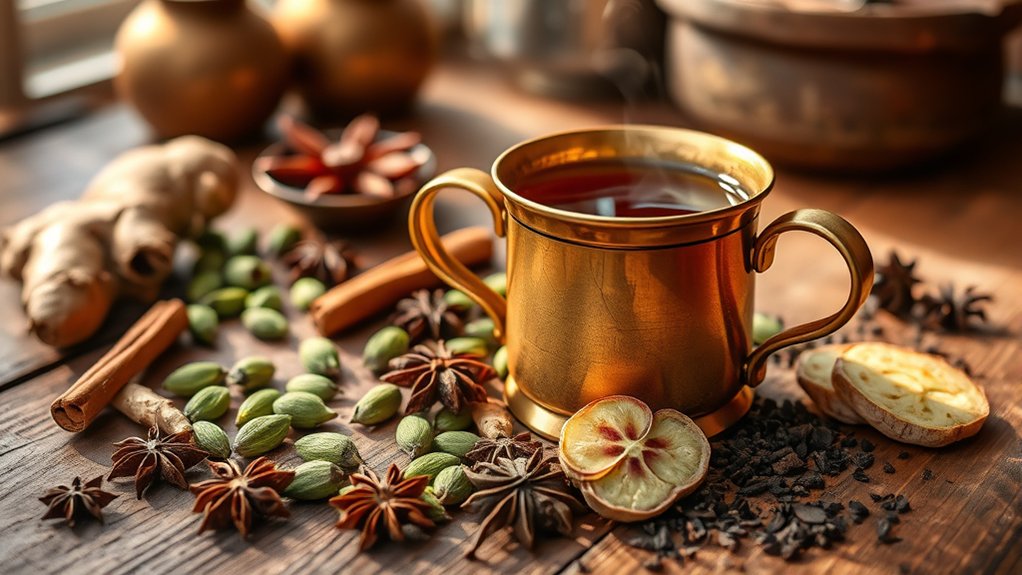
You’ll find that traditional chai centers on robust black tea leaves—often Assam or English Breakfast. These are combined with a carefully balanced mix of spices like cinnamon, cardamom, and ginger.
These core ingredients create the foundation of chai, but regional and personal preferences can introduce variations. For example, some people add star anise or black pepper to give it a little extra kick.
Understanding these components helps you appreciate how each element contributes to chai’s distinctive, aromatic flavor. It’s all about the perfect blend that makes each cup so special.
Core Traditional Ingredients
Because traditional chai relies on a balance of bold and aromatic elements, it uses black tea leaves, commonly Assam or English Breakfast, to provide a rich, malty base. You’ll find that the core traditional ingredients hinge on carefully executed spice blending, where cinnamon, ginger, cardamom, cloves, star anise, and black pepper combine to create chai’s distinctive warmth and depth.
This precise combination functions similarly to herbal infusions, where each spice contributes unique aromatic and flavor notes without overpowering the others. Additional elements like orange peel and licorice root occasionally enhance complexity, but the fundamental character stems from this interplay of black tea and spices.
Milk and sweeteners complement the infusion but remain separate from the core spice blending that defines traditional chai’s essence. It’s really this mix of tea and spices that gives chai its true soul.
Common Spice Variations
How do the spices in traditional chai come together to create its signature warmth and complexity? The key lies in precise spice blending and flavor balancing. Cinnamon, cardamom, ginger, cloves, and black pepper form the core, each adding a distinct layer.
Cardamom, often the hallmark spice, imparts floral and citrusy notes that brighten the blend. Ginger contributes a sharp, pungent warmth, enhancing digestion and depth. Cloves add earthy undertones, used sparingly to avoid overpowering the mix.
Cloves add earthy undertones, used sparingly to avoid overpowering the mix.
Black pepper injects subtle heat, tying the spices together. Some variations introduce star anise or licorice root, adding sweetness and complexity. By carefully adjusting quantities, you achieve a harmonious chai where no spice dominates, creating the balanced, aromatic profile you recognize and enjoy.
Which Spices Give Chai Its Flavor?
You’ll find cinnamon, cardamom, ginger, cloves, and star anise right at the heart of chai’s distinctive flavor. Each spice adds its own special note—like cinnamon bringing warmth and star anise offering a subtle sweetness.
It all comes together to create a balanced and complex profile.
And here’s the interesting part: depending on where you are, the mix of these spices can change a bit. That means chai’s aroma and taste shift, highlighting local preferences and making each cup a little unique.
Key Chai Spices
Although chai blends vary regionally, certain spices consistently define its distinctive flavor profile. The key chai spices—cinnamon, cardamom, ginger, cloves, and black pepper—form the foundation of this traditional beverage. Effective spice blending requires understanding how each spice contributes to flavor balancing.
Cinnamon provides warmth and subtle sweetness, anchoring the blend. Cardamom introduces floral and citrus notes, brightening the mixture. Ginger adds a zesty, spicy kick to counterbalance the sweetness, ensuring complexity.
Cloves contribute an earthy, slightly bitter aroma that deepens the profile. Ultimately, black pepper injects a gentle heat and depth, rounding out the blend. When combined thoughtfully, these spices create chai’s signature harmonious and layered flavor.
It really shows how important precision is in spice blending. Getting the balance right is what makes chai so special and memorable.
Spice Flavor Profiles
The unique character of chai arises from the specific flavor contributions of each spice in the blend. You’ll notice how the spice aroma sets chai apart, with each component playing a distinct role in the flavor balance.
Cinnamon offers warmth and sweetness, cardamom adds floral citrus notes, and ginger delivers spicy earthiness that counteracts sweetness. Cloves introduce a sharp, slightly bitter depth, while star anise provides a subtle licorice sweetness, enriching the complexity.
| Spice | Flavor Notes | Contribution to Chai |
|---|---|---|
| Cinnamon | Sweet, woody | Comforting spice aroma |
| Cardamom | Floral, citrusy | Enhances complexity |
| Ginger | Spicy, earthy | Balances sweetness and spice |
Regional Spice Variations
How do regional differences shape the distinctive flavors of chai? You’ll find that regional spice blends play a vital role, influenced by cultural flavor influences unique to each area.
For example, South Indian chai often highlights ginger and cardamom, creating a spicier, more pungent profile.
In contrast, North Indian chai favors cinnamon and cloves, lending warmth and depth.
Some regional blends also include star anise or licorice root, adding a sweet, aromatic nuance.
Others incorporate nutmeg or fennel seeds to craft distinct taste profiles.
The specific combination and proportion of these spices directly affect chai’s flavor and aroma, making each regional version a precise reflection of local taste preferences and traditions.
Understanding these variations helps you appreciate chai’s rich, diverse character.
How Do Milk and Sweeteners Affect Chai?
When you add milk to chai, it not only introduces a creamy texture but also softens the intensity of the bold spices, creating a well-rounded flavor balance. The milk influence extends beyond texture, as different milk types, whether dairy or plant-based, subtly modify taste and mouthfeel.
Sweeteners further shape chai’s profile, with their impact varying by quantity and type. This influences whether the chai leans more spicy or sweet.
Consider these factors:
- Milk increases chai’s calorie content, enhancing its indulgence and comfort level.
- Sweeteners like sugar or honey amplify the natural fruit-like sweetness of spices, improving palatability.
- Adjusting sweetener levels shifts chai’s character between earthy spice and dessert-like sweetness.
Understanding how milk and sweeteners influence chai helps you tailor it precisely to your taste. Give it a try and see what combinations you like best!
What Is the Difference Between Chai Tea and Chai Latte?
Although both chai tea and chai latte share the same foundation of black tea and aromatic spices, they differ markedly in preparation and sensory experience. Chai tea involves steeping tea leaves with spices, delivering a bold, spiced brew that highlights chai tea health benefits without added milk.
Chai tea and chai latte share spices but differ in preparation, offering bold brew versus creamy indulgence.
In contrast, chai latte blends this spiced infusion with steamed milk, creating a creamy, velvety texture that softens the robust flavors. You’ll also find chai lattes often feature sweeteners or vanilla, enhancing indulgence.
Seasonal flavor blends adapt both drinks, but chai lattes emphasize richness, while chai tea remains lighter and lower in calories.
Understanding this difference helps you choose between the pure spice-forward profile of chai tea and the smooth, comforting experience of a chai latte.
Does Chai or Chai Latte Contain Coffee or Caffeine?
Since traditional chai and chai lattes are brewed with black tea leaves, they naturally contain caffeine but no coffee. The caffeine content in these beverages varies, but it’s important to note that the source is always the tea, not coffee beans.
Here’s what you should understand:
- An 8 oz chai latte typically contains 30 to 50 mg of caffeine, which is less than a standard coffee cup.
- Herbal chai options, like rooibos-based blends, offer caffeine-free alternatives for those avoiding caffeine altogether.
- Decaffeinated chai lattes rely on herbal chai to eliminate caffeine content, making them suitable for sensitive individuals.
Understanding these distinctions helps you accurately assess chai’s caffeine intake without confusing it with coffee’s caffeine sources. It’s pretty straightforward once you know where the caffeine comes from!
What Is a Dirty Chai Latte and How Is It Different?
If you’re familiar with a traditional chai latte, you’ll recognize that a dirty chai latte elevates this classic by adding a shot of espresso. It blends the warm spices of chai with the rich, bold flavors of coffee.
Unlike herbal chai blends, which focus on spiced tea history and aromatic, caffeine-free ingredients, the dirty chai introduces robust espresso. This increases caffeine content and adds chocolate and roasted notes.
The dirty chai combines rich espresso with traditional spices, boosting caffeine and adding deep chocolate and roasted flavors.
Originating in 1990s London, this drink offers a unique fusion: the comforting complexity of spiced tea combined with the energizing kick of coffee.
When you choose a dirty chai latte, you get a balanced beverage that honors the spiced tea tradition while delivering a stronger, more invigorating experience than a standard chai latte.
How Are Commercial Chai and Chai Latte Concentrates Made?
When you pick up a commercial chai or chai latte concentrate, you’re getting a carefully crafted blend of brewed black tea, spices, sweeteners, and stabilizers combined into a thick, syrupy base. The process hinges on precise tea fermentation and expert spice blending to achieve balanced flavor profiles.
Typically, manufacturers follow these steps:
- Brew black tea with controlled fermentation to develop depth.
- Incorporate a spice blend, often cinnamon, cardamom, and cloves, blended uniformly for consistent taste.
- Heat and mix the ingredients with sweeteners, stabilizers, and preservatives to ensure shelf stability and homogeneity.
Some producers add vanilla or fruit extracts for complexity. Others use instant powders or freeze-dried extracts, reconstituted with hot water or milk. This offers convenience without sacrificing flavor integrity.
Popular Chai Variations With and Without Coffee
Although traditional chai centers on a spiced black tea base without coffee, popular variations have emerged that incorporate espresso to create the so-called “dirty chai.” This blend boosts the beverage’s caffeine content and deepens its flavor by combining the aromatic spices and creamy texture of classic masala chai with the bold intensity of coffee.
If you prefer a caffeine-free option, many cafes offer herbal infusions like rooibos or decaffeinated black tea. These maintain complex flavor combinations without coffee.
Plus, modern recipes sometimes use chai concentrate or powder to craft quick, coffee-free chai beverages.
Your choice between coffee and non-coffee chai variations really comes down to your caffeine needs and desired flavor intensity. This way, you can tailor the chai experience exactly to your taste.
How to Make a Coffee-Free Chai at Home
Choosing to skip coffee doesn’t mean sacrificing the rich, spiced complexity chai is known for. To craft a coffee-free chai at home, prioritize herbal infusions paired with meticulous spice blending. Follow these steps:
Skipping coffee doesn’t mean losing chai’s rich, spiced complexity—herbal infusions and careful spice blending create full flavor.
First, replace black tea with rooibos or herbal tea to avoid caffeine and coffee flavors. Then, create a warming spice blend using cinnamon, ginger, cardamom, cloves, and star anise. Simmer these spices in water or milk to release their aromatic oils.
Next, steep the herbal tea alongside the spices for 5-10 minutes, ensuring full flavor extraction without coffee elements.
Sweeten your chai with honey, maple syrup, or sugar to taste. Finish by adding steamed or hot milk, frothing if preferred, for a smooth, creamy, and authentic coffee-free chai experience.
Tips for Brewing the Perfect Chai Latte at Home
To brew the perfect chai latte at home, you’ll need to focus on selecting high-quality black tea or chai blends that provide a robust base flavor.
Mastering brewing techniques involves simmering your chosen tea with a carefully measured spice blend of cinnamon, ginger, cardamom, and cloves to extract full-bodied aromas.
Heat frothed milk or plant-based alternatives to about 150°F (65°C) and whisk until creamy and frothy, ensuring the ideal texture.
Gradually add sweeteners like honey or cane sugar so you can control the sweetness precisely.
Strain the chai through a fine mesh to remove spice solids, resulting in a smooth, balanced drink.
These steps will help you create a chai latte that’s both authentic and tailored to your taste.
It really highlights how important technique and ingredient quality are.
Frequently Asked Questions
What Is the Origin of Chai Tea in Different Cultures?
You’ll find chai tea’s origin varies through cultural influences and tea ceremonies across regions like India, Thailand, and Sri Lanka. Each culture adapted spiced tea uniquely, reflecting local ingredients and traditional brewing methods.
It’s pretty interesting how something as simple as tea can tell a story about a place and its people. These variations show how different traditions put their own twist on chai, making it more than just a drink.
How Does Chai Benefit Health and Digestion?
Coincidentally, chai’s herbal benefits serve as a powerful digestive aid. You’ll find ginger and cinnamon reduce inflammation and nausea. Plus, spices like cardamom improve gut health.
They help soothe digestion and promote a balanced microbiome effectively. It’s pretty amazing how these simple ingredients come together to support your tummy. Drinking chai isn’t just tasty—it’s good for you too!
Can Chai Be Made Using Green or White Tea Instead of Black?
You can use alternative tea bases like green or white tea to make chai. These options offer a lighter flavor and less caffeine compared to black tea.
Herbal chai blends also provide caffeine-free options. This way, you can customize the spice intensity and antioxidant content just the way you like it.
What Are the Best Types of Milk for Chai Lattes?
You’ll find whole milk offers rich creaminess, but milk alternatives like oat, almond, and coconut create distinct flavor variations. They balance chai’s spices while catering to dietary needs.
Choose based on texture and taste preferences for the best results. It really comes down to what you enjoy most in your latte.
How Long Can Homemade Chai Be Stored Safely?
Picture your chai sealed tight and chilling in the fridge. Your storage duration is 3-5 days to guarantee spoilage prevention.
Make sure to reheat it thoroughly above 165°F. You can add fresh milk or spices to extend freshness slightly.
This way, your chai stays tasty and safe to enjoy!
Conclusion
Chai is a rich tapestry of spices, tea, milk, and sweeteners, without coffee as a standard ingredient. Think of it as a symphony where each spice plays a distinct note, creating a balanced, aromatic blend.
While some chai variations add coffee, traditional chai stands strong on its own. By mastering your brewing technique and ingredient choices, you can craft a perfect, coffee-free chai that’s both authentic and satisfying every time.