Who Makes Kirkland Coffee – Brand And Manufacturer Details
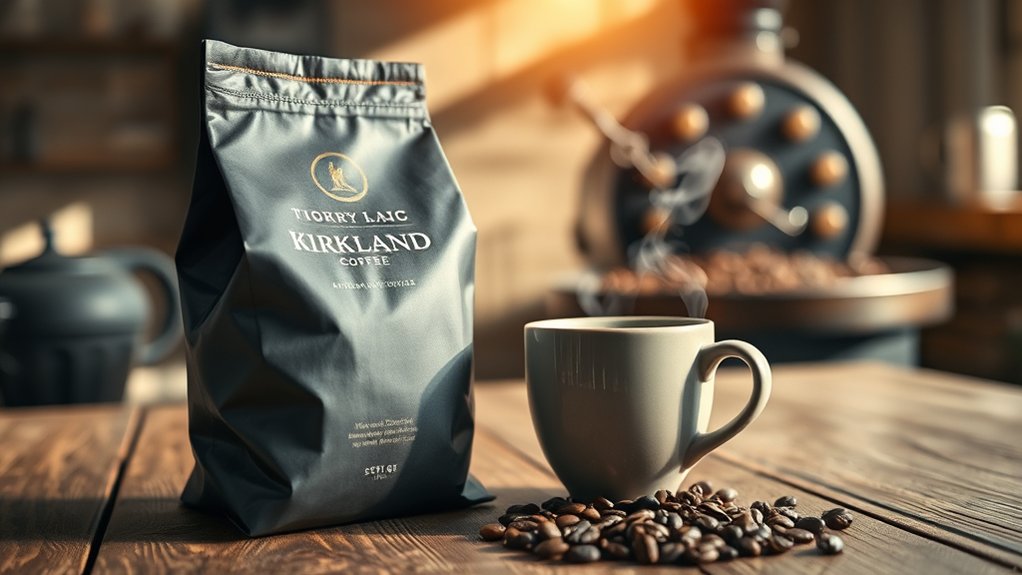
If you’re wondering who makes Kirkland Coffee, it’s crafted through partnerships with trusted suppliers like Rogers Family Co., known for their rich Colombian Supremo beans, and brewing experts Keurig and Green Mountain.
While Starbucks previously contributed blends, Kirkland now emphasizes its own independent, ethically sourced offerings. Sourced directly from diverse regions, Kirkland Coffee balances quality, sustainability, and cost through a private label strategy.
Keep exploring to discover the full story behind its unique blends and sourcing practices.
Kirkland Coffee Brand Origins and History
Although you mightn’t immediately recognize Kirkland Signature as a coffee brand, it has quietly established itself since the mid-1990s as Costco’s go-to for affordable, high-quality coffee.
You’ll find that Kirkland coffee offers a rich coffee flavor that appeals to a wide range of tastes, helping build strong brand loyalty among Costco shoppers.
The brand’s origins lie in providing value without compromising quality, sourcing beans from reputable regions like Colombia and Papua New Guinea.
By focusing on ethical sourcing and maintaining consistent flavor profiles, Kirkland guarantees you get great coffee at a fair price.
Over time, its reputation has grown, making it a trusted choice for those who want excellent coffee flavor without the premium price tag.
It’s pretty clear why so many people keep coming back for more.
Current Kirkland Coffee Manufacturers and Suppliers
While Kirkland Signature coffee proudly carries Costco’s label, its production involves several key manufacturers and suppliers working behind the scenes. You’ll find that Rogers Family Co. plays an essential role, supplying the Colombian Supremo and collaborating with farms across Panama, Mexico, and Hawaii to promote coffee sustainability.
Rogers Family Co. supplies Kirkland’s Colombian Supremo and champions coffee sustainability across multiple regions.
Keurig and Green Mountain, now under private ownership, handle Kirkland’s coffee pods. They often pioneer packaging innovations to enhance freshness and convenience.
Although Starbucks once supplied popular blends, recent packaging changes hint at a broader supplier base.
Due to minimal disclosure, the exact current manufacturer of every Kirkland coffee product remains unclear. Still, these partnerships ensure you enjoy quality coffee with ongoing efforts toward sustainable practices. Plus, innovative packaging supports both flavor and environmental responsibility.
Starbucks’ Role in Producing Kirkland Coffee
You might remember that Starbucks used to produce the Kirkland Signature House Blend. But if you’ve noticed the recent packaging, their branding is nowhere to be seen anymore. That change makes you wonder—does Starbucks still supply Kirkland coffee?
Even though Starbucks continues to sell their own products at Costco, it seems like they might’ve stepped back from making Kirkland coffee. So, what does this mean for the relationship between the two brands? And how will Kirkland coffee fans feel about this shift?
Let’s dive in and find out.
Starbucks Production History
How did Starbucks become intertwined with Kirkland coffee? For years, Starbucks produced Kirkland Signature’s House and Espresso Blends, bringing its expertise in coffee maturation and packaging innovation to Costco’s shelves. This collaboration guaranteed consistent quality and freshness in every cup.
However, by late 2023 or early 2024, Starbucks’ branding vanished from Kirkland packaging, leaving their current role uncertain.
| Aspect | Details |
|---|---|
| Initial Role | Supplied medium and espresso blends |
| Coffee Maturation | Applied Starbucks’ roasting standards |
| Packaging Innovation | Assured freshness, distinctive design |
Though Starbucks products still appear on Costco’s site, they no longer carry Kirkland labels, hinting at a shift in production or branding strategies.
Recent Branding Changes
Although Starbucks once played a key role in producing Kirkland Signature coffee, recent packaging changes reveal that their branding has quietly disappeared from these products. If you’ve noticed the Kirkland House Blend on Costco’s shelves, you’ll see it no longer carries the Starbucks logo. This update started appearing around late 2023 or early 2024.
This shift in packaging design signals a change behind the scenes. It suggests Starbucks’ role in crafting that rich coffee aroma may have diminished or ended altogether.
While the coffee itself remains available online, the fresh look of the packaging leaves you wondering who now guarantees that familiar flavor. These subtle branding adjustments mark a significant evolution in Kirkland’s coffee story.
Even so, Costco hasn’t officially confirmed any supplier changes.
Supplier Relationship Status
Since Starbucks once played a key role in producing Kirkland Signature coffee, the recent removal of their branding from packaging has sparked curiosity about their current involvement. You’ll notice the new packaging design for Kirkland coffee, including the Espresso Blend, no longer features Starbucks logos. This change hints at a shift in supplier relationships, though Costco hasn’t confirmed the details.
Starbucks’ previous influence shaped the flavor profiles of some blends, but now other manufacturers like Rogers Family Co. and Green Mountain likely handle production.
Here’s what you should know about the supplier relationship status:
- Starbucks branding has disappeared from Kirkland coffee packaging
- Manufacturing contract with Starbucks appears terminated
- No official confirmation from Costco on current suppliers
- New flavor profiles may reflect different roasters’ influence
Rogers Family Co.’s Contribution to Kirkland Coffee
You mightn’t realize it, but Rogers Family Co. plays a vital role in crafting Kirkland’s Colombian Supremo coffee. They source beans from their farms in Panama, Mexico, and Hawaii.
They also work closely with about 100 coffee farms worldwide to keep quality and ethical standards high. Even though their name doesn’t show up on the packaging, their influence really shapes the balanced flavor and aroma you enjoy.
Rogers Family Co. Overview
When you savor a cup of Kirkland coffee, chances are you’re enjoying the carefully sourced beans from Rogers Family Co., a key partner behind the brand’s rich offerings. They excel in coffee roasting and flavor profiling, making sure every batch delivers consistent quality and a vibrant taste experience.
Rogers Family Co. collaborates with around 100 farms globally and owns 11 farms in Panama, Mexico, and Hawaii. They put a big emphasis on sustainability and ethical sourcing, which is really important in today’s coffee world.
Here’s what makes them stand out:
- Operates also as San Francisco Bay Coffee, expanding Kirkland’s variety
- Holds Fair Trade America certification, supporting fair labor practices
- Specializes in single-origin beans like Colombian Supremo
- Masters flavor profiling to balance aroma and taste perfectly
Their expertise shapes the exceptional quality Kirkland coffee lovers enjoy every day.
Colombian Supremo Production
Although many coffee lovers recognize Kirkland Signature Colombian Supremo for its smooth, rich flavor, few realize that Rogers Family Co. plays an essential role in crafting this exceptional brew. They handle bean sourcing directly from about 100 farms and own 11 themselves across Panama, Mexico, and Hawaii, ensuring first-rate quality.
The coffee flavor features subtle notes of chocolate, nuts, and caramel, typical of premium Colombian beans. Rogers Family Co.’s dedication to precision and quality control means you get consistent, flavorful coffee every time, exclusively packaged for Kirkland.
| Aspect | Details |
|---|---|
| Bean sourcing | Direct from 100+ farms worldwide |
| Flavor profile | Chocolate, nuts, caramel notes |
| Production focus | Exclusively for Kirkland products |
Ethical Sourcing Practices
Rogers Family Co.’s commitment to quality goes beyond flavor and production. It extends deeply into ethical sourcing practices. When you choose Kirkland Coffee, you’re supporting a brand that values farm sustainability and holds strong ethical certifications.
Rogers partners directly with around 100 farms worldwide and owns 11 in Panama, Mexico, and Hawaii. This guarantees transparency and care from seed to cup.
Their adherence to Fair Trade standards ensures fair labor conditions and respect for the environment.
Here’s what makes their sourcing stand out: direct relationships with coffee farmers for traceable origins, support for sustainable farming practices that protect ecosystems, compliance with ethical certifications promoting fair labor, and transparent supply chains guaranteeing consistent, quality coffee.
This dedication means Kirkland Coffee delivers both exceptional taste and ethical integrity every time.
Keurig and Green Mountain as Kirkland Coffee Suppliers
Since you’re likely familiar with Keurig’s role in the coffee world, it’s interesting to note that Keurig Green Mountain, through its Green Mountain Coffee Roasters division, supplies many of Kirkland’s single-serve coffee pods.
When you use Kirkland pods in your Keurig machine, you’re benefiting from expert coffee brewing technology combined with carefully crafted flavor profiles. Green Mountain’s experience in producing private label coffee guarantees consistent quality and taste in each cup.
While their involvement is most notable in the single-serve segment, these pods offer a range of rich and balanced flavors designed to satisfy diverse coffee preferences.
This partnership highlights how Kirkland leverages Keurig and Green Mountain’s manufacturing strengths to deliver convenient, flavorful coffee options to its customers.
Why Kirkland Coffee Packaging Hides Manufacturer Information
You might’ve noticed that Kirkland Coffee’s packaging often doesn’t include detailed manufacturer information. That’s actually intentional—it helps keep their branding flexible and suppliers confidential.
This way, Costco can switch producers whenever they want without confusing customers or weakening their own brand identity.
Branding And Packaging Strategy
Although Kirkland Coffee is widely recognized for its quality and value, its packaging intentionally keeps the manufacturer’s identity under wraps. This branding and packaging strategy focuses on simplicity and consistency. That way, Costco can present Kirkland as a unified brand no matter who actually produces the coffee.
You’ll notice the packaging design is clean and subdued, avoiding flashy logos or detailed supplier info. This helps maintain a consistent look across all products. Plus, it lets Costco source different flavor profiles from multiple manufacturers without confusing you.
Key aspects of Kirkland’s branding and packaging strategy include:
- Minimalist packaging design with limited manufacturer details
- Consistent, generic look across all Kirkland Coffee products
- Avoidance of supplier logos like Starbucks to keep origins unclear
- Flexibility to source diverse flavor profiles without brand conflict
Supplier Confidentiality Reasons
Because Costco wants to maintain tight control over Kirkland Coffee’s supply chain, the packaging deliberately omits manufacturer details. This confidentiality helps them safeguard proprietary blends, negotiate better prices, and switch suppliers seamlessly without disrupting your experience.
It also encourages you to focus on quality rather than origin, which helps build trust in the Kirkland brand.
| Reason | Benefit |
|---|---|
| Protect proprietary blends | Keeps unique recipes away from competitors |
| Flexible supplier switching | Ensures consistent pricing and availability |
| Packaging innovation focus | Supports environmental sustainability efforts |
Marketing And Consumer Perception
Why does Kirkland Coffee packaging often leave out manufacturer details? It’s a clever marketing strategy designed to focus your attention on Costco’s private label rather than the supplier. By hiding manufacturer info, Costco keeps sourcing flexible and avoids confusing you with multiple brands.
This approach also builds intrigue around flavor profiles, making you perceive Kirkland Coffee as exclusive and high quality.
Here’s why this matters to you:
- Enhances brand loyalty by spotlighting Kirkland’s identity
- Creates a sense of mystery around coffee origins
- Allows smooth supplier changes without packaging overhaul
- Influences your perception positively if you trust Costco’s quality control
Ultimately, this tactic shapes your buying experience, balancing transparency with effective marketing strategies.
Recent Packaging Changes and What They Reveal About Kirkland Coffee
When you look at the latest Kirkland coffee packaging, you’ll notice something pretty big: the Starbucks branding is gone. That’s a clear sign there’s been a major shift in how the product is made.
This change isn’t just about looks. It shows how packaging is evolving to match what consumers want these days. By taking off the Starbucks logos, Costco seems to be reshaping what Kirkland stands for.
They might be teaming up with new suppliers, like Rogers Family Co. The Colombian Supremo packaging backs this up by only showing the Kirkland name, making it less clear who actually produces it.
These updates aren’t just minor design changes. They show Kirkland is moving toward being more independent and listening to customers.
The focus is now on simple, clear branding that highlights the Kirkland name, which shows confidence in their own product.
How Supplier Changes Affect Kirkland Coffee Quality
Although you mightn’t notice at first, changes in Kirkland coffee’s suppliers can considerably impact the flavor and consistency you experience in each cup. When Kirkland shifts manufacturers, you may encounter subtle shifts in flavor consistency due to different roasting methods and bean selections.
These supplier changes also influence sourcing transparency, making it harder for you to trace where the beans come from. Packaging changes, like the removal of Starbucks branding, hint at these behind-the-scenes shifts.
Here’s what you should keep in mind:
- Varying roasting techniques affect taste profiles.
- Different bean origins alter flavor consistency.
- Supplier quality control impacts batch-to-batch uniformity.
- Reduced sourcing transparency can affect your trust in the product.
Being aware of these factors helps you understand why your Kirkland coffee might taste different over time.
Kirkland Coffee’s Ethical Sourcing and Fair Trade Certification
Because Kirkland Signature coffee carries Fair Trade America certification, you can trust that its beans are ethically sourced with a focus on fair labor practices and environmental sustainability. This means farmers receive fair wages and work under ethical conditions, supporting sustainable farming methods.
These efforts not only protect the planet but also enhance the coffee flavor you enjoy every morning. Kirkland sources beans from Colombia, Papua New Guinea, and Central America, balancing quality and transparency.
| Aspect | Details |
|---|---|
| Certification | Fair Trade America |
| Sourcing Regions | Colombia, Papua New Guinea, Central America |
| Ethical Focus | Fair labor, sustainable farming |
| Consumer Benefit | Superior coffee flavor with ethical trust |
Kirkland Coffee’s Private Label Strategy and Its Supply Chain Impact
Kirkland Signature’s commitment to ethical sourcing sets a strong foundation, but its private label strategy plays a key role in shaping how the coffee reaches your cup. By partnering with multiple manufacturers like Starbucks and Keurig, Costco balances quality control and cost efficiency.
This approach minimizes supply chain vulnerabilities but requires careful management to protect Kirkland’s brand reputation.
Key impacts of this strategy include increased profit margins by controlling product quality and branding. It also gives Costco the flexibility to switch suppliers, which you might notice in packaging and logo changes.
Plus, they can offer diverse coffee profiles at competitive prices. On top of that, there’s enhanced supply chain transparency thanks to their ethical sourcing commitments.
You benefit from consistent, high-quality coffee while Costco manages the complex supply chain dynamics behind the scenes.
Overview of Kirkland Coffee Blends and Their Producers
Ever wondered who crafts the coffee blends under the Kirkland Signature label you enjoy? Kirkland coffee blends come from various producers, including Starbucks, Rogers Family Co., Keurig, and Green Mountain.
For instance, the Kirkland House Blend was made by Starbucks until packaging updates around late 2023 hinted at a change.
The Colombian Supremo, known for its rich coffee flavor, is sourced from Rogers Family Co., which manages farms in Panama, Mexico, and Hawaii.
Starbucks also supplied the Espresso and Decaf blends, though recent packaging suggests their involvement may have ended.
Because many Kirkland products don’t clearly list their manufacturers, it can be tricky to pinpoint the exact producer.
Regardless, these blends are crafted to suit diverse brewing methods, ensuring you get a satisfying cup every time.
Future Outlook for Kirkland Coffee Manufacturers
As consumer preferences evolve and demand for transparency grows, Costco is likely to adjust its coffee manufacturing partnerships to stay ahead. You’ll see a sharper focus on roaster transparency and coffee flavor to meet your expectations.
The future may bring shifts toward diverse suppliers, guaranteeing quality and ethical sourcing remain top priorities.
Expect changes in packaging and branding as Costco explores long-term contracts with manufacturers like Rogers or Green Mountain.
Key future trends include:
- Emphasis on sustainable, specialty coffee blends enhancing flavor complexity
- Greater transparency about sourcing and roasting processes
- Expansion of partnerships with premium, certified producers
- Innovative packaging reflecting ethical certifications and brand values
This approach assures Kirkland Coffee stays fresh, flavorful, and aligned with your values.
Frequently Asked Questions
Where Can I Buy Kirkland Coffee Outside Costco Stores?
You can find Kirkland Coffee outside Costco through online marketplaces like Amazon or specialty shops linked to Costco distributors.
These options let you enjoy quality coffee brewing while trusting the brand reputation Kirkland upholds.
It’s pretty convenient if you don’t have a Costco nearby or prefer shopping online. Just make sure to check the seller’s credibility to get the best experience!
How Should I Store Kirkland Coffee for Best Freshness?
You absolutely must treat coffee storage like guarding treasure! To preserve Kirkland coffee’s freshness, keep it airtight, away from light, heat, and humidity. Don’t refrigerate it.
Instead, use opaque, vacuum-sealed containers for ultimate freshness preservation. This way, your coffee stays flavorful and aromatic for longer. Trust me, it makes a big difference!
What Is the Caffeine Content in Different Kirkland Coffee Blends?
You’ll notice caffeine variation across Kirkland coffee blends. Regular roasts offer moderate coffee strength with 150-200 mg caffeine. Espresso packs higher intensity.
Decaf keeps caffeine minimal, perfect if you want to control your coffee strength precisely. It’s all about choosing what fits your taste and caffeine needs best.
Are There Any Seasonal or Limited-Edition Kirkland Coffee Flavors?
You’ll love discovering Kirkland’s seasonal flavors and limited edition releases, like pumpkin spice or holiday blends. These exclusive coffees pop up briefly each year, featuring unique tastes and packaging.
They’re a must-try for any coffee fan who enjoys switching things up with the seasons. Keep an eye out because once they’re gone, they’re gone!
Can Kirkland Coffee Be Used in Espresso Machines?
You can use Kirkland coffee in espresso machines, but for ideal espresso compatibility, choose their Signature Espresso Blend.
It’s specially roasted to enhance your brewing method, delivering rich, full-bodied shots with excellent crema every time.
This blend really brings out the best in your espresso machine, making each cup taste just right. Give it a try and see the difference it makes!
Conclusion
When you choose Kirkland Coffee, you’re savoring more than just a cup. You’re embracing a blend of trusted partnerships and thoughtful craftsmanship. Behind every sip lies a network of skilled producers, from well-known names to dedicated artisans, all committed to quality and ethical sourcing.
While the brand keeps some details under wraps, this subtle mystery only adds to the rich experience you enjoy with each brew. It’s kind of like being part of a little secret club that appreciates great coffee. And honestly, that makes every cup feel a bit more special.