Does Chai Have More Caffeine Than Coffee – Comparison Guide
You’ll find chai contains considerably less caffeine than coffee, typically offering 15–50 mg per cup versus coffee’s 95 mg. Chai’s gentler boost comes from black tea and warming spices, which slow caffeine absorption, avoiding jitters.
Coffee delivers a quick, intense energy rush due to higher caffeine and brewing methods like espresso. Your choice depends on sensitivity and taste preferences.
Exploring how preparation, culture, and health benefits differ will help you decide which suits you best.
Chai Tea: Origins and Preparation

How did chai tea become such a beloved beverage? It all starts with its origins in India, where chai is traditionally made by brewing black tea with a carefully crafted spice blending. You’ll find cinnamon, ginger, cardamom, cloves, and nutmeg combined to create its signature warm, aromatic flavor.
The brewing techniques are essential. You simmer whole spices and black tea leaves together in water, allowing the flavors to infuse deeply. After simmering, milk and sweeteners like honey or sugar get added, rounding out the taste.
Whether you use loose leaf tea, tea bags, or powdered spice blends, the authentic slow brewing process develops chai’s complex, comforting profile. Mastering these methods guarantees you enjoy chai’s rich, energizing qualities every time.
Coffee: Brewing Methods and Types

Why does the brewing method matter when it comes to coffee? Different methods, like drip, French press, espresso, and cold brew, extract caffeine differently.
For example, espresso forces hot water through finely ground coffee under pressure, delivering roughly 63 mg of caffeine per ounce.
Cold brew, steeped for hours, often contains more caffeine due to extended extraction time.
Coffee roasting also impacts flavor and caffeine levels. Darker roasts generally have slightly less caffeine than lighter ones.
The type of bean, such as Arabica versus Robusta, plays a role too. Robusta beans have nearly twice the caffeine.
While tea fermentation affects caffeine in chai, coffee’s brewing method dominates its caffeine concentration.
Understanding these factors helps you choose your ideal cup based on taste and caffeine content. It’s all about finding what works best for your preferences.
Comparing Caffeine Levels in Chai and Coffee
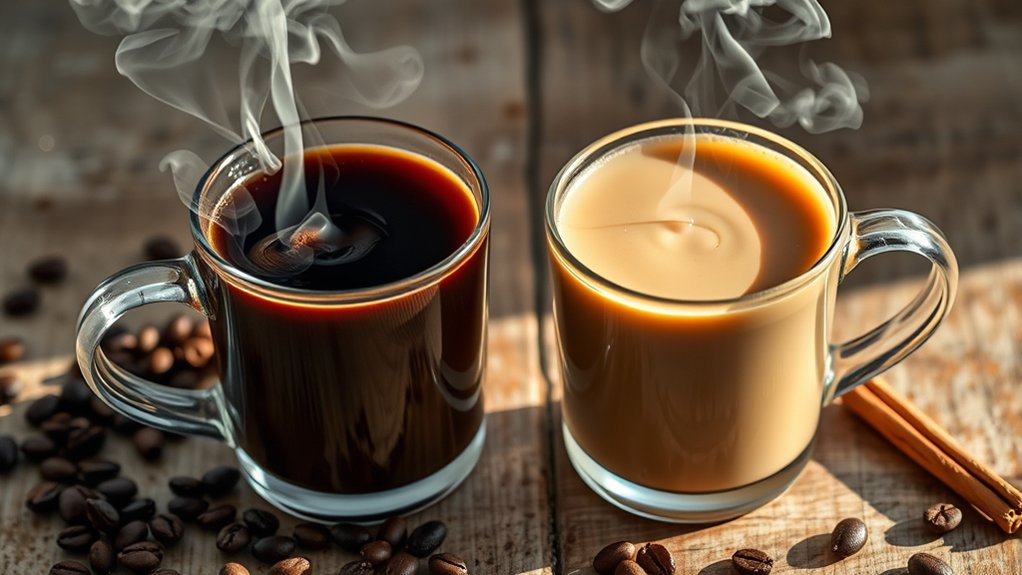
Understanding the factors that influence caffeine in coffee sets the stage to compare it directly with chai. When you look at caffeine levels, the difference is clear but nuanced. Here’s what you need to know:
- An 8 oz. cup of coffee typically contains about 95 mg of caffeine, nearly double the average chai cup, which ranges from 15 to 50 mg.
- Chai’s caffeine content varies based on tea strength and preparation, offering a gentler, more sustained energy boost.
- Coffee’s roasted beans provide a higher caffeine concentration, impacting caffeine metabolism and energy onset.
Besides caffeine, consider flavor pairing. Chai’s spices balance its lower caffeine, providing a unique sensory experience compared to coffee’s bold profile.
This balance affects how your body metabolizes caffeine and feels energized.
Why Coffee Contains More Caffeine Than Chai
You’ll find that coffee contains more caffeine than chai because coffee beans naturally have higher caffeine levels than the black tea leaves used in chai.
Plus, the way each is brewed makes a big difference.
For example, espresso and drip coffee methods extract caffeine more efficiently than just steeping tea leaves.
Caffeine Levels Explained
Although both chai and coffee contain caffeine, coffee delivers a considerably higher amount, about 95 mg per 8-ounce cup compared to chai’s 30 to 50 mg. This difference affects caffeine metabolism and energy regulation in your body. Here’s why:
Coffee beans naturally have a higher caffeine density than the black tea leaves used in chai. Roasting coffee beans concentrates caffeine, which intensifies its stimulant effect.
On the other hand, chai’s caffeine is diluted by milk and spices, lowering the overall caffeine content.
Because of these factors, coffee provides a stronger and quicker energy boost. This influences how your body metabolizes caffeine.
Chai’s milder caffeine levels mean a gentler effect on energy regulation.
Many people prefer chai if they’re sensitive to caffeine or want a more balanced alertness without the jitters. It’s all about what kind of energy boost works best for you.
Brewing Methods Impact
Because coffee brewing methods like espresso and French press use higher temperatures and longer extraction times, they pull more caffeine from the beans than chai’s typical steeping process extracts from tea leaves.
Coffee bean roasting also enhances caffeine availability, as roasting breaks down cell structures, making caffeine easier to extract.
In contrast, chai uses black tea leaves that undergo tea leaf fermentation, which slightly alters caffeine content but doesn’t compensate for the shorter, lower-temperature steeping process.
Since chai is brewed quickly and at lower temperatures, it extracts markedly less caffeine than coffee methods that prioritize longer extraction times and hotter water.
Also, coffee’s higher caffeine concentration per bean combined with these brewing techniques results in a stronger caffeine profile than chai’s milder, spiced steep.
How Brewing Affects Caffeine in Both Drinks
When you brew chai or coffee, the method you choose directly influences the caffeine content in your cup. Factors like tea fermentation and coffee roasting affect the base caffeine levels, but brewing techniques play a vital role in extraction.
Think about it this way: longer steeping times and hotter water pull more caffeine from black tea leaves in chai and coffee grounds alike. So, timing and temperature really matter.
Also, grind size and brewing pressure come into play. Finer coffee grinds and espresso’s high-pressure, short extraction boost caffeine per ounce compared to drip coffee. It’s all about how much caffeine you get in each sip.
And don’t forget about the tea leaf quality! Loose leaf black tea used in chai usually has more caffeine than tea bags because it undergoes less processing during tea fermentation. That’s why your chai might pack a bigger caffeine punch.
How Caffeine From Chai and Coffee Affects Your Body
When you drink chai, the caffeine gets absorbed more slowly. So, you get a steady, gentle energy boost instead of those sudden spikes you might notice with coffee.
On the other hand, coffee delivers a quicker, more intense alertness because it has more caffeine. But sometimes, that can lead to jitters or energy crashes.
Knowing these differences can help you pick the right drink depending on how you want caffeine to affect your body.
Caffeine Absorption Differences
Although both chai and coffee contain caffeine, the way your body absorbs it differs quite a bit because of their unique ingredients. The caffeine metabolism and absorption rate vary since chai’s tannins and spices slow absorption, while coffee’s caffeine hits your bloodstream quickly.
Here’s what happens: Chai’s slower absorption leads to a gradual, sustained energy release that avoids sudden spikes. Coffee, on the other hand, causes a rapid spike in alertness, which is often followed by a noticeable crash.
Plus, the L-theanine in chai changes how caffeine affects you, promoting alertness without the jitters.
So, these differences mean you’ll get a milder, more balanced energy boost from chai, while coffee gives you a fast, intense surge.
Knowing how your body handles caffeine can help you pick the drink that fits your rhythm better.
Energy Boost Comparison
Understanding how caffeine absorption varies between chai and coffee helps explain the differences in the energy boost each provides. Coffee delivers a quick spike in energy due to faster caffeine metabolism, but this often leads to jitters or crashes.
Chai, with its lower caffeine content and tannins, slows caffeine absorption, promoting energy sustainability. Plus, chai’s L-theanine supports calm alertness, unlike coffee’s more intense stimulation.
| Beverage | Caffeine Content (mg) | Energy Effect |
|---|---|---|
| Coffee | ~95 | Rapid spike, potential crash |
| Chai | 30-50 | Slow release, sustained focus |
| Sensitivity Risk | Higher (coffee) | Lower (chai) |
Choosing chai can offer a gentler, more balanced energy boost that’s great for sensitive folks looking for steadier focus.
Flavor Profiles of Chai and Coffee
How do chai and coffee differ in flavor? You’ll notice a distinct flavor contrast and unique aroma profiles between the two. Chai offers a warm, spiced experience with cinnamon, ginger, and cardamom, while coffee delivers bold, bitter, and sometimes smoky notes.
Chai brings warm spices like cinnamon and cardamom, while coffee offers bold, bitter, and smoky flavors.
To break it down: Chai’s complex, layered taste comes from multiple spices and a lightly earthy black tea undertone. Coffee’s flavor varies mainly by roast and bean origin, with roasted or nutty notes.
The aromas differ too. Chai’s inviting spiced sweetness contrasts with coffee’s stronger, chocolatey, nutty, or smoky scent.
Understanding these differences helps you appreciate how each beverage suits your flavor preferences. It’s pretty cool to know what makes each one unique!
How Milk and Sweeteners Impact Flavor and Calories
When you add milk to your chai, it creates a creamy texture that softens the spicy, robust flavors. Plus, it can increase the calories depending on the type of milk you choose.
Sweeteners like honey or sugar kick up the drink’s warmth and sweetness, but they also add extra calories. That’s why a chai latte can often reach 200-300 calories.
Finding the right balance between milk and sweeteners helps smooth out any bitterness and really brings out the chai’s complex spice profile—without blowing your calorie goals.
Milk’s Role In Flavor
Although chai’s bold spices and robust black tea create a distinctive flavor, adding milk softens the intensity by introducing a creamy texture that balances bitterness and spice. When you incorporate milk, the flavor profile changes significantly.
Milk frothing enhances the creamy mouthfeel, making the chai smoother and less sharp.
Plant-based options like almond or oat milk adjust sweetness and richness, tailoring the taste to your preference. The natural sugars in milk reduce the need for added sweeteners, subtly moderating chai’s spiciness without overpowering it.
Sweeteners And Calorie Count
The calorie content and flavor of chai are directly influenced by the type and amount of milk and sweeteners you add. Using whole milk increases calories and richness, while skim or almond milk offers lighter flavor pairings with fewer calories.
Sweeteners like honey or sugar add about 16-20 calories per teaspoon, notably boosting the calorie count and sweetness level.
If you prefer a lower-calorie option, brewing techniques that emphasize spices and tea strength allow you to reduce sweeteners without sacrificing taste.
Balancing these elements helps you control both flavor and calorie intake effectively.
Whether you choose creamy or plant-based milk, or opt for unsweetened chai, your choices shape the final flavor profile and caloric value to suit your preferences and dietary goals.
Balancing Spice And Sweetness
Adjusting the amount of milk and sweeteners in your chai latte lets you find the right balance between spice and sweetness that suits your palate. Milk softens the bold spices and black tea, creating a creamy texture that smooths the spice balance.
Sweeteners like honey or sugar boost sweetness levels, counteracting the heat from the spices.
Keep in mind, adding milk and sweeteners raises the calorie content, often reaching 200-300 calories per 8 oz. serving. To tailor your chai experience, consider increasing milk for a milder, creamier spice balance.
You can also adjust sweeteners to complement spices without overpowering them.
And don’t forget to watch your calorie intake when adding sweeteners and milk. This approach guarantees your chai remains flavorful, balanced, and aligned with your dietary preferences.
Cultural Importance of Chai and Coffee
When you explore chai and coffee, you’ll see they each carry deep cultural significance shaped by their histories and social roles. Chai’s cultural symbolism in India centers on hospitality and ritual significance, as it’s traditionally brewed with spices and milk, then shared warmly with guests. This daily ritual reflects a welcoming spirit rooted in Indian tradition.
On the other hand, coffee represents socialization and productivity in Western cultures. In countries like Ethiopia, Italy, and the U.S., coffee culture thrives around cafes and social gatherings, emphasizing community and modern urban life.
The rise of global coffeehouse chains further cements coffee’s role as a symbol of contemporary lifestyle.
Both beverages embody unique cultural meanings that go beyond their caffeine content. It’s pretty fascinating how something as simple as a drink can carry so much history and meaning, don’t you think?
Health Benefits of Chai Tea and Coffee Ingredients
Although both chai tea and coffee give you a nice caffeine boost, their health benefits go way beyond just energy. When you look at the ingredients, chai’s mix of spices and black tea offers some pretty unique advantages.
Here’s a quick ingredient comparison that highlights the key health benefits:
- Chai spices like cinnamon, ginger, cardamom, and cloves bring antioxidants and antimicrobial properties to the table. These support your immune health, reduce inflammation, and help improve digestion.
- Black tea in chai provides essential minerals such as magnesium, zinc, and potassium. These promote skin health and overall wellness.
- Coffee mainly boosts brain function and lowers the risk of type 2 diabetes. It also delivers a stronger caffeine kick.
Variations Like Dirty Chai: Boosting Flavor and Caffeine
If you enjoy the unique health benefits and flavors of chai but want an extra kick, you might consider trying a dirty chai. This variation combines traditional spice combinations found in chai with a shot of espresso, considerably boosting caffeine content.
An 8 oz. dirty chai typically delivers 100-150 mg of caffeine, depending on the espresso shots used. That often matches or even surpasses standard coffee blends.
Beyond caffeine, the espresso intensifies the drink’s boldness, blending rich coffee flavors with the warm spices of chai. This creates a layered taste experience that appeals to those seeking both flavor complexity and a stronger caffeine boost.
So, if you want a flavorful yet potent beverage, a dirty chai offers an effective combination of spice and coffee blends. It’s a great way to enjoy the best of both worlds in one cup.
Give it a try and see how it changes your chai game!
Chai or Coffee: Which One’s Right for You?
How do you decide between chai and coffee as your daily pick-me-up? It really depends on your caffeine needs and taste preferences.
Coffee culture celebrates strong, quick boosts with about 95 mg caffeine per cup. It’s ideal if you want an energetic start.
In contrast, chai, rooted in tea ceremonies, offers a gentler lift with 15-50 mg caffeine and calming L-theanine. So it’s kind of like a softer, steadier buzz.
Consider these points to choose wisely:
- If you need high caffeine for alertness, coffee’s your best bet.
- For a milder, steadier energy and less jitteriness, chai suits you.
- If you’re caffeine-sensitive, chai’s lower caffeine content makes it friendlier.
Weighing these factors helps you pick the drink that matches your lifestyle perfectly.
Frequently Asked Questions
Can Chai Be Made Caffeine-Free?
Yes, you can make chai caffeine-free by using herbal infusions instead of traditional tea. This switch reduces caffeine content to zero, letting you enjoy chai’s spices and aroma without any stimulating effects.
It’s a great way to have all the flavor without the buzz. You can experiment with ingredients like rooibos or chamomile to keep that cozy chai vibe going.
Does Decaf Coffee Have Less Caffeine Than Chai?
Yes, decaf caffeine content is usually lower than chai’s. You’ll find decaf coffee has about 2-15 mg caffeine per cup, while chai often contains more.
If you prefer, herbal substitutes offer a caffeine-free alternative. They’re a great option to avoid caffeine altogether.
How Long Does Caffeine From Chai Stay in Your System?
Caffeine from chai typically stays in your system for 3 to 7 hours, depending on your caffeine metabolism. You’ll notice energy fluctuations as the caffeine’s effects gradually diminish. This can be influenced by factors like body weight and liver function.
Everyone processes caffeine a bit differently, so your experience might not be exactly the same as someone else’s. It’s pretty normal to feel those ups and downs during that time. Just keep in mind how your body reacts when you enjoy your chai.
Are There Any Caffeine Alternatives to Chai and Coffee?
You can try herbal infusions like peppermint or lemon thyme. They have zero caffeine content but still offer flavor and health benefits.
These caffeine alternatives let you enjoy tasty drinks without the jitters from chai or coffee. It’s a nice way to switch things up and keep your routine calm and cozy.
Can Chai or Coffee Cause Insomnia Differently?
Sleep disruption strikes stronger with coffee’s swift caffeine surge, causing anxiety increase and restless nights.
Chai’s slower caffeine release and calming L-theanine lessen sleep issues, but if you’re sensitive, both can still disturb your sleep.
Conclusion
When you sip chai, imagine a warm, spiced embrace. It’s comforting but gentle on caffeine. Coffee, bold and robust, delivers a stronger kick. It fuels your day with its richer caffeine punch.
Your choice depends on the energy you need and the flavors you crave. Whether it’s chai’s soothing blend or coffee’s vibrant buzz, understanding their caffeine content helps you pick the perfect cup. That way, you can match your drink to your mood and lifestyle.