
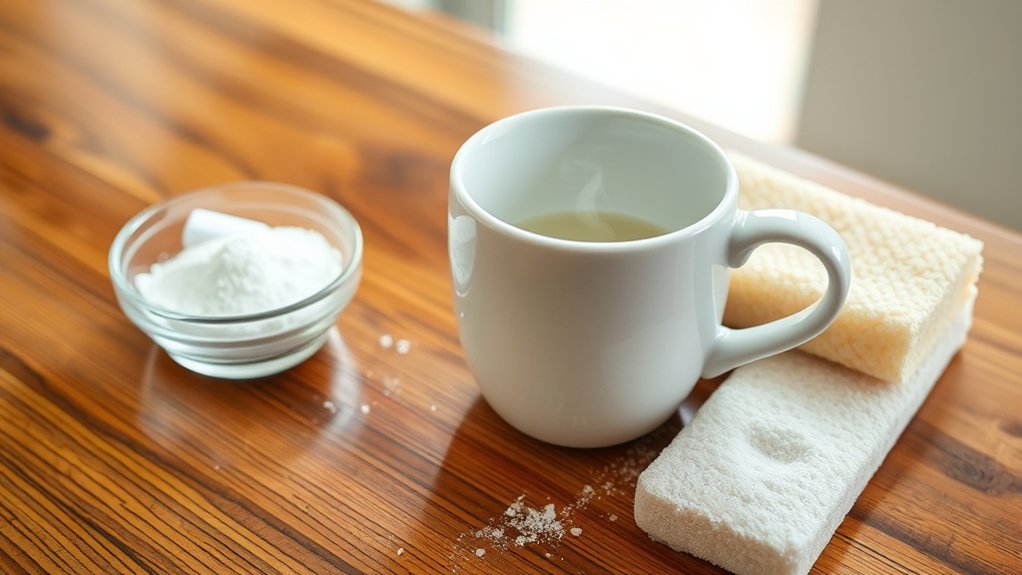
How To Remove Coffee Stains From Cups – Easy Cleaning Solutions
To remove coffee stains from your cups easily, rinse them with warm water right after use to stop stains from setting. For stubborn marks, sprinkle baking soda on damp areas and scrub gently. Or soak the cup in a vinegar-water mix for 10 to 15 minutes before scrubbing.
Lemon juice also lifts stains while adding a fresh scent. Use mild soaps daily and avoid harsh scrubbing. Make sure to match cleaning methods to your cup’s material for the best results.
Discover more tips to keep your cups spotless and fresh. It’s easier than you think!
Why Coffee Stains Form on Cups
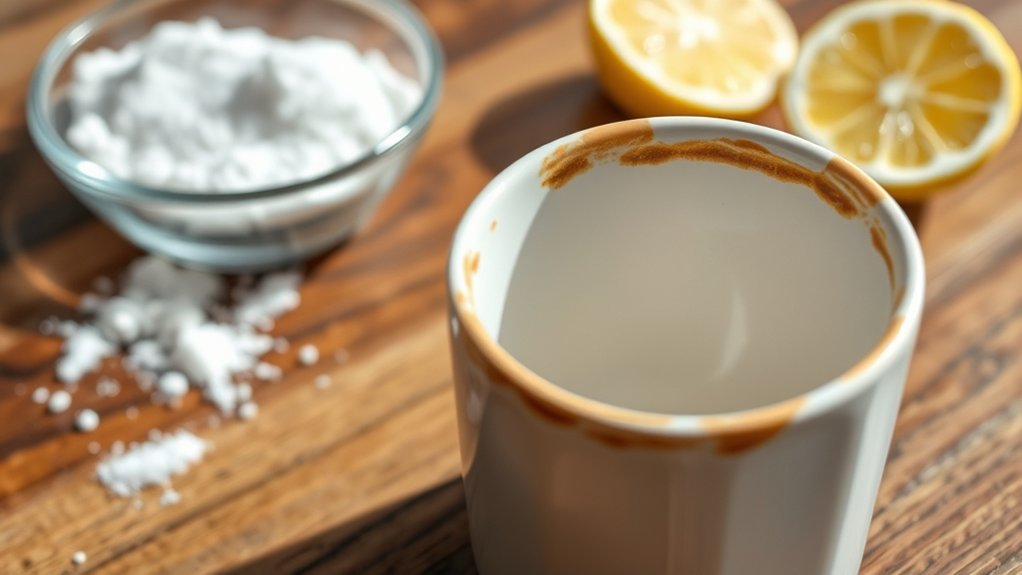
Why do coffee stains cling so stubbornly to your cups? It all boils down to the natural oils and tannins in coffee that latch onto surfaces. These compounds contribute to the rich coffee aroma you love but also leave behind residues.
Your cup design plays a vital role. Porous materials like ceramic absorb these substances more readily than glass or stainless steel. Plus, the shape and texture of your cup influence how easily stains settle.
Rougher surfaces trap more tannins, making stains tougher to remove. Even the temperature of the coffee affects stain formation. Hotter drinks speed up the bonding process.
Understanding these factors helps you appreciate why those persistent coffee stains form and why some cups stain more than others.
How to Clean Fresh Coffee Stains Quickly
Since coffee’s natural oils and tannins bond quickly with your cup’s surface, acting fast makes stain removal much easier. Right after coffee brewing, rinse your cup with warm water to prevent stains from setting, especially if the cup design has grooves where residue hides.
Use a gentle sponge and mild dish soap to wipe away fresh stains without damaging the cup’s finish.
| Step | Action |
|---|---|
| 1. Rinse | Use warm water immediately |
| 2. Apply soap | Mild dish soap on a sponge |
| 3. Scrub gently | Focus on stained areas |
| 4. Rinse & dry | Make certain no soap residue remains |
Quick cleaning preserves your cup’s look and keeps stubborn stains at bay. It’s a simple trick that really pays off.
How to Remove Stubborn Coffee Stains With Baking Soda
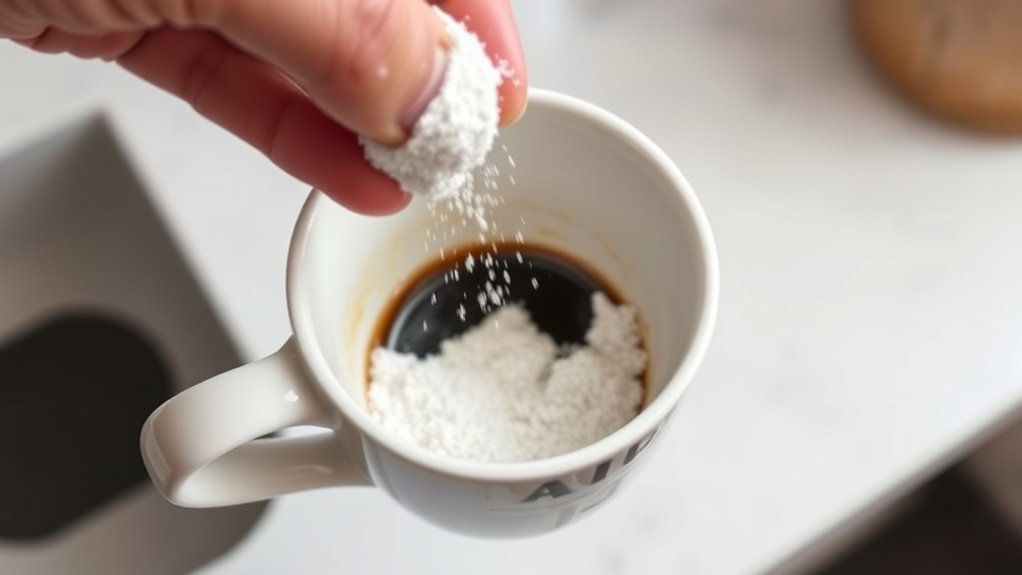
When regular washing doesn’t remove stubborn coffee stains, baking soda can be your go-to solution. Sprinkle a small amount of baking soda onto the damp stained areas of your cup. Use a soft cloth or sponge to gently scrub in circular motions.
Baking soda’s mild abrasiveness lifts stains without damaging the cup’s surface. This method preserves the coffee aroma in your cup while effectively tackling discoloration.
After scrubbing, rinse thoroughly with warm water.
For stain prevention, clean your cups promptly after use and apply this baking soda treatment weekly to keep coffee stains at bay. Using baking soda regularly not only removes existing stains but also helps maintain the pristine look of your cups.
This way, each coffee experience is as fresh as the aroma you love.
How to Use Vinegar to Brighten and Remove Coffee Stains
Although coffee stains can be stubborn, you can effectively brighten and remove them using vinegar. Its acidic nature breaks down residue without harming your cup design or lingering on the coffee aroma.
Coffee stains can be stubborn, but vinegar’s acidity brightens cups without harming designs or coffee aroma.
To use vinegar properly, pour equal parts white vinegar and warm water into the cup. Let it soak for 10-15 minutes to loosen stains.
Then, use a soft brush or sponge to gently scrub, preserving the cup design. Rinse thoroughly with warm water to remove the vinegar smell.
Finally, dry with a clean cloth to prevent water spots. This method revives your cup’s appearance while keeping the pleasant coffee aroma you enjoy.
Vinegar’s natural cleaning power makes it a reliable option for keeping your coffee cups stain-free and visually appealing. Give it a try and see the difference!
How Lemon Juice Can Lift Coffee Stains
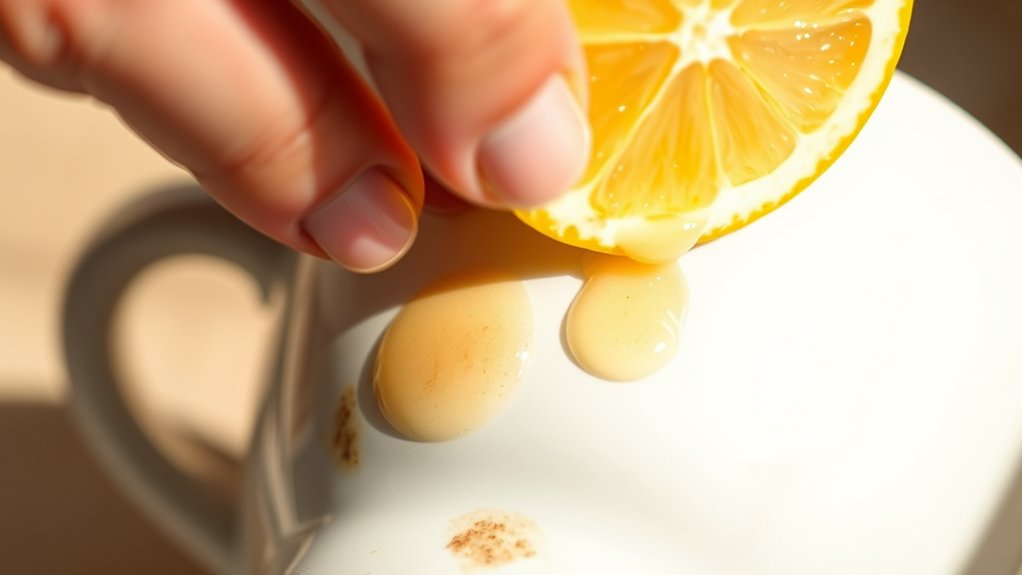
How does lemon juice effectively lift coffee stains from your cups? Its natural acidity breaks down the tannins that cause stubborn discoloration, making it a powerful yet gentle cleaner. Simply squeeze fresh lemon juice onto the stained areas and let it sit for a few minutes to penetrate the residue.
Then, scrub with a soft sponge to avoid damaging the cup design. This method not only removes stains but also preserves the coffee aroma, so your cup won’t carry any unwanted scents after cleaning. Lemon juice’s mild bleaching action brightens the surface without harsh chemicals, maintaining the integrity of delicate materials.
Using lemon juice is a straightforward, eco-friendly way to keep your cups spotless while retaining their original look and smell. It’s easy, effective, and gentle enough for regular use. Give it a try next time your coffee cups need a little refresh!
Top Household Ingredients for Removing Coffee Stains
You can easily tackle coffee stains using common household ingredients like baking soda, vinegar, and lemon juice. Baking soda works great because it gently scrubs away the residue without scratching your cups.
Then, there’s vinegar—it’s acidic, so it breaks down those tough stains really well. And don’t forget lemon juice! It not only brightens the surface but also helps lift any discoloration.
When you use these ingredients the right way, you’ll have your cups looking clean and fresh again in no time. Plus, it’s all safe and simple to do at home.
Baking Soda Benefits
Why does baking soda work so well for removing coffee stains? Baking soda’s mild abrasiveness and alkaline nature break down the tannins that discolor your cup’s surface. This helps preserve delicate coffee art and cup design.
When you use it, you’re targeting stains without damaging the cup’s finish. That way, your favorite mug looks as good as new.
Here’s why baking soda is a top choice:
- Gently scrubs away stubborn coffee stains
- Neutralizes acidic residue from coffee
- Safe for most cup materials and designs
- Removes odors, keeping your cup fresh
- Easy to mix into a paste for precise cleaning
Try incorporating baking soda into your cleaning routine. It’s a simple way to keep your cups pristine and your coffee art flawless every time.
Vinegar Cleaning Power
Although coffee stains can be stubborn, vinegar’s natural acidity cuts through residue quickly and effectively. To restore your cup’s original look without compromising its design, soak the stained area in a mixture of equal parts white vinegar and water for 10-15 minutes. The acidity breaks down the tannins that cause discoloration, making them easier to scrub away.
Use a soft brush or sponge to avoid damaging delicate cup designs. After rinsing thoroughly, you’ll notice the coffee aroma returns to its fresh state, free from lingering bitterness caused by old stains.
Vinegar not only cleans but also deodorizes, ensuring your cups smell as inviting as the coffee you brew.
This simple, affordable method keeps your cups spotless and ready to enhance every coffee experience. Give it a try — it really works wonders!
Lemon Juice Effectiveness
When dealing with stubborn coffee stains, lemon juice stands out as a powerful natural cleaner. Its acidity breaks down tannins in coffee, lifting stains effortlessly. Plus, the fresh citrus aroma leaves your cup smelling clean.
You can even use lemon zest for added scrubbing power and a pleasant scent boost. Here’s how lemon juice works for you:
- Apply fresh lemon juice directly to stains.
- Let it sit for 5–10 minutes to penetrate grime.
- Scrub gently with lemon zest for tough residue.
- Rinse with warm water to remove loosened stains.
- Enjoy the lingering citrus aroma that refreshes your cup.
Lemon juice’s natural bleaching effect and crisp scent make it an excellent, eco-friendly choice for spotless coffee cups. Give it a try and see how easily your stains disappear!
When to Use Commercial Cleaners for Coffee Stains
If your coffee stains just won’t budge with household remedies, it might be time to consider commercial cleaners made specifically for tough stains.
You’ll want to pick products that are strong enough to get the job done but still safe for your cups and gentle on your hands.
Knowing when and how to use these cleaners can help you get great results without causing any damage.
Stubborn Stains Treatment
Since some coffee stains resist traditional home remedies, you’ll need commercial cleaners to restore your cups effectively. These products target stubborn discolorations without compromising the coffee aroma or damaging the cup material.
Choose cleaners formulated for your specific cup type, whether it’s ceramic, glass, or stainless steel. This helps maintain durability and keeps the scent just right.
When treating tough stains, consider these tips: test the cleaner on a hidden spot first. Follow manufacturer instructions precisely to get the best result. Use a soft brush to avoid scratching your cup.
Make sure to rinse thoroughly to prevent any residue from affecting the coffee aroma. And only repeat the treatment if necessary, so you don’t harm the cup material.
Safety and Effectiveness
How do you guarantee commercial cleaners remove coffee stains safely and effectively? First, always read product labels and follow safety precautions, including wearing gloves and ensuring proper ventilation.
Use commercial cleaners only when homemade remedies fail. They contain stronger chemicals that can damage delicate cup materials if misused. It’s a good idea to test the cleaner on a small, hidden area before applying it fully to prevent surface damage.
To keep stains from setting in the first place, rinse cups promptly after use. Regular maintenance with mild soaps also helps reduce the need for harsh cleaners.
When used correctly, commercial cleaners break down stubborn coffee stains efficiently without harming your cup’s integrity. Just remember to handle these products responsibly and store them out of reach of children and pets.
Tips for Preventing Coffee Stains in Your Cups
Although coffee stains can be stubborn, you can considerably reduce their appearance by rinsing your cup immediately after use. Taking a proactive approach helps maintain both the cup’s look and your coffee art. This way, you preserve any delicate designs or cup customization you value.
To prevent stains effectively, follow these tips:
- Rinse cups with warm water right after drinking.
- Use a soft cloth to gently wipe away residue.
- Avoid leaving coffee sitting in the cup for extended periods.
- Choose cups with smooth, non-porous surfaces to minimize stain absorption.
- Apply a protective coating or sealant designed for cup customization.
Daily Habits to Keep Coffee Cups Stain-Free
To keep your coffee cups stain-free, try rinsing them right after you use them. This helps stop any residue from sticking around.
It’s best to use mild detergents when you clean your cups. That way, you protect the surface without exposing it to harsh chemicals.
Also, avoid soaking your cups for too long. Prolonged soaking can weaken the material and actually make stains tougher to get rid of.
Rinse Cups Immediately
Since coffee residue can quickly set and become stubborn, you should rinse your cups immediately after use. Doing so prevents stains from forming and makes cleaning easier. Pay close attention to the coffee temperature. Hot coffee leaves more intense stains that bind faster to porous cup materials like ceramic or porous stoneware.
Quickly rinsing with warm water helps loosen these residues before they adhere.
To effectively rinse your cups immediately:
- Use warm water to match the coffee temperature and prevent thermal shock.
- Avoid letting coffee sit for hours, as it seeps into the cup material.
- Swirl water inside the cup to dislodge residue.
- Rinse both the interior and rim thoroughly.
- Dry the cup promptly to avoid water spots and residue buildup.
This habit protects your cups and keeps them stain-free longer. It really makes a difference in the long run!
Use Mild Detergents
When you want to keep your coffee cups spotless, choosing mild detergents makes a big difference. Harsh chemicals can degrade the cup material or strip away the subtle coffee aroma you enjoy. Mild detergents remove stains effectively without damaging delicate surfaces like porcelain or glass.
Use a soft sponge to preserve the cup’s finish while keeping it clean.
| Cup Material | Recommended Detergent Type |
|---|---|
| Porcelain | Mild dish soap |
| Glass | Gentle, fragrance-free soap |
| Stainless Steel | Mild detergent with no abrasives |
| Ceramic | Non-abrasive, pH-neutral soap |
Picking detergents that match your cup material helps protect both the look and the aroma. That way, your coffee experience stays fresh and enjoyable every time.
Avoid Prolonged Soaking
Although soaking your coffee cups might seem like an easy way to loosen stains, leaving them submerged for too long can cause discoloration and damage. Excessive soaking duration increases stain penetration into the cup’s surface, making removal harder and potentially harming the finish.
To keep your cups stain-free without risking damage, limit how long you soak them. Here’s how to manage soaking effectively:
- Soak cups for no longer than 15-20 minutes
- Use warm water with mild detergent to reduce harsh effects
- Rinse thoroughly immediately after soaking
- Avoid soaking in strong chemicals or abrasive solutions
- Dry cups promptly to prevent water spots and residue buildup
Cleaning Coffee Stains on Different Cup Materials
Different cup materials react uniquely to cleaning agents and methods, so you’ll need to adapt your approach accordingly.
Porcelain and ceramic cups have low stain absorption and handle baking soda and mild abrasives well. You can use a paste of baking soda and water to scrub stubborn stains gently.
Glass cups are non-porous but prone to cloudy residue. A vinegar soak followed by thorough rinsing works best to get them clear again.
For stainless steel, avoid harsh abrasives that can scratch the surface. Instead, opt for a mixture of lemon juice and baking soda to lift stains.
Plastic cups absorb stains more easily, so they need prompt cleaning using dish soap and warm water. This helps prevent permanent discoloration.
Knowing your cup material guarantees effective stain removal without damage, which keeps your cups looking good and lasting longer.
Frequently Asked Questions
Can Coffee Stains Affect the Taste of My Next Cup?
Yes, coffee stains can affect the taste of your next cup by altering the coffee aroma. This can make it less fresh and sometimes even bitter.
Over time, these stains can also compromise the durability of your cup, especially if they cause surface roughness or damage.
To keep both the flavor and your cup in great shape, it’s a good idea to clean your cup thoroughly after each use.
This way, the coffee aroma stays pure, and your cup lasts longer.
Are Coffee Stains Harmful to Health if Ingested?
Coincidentally, while coffee residue might seem harmless, it’s not ideal to ingest over time. You aren’t likely to get sick from small amounts, but buildup can harbor bacteria or mold, especially if stain removal is neglected.
So, you should clean your cups regularly to avoid those risks. Effective stain removal keeps your cup safe and your coffee tasting fresh.
Don’t let old coffee residue compromise your health or enjoyment.
How Long Do Coffee Stains Typically Take to Set?
Coffee stains typically start setting within 20 to 30 minutes after contact, so it’s super important to act fast when you notice one. If you wait too long, the stain bonds more firmly to the cup’s surface, which makes cleaning a real hassle.
You should jump on it quickly using effective stain removal methods like baking soda scrubs or vinegar soaks to break down the pigments.
The faster you address the stain, the easier your cleaning process will be.
That way, your cups stay spotless without much fuss. It’s all about timing!
Can Coffee Stains Ruin the Finish on Collectible Cups?
Yes, coffee stains can ruin the finish on collectible cups if left untreated. Like tea stains, they contain tannins that penetrate the surface, causing discoloration and dullness.
Over time, improper cleaning or harsh scrubbing can lead to ceramic damage, weakening the glaze or paint.
To protect your collectibles, you should clean stains gently and promptly. Use mild solutions that preserve the cup’s finish without abrasive effects.
It’s all about being careful and acting quickly to keep your cups looking their best.
Is It Safe to Use Bleach on Coffee-Stained Cups?
You might want to think twice before inviting bleach to the party. While bleach can tackle stubborn stains, it can also damage delicate finishes and leave harmful residues.
For safe stain removal, try gentler alternatives like baking soda or vinegar. These methods keep your cup’s integrity intact without risking discoloration or health concerns.
Conclusion
Coffee stains on your cups don’t have to be a stubborn shadow lingering after every sip. With simple solutions like baking soda, vinegar, or lemon juice, you can brighten your cups to their original glow.
Remember, consistent care is your shield against stubborn marks. When stains persist, commercial cleaners can step in as reliable allies. Keep these tips close, and your cups will always sparkle.
That way, every coffee moment feels fresh and clean.