
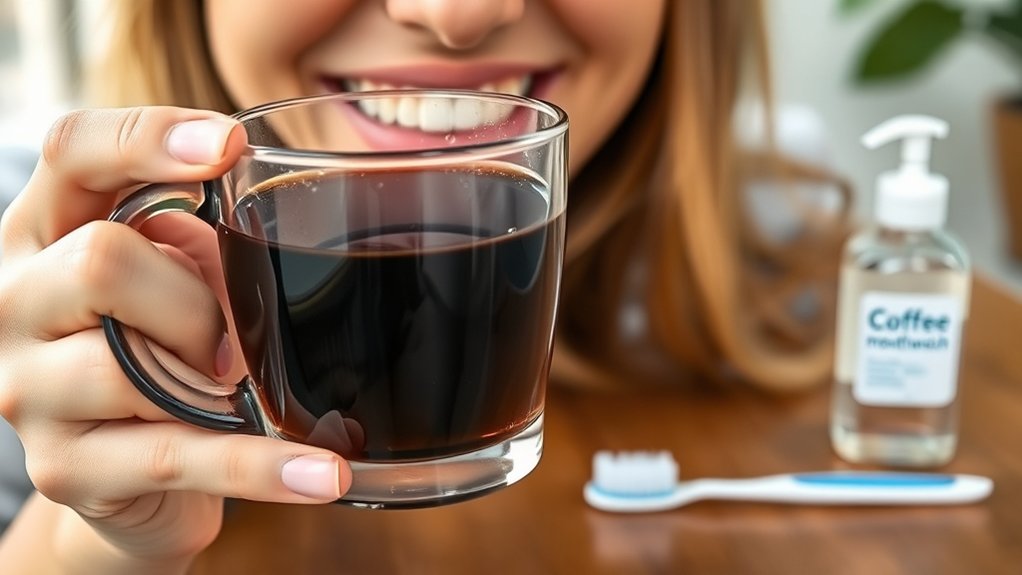
How To Prevent Coffee Stains On Teeth – Effective Tips And Solutions
To prevent coffee stains on your teeth, rinse your mouth with water right after drinking and avoid sipping slowly to limit enamel exposure. Use a straw for iced coffee, and wait 30 minutes before brushing to protect softened enamel.
Try incorporating crunchy fruits or veggies to naturally clean your teeth. Also, choose toothpastes with whitening agents like baking soda or hydrogen peroxide.
Regular dental cleanings and professional whitening treatments help keep your smile bright. There are plenty of other ways to keep your teeth stain-free and healthy—so explore what works best for you!
Why Coffee Stains Teeth and How It Happens

Why does coffee stain your teeth so easily? It comes down to coffee chemistry and how stain formation occurs. Coffee contains chromogens, which are intensely pigmented compounds that readily attach to your tooth enamel.
Coffee stains teeth because its pigmented compounds, chromogens, easily bind to enamel, causing discoloration.
Moreover, coffee’s acidity slightly softens the enamel surface, making it easier for these chromogens to stick. Over time, repeated exposure lets these pigments build up, creating noticeable stains.
The porous nature of enamel also plays a role; it absorbs the coffee’s pigments, deepening discoloration. Understanding this process helps you grasp why coffee stains teeth despite regular brushing.
The combination of coffee’s chemical makeup and your enamel’s susceptibility drives stain formation, making coffee one of the most common culprits behind tooth discoloration.
Effective Daily Habits to Limit Coffee Stains
Since coffee’s pigments cling tightly to your enamel and the surface softens with acidity, adopting specific daily habits can considerably reduce stain buildup.
Start by optimizing your coffee brewing method. Using a cooler brew temperature or cold brew can lessen acidity and staining potential.
Rinse your mouth with water immediately after drinking coffee to dilute pigments and acids. This helps with stain removal.
Also, try to avoid sipping coffee slowly over long periods because prolonged exposure increases enamel staining.
Incorporate foods like crunchy fruits and vegetables, which naturally help clean teeth surfaces.
You might also consider using a straw when drinking iced coffee to minimize direct contact with your teeth.
These simple, consistent habits can really help limit coffee stain accumulation and keep your smile bright without any drastic measures.
How Often Should You Brush to Keep Coffee Stains Away?

Although brushing too soon after drinking coffee can damage softened enamel, maintaining a consistent brushing routine is essential to prevent stains from setting in. You should wait at least 30 minutes after enjoying your coffee aroma before brushing to protect your enamel.
Brushing twice daily, once in the morning and once before bed, effectively removes surface stains and plaque buildup. This supports long-term stain prevention. If possible, rinsing your mouth with water right after drinking coffee can help reduce residue until you brush.
Remember, overbrushing or using a hard-bristled toothbrush can cause damage. So, choose a soft-bristled brush and use a gentle technique.
Top Toothpastes and Mouthwashes That Fight Coffee Stains
When you want to combat coffee stains effectively, choosing the right toothpaste and mouthwash plays an essential role in your oral care routine. Toothpastes formulated with mild abrasives and whitening agents target the outer enamel, the first line of defense in dental anatomy against discoloration from coffee brewing compounds.
Look for products containing hydrogen peroxide or baking soda; these ingredients gently lift stains without damaging enamel.
Complement this with an antimicrobial mouthwash that reduces plaque buildup, which can trap coffee pigments and worsen staining. Mouthwashes with whitening properties also help maintain brightness by reaching areas your brush can’t.
By integrating these specialized toothpastes and mouthwashes, you reinforce your teeth’s natural resistance to the staining effects of coffee brewing.
This way, you keep your smile visibly cleaner and healthier. It’s all about using the right products consistently to see the best results.
How Drinking Water Helps Wash Away Coffee Residue

Beyond selecting the right toothpaste and mouthwash, drinking water regularly plays a key role in minimizing coffee stains. When you sip coffee, its rich aroma often lingers along with microscopic residue that clings to your teeth.
Drinking water immediately after helps rinse away this residue, reducing the coffee’s acidic impact and preventing particles from settling.
This simple habit interrupts stain longevity by diluting pigments before they penetrate your enamel. Additionally, water stimulates saliva production, which naturally neutralizes acids and further washes away staining compounds.
How Using Straws Can Protect Your Teeth From Coffee Stains
Using a straw can really help keep your teeth from getting stained by coffee. When you use one, it reduces the amount of direct contact your teeth have with the coffee, which means fewer stains.
To get the best results, try to position the straw toward the back of your mouth. Also, avoid sipping slowly over long periods because that can still let the coffee linger on your teeth.
Making these small changes can make a big difference in protecting your smile from discoloration. It’s an easy way to enjoy your coffee without worrying so much about stains!
Benefits Of Using Straws
Although coffee is a beloved beverage, it can easily leave stains on your teeth if you’re not careful. Using straws offers a simple yet effective way to minimize contact between coffee and your teeth, reducing staining.
By directing the liquid past your teeth, straws help preserve your smile’s brightness.
Plus, choosing straws made from sustainable alternatives and eco-friendly materials means you’re protecting both your dental health and the environment. Options like bamboo or silicone provide durability without adding to plastic waste.
Incorporating straws into your coffee routine can greatly lower the risk of discoloration while supporting eco-conscious choices.
Proper Straw Usage Tips
When you position the straw correctly, you can considerably reduce the coffee’s contact with your teeth, which helps prevent stains. To maximize stain prevention, place the straw toward the back of your mouth, directing the coffee past your front teeth. This minimizes exposure to coffee acidity, which can erode enamel and increase stain susceptibility.
Avoid sipping slowly through the straw, as prolonged contact with acidic coffee still poses risks. Instead, take quick, controlled sips to limit acid exposure.
Also, choose reusable or BPA-free straws to maintain hygiene.
By following these proper straw usage tips, you effectively shield your teeth from coffee’s staining effects while still enjoying your beverage.
Consistent practice of these techniques plays a crucial role in maintaining a brighter, healthier smile. So go ahead, enjoy your coffee with a straw the right way!
Natural Remedies to Remove Coffee Stains at Home
You can easily tackle coffee stains at home using natural remedies like baking soda. It’s great because it gently whitens teeth by removing those stubborn surface stains.
Another cool trick is oil pulling—just swish some coconut or sesame oil around in your mouth. This helps reduce discoloration and also promotes better oral health.
These simple techniques are a nice way to boost your regular dental care routine and keep your smile looking bright.
Baking Soda Benefits
Since coffee stains can be stubborn, using baking soda offers a practical and effective solution for removing discoloration at home. Baking soda’s mild abrasive properties help break down the surface stains caused by the coffee flavor, gently polishing your teeth without damaging enamel.
When combined with water or toothpaste, it forms a paste that enhances stain removal, making your smile visibly brighter. You can use baking soda once or twice a week to avoid overuse, which might irritate your gums.
While it effectively tackles coffee stains, it’s important to maintain regular dental hygiene for long-term results. Incorporating baking soda into your routine supports stain removal, helping you enjoy your coffee without worrying about discoloration.
Oil Pulling Technique
Although coffee stains can be persistent, incorporating the oil pulling technique offers a natural and efficient way to reduce discoloration at home. This method involves swishing natural oils in your mouth to remove bacteria and plaque, which contribute to stains. You’ll enjoy several oil pulling benefits, including fresher breath and improved oral hygiene.
It’s a simple step you can easily add to your daily routine. Plus, it feels refreshing and helps keep your mouth clean.
| Natural Oil Options | Benefits | Usage Tips |
|---|---|---|
| Coconut Oil | Antibacterial, tasty | Swish 10-15 minutes |
| Sesame Oil | Reduces plaque | Use daily, morning |
| Sunflower Oil | Whitens teeth | Avoid swallowing |
| Olive Oil | Anti-inflammatory | Swish gently |
| Almond Oil | Strengthens gums | Combine with brushing |
Try oil pulling regularly to complement your coffee stain prevention routine effectively. It’s a natural way to help keep your smile bright and your mouth healthy.
Foods and Drinks That Prevent or Reverse Coffee Stains
While coffee tends to stain teeth over time, certain foods and drinks can help prevent or even reverse these effects by neutralizing acids and removing surface discoloration. Incorporating coffee alternatives and stain-resistant foods into your diet supports better oral health and reduces staining risks.
Green tea is a popular coffee alternative. It contains antioxidants that fight bacteria and reduce plaque, which helps minimize stains.
Crunchy fruits and vegetables like apples, carrots, and celery act as natural abrasives. They scrub tooth surfaces and prevent discoloration.
Dairy products such as cheese and yogurt increase saliva production. This helps wash away staining agents and neutralizes harmful acids.
Professional Teeth Whitening Options for Coffee Drinkers
If you want faster and more noticeable results in removing coffee stains, professional teeth whitening treatments offer effective solutions tailored to your needs. These treatments target stubborn discoloration caused by coffee aroma and pigments, providing significant stain removal. You can choose between in-office procedures or custom take-home kits, depending on your preference and schedule.
| Treatment Type | Duration | Effectiveness on Coffee Stains |
|---|---|---|
| In-office Whitening | 30–60 minutes | High |
| Custom Take-home Kits | 1–2 weeks | Moderate to High |
| Over-the-counter Products | Varies | Low to Moderate |
Professional options provide precision and safety, ensuring your smile stays bright without compromising enamel integrity. It’s a smart way to keep your teeth looking great, especially if you’re a regular coffee drinker.
How Regular Dental Cleanings Keep Coffee Stains Under Control
Because coffee stains can build up gradually, scheduling regular dental cleanings plays an essential role in keeping your teeth bright and free from discoloration. During these cleanings, your dentist removes dental plaque that traps coffee pigments, preventing further staining.
Plus, professional cleaning helps reduce the risk of tooth sensitivity caused by enamel erosion linked to acidic coffee.
Here’s how regular dental cleanings help control coffee stains effectively:
- Thorough Plaque Removal: Eliminates stubborn plaque where stains accumulate.
- Surface Polishing: Smooths enamel to resist future discoloration.
- Early Detection: Identifies areas of enamel wear to manage tooth sensitivity promptly.
Frequently Asked Questions
Can Coffee Stains Damage Tooth Enamel Permanently?
Coffee stains themselves don’t permanently damage tooth enamel, but they can make your teeth look discolored and dull.
However, if you neglect stain prevention and maintain poor oral hygiene, acids from coffee combined with bacteria can weaken enamel over time.
To protect your tooth enamel, rinse your mouth with water after drinking coffee, brush regularly, and consider using toothpaste designed for stain prevention.
This keeps your enamel healthy and your smile bright.
Does Cold Coffee Stain Teeth Less Than Hot Coffee?
Cold coffee stains teeth slightly less than hot coffee because temperature impacts coffee acidity. Hot coffee tends to have higher acidity, which can erode enamel and make teeth more prone to staining.
When you drink cold coffee, the lower temperature reduces acidity’s effect, lessening enamel wear and stain absorption.
That said, both hot and cold coffee contain pigments that can stain your teeth. So, rinsing or brushing afterward really helps minimize discoloration no matter the temperature.
Are Electric Toothbrushes More Effective Against Coffee Stains?
Yes, electric toothbrushes are more effective against coffee stains. Imagine a tiny, fast-moving brush head scrubbing away stubborn pigments caused by coffee acidity. It reaches spots you might miss with a manual brush.
They provide consistent pressure without aggravating tooth sensitivity, making stain removal gentler yet thorough. Using an electric toothbrush regularly helps maintain your smile’s brightness by efficiently combating the discoloration coffee can cause.
This effect is even better when paired with whitening toothpaste.
Can Whitening Strips Remove Deep Coffee Stains?
Whitening strips can help remove surface coffee residue but may struggle with deep coffee stains. Their stain removal ability is most effective on discoloration close to the enamel’s surface.
For deeper stains, you might need professional treatments or stronger whitening solutions.
Using whitening strips consistently can improve your teeth’s brightness, but don’t expect them to completely erase stubborn, deep coffee stains without additional dental care.
Sometimes, a little extra help from your dentist is what it takes to get that bright smile back.
How Long After Drinking Coffee Should I Avoid Brushing?
You should wait about 30 minutes after drinking coffee before brushing your teeth to avoid enamel damage.
In the meantime, try coffee rinsing by swishing water around your mouth to reduce acidity.
Using dental floss after meals helps remove plaque and prevent stains.
This routine protects your teeth while maintaining oral hygiene effectively.
So, be patient before brushing and make rinsing and flossing part of your daily care.
It really makes a difference!
Conclusion
If you drink coffee regularly, you’re not alone. Over 50% of adults consume it daily, which can increase the risk of stains. But don’t worry, there are ways to keep your teeth looking great.
By adopting effective habits like brushing twice a day, rinsing with water, and using stain-fighting products, you can keep your smile bright. It’s all about being consistent with these simple steps.
You can also combine these habits with professional cleanings and natural remedies. Together, they work efficiently to combat stains. Taking these steps means you can enjoy your coffee without losing a confident, spotless smile.