
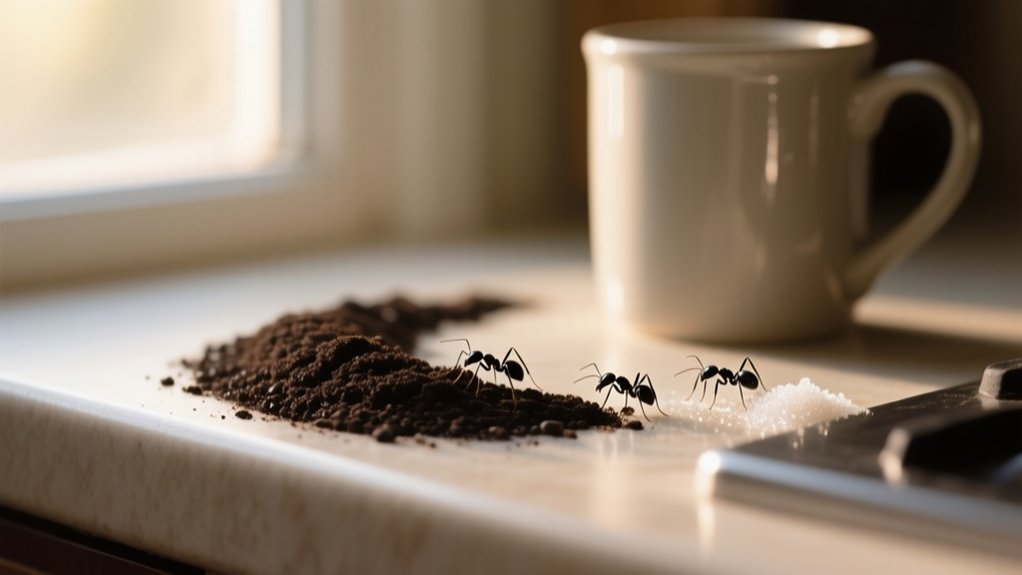
Are Ants Attracted To Coffee Grounds – Facts Explained
You’ll find ants both attracted to and repelled by coffee grounds due to their chemical and nutrient composition. The strong aroma and caffeine stimulate foraging, drawing ants looking for nitrogen and minerals.
Yet, the coarse texture and acidity create physical and sensory barriers that deter some species. These conflicting effects depend on species-specific behaviors and environmental factors.
Exploring these interactions reveals how coffee grounds can simultaneously lure and discourage ants in your home or garden.
Do Coffee Grounds Repel Ants or Attract Them?
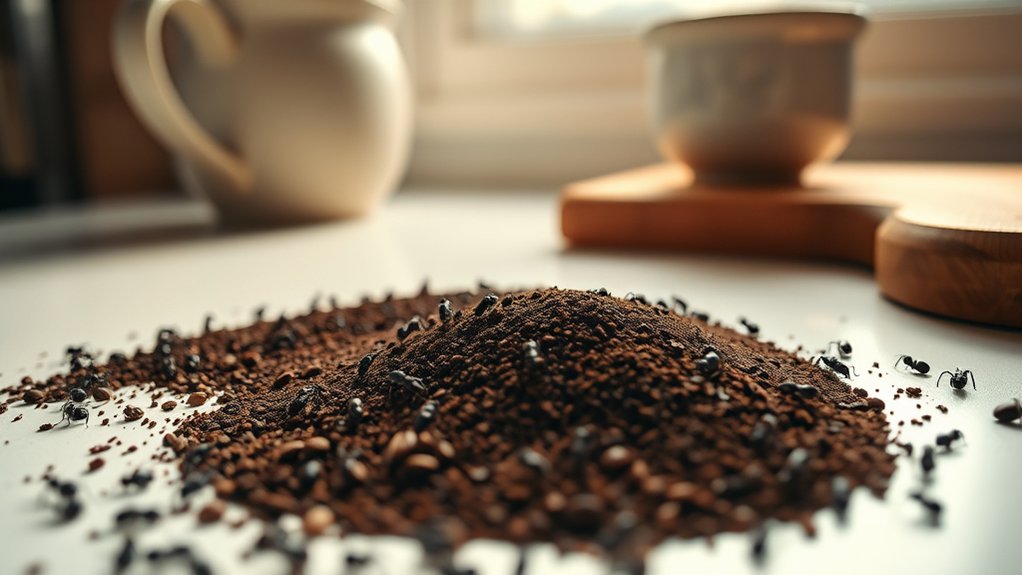
How do coffee grounds influence ant behavior? You’ll find that ants are attracted to coffee primarily because of its nitrogen content and caffeine, which stimulates their central nervous systems.
Ants are drawn to coffee due to its nitrogen and caffeine, which energize their nervous systems.
Used coffee grounds release a strong aroma resembling ant pheromones, triggering foraging activity.
While some argue coffee grounds repel ants, research shows ants may initially avoid them but often return, indicating a nuanced effect rather than simple deterrence.
Moreover, nutrients like potassium and phosphorus in used coffee grounds provide energy and nourishment, further attracting ants.
The texture and chemical makeup can create a physical barrier for some species, but this doesn’t equate to true repellency.
Consequently, you’ll see coffee grounds have a complex influence, simultaneously attracting ants while occasionally impeding their movement.
Why Ants Are Drawn to Coffee Grounds
You’ll notice ants are drawn to coffee grounds mainly because of their strong aroma. It kind of mimics the pheromones ants use to signal food sources.
Plus, the grounds provide essential nutrients like nitrogen, potassium, and phosphorus, which help support ant colonies.
On top of that, caffeine acts as a chemical stimulant, kicking their central nervous systems into gear and boosting their foraging activity.
Coffee Aroma Attraction
Although coffee grounds repel some insects, ants are drawn to them primarily because of the strong aroma produced by organic chemicals and caffeine. This scent mimics pheromones signaling food sources, effectively stimulating ants’ foraging behavior.
When you introduce coffee grounds near a new account of ant activity, you’ll notice increased ant traffic as their central nervous systems activate in response to caffeine’s stimulant effect.
Notably, diatomaceous earth used as a natural insect deterrent doesn’t mask this aroma, so ants remain attracted despite its abrasive properties.
Leveraging AI from the post, researchers analyze how these olfactory cues impact ant navigation and colony behavior.
Understanding coffee’s chemical profile clarifies why ants prioritize these grounds, despite the grounds’ acidity and texture repelling other insects.
Nutritional Value Influence
Because coffee grounds contain high levels of nitrogen, potassium, and phosphorus, they serve as a valuable nutrient source that actively attracts ants seeking sustenance.
You’ll find that ants’ nutritional preferences lead them to exploit coffee grounds as efficient energy sources.
Their digestive efficiency allows them to metabolize the organic compounds and minerals contained within, supporting colony growth.
This nutrient-rich substrate meets their dietary requirements beyond sugars and proteins, making coffee grounds an appealing resource.
Rich mineral content aligns with ants’ macronutrient needs.
Organic compounds provide sustained energy release.
Digestive enzymes optimize nutrient extraction from coffee grounds.
Nutritional benefits promote foraging and colony expansion.
Understanding these factors clarifies why ants target coffee grounds as a reliable food source.
Chemical Signal Effects
Beyond their nutritional appeal, coffee grounds emit chemical signals that play a significant role in attracting ants. The strong aroma contains organic compounds that engage the chemical signaling dynamics ants rely on to locate food.
These compounds often exhibit pheromone mimicry, resembling the ants’ natural food-source pheromones, which triggers their foraging behavior. Moreover, caffeine in coffee grounds influences ants’ central nervous systems, increasing activity and potentially acting as an attractant.
Ants use communication pathways involving pheromones to mark and recruit others to food, and coffee grounds’ chemical cues exploit these pathways effectively.
This mimicry and signaling interplay explain why ants are drawn to coffee grounds beyond mere nutritional factors, highlighting the intricate biochemical interactions underlying their foraging responses.
How Coffee Grounds Naturally Deter Ants
When you apply coffee grounds around your home, their unique chemical composition and texture work together to deter ants naturally. Coffee ground applications create a physical barrier ants tend to avoid, modifying their behavior without toxic chemicals.
This alternative pest solution leverages both chemical and tactile factors to influence ant behavior effectively.
The coarse texture disrupts ant movement, serving as a mechanical deterrent. Caffeine and acidity interfere with ant sensory receptors, reducing trail-following behavior.
Strong coffee aromas mimic food pheromones but can confuse and repel ants over time. Organic compounds in grounds alter local microenvironments, making areas less hospitable.
How Different Ants React to Coffee Grounds
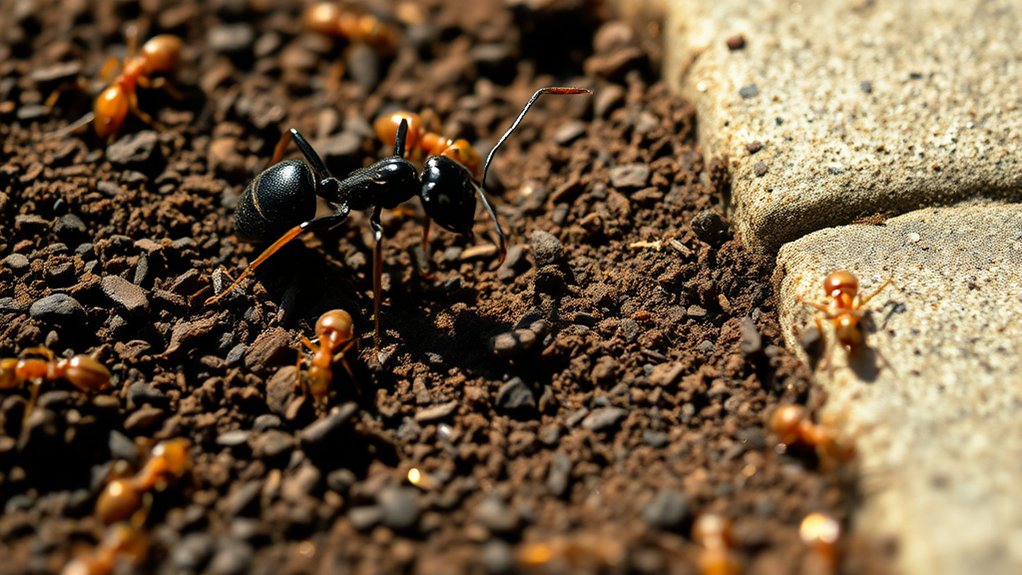
You’ll notice that ants react differently to coffee grounds depending on their species. Some ants are actually attracted to them, while others tend to avoid them.
This happens because of a few things—like what nutrients the ants need, how sensitive they’re to certain chemicals, and the environment they’re in.
Knowing these little differences helps explain why coffee grounds can sometimes repel ants and other times draw them in.
Species-Specific Reactions
Although coffee grounds contain compounds that might attract some ants, their reactions vary considerably across species. You’ll notice that ant species interactions with coffee grounds depend heavily on environmental factors and food source availability.
Some ants respond to the nitrogen and aromatic compounds, while others are deterred by caffeine’s stimulant properties. For instance, fire ants tend to navigate around coffee grounds rather than avoid them entirely.
Understanding these species-specific reactions is essential for interpreting ant behavior in various contexts. Smaller ant species may exploit coffee grounds as a nutrient-rich food source.
Chemical signals in coffee can mimic pheromones, influencing foraging behavior. Texture and physical composition of grounds can deter certain ants. Environmental context and competing food sources shape ant response patterns.
Attraction Versus Repellency
The response of ants to coffee grounds presents a nuanced balance between attraction and repellency, influenced by the grounds’ chemical and physical properties.
You’ll notice that ant behavior patterns vary: some species are drawn to the nitrogen-rich caffeine residue, which can stimulate foraging, while others avoid the texture or chemicals due to their repellent effects.
Coffee grounds may interfere with or enhance pheromone communication, as certain chemical signals mimic or strengthen existing pheromone trails, altering ecological interactions within ant colonies.
This dual role complicates how ants perceive coffee grounds, resulting in initial avoidance followed by eventual attraction in some species.
Understanding these dynamics reveals how ecological context and species-specific sensory mechanisms govern the complex interplay between coffee grounds and ant responses.
Behavioral Adaptations
Understanding how ants respond to coffee grounds requires examining species-specific behavioral adaptations. You’ll notice that ant foraging strategies differ widely. Some species exploit coffee’s aromatic compounds, while others avoid its texture and acidity.
Chemical communication dynamics play a vital role. Pheromones emitted by coffee grounds can mimic those signaling food sources, triggering attraction in certain ants.
Ecological interactions reveal a dual effect: caffeine acts both as an attractant and a natural insecticide, influencing colony behavior variably.
Some ants are initially deterred by coffee grounds’ acidity and texture. Others are attracted due to nitrogen content and caffeine residue.
Pheromone-like compounds stimulate foraging in specific species. Behavioral responses depend on species-specific chemical communication and ecological context.
Does Coffee Grounds Work for Garden Ant Control?
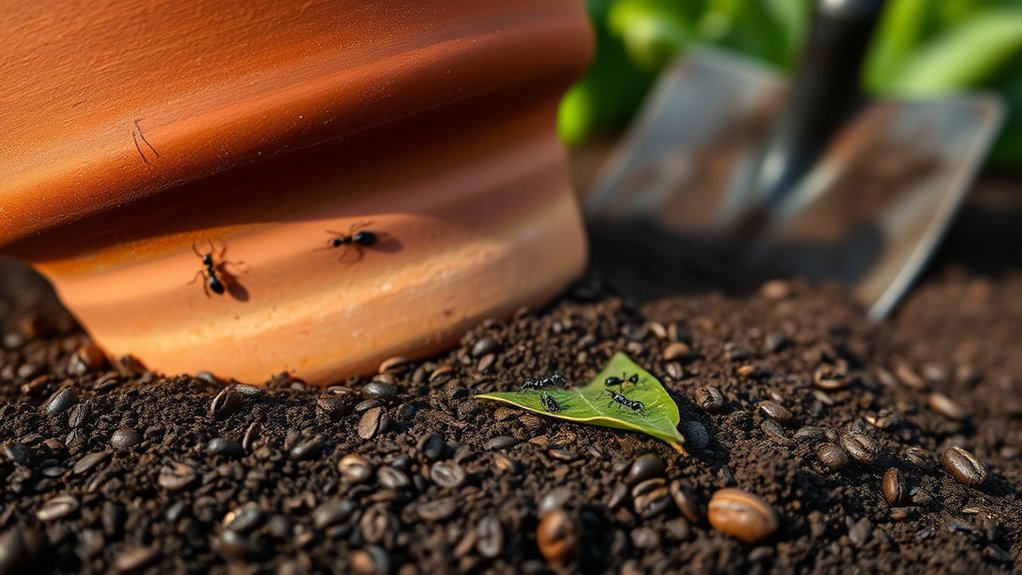
How effective are coffee grounds for controlling garden ants? Coffee grounds offer mixed results as a natural deterrent for garden pests. Their nitrogen content and aroma may initially attract ants, but they don’t consistently repel all species.
While coffee grounds can enhance soil health, their pest control role remains inconclusive. You might find them useful as a physical barrier, yet some ants navigate around them. Combining coffee grounds with other methods improves outcomes.
| Aspect | Coffee Grounds | Alternative Natural Deterrents |
|---|---|---|
| Attraction | May attract ants initially | Generally repel ants |
| Effectiveness | Variable, species-dependent | More reliable (e.g., diatomaceous earth) |
| Soil Health Impact | Improves soil quality and structure | Varies, often neutral |
Using Coffee Grounds to Deter Ants at Home
Using coffee grounds to deter ants at home involves strategic placement and application techniques to maximize their limited repellent properties. You can use coffee grounds as a home remedy for ant prevention, but understanding their dual role is essential. They may repel ants initially due to texture yet attract them because of caffeine and nitrogen content.
To optimize effectiveness, consider these points:
- Create a 2-inch wide barrier of coffee grounds around entry points to hinder ant access.
- Apply hot water mixed with coffee grounds over anthills to disrupt colony activity.
- Reapply grounds regularly to maintain a protective zone, acknowledging their temporary effect.
- Monitor for increased ant activity, as coffee grounds can sometimes attract ants seeking nutrients.
This method offers short-term ant prevention but requires careful management to avoid unintended attraction.
Why Ants Ignore Coffee Grounds and Come Back
Although coffee grounds initially deter ants due to their coarse texture and chemical irritants, ants often overcome this barrier and return. Ant behavior patterns reveal persistence in foraging strategies, enabling them to navigate around or tolerate irritants.
Environmental influences, such as moisture and scarcity of alternative food, heighten their motivation to revisit coffee ground areas. Curiously, the strong aroma of coffee can mimic pheromone trails, inadvertently attracting ants despite initial avoidance.
Moreover, nutrients like nitrogen and potassium in coffee grounds may stimulate sustained foraging interest.
Understanding these factors clarifies why ants ignore coffee grounds temporarily but ultimately come back, suggesting that coffee grounds act more as a delayed deterrent rather than a permanent barrier in ant management.
Combining Coffee Grounds With Other Natural Ant Remedies
When combined with other natural substances, coffee grounds can greatly increase their effectiveness in ant control. You can create potent, natural deterrents by integrating coffee grounds into effective mixtures that enhance pest control strategies.
For instance:
- Combine coffee grounds with diatomaceous earth to form a physical barrier that repels ants and improves soil quality.
- Mix coffee grounds with boiling water and sugar to lure ants away from indoor areas effectively.
- Use a blend of coffee grounds and borax with a sweetener to attract ants to a toxic bait targeting the colony.
- Integrate orange oil or d-Limonene with coffee grounds to kill ants on contact while utilizing the abrasive texture for added deterrence.
These combinations leverage coffee grounds’ chemical and physical properties, optimizing natural pest control outcomes.
Benefits of Coffee Grounds Beyond Ant Control
Beyond their role in ant control, coffee grounds offer multiple benefits that contribute to soil health and plant growth. Their addition to compost enhances organic matter content, improving nutrient cycling and soil structure, which supports robust plant development.
Coffee grounds provide essential trace elements and acidity, favoring acid-loving plants and stimulating root vegetable growth when integrated into planting rows. This soil enhancement optimizes nutrient availability and water retention, promoting healthier crops.
Furthermore, coffee grounds serve as a natural pest deterrence method; their texture and scent discourage neighborhood cats from disturbing gardens, reducing soil contamination.
Frequently Asked Questions
Can Coffee Grounds Harm Other Household Pests Besides Ants?
Yes, coffee grounds can harm other household pests besides ants due to their caffeine content and acidic properties.
When you apply coffee grounds, they alter pest behavior by acting as natural repellents, disrupting habitats of pests like fleas, cockroaches, slugs, and snails.
In organic gardening, using coffee grounds helps manage pests effectively while minimizing chemical use.
However, you should use them carefully to avoid negatively impacting beneficial insects and soil health.
How Often Should Coffee Grounds Be Replaced to Maintain Effectiveness?
Imagine the scent fading and moisture seeping in. Your coffee grounds lose their power.
To maintain coffee grounds frequency as an effective pest deterrent, replace them every 1 to 2 weeks. This guarantees ideal usage tips, keeping the aroma strong and preventing mold.
After rain or heavy dew, refresh the barrier with fresh grounds mixed in. Regular replacement maximizes their repellent properties and keeps ants at bay efficiently.
Are Coffee Grounds Safe to Use Around Pets and Children?
Yes, coffee grounds are generally safe around pets and children when used responsibly. Their natural composition offers coffee ground benefits like pest deterrence without toxic risk.
However, to guarantee pet safety, avoid excessive exposure, as caffeine in large amounts can be harmful.
For child safety, keep grounds out of reach to prevent accidental ingestion.
Always use clean, chemical-free coffee grounds to maintain a safe environment for both pets and children.
Can Used Coffee Grounds Be Composted After Deterring Ants?
You know what they say: “Don’t throw the baby out with the bathwater.” Yes, you can compost used coffee grounds after deterring ants. Understanding ant behavior helps you manage their presence effectively.
Coffee grounds offer compost benefits like added nitrogen and trace elements. For best gardening tips, mix grounds with browns to balance carbon-to-nitrogen ratios, ensuring healthy soil without attracting pests.
This scientific approach maximizes nutrient recycling while controlling ants in your compost.
Do Different Types of Coffee Grounds Vary in Repelling Ants?
Yes, different ground types do vary in repelling ants because ant behavior reacts to coffee acidity and chemical composition.
You’ll find that light roasts with higher acidity might repel certain species, while dark roasts with lower acidity can attract others.
The organic compounds in each ground type influence how ants perceive the environment, making some coffee grounds effective repellents and others less so.
Understanding these nuances helps you choose grounds based on specific ant behavior.
Conclusion
When battling ants, coffee grounds act like a double-edged sword. Sometimes they work as a natural repellent, other times they’re just an unnoticed crumb on their trail.
You’ll find that their reaction depends on the species and environment, making coffee grounds a variable tool rather than a silver bullet. To really outsmart these tiny invaders, combine grounds with other proven remedies.
Think of coffee grounds as one piece in your ant-control puzzle, adding a subtle but valuable layer of defense.