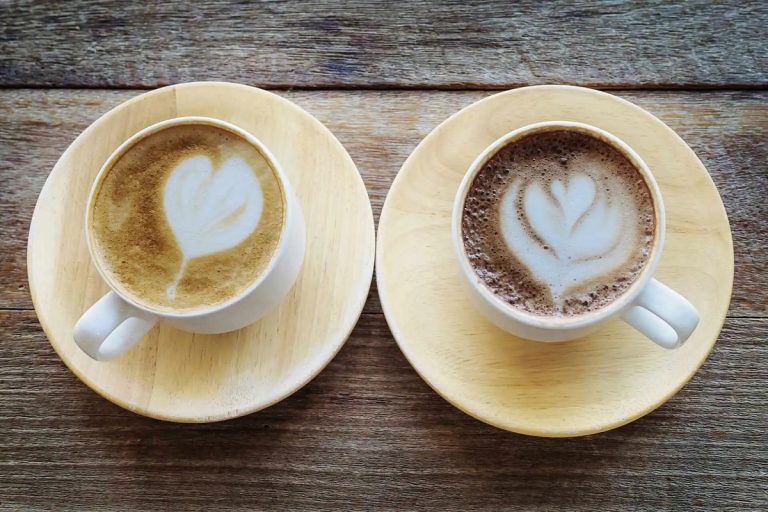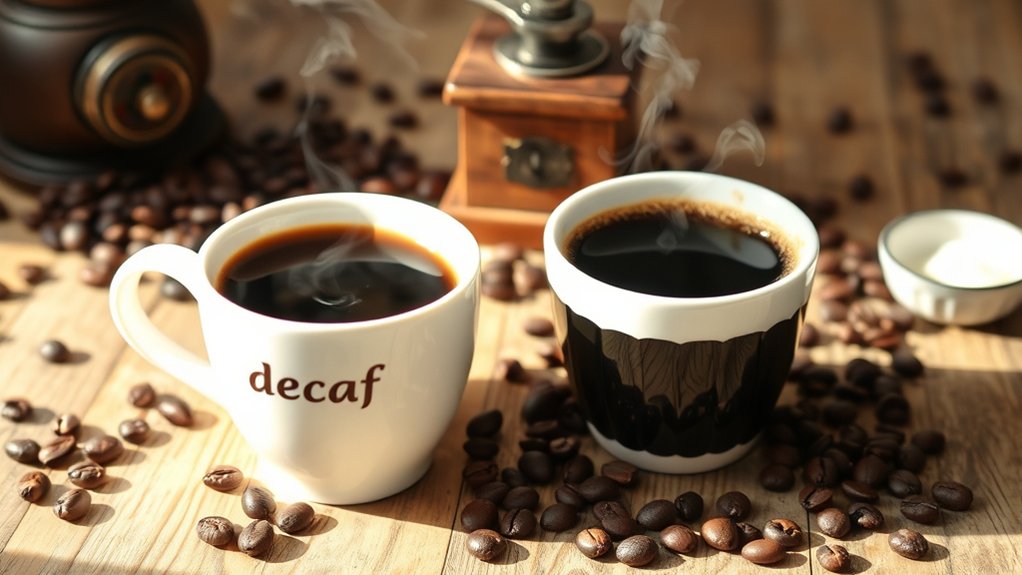
Does Decaf Coffee Taste Different – Flavor Differences Explained
You’ll find decaf coffee tastes different because the decaffeination process removes not just caffeine but also some flavor compounds. This leads to milder bitterness and less complex aroma.
Its flavor tends to be smoother, flatter, and sometimes shows subtle earthy or woody notes. Roast level and brewing methods still shape its profile, though regional nuances are slightly muted.
Understanding how caffeine influences taste and aroma helps explain these differences. There’s more detail on how origin, roast, and brewing impact decaf’s flavor.
What Is Decaf Coffee and How Is It Made?
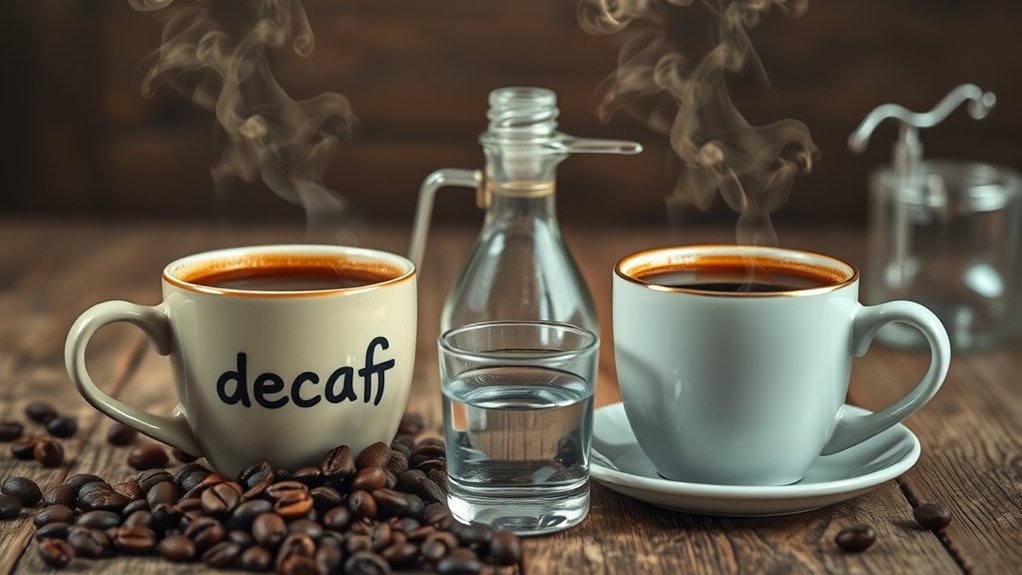
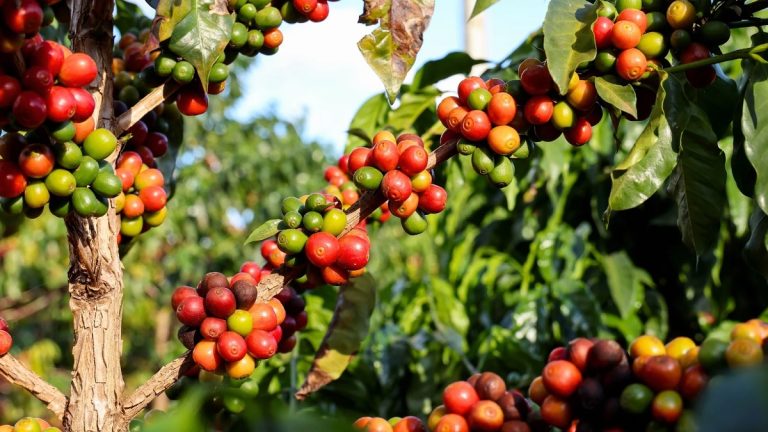
Although decaf coffee contains considerably less caffeine than regular coffee, it still delivers a similar taste experience. You should know decaf originates from the same coffee plant as regular coffee, but undergoes a decaffeination process to remove most caffeine.
This process typically involves water, solvents, or carbon dioxide, each aiming to extract caffeine while preserving flavor compounds.
When choosing decaf, look for decaf certification, which guarantees strict standards in caffeine removal and quality control. This certification verifies that caffeine content meets regulatory limits, typically under 0.1%.
Understanding these factors helps you appreciate that decaf coffee maintains its essential taste characteristics while offering a reduced-caffeine option.
The precise methods and certification standards are vital in achieving a balance between flavor retention and caffeine reduction.
How Does Caffeine Affect Coffee Flavor?
You’ll notice that caffeine contributes directly to coffee’s bitterness, which helps shape its overall taste profile.
Plus, it interacts with aroma compounds, so it subtly influences the coffee’s scent as well.
On top of that, caffeine affects how you perceive acidity, changing the balance of flavors in your cup.
Caffeine’s Role In Bitterness
Since caffeine is a naturally bitter compound, it plays a big role in coffee’s overall bitterness. When you drink coffee, caffeine directly contributes to how bitter it tastes and influences whether the flavor feels sharp or smooth.
But caffeine doesn’t work alone. Its bitterness can be changed by other compounds, which sometimes mask the flavor a bit.
Here’s how caffeine impacts bitterness:
- Caffeine’s bitterness adds to coffee’s sensory profile, making it more noticeable.
- It interacts with acids and oils, sometimes reducing perceived bitterness through flavor masking.
- In decaf coffee, less caffeine means lower bitterness, which changes the taste balance.
- Your sensitivity to caffeine’s bitterness varies, affecting your overall coffee experience.
Knowing caffeine’s role helps explain why decaf can taste less bitter but still have a different kind of complexity.
Impact On Coffee Aroma
Caffeine’s impact extends beyond bitterness to influence the aroma of coffee, shaping how you perceive its flavor overall. It interacts with volatile compounds responsible for coffee’s scent, which affects the intensity of the aroma. Your coffee storage method also plays a vital role. Improper storage can degrade these compounds, diminishing aroma regardless of caffeine content.
Brewing temperature matters too. Higher temperatures help release aromatic oils, boosting aroma, but they also risk making the coffee bitter. Decaf coffee often has a subtler aroma because the caffeine removal process changes these volatile profiles.
| Factor | Effect on Aroma | Consideration |
|---|---|---|
| Caffeine Content | Modulates volatile compounds | Influences scent depth |
| Coffee Storage | Preserves or degrades aroma | Use airtight containers |
| Brewing Temperature | Releases aromatic oils | Optimal range: 195-205°F |
| Decaffeination | Reduces some aroma compounds | Alters flavor profile |
| Roast Level | Enhances or masks aroma | Dark roasts can mask nuances |
Influence On Perceived Acidity
Although caffeine itself isn’t acidic, it considerably influences how you perceive the acidity in coffee. When you taste coffee, caffeine interacts with other compounds, altering your acidity perception. Here’s what to take into account:
Caffeine can enhance bitterness, which balances perceived acidity. Decaf often lacks this bitterness, making acidity seem more pronounced.
Brewing techniques affect extraction; for example, cold brew reduces acidity and caffeine, changing flavor pairing dynamics. The choice of beans and roast level further modulate acidity perception alongside caffeine content.
Understanding these factors helps you adjust brewing techniques and flavor pairing to achieve your preferred acidity profile.
Which Decaffeination Methods Affect Flavor Most?
You’ll find that common decaffeination methods vary a lot in how they affect coffee’s flavor profile.
When you compare chemical processes with natural ones, you notice they each have their own impact on aroma and taste.
Knowing these differences can really help you pick a decaf coffee that matches what you like.
Common Decaffeination Processes
When exploring how decaf coffee’s flavor changes, understanding the common decaffeination processes is essential. These methods directly influence the final taste profile and your choice among decaf alternatives. Here are the main processes you should know:
- Swiss Water Process: Uses water and osmosis, preserving most flavor compounds. It’s ideal if you want to keep as much flavor as possible.
- Direct Solvent Method: Employs chemical solvents like methylene chloride. This method can strip delicate flavor oils, so it might affect the taste more.
- Indirect Solvent Method: Soaks beans in water, then solvents remove caffeine from the water. This helps maintain more flavor compared to the direct method.
- Supercritical CO2 Process: Uses pressurized CO2 to extract caffeine. It balances efficiency with flavor retention pretty well.
Each technique varies in flavor impact, so recognizing these helps you select the best decaf alternative tailored to your taste preferences.
Flavor Impact Comparison
Understanding the different decaffeination methods sets the stage for evaluating how each impacts the flavor of decaf coffee. When you compare these methods, you notice that flavor nuances vary considerably, influencing your overall taste perception.
For instance, the Swiss Water Process tends to preserve more of the coffee’s original flavor profile, maintaining delicate acidity and sweetness. In contrast, chemical solvent methods, while efficient, can sometimes mute certain flavor notes, leading to a flatter taste experience.
The CO2 process strikes a balance but may slightly alter some aromatic compounds.
By recognizing these differences, you can better anticipate how decaffeination affects the coffee you brew.
Ultimately, the choice of method shapes the subtle flavor nuances that define your enjoyment of decaf coffee.
Chemical vs. Natural Methods
Although both chemical and natural decaffeination methods aim to remove caffeine, they impact coffee flavor in distinctly different ways. Understanding these differences helps you choose the best decaf based on flavor pairing and coffee storage needs.
Chemical methods, like the Swiss Water Process or solvent-based extraction, often strip more natural oils, which changes the coffee’s aroma and taste. On the other hand, natural methods such as CO2 or water processing tend to preserve more flavor compounds.
Here’s what you should consider:
- Chemical methods can create a flatter flavor profile.
- Natural methods maintain more of the coffee’s original complexity.
- Flavor pairing is easier with natural decaf since nuanced notes remain.
- Coffee storage affects chemical decafs more because they can oxidize faster.
What Flavor Differences Do People Notice in Decaf Coffee?
How does decaf coffee’s flavor differ from regular coffee? When you look at flavor profiles, you’ll notice decaf often has a milder, less complex taste. This happens because of the chemical changes during caffeine removal.
You might find the acidity is toned down and the bitterness isn’t as strong, which can make decaf feel smoother but less vibrant. Some people even pick up on subtle earthy or woody notes that aren’t as obvious in regular coffee.
Decaf often feels smoother and less vibrant, with subtle earthy or woody undertones.
Plus, the balance between sweetness and acidity shifts, sometimes making the overall flavor seem flatter.
These differences happen because the decaffeination process can strip away some flavor compounds, changing the coffee’s natural profile. Knowing this helps you understand why decaf doesn’t quite match the full sensory experience of regular coffee, even when brewed the same way.
How Does Decaf Coffee’s Aroma Compare to Regular Coffee?
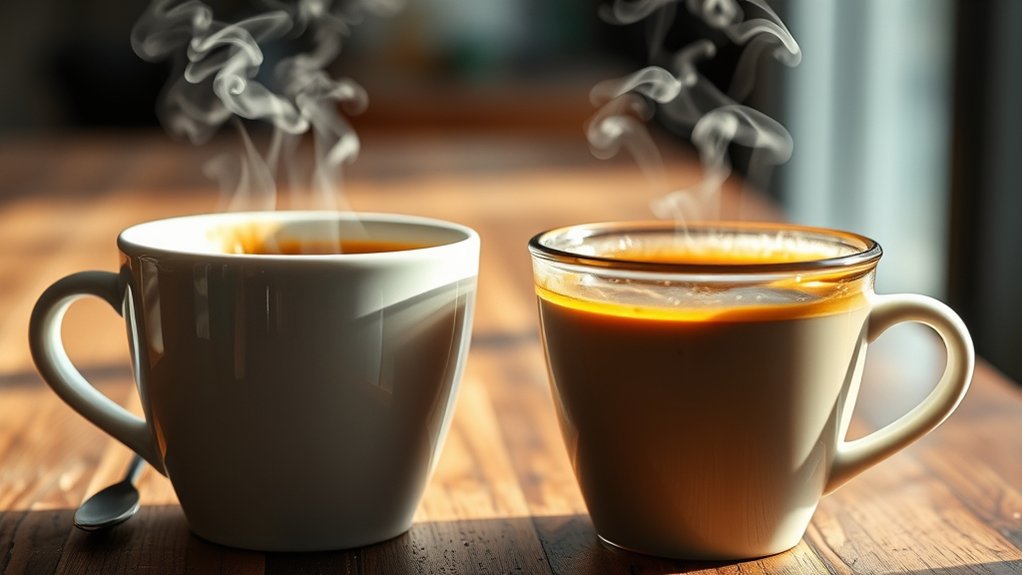
While decaf coffee shares many characteristics with its caffeinated counterpart, its aroma often presents noticeable differences. You’ll find that the decaffeination process affects volatile compounds responsible for coffee’s scent.
When you compare aromas, consider these factors:
- Coffee bean varieties: Different beans contribute distinct aromatic profiles, yet decaf beans generally emit milder, less complex aromas.
- Reduction of oils: Decaffeination removes some oils that carry key aromatic notes.
- Flavor enhancement techniques: Roasters may adjust roasting profiles to compensate for aroma loss, but subtle differences remain.
- Freshness: Decaf’s aroma diminishes faster post-roast, impacting your sensory experience.
Understanding these elements helps you appreciate how decaf’s aroma diverges from regular coffee, even when both share similar origins and processing methods. It’s pretty interesting once you start noticing the little things.
How Does Bean Origin Affect Decaf Coffee Flavor?
Because bean origin directly influences the inherent flavor compounds present in coffee, it plays an essential role in shaping decaf coffee’s taste profile. When you choose decaf, you’re still selecting beans from distinct regions, each contributing unique characteristics.
For example, beans from Ethiopia often bring fruity and floral notes, while those from Central America tend to offer bright acidity and nutty undertones. This regional variation affects the decaf’s overall flavor profile despite the decaffeination process, which can slightly mute some attributes.
Understanding bean origin helps you anticipate subtle differences in sweetness, acidity, and body.
How Does Roast Level Affect Decaf Coffee Flavor?
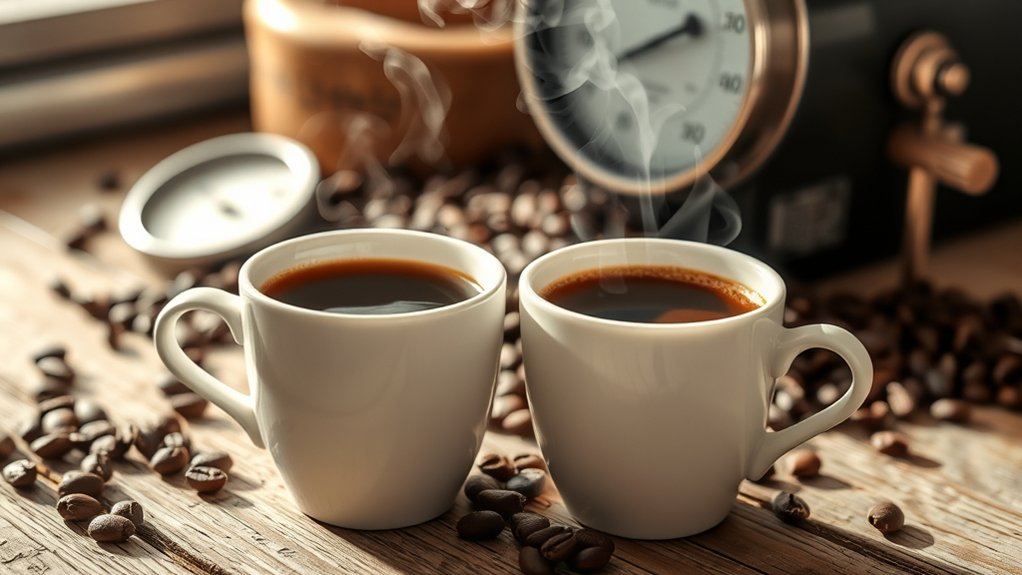
You’ll notice that light roast decaf really brings out brighter, more delicate flavor notes.
On the other hand, medium roast gives you a balanced profile with just the right amount of acidity and body.
Then, when it comes to dark roast decaf, you’ll find it tends to have more bitterness along with heavier, smoky flavors.
Knowing these differences makes it easier to pick a roast level that fits what you like best.
Light Roast Flavor Notes
Although decaffeination changes some compounds, the light roast level still keeps many of the coffee’s original flavors. When you taste light roast decaf, you’ll notice distinct flavor notes that set it apart from darker roasts.
The lighter roast brings out bright acidity, often citrus or floral. You might catch fruity undertones, like berry or apple. There’s also a subtle sweetness, kind of like honey or caramel. Plus, it finishes clean and crisp, really highlighting the coffee’s origin.
These flavors come from the shorter roasting time, which limits the bitter or smoky qualities. So, light roast decaf keeps a more complex and nuanced profile. That way, you can still enjoy the coffee’s natural qualities even after decaffeination.
When choosing decaf, knowing how light roast affects flavor helps you pick a cup with clarity and vibrancy. It’s a great way to enjoy a lively, flavorful coffee without the caffeine.
Medium Roast Balance
When you explore medium roast decaf coffee, you’ll find a balanced flavor profile that bridges the bright acidity of lighter roasts and the deeper, richer notes of darker ones. This roast level enhances sensory perception by maintaining complexity without overwhelming bitterness.
You’ll notice subtle caramel sweetness, mild fruitiness, and moderate body, which combine to create a harmonious cup. Medium roasts allow you to experience decaf coffee’s nuanced flavors more fully, as the roasting process develops sugars and acids evenly.
| Roast Level | Flavor Profile | Sensory Perception |
|---|---|---|
| Light | Bright, acidic | Crisp, sharp |
| Medium | Balanced, caramel notes | Smooth, nuanced |
| Dark | Bold, bitter | Robust, intense |
| Decaf Medium | Mild, sweet | Clear, balanced |
| Decaf Light | Acidic, floral | Bright, delicate |
Dark Roast Bitterness
Moving from the balanced and smooth characteristics of medium roast decaf, dark roast introduces a distinctly different flavor profile marked by increased bitterness and intensity. You’ll notice that dark roast bitterness becomes a defining trait, altering how you perceive the coffee’s taste.
This bitterness comes from longer roasting times, which break down sugars and create more bitter compounds. When you’re evaluating dark roast decaf’s flavor profile, keep these key factors in mind:
- Increased bitter compounds overshadow subtle sweetness.
- Roasting oils surface, intensifying boldness but reducing acidity.
- Dark roast masks some original bean nuances, simplifying flavor.
- Prolonged heat exposure can introduce smoky or charred notes.
Understanding these changes helps you appreciate how roast level shapes decaf coffee’s distinct dark roast bitterness and overall flavor profile. It’s pretty interesting how the roast can really change what you taste.
How Do Brewing Methods Impact Decaf Coffee Flavor?
Because brewing methods extract flavors differently, they considerably influence the taste profile of decaf coffee. When you choose a brewing method, you’re controlling variables like brewing temperature and extraction time. These factors affect flavor pairing outcomes.
Brewing methods shape decaf coffee’s flavor by controlling temperature and extraction time, influencing taste and pairing.
For example, a lower brewing temperature in pour-over methods can highlight delicate fruity notes. On the other hand, higher temperatures in espresso machines intensify bitterness and body.
Immersion methods, such as French press, often produce fuller, richer flavors by allowing more oils and solids to infuse.
These differences matter because decaf beans, having undergone chemical processing, are more sensitive to extraction nuances. By adjusting your method and temperature, you can optimize the balance of acidity, sweetness, and bitterness. This improves flavor pairing with milk or sweeteners.
Understanding this helps you tailor your brewing approach for the best decaf coffee experience. It’s all about finding what works best for your taste buds.
Can You Train Your Palate to Like Decaf Coffee?
Although decaf coffee initially tastes different from regular coffee, you can train your palate to appreciate its unique flavor profile over time. Flavor adaptation happens as your sensory receptors become more attuned to the subtle nuances of decaf.
Effective taste training involves consistent exposure and focused evaluation. To develop your palate, follow these steps:
- Sample various decaf roasts to identify preferred flavor notes.
- Compare decaf and regular coffee side by side to notice the differences.
- Note specific taste attributes like acidity, bitterness, and mouthfeel.
- Gradually increase decaf consumption to reinforce flavor recognition.
With a little patience, you’ll find yourself enjoying decaf just as much as your regular brew.
Is Decaf Coffee Worth Choosing for Flavor and Health?
Training your palate to appreciate decaf highlights its distinct flavor qualities, but deciding whether to choose decaf also involves weighing its health benefits alongside taste. You’ll find that decaf offers more flavor consistency compared to some regular coffees, as the decaffeination process standardizes certain compounds. This can be advantageous if you prioritize a predictable taste profile.
On the health front, decaf coffee retains many antioxidants and nutrients while considerably reducing caffeine intake. This reduction may lower risks of caffeine-related side effects like insomnia or increased heart rate. However, the slight loss of some flavor compounds during decaffeination means you might notice subtle differences compared to regular coffee.
Ultimately, if you want consistent flavor with added health benefits from reduced caffeine, decaf is worth considering.
Frequently Asked Questions
Is Decaf Coffee More Expensive Than Regular Coffee?
Yes, decaf coffee is generally more expensive than regular coffee. The decaffeination process requires extra steps, which raises production costs.
Also, when you think about decaf brewing, its flavor often calls for higher-quality beans to keep the taste just right. So, you end up paying more not just for removing the caffeine but also to preserve a balanced, satisfying flavor.
That’s why decaf coffee usually costs more compared to regular options.
Does Decaf Coffee Have the Same Caffeine Content Worldwide?
No, decaf coffee doesn’t have the same caffeine content worldwide. Variations happen because caffeine extraction depends a lot on the decaffeination process used, which can differ by region and manufacturer.
Some methods remove up to 97% of the caffeine, while others leave a bit more behind. So, when you drink decaf coffee from different countries, the caffeine levels can vary quite a bit.
This all comes down to inconsistencies in how decaffeination is done and how efficiently caffeine is extracted. That’s why your decaf might have more caffeine in one place compared to another.
Can Decaf Coffee Cause the Same Health Benefits as Regular Coffee?
Decaf coffee can offer many decaf health benefits similar to regular coffee, but with less caffeine. While the caffeine comparison shows decaf contains only a small fraction of caffeine, it still provides antioxidants and nutrients linked to reduced risks of certain diseases.
However, some benefits tied specifically to caffeine, like enhanced alertness, won’t be as strong. So, you’ll gain many health advantages, just with milder caffeine effects.
How Long Does Decaf Coffee Stay Fresh After Brewing?
You should drink decaf coffee within 30 minutes to an hour after brewing for maximum flavor preservation.
Beyond that, the freshness duration declines rapidly as oxidation and heat degrade its taste.
If you leave it longer, the flavor will become stale and bitter.
To keep it tasting good, store your coffee in an insulated container.
Also, try to avoid reheating it because that speeds up flavor loss.
Acting quickly is the best way to enjoy the full flavor profile decaf coffee offers.
Are There Any Popular Coffee Brands Specializing in Decaf?
If you’re seeking a gentle morning companion, brands like Starbucks and Peet’s Coffee have earned solid brand reputations for their decaf flavor profiles. You’ll find that these companies focus on preserving rich taste while minimizing caffeine, making decaf an appealing choice.
Furthermore, Kicking Horse and Stumptown offer carefully crafted decaf options. By choosing established brands, you ensure consistent quality and enjoy a balanced decaf flavor without surprises.
Conclusion
If you’re wondering whether decaf coffee tastes different, the answer is yes. Because of caffeine removal and processing methods, the flavor and aroma can shift a bit.
That said, by picking the right roast and brewing technique, you can still enjoy a satisfying cup.
Can you train your palate to appreciate these subtle differences? With a little awareness and some experimentation, decaf can be a flavorful, health-conscious choice without compromising your coffee experience.