

Can You Clean A Coffee Pot With Apple Cider Vinegar – What To Know
You can clean your coffee pot with apple cider vinegar because its natural acids break down grease, mineral buildup, and coffee oils effectively. Mixing equal parts vinegar and water, running brew cycles, then rinsing thoroughly removes residues and odors without harsh chemicals.
It’s cost-effective, non-toxic, and disinfects while preserving flavor. Regular cleaning prevents mold and maintains your machine’s performance. If you want detailed steps and tips for handling stubborn buildup or odors, there’s more you should know.
Why Apple Cider Vinegar Is Great for Cleaning Coffee Pots

Because apple cider vinegar contains natural acids, it effectively breaks down grease, fat, and mineral deposits that accumulate in coffee pots. When cleaning coffee makers, apple cider vinegar serves as a potent cleaning agent that removes mineral buildup and dissolves stubborn coffee oils.
Its disinfectant properties eliminate around 90% of harmful germs, fostering a hygienic environment for each brew cycle. Unlike harsh chemicals, it offers a non-toxic alternative safe for regular use, avoiding harmful residues that could affect coffee flavor.
Furthermore, apple cider vinegar is cost-effective and widely available, making it practical for routine maintenance. Using it consistently not only cleans but also helps enhance flavor by preventing oil and mineral accumulation, ensuring your coffee tastes fresh with every brew.
Preparing the Apple Cider Vinegar Cleaning Solution
You’ll want to mix apple cider vinegar and water in a precise ratio to get the best cleaning results.
Usually, starting with equal parts works well. But if you’re dealing with tougher buildup, go ahead and increase the vinegar to a 2:1 ratio. Just make sure you have enough solution to get through a full brew cycle.
Adding hot water can help boost the cleaning power, too.
And don’t forget to store the mixture properly—this keeps it from getting diluted or spoiled before you use it.
Vinegar To Water Ratio
Mixing apple cider vinegar and water in the right ratio is essential for effective coffee pot cleaning. Use equal parts apple cider vinegar and water to create a balanced cleaning solution that targets coffee residue and mineral buildup.
For tougher deposits, increase the vinegar concentration to a 2:1 ratio.
Fill half of the coffee maker’s water reservoir with this mixture to guarantee efficient circulation during the cleaning cycle. Pour the solution into the brew basket, then run the coffee maker and let the vinegar and water sit for 15-30 minutes to break down stubborn gunk.
Afterward, perform multiple cleaning cycles with clear water to thoroughly rinse away vinegar residue.
This precise vinegar to water ratio ensures thorough cleaning and preserves your coffee maker’s performance over time.
Mixing And Storage Tips
When preparing your apple cider vinegar cleaning solution, combine equal parts vinegar and hot water for routine cleaning.
Or increase the vinegar to water ratio to 2:1 to tackle stubborn buildup.
Verify the volume is sufficient to fill at least half of your coffee maker’s reservoir for effective descaling and removing coffee residue.
For best results, use the solution promptly, ideally within a few weeks, to maintain its potency and cleaning effectiveness.
If you mix more than needed, store the unused apple cider vinegar solution in a tightly sealed container, placed in a cool, dark location.
Label the container clearly to avoid confusion with cooking vinegar or other liquids.
These mixing and storage tips help preserve the cleaning solution’s strength, verifying your coffee maker stays free from buildup and performs efficiently.
Step-by-Step Cleaning Guide With Apple Cider Vinegar

Start by combining equal parts of apple cider vinegar and water until the coffee pot’s reservoir is half full. This ratio guarantees effective dissolution of grease and mineral deposits.
To clean your coffee maker efficiently, follow these steps:
- Run a half brewing cycle to circulate the apple cider vinegar solution, targeting internal buildup.
- Initiate a full brewing cycle to guarantee thorough cleaning of mineral deposits.
- Dispose of the used vinegar solution and flush the coffee maker with multiple cycles of hot water to eliminate residual vinegar taste.
- Perform regular cleaning at least monthly to maintain peak performance, especially if you use hard water frequently.
Afterward, wash removable parts with hot soapy water to remove leftover residues and odors, ensuring a clean coffee maker.
Cleaning Removable Parts and Exterior of Your Coffee Maker
To maintain peak performance and flavor, you should wash all removable parts of your coffee maker, such as the carafe and brew basket, with warm, soapy water after each use. This eliminates coffee residue and prevents buildup.
Scrub these parts thoroughly to remove stains and grounds. Then rinse well to avoid soap residue that can alter taste.
Wipe the exterior with a damp cloth to clear dust and stains, finishing with a dry towel for a polished look. Confirm all parts dry completely before reassembling to prevent mold.
| Action | Benefit |
|---|---|
| Clean removable parts | Removes coffee residue & stains |
| Use warm soapy water | Effective cleaning solution |
| Rinse thoroughly | Eliminates soap residue |
| Wipe exterior | Maintains appearance & hygiene |
Removing Vinegar Residue After Cleaning
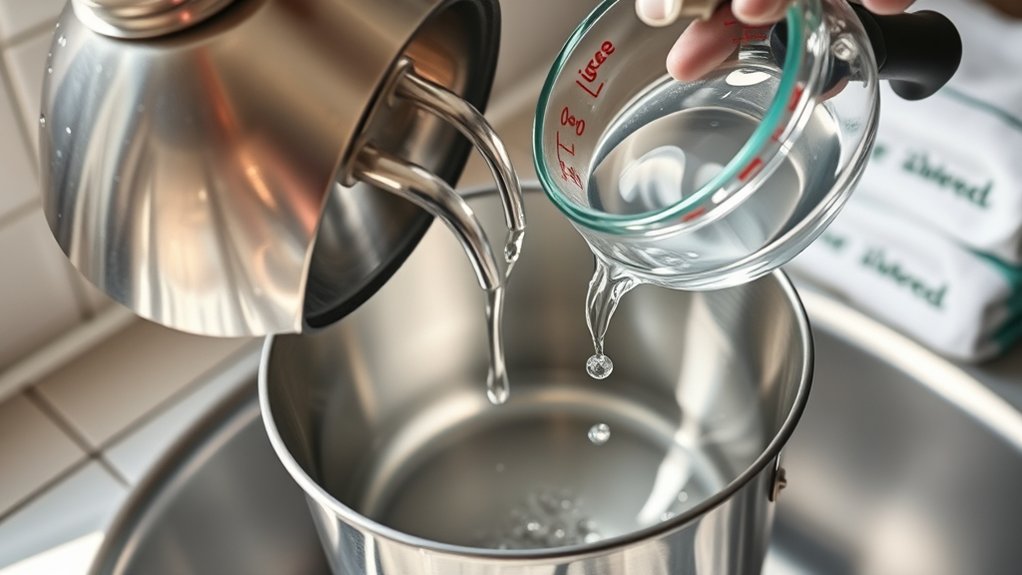
Although apple cider vinegar effectively cleans your coffee maker, you’ll need to run multiple cycles of fresh water to eliminate any lingering vinegar taste or smell.
After the descaling process, thoroughly remove any remaining vinegar by flushing out your coffee maker with plain water.
To clean the coffee maker and prevent buildup, regularly rinsing is essential.
Follow these steps to remove vinegar residue:
- Brew at least three full pots of fresh water through the machine.
- Allow the coffee maker to complete each full cycle before refilling.
- Keep the lid open during rinsing to help dissipate lingering vinegar odor.
- Wash the coffee pot with hot water and dish soap after rinsing to remove any residual flavors.
This method guarantees cleaning with vinegar leaves no unwanted taste behind.
Cleaning Frequency for Your Coffee Maker
Regularly cleaning your coffee maker is crucial to maintaining both its performance and the quality of your brew. If you use your coffee maker daily, aim for a cleaning frequency of at least once a month to prevent mineral buildup and keep it running at its best.
Consistent monthly cleaning preserves your coffee maker’s performance and ensures the best quality brew every time.
Infrequent users should deep clean every 2-3 months to avoid coffee oil deposits that can cause bitter coffee and off flavors. If you live in a hard water area, you’ll need to clean more often to reduce mineral buildup.
Signs like unusual noises, slower brewing, or bitter coffee mean it’s time for a deep clean.
Regular cleaning not only enhances flavor but also supports healthier brewing by preventing mold and bacteria growth.
Staying consistent with your coffee maker’s cleaning schedule guarantees every cup tastes fresh and your machine runs efficiently.
Other Natural Cleaning Alternatives for Coffee Makers
While apple cider vinegar remains a popular choice for cleaning coffee makers, several other natural alternatives offer effective solutions for maintaining your machine. Each option targets mineral deposits and residues differently, enhancing the overall cleaning process.
- Lemon Juice is a natural cleaner that breaks down mineral deposits effectively while leaving a fresh scent.
- Baking Soda acts as a gentle scrubbing agent and neutralizes odors, though it’s less effective against mineral buildup.
- Hydrogen Peroxide is a non-toxic disinfectant that kills bacteria and mold on coffee maker components without harmful residues.
- Citric Acid and Salt work together—citric acid dissolves mineral deposits powerfully, while coarse salt with warm water provides abrasive scrubbing to remove tough stains.
These alternatives provide versatile, evidence-based options for a thorough, natural cleaning process.
Troubleshooting Common Cleaning Problems
When your coffee maker brews slowly or makes unusual noises, it signals a buildup of coffee oils or mineral deposits that apple cider vinegar can effectively dissolve.
To descale your coffee maker and tackle stubborn stains, use a stronger solution. Mix apple cider vinegar with water in a 2:1 ratio and run a full brew cycle.
If odors or off-flavors persist, thoroughly rinse the machine with multiple brew cycles using clean water.
For persistent odors, follow up with a brew cycle combining water and lemon juice to freshen your coffee maker.
If available, use the built-in cleaning function during the vinegar cycle to enhance cleaning efficiency.
This precise approach guarantees you remove residues and coffee oils, restoring peak performance and flavor while maintaining your machine’s longevity.
Frequently Asked Questions
Can Apple Cider Vinegar Damage My Coffee Pot’s Internal Components?
Apple cider vinegar won’t damage your coffee pot’s internal components if you use it properly. Its vinegar effects gently break down buildup without harming material compatibility.
Just avoid high concentrations to prevent residue buildup. Incorporate vinegar into your maintenance routine for improved brewing efficiency and fewer safety concerns.
Always rinse thoroughly after cleaning. If you worry about vinegar effects, consider alternative cleaners designed for coffee pots to protect delicate internal parts.
Is It Safe to Use Apple Cider Vinegar on All Coffee Maker Brands?
No, apple cider vinegar isn’t safe for all coffee maker brands due to varying coffee maker compatibility. You should check manufacturer guidelines first.
Vinegar cleaning benefits include natural descaler options and improved coffee pot maintenance, but vinegar concentration levels matter to avoid damage. Some brands prefer alternative cleaning solutions.
Considering safety precautions, cleaning frequency guidelines, and user experiences helps minimize risks.
Plus, vinegar offers an eco-friendly, effective method with low environmental impact when used properly.
How Long Should the Vinegar Solution Sit in the Coffee Pot Before Brewing?
You should let the vinegar solution sit in the coffee pot for 15 to 30 minutes before completing the brewing cycle. This soak time, combined with an appropriate vinegar concentration, effectively breaks down coffee residue and mineral buildup.
For better odor removal and maintenance, adjust cleaning frequency based on pot materials and brewing temperature.
Always follow safety precautions and rinse thoroughly, as apple cider vinegar is an eco-friendly cleaner but can leave a strong taste if not fully flushed.
Can Apple Cider Vinegar Remove Stubborn Coffee Stains From the Carafe?
Apple cider vinegar effectively removes stubborn coffee stains from your carafe by breaking down the residue with its acidic properties.
This natural cleaner excels in carafe care, offering eco-friendly solutions compared to harsh chemicals.
For ideal cleaning methods, soak the brewing equipment with a vinegar-water mix, then scrub gently.
Incorporate this into your daily upkeep routine to maintain spotless brewing equipment, benefiting from vinegar’s disinfectant properties and prolonging your coffee pot’s lifespan.
Will Apple Cider Vinegar Affect the Taste of My Coffee After Cleaning?
Apple cider vinegar won’t permanently alter your coffee flavor if you rinse thoroughly to remove vinegar residue. Its acidity effectively breaks down coffee oils, improving cleanliness without affecting taste perception long-term.
However, brewing temperature and coffee acidity can influence odor absorption, so clean regularly to avoid buildup.
Using natural cleaners like vinegar occasionally won’t disrupt flavor profiles, but infrequent rinsing may leave slight vinegar tastes that fade with repeated water cycles.
Conclusion
You might think cleaning your coffee pot with apple cider vinegar is just a simple hack, but it’s a powerhouse method backed by science. This natural solution tackles stubborn stains and mineral buildup like a pro, keeping your brew tasting perfect.
With just a little vinegar, you’re not just cleaning, you’re performing a deep, precise cleanse that extends your coffee maker’s life. Skip the harsh chemicals and embrace this proven, eco-friendly cleaning champion.