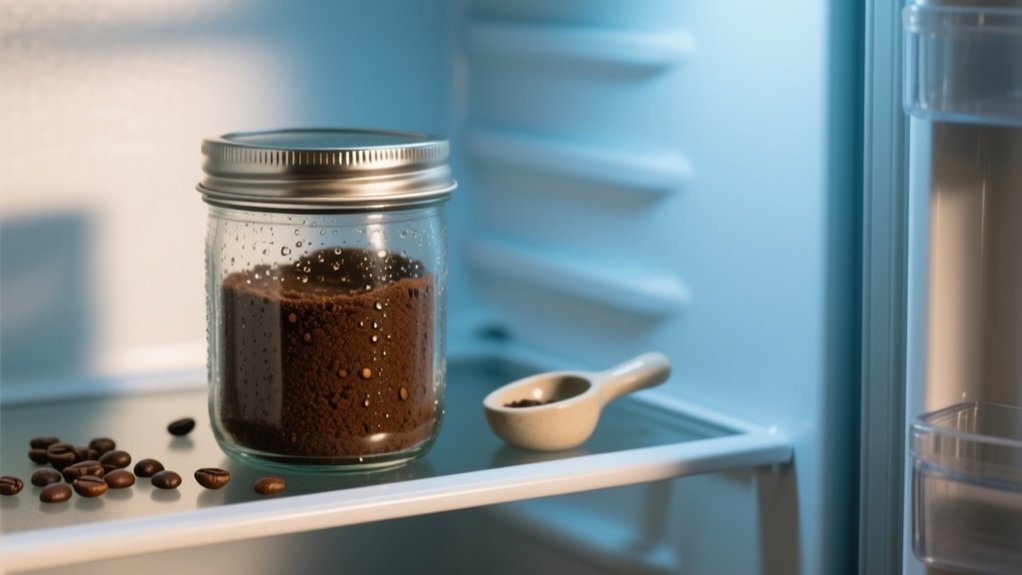
Can You Put Coffee In The Fridge – Storage Guide
You can put brewed coffee in the fridge safely, but timing and storage are key. Black coffee stays fresh for 3-4 days, with the best flavor in the first 24 hours.
Milk coffee spoils faster, lasting only 1-2 days because dairy encourages bacterial growth. Always cool coffee to room temperature before storing, use airtight containers, and avoid mixing in milk beforehand.
Watch for sour smells or color changes to spot spoilage. Keep these tips in mind to maintain your coffee’s quality longer.
Is It Safe to Keep Coffee in the Fridge?
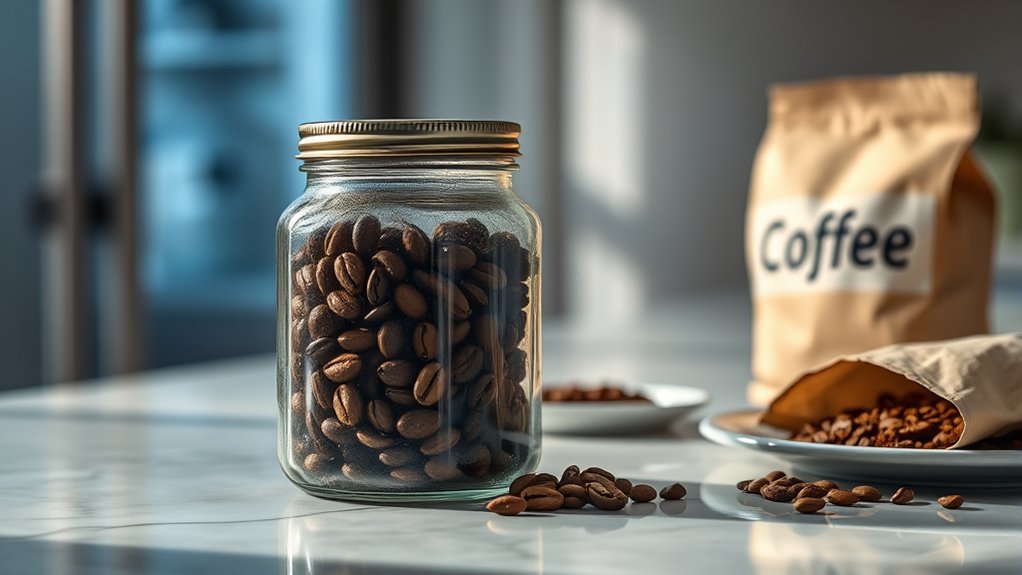
How long can you safely keep coffee in the fridge? Brewed coffee can be stored in the refrigerator for up to 3-4 days, but its flavor peaks within the first 24 hours.
Brewed coffee stays safe in the fridge for 3-4 days, with peak flavor in the first 24 hours.
To preserve flavor and prevent spoilage, cool brewed coffee to room temperature and store it in an airtight container. This minimizes oxidation, which degrades taste.
Cold brew coffee lasts longer, up to 10 days, due to its lower acidity that slows flavor loss.
Avoid refrigerating coffee beans because moisture in the fridge causes staleness and flavor deterioration.
When you store brewed coffee properly in the refrigerator, you reduce the risk of spoilage while maintaining a more enjoyable flavor profile.
How Long Does Black and Milk Coffee Last in the Fridge?
You can keep black coffee in the fridge for about 3 to 4 days, but honestly, its flavor is at its best within the first 24 hours.
After that, it starts to lose its freshness.
Now, when it comes to milk coffee, you’ll want to drink it sooner—within 1 to 2 days.
That’s because the dairy can spoil faster due to bacterial growth.
Black Coffee Shelf Life
Where should you keep your black coffee to maintain its best flavor? For ideal freshness, cool it to room temperature, then store it in an airtight container before refrigerating.
Black coffee’s shelf life in the fridge spans 3–4 days, but you’ll experience the best flavor within the first 24 hours. Refrigerated coffee beyond this period begins to lose aroma and taste, though it remains safe if you watch for signs of spoilage.
Discard any coffee showing sour smells, unusual color changes, or excessive separation.
While cold brew coffee lasts longer, up to 10 days due to lower acidity, regular black coffee stored in the refrigerator demands prompt consumption to preserve quality and avoid spoilage.
Milk Coffee Safety
Milk coffee demands more careful storage than black coffee because dairy is perishable. When you store coffee with milk or cream in the fridge, it’s important to consume it within 1–2 days. This helps keep the flavor ideal and avoids health risks.
Here’s what to keep in mind:
- Always refrigerate coffee immediately after preparation.
- Consume coffee with milk quickly, since dairy spoils faster than black coffee.
- Watch for signs of spoilage like sour smells, bitterness, curdling, or separation.
- Throw away any coffee that smells off, looks discolored, or has sludge to prevent illness.
How to Store Brewed Coffee in the Fridge
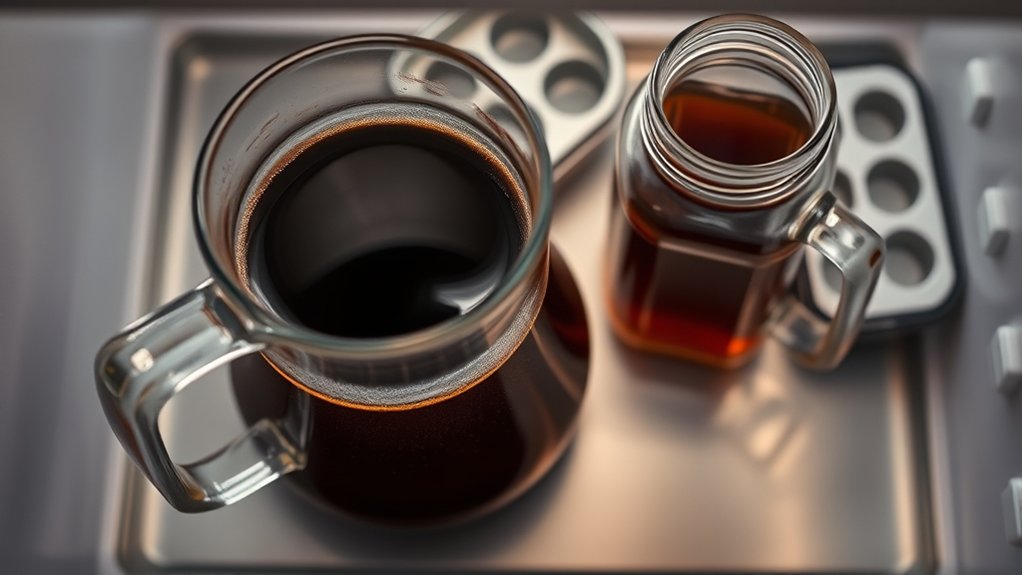
How long can brewed coffee stay fresh in the fridge? Brewed coffee maintains ideal flavor for up to 24 hours when stored properly, though it can last 3–4 days before noticeable spoilage occurs.
To preserve quality during fridge storage, you should cool brewed coffee to room temperature first. Then, transfer it into an airtight container to minimize oxidation, which degrades flavor.
Avoid adding milk or cream before refrigerating, as dairy shortens safe storage to 1–2 days due to spoilage risk.
Cold brew coffee, with its lower acidity, lasts considerably longer, up to 7–10 days in the fridge, retaining its flavor better.
Always inspect refrigerated coffee for sour smells or color changes before drinking to verify it hasn’t spoiled.
Proper storage balances convenience with maintaining flavor and safety.
Best Containers for Fresh Coffee Storage
Selecting the right container plays an essential role in preserving your coffee’s freshness and flavor. When storing coffee, choosing the best containers can greatly extend its quality by minimizing exposure to air and moisture.
Consider these options:
- Vacuum-sealed containers excel at reducing oxidation, which preserves the flavor and coffee freshness for longer periods.
- Glass carafes are ideal for brewed coffee since they’re non-porous, easy to clean, and don’t retain odors.
- BPA-free plastic containers work well for short-term storage of brewed coffee but aren’t suitable for long-term preservation.
- Avoid stainless steel carafes for fresh coffee storage, as oxidation can alter the taste over time.
Always use a sealed container with a tight lid to prevent air infiltration, which compromises coffee quality during storage.
How Milk Changes Coffee’s Fridge Life
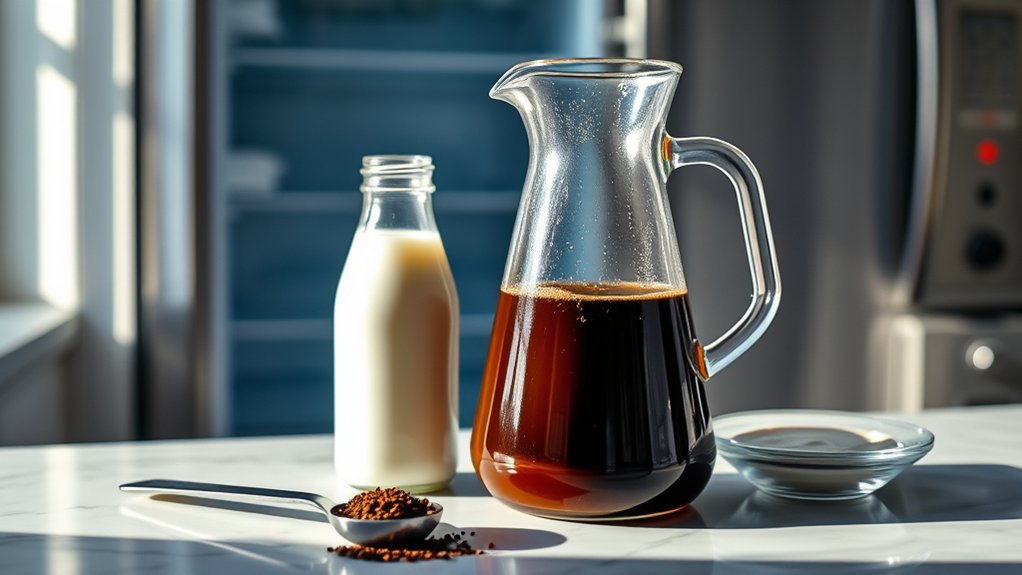
While choosing the right container helps preserve your coffee’s freshness, what you add to your coffee can greatly affect how long it stays good in the fridge.
Adding milk to coffee considerably shortens its fridge life, reducing safe storage time to just 1-2 days due to increased spoilage risk.
Milk creates an environment where bacteria thrive, accelerating degradation compared to black coffee, which can remain fresh for 3-4 days.
This rapid decline affects both flavor and safety, demanding careful handling and prompt consumption.
To maximize freshness, it’s best to store coffee black and add milk only when ready to drink.
This practice minimizes spoilage and maintains ideal flavor during storage, helping you avoid health risks associated with spoiled milk-added coffee.
Signs Your Refrigerated Coffee Has Gone Bad
Three key indicators can help you determine if your refrigerated coffee has gone bad.
First, signs like a sour or vinegar-like smell strongly suggest the coffee has begun to spoil and should be discarded immediately.
Second, visual changes such as unusual color shifts, sludge-like consistency, or mold growth indicate spoilage, especially if milk or cream was added.
Third, tasting your coffee can reveal off-flavors. Bitter or overly sour notes mean it’s no longer safe to consume.
To guarantee safety and quality, remember that refrigerated coffee should be consumed within 12 days.
Here’s what to watch for:
- Sour or vinegar-like odor
- Unusual color or texture changes
- Bitter or off-flavors
- Visible mold growth or curdling
If you notice any of these signs, discard the coffee promptly.
Tips to Preserve Coffee Flavor When Storing in the Fridge
Noticing signs that your refrigerated coffee has gone bad is important, but taking steps to preserve its flavor during storage can extend its freshness and enjoyment.
First, always cool brewed coffee to room temperature before you refrigerate it. This prevents moisture buildup that accelerates flavor loss.
Use an airtight container to minimize air exposure and oxidation, which are primary factors in coffee spoilage.
Avoid adding milk or cream before storage, as dairy spoils quickly, compromising flavor and safety within 1 to 2 days.
Store coffee away from strong-smelling foods to prevent odor absorption that alters flavor.
For coffee beans, maintain airtight conditions and refrigerate only if you plan to use them within a short period.
Regularly check for spoilage indicators like sour smells or color changes to guarantee peak flavor and safety.
Frequently Asked Questions
Does Freezing Coffee Affect Its Caffeine Content?
Freezing coffee doesn’t affect its caffeine content because caffeine stability remains intact at low temperatures.
However, to preserve flavor and bean quality, you must use airtight storage containers to prevent moisture absorption.
While cold brew made from frozen beans retains caffeine, flavor preservation can decline over time.
Freezing extends shelf life up to a year, but for best taste, consume within a few months to maintain freshness and sensory qualities.
Can You Refreeze Thawed Coffee Beans?
You’d want to avoid the temptation of refreezing thawed coffee beans for ideal coffee bean safety.
Each freeze-thaw cycle invites moisture exposure, which leads to quality degradation and loss of aroma retention.
Proper thawing methods and careful storage durations help preserve flavor.
Instead, portion your beans before freezing, and once thawed, use them within a week to maintain the best experience without compromising your brew’s integrity.
How Does Room Temperature Storage Compare to Fridge Storage?
Room temperature storage leads to faster oxidation effects, causing quicker coffee freshness loss compared to fridge storage.
The fridge slows temperature fluctuations, preserving flavor longer, especially for cold brew and black coffee.
However, humidity inside the fridge can degrade quality if storage containers aren’t airtight.
Brewing methods also matter. Milk-based coffee spoils faster regardless.
To maximize flavor preservation, you should cool brewed coffee before refrigerating it in sealed containers to limit moisture and oxidation.
Is It Better to Grind Coffee Before or After Freezing?
You should grind coffee after freezing to enhance flavor preservation and aroma retention. Freezing whole beans in airtight storage containers slows freshness duration loss and protects grind size integrity.
Grinding methods applied post-thaw guarantee peak brew consistency since freshly ground coffee releases fuller flavor profiles.
Pre-freeze grinding increases surface area exposure to air, accelerating staleness.
For best results, store whole beans frozen, grind just before brewing, and use airtight containers for storage.
Can Flavored Coffee Be Stored in the Fridge Safely?
Yes, you can store flavored coffee in the fridge safely if you use ideal storage containers that are airtight to prevent moisture impact and aroma absorption.
Refrigeration benefits include extending flavored coffee shelf life, but taste deterioration may occur due to flavor infusion from other foods.
To preserve the best aroma and flavor, consume brewed flavored coffee within 1-2 days and cold brew within 10 days.
Always check for spoilage signs before drinking.
Conclusion
You can safely store coffee in the fridge, but timing and container choice are key to preserving flavor. Black coffee lasts up to a week, while milk-based brews spoil faster because of the dairy.
Use airtight containers to keep freshness locked in. Watch for changes in smell or taste as signs of spoilage.
Treat your refrigerated coffee like a delicate gem. Handle it right, and it’ll reward you with a satisfying cup every time.