How Much Caffeine In 3 Shots Of Espresso – Complete Caffeine Breakdown
You’ll get between 180 to 225 mg of caffeine in three shots of espresso, giving you a strong, concentrated boost that’s nearly half the FDA’s daily limit. The exact amount depends on factors like bean type, roast, and grind size.
Compared to drip coffee, espresso packs more caffeine per ounce, which can feel more intense. If you want to understand how to manage caffeine effects and tweak your espresso for the perfect energy lift, keep exploring these details.
How Much Caffeine Is in One Shot of Espresso?
Curious about how much caffeine you’re getting in a single shot of espresso? A standard shot contains roughly 60-75 mg of caffeine, with the average landing around 63 mg.
This high caffeine concentration comes from brewing under pressure, which efficiently extracts caffeine from the coffee grounds used.
Compared to brewed coffee, espresso packs more caffeine in a smaller volume—just one ounce per shot.
When you order espresso shots, keep in mind that a double shot doubles the total caffeine content, often reaching about 126 mg or more.
While extraction time and coffee grind affect caffeine levels, a single shot consistently offers a potent caffeine boost despite its small size.
Factors That Affect Caffeine Levels in Espresso
When you choose your coffee beans, the variety you pick can actually change how much caffeine ends up in your espresso.
And here’s something interesting—lighter roasts usually have a bit more caffeine than darker ones, though the difference isn’t huge.
Bean Variety Impact
Although many factors influence the caffeine content in your espresso, the variety of coffee beans you choose plays a crucial role.
Robusta beans pack a punch with about 140 mg of caffeine per espresso shot, while Arabica beans offer a smoother flavor profile and contain roughly 63-70 mg.
Your bean variety directly affects caffeine levels and taste, with Robusta lending bitterness and Arabica providing nuance.
Keep in mind, blends of beans can adjust the caffeine content by mixing these characteristics.
Moreover, extraction time and a fine grind can increase the caffeine extracted from your grounds.
Roast Level Influence
Since the roasting process changes the beans’ density and volume, the roast level can subtly affect caffeine content in your espresso.
Lighter roasts generally retain slightly more caffeine than darker roasts because roasting reduces bean mass and caffeine concentration by weight. However, the difference is often minimal when you consider espresso’s brewing method and extraction time.
Here’s what you need to know:
- Lighter roasts have higher caffeine concentration by volume due to less mass loss.
- Darker roasts lose more mass but brewing espresso extracts caffeine efficiently, balancing content.
- Extraction time and brewing method ultimately influence how much caffeine ends up in your cup more than roast level alone.
How Much Caffeine Do Three Shots of Espresso Contain?
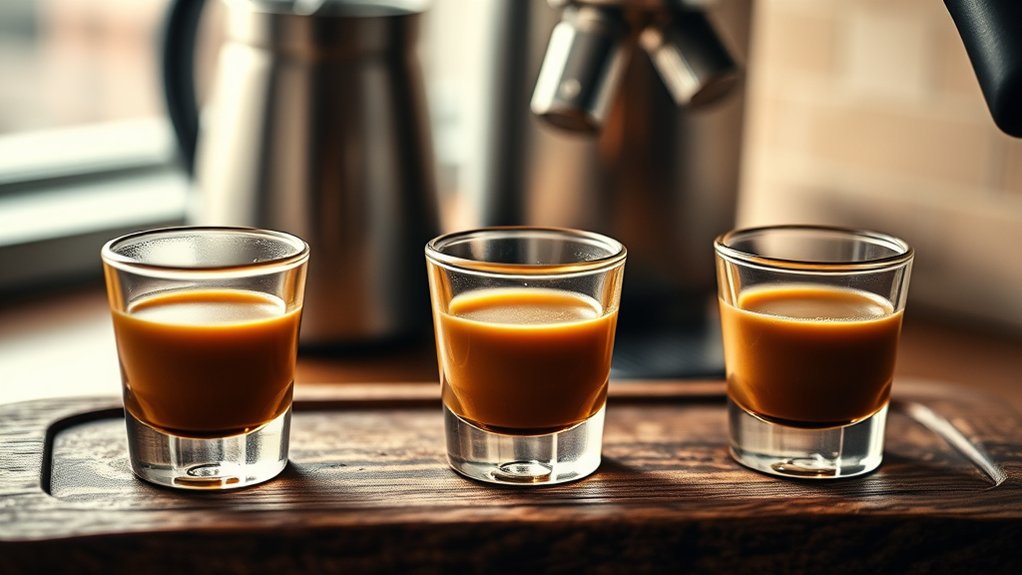
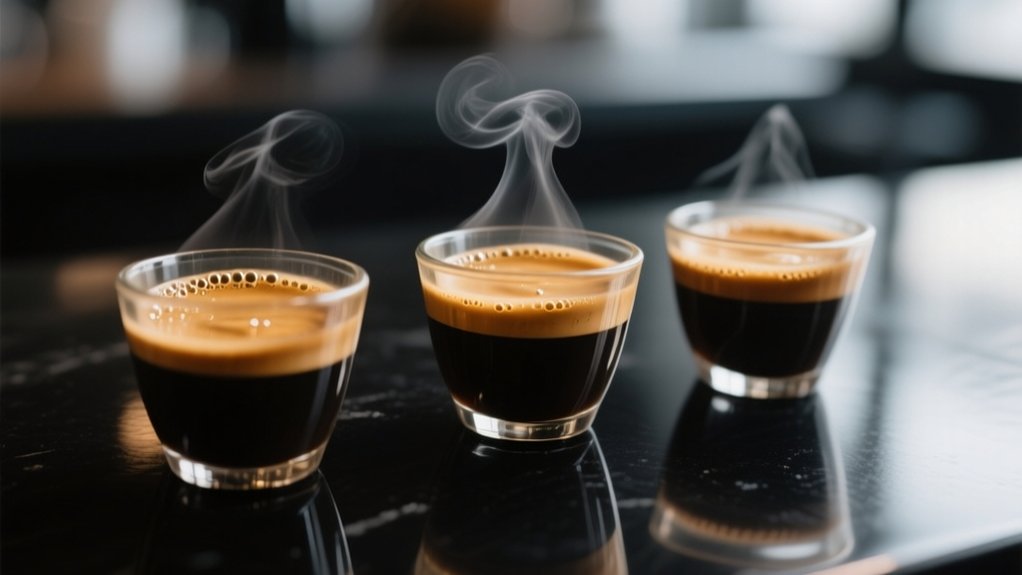
How much caffeine do you get from three shots of espresso? Typically, three shots of espresso contain between 180 to 225 mg of caffeine, depending on the extraction method and coffee bean type.
This concentrated source of caffeine packs nearly half of the FDA’s recommended daily limit for healthy adults.
Compared to regular brewed coffee, which has about 80 to 120 mg of caffeine per 8-ounce serving, espresso’s caffeine concentration per ounce is considerably higher.
When you consume three shots rapidly, you may experience a quick energy boost or jitteriness, depending on your individual caffeine tolerance.
Understanding this helps you gauge your caffeine intake better and enjoy espresso responsibly without unexpected side effects.
Comparing Caffeine in Three Shots of Espresso vs. Drip Coffee
Three shots of espresso deliver about 180 to 225 mg of caffeine, which is nearly double the amount found in a typical 8-ounce cup of drip coffee.
When comparing the caffeine content, consider these key points:
- Shots of espresso are highly concentrated, packing more caffeine per ounce than drip coffee.
- Drip coffee has a larger serving size, which can result in a similar or even higher total caffeine content depending on brewing strength.
- Your energy needs and caffeine tolerance should guide your choice between the two.
While espresso’s caffeine content is concentrated, drip coffee offers a milder caffeine experience per serving.
Understanding these differences helps you make informed decisions about caffeine intake based on how much energy you want and how strong you prefer your coffee.
Why Three Shots of Espresso Feel Stronger Than Regular Coffee
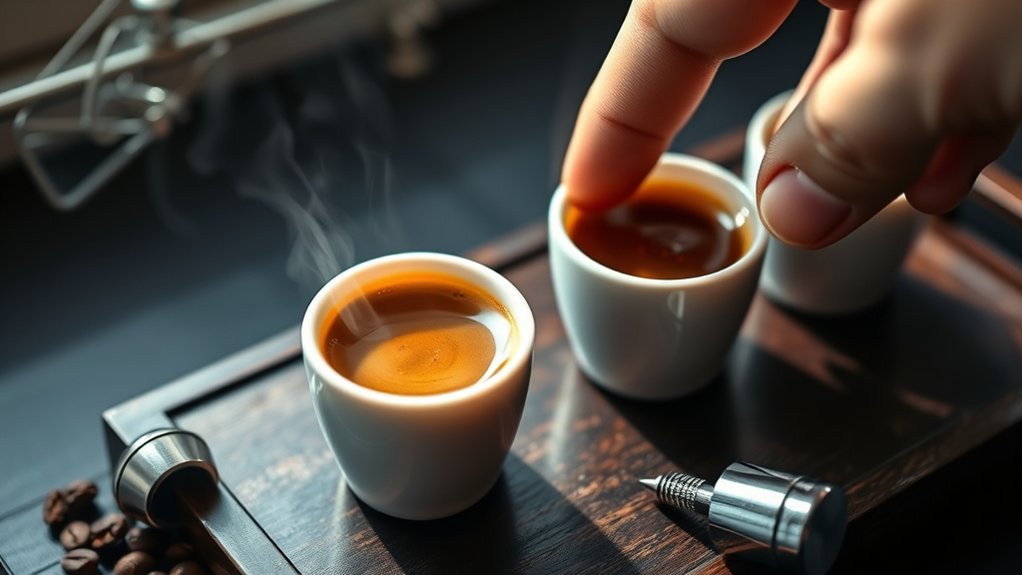
Although an equal amount of caffeine might be present, you’ll feel a stronger kick from three shots of espresso because its caffeine is packed into a small, concentrated volume. The brewing method uses high pressure, producing a rich flavor and thick crema that boost the espresso’s perceived strength compared to regular coffee.
While an 8-ounce cup of drip coffee has 80-120 mg of caffeine, three espresso shots contain 180-225 mg in a much smaller serving. This concentrated form increases the absorption rate, making the stimulant effects hit you faster and feel more intense.
The combination of texture, crema, and concentrated caffeine means your body processes espresso differently. So those three shots deliver a noticeably stronger caffeine experience than the same caffeine dose in regular coffee.
Brewing Methods That Affect Espresso Caffeine
You’ll notice that the pressure used during brewing plays a big role in how much caffeine ends up in your espresso.
And when you use finer grind sizes, you increase the surface area. That lets more caffeine extract efficiently under that pressure.
Pressure Impact On Extraction
When you force hot water through finely ground coffee at around 9 bars of pressure, you maximize caffeine extraction and intensify the espresso’s flavor.
This pressure is essential for producing rich, concentrated shots packed with caffeine and vital oils.
Here’s why pressure matters in espresso brewing:
- Consistent 9 bars pressure guarantees efficient extraction of caffeine and flavor compounds quickly, within a short brewing time of 25-30 seconds.
- Pressure pushes water through the coffee puck, extracting oils that enhance the espresso’s complexity and mouthfeel.
- Adjusting pressure slightly impacts how concentrated your shots are, affecting caffeine yield without changing grind size or brewing time.
Grind Size Influence
Since grind size directly controls how quickly water extracts caffeine from coffee grounds, dialing in the right fineness is crucial for a strong espresso.
Using finer grinds increases the surface area, allowing for more efficient extraction and boosting caffeine content by up to 20% compared to a coarser grind.
If your grind is too coarse, under-extraction occurs, leading to lower caffeine concentration and a weaker flavor profile.
To achieve a balanced extraction, aim for a grind size between fine and extra-fine.
Consistency in grind size guarantees even extraction, which directly impacts both the flavor profile and caffeine concentration of your espresso shot.
Adjusting grind size carefully helps you maximize caffeine extraction without sacrificing taste.
How Milk and Additives Change Your Espresso Caffeine Intake
Although espresso packs a strong caffeine punch, adding milk and other additives changes how you experience its effects. When you mix milk with espresso, like in a latte, the caffeine concentration dilutes, making the drink feel smoother and less intense despite containing the same shots.
Here’s how milk and additives affect your caffeine intake:
- Milk increases volume but doesn’t add caffeine. It alters texture and flavor without changing caffeine content.
- Flavored syrups mask espresso’s bitterness, letting you enjoy more caffeine comfortably.
- Fatty creamers slow your caffeine absorption rate, offering a steadier energy boost compared to straight espresso.
Understanding these factors helps you enjoy your espresso-based drinks while managing your caffeine intake effectively.
Choosing Espresso Strength for Your Caffeine Needs
If you want to control your caffeine intake precisely, choosing the right espresso strength is key. A single shot of espresso packs 60-75 mg of caffeine, while three shots deliver about 180-225 mg, which is almost half the daily recommended limit.
You can manage your boost by selecting between single, double, or triple shots based on your needs. The beans you choose also affect caffeine amount. Robusta beans contain more caffeine than Arabica, which influences strength.
Keep in mind espresso has a higher caffeine concentration per ounce compared to drip coffee—about 63 mg versus 95 mg in an 8-ounce cup.
Managing Caffeine Tolerance With Multiple Espresso Shots
You might notice that your reaction to multiple espresso shots isn’t the same as someone else’s. That’s because caffeine sensitivity can really vary from person to person.
It helps to pay attention to how your body feels so you can enjoy the energy boost without going overboard. By managing your intake thoughtfully, you can avoid jitters and keep your caffeine kick feeling good.
Individual Caffeine Sensitivity
Since caffeine affects everyone differently, understanding your individual sensitivity is key when managing multiple espresso shots. Your caffeine sensitivity depends on factors like body weight, metabolism, and genetics. These influence how you experience the effects of caffeine.
To handle your individual tolerance and maximize your energy boost while avoiding negative personal effects, consider these steps:
- Monitor caffeine intake carefully, noting how different amounts of espresso shots affect your mood and alertness.
- Recognize that caffeine absorption varies, so your body might process three shots differently than someone else’s.
- Adjust consumption based on your metabolism and experience, balancing espresso intake to suit your personal tolerance.
Balancing Intake Effects
While enjoying multiple espresso shots can boost your energy, balancing their effects requires careful management of caffeine tolerance. Your caffeine intake from three shots ranges between 180-225 mg, which can affect you differently based on individual tolerance.
Factors like body weight and metabolism influence how caffeine impacts you, so monitoring your reactions is key. Regular consumption of espresso shots may increase your tolerance, meaning you’ll need more caffeine for the same energy boost over time.
To moderate caffeine effects, consider pairing your espresso with protein or fat, such as milk, to slow absorption and promote steadier energy.
Tips to Balance Energy and Avoid Caffeine Overload With Espresso
Although espresso delivers a powerful caffeine kick, spreading three shots evenly throughout your day can help you maintain steady energy without feeling overwhelmed.
To manage your caffeine intake wisely and avoid caffeine overload, try these tips:
- Monitor tolerance by noting how your body reacts to each shot of espresso. Adjust timing and amount accordingly to prevent jitters or anxiety.
- Incorporate breaks between consumption to allow caffeine levels to stabilize. This promotes a steady energy boost rather than spikes.
- Pair your espresso with a protein creamer or healthy fats and stay hydrated. This helps slow caffeine absorption and reduce side effects.
Frequently Asked Questions
Can Espresso Caffeine Affect Sleep Quality Differently Than Drip Coffee?
Yes, espresso caffeine can affect your sleep quality differently than drip coffee.
Because espresso delivers caffeine quickly, your caffeine metabolism can spike alertness, disrupting sleep patterns if taken late.
If you have low caffeine tolerance or sensitivity, especially with evening consumption, espresso timing matters more.
You might notice trouble relaxing or worsening sleep disorders.
Using relaxation techniques before bed can help, but knowing your caffeine sensitivity and adjusting intake is key to better sleep.
Does Decaf Espresso Contain Any Caffeine at All?
Yes, decaf espresso does contain some caffeine, though its caffeine content is much lower than regular espresso.
Depending on brewing methods and preparation techniques, you might get 0.3 to 7 milligrams per shot.
If you have caffeine sensitivity, it’s wise to monitor your intake.
Despite decaf myths, decaf espresso offers similar taste profiles and health benefits.
Understanding espresso types helps you make informed consumer choices that suit your preferences.
How Long Does Caffeine From Espresso Stay in Your System?
Caffeine from espresso can stick around in your system like an uninvited guest for 3 to 7 hours, thanks to caffeine metabolism.
You’ll feel peak effects between 30 to 90 minutes, boosting your energy levels and espresso benefits.
Your individual sensitivity and tolerance levels play a big role. Some might face withdrawal symptoms if they hit daily limits or consume multiple caffeine sources.
Don’t forget hydration effects; staying hydrated helps balance caffeine’s impact.
Are There Health Risks Associated With Drinking Three Shots Daily?
Yes, drinking three shots daily can pose health risks depending on your caffeine tolerance. You might experience increased heart rate, anxiety levels, or withdrawal symptoms if you stop suddenly.
While some enjoy health benefits, exceeding daily limits risks long-term consumption effects like sleep disturbances.
Pregnancy risks are significant, so avoid high intake if pregnant.
Also, caffeine affects hydration and metabolism differently, so monitor how your body responds to avoid negative impacts.
Can Espresso Caffeine Interact With Medications or Supplements?
Yes, espresso interactions with medications and supplements can affect caffeine metabolism and medication absorption.
You should watch for reduced supplement effectiveness, especially with calcium and iron.
Timing considerations matter. Taking espresso close to medications may increase side effects or reduce health benefits.
Dosage guidelines vary based on individual tolerances, so expert opinions recommend consulting your healthcare provider before combining espresso with medications or supplements to avoid risks and optimize benefits.
Conclusion
Think of your caffeine intake like steering a boat through waves. One shot of espresso is a swift gust pushing you forward, but three shots? That’s a strong wind that can speed you up or rock the boat if you’re not careful.
By understanding the caffeine currents and adjusting your sails, whether with milk or timing, you’ll navigate your energy levels smoothly. This way, you avoid the storm of jitters and stay on course throughout your day.