How Do You Make Strong Coffee – Best Brewing Tips
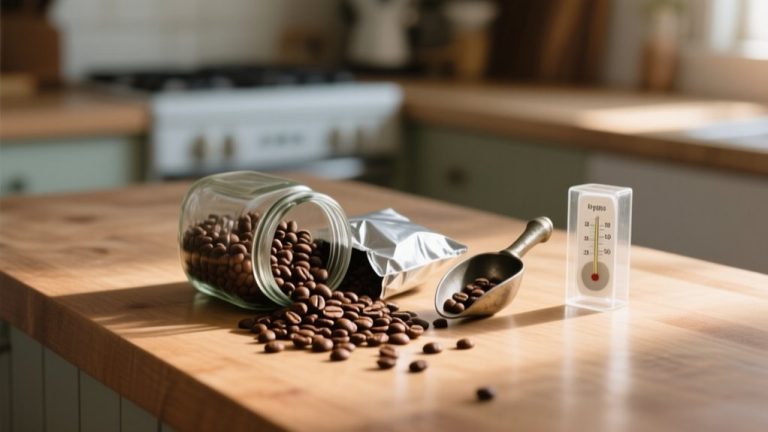
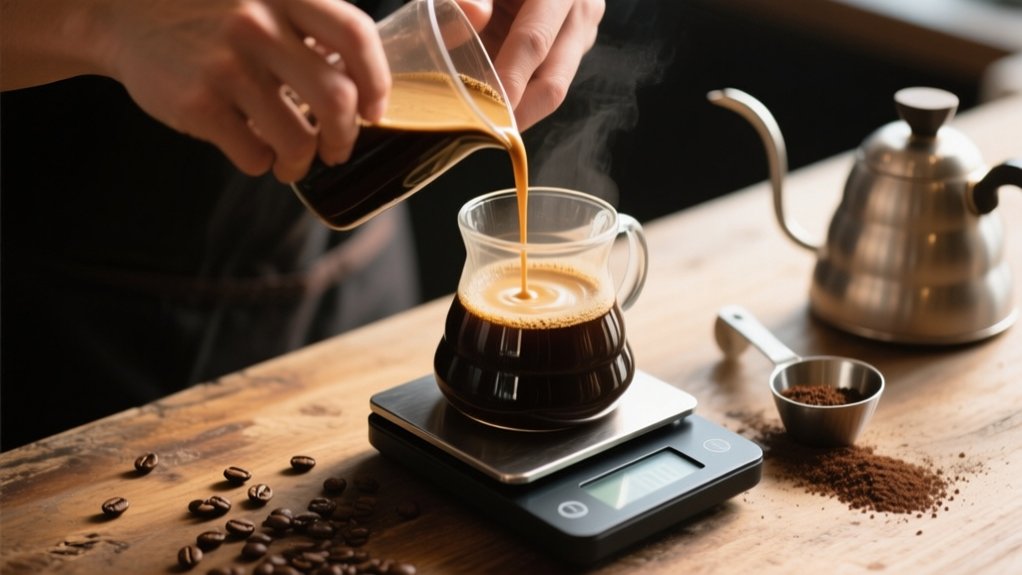
To make strong coffee, start by using a tighter coffee-to-water ratio, around 1:14 or even 1:12. Measure your coffee and water precisely with a digital scale.
Grind your beans just before brewing, aiming for a medium-fine size for drip or finer for espresso. Brew with water between 195°F and 205°F to avoid bitterness.
Choose fresh, dark-roasted beans and clean your equipment regularly. Mastering these details reveals bold, balanced flavors without harshness. There’s much more to perfect for your ideal cup.
Adjusting Coffee-to-Water Ratio for Strong Coffee
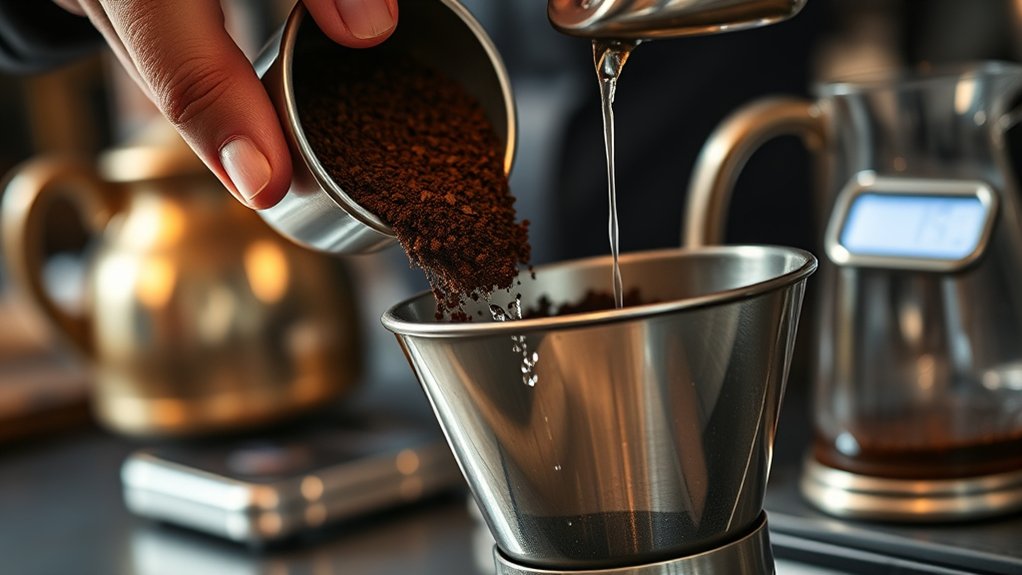
When you want to brew strong coffee, adjusting the coffee-to-water ratio is key to revealing a richer, more robust flavor. For a robust cup, aim for a ratio between 1:15 and 1:12, meaning one gram of coffee for every 15 to 12 grams of water.
For example, to brew strong coffee in a 12-ounce cup, use about 21 grams of coffee with 250 grams of water. Tightening the ratio to 1:14 or 1:12 intensifies strength without overpowering bitterness.
Brew strong coffee with 21 grams of coffee and 250 grams of water for a bold, balanced cup.
Accurate measurements using a digital scale are essential for consistency in coffee brewing.
Don’t hesitate to experiment with grams of coffee to find your perfect balance.
Mastering this ratio empowers you to tailor strength and savor complexity in every cup you brew strong.
How Grind Size Affects Strength and Flavor
Adjusting the coffee-to-water ratio sets the foundation for a strong brew, but grind size shapes how those flavors develop during extraction. Your grind size directly affects extraction rate. Finer grinds increase surface area, speeding extraction but risking bitterness if overdone. Coarser grinds extract slower, yielding smoother flavors.
Using a burr grinder guarantees consistent particle size, preventing uneven extraction that weakens or overpowers your cup.
Consider these key points:
- Fine grind suits espresso and AeroPress, creating needed pressure for bold flavor.
- Medium to medium-fine grind works best for drip coffee, balancing clarity and strength.
- Coarser grinds excel in immersion methods like French Press for smoother, less intense flavor.
Mastering grind size lets you tailor extraction and flavor intensity to craft your perfect strong coffee.
Why Water Temperature Matters for Strong Coffee
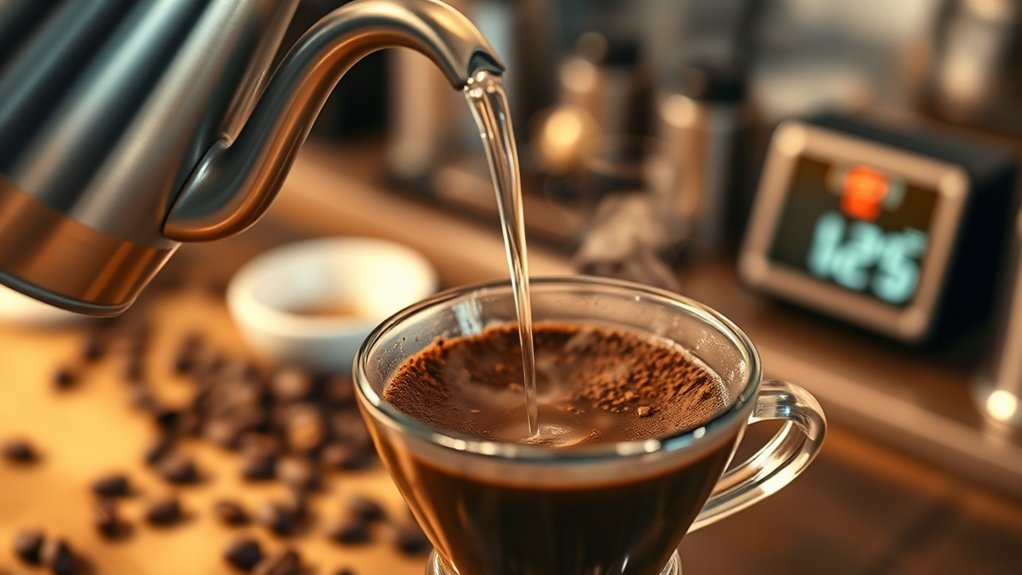
You’ve got to hit the right water temperature—somewhere between 195°F and 205°F—to pull out the richest flavors without any bitterness.
If the water’s too hot, it’ll scorch the grounds, which is no good. But if it’s too cold, your coffee will come out weak and under-extracted.
Getting this temperature range just right means every cup will be full-bodied and strong, exactly how you want it.
Optimal Brewing Temperature
Because water temperature directly influences the extraction process, mastering it’s vital for brewing strong, flavorful coffee. The ideal brewing temperature lies between 195°F and 205°F (90°C to 96°C), where you extract maximum flavor without bitterness.
Too hot, and you risk scorching grounds; too cool, and your coffee tastes weak.
To nail this important aspect of the brewing process, remember:
- Let boiling water rest about 30 seconds before pouring to reach the perfect temperature.
- Use a thermometer or temperature-controlled kettle for consistent brewing temperatures.
- Adjust temperatures within the range for specific methods. Espresso and Aeropress favor the higher end for strength.
Controlling water temperature with precision guarantees your coffee’s boldness shines through every time.
Temperature Impact On Extraction
When water temperature falls within the ideal range of 195°F to 205°F (90°C to 96°C), it releases the full potential of your coffee grounds by extracting the perfect balance of soluble compounds.
This temperature range guarantees that about 20% of extractable solids dissolve, creating a robust yet balanced flavor.
If the temperature’s too high, you risk over-extraction, which leads to bitterness by pulling out undesirable compounds.
Too low, and under-extraction yields weak, sour coffee.
Different brewing methods demand precise temperature control to optimize extraction according to your coffee-to-water ratio.
Even a 10°F deviation can drastically alter strength and taste.
Ranking Brewing Methods by Coffee Strength
You’ll find that brewing methods vary a lot in strength, and each one brings out unique flavors depending on how efficiently the coffee is extracted and how long it brews.
For example, espresso uses intense pressure to pull out bold flavors quickly, while a French Press relies on immersion, letting the coffee steep for several minutes.
Then there’s the AeroPress, which gives you the flexibility to customize your brew time and strength.
Knowing these differences can really help you find your perfect cup.
Whether you want something super strong and concentrated or a bit smoother and more nuanced, understanding how each method works lets you pick the one that matches your taste.
Brewing Method Strength Comparison
Although each brewing method offers unique flavors and textures, their strength varies considerably due to differences in extraction techniques and pressure.
To make the strongest coffee, you need to understand how each method manipulates brew ratio and pressure to extract caffeine and flavor.
Espresso tops the list, using high pressure to produce intensely concentrated shots with a powerful caffeine punch.
The Moka pot follows closely, applying steam pressure to yield a robust, espresso-like brew, though it may leave sediment behind.
French press offers a full-bodied, immersive extraction, controlled by brew ratio and steeping time.
Its mesh filter can result in a heavier mouthfeel.
Flavor Profiles by Method
Five popular brewing methods each deliver distinct flavor profiles and varying coffee strengths, shaped by their unique extraction processes. Your choice of coffee-making method directly influences brew time and coffee-to-water ratio. These factors define the cup’s character.
| Brewing Method | Flavor Profile & Strength |
|---|---|
| Espresso | Intense, concentrated, high caffeine per ounce |
| AeroPress | Robust, adjustable strength, minimal bitterness |
| Moka Pot | Rich, thick-bodied, espresso-like |
| French Press | Full-bodied, heavy mouthfeel, rich oils retained |
Pour Over, while cleaner and lighter, depends heavily on grind size and brew time for strength. Tailor these variables to master your preferred flavor profiles.
Efficiency and Extraction Factors
When aiming for the strongest coffee, understanding each brewing method’s efficiency and extraction nuances is crucial. The espresso machine excels here, delivering intense flavors rapidly due to its high-pressure extraction and fine grind size.
You’ll want to adjust the coffee-to-water ratio tightly, around 1:12 to 1:14, to maximize strength without bitterness. Maintaining the ideal brewing temperature between 195°F and 205°F guarantees balanced extraction. Too hot scorches, too cool under-extracts.
Focus on these key factors:
- Grind Size: Finer grinds speed extraction but risk bitterness if overdone.
- Brewing Time: Espresso requires 25-30 seconds, contrasting with longer steep times elsewhere.
- Brewing Method Efficiency: Espresso and AeroPress lead in strength due to concentrated extraction.
Master these, and your coffee will hit that bold, robust mark every time.
How to Brew Strong Coffee With an Espresso Machine
Because espresso machines rely on precise extraction, brewing strong coffee with one demands careful attention to grind size, water temperature, and timing.
To make strong coffee, start with a fine grind, similar to table salt, maximizing extraction and delivering rich, concentrated flavors.
Set your espresso machine’s water temperature between 195°F and 205°F to avoid scorching the grounds and bitterness. Use a coffee-to-water ratio of about 1:2 for a powerful, balanced shot, adjusting to taste.
Aim for a 25 to 30-second brew time. Under-extracting yields sour notes, and over-extracting brings bitterness.
Don’t forget to clean your machine regularly because buildup in the portafilter and group head can degrade flavor quality.
This brewing method guarantees every shot packs strength and complexity, making your espresso machine your ultimate tool for bold coffee.
Brewing Strong Coffee With a Moka Pot
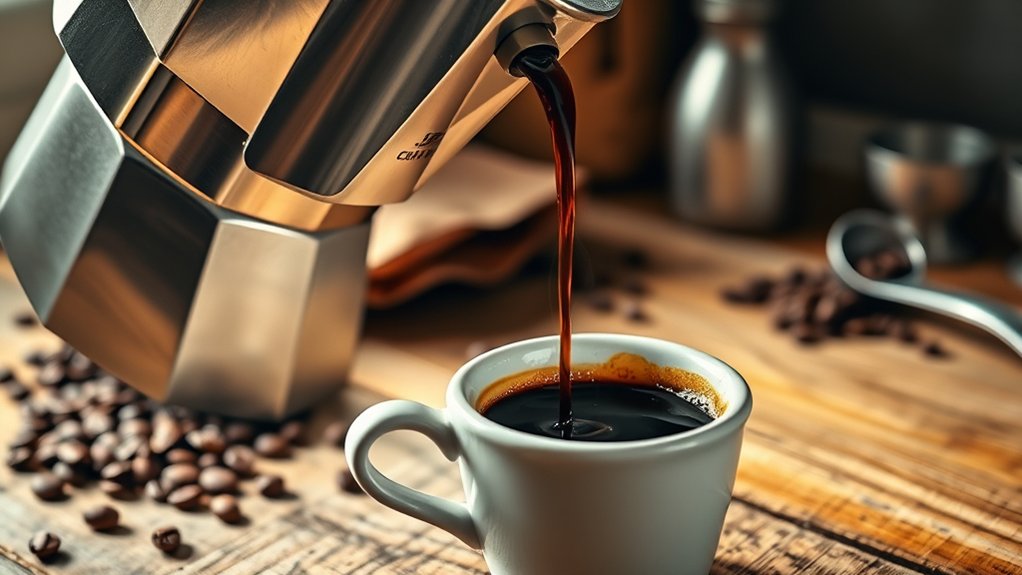
When you’re brewing strong coffee with a Moka pot, it’s all about getting the water temperature and grind size just right. This helps you pull out that rich, espresso-like flavor without ending up with any bitterness.
You also want to keep a close eye on the brewing process. For example, keeping the lid open early on can make a difference.
And don’t forget—keeping your pot clean is key to preserving that bold taste every single time.
Brewing Process Tips
Although brewing strong coffee with a Moka pot might seem straightforward, mastering the process requires attention to precise details that elevate flavor intensity.
Start with the right coffee-to-water ratio, about 1:7, to guarantee a concentrated brew that suits your taste. Use medium-fine coffee grounds, similar to table salt, for ideal extraction without bitterness.
During the brewing process, fill the lower chamber with water just up to the safety valve and pack the coffee grounds firmly but avoid over-compressing.
Follow these key steps:
- Heat the Moka pot on medium-low to keep water just below boiling.
- Remove the pot from heat as soon as you hear a hissing sound.
- Avoid boiling the coffee to preserve rich flavors.
This precision brings out the best in your Moka pot brew.
Flavor Profile Characteristics
Since the Moka pot uses steam pressure to force hot water through finely ground coffee, it delivers a robust, espresso-like flavor that’s both intense and nuanced.
When you brew with a medium-fine grind, similar to table salt, you guarantee peak extraction, balancing strength and smoothness without bitterness.
This grind size allows water at just below boiling, around 200°F, to pull rich oils and deep aromas from the coffee grounds.
The resulting flavor profile is bold and concentrated, with pronounced notes of chocolate, caramel, and subtle fruitiness, reflecting the coffee’s origin and roast.
This strong brew captivates with its full body and lingering finish, making the Moka pot a favorite for those craving intense coffee experiences without the complexity of an espresso machine.
Maintenance and Cleaning
To keep your Moka pot brewing strong, flavorful coffee consistently, you must clean it thoroughly after each use. Proper maintenance prevents coffee oils from building up, which can cause rancidity and spoil your brew’s taste.
After the pot cools, disassemble and rinse all parts with warm water. Avoid soap or abrasives to preserve flavor integrity. Pay close attention to the rubber gasket and filter; replacing them when worn guarantees peak pressure and leak-free brewing.
Follow these essential maintenance steps:
- Clean all components with warm water, removing residual coffee oils.
- Inspect and replace the gasket and filter regularly to maintain pressure.
- Store the dry pot in a moisture-free environment to prevent corrosion.
This disciplined cleaning routine ensures every cup bursts with rich, strong coffee.
How to Brew Strong Coffee Quickly With Aeropress
When you want a strong cup of coffee fast, the AeroPress offers unmatched control and efficiency. Start by using a coffee-to-water ratio between 1:15 and 1:12, adjusting to your preferred strength.
Heat your water to about 200°F (93°C) to avoid scorching the grounds. Grind your beans to a medium-fine consistency; this guarantees even extraction and prevents bitterness.
Heat water to 200°F and use a medium-fine grind for smooth, balanced coffee without bitterness.
Add the grounds to the AeroPress, then pour the hot water and allow the coffee to steep before pressing. This 1 to 2-minute immersion deepens the flavor and intensifies strength.
For even bolder results, try the inverted method, which maximizes contact between water and grounds before plunging.
Mastering these steps lets you craft a rich, robust brew quickly with your AeroPress.
Brewing Strong Coffee With Pour Over
How do you reveal the full depth of flavor in your pour-over coffee? Mastering the pour-over process hinges on precision and technique.
Start with a medium-fine grind size, resembling granulated sugar, to optimize extraction. Adjust your coffee-to-water ratio between 1:15 and 1:16 for a strong cup; push to 1:12 for even bolder flavor.
Don’t skip blooming. Pre-wet your grounds with hot water (195°F to 205°F) in a slow, circular motion to release trapped gases and enhance flavor.
Focus on these essentials:
- Pre-wet the filter to prevent paper taste and promote even water flow.
- Pour water steadily, controlling brew time to 2.5–3.5 minutes to avoid bitterness.
- Adjust grind and ratio to suit your strength preference.
This approach guarantees a rich, vibrant pour-over brew every time.
Getting Bold Flavor From French Press Brewing
Although the French Press is celebrated for its full-bodied texture, revealing bold flavor demands careful attention to grind size and brewing time. Use a coarse grind, similar to breadcrumbs, to avoid over-extraction and bitterness in your French press coffee.
Adjust your coffee-to-water ratio between 1:15 and 1:12 for a stronger cup, for instance, 21 to 24 grams of coffee per 12 ounces of water. Pour water heated to 195°F to 205°F over the grounds, then stir gently to guarantee even saturation.
Allow the coffee to steep for about 4 minutes, extracting rich, bold flavor without harshness.
Finally, press the plunger slowly and steadily to separate grounds cleanly, delivering a smooth, robust brew that showcases the French Press’s full-bodied potential.
Avoiding Bitterness in Strong Coffee
To craft strong coffee without bitterness, you must control extraction carefully by managing grind size, temperature, and brew time.
Crafting strong coffee without bitterness hinges on precise control of grind size, temperature, and brew time.
Start with a coarser grind size to prevent over-extraction, especially for methods like French Press. Maintain an ideal temperature between 195°F and 205°F to avoid scorching grounds, which causes bitterness.
Finally, limit your brew time precisely, around 4 minutes for French Press and 1-2 minutes for AeroPress, to balance strength and flavor.
Focus on these three essentials:
- Use a coffee-to-water ratio between 1:15 and 1:18 to achieve strength without harshness.
- Adjust grind size coarser to slow extraction and reduce bitterness.
- Control brew time strictly to avoid over-extracting bitter compounds.
Master these, and your strong coffee will be rich, bold, and smooth.
Cleaning and Equipment Care for Consistent Strong Coffee
Perfectly balancing grind size, temperature, and brew time sets the foundation for strong coffee, but maintaining that quality requires consistent care of your equipment.
Regular cleaning of your coffee makers and grinders prevents stale oils and residue buildup that dull your coffee bean’s flavor and strength.
Use soft water during brewing to avoid mineral deposits that impair machine performance and taste.
Descale your coffee maker every few months to eliminate limescale, ensuring ideal extraction.
Replace filters regularly, since used ones absorb oils and weaken flavor.
Store your coffee beans airtight in a cool, dark place to preserve freshness and potency.
Frequently Asked Questions
Does Coffee Bean Origin Affect the Strength of Brewed Coffee?
Yes, coffee bean origin definitely affects the strength of your brew. Different origins bring unique bean flavors and acidity levels that shape how strong your coffee tastes.
For example, Ethiopian beans often have bright acidity, while Brazilian beans lean nutty with lower acidity.
Your roast profile and brewing method also interact with these factors, enhancing or softening perceived strength.
Understanding origin helps you choose beans that match your preferred boldness and complexity perfectly.
How Does Grind Freshness Impact Coffee Strength?
Imagine the aroma hitting you right after grinding. Freshness is everything. Your grind freshness directly impacts coffee strength by preserving volatile oils that boost flavor.
If you grind too early or store beans poorly, oxidation dulls your extraction rate, weakening the brew.
Pairing the right grind size with your brewing method guarantees ideal extraction.
Can Adding Coffee Grounds During Brewing Increase Strength?
Yes, adding more coffee grounds during brewing techniques can definitely increase strength by adjusting coffee ratios.
When you boost grounds while keeping water constant, extraction methods intensify, pulling richer compounds and deeper flavor profiles.
Just be careful not to overcrowd your filter or basket, as that disrupts even extraction.
Mastering this balance lets you customize your brew’s intensity with precision, enhancing your coffee’s boldness without bitterness.
What Role Does Water Quality Play in Coffee Strength?
Water quality is the secret superhero behind strong coffee! You’ll notice water hardness and mineral content dramatically impact extraction and flavor depth.
Hard water boosts body and complexity, while soft water risks a flat cup.
Filtration methods remove impurities that dull taste, ensuring your brew’s purity.
Plus, water temperature impact depends on clean, balanced water; impurities can lower effective heat, weakening strength.
Keep your water perfect, and your coffee will reward you richly!
How Does Brew Time Influence Caffeine Content Versus Flavor Strength?
Brew time directly impacts your coffee’s flavor profile more than caffeine extraction.
While longer brew times can deepen flavors, they risk bitterness from over-extraction.
Caffeine extraction happens relatively quickly, so extending brew time won’t drastically increase caffeine.
Your brewing method matters. Espresso’s short brew time yields intense caffeine per ounce, but drip coffee needs longer to develop its taste.
Mastering brew time balances rich flavor without sacrificing smoothness or caffeine punch.
Conclusion
To make strong coffee that hits like a lightning bolt, you need precision and care. Adjust your coffee-to-water ratio, choose the right grind size, and control water temperature meticulously.
Each brewing method has its secrets, so embrace them. Keep your equipment spotless to reveal consistent bold flavors every time.
Like a symphony, strong coffee demands harmony between technique and passion. Master these tips, and your cup will always deliver that powerful, rich experience you crave.