Can You Put Brown Sugar In Coffee – Flavor Tips Explained
You can definitely put brown sugar in your coffee. It adds rich caramel and toffee notes that deepen flavor and bring warmth. Brown sugar’s molasses content creates a smooth, syrupy sweetness that dissolves best in hot coffee.
This sweetness enhances nutty and chocolate undertones, especially in dark roasts and espresso. Just remember to stir well and avoid overwhelming subtle coffee traits. If you want to explore how to use brown sugar perfectly and discover alternatives, there’s plenty more to uncover.
Why Brown Sugar Is a Great Choice for Coffee
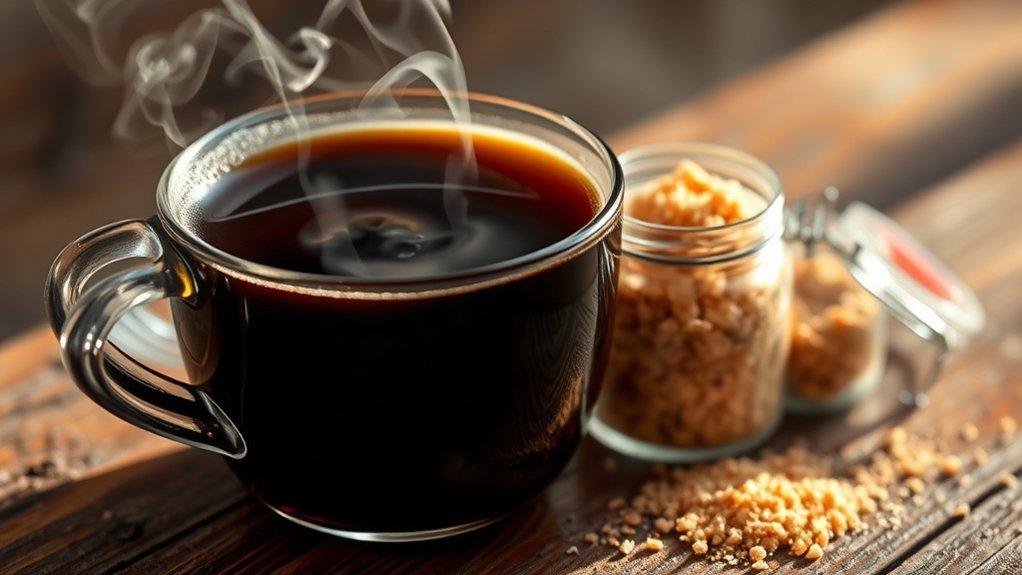
Although many sweeteners can enhance your coffee, brown sugar stands out by adding a rich, caramel-like flavor that deepens the drink’s complexity. When you choose brown sugar, you get a perfect balance of sweetness that goes beyond simple sugariness.
Brown sugar adds a rich, caramel depth that elevates your coffee beyond ordinary sweetness.
Its molasses content not only darkens your coffee but also adds a moist texture and subtle earthiness that white sugar just can’t match. This creates a smooth, syrupy sweetness that dissolves effortlessly in hot coffee, offering a natural flavor boost.
Brown sugar works especially well with darker roasts and espresso because it highlights nutty and chocolatey notes. It makes every sip more satisfying.
Using brown sugar transforms your cup into a richer, more textured experience without overpowering the original coffee flavors.
How Brown Sugar Changes the Flavor of Coffee
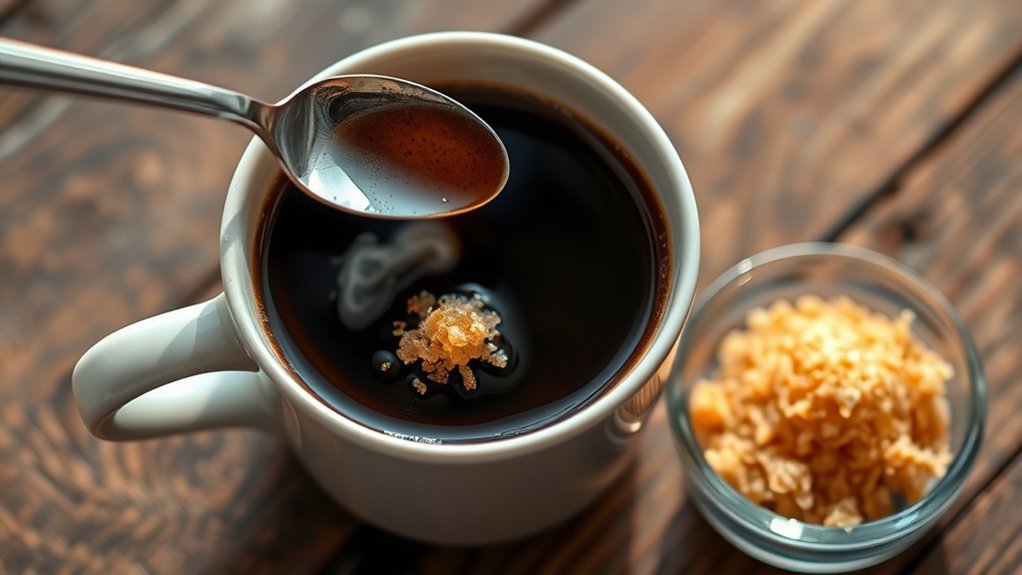
When you add brown sugar to your coffee, it brings rich caramel and molasses notes that really deepen the flavor and create a smooth, syrupy texture.
You’ll notice it enhances those nutty and chocolatey undertones, especially if you’re drinking darker roasts or espresso.
Pairing brown sugar with these kinds of coffees can really highlight their complex layers.
It makes each sip feel more satisfying, almost like you’re discovering new flavors every time.
It’s a simple addition, but it can totally change the way your coffee tastes.
Flavor Profile Impact
How does brown sugar transform the flavor of your coffee? It adds rich caramel, toffee, and molasses notes that offer a warm, inviting flavor enhancement. The molasses in brown sugar deepens the coffee’s richness, making each sip feel more full-bodied and satisfying.
When you stir it into a dark roast, brown sugar brightens the profile by introducing subtle sweetness and complexity, elevating the overall experience. This aroma development creates a more layered, fragrant cup compared to white sugar’s straightforward sweetness.
Keep in mind, the impact varies based on the coffee type and how much you use, allowing you to tailor the flavor intensity. By choosing brown sugar, you reveal a deeper, more nuanced coffee taste that’s both comforting and enchanting.
Coffee Pairing Suggestions
Brown sugar’s rich caramel and molasses notes don’t just enhance your coffee’s flavor. They also open up exciting pairing possibilities. When you use brown sugar, you amplify the flavor enhancement in dark roasts and espresso. This complements their deep, roasted qualities with toffee undertones.
The sugar’s molasses content brightens coffees that feature chocolate or nutty notes, making them more vibrant. If you prefer light roasts, brown sugar adds warmth that highlights their delicate fruity or floral hints. This creates a fuller, velvety body.
Understanding coffee bean roasting helps you choose the perfect pairing. Brown sugar balances sweetness with the beans’ natural traits, enriching your cup and elevating your coffee experience.
Give it a try and see how it transforms your brew’s flavor profile beautifully.
When to Use Brown Sugar Instead of White Sugar
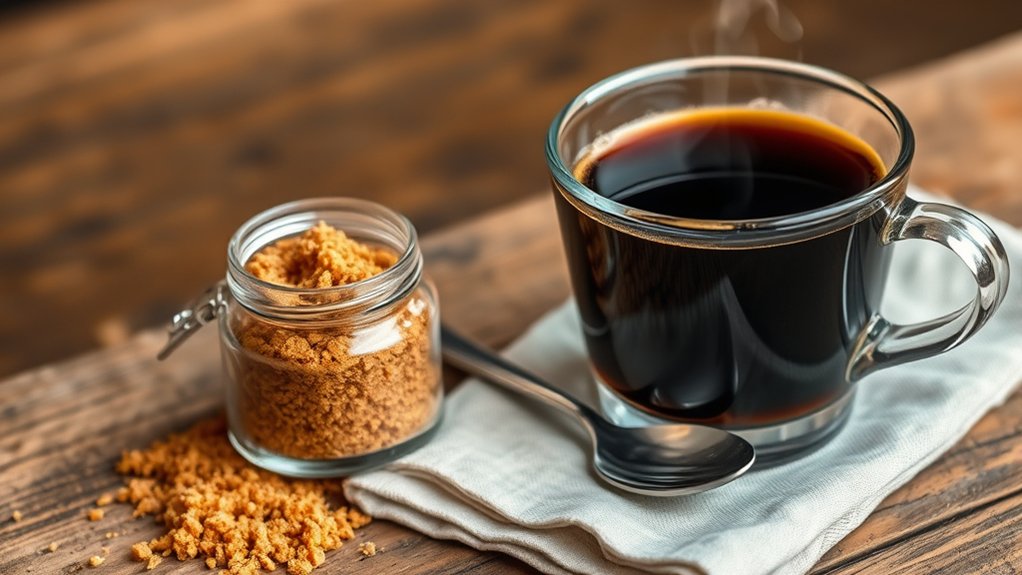
If you want to bring out richer, more complex flavors in your coffee, swapping white sugar for brown sugar can make a noticeable difference. Brown sugar’s natural molasses content adds caramel and toffee notes, perfect for flavor enhancement in dark roasts and espresso-based drinks.
When applying sweetening techniques, choose brown sugar for beverages like lattes or cold brews that benefit from its slight syrupy texture and moisture. It’s ideal when you want a layered sweetness, providing depth that white sugar lacks.
Use brown sugar in recipes or brewing methods where a subtle caramel flavor complements coffee’s natural characteristics.
How to Sweeten Coffee With Brown Sugar
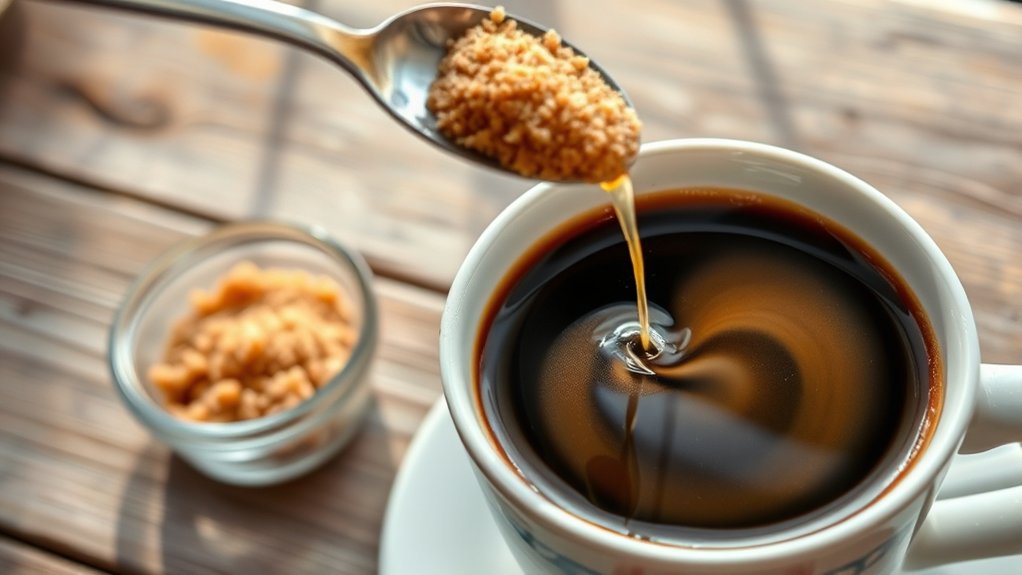
Wondering how to bring out the best in your coffee’s sweetness? Start by adding brown sugar directly to hot coffee. The higher coffee temperature helps the sugar granules dissolve quickly, releasing those rich caramel and molasses notes. Stir well to guarantee full blending.
For cold brews, prepare a brown sugar syrup ahead of time. It sweetens evenly without any graininess.
| Coffee Temperature | Sugar Granularity | Resulting Flavor |
|---|---|---|
| Hot (above 140°F) | Fine to medium | Smooth, rich |
| Warm (120-140°F) | Medium | Balanced sweetness |
| Cold (below 80°F) | Syrup form | Even, subtle |
| Hot (above 140°F) | Coarse | Slightly textured |
| Cold (below 80°F) | Granular | Less dissolved |
Adjust sweetness to taste. Usually, one teaspoon per cup works well.
Common Brown Sugar Mistakes in Coffee
While adding brown sugar can enhance your coffee, common mistakes often sneak in and spoil the experience. For one, using too much brown sugar can overpower the unique flavors of different coffee bean varieties, masking their subtle, complex notes.
Also, adding sugar directly to coffee without stirring properly, especially if the brewing temperature is too low, can leave clumps and uneven sweetness.
Don’t forget to store your brown sugar in an airtight container; otherwise, it hardens and resists dissolving, affecting your drink’s balance.
Finally, avoid reusing old, hardened sugar that may have developed mold, as it can ruin your coffee’s taste and introduce unwanted bacteria.
Adjust your brown sugar amount thoughtfully to complement the roast and brewing method for the best flavor.
How Brown Sugar’s Texture Affects Coffee Sweetening
You’ll notice that brown sugar’s moist texture makes it dissolve more slowly in your coffee. So, you might need to stir a little longer or warm your cup up a bit to get it to blend fully.
That moisture isn’t just a hassle—it actually adds a subtle body and depth to your drink, giving each sip a nice caramel-like richness.
Knowing how its texture works with heat can help you sweeten your coffee just the way you like it.
Brown Sugar Moisture Content
How does the moisture content in brown sugar influence your coffee’s sweetness? Brown sugar’s higher moisture content, thanks to molasses, makes it slightly sticky and prone to clumping issues. This stickiness can affect how you measure and add it to your coffee, sometimes creating small lumps rather than a smooth sprinkle.
Dark brown sugar usually has more moisture content than light, giving your coffee a richer, syrupy texture when used generously. To avoid clumping issues and maintain its ideal moisture level, store brown sugar in an airtight container.
This keeps it soft and ready to sweeten your brew evenly, enhancing flavor without the frustration of hardened chunks. Understanding this moisture factor helps you get the perfect balance of sweetness and texture in every cup.
Dissolving Speed In Coffee
The moisture and texture that make brown sugar a unique sweetener also influence how it dissolves in your coffee. Its coarse texture and molasses content cause larger crystals, which slow down the crystallization process and mean it takes more time to melt.
Because brown sugar is sensitive to temperature, it dissolves faster in hot coffee, especially when you stir it well.
In colder coffee, you’ll notice it takes longer to dissolve or needs extra stirring to blend smoothly. To speed things up, you might want to use finer or powdered brown sugar. These break down more easily no matter the temperature.
Understanding these factors helps you sweeten your brew efficiently without losing flavor or texture. That way, every cup tastes just right.
Is Brown Sugar Healthier Than White Sugar?
Wondering if brown sugar is a healthier choice than white sugar? When it comes to health comparisons, both sugars are quite similar.
Brown sugar contains trace amounts of minerals like calcium, potassium, and magnesium, but these don’t make a significant difference in your diet.
Brown sugar has tiny amounts of minerals, but they don’t meaningfully affect your diet.
Here’s what you should know: both have nearly the same calorie content. The mineral content in brown sugar is minimal and won’t impact your health noticeably.
Neither provides substantial health benefits when consumed in moderation.
And remember, excessive intake of either can lead to obesity, diabetes, and heart disease. So, it’s best to enjoy them both in moderation!
How Brown and White Sugar Are Made
You’ll notice that white sugar gets its clean, sweet profile from a thorough refining process. This process strips away molasses and impurities, making it pure and bright.
Brown sugar, on the other hand, either keeps its natural molasses or has some added back in. That’s what gives it that rich, caramel flavor and darker color.
Knowing these differences in how sugar is made can help you pick the best sweetener to match your coffee’s flavor.
Sugar Refining Processes
Although sugar may seem simple, its journey from sugarcane or beet juice to the sweet crystals you use involves intricate refining processes. These steps shape the sugar granule’s texture and flavor enhancement in your coffee. Here’s how it works:
First, juice is extracted from sugarcane or sugar beet. Then, the juice is clarified and water is evaporated to concentrate the sugar.
After that, the sugar crystallizes, forming raw granules.
For white sugar, it’s fully refined and bleached to remove molasses. Brown sugar, on the other hand, is either partially refined or has molasses added back in.
Brown sugar keeps or regains molasses, giving it moisture, color, and a rich flavor.
White sugar, meanwhile, boasts pure sucrose crystals.
Understanding these processes helps you appreciate how each sugar type influences your coffee’s taste. It’s pretty neat once you think about it!
Molasses Role Differences
How does molasses shape the distinct identities of brown and white sugar? The answer lies in their production.
White sugar undergoes thorough refining, stripping away all molasses to yield pure sucrose with a clean, neutral taste.
In contrast, brown sugar either keeps its natural molasses from the initial extraction or has molasses added back after refining. This molasses content is key. It provides that rich, caramel-like molasses flavor and gives brown sugar its signature darker color, thanks to color enhancement from the molasses.
You’ll also notice a moist texture in brown sugar, unlike the dry, granulated feel of white sugar.
Barista Tips for Using Brown Sugar in Coffee
When you want to enhance your coffee with brown sugar, dissolving it first in hot water or milk is key to getting a smooth, evenly sweetened cup. This step helps prevent clumping and makes sure the flavor blends seamlessly. It’s especially important when you want to show off your coffee art.
Baristas follow these tips to get the most out of brown sugar:
- Use dark brown sugar for bold, caramel-rich notes. Light brown sugar works best with more delicate brews.
- Add brown sugar syrup to steamed milk to make your lattes and cappuccinos richer.
- Stir or shake thoroughly so the sweetness stays consistent.
- Always add sugar after the espresso extraction to keep those nuanced flavors intact.
And don’t forget to keep your equipment clean. Residue buildup can mess with how the sugar dissolves and change the taste of your coffee. So a little maintenance goes a long way!
Natural Alternatives to Brown Sugar for Coffee
If you’re looking to switch up the sweetness in your coffee beyond brown sugar, natural alternatives bring exciting flavors and benefits to your cup. Try raw honey for its floral and fruity notes. It adds antioxidants and you usually need less because it’s pretty potent.
Maple syrup offers a distinct fruity sweetness along with antioxidants. It’s great for enhancing your coffee’s flavor, especially with rich roasts.
Coconut sugar has a caramel-like taste and contains trace minerals. It’s similar to brown sugar but with extra health perks since it’s minimally processed.
Agave nectar stands out as a low-glycemic option. It has a mild flavor and dissolves quickly in both hot or cold coffee.
Each of these alternatives not only sweetens your brew but also introduces unique flavor profiles and potential health benefits. They can make your daily coffee ritual more enjoyable and wholesome.
How Coffee Cultures Use Brown Sugar Around the World
Although brown sugar is a simple ingredient, it plays a vibrant role in coffee traditions across the globe, adding warmth and depth to each cup. Different cultures use it uniquely, showcasing diverse brewing techniques and coffee art.
Here’s how brown sugar enhances coffee worldwide:
- In the Philippines, it sweetens Kapeng Barako with a rich, caramel-like flavor.
- Latin America grates piloncillo into coffee, offering a deep molasses taste.
- Moroccan blends mix brown sugar with cinnamon and cardamom, creating complex layers.
- Japanese cafés craft sugar syrup from brown sugar, allowing you to customize sweetness and flavor nuances.
These traditions highlight how you can elevate your coffee experience by exploring brown sugar’s role in global coffee art and brewing techniques. It’s pretty cool to see how one simple ingredient can have so many unique uses, right?
Expert and Future Perspectives on Coffee Sweeteners
Since coffee sweeteners shape both flavor and experience, experts emphasize how brown sugar’s rich caramel and molasses notes make it a favorite among baristas. This is especially true in steamed milk drinks.
Brown sugar’s caramel and molasses notes elevate flavor, making it a barista favorite in steamed milk drinks.
Looking ahead, sweetening innovation is transforming your coffee routine with craft syrups and personalized options. These blend global influences seamlessly.
Cultural integrations play a big role too. Traditional sweeteners like jaggery or piloncillo continue to inspire new flavors rooted in local heritage.
While nutritionists remind you that health differences between brown and white sugar are minimal, the industry is shifting toward natural, sustainable choices. They’re prioritizing authenticity and environmental impact.
Embracing these expert and future perspectives lets you enjoy coffee sweetened not just for taste but with a nod to culture, craft, and conscious living.
Frequently Asked Questions
Can Brown Sugar Affect Coffee’s Caffeine Content?
Brown sugar won’t affect your coffee’s caffeine content but can enhance sweetness balance. Its molasses slows sugar crystallization, creating a richer flavor. So while caffeine stays the same, your taste experience definitely changes.
Does Brown Sugar Spoil Coffee Faster?
Don’t throw the baby out with the bathwater. Brown sugar won’t spoil your coffee faster if stored well.
Its sweetness balance and sugar crystallization can change texture, but proper storage keeps your brew fresh and tasty.
Is Brown Sugar Suitable for Cold Brew Coffee?
Yes, brown sugar suits cold brew well. You’ll enjoy a pleasant sweetness balance and texture enhancement, adding rich caramel notes and a velvety mouthfeel.
Just stir or shake to dissolve it fully for the best flavor. It blends smoothly without overpowering the coffee’s natural taste. Give it a try and see how it sweetens your cold brew just right.
Can Brown Sugar Cause Coffee to Burn When Brewing?
Yes, brown sugar can cause coffee to burn during brewing if the heat’s too high. This can disrupt the sweetness balance and cause sugar crystallization.
To avoid bitterness, it’s better to add brown sugar after brewing. This way, you get a smoother, richer flavor.
How Does Brown Sugar Interact With Flavored Coffee Syrups?
Imagine warm caramel swirling in your cup. Brown sugar enhances flavor by adding rich molasses depth.
It balances sweetness perfectly, creating a layered taste that intensifies your flavored syrup’s warmth and smoothness with every sip.
You’ll notice how it brings out the best in your coffee, making each cup feel cozy and satisfying.
Conclusion
So, why settle for plain when you can savor the rich, caramel warmth brown sugar brings to your coffee? It’s not just sweetening. It’s an experience that transforms every sip into a cozy moment.
Next time you brew, think beyond white sugar and let brown sugar dance on your taste buds. It adds depth and delight.
After all, your coffee deserves a little more magic, doesn’t it?