
How Much Calories In Coffee With Milk And Sugar – Nutrition Breakdown Guide
An 8-ounce cup of black coffee has about 2 calories, but adding milk and sugar quickly raises that number. For example, each ounce of whole milk adds roughly 18 calories, while a teaspoon of sugar adds about 16.
Creamers can add even more, sometimes up to 40 calories per serving. Choosing low-fat or plant-based milks and measuring sugar helps control intake. Managing portions and ingredients makes a big difference.
You can explore more ways to balance flavor with calorie goals. It’s all about finding what works best for you and your taste buds.
How Many Calories Are in Plain Black Coffee

How many calories are in plain black coffee? Typically, an 8-ounce cup contains just 2 calories, making it an excellent low-calorie beverage. The calorie count stays pretty much the same no matter which coffee bean variety you pick, whether it’s Arabica or Robusta. These beans themselves contribute minimal calories.
Brewing methods can slightly influence the calorie content, but not by much. For example, drip brewing, French press, and espresso extraction don’t add calories. They do affect the coffee’s concentration and strength, which might change how full you feel.
Cold brew, which is steeped longer, also keeps the calorie count low. So overall, plain black coffee’s calories stay very low, no matter the bean variety or brewing method. You can enjoy your cup without worrying about added calories.
How Portion Size Affects Coffee Calories
Because the calorie content in coffee primarily comes from added ingredients rather than the coffee itself, the portion size you choose plays a big role in your overall calorie intake. When you increase your coffee size, you usually add more milk, sugar, or creamers, which directly boosts the calories.
Even small changes, like going for a larger latte instead of a small one, can add 50 to 100 extra calories.
Brewing techniques also affect the coffee’s flavor intensity, which might change how much milk or sugar you add. For example, stronger brews like espresso may need less sweetener, helping you control calories better.
Being mindful of portion sizes lets you enjoy your favorite coffee flavor while managing calorie intake effectively. Just adjust your serving size to balance taste and nutrition without giving up the enjoyment.
Calories in Coffee With Different Milks
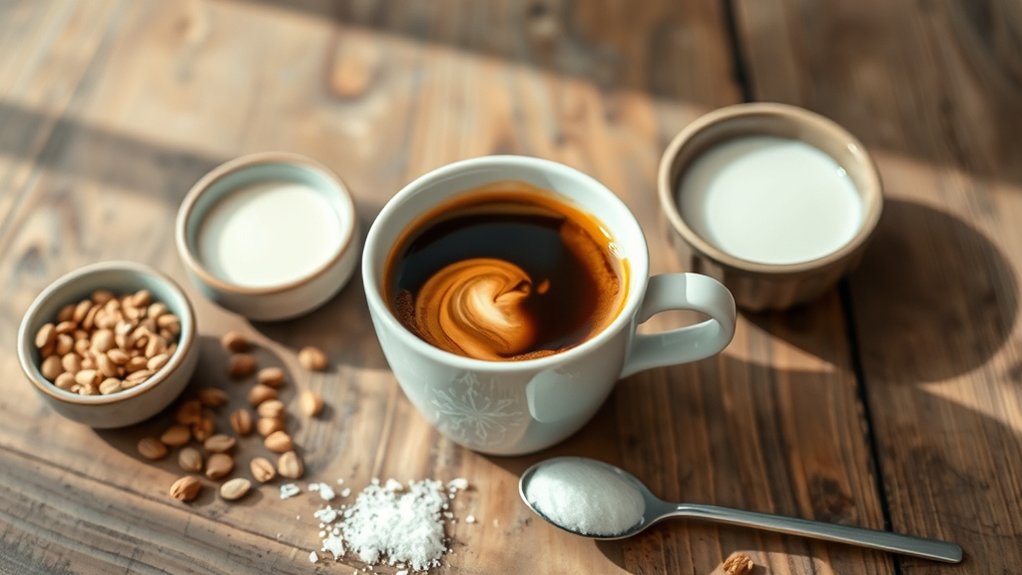
When you choose the type of milk to add to your coffee, you directly influence its calorie content and nutritional profile. Different milks provide varying calorie counts, impacting your overall intake and flavor enhancement during coffee brewing.
Selecting your milk shapes both the calories and flavor in every cup of coffee.
- Whole milk: Adds about 18 calories per ounce. It’s rich in fats and offers a creamy texture that complements coffee’s bitterness.
- Skim milk: Contains roughly 10 calories per ounce and is lower in fat. It’s ideal if you want fewer calories without sacrificing too much creaminess.
- Plant-based milks: These vary widely. For example, almond milk has about 7 calories per ounce, while oat milk can reach 15 calories. Each contributes unique flavors that affect your coffee’s taste and mouthfeel.
Picking your milk thoughtfully helps balance calorie goals with flavor enhancement during coffee brewing. It’s all about finding what works best for your taste and diet.
Calories Added by Sugar Amounts
Choosing the type of milk for your coffee affects its calorie content, but sugar can add even more calories depending on the amount you use. Each teaspoon of granulated sugar contains about 16 calories, so if you add two teaspoons, you’re adding roughly 32 calories.
Being mindful of sweetening options helps you maintain calorie awareness, especially if you consume multiple cups daily.
Alternatives like artificial sweeteners or natural zero-calorie options can reduce added calories without sacrificing sweetness. However, if you prefer sugar, measuring it rather than eyeballing can prevent unintentional calorie increases.
Understanding how sugar contributes to your coffee’s total calorie count empowers you to make informed choices that align with your dietary goals and overall calorie intake.
Coffee Calories in Popular Creamers
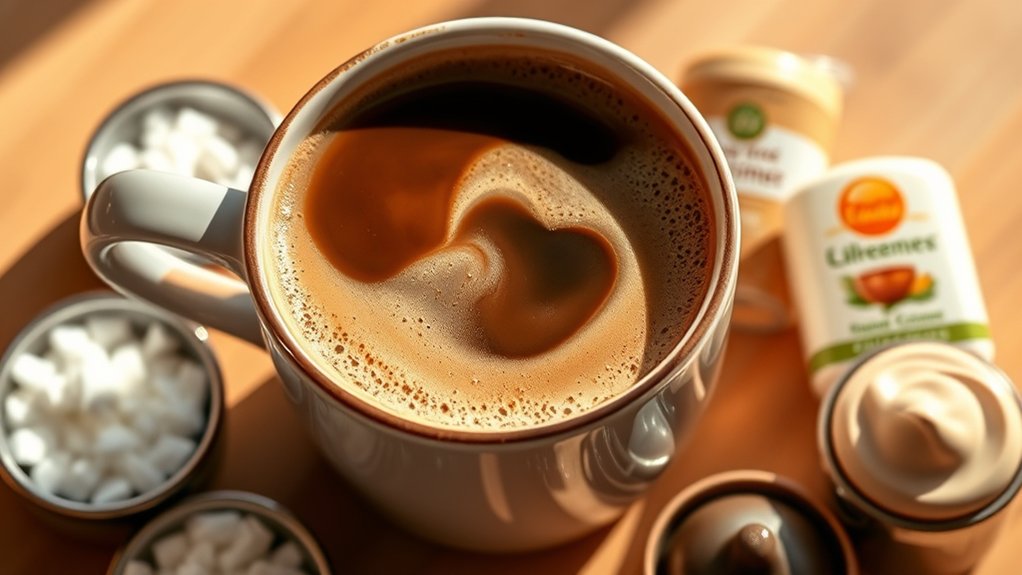
When you add popular creamers to your coffee, the calorie count can vary quite a bit depending on what you pick.
For instance, a tablespoon of half-and-half has about 20 calories.
On the other hand, flavored creamers usually pack in around 30 to 40 calories per serving.
Knowing these differences can really help you keep track of your overall calorie intake more easily.
Common Creamer Calorie Counts
A variety of popular creamers add differing amounts of calories to your coffee, and understanding these differences can help you manage your intake more effectively. Depending on the coffee flavor and brewing methods you prefer, the choice of creamer can markedly impact your overall calorie count.
Here are common creamer calorie counts per tablespoon:
- Half-and-half: About 20 calories, adds a rich, creamy texture without overpowering the coffee flavor.
- Whole milk: Roughly 9 calories, offering a lighter creaminess that complements most brewing methods.
- Flavored creamers: Typically 35-40 calories, these can enhance coffee flavor but add more sugar and calories.
Choosing your creamer wisely helps maintain your desired calorie intake while enjoying your preferred coffee style. It’s all about finding the right balance that works for you.
Impact of Creamer Types
Since creamers vary widely in ingredients and calorie content, understanding their impact on your coffee’s total calories is essential for managing your diet. Different creamer types, from dairy to plant-based and flavored varieties, add varying amounts of calories and fats. This directly influences your coffee’s nutritional profile.
For example, heavy cream typically contains about 50 calories per tablespoon, while almond milk creamer may have only 10 to 15 calories. When you brew coffee, the flavor profiles also shift depending on the creamer you choose. This affects sweetness, richness, and mouthfeel.
If you want to control calories without sacrificing taste, opt for lower-calorie creamers or measure portions carefully. This approach helps you enjoy your coffee while maintaining a balanced calorie intake aligned with your dietary goals.
How to Calculate Calories in Coffee Drinks
To calculate calories in your coffee accurately, start by measuring each ingredient precisely, like milk and sugar, using standard units.
Then, use nutrition labels or reliable databases to estimate the calorie content per serving size.
This method helps you track your intake with confidence and adjust recipes to meet your dietary goals.
It’s pretty straightforward once you get the hang of it. Just take it step by step, and soon you’ll be able to enjoy your favorite coffee drinks without any guesswork about the calories.
Plus, tweaking your recipes to fit your goals becomes a lot easier.
Measuring Ingredients Accurately
How can you guarantee the calorie count in your coffee is accurate? Precision starts with measuring each ingredient carefully. First, use a digital kitchen scale to weigh milk and sugar, since volume measurements can vary widely.
Next, note the coffee brewing method. Whether it’s drip, espresso, or French press, each can change the coffee’s strength and concentration a bit, which can slightly affect calorie calculations.
Also, keep your coffee stored properly to preserve freshness. This helps prevent changes in flavor and density that might influence your recipe.
Estimating Calorie Content
Although coffee itself contains very few calories, the additions you choose, like milk, sugar, or cream, significantly impact the total calorie count. To estimate calories accurately, start by identifying each ingredient’s portion size. For example, a tablespoon of whole milk adds about 9 calories, while a teaspoon of sugar contributes 16 calories.
Also, consider the coffee flavor and brewing methods, as these can slightly affect calorie content. Espresso-based drinks often use less water and more concentrated coffee, which influences your total intake.
Use nutrition labels or reliable databases to find precise values for each component.
How Sugar Alternatives Affect Coffee Calories
Why should you consider sugar alternatives when calculating coffee calories? Using sweetener substitutes can really change your calorie intake, especially if you add multiple sugars daily.
Here’s why it matters:
- Calorie comparison: Traditional sugar adds about 16 calories per teaspoon. Many sugar alternatives offer zero or negligible calories, which lowers your coffee’s total calorie count.
- Portion control: Sweetener substitutes let you enjoy sweetness without the extra calories. This helps you keep better control over how much you consume.
- Metabolic effects: Some sugar alternatives, like stevia or erythritol, don’t spike blood sugar. That can affect how your body stores energy and burns calories.
Easy Ways to Lower Coffee Calories Without Losing Taste
Choosing sugar alternatives is one effective step, but there are several other simple strategies you can use to reduce the calories in your coffee without sacrificing flavor.
Start by exploring different brewing techniques, such as cold brew or French press. These often produce a richer coffee flavor, allowing you to cut back on added milk or sweeteners.
Try cold brew or French press for richer coffee, reducing the need for milk or sweeteners.
Opt for low-fat or plant-based milk options to lower calorie content while maintaining creaminess.
You can also control portion sizes. Smaller servings naturally reduce calorie intake.
Experiment with spices like cinnamon or nutmeg to enhance coffee flavor without extra calories.
In conclusion, avoid high-calorie creamers and syrups; instead, use natural flavor enhancers.
These evidence-based adjustments help you enjoy your coffee fully while keeping calories in check.
How to Track Your Coffee Calories All Day
To accurately manage your daily calorie intake from coffee, you need a consistent way to track every addition, from milk to sweeteners. Coffee brewing methods impact flavor enhancement, but added ingredients can markedly raise calorie counts.
Here’s how you can track calories efficiently:
- Measure Ingredients: Use a kitchen scale or measuring spoons to quantify milk, sugar, or syrups. Estimating leads to inaccuracies.
- Use a Tracking App: Log each component in apps like MyFitnessPal, which offer extensive nutritional databases for coffee additives.
- Note Your Brewing Method: Different brewing techniques influence flavor intensity, which may reduce the need for extra sweeteners or creamers, indirectly controlling calories.
Why Coffee Calories Matter for Weight and Health Goals
You mightn’t realize how quickly the calories from milk and sugar in your coffee can add up and affect your daily intake. It’s easy to overlook, but those extra calories can really influence your weight management efforts if you don’t keep track of them.
Plus, knowing how these calories impact your metabolism can help you make smarter choices. That way, you’re staying on track with your health goals without feeling like you’re missing out.
Impact On Daily Intake
How much do the calories in your coffee really affect your daily nutritional goals? Every cup you enjoy impacts your total calorie intake, especially when you add milk and sugar. The coffee flavor and brewing techniques can influence how much milk or sugar you use, affecting calorie count.
Think about these factors:
- Milk type and quantity: Whole milk adds more calories than skim or plant-based alternatives.
- Sugar amount: Even small teaspoons add up quickly, raising your daily sugar intake.
- Brewing method: Stronger brews might reduce the need for extra sweeteners or milk, lowering calories.
Role In Weight Management
Understanding the calorie content in your coffee becomes really important when you’re managing weight and overall health goals. Every addition like milk, sugar, or flavored syrups adds calories that can add up fast, affecting your daily energy balance.
If you like to enhance your coffee’s flavor, just be mindful that these extras might unintentionally boost your calorie intake. Tracking these calories can help you stay within your target range without having to give up on taste.
Also, when you drink your coffee matters. Consuming it earlier in the day can support your activity levels without messing with your sleep, which is key for weight regulation.
Effects On Metabolism
Although coffee itself is low in calories, adding milk and sugar can affect your metabolism in ways that impact your weight and health goals. It’s important to understand these effects so you can make smarter choices.
First, caffeine in coffee gives your metabolism a little boost, helping you burn calories temporarily. But when you add sugars and full-fat milk, you’re also adding extra calories that might cancel out this benefit.
When you add sugar, your body has to process the extra energy, which could lower how efficiently your metabolism burns calories from coffee’s effects.
Over time, regularly drinking high-calorie coffee beverages can lead to weight gain. This can undo the metabolism boosts and make it tougher to reach your health goals.
Frequently Asked Questions
Does the Temperature of Coffee Affect Its Calorie Content?
No, coffee temperature doesn’t affect its calorie content directly. The number of calories depends on what you add, like milk or sugar, not how hot or cold the coffee is.
That said, coffee temperature might influence calorie absorption slightly. Hotter drinks could enhance digestion and nutrient uptake. But honestly, this effect is minimal and won’t change your overall calorie intake much.
How Does Adding Flavored Syrups Impact Coffee Calories?
Back in the age of knights, flavor enhancement meant herbs, but today, flavored syrups add a modern twist to your coffee.
When you add syrup varieties like vanilla or caramel, you considerably boost your drink’s calories. It’s often an extra 20 to 80 calories per tablespoon.
These syrups contain sugars and sometimes fats, so they increase your intake more than plain milk or sugar alone. Keep an eye on serving sizes to manage your calorie count effectively.
It’s all about enjoying the flavor without going overboard.
Can Coffee Calories Vary by Brewing Method?
Yes, coffee calories can vary by brewing method because brewing efficiency affects how much coffee flavor and oils are extracted. Methods like espresso pull a concentrated shot with more dissolved solids, which slightly increases calories compared to drip coffee.
Drip coffee is more diluted, so it usually has fewer calories.
Cold brew often extracts fewer bitter compounds but can have similar calories if brewed strong. So, your choice impacts flavor intensity and calorie content through extraction differences.
It’s pretty interesting how the way you brew your coffee can change more than just the taste!
Are There Calorie Differences Between Instant and Ground Coffee?
You won’t find significant calorie differences between instant and ground coffee itself, as both have negligible calories.
However, when you add coffee additives like milk and sugar, the calorie comparison shifts based on the amount and type you use.
Instant coffee often comes pre-mixed with creamer or sugar, increasing calories, while ground coffee lets you control additives more precisely.
Does Decaffeinated Coffee Have Fewer Calories Than Regular Coffee?
Ever wonder if removing caffeine changes coffee’s calorie count? The decaffeination process doesn’t add or remove significant calories.
So, when you compare decaf and regular coffee, their calorie content is nearly identical. Usually, it’s just 2-5 calories per cup.
Unless you add milk or sugar, you won’t see a calorie difference.
Conclusion
You’ve seen how simple shifts in sugar, size, and milk can markedly shape your coffee’s calorie count. By choosing lighter creamers, smaller servings, or sugar substitutes, you can smartly slim your sips without sacrificing satisfaction.
Staying savvy about your coffee calories supports sustainable weight and wellness wins. So, savor your sip, stay selective, and keep tracking to transform your daily drink into a deliberate, delicious part of your healthy habit.