How Much Instant Coffee Per Cup – Recommended Ratios And Tips
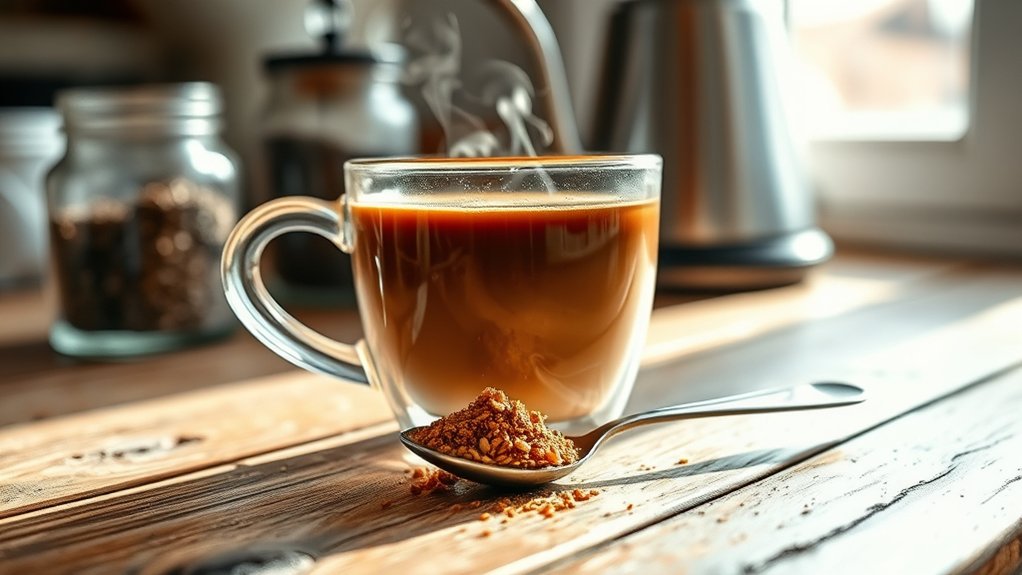
You should use about 1 to 2 teaspoons (1.8 to 3.6 grams) of instant coffee per 8-ounce cup for ideal flavor. Adjust this based on your water volume and how strong you like your coffee. Measuring by grams really helps with accuracy, especially if you’re making different cup sizes.
Use water heated to 80–85°C to avoid bitterness. If you add milk or cream, increase the coffee slightly to keep the flavor balanced. Proper preparation and storage also help preserve the quality.
There are more tips you can try to refine your brew even further. It’s all about finding what works best for you.
Ideal Instant Coffee Amount Per Cup
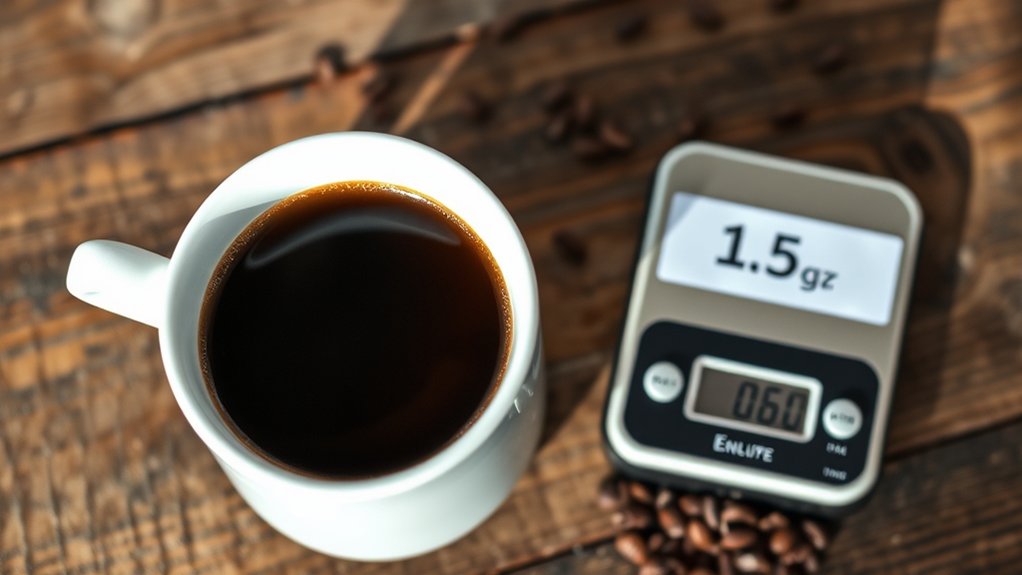
When determining the ideal instant coffee amount per cup, you should consider both strength and taste preferences. The coffee bean origin greatly impacts the flavor intensity, so beans from regions like Ethiopia or Colombia may require slightly different amounts to achieve your preferred taste.
Brewing methods also influence extraction efficiency. Instant coffee dissolves quickly, but factors such as water temperature and agitation affect flavor release.
Standard guidelines suggest starting with 1 to 2 teaspoons (approximately 1.8 to 3.6 grams) per 8-ounce cup, adjusting based on your desired strength. If you prefer a robust cup, increase the amount incrementally.
It’s all about experimentation. Considering bean origin and brewing nuances helps you pinpoint the precise instant coffee quantity that balances strength and flavor to meet your expectations efficiently.
How Water Volume Affects Instant Coffee Strength
Although instant coffee dissolves quickly, the volume of water you use directly influences its strength and flavor concentration. The original coffee bean’s essence is preserved in instant coffee, but water volume changes how intense the brewing process extracts that flavor. Too much water dilutes the concentration, weakening the taste.
On the other hand, too little water results in an overly strong, sometimes bitter cup.
| Water Volume (ml) | Coffee Strength Impact |
|---|---|
| 100 | Very strong, intense flavor |
| 150 | Balanced, rich flavor |
| 200 | Mild, less concentrated |
| 250+ | Weak, diluted flavor |
Adjusting water volume lets you control the extraction’s perceived strength. This is really important for matching your preferred taste.
Spoons or Grams: Measuring Instant Coffee
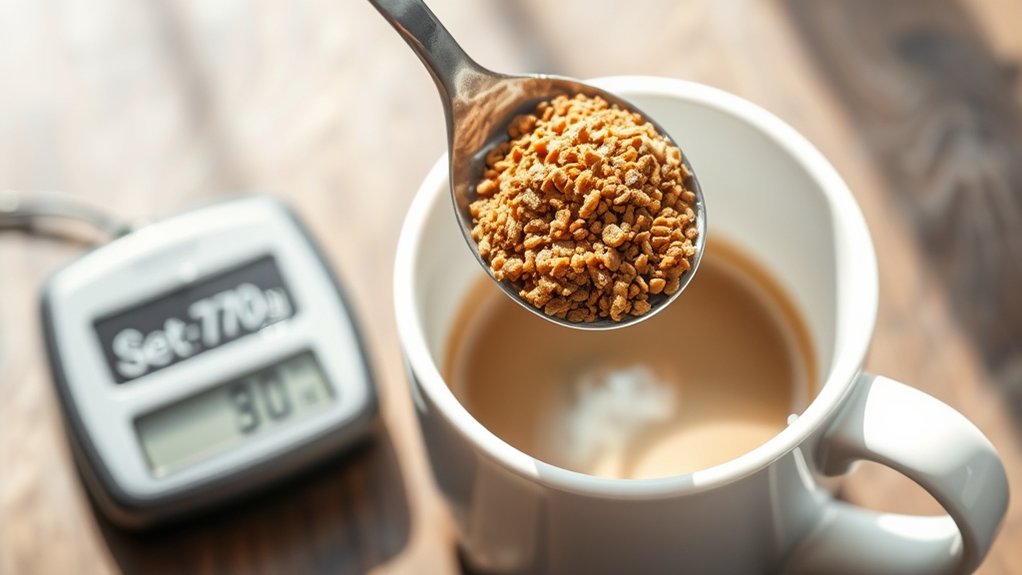
Since precise measurement influences your coffee’s strength and consistency, choosing between spoons and grams matters a lot. When you’re brewing coffee, you’ll find that grams offer greater accuracy than spoons. That’s because spoons can vary in volume depending on their size and how you fill them.
Measurement tools like digital scales provide consistent dosing. This helps ensure each cup matches your preferred strength. While spoons are convenient, they can introduce variability that affects flavor balance.
For example, one level teaspoon may weigh anywhere between 1.5 to 2 grams, which changes your coffee concentration. If you want reproducible results and to optimize extraction, using grams is the way to go.
Investing in a reliable scale refines your brewing process by reducing guesswork and enhancing your cup’s consistency every time.
Adjusting Coffee Ratios for Different Cup Sizes
You’ll want to start with the standard cup measurement of about 6 ounces when figuring out your instant coffee ratio.
Then, if you’re using a bigger mug, just scale the coffee amount up proportionally.
This way, you’ll keep the flavor consistent no matter what size cup you’re using.
Standard Cup Measurements
When measuring instant coffee, understanding standard cup sizes helps you adjust the coffee-to-water ratio accurately. A typical cup is 6 ounces (177 ml), requiring about 1 to 1.5 teaspoons of instant coffee. Deviating from this standard affects flavor balance, influenced by variables from coffee bean cultivation to brewing equipment maintenance.
Coffee grown at higher altitudes tends to have denser beans, which impacts solubility and extraction rates. Also, well-maintained brewing equipment ensures consistent water temperature and flow. These factors are critical for optimizing instant coffee dissolution.
By aligning your measurements with these standards, you get a reliable baseline for taste. Remember, precise ratios matter because even small changes can alter bitterness or make flavors weak.
Using a measuring spoon calibrated to standard volumes helps maintain consistency across different cup sizes.
Scaling For Larger Mugs
Although a standard cup size provides a solid reference, adjusting your instant coffee measurements for larger mugs is essential to maintain flavor balance. Increasing the volume without scaling the coffee amount dilutes taste, while overcompensating risks bitterness. Using precise ratios ensures consistent quality, especially when your brewing equipment varies.
Here’s a guideline to help you scale accurately:
| Mug Size (oz) | Instant Coffee (tsp) |
|---|---|
| 8 | 1.5 |
| 12 | 2.25 |
| 16 | 3 |
| 20 | 3.75 |
These ratios support ideal extraction and enable you to create coffee art with balanced flavors. Adjusting your coffee dose based on mug size lets you enjoy perfect cups every time, regardless of your equipment or presentation style. Just tweak the amounts a bit, and you’ll notice the difference.
How Temperature Impacts Instant Coffee Taste
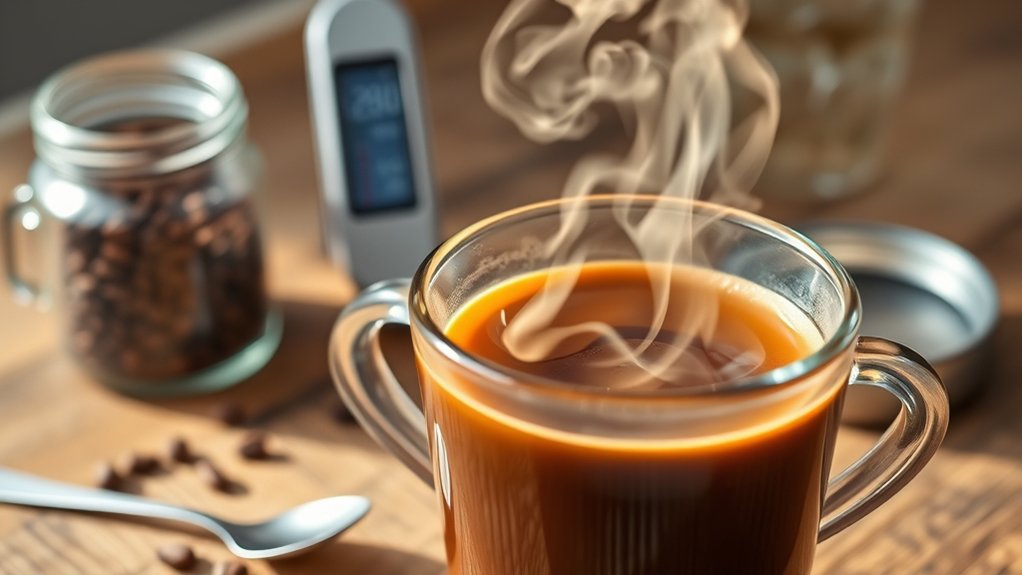
Because temperature directly affects the solubility of instant coffee granules, it plays a crucial role in shaping the beverage’s flavor profile. When you use water that’s too hot, above 85°C (185°F), you risk over-extracting bitter compounds, which diminishes the coffee aroma.
On the other hand, water that’s too cool won’t fully dissolve the granules, resulting in a weak, flat taste.
Research shows the ideal brewing temperature for instant coffee lies between 80°C and 85°C (176°F to 185°F), balancing solubility and flavor release.
This range enhances the coffee aroma by preserving volatile compounds without extracting excessive bitterness.
Making Instant Coffee Less Bitter
You can make instant coffee less bitter by tweaking the coffee-to-water ratio a bit. This helps avoid over-extraction, which is usually what makes it taste harsh.
Also, adding a little sweetener or cream can really help balance out the flavors by covering up some of those bitter notes.
And here’s a tip: try using water that’s a bit cooler than boiling. It slows down the extraction process and gives you a smoother, more enjoyable cup.
Adjusting Coffee To Water
When adjusting the ratio of instant coffee to water, you directly influence the drink’s bitterness and overall flavor balance. Using too much instant coffee, derived from roasted coffee beans, intensifies bitterness due to a higher concentration of bitter compounds extracted during the brewing method.
Conversely, adding more water dilutes these compounds, reducing bitterness but potentially weakening flavor.
To find the *best* balance, start with the recommended ratio, typically one to two teaspoons per cup, and adjust incrementally. Remember, the coffee bean origin and roasting level affect bitterness.
Darker roasts may require slightly more water.
Your brewing method, even with instant coffee, impacts extraction and taste perception. Experiment with water volume to suit your preference.
Aim for a balance that minimizes bitterness without sacrificing the coffee’s inherent flavors.
Adding Sweeteners Or Cream
Balancing the coffee-to-water ratio effectively reduces bitterness but mightn’t eliminate it entirely. To further soften harsh flavors, adding a sweetener variety like sugar, honey, or stevia can help. Each sweetener interacts differently with coffee compounds, so experiment to find your preferred balance.
For instance, honey offers a subtle floral note, while sugar adds straightforward sweetness. Cream consistency also plays an essential role. Whole milk or heavy cream tends to smooth bitterness more effectively than skim milk because of the higher fat content.
Non-dairy alternatives vary widely in creaminess and impact on taste. Adding cream increases perceived sweetness and balances acidity, making the cup more palatable. So, by carefully selecting sweeteners and cream with the right consistency, you can really reduce bitterness and boost the overall flavor of your instant coffee.
Using Cooler Water Temperature
Although brewing instant coffee with boiling water is common, using cooler water temperatures considerably reduces bitterness by limiting the extraction of harsh compounds. When you use cooler water, you slow down the extraction process, allowing more control over flavor balance.
This method emphasizes smoother, less acidic notes.
| Water Temperature | Extraction Rate | Bitterness Level |
|---|---|---|
| 100°C (Boiling) | Fast | High |
| 90°C | Moderate | Medium |
| 80°C | Slow | Low |
| 70°C | Very Slow | Minimal |
How Milk or Cream Affects Instant Coffee Ratios
Adding milk or cream to your instant coffee changes the overall flavor and strength, which means you’ll need to adjust the coffee-to-water ratio accordingly.
Adding milk or cream alters the flavor and strength, so adjust your coffee-to-water ratio for the best taste.
Milk addition dilutes the coffee’s intensity, so increasing the instant coffee amount by about 10-15% compensates for this loss.
For cream ratios, a higher fat content cream masks bitterness and enriches mouthfeel, often allowing you to reduce coffee concentration slightly.
Research shows that a 1:1 ratio of cream to coffee creates a balanced flavor without overpowering the brew.
If you prefer more milk or cream, start by increasing your instant coffee by 0.2 grams per cup to maintain a robust flavor.
Just adjust these ratios based on your personal taste and the specific type of milk or cream you use.
Faster, Better Ways to Brew Instant Coffee
Adjusting the coffee-to-water ratio when using milk or cream can improve your cup’s flavor. But brewing methods also play a big role in extraction efficiency and taste quality.
To brew instant coffee faster and better, start with water just off the boil, around 90 to 96°C. This helps maximize solubility and preserves those nuanced coffee flavors. Stir vigorously to speed up dissolution, making sure the coffee extracts evenly and you get less sediment.
Using preheated cups helps reduce temperature loss, keeping your brew at the ideal temperature.
Try experimenting with bloom time by letting the water sit on the coffee granules briefly before stirring. This can really boost the flavor release.
Be careful not to over-dilute your coffee—measure the water precisely based on how strong you like it.
These simple brewing tips work together to improve extraction efficiency, giving you a richer, more balanced instant coffee experience without adding complexity or extra time.
Storing Instant Coffee to Keep Flavor Fresh
To keep your instant coffee tasting fresh, it’s best to store it in a cool, dry spot away from sunlight and moisture. This helps protect those rich flavors you love.
Also, try using airtight containers or make sure to reseal the original packaging tightly. Exposure to air can speed up flavor loss, so keeping air out is key.
Optimal Storage Conditions
Although instant coffee is known for its convenience, preserving its flavor requires careful storage. To maintain ideal taste, you should store instant coffee in a cool, dry place away from direct sunlight and moisture. Exposure to heat and humidity accelerates flavor degradation, similar to how improper coffee bean storage affects grind consistency and overall freshness.
While instant coffee doesn’t involve grinding like whole beans, its freeze-dried or spray-dried granules are still vulnerable to oxidation. Using airtight containers with minimal air exposure greatly slows this process.
Avoid storing instant coffee near strong odors, as it can absorb unwanted scents.
Packaging Tips for Freshness
When you choose the right packaging for your instant coffee, you considerably slow down flavor loss caused by air and moisture exposure. Unlike whole coffee beans, instant coffee’s surface area increases its vulnerability to oxidation. This oxidation alters the flavor profile you get from your preferred brewing method.
Using airtight, opaque containers blocks oxygen and light. This helps preserve the coffee’s volatile compounds responsible for aroma and taste.
| Packaging Type | Benefit |
|---|---|
| Vacuum-sealed bags | Minimizes oxygen contact |
| Glass jars with lids | Prevents moisture infiltration |
| Foil pouches | Blocks light and air |
| Plastic containers | Convenient but less airtight |
When you pick packaging that mimics the protective qualities of coffee bean storage, you optimize freshness. That way, each cup matches your brewing method’s potential.
Common Instant Coffee Mistakes to Avoid
Since instant coffee offers convenience, many users overlook key preparation details that can really affect flavor and strength. One common mistake is ignoring the role of coffee bean varieties used in the instant blend. Different beans have distinct flavor profiles, so choosing a quality variety can make a big difference in taste.
Another error is neglecting the brewing equipment’s influence. Using water at the wrong temperature or mixing poorly can weaken the flavor extraction. Also, over- or under-dosing instant coffee changes the strength and bitterness, so measuring carefully is important.
Avoid adding instant coffee directly to cold water because it doesn’t dissolve well.
Lastly, storing instant coffee the wrong way exposes it to moisture and air, which ruins its quality.
Frequently Asked Questions
Can Instant Coffee Be Used in Baking Recipes?
Yes, you can use instant coffee in baking recipes to enhance flavor. Instant coffee substitutes like espresso powder or brewed coffee concentrate work similarly, providing depth without altering texture.
Adding instant coffee intensifies chocolate or caramel notes effectively.
Just make sure to adjust the liquid content if you use brewed coffee. Research shows that even small amounts boost aroma and taste.
What Are the Health Benefits of Instant Coffee?
You’ll find that instant coffee packs a punch with antioxidants. Studies show it contains up to 30% more than brewed coffee. These coffee antioxidants help combat oxidative stress and may reduce inflammation.
Plus, instant caffeine provides a quick boost to your alertness without the heaviness of brewed coffee. Drinking instant coffee in moderation supports brain function and may lower the risk of certain diseases. It’s a convenient, healthful choice.
How Does Instant Coffee Compare to Ground Coffee Taste-Wise?
Instant coffee’s flavor profile tends to be milder and less complex than ground coffee because of how it’s processed and dried.
You’ll notice that ground coffee offers richer, more nuanced flavors since it keeps more oils and aromatic compounds.
Preparation also changes the taste. Instant coffee dissolves quickly, which can sometimes make it taste a bit flat or bitter.
On the other hand, brewed ground coffee pulls out more depth and freshness.
Are There Decaffeinated Instant Coffee Options Available?
Decaffeinated instant coffee serves as a gentle sunrise, offering warmth without the jolt of caffeine. Yes, you can find these options easily. They undergo a decaffeination process that carefully reduces caffeine content while preserving flavor.
This process typically uses water or solvents to extract caffeine, ensuring the instant coffee remains convenient and satisfying. If you’re sensitive to caffeine or want a lighter option, decaf instant coffee delivers a balanced, evidence-based choice.
Can Instant Coffee Be Used to Make Cold Brew?
You can use instant coffee as a cold brew flavoring, but it’s not a perfect substitute for traditional cold brew. Instant coffee dissolves quickly in cold water, which is super convenient.
However, it lacks the rich, smooth complexity you get from steeped coffee grounds.
If you want to experiment with instant coffee as a cold brew substitute, try mixing it with chilled water or milk.
It’s a quick way to enjoy cold coffee, but keep in mind it will be less intense than the real thing.
Conclusion
Mastering instant coffee is like fine-tuning a symphony. Each scoop, water amount, and temperature note shapes your perfect cup. Stick to 1 to 2 teaspoons per 6 ounces of water, adjusting for strength and cup size.
Also, factor in milk’s mellowing effect. Precision in measuring and brewing guarantees your coffee sings with freshness and balance. Avoid common mistakes, store properly, and you’ll consistently brew a cup that’s both scientifically sound and deeply satisfying.