How To Use Bunn Coffee Maker – Step-By-Step Guide
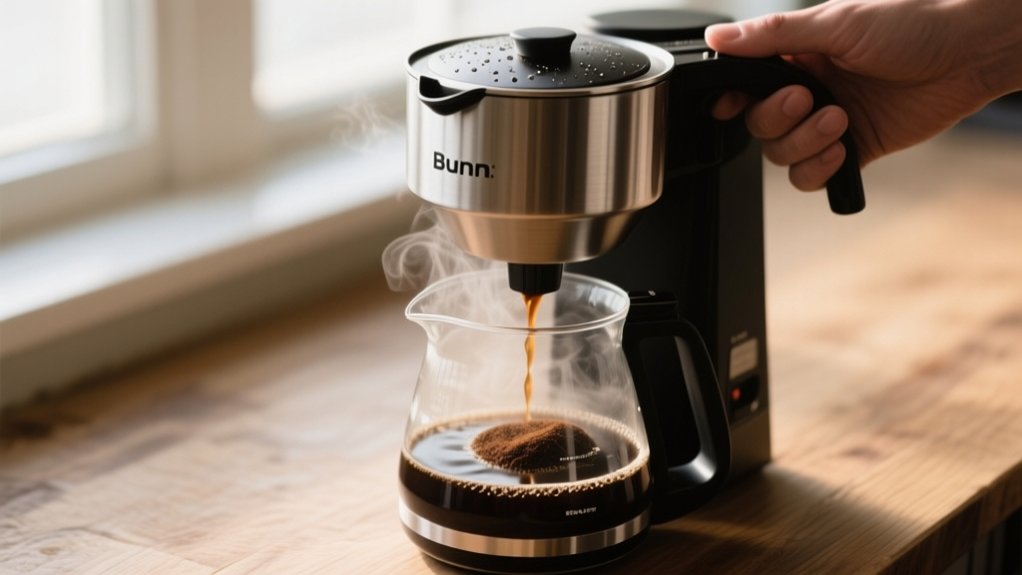
To use your Bunn coffee maker, first position the brew funnel above the pot without a filter. Then fill the water tank and pot with cold water, discarding any excess. Turn on the machine to heat for 15 minutes.
Measure medium grind coffee at one tablespoon per 5 ounces of water. Place it in the funnel, and start brewing by closing the lid. Use the warmer plate to maintain the temperature.
Make sure to clean the machine regularly for peak performance. Explore further to master maintenance and troubleshooting tips.
Setting Up Your Bunn Coffee Maker
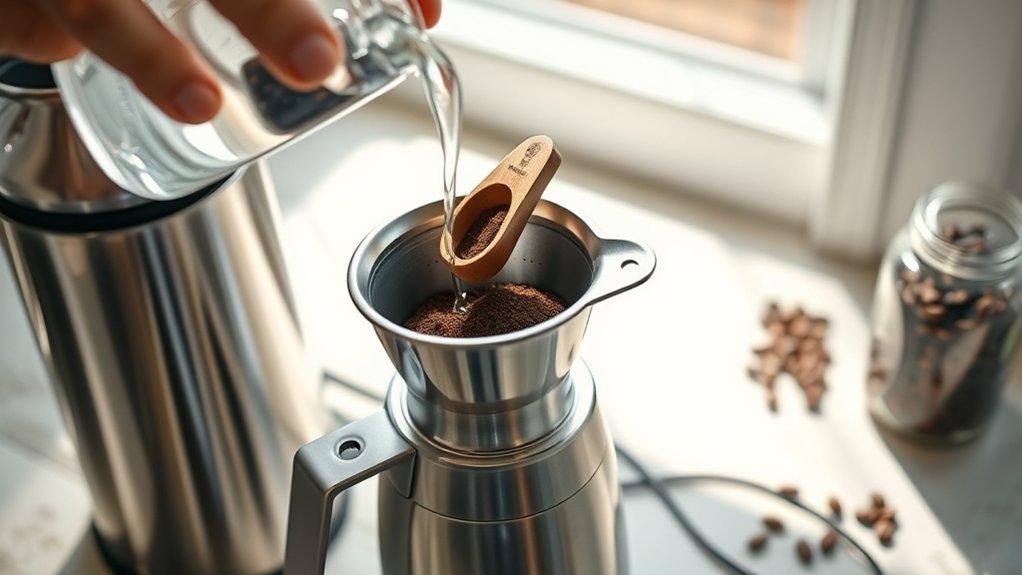
To set up your Bunn coffee maker, start by securely placing the brew funnel above the coffee pot without inserting a filter.
Next, fill the coffee pot with cold water up to the designated fill line.
Pour this water into the Bunn coffee maker’s water tank until it reaches full capacity, allowing the water to settle properly.
Be sure to dispose of any excess water remaining in the coffee pot before beginning the brewing process.
Once the water tank is filled, turn on the machine.
Bunn coffee makers require approximately 15 minutes to heat the water adequately.
After heating, the system is ready for brewing, capable of producing between 10 to 12 cups per cycle, ensuring consistent and efficient coffee preparation.
How to Measure and Add Coffee Grounds
You’ll want to use a medium grind to get the best extraction and a nice balance of flavor and brewing efficiency.
It’s pretty simple—measure out one tablespoon of coffee for every five ounces of water. This way, you keep the perfect coffee-to-water ratio.
For the best results, go with medium to dark roasts like Sai Gon OG or Ban Me, as they really complement the Bunn’s brewing style.
Coffee Grind Size
Although selecting the right grind size may seem straightforward, using a medium grind is critical for excellent extraction in your Bunn coffee maker. This grind size guarantees balanced flavor and peak brewing efficiency by allowing water to flow evenly through the coffee grounds.
Avoid fine grinds, as they can clog the sprayhead and cause overflow during brewing, compromising performance.
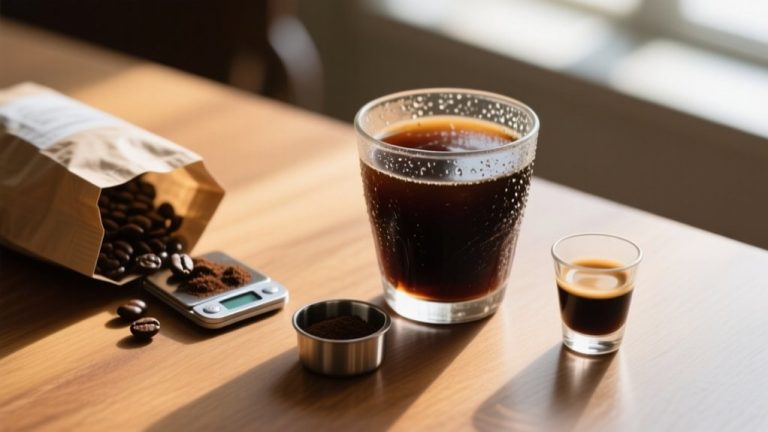
Accurately measure your coffee grounds using a scale or measuring spoon to maintain consistency.
While medium to dark roasts complement Bunn machines by enhancing richness and depth, your focus should remain on maintaining the correct coffee grind size.
Proper grind size directly impacts extraction quality, so adhere strictly to a medium grind for reliable, robust coffee every time.
Coffee-to-Water Ratio
One tablespoon of medium grind coffee per 5 ounces of water delivers the ideal coffee-to-water ratio for your Bunn coffee maker. To achieve peak extraction, always use medium grind coffee, which enhances flavor and aroma.
Since Bunn machines typically brew between 10 and 12 cups, adjust your coffee quantity accordingly. Measure precisely to maintain this ratio. For example, for 10 cups (50 ounces), use 10 tablespoons of coffee grounds.
Accurate measurement prevents over-extraction and bitterness, ensuring consistent flavor with every brew. Remember, maintaining the correct coffee-to-water ratio is critical for balanced strength and taste.
Use a reliable tablespoon measure and scale if available. Add the coffee grounds directly to the filter basket, evenly distributing them before brewing. This precision guarantees a superior cup every time.
Recommended Coffee Blends
Selecting the right coffee blend greatly influences the flavor profile when using your Bunn coffee maker. For ideal extraction, choose medium grind coffee, as it balances water flow and flavor release.
The recommended coffee blends include medium to dark roasts like Sai Gon OG, Ban Me, and Da Lat, which complement the Bunn’s brewing temperature and pressure.
Measure precisely, using one tablespoon of coffee grounds per 5 ounces of water to maintain consistent flavor and strength.
Since your Bunn can brew 10 to 12 cups per cycle, scale your grounds accordingly, ensuring uniform distribution in the filter basket.
Accurate measurement and correct grind size are essential to leverage the full potential of the recommended coffee blends and achieve a balanced, rich cup every time.
Starting the Brew on Bunn Coffee Maker Models
Before you start the brew on your Bunn coffee maker, make certain the brew funnel is securely positioned above the coffee pot without a filter.
Next, fill the carafe with filtered water to your desired amount, between 4 to 10 cups, and pour it into the water tank.
Close the tank lid and wait 3 to 4 minutes for the internal reservoir to fill completely.
Add medium grind coffee to the brew funnel, maintaining the precise ratio of 1 tablespoon per 5 ounces of water to optimize extraction.
Finally, replace the brew funnel lid to initiate the brewing process.
This method guarantees your Bunn coffee maker functions efficiently, delivering a consistent and high-quality cup every time.
How Many Cups Can You Brew at Once?
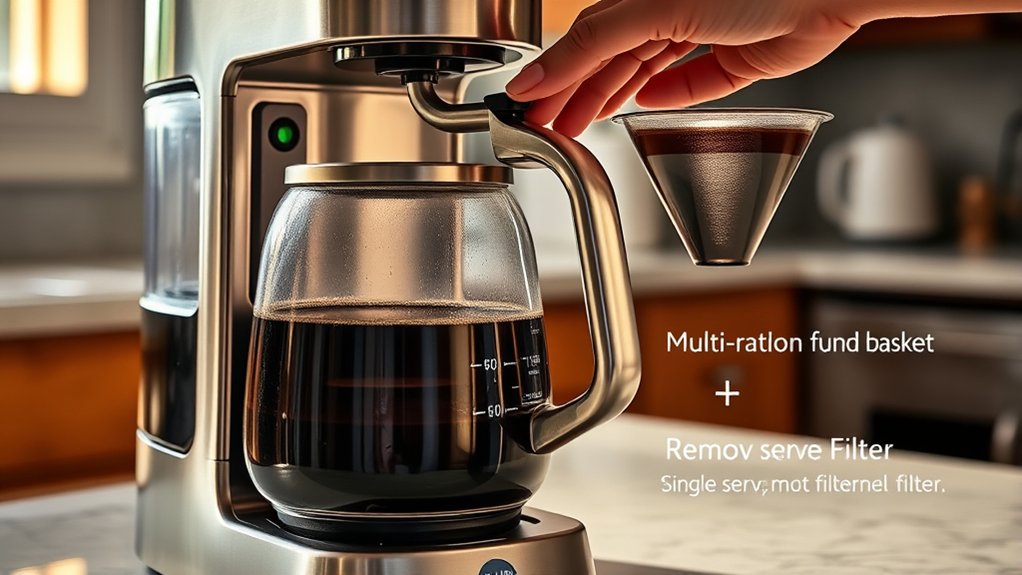
How many cups can your Bunn coffee maker brew at once depends largely on the model, but most units handle between 10 to 12 cups per cycle.
This capacity suits both home use and commercial settings, providing ample coffee for gatherings or workplaces.
When you brew at once, the machine’s tank supports continuous brewing, so you can prepare multiple pots quickly without long waits.
Models such as the VPR and VPS series include warming plates to maintain ideal temperature after brewing.
Keep in mind, to preserve robust flavor and quality, consume the coffee promptly after brewing.
Understanding your Bunn’s maximum brew capacity guarantees you use it efficiently, meeting your coffee volume needs without compromising taste or freshness.
Using the Warmer Plate and Glass Decanter on Your Bunn Coffee Maker
You’ll use the warmer plate to keep your coffee hot after brewing, but be sure the glass decanter is securely in place to avoid any spills.
Then, just flip the warmer switch on to maintain a steady heat without overheating your coffee.
It’s a good idea to clean both the decanter and the warmer plate regularly.
This helps preserve the flavor and stops any residue from building up.
Keeping things clean will make sure every cup tastes just right!
Using The Warmer Plate
Although the warmer plate’s primary function is to maintain your coffee’s perfect temperature, you must use it correctly to preserve flavor. On Bunn coffee makers, verify the machine is plugged in and the warmer switch is activated to power the warmer plate.
Place the compatible glass decanter directly on the warmer plate immediately after brewing to retain peak heat. However, avoid leaving the decanter on the warmer plate for extended periods, as prolonged heat exposure can burn the coffee, degrading its taste.
Regularly clean the warmer plate to prevent residue buildup, which can impair heating efficiency.
Handling The Glass Decanter
Proper placement and care of the glass decanter directly impact the quality and temperature of your brewed coffee. Always position the glass decanter securely on the warmer plate to maintain ideal temperature without risking coffee burn.
Before brewing, confirm the decanter is empty to prevent overflow and preserve coffee integrity. Make sure the lid fits tightly to trap heat and aromas during the brewing cycle.
Though the warmer plate sustains temperature for extended periods, avoid leaving the decanter on it too long to prevent over-extraction, which degrades flavor.
- Place the glass decanter firmly on the warmer plate
- Verify the decanter is empty before brewing
- Fit the lid securely to retain heat and aroma
- Limit time on the warmer plate to avoid over-extraction
- Clean the decanter regularly to remove coffee oil residues
Maintaining Temperature And Freshness
When you use the warmer plate on your Bunn coffee maker, it maintains brewed coffee at an ideal temperature range of 180°F to 190°F, ensuring each cup stays hot and enjoyable.
This precise temperature control prevents rapid cooling but requires caution. Leaving the glass decanter on the warmer plate too long can cause over-extraction and burnt flavors.
To preserve freshness, serve coffee promptly after brewing. Regularly clean both the warmer plate and carafe to remove residue that compromises temperature retention and taste.
For models compatible with thermal carafes, consider using one to maintain coffee temperature without relying on heat. This better preserves flavor over time.
How to Clean and Maintain Your Bunn Coffee Maker
Maintain your Bunn coffee maker by routinely cleaning key components to guarantee consistent brewing performance and ideal flavor extraction.
Regular maintenance extends the life of your coffee machines and preserves coffee quality.
Clean the brew funnel and thermal carafe after each use to prevent residue buildup and flavor contamination.
Descale by running a mixture of 1 part white vinegar to 3 parts water through the water tank every few months.
Use dish detergent like Cascade monthly to deep clean the carafe and maintain clarity.
Inspect and clean the sprayhead and fittings regularly to avoid clogs that disrupt water flow.
Avoid exceeding the thermal carafe’s fill line and don’t leave it on the warming plate too long to prevent bitterness and burnt coffee taste.
How to Troubleshoot Common Brewing Issues With Bunn Machines
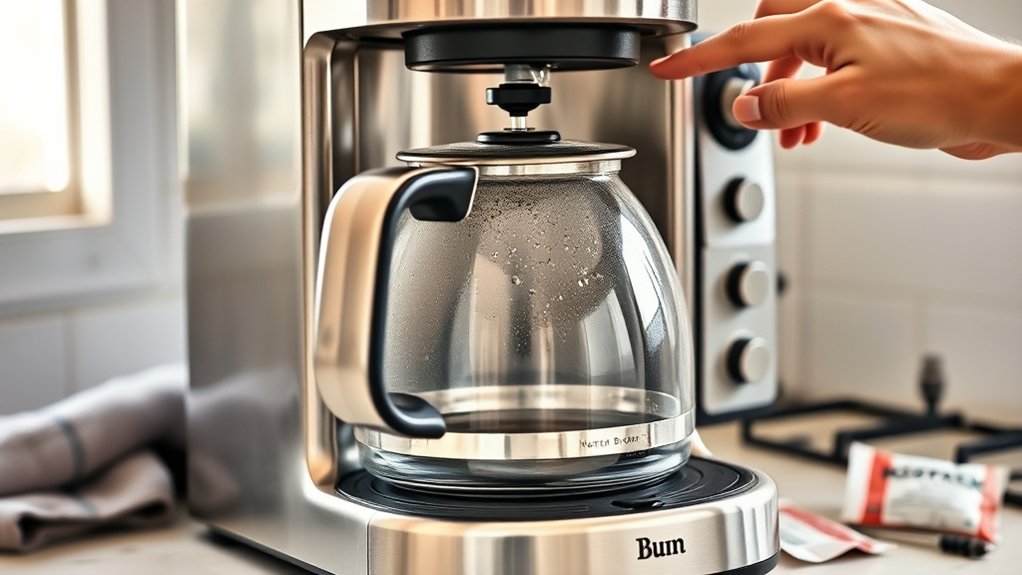
One common cause of brewing issues with Bunn machines is improper water levels. Make certain you pour between 20 to 50 ounces into the tank and securely close the pour-in lid to assure correct water flow. Using cold water straight from the tap guarantees ideal extraction.
If brewing is partial, check the water tank isn’t empty and the warmer switch is on for glass decanters. Overflow often results from missing sprayheads or incorrect filters. Regularly clean sprayhead tubes to prevent clogs causing leaks or noise.
For persistent leaks, contact BUNN support.
| Issue | Cause | Solution |
|---|---|---|
| Partial Brewing | Low water or warmer off | Refill tank, switch warmer on |
| Overflow | Missing sprayhead or wrong filter | Install sprayhead, use correct filter |
| Leaks/Noise | Clogged sprayhead tube | Clean sprayhead tube |
| No Brew | Improper water level | Pour 20-50 oz cold water, close lid |
Frequently Asked Questions
Can I Use Bunn Coffee Maker With Bottled or Filtered Water?
Yes, you can use bottled or filtered water in your Bunn coffee maker to improve water quality.
Using filtered water reduces mineral buildup, which helps preserve your machine’s longevity and performance.
Just make sure the bottled water doesn’t have added minerals or flavors that could change the taste.
Also, use cold water for the best brewing results.
Even if you use bottled water, remember to regularly descale your coffee maker.
This keeps water quality consistent and prevents mineral deposits from affecting your machine’s efficiency and the flavor of your coffee.
What Types of Coffee Filters Are Compatible With Bunn Machines?
Think of your Bunn coffee maker as a precision instrument that thrives on the right Filter Options. You can use standard size 4 or 9 filters, depending on your model, but Bunn’s proprietary filters optimize flow rate and temperature for superior brewing.
Avoid bleached filters, as they can taint flavor; unbleached is best.
For the Axiom series, choose flat-bottom filters, while VPR and VPS models prefer cone-shaped ones.
Always inspect the brew funnel for blockages to guarantee perfect filtration.
How Long Does It Take for a Bunn Coffee Maker to Heat Up?
The heat time for a Bunn coffee maker is typically around 15 minutes after you first plug it in. This duration allows the internal hot water tank to reach the ideal temperature, ensuring efficient brewing.
You need to wait for this initial heat cycle to complete before making coffee.
Once heated, the machine maintains the water temperature, enabling quick brew times. Regular descaling helps keep the heat time consistent and effective.
Is It Safe to Leave the Warmer Plate on Overnight?
Leaving the warmer plate on overnight is like playing with fire, literally. For ideal warmer safety, you shouldn’t leave it on that long.
Extended heating risks overheating the carafe and coffee maker. This may damage components and degrade your coffee’s flavor.
Bunn machines perform best when the warmer plate operates only during brewing and serving times.
To protect your coffee’s taste and guarantee safety, turn off the warmer once you’re done.
Can I Use Pre-Ground Coffee or Only Fresh Grounds?
You can definitely use pre-ground coffee in your Bunn coffee maker, but the coffee grind matters. For ideal extraction, choose a medium grind, which balances water flow and flavor release.
While fresh grounds usually deliver richer aroma and taste, pre-ground coffee still brews well if it’s medium grind and fresh.
Avoid too fine or coarse grinds, as they can clog or under-extract, respectively, impacting your coffee quality.
Conclusion
Now that you’ve mastered your Bunn coffee maker, brewing is as smooth as a well-oiled machine. With precise measurements and proper maintenance, each cup flows like clockwork, delivering consistent, rich flavor every time.
Treat your brewer like a trusted partner. Clean it regularly, troubleshoot swiftly, and it’ll reward you with countless perfect mornings. Your Bunn isn’t just a coffee maker; it’s the heartbeat of your daily ritual, engineered for flawless performance.