How To Make Coffee Without Electricity – Simple Brewing Methods
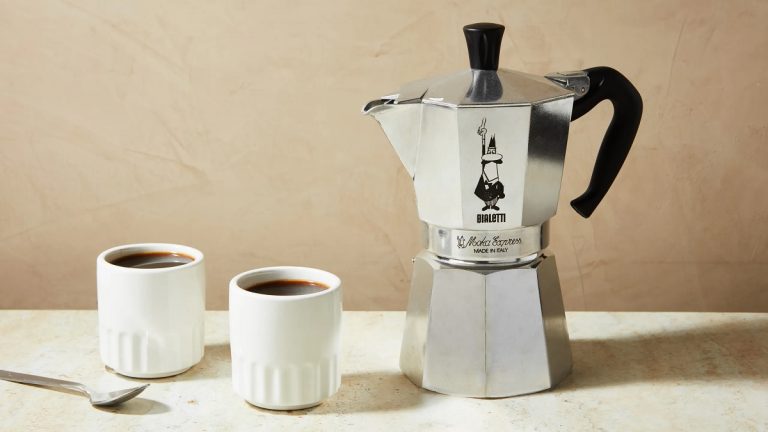
You can make great coffee without electricity by heating water over a gas stove, propane burner, or even an outdoor grill using a reliable kettle. Try manual methods like Cowboy Coffee by boiling water with grounds and letting them settle. Or use a stovetop Moka Pot for a strong brew.
You can also steep grounds for cold brew or quickly mix instant coffee with hot water. Ready to explore simple, effective techniques and safety tips for making coffee when power’s out? Let’s dive in!
Essential Equipment for Brewing Coffee Without Power
Although electricity powers most modern coffee makers, you can still brew a great cup without it by relying on essential equipment designed for manual use. A gas stove paired with matches or a lighter lets you heat water efficiently. This helps preserve coffee flavor by maintaining proper temperatures.
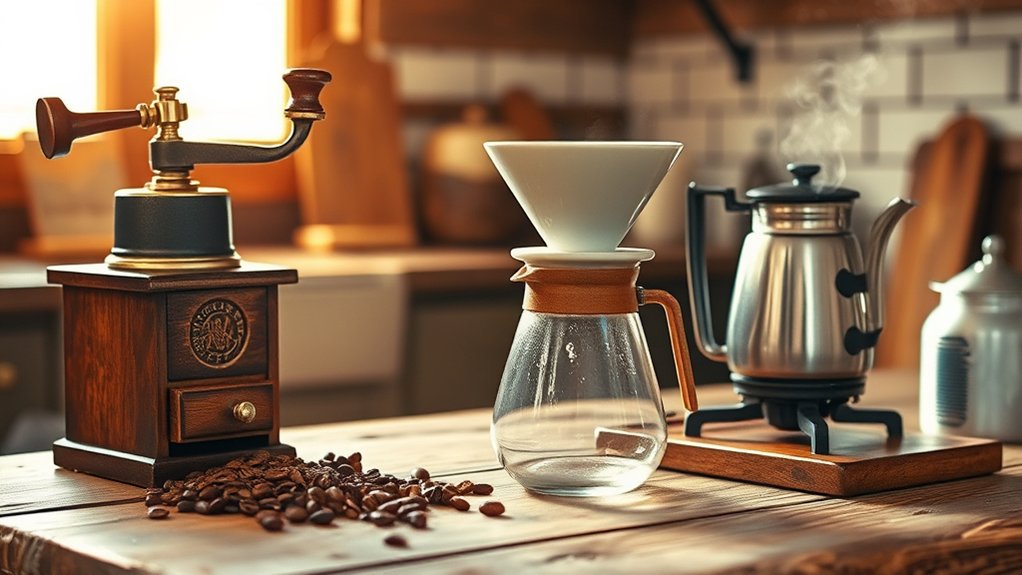
A reliable kettle or pot is vital for boiling water, while manually operated coffee makers with filters and grounds ensure you control extraction without power.
Alternative heat sources like crockpots or outdoor grills expand your options when a stove isn’t available.
To keep your setup dependable, focus on regular equipment maintenance. Cleaning pots, checking lighters, and inspecting coffee makers helps avoid interruptions.
With the right tools and upkeep, you’ll consistently enjoy rich, flavorful coffee even during power outages.
Heating Water Safely When the Power’s Out
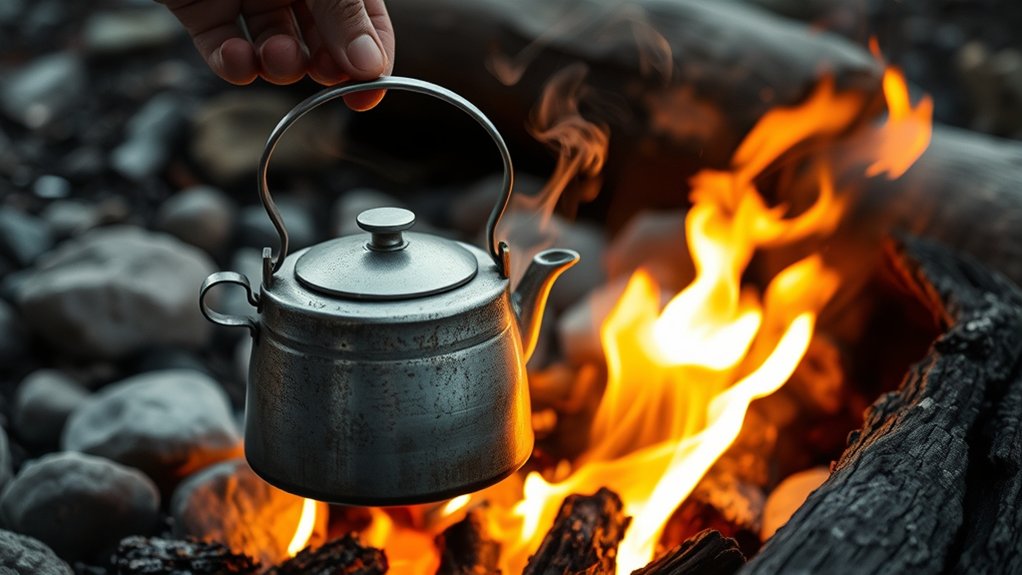
Once you have the right manual coffee equipment ready, the next step is heating water safely without electricity. Use a gas stove, propane burner, or outdoor grill to boil water. Just make sure you have proper ventilation and follow all safety precautions.
Always use a heatproof, stove-safe pot or kettle and bring the water to a rolling boil to guarantee effective water purification.
Keep matches or a lighter close by to ignite your burner safely and efficiently. If those options aren’t available, consider alternatives like a fondue pot, chafing dish, or even a campfire.
Remember, safety precautions are super important when using open flames indoors. Never neglect ventilation or manufacturer instructions.
Properly purified, boiling water ensures your coffee brews safely and tastes its best during power outages.
Manual Coffee Brewing Methods: Choosing What Works for You
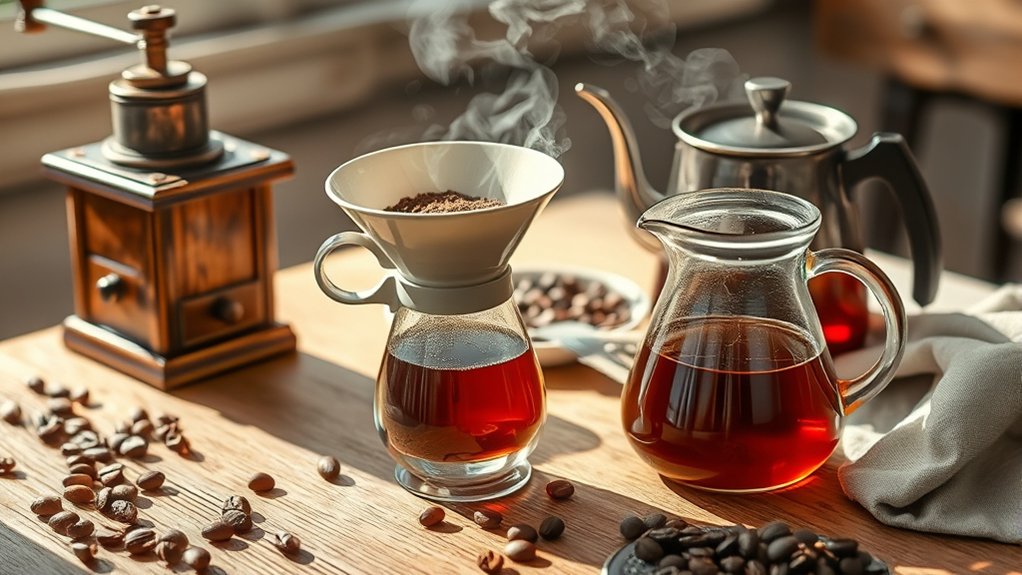
When you choose a manual coffee brewing method, you gain full control over variables like water temperature and steeping time. This directly impacts your coffee’s flavor and strength. Picking the right method really depends on what you like and what gear you have on hand.
- French Press lets you control brewing timing precisely, producing a rich, full-bodied coffee flavor.
- Pour-over emphasizes clarity and brightness, requiring careful pouring technique and timing.
- Moka Pot offers a strong, espresso-like taste with straightforward brewing steps.
- Cold brew extracts smooth, low-acidity coffee through extended steeping without heat.
Trying out these methods helps you fine-tune your coffee’s flavor and strength. Just remember to use freshly ground beans and the right ratios.
It’s a hands-on way to appreciate the craft of coffee. Plus, it’s practical if you’re off the grid or just want to slow down and enjoy the process.
How to Brew Cowboy Coffee
You’ll need just coarsely ground coffee, water, and a sturdy pot to brew cowboy coffee. First, bring the water to a boil in your pot.
Then, add the coffee grounds directly into the boiling water.
Once you’ve done that, take the pot off the heat and let it steep for a few minutes. This helps develop a rich, bold flavor.
It’s pretty simple—minimal gear and easy steps.
Before you pour, you might want to let the grounds settle at the bottom. That way, you get a smooth cup without too much grit.
Enjoy your rustic, no-fuss cowboy coffee every time!
Cowboy Coffee Essentials
Although brewing cowboy coffee might seem straightforward, mastering its essentials guarantees a rich, bold cup every time. Start by selecting the right coffee bean varieties. Coarsely ground beans work best to prevent excessive sediment.
Pay close attention to brewing temperature. Bring water and grounds to a rolling boil to extract full flavor without bitterness. Here are the essentials to keep in mind:
- Use about one tablespoon of grounds per 8 ounces of water for balanced strength.
- Boil the mixture over an open flame or stovetop until it reaches a rolling boil.
- Remove from heat and let steep for 2-4 minutes to develop robust flavor.
- Gently tap the pot or strain through a cloth to settle grounds before pouring.
Master these steps and you’ll enjoy authentic cowboy coffee’s rustic character every time. It’s a simple process, but getting it right makes all the difference.
Brewing Steps Overview
Since brewing cowboy coffee requires no special equipment, you can easily prepare a flavorful cup with just a pot, water, and coarsely ground coffee. Start by measuring one tablespoon of coffee per 8 ounces of water for a strong coffee flavor.
Bring the water to a boil over an open flame or stovetop, then add the grounds directly into the boiling water. Stir thoroughly and let it boil for about two minutes.
Remove from heat and let it steep for three more minutes, allowing the grounds to release rich flavors.
When pouring, use a strainer or spoon to hold back grounds. Let any remaining sediment settle before drinking to enjoy smooth, bold coffee.
These simple brewing techniques guarantee a robust cup without electricity. It’s a great way to make coffee when you’re outdoors or just want a no-fuss, tasty brew.
Brewing Turkish Coffee Without Electricity
To brew Turkish coffee without electricity, start by grabbing a cezve—that’s a small copper or brass pot made just for this kind of coffee.
You’ll want to combine finely ground coffee with cold water right in the cezve, measuring everything carefully to get that rich, concentrated flavor.
Next, slowly heat the mixture over low heat. Keep a close eye on it as foam begins to form and the coffee gets close to boiling.
It’s all about patience and watching the process so you don’t miss that perfect moment.
Traditional Turkish Brewing
How exactly do you brew authentic Turkish coffee without electricity? This method taps into a rich brewing history, using a cezve, a small, long-handled pot usually made of copper or brass. The key lies in developing the coffee flavor slowly over low heat. Here’s how:
First, combine finely ground coffee, cold water, and sugar if you like, directly in the cezve.
Heat it gently over a stove or open flame. Watch carefully as foam forms but be sure it doesn’t boil over.
Once the foam rises, take it off the heat briefly. Then heat it again to thicken the foam and bring out the aroma even more.
Finally, pour the coffee unfiltered into small demitasse cups and let the grounds settle naturally.
This process preserves the distinct, rich flavor Turkish coffee is known for. It really highlights its unique texture and tradition in every cup.
Preparing Coffee Pot
Although brewing Turkish coffee without electricity might seem challenging, preparing your cezve correctly sets the foundation for an authentic cup.
Start with a small, traditional coffee container, your cezve or ibrik, usually made of brass or copper. Measure one to two teaspoons of finely ground coffee per cup and add it directly into the cold water inside your brewing vessel.
Stir the mixture thoroughly to make sure the coffee grounds are fully combined with the water before heating.
Place the cezve over a low flame or open fire, heating slowly until foam forms and the coffee begins to rise. Just be careful not to let it boil over; remove it right before boiling.
Pour carefully into cups, allowing the grounds to settle, and serve immediately for the best experience.
This way, you get that rich, authentic flavor that Turkish coffee is famous for. It might take a little patience, but it’s definitely worth it!
Brewing Coffee With the Bag It Method
When you want a simple, no-fuss way to brew coffee without electricity, the Bag It Method offers an elegant solution. This technique lets you enjoy great coffee flavor with excellent brewing control using minimal equipment.
Here’s how to do it:
Here’s how to do it: a straightforward, no-fuss way to brew delicious coffee anytime, anywhere.
- Place 2.5 tablespoons of coffee grounds into a filter, then tie it into a pouch using a string.
- Boil water separately and pour it over the coffee bag, fully saturating the grounds.
- Let it steep for about 4 minutes, or longer if you prefer a stronger brew.
- Remove the bag and savor your fresh coffee, free from sediment and bitterness.
This method’s precision and simplicity make it ideal for brewing anywhere, anytime, without electricity or complicated gear.
It’s really handy when you’re on the go or just want a quick cup without the fuss. Give it a try—you might be surprised how good simple can taste!
Brewing French Press Coffee Without Power
If you want to brew French press coffee without power, don’t worry—it’s pretty straightforward. You’ll need a few basics: coarsely ground coffee, hot water (which you can heat on a gas stove or even over an outdoor fire), and, of course, your French press.
Start by adding the coffee grounds to the press. Then, pour in water that’s about 200°F, making sure all the grounds get nice and evenly wet.
Let it steep for around four minutes. After that, slowly press the plunger down to separate the grounds from the coffee.
And just like that, you’ve got yourself a rich, manually brewed cup of coffee to enjoy.
French Press Essentials
Since you don’t need electricity to use a French press, it’s an excellent choice for brewing coffee during power outages. To make the most of this method, focus on these essentials:
- Choose the right coffee bean varieties that suit your taste, as the French press highlights their full-bodied flavors.
- Confirm grind consistency by using coarsely ground coffee to avoid over-extraction and sediment in your cup.
- Heat water using a stove or open flame to reach the ideal brewing temperature without electricity.
- Maintain the standard coffee-to-water ratio, about 1 tablespoon per 4 ounces, but feel free to adjust it to match your preferred strength.
Mastering these fundamentals guarantees a rich, flavorful cup every time, even when power isn’t available.
Give it a try—you’ll love the results!
Manual Brewing Steps
Although brewing French press coffee without electricity requires a few manual steps, it’s a straightforward process that delivers rich, full-bodied flavor. Start by heating water on a gas stove or outdoor heat source until just boiling.
Measure 1 tablespoon of coarsely ground coffee per 4 ounces of water, choosing coffee bean varieties that suit your preferred coffee flavor profiles. Pour hot water over the grounds in your French press, stir gently to saturate, and place the plunger lid on without pressing.
Let it steep for about 4 minutes, then slowly press the plunger down to separate grounds from liquid. Pour immediately to enjoy.
| Step | Detail |
|---|---|
| Coffee-to-Water Ratio | 1 tbsp per 4 oz water |
| Steeping Time | Approximately 4 minutes (adjustable) |
| Flavor Adjustment | Varies with bean variety and steeping |
How to Brew Pour-Over Coffee Manually
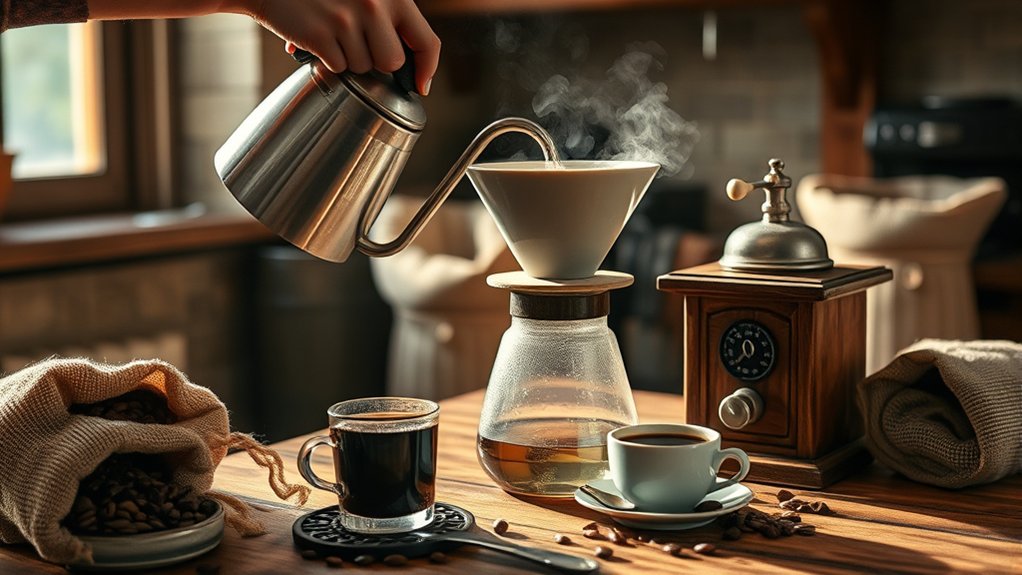
When you manually brew pour-over coffee, you control every step to extract the best flavors from your grounds. The process highlights the nuances of coffee bean roasting and reveals distinct coffee flavor profiles. This makes each cup a unique experience.
Follow these steps for perfect pour-over coffee:
Master the art of pour-over coffee with simple, precise steps for a rich, flavorful brew.
- Place a filter in the dripper and add 1–2 tablespoons of freshly ground coffee per 6 ounces of water.
- Heat water to about 200°F, just below boiling.
- Pour water slowly in a circular motion, allowing the grounds to bloom and release gases.
- Continue a steady pour to fully saturate grounds without over-extracting. Then, let the coffee drain completely.
Remove the dripper and savor your clean, balanced cup brewed without electricity. Enjoy!
Brewing Rich Coffee With a Stovetop Moka Pot
If you want a rich, espresso-like coffee without electricity, the stovetop Moka pot is an excellent choice.
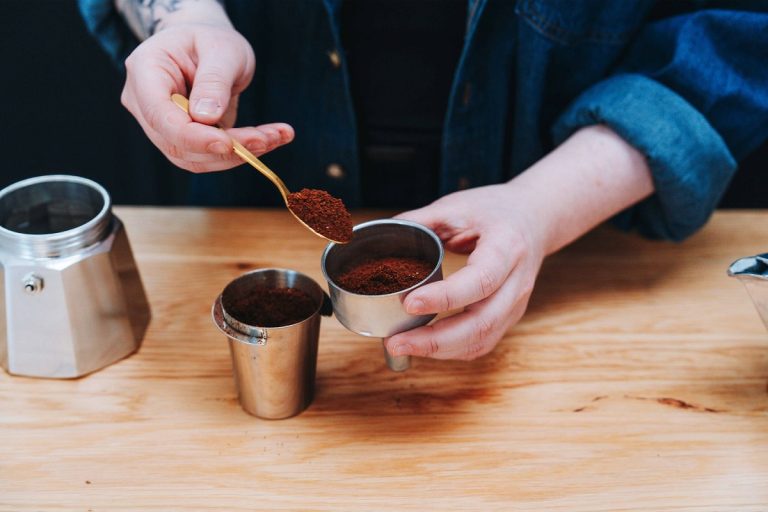
Start by filling the bottom chamber with water up to the safety valve. Insert the filter basket and add finely ground coffee, making sure the grind size is consistent for even extraction. Avoid pressing it down.
Choose coffee bean varieties that suit your taste, like medium or dark roasts, to get the most flavor.
Assemble the pot tightly to secure the seal, then place it on medium heat.
As the water boils, it forces hot water through the grounds, producing a concentrated brew.
When you hear a hissing sound, take the pot off the heat and pour your coffee.
This method gives you a rich, robust cup using just your stovetop and good quality coffee.
Making Cold Brew Coffee Without Electricity
Since cold brew coffee relies on steeping rather than heat, you can easily make it without electricity by combining coarsely ground coffee with cold water in a sealed container.
Cold brew coffee uses steeping, not heat, letting you brew delicious coffee without any electricity.
This method reveals unique coffee flavor profiles, especially from different coffee plant varieties known for their smooth, less acidic taste.
Follow these steps:
- Use a 1:8 ratio of coarsely ground coffee to cold water.
- Seal the container and place it in a cool spot or refrigerator for 12-24 hours.
- Strain the steeped coffee through a fine sieve or coffee filter for a clean concentrate.
- Dilute with water, milk, or a milk alternative to taste before serving.
This technique offers a revitalizing, electricity-free way to enjoy rich, nuanced coffee anytime.
Give it a try—you might just find your new favorite way to brew!
Quick Instant Coffee Preparation
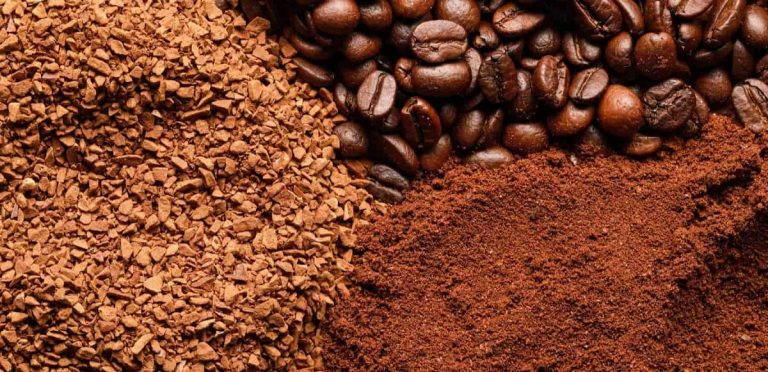
Though instant coffee lacks the depth of freshly brewed beans, it delivers a quick and convenient caffeine boost without any special equipment.
To prepare, add 1-2 teaspoons of instant coffee granules to your mug, then pour 6-8 ounces of hot water over them. Stir thoroughly until the granules dissolve completely, ensuring an even coffee flavor throughout.
The brewing timing is virtually instantaneous, making it ideal when you’re short on time.
You can adjust the strength by varying the amount of granules, tailoring the intensity to your preference. For a personalized touch, mix in milk, sugar, or flavorings.
This straightforward method prioritizes speed and simplicity, offering a reliable caffeine fix without sacrificing clarity or control over your coffee’s flavor profile.
It’s perfect when you want something fast and fuss-free without giving up on taste.
Tips for Better Manual Coffee Brewing
When you take the time to master manual coffee brewing, you unlock the ability to tailor each cup to your exact taste preferences. To get the best flavor and results, focus on these key tips.
First, use freshly ground coffee and adjust the coffee-to-water ratio. Usually, it’s about one tablespoon per 4 to 6 ounces, but feel free to tweak it to match your preferred strength.
Start with freshly ground coffee and customize the coffee-to-water ratio for your ideal strength.
Pour hot water slowly and evenly over the grounds. This helps ensure proper extraction and a balanced flavor.
Be patient during steeping. Let the coffee develop its full aroma and taste without rushing the process.
Also, try experimenting with different bean selections and brewing techniques. This way, you can discover your perfect flavor profile.
Stick to these strategies consistently, and you’ll definitely elevate your manual coffee brewing experience.
Frequently Asked Questions
How Long Can Brewed Coffee Be Safely Stored Without Refrigeration?
You can safely store brewed coffee at room temperature for up to 2 hours to guarantee storage safety. For better coffee preservation, use a clean, airtight container.
But avoid keeping it unrefrigerated beyond 12 hours. It’s just not worth the risk. Fresh coffee always tastes best anyway!
What Types of Coffee Beans Work Best for Manual Brewing Methods?
Choose coffee bean selection wisely. Prioritize bean freshness consistently, and prefer medium to dark roasts carefully.
Coarsely ground, single-origin beans work best for manual brewing. They enhance flavor depth while avoiding oily beans that clog filters.
This way, your brew tastes great and your equipment stays clean. It’s all about getting the best from your coffee experience.
Can I Use Alternative Heat Sources Like Solar Ovens for Brewing Coffee?
Yes, you can use solar brewing as an alternative heat source for coffee. Just place your grounds and water in a heat-safe container inside a solar oven. Make sure it gets maximum sunlight for efficient, eco-friendly coffee extraction.
It’s a great way to enjoy your coffee while being kind to the environment. Plus, it’s pretty cool to use the sun’s power to brew your morning cup!
How Do Altitude and Water Quality Affect Coffee Taste Without Electricity?
Altitude effects shape your coffee’s brightness and complexity, while water quality influence steers extraction clarity.
You’ll need to adjust brewing times carefully, balancing minerals in your water to avoid bitterness and reveal rich, nuanced flavors.
Are There Portable Grinders Suitable for Electric-Free Coffee Preparation?
Yes, you’ll find manual grinders and portable mills perfect for electric-free coffee preparation. They’re lightweight, adjustable, and durable, letting you grind beans precisely wherever you go.
It’s ideal for camping, travel, or emergency brewing. These grinders make sure you don’t miss out on fresh coffee, no matter the situation.
Conclusion
Now that you’ve discovered these simple, no electricity coffee methods, imagine savoring that perfect cup anytime, anywhere. Whether it’s the boldness of cowboy coffee or the rich aroma of a stovetop Moka pot, each technique reveals unique flavors waiting to be explored.
Or maybe you’re craving the smoothness of cold brew. Don’t just settle for instant coffee. Your next extraordinary coffee experience is just a few steps away.
Ready to brew like a pro off the grid?